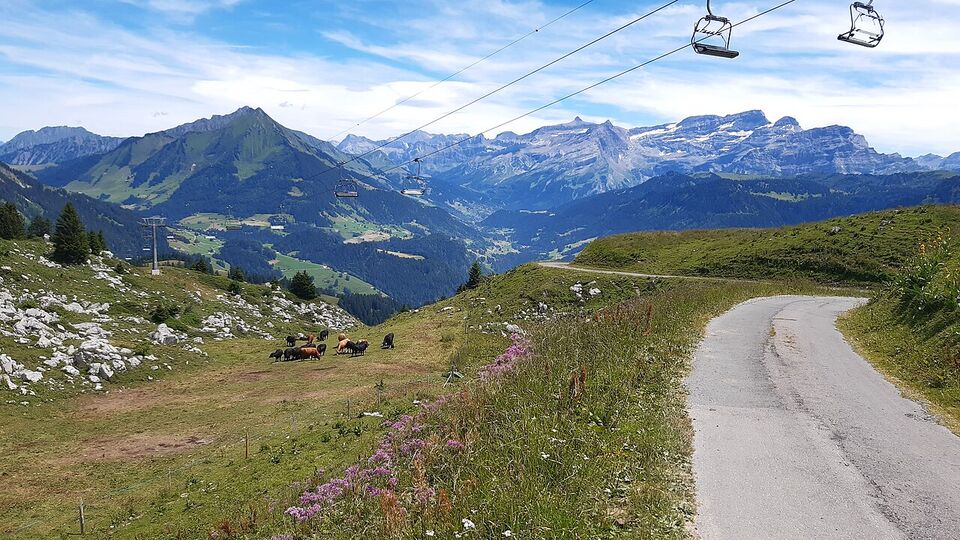
Overview: what to plan for
Switzerland has high-quality health care, clean water and clear rules, and most trips involve nothing worse than sore feet. The surprise for Americans is not the quality of care but the cost and the insurance gap. A visitor who needs a doctor, a hospital or a helicopter pays the real price, often up front, and US insurance may not reimburse it.
This page covers what to buy before you go (insurance and vaccines), what to do when you need help (the numbers to call, pharmacies, doctors, hospitals), and the health risks in the Swiss environment: altitude, sun, ticks, heat and unsafe water in the mountains. It also covers bringing medicines and getting around with limited mobility. For crime, mountain hazards and emergencies in general, see Safety in Switzerland.
We are a travel guide, not a medical service. Talk to your own doctor or a travel clinic four to six weeks before departure, especially if you have a chronic condition, are pregnant, are traveling with young children or plan to hike at altitude.
Health insurance reality
Most US health plans are built around US providers. Many cover emergencies abroad only in part, some not at all, and almost none pay for evacuation or repatriation. Medicare generally does not cover care outside the US. Check your policy before you go by calling the insurer and asking three questions: does it cover care in Switzerland, does it cover emergency evacuation, and do you have to pay up front and claim later?
Swiss health care is of high quality but is not cheap for visitors. Swiss residents are covered through compulsory insurance, but tourists are billed as private patients, usually by invoice or by card payment at the time of care. Because we have no confirmed price lists for 2026, we do not give prices here. A short clinic visit, an emergency room visit, an ambulance ride and a hospital stay can each cost far more than similar care would at home. The US Embassy in Bern keeps a medical assistance page that lists doctors and hospitals, and it is a good place to start when you need an English-speaking provider.
That is why travel insurance matters. Look for a policy with medical expense cover, emergency evacuation and repatriation, and mountain rescue cover if you plan to hike, ski or use cable cars. Read the exclusions: some policies exclude activities such as off-piste skiing, climbing, paragliding or hiking above a certain altitude, and they may exclude pre-existing conditions unless you buy the policy within a short window after your first trip payment. Keep the policy number and the insurer's 24-hour number on your phone and on paper.
Different from home
In Switzerland, health insurance is mandatory for residents and is private, not government-run. There is no walk-in emergency system that waives the bill for foreigners. You pay as a private patient, so ask about costs before non-urgent care, keep every receipt and submit it to your travel insurer.
Emergency numbers and Rega
The main numbers are 144 for an ambulance, 112 for any emergency, 117 for police and 118 for fire. Call 1414 for Rega, the Swiss air rescue, in the mountains; from abroad or on a foreign SIM the number is +41 333 333 333. Rega also has an app that can send your location. Save the numbers before you leave home, since mobile networks may not give you a signal in some valleys and you may need to move to find one.
A Rega helicopter mission costs around CHF 4,500 (about $5,350) on average, according to Rega, and difficult searches can cost much more. A patronage of CHF 40 (about $48) for an adult, valid until May 15, 2027, may help with rescue costs in Switzerland, but it does not replace travel insurance, and its conditions do not extend to repatriation for visitors who live abroad. Our safety page explains Rega in more detail, including what to say when you call.
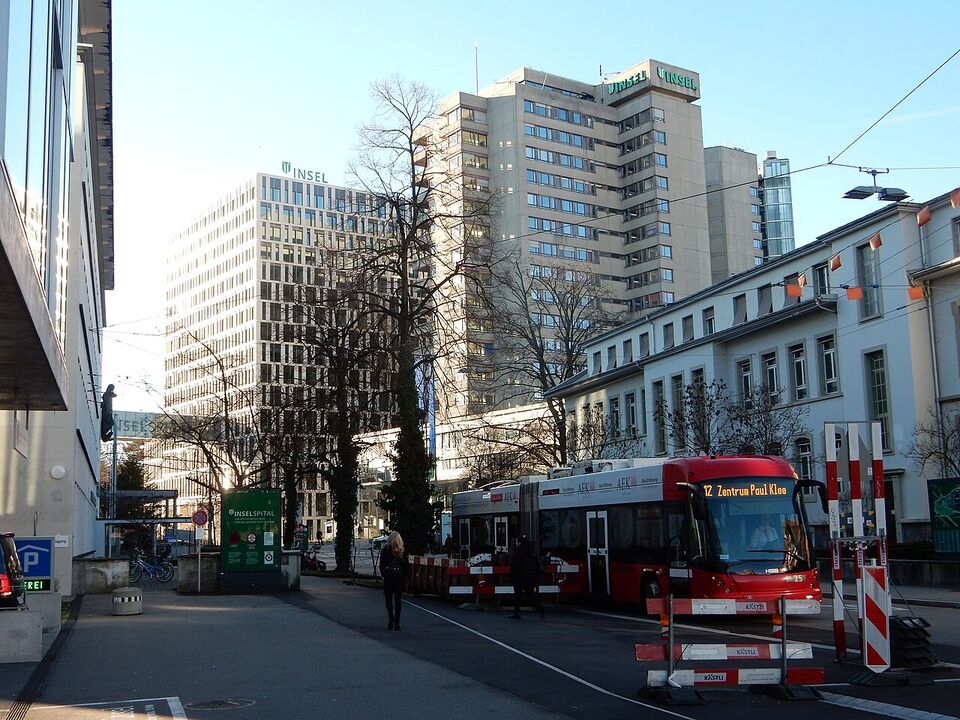
For an emergency in a city, call 144 or go to the emergency department (Notfall in German, urgences in French, pronto soccorso in Italian) of the nearest hospital. For less urgent problems, call a doctor's practice or a walk-in clinic first. If you do not speak the local language, ask for English; the hospital staff usually can help.
Pharmacies and what they can dispense
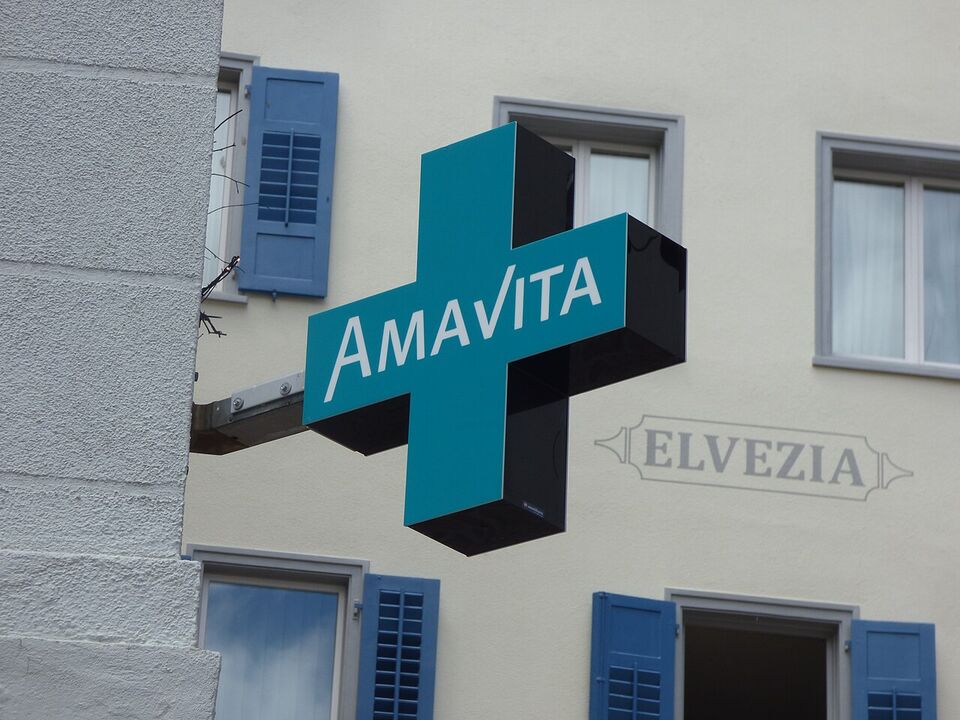
A pharmacy is called Apotheke in German, pharmacie in French and farmacia in Italian. Look for a green cross sign. Pharmacists in Switzerland are highly trained, and they can advise on minor problems such as colds, stomach upsets, allergies, sunburn, insect bites and minor wounds, and recommend over-the-counter medicines. A pharmacist can also tell you when you need a doctor.
A drugstore (Drogerie or droguerie) is different from a pharmacy. It sells cosmetics, vitamins, herbal products and some non-prescription items but cannot dispense prescription medicines. If you need a medicine, go to a pharmacy. Some medicines that are on the shelf at home need to be asked for at the counter in Switzerland, and brand names differ, so bring the generic name (the active ingredient) written down.
Prescriptions are generally needed for antibiotics, many strong painkillers and other prescription drugs. A foreign prescription may not be accepted as it is. If you run out of a medicine, a pharmacist or a doctor can sometimes help with an emergency supply, and a doctor can issue a Swiss prescription, which you pay for. Hours differ by town, and pharmacies in stations and airports may open longer. Outside normal hours, towns have an emergency pharmacy service that rotates; the pharmacy door usually shows who is on duty, or you can ask at a hotel. We could not confirm opening hours, so check locally.
Insider tip
Pack a small kit from home: your regular medicines, pain relief, anti-diarrhea medicine, antihistamines, blister plasters, sunscreen, lip balm with SPF and a thermometer. Brands you know can be hard to find in a village on a Sunday, when most shops are closed.
Seeing a doctor
If you need a non-emergency doctor, call a general practice (Hausarzt, médecin généraliste) or a walk-in clinic in a larger town. Many hotels can recommend a doctor or call one for you. Telehealth services from your insurer may also help before you decide whether to go in. Ask whether the practice speaks English, whether you need an appointment and how payment works.
Expect to pay at the time of the visit or to receive an invoice that you have to pay promptly. Ask for an itemized receipt in a form your insurer will accept, and for a note in English if you need one. Take your passport, your insurance details and a list of medicines and allergies. Swiss doctors expect patients to be on time and to arrive prepared, in keeping with the culture described in our etiquette guide.
Hospitals in Swiss cities and larger towns provide full emergency and specialist care. In small mountain villages, the nearest hospital can be an hour or more away by road, and an air ambulance is often faster. For serious injuries in remote places, do not drive the person yourself unless you have to; call for help.
Vaccines and the CDC advice
The CDC's travel health page for Switzerland lists it at Level 1 (practice usual precautions). The advice, as shown in November 2026, includes keeping routine vaccines up to date, such as measles-mumps-rubella (MMR) and COVID-19; hepatitis A for most travelers; and hepatitis B for unvaccinated adults under 60. The CDC does not require a yellow fever vaccine for Switzerland. It also carried a measles notice. Check cdc.gov for the current notices before you go, and talk to a doctor or travel clinic about your own needs.
For measles, make sure you have two doses or proof of immunity, especially if you travel with children. Vaccines that need several doses, such as hepatitis B and tick-borne encephalitis, take weeks to complete, so start early.
Ticks and tick-borne encephalitis
Ticks are widespread in Switzerland. The official Swiss portal ch.ch warns that tick bites can cause Lyme disease or meningitis. Ticks live in grass, bushes and the edges of woods, mainly at lower elevations, and are most active in the warmer months. Many walks on well-traveled paths in meadows and forests, picnic spots and pastures carry some risk.
The CDC says the tick-borne encephalitis (TBE) vaccine is recommended for people who will have extensive exposure to ticks because of their planned outdoor activities, and may be considered for others who might be exposed. A short city trip with a few paved walks does not usually call for it; a week of hiking, camping or trail running through meadows and forests in summer might. Talk to a travel clinic well before you go, since the vaccine takes more than one dose.
To protect yourself, wear long trousers tucked into socks and closed shoes on grassy or wooded trails, and use an insect repellent that is suitable for ticks. After a walk, check your whole body, including behind the knees, the groin, the armpits, the waist, the scalp and behind the ears, and check children and pets. If you find a tick, remove it promptly with fine tweezers or a tick tool, pulling steadily at the head, then clean the skin. Note the date. If you develop a rash, fever or flu-like symptoms in the weeks that follow, see a doctor and say that you had a tick bite. Lyme disease is treatable with antibiotics, especially if caught early.
Altitude sickness and the Jungfraujoch
The Jungfraujoch railway station is at 3,454 m (11,332 ft), and visitors rise from the valley to it in a single day. Many arrive from near sea level in a short time, and some feel the altitude. Typical symptoms are a headache, dizziness, nausea, a faster heartbeat, breathlessness on small efforts, tiredness and poor sleep. They are usually mild and short.
To reduce the risk, move slowly, take breaks, drink water, eat lightly and avoid alcohol. Do not plan strenuous exercise at the top. If you feel unwell, sit down, rest and take a descent into account. A headache that does not ease, vomiting, confusion, loss of balance or breathlessness at rest are warning signs; go down and get medical help. People with heart, lung or blood disorders, pregnant women and anyone who has had altitude illness before should ask a doctor before going. Lower-altitude stations are less demanding: Gornergrat, for example, is about 3,090 m (10,135 ft).
At the Jungfraujoch the air is thin and cold even in summer. Long-term monthly averages from the weather station show daily highs below freezing from October to May, so bring a warm layer, a hat, gloves and sunglasses. See the mountain excursions guide for the lift stations and check the operator's site for running days and prices; many lifts close for maintenance in November and spring.
Watch out
Do not combine a first night at altitude with heavy drinking, a long hike or a poor night's sleep. If a child or an older family member seems unusually sleepy, irritable or confused at altitude, treat it as serious and go down.
Sun, UV and cold at altitude
UV radiation increases with altitude, and snow reflects it. You can burn in a few hours on a cloudy day on a glacier or a ski slope, and the sun at 3,000 m is stronger than at the lake. Use broad-spectrum sunscreen with a high SPF on exposed skin, including ears and the back of the neck, reapply it often, wear a hat and use sunglasses with UV protection. Goggles are useful on snow, as snow blindness is painful. Lip balm with SPF avoids cracked lips.
Cold and wind matter as well. The temperature drops as you climb, and the wind makes it feel colder. Dress in layers and keep your hands, head and ears covered. Frostbite and hypothermia can develop on a long day outdoors in poor weather. Keep dry, eat regularly and carry a warm layer even in summer.
Water and food safety
Tap water in Swiss towns and villages is safe to drink. Public fountains often provide drinking water, and a refillable bottle saves money. Look at the signs: a fountain marked as not drinking water (in German, kein Trinkwasser) should not be used for drinking. Restaurants usually serve tap water on request.
Do not drink water from mountain streams, springs or troughs on alpine pastures. Even clear water can carry bacteria or parasites from animals, and grazing cattle and sheep are often upstream. If you have to drink from a stream, filter or treat the water. Huts normally provide safe water and will tell you if there is a problem.
Food safety is high, with few risks for visitors. Raw-milk cheeses and charcuterie are part of the local diet; if you are pregnant or have a weakened immune system, ask your doctor about unpasteurized cheese, raw meat and raw eggs. Tell restaurants about allergies: say them clearly in the local language and ask what is in a dish. Our food guide explains the main dishes and how to order.
Medication import rules
For personal use, travelers can generally bring the medicines they need for the trip. Keep them in the original packaging with the pharmacy label, carry them in your hand luggage, bring only the amount that you need for the stay, and bring a doctor's letter or prescription, ideally in English, listing the generic name and the dose. Medicines that contain narcotics or other controlled substances, such as strong painkillers, some ADHD and sleep medications, are more strictly regulated, and you may need extra paperwork.
We could not confirm the current Swiss rules from an official page for this guide. Check swissmedic.ch (the Swiss agency for therapeutic products) and the customs site bazg.admin.ch before you travel, and ask your doctor or pharmacist for a letter if your medicine is a controlled substance. If in doubt, contact the Swiss embassy or consulate in the US. Switzerland has also run campaigns against illegally imported products such as peptides, so do not bring unregistered supplements or products that you cannot document.
Pack medicines in your carry-on in case checked luggage is delayed, and bring extra days of supply. Insulin and other temperature-sensitive medicines need a cool bag; ask the airline and security staff about the rules for liquids and medical items. Syringes and needles should have a doctor's note.
Heat waves and summer health
Summers in Switzerland can be hot, especially in cities and low-lying areas such as Geneva, Basel and Ticino. Plan for heat in July and August. Drink plenty of water, wear light clothes and a hat, plan outdoor activities for the morning and evening, and rest in the shade at midday.
Many older Swiss buildings and some hotels do not have air conditioning. If heat is a concern for you, ask for a room that has it or a fan before you book. Lakes and rivers offer relief, but follow the water safety guidance in our safety guide. Signs of heat exhaustion are heavy sweating, headache, dizziness, nausea and fatigue; rest in a cool place and drink. Heat stroke, with confusion and hot, dry skin, is an emergency: call 144.
On hot days, thunderstorms can develop quickly in the mountains in the afternoon, so combine heat planning with weather checks on MeteoSwiss.
Mobility and accessibility
Switzerland is among the more accessible countries in Europe, but there are limits in historic centers and the mountains. Many train stations and newer trains are step-free, and the railway offers help for travelers with reduced mobility if you arrange it in advance; the SBB site and phone line explain how to book assistance and how far ahead to ask. Trams and buses in the larger cities have low floors, though older vehicles and some regional lines differ.
Old towns have cobblestones, steps and steep streets, such as the lanes of Bern, Lucerne and Zurich. Many mountain stations have lifts or ramps, but some summits, huts and viewpoints have steps and uneven paths. Check each operator's accessibility page before you plan an excursion, and call if you travel with a wheelchair or a scooter. Hotels vary in how accessible their rooms are, so ask for details about step-free access, bathrooms and lifts when you book.
Plan rest stops, and consider whether altitude is advisable if you have heart or lung problems. Service animals have their own rules; our pets guide covers bringing animals into Switzerland. For help with the trip itself, our getting-around page explains tickets and assistance.
Before you go: a health checklist
- Buy travel insurance with medical expenses, evacuation and mountain rescue cover, and read the exclusions.
- Ask your health insurer and, if you are on Medicare, confirm what is covered abroad.
- See your doctor or a travel clinic four to six weeks before departure about routine vaccines, hepatitis A and, if needed, tick-borne encephalitis.
- Pack medicines in original packaging in your carry-on, with the generic names and a doctor's letter.
- Save 144, 112, 117, 118 and Rega 1414 in your phone, plus the US Embassy number, +41 31 357 70 11.
- Bring sunscreen, a hat, sunglasses, a first-aid kit and tick protection.
- Fill a reusable bottle from town fountains, not from streams.
- Plan slow, short days when you first go to altitude, and know the warning signs.
For planning the rest of the trip, start with the trip planner.
Add it to a route in the trip builder, or ask us to plan the hotels, trains and guides for you.