Overview
January is Switzerland's deepest winter, and for many visitors the best time to see it as the Swiss do: skiing, sledging, winter walking, thermal baths and long lunches of fondue and raclette. The first week is busy with holiday crowds. After that, the resorts settle into steady winter, and the cities are at their quietest and often at their cheapest.
This guide covers the famous January events, how snow reliability depends on altitude, winter walking and sledging, spas, food, city breaks and how to pack. Facts were checked on November 14, 2026. For ski details see skiing in Switzerland, for the St. Moritz area see the Engadine, and for a year-round view see when to go. The month before is on Switzerland in December.
Weather and daylight
Days are short, with about 9 hours of daylight in mid-January. The lowlands can sit under fog for days, particularly in the Mittelland (the central plateau around Zurich, Bern and Lucerne). Zurich averages only about 60 hours of sunshine for the whole month. The cure is altitude: when the fog is low, a train or cable car up to a ridge can put you in full sun. Lugano and the south are drier, with an average of about 5 rainy days.
| Place | Average high | Average low | Days with rain or snow |
|---|---|---|---|
| Zurich | 38°F (3.5°C) | 29.5°F (-1.4°C) | 10 |
| Geneva | 41°F (5°C) | 30°F (-1°C) | 9.5 |
| Lucerne | 39°F (4°C) | 29°F (-1.6°C) | 9.7 |
| Interlaken | 38°F (3°C) | 27°F (-3°C) | 9 |
| Lugano | 45°F (7°C) | 34°F (1°C) | 5 |
| Zermatt village (5,374 ft / 1,638 m) | 33°F (1°C) | 19°F (-7°C) | 6 |
| Jungfraujoch weather station (11,745 ft / 3,580 m) | 15°F (-9.5°C) | 4°F (-15.5°C) | not listed |
These are 1991-2020 averages. Zermatt village averages about 21 inches (53 cm) of snow in January. At the Jungfraujoch it is well below freezing all year. We make no snow forecast for 2027; read the avalanche bulletin at slf.ch and the resort's own snow report.
Big January events
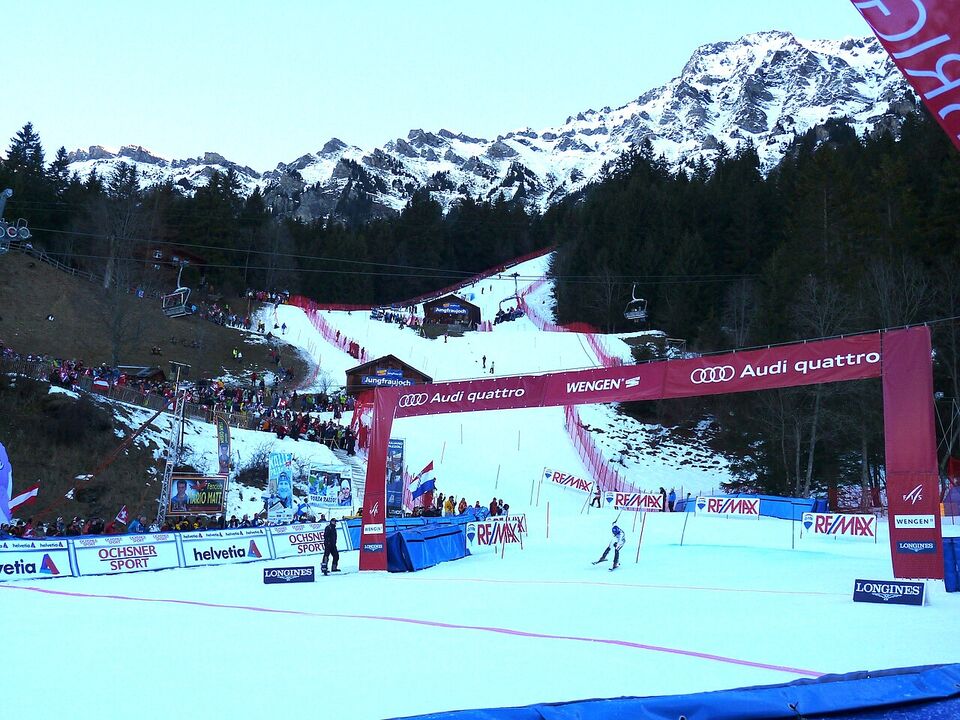
Lauberhorn races, Wengen: January 15-17, 2027
The International Lauberhorn Races, held since 1930, are among the best-known events in ski racing. The official site lists January 15-17, 2027, with a ticket shop and race program. Wengen is a car-free village in the Bernese Oberland, reached by train from Lauterbrunnen. Rooms in Wengen and nearby villages go fast for the weekend, so book early or stay in Interlaken or Grindelwald and travel in. Check lauberhorn.ch for the schedule and tickets. See Interlaken and the Jungfrau region.
Engadine: World Cups, curling and a frozen lake
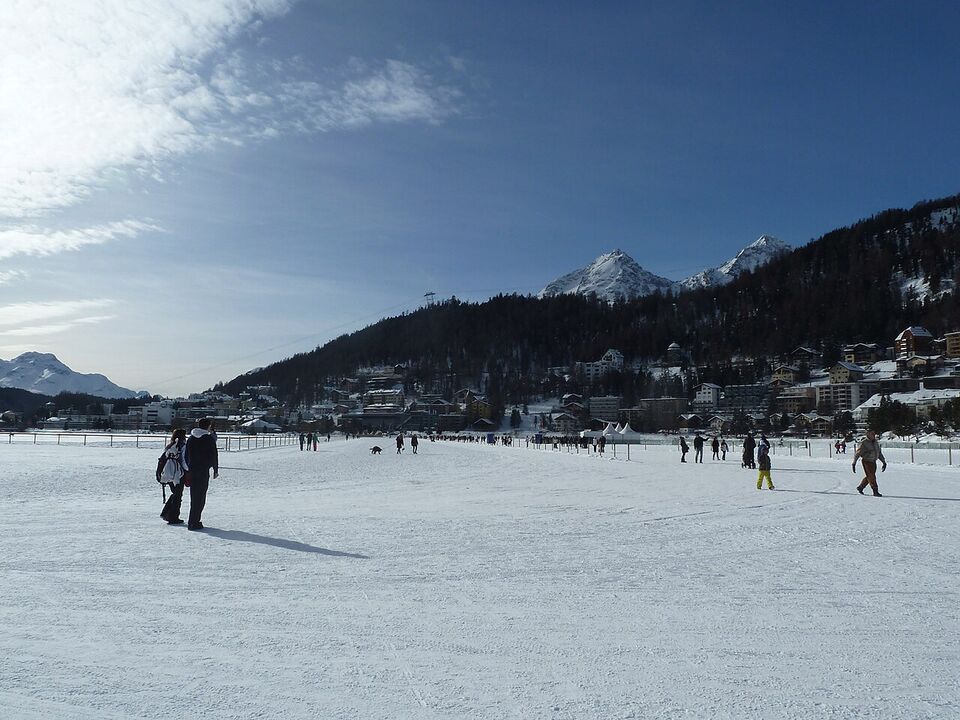
The Engadine's official events page lists a busy January: the FIS Para Alpine World Cup (January 9), the Coppa Romana open-air curling tournament in Silvaplana (January 10), the Swiss Pond Hockey Championship (January 15), the La Diagonela cross-country race (January 16), the cross-country World Cup (January 22-24) and a bobsleigh and skeleton World Cup from January 22. "Amusements on the Lake" runs January 18-February 21. White Turf, horse racing on the frozen lake at St. Moritz, falls in February (race days February 7, 14 and 21; family days February 6, 13 and 20) and is its 120th year. Details at engadin.ch and whiteturf.ch.
Other events: dates to confirm
Two famous January events have dates we could not confirm for 2027, so check the official sites:
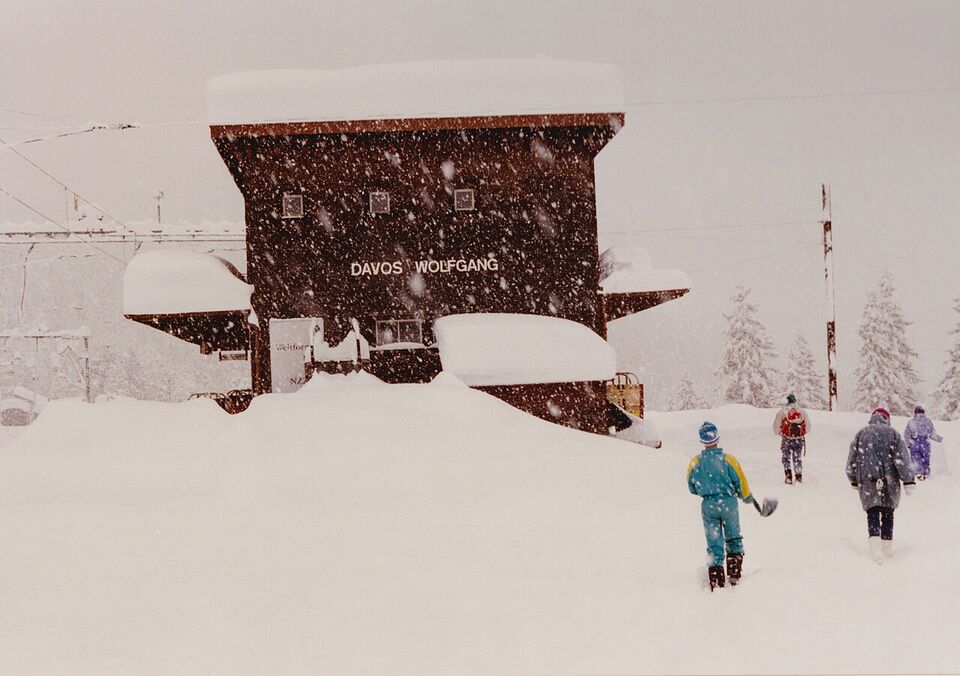
- The World Economic Forum in Davos. It is held in Davos in January in most years and is not a public event. Delegates and security fill the town, and hotels there and in Klosters are scarce and expensive that week. Avoid it if you want a ski holiday there.
- The International Hot Air Balloon Festival in Château-d'Oex (Vaud). It has traditionally been held in late January, with dozens of balloons launching over the valley. Confirm the 2027 dates and any ticket or ride rules on the festival's own site.
- Old Silvester (Silvesterchlausen) in Appenzell. The "old" New Year, around January 13, brings costumed groups with bells to villages such as Urnäsch and Herisau. Times and places vary; ask the Appenzell tourist office. See Appenzell.
Snow reliability by altitude
A simple rule: the higher the ski area, the more reliable the snow. Glacier and high-altitude areas such as Zermatt's Matterhorn Glacier Paradise (listed as open until April 30, 2027) are the safest bets in a poor winter. Mid-altitude resorts depend on natural snow plus snowmaking. Low villages under about 4,000 feet (1,200 m) can have a green valley and a white mountain, or even close their lower runs. Even in a good winter, a warm spell with rain can strip a south-facing slope in a few days.
- Zermatt. Ski passes from CHF 92 (about $110), a Flex ski pass from CHF 181 (about $215) and the Peak Pass from CHF 190 (about $225) are valid into spring (ski passes to May 2, 2027 and the Peak Pass to April 30, 2027).
- Jungfrau Ski Region. The ski pass, from CHF 79 (about $94), is valid November 21, 2026-April 25, 2027.
- St. Moritz-Engadin, Engelberg-Titlis, Verbier. Aggregators list planned seasons from late October or November to late April or early May. These are preliminary, so confirm on each resort's site.
For slopes, lift types and school choices, see skiing. Do not ski off the marked runs without a guide and avalanche gear; the SLF bulletin is the first thing to read.
Winter walking and sledging
You do not need to ski to enjoy the Alps in January. Many resorts groom winter walking paths, and many lifts run for walkers and sledgers as well. The Jungfrau Region's Winter Hiking and Sledging Pass starts at CHF 61 (about $73) and is valid November 21, 2026-April 25, 2027. Grindelwald First, reached by cableway, is one such base; its cableway price is from CHF 38 (about $45). Harder Kulm above Interlaken has a funicular from CHF 19 (about $23).
Sledging (Schlitteln) runs are marked in many resorts. You usually rent a sledge at the lift. Check that the run is open on the resort's site on the day, because conditions change fast. Wear boots with grip and a helmet if one is offered; sledges are harder to steer than they look. See hiking for winter trail rules.
Watch out
Winter hiking trails are not the same as summer ones. Stay on marked winter paths, check the avalanche and weather information before you go, and carry a charged phone. Switzerland's emergency numbers are 112, 144 for an ambulance, and 1414 for the Rega air rescue. Buy travel insurance that covers mountain rescue and medical evacuation. See safety.
Thermal baths and spa days
Hot spring baths are a classic January plan after a cold day. Spa towns such as Leukerbad and Bad Ragaz are known for them, and there are baths in or near many cities. We did not confirm 2026-27 prices or opening hours, so check each bath's own site, and book weekends ahead. Many have a swimsuit rule, a time limit on the entry ticket and a separate sauna area with its own rules, so read the signs.
Fondue and raclette season
Fondue is melted hard cheese, usually Gruyère and Vacherin, with white wine, eaten from a shared pot (caquelon) with bread. Raclette comes from the Valais: melted cheese scraped from a half wheel onto potatoes with pickles, often with a Fendant white wine. Both are winter staples, and both are made for groups. Book a table for dinner, especially on weekends. See food.
Low-season city breaks: Zurich, Bern, Geneva
January is a good time for a city break. The cities are less crowded and hotels are easier to find, though there is no price figure we can confirm for 2027. Museums are open (many close on Mondays):
- Zurich. The Kunsthaus shows Maria Lassnig and Edvard Munch until February 21, 2027, and "Evergreens" until January 10. The Swiss National Museum is open January 1-2, 10 a.m.-5 p.m. The Lindt Home of Chocolate is open daily 10 a.m.-7 p.m. but closed January 1. See Zurich.
- Bern. The arcaded old town keeps you dry. Opening hours for the smaller sights were not confirmed, so check before you go. See Bern.
- Geneva. CERN's Science Gateway is free but requires registration. See Geneva.
- Elsewhere. Château de Chillon is closed January 1 and otherwise open 10 a.m.-5 p.m. (last entry 4 p.m.); the Gruyères castle exhibition "The Great Christmas" runs to January 10.
Hotel booking patterns
The first week of January is high season, since Swiss holidays are January 1 (everywhere) and often January 2 (Berchtold's Day, in 14 cantons). The Epiphany holiday on January 6 applies in three cantons. After the first week, many resort hotels have rooms, and the city hotels are quiet. February is busier again in the ski regions, as winter school holidays begin on dates that vary by canton. We have not confirmed 2027 hotel prices. Book early for Lauberhorn weekend, the Davos week and any Engadine event weekend. See where to stay.
Save money
Midweek is quieter on the slopes. If you do not ski, a Half Fare Card at CHF 150 (about $180) halves train, bus, boat and most mountain railway fares for a month. It only pays if you travel a lot. Work it out in the SBB app first. See Swiss Travel Pass.
What to pack
Pack warm layers: a base layer, a fleece or wool midlayer and a waterproof, windproof shell. Bring waterproof boots with real grip, warm socks, a hat, gloves, a scarf, sunglasses or goggles, and sun cream and lip balm for the mountains. A small daypack is useful for the layers you take off. Charge your phone before you go out in the cold, because batteries drain quickly. Our packing page has a full list.
Different from home
Cars in winter must be ready for snow. Winter tires are obligatory on the mountain passes that stay open, and chains may be needed. Many Americans find that Swiss trains are a calmer way to reach a ski resort than driving. See driving.
Add it to a route in the trip builder, or ask us to plan the hotels, trains and guides for you.