Overview: what Americans need to enter
A US passport holder visiting Switzerland as a tourist needs a valid passport and, in practice, nothing else in advance. You can stay up to 90 days in any 180-day period, counted across the whole Schengen area, without a visa. Since the EU's new Entry/Exit System (EES) came into force, you also register your fingerprints and a photo on your first entry, instead of getting a passport stamp. ETIAS, the EU's planned travel authorization, is not required yet.
One caution on wording. The Swiss State Secretariat for Migration (SEM) FAQ sets out the general rules but does not name the United States, and the Swiss foreign ministry page that does was not available to us when we checked. So treat "no visa for Americans" as the standard rule, and confirm it on sem.admin.ch or the State Department's Switzerland page before you book. For stays over 90 days, see long stays.
Switzerland is not in the European Union, but it is in the Schengen area. That mix confuses many travelers. For borders and the 90/180 clock, Switzerland counts as Schengen. For customs, money and phones, Switzerland has its own rules. This page covers both, and the money and phones pages cover the rest.
Different from home
Within Schengen, you normally cross internal borders (for example, from Switzerland into France, Italy, Germany or Austria) without routine passport control. But you must still carry your passport, because spot checks happen and hotels ask for ID. See Italy, France and beyond.
Passport rules
The SEM entry FAQ gives two tests for a short stay. Your passport must be valid for at least three months after the date you plan to leave the Schengen area, and it must have been issued within the last 10 years. A US adult passport is valid for 10 years, so the second rule rarely bites, but a passport renewed after a long gap can be affected. Check the issue date, not just the expiry date.
The three-month rule is measured from your planned departure, not your arrival. If you will leave Schengen on June 30, your passport should be valid until at least September 30. Many airlines apply stricter rules than the border does and can refuse to board you, so give yourself a margin. If you are within six months of expiry, renew first.
Other documents
- Return or onward ticket: not always checked, but border officers can ask for it, along with proof of lodging and enough money. Keep a screenshot of your return flight and your first hotel booking.
- Children: every traveler needs a passport. If a child travels with one parent or without parents, carry a signed consent letter as a precaution. Rules vary, so ask your airline.
- Dual citizens: enter on the passport you plan to show at the border, and use the same one when you leave. This keeps your EES record consistent.
- Driving: bring your US license, and an International Driving Permit if the rental company asks. See driving.
The 90/180 rule, in plain terms
A short stay (tourism, visiting family or business) is limited to 90 days in any 180-day period across the whole Schengen area. It is a rolling window: on any given day, count back 180 days and add up the days you spent in any Schengen country. That total must not exceed 90. Switzerland, France, Italy, Germany, Austria, Liechtenstein and the other Schengen countries (29 in all) share one clock.
A typical two-week trip is nowhere near the limit. The rule matters for long trips: a three-month grand tour, a summer in Europe, or a winter in the Alps followed by a spring in Italy. Countries outside Schengen, such as the UK and Ireland, do not count toward the 90 days, but check each country on your route, because not every European country is in the area. The EU's travel site has a calculator.
The EES now keeps the record, so overstays are detected automatically. Overstaying can lead to fines, a ban on re-entry and trouble on later trips. If you want to stay longer than 90 days, you need a category D national visa and a permit from the Swiss canton, applied for from abroad through the Swiss representation. We cover this on long stays.
The EES: fingerprints and a photo at the border
The Entry/Exit System started in stages on October 12, 2025, and has been fully operational at all Schengen external borders since April 10, 2026. It replaces passport stamping. It records your name, passport data, a facial image and fingerprints, plus the date and place of each entry and exit. Switzerland is one of the 29 countries that use it. The EU says children under 12 are not fingerprinted.
What happens the first time
If you have never registered, you do it on your first arrival in Schengen. At many airports, you start at a self-service kiosk: scan your passport, have your photo taken and scan your fingers. At other places, an officer does it. You then go to passport control as usual. Data is kept for three years, and on later trips you are checked against your record, which should be quicker, though we have no Swiss-specific measure of how much quicker.
Has the EES changed queue times at Swiss airports?
We could not confirm this. No source we checked gives measured waiting times for Zurich, Geneva or Basel since the EES started. EES has been running at Swiss airports since the Schengen-wide start in October 2025, and is fully in force since April 2026, but we have no airport-specific start date. What we do have is news from other places: in July 2026, a report quoted an airline industry warning of waits of three to six hours at some European airports. That is not a statement about Switzerland, but it is a reason to leave extra time at the first Schengen airport you reach, and to avoid a tight connection there.
The EU also has an optional "Travel to Europe" pre-registration app. As of April 2026, only trips to Sweden and Portugal could be pre-registered, with a window opening 72 hours before travel. Do not count on pre-registering for Switzerland.
Watch out
Do not plan a tight connection at your first Schengen airport. If you fly via Frankfurt, Paris, Amsterdam or another hub, you clear the EES and passport control there, not in Zurich. Allow extra time; waits vary by airport and day. The same goes for your departure, when the EES records your exit.
ETIAS: not required yet
ETIAS is a planned online travel authorization for visa-exempt visitors to Schengen countries, including Switzerland. It is not a visa. It is not in force. A French foreign ministry page updated on November 10, 2026 says the system "is not yet operational" and warns that no website currently issues ETIAS authorizations. Fraudulent sites exist, so never pay for one.
The Swiss SEM FAQ says travelers do not need to do anything now, and that the EU will announce the exact date several months before ETIAS comes into force. Press reports in July 2026 said a late-2026 launch was no longer realistic, but we found no official new date, so we give none.
On cost, the plan is about €20 (about $22), generally valid for three years, and free for travelers under 18 and over 70. That is a plan, not a price you can pay yet. Check the official EU travel site (travel-europe.europa.eu) before you go, and ignore any stray lower figure you may see on blogs.
What to expect at the airport
Your passport check happens at the first Schengen airport where you land. If you fly nonstop to Zurich or Geneva, that is where you register for the EES and meet a border officer. If you connect through another Schengen country, you are checked there, and your onward flight to Switzerland is treated as a flight within Schengen.
Zurich
Arriving passengers from outside Schengen follow signs for passport control, then baggage, then customs. After you register for the EES, collect your bags and head out. The airport has its own railway station, with trains to Zurich Hauptbahnhof (Zürich HB) taking about 10 minutes. Nonstop flights from the US include SWISS to several US cities; check the airline for the winter 2026-27 timetable. See flights and Zurich.
Geneva
Geneva airport sits about 2.5 miles (4 km) from the center and has its own railway station. It is a Swiss airport with a French sector: a separate exit leads to France, intended for travelers going directly into French territory. If you are staying in Switzerland, make sure you leave through the Swiss side, follow the signs for the train and for Genève, and ask staff if you are unsure. Hotel guests in approved accommodation in Geneva receive a free Geneva Transport Card; ask your hotel. See Geneva.
Basel EuroAirport
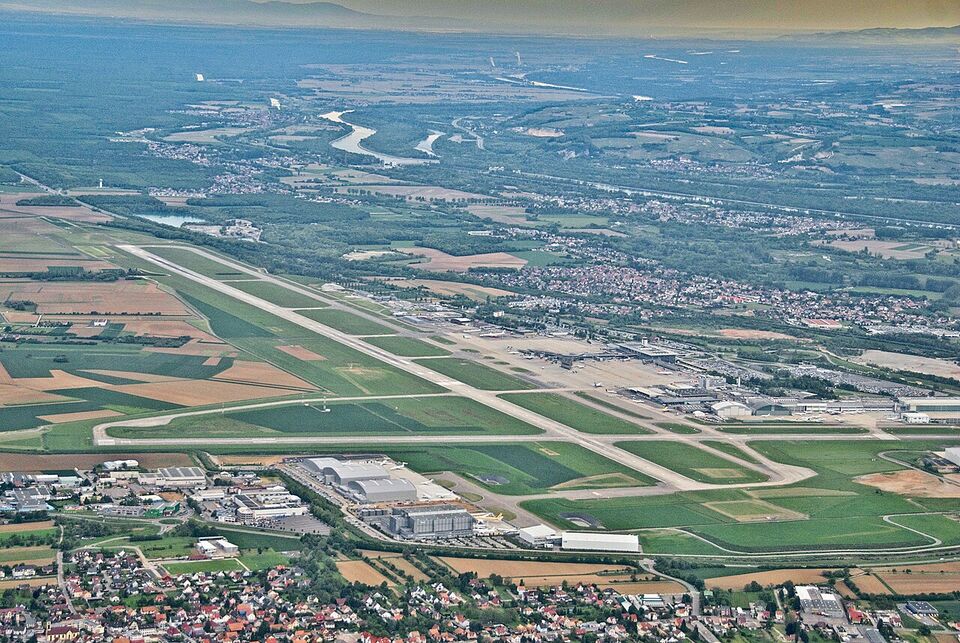
EuroAirport Basel-Mulhouse sits on French territory and serves Basel and the French side of the Upper Rhine. It is a binational airport with Swiss and French sectors. The airport describes its car parks and facilities by side: Swiss-side parking is charged in francs, French-side in euros. The airport is organized into national sectors (Swiss and French) plus shared areas, so the exit you choose decides which country's road network, car rental desks and taxis you meet first. Check the map on euroairport.com for exactly where each exit leads. A city bus links the airport with Basel station; check the operator for fares. If you are renting a car, confirm which side the desk is on and which side your booking uses. See Basel.
Insider tip
If your hotel or rental car booking is on the other side of the Geneva or Basel airport from your exit, you can end up in another country and have to go back through the airport. Confirm the side with your hotel or rental company, and screenshot the address.
Swiss customs: not EU customs
Switzerland is outside the EU customs union. Swiss rules apply when you arrive, whether you fly in directly or come overland from France, Italy or Germany. Do not use EU limits. The authority is the Federal Office for Customs and Border Security (BAZG, bazg.admin.ch). The figures below come from its allowance sheet, which was dated 2025 on the page we saw, so check the site before you go.
| Item | Rule for travelers from the US |
|---|---|
| Goods you buy (souvenirs, gifts, clothes, food) | Swiss VAT (8.1%) is due on goods with a total value of CHF 150 (about $180) or more per person |
| Meat and dairy | Prohibited from non-EU countries, so do not bring meat or dairy products from the US |
| Fruit and vegetables | Most are prohibited from third countries; leave them at home |
| Alcohol | 5 liters up to 18% alcohol plus 1 liter above 18%, per person |
| Tobacco | 250 units per person (cigarettes, cigars and heated tobacco units count) |
| Cash | Large cash sums must be declared; check the Swiss customs site for the current threshold |
The CHF 150 (about $180) limit replaces the CHF 300 (about $355) figure that older tourist sites still print. Declare larger purchases with the Swiss customs app, QuickZoll, which handles both VAT rates (standard 8.1%, reduced 2.6%) since June 2, 2026. At the airport, follow the signs for goods to declare if you carry more than the limits, and ask a customs officer if you are unsure.
Watch out
Do not pack summer sausage, jerky, cured ham or cheese from home to eat in the Alps. The ban on meat and dairy from the US is strict, and it is the item Americans most often get wrong. Buy snacks at a Swiss supermarket instead.
Coming home: US customs and CBP
US Customs and Border Protection (CBP) lets returning residents bring in $800 of goods duty-free, once every 31 days and after at least 48 hours abroad. The next $1,000 above that is taxed at a flat 3%. Adults 21 and over can bring in 1 liter of alcohol duty-free (state rules can differ), and up to 200 cigarettes and 100 cigars fall within the exemption. Goods bought in a duty-free shop still count toward the limit, and liquor over 1 liter is dutiable.
On food, CBP says you may bring bakery items and certain cheeses into the US, but not fresh, dried or canned meat or meat products from most countries. Rules change with animal-disease outbreaks. Chocolate and hard cheese are usually fine, but check the CBP and APHIS sites; no sausage or dried meat. Declare large amounts of cash; check CBP for the threshold. Our shopping and bringing it home page covers watches, chocolate and knives.
Traveling with a pet? Rules differ for entry into Switzerland and the return. See pets.
Entering by land, rail or another Schengen country
Many Americans arrive in Switzerland by train or car after starting in Paris, Milan, Munich or Vienna. Those countries are all in Schengen, so the EES registration and the main passport check happen where you first enter the area, usually at the airport where you land. The border between, say, France and Switzerland is then an internal border. You may drive or ride across without stopping, but customs officers still patrol, and Switzerland is outside the EU customs union, so a Swiss customs officer can stop you and ask what you carry.
If your first stop in Europe is Switzerland and you arrive by train from a non-Schengen country, or by road from one, border officers register you at the crossing. Carry your passport at all times, and keep it somewhere you can reach it on a train. Hotels in Switzerland collect guest details and may ask to see your passport at check-in.
If you drive in from France, Italy, Germany or Austria, you also need a motorway vignette (a sticker or e-vignette) for Swiss motorways. The 2026 vignette costs CHF 40 (about $48). See driving.
Leaving Switzerland: your exit record
The EES also records your exit from Schengen, which is what replaces the old exit stamp. At the airport, leave time for passport control on departure. If you leave Schengen from another country, such as flying home from Paris or Frankfurt, your exit is recorded there. It is the recorded exit, not the day you left Switzerland, that closes your 90-day clock. If you travel on to Ireland or the UK and then home, keep your boarding passes as a backup record.
If you leave Switzerland by plane and shop at the airport, remember that Swiss VAT rules and the US allowance both apply: the US limit of $800 counts what you carry home, including duty-free purchases. Keep receipts together in one place. If you plan to buy watches, jewelry or a lot of chocolate, read shopping and bringing it home.
Arrivals checklist
- Passport valid for three months past your planned departure, and issued in the last 10 years.
- Return flight and first-night hotel in your phone or on paper.
- Travel insurance with medical and rescue cover (see health).
- A phone plan or eSIM sorted (see phones).
- A few Swiss francs in cash and a card without foreign fees (see money).
- No meat or dairy in your bags; alcohol and tobacco inside the limits.
- Enough time between flights at your first Schengen airport.
- US Embassy contact saved: Bern, +41 31 357 70 11 (24/7 line from abroad: +1-202-501-4444).
Safety and the embassy
The State Department rates Switzerland at Level 1, the lowest level, as of November 2026. The US Embassy in Bern (Sulgeneckstrasse 19, 3007 Bern) posted an alert on November 9, 2026 about potential demonstrations and related disruptions; avoid demonstrations and check embassy alerts. Emergency passports are issued only in Bern, while the Consular Agencies in Geneva and Zurich keep limited part-day hours, so call ahead. For more, see safety.
Mistakes to avoid
- Trusting an ETIAS website. It is not required, and any site that sells it as of November 2026 is wrong or fraudulent.
- Leaving only one hour between flights. The EES and passport control can be slow at your first Schengen stop.
- Mixing EU and Swiss customs. Switzerland is not in the EU customs area.
- Counting days country by country. The 90 days are for all of Schengen together.
- Leaving through the wrong side at Geneva or Basel. Check the sign before you walk out.
- Carrying a passport with weak margins. Renew early if it expires within six months, and check the issue date.
- Skipping the official sites. Rules change. Check sem.admin.ch, travel-europe.europa.eu and travel.state.gov before you fly.
Planning the rest of the trip? Start with plan your trip and the FAQ.
Add it to a route in the trip builder, or ask us to plan the hotels, trains and guides for you.