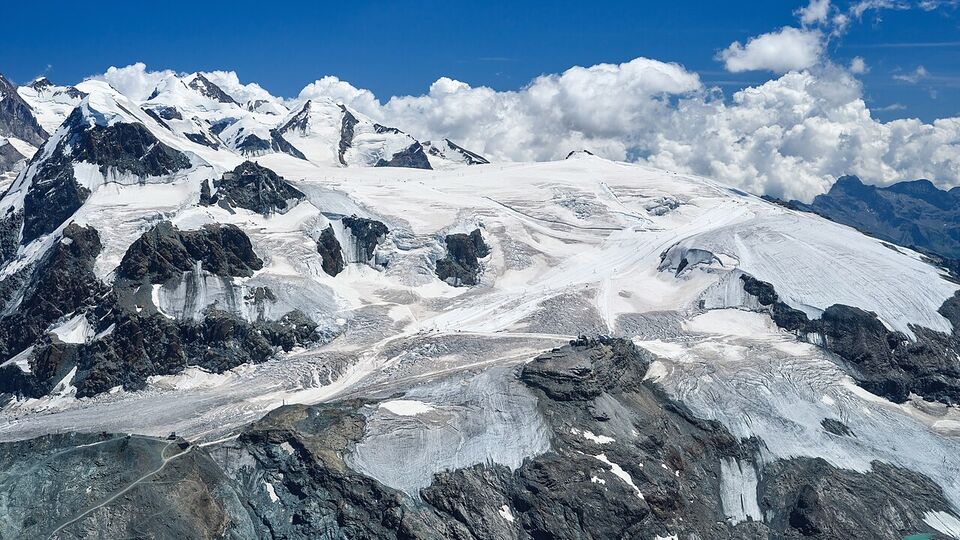
Overview: skiing in Switzerland for Americans
Switzerland has some of the highest and most scenic ski areas in the Alps, and it is easy to reach without a car. Trains run to or near most major resorts, mountain villages are compact, and several are car-free. The trade-offs are cost and the weather: Swiss hotels are among the most expensive in Europe, and snow depends on altitude and the season.
This page covers how to choose a resort, what a lift pass is, how lessons and rentals work, what else to do in winter, how to get there by train, and the rules for driving. It gives price figures only where our research found them on an operator's site, and it sends you to each resort's official page for 2026-27 opening dates and lift prices. We could not confirm those for every resort, and that is flagged where it applies. For the broader picture of winter in the country, see the December guide, the January guide and when to go.
Different from home
European pistes are colored blue, red and black, and there is no green circle. Blue is the easiest and roughly matches a US green or easy blue. Red is intermediate, and black is difficult. Ratings are not standardized between resorts, so a black run in one area can feel different from a black run in another. Check the piste map and ask the ski school if you are unsure.
Choosing a resort
There is no best resort, only a best fit. Consider who is in your group, how high you want to be, how you will get there, and whether you want a lively village or a quiet one.
Zermatt
High terrain, long runs and Matterhorn views, reached by train from Visp. The ski area connects to Cervinia in Italy. It suits intermediate and advanced skiers and groups with non-skiers who enjoy the lifts. See the Zermatt guide.
Verbier
A large, steep, off-piste-minded area in French-speaking Switzerland. It is reached by train to Martigny and Le Châble, then a gondola. Best for confident skiers who want challenging terrain and a lively evening scene. Verify current details on the resort's site.
St. Moritz and the Engadine
Sunny, high and event-rich, with a strong cross-country scene. Ski passes are listed from CHF 55 (about $65) per day when booked for a whole stay. See the Engadine guide.
Davos-Klosters
A big area spread over two villages, reachable by Rhaetian Railway from Chur or Landquart. Good for mixed-ability groups. Check opening dates on the resort's site; the season-calendar site lists a planned start of November 13, 2026.
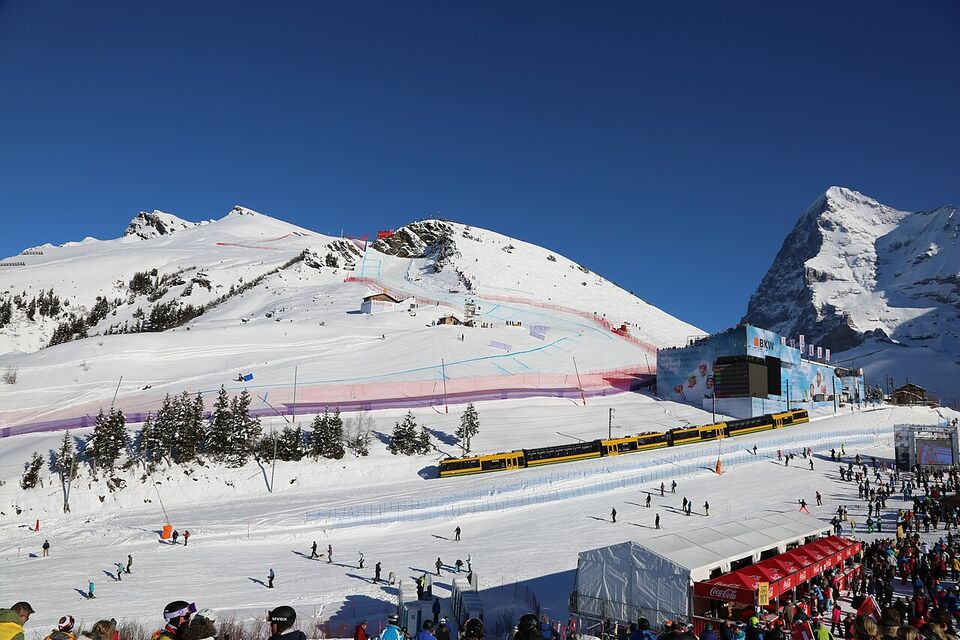
Wengen and Grindelwald (Jungfrau region)
Wengen is car-free, and the region pairs skiing with the Eiger, Mönch and Jungfrau scenery. The official Jungfrau Ski Region pass is listed from CHF 79 (about $94) and valid November 21, 2026 to April 25, 2027. The Lauberhorn races are January 15-17, 2027.
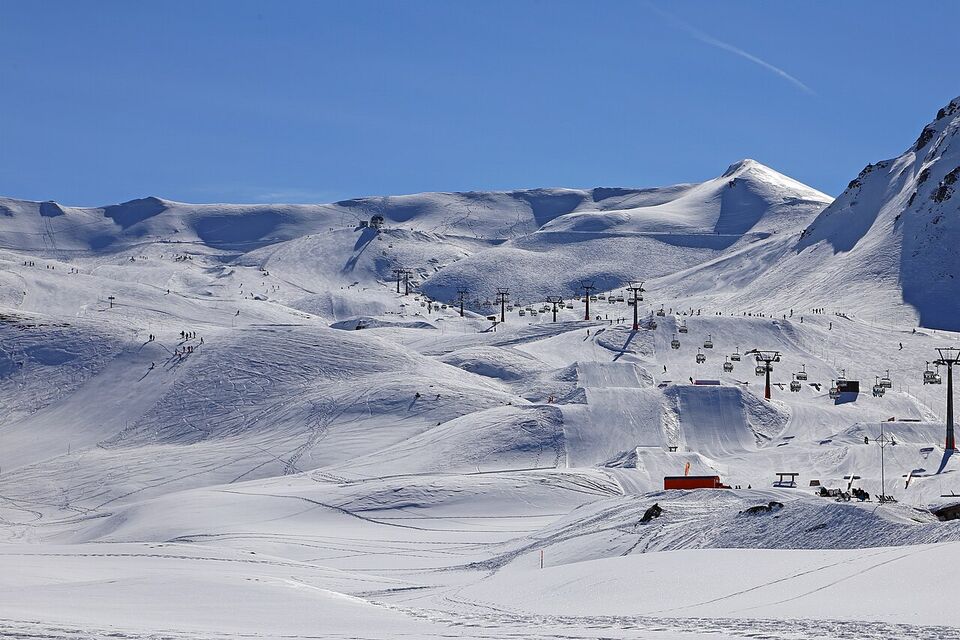
Laax
Known for snowboarding and freestyle parks. We did not find 2026-27 details in our sources, so verify the season and facilities on the resort's site before you plan.
Engelberg-Titlis
Reached by train from Lucerne and good for a mix of skiing and sightseeing. Check current lift works: the Rotair rotating cabin was reported out of operation from August 17 to December 12, 2026, and summit construction is planned from December 13, 2026 for several years. Confirm on titlis.ch.
For a first trip, we suggest picking one base and staying there for most of the week. Hopping between resorts costs time and lodging changes.
Beginner versus expert terrain
Beginners want gentle, well-groomed slopes close to the village and a ski school meeting point. Many Swiss resorts have a beginner area at village level with a magic carpet or a short lift. Experts look for steep runs, high-altitude bowls and, where conditions and training allow, off-piste routes.
- Beginners: pick a village with a good learning area and gentle lifts, and take lessons on the first days. Compact resorts with train access, such as those in the Jungfrau region, suit families.
- Intermediates: big linked areas such as Zermatt and the Engadine offer long cruising runs and varied scenery.
- Experts: Verbier and the high terrain above Zermatt are known for steep and off-piste skiing. Off-piste skiing carries avalanche risk, and we strongly suggest a mountain guide.
- Snowboarders and freestylers: Laax is known for parks. The Engadine's Corvatsch area also hosts freestyle World Cup finals in April 2027, according to the tourism site.
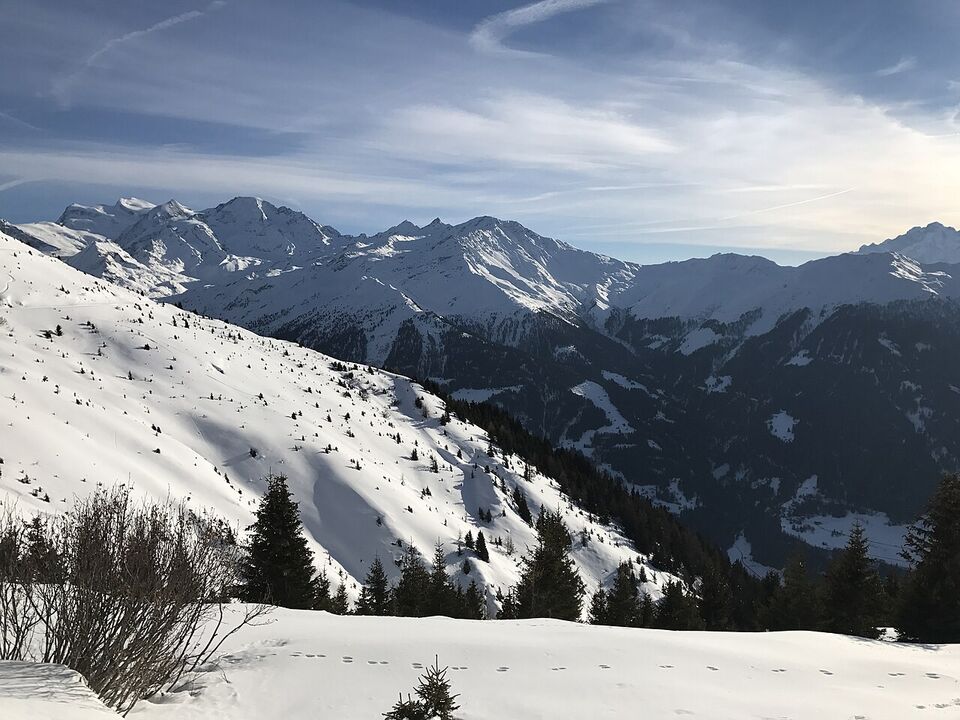
Snow reliability and altitude
Altitude is the best simple guide to snow. Resorts with villages above 5,000 ft (1,500 m) and ski areas that reach well above 8,000 ft (2,400 m) hold snow longer. Glacier areas such as the ones above Zermatt and Saas-Fee can offer skiing earlier in the season and later in spring. Low villages, such as Engelberg at 3,268 ft (996 m) or valley towns, depend on the upper mountain and on temperature. Glaciers are also retreating: the Swiss glacier monitoring network reported that glaciers lost a further 5 percent of their volume in 2026.
The SLF, the Swiss institute for snow and avalanche research, published a note in November 2026 on how the hot summer might affect the winter. We have not read its conclusions, so we make no snow forecast. Check slf.ch and each resort's snow report close to your dates.
Planned 2026-27 season dates
These are planned dates only. Official dates are published by each resort and change with the weather. The first line comes from the operators; the others come from a ski-season calendar site that labels its dates preliminary.
| Area | Planned dates | Source quality |
|---|---|---|
| Zermatt (Matterhorn Ski Paradise) | Winter ski passes valid November 1, 2026 to May 2, 2027; Peak Pass to April 30, 2027 | Operator (matterhornparadise.ch) |
| Jungfrau Ski Region | November 21, 2026 to April 25, 2027 | Operator pass dates (jungfrau.ch) |
| St. Moritz-Engadin | October 24, 2026 to May 2, 2027 | Calendar site, preliminary |
| Engelberg-Titlis | October 29, 2026 to May 2, 2027 | Calendar site, preliminary |
| Saas-Fee | October 31, 2026 to April 18, 2027 | Calendar site, preliminary |
| Verbier | November 7, 2026 to April 25, 2027 | Calendar site, preliminary |
| Davos-Klosters | November 13, 2026 to April 11, 2027 | Calendar site, preliminary |
Zermatt's own tourism site runs "Winter Opening Weeks" from November 1 to December 6, 2026, with 10 percent off stays of four nights or more and 10 percent off the Flex Ski Pass. Early-season skiing can be good value, but snow cover is thinner, and not every run is open. Check the resort's lift status page.
Lift passes: day, multi-day, regional and season
A lift pass is a card or ticket that opens the turnstiles on the lifts. Types differ by resort, but the main ones are:
- Day pass. One day on one ski area.
- Multi-day pass. Consecutive days, usually cheaper per day. Choose it if you will ski most days.
- Flexible pass. Zermatt lists a Flex ski pass, which is designed for non-consecutive days. Check the terms before you buy.
- Regional pass. Covers a linked region, such as the Jungfrau Ski Region or the Matterhorn Ski Paradise.
- Season or multi-resort pass. Useful if you ski a lot. The Zermatt ticket page lists an Ikon Pass section, so if you hold an Ikon Pass, check its Zermatt terms before you travel.
Prices we found, all "from" prices on operator pages in November 2026: Zermatt winter ski passes from CHF 92 (about $110), Flex ski passes from CHF 181 (about $215) and the Peak Pass from CHF 190 (about $225); the Jungfrau Ski Region pass from CHF 79 (about $94); Engadine ski and cross-country passes from CHF 55 (about $65) per day. A "from" price is the lowest listed, often for a specific length or period. The price for your dates is on the resort's site.
Watch out
Do not assume your Swiss Travel Pass or Half Fare Card covers ski lifts. The pass gives discounts on many mountain railways, but ski-lift pricing is separate. Ask the resort before you rely on any discount, and see the Swiss Travel Pass guide for what the pass does cover.
Save money
Buy lift passes online ahead of time when the resort offers an advance price, ski in early season or midweek if you can, and use packages that bundle lodging with a pass, such as the Engadine's Sleep+Ski offer. Look at the budget tips for more ways to trim costs.
Lessons and rental
Swiss resorts have ski and snowboard schools with group and private lessons, and instructors who teach in English are common. Ask when you book. Group lessons are cheaper, and private lessons suit beginners with a specific goal or children who need individual attention. We found no 2026-27 lesson prices, so we give none.
- Book early for Christmas, New Year and February weeks, when classes and rental gear sell out.
- Rent in the village where you stay, or at the base station near the lifts. Many shops offer storage so you can leave boots overnight.
- Wear a helmet. Rental shops provide them, and they are a sensible choice for all levels.
- Bring your own boots if you have them, since boot fit matters most. Skis can be rented.
- Children. Check minimum ages and group sizes for kids' classes. Zermatt's tourism site says children up to age 8 travel free on all Zermatt mountain railways with the Wolli Card, which can be obtained at the valley stations. Check whether that covers ski lifts.
Winter days without skis
Not everyone in a group wants to ski, and Switzerland is good for winter without skis. Operators and tourist boards list a range of options, and several run all season.
- Sledding and winter hiking. Grindelwald First lists a Winter Hiking and Sledging Pass from CHF 61 (about $73), valid November 21, 2026 to April 25, 2027. One closure guide reported the First cableway closed until November 27, so check the opening date. Zermatt and the Engadine also list winter hiking and sledging.
- Snowshoeing. Zermatt and the Engadine list guided snowshoe tours.
- Scenic lifts and trains. Gornergrat and Matterhorn Glacier Paradise are open to sightseers. The Pilatus winter excursion from Kriens costs CHF 60 (about $71), and CHF 30 (about $36) with a Swiss Travel Pass or Half Fare Card. See the scenic trains guide and the mountain excursions guide.
- Spa and hot tubs. The Engadine lists a jacuzzi at 3,000 m at Diavolezza with a glacier view. Thermal bath towns such as Leukerbad are well known for spa days; check the baths' websites.
- Events. The Engadine hosts curling, pond hockey and horse racing on the frozen lakes; see the Engadine guide. Christmas markets are covered in the Christmas markets guide.
- Lauberhorn races. The World Cup downhill weekend in Wengen is January 15-17, 2027, if you want to watch professionals. Book lodging early.
Getting to resorts by train
Most major resorts can be reached without a car, and a train-and-lift journey is part of the experience. A new timetable starts on December 13, 2026, so check the SBB app for your date.
- Zermatt: train to Visp, then the Matterhorn Gotthard Bahn to Zermatt. Drivers park in Täsch and take the shuttle train.
- Grindelwald: train to Interlaken Ost, then the Bernese Oberland Railway, which runs every 30 minutes. Grindelwald Terminal is a different stop from Grindelwald station; get off at the station for the village and the First lift.
- Wengen and Mürren: go via Lauterbrunnen; both are car-free and reached by rack railway or cable car.
- Davos, Klosters and St. Moritz: go through Chur or Landquart, then the Rhaetian Railway.
- Engelberg: usually via Lucerne on the Zentralbahn.
- Verbier: train to Martigny and Le Châble, then a gondola.
Besides Zermatt, Wengen and Mürren, other well-known car-free or nearly car-free resorts include Saas-Fee, Braunwald and Bettmeralp. Confirm each one's access on its site. For tickets and rail passes, see the getting around guide.
Insider tip
Ship your bags ahead. SBB offers station-to-station luggage at CHF 12 (about $14) per item for up to 23 kg, dropped at one station and collected two days later. Ask whether skis count as an item and confirm the rules on sbb.ch before you rely on it. The Swiss Travel Pass luggage promotion for same-day services ends on December 15, 2026.
What winter skiing costs: the structure
We give no total because we could not confirm 2026-27 prices for most items. The cost has these parts:
- Lodging. The biggest cost. Swiss hotels are among the most expensive in Europe, and peak weeks cost the most. Hotels add a per-person, per-night tourist tax, often a few francs, so ask what yours charges.
- Lift passes. Priced per day, with discounts for more days and for children.
- Lessons. Group or private.
- Rental. Skis, boots, helmet and sometimes clothing.
- Meals. Mountain restaurants are expensive; a picnic or a village lunch can cut the bill. Service is normally included, with rounding up appreciated.
- Transport. Train fares to the resort, plus any local lifts or taxis.
- Insurance. See the safety section.
The budget tips and the money guide explain how francs, cards and tipping work.
Common mistakes
- Booking late. Christmas, New Year and February weeks sell out. Swiss lodging in small villages is limited, so book months ahead.
- Ignoring weather and avalanche warnings. Lifts close in storms and high wind. Avalanche danger is rated on a scale from 1 (low) to 5 (very high) in the bulletin on slf.ch. Do not ski off marked and controlled runs without training, a transceiver, a probe, a shovel and, ideally, a guide.
- Assuming a pass covers lifts. See the callout above.
- Underestimating altitude and cold. Wear layers and sun protection; the sun is strong at height.
- Renting a car for a car-free resort. It adds cost and winter-driving risk and you will not use it in the village.
- Skipping insurance. A mountain rescue or hospital stay is expensive for visitors.
Safety and insurance
Stay on marked, open runs; obey closures and fences, which are there for avalanche or other hazards. The official avalanche bulletin comes from the SLF at slf.ch, and forecasts and hazard bulletins come from MeteoSwiss at meteoswiss.admin.ch. Check them the evening before and the morning of your ski day.
In an emergency in Switzerland call 112, or 144 for an ambulance, 117 for police and 118 for fire. For a mountain rescue call 1414 (Rega) or use the Rega app, or +41 333 333 333 from abroad. A Rega helicopter mission costs around CHF 4,500 (about $5,350) on average, and complex searches can cost far more. Buy travel insurance with medical and mountain-rescue cover before you go. Rega patronage costs CHF 40 (about $48) for adults, is valid until May 15, 2027 and may help with rescue costs in Switzerland, but it does not replace travel insurance. See the safety guide and the health guide.
Winter driving rules
If you do drive, know the rules. Switzerland drives on the right, as at home.
- Vignette. Motorways require a vignette, CHF 40 (about $48) for 2026, valid from December 1, 2025 to January 31, 2027. Check e-vignette.ch for the 2027 price and rules. Rental cars normally have one; confirm with the company.
- Tyres. Winter tyres are obligatory on Alpine passes that stay open all year, and snow chains may be required. Ask the rental company about winter tyres and chains.
- Pass roads. Many passes close for winter. On the November 13-14, 2026 snapshot, Furka, Grosse Scheidegg, Grosser St. Bernhard, Susten, the Gotthard pass road, Nufenen, Grimsel and Klausen were closed, while Bernina, Julier, Maloja and Simplon were open. Conditions change daily; check alpen-paesse.ch.
- Speed limits. Usually 50 km/h (31 mph) in towns, 80 km/h (50 mph) outside, 100 km/h (62 mph) on expressways and 120 km/h (75 mph) on motorways, unless signs say otherwise.
- Car shuttles. The Lötschberg shuttle between Kandersteg and Goppenstein takes about 20 minutes. The Vereina shuttle (telephone +41 81 288 37 37) links Klosters with the Lower Engadine.
- Licence. Bring your US licence and ask the rental company whether it wants an International Driving Permit.
For more, see the driving guide.
Add it to a route in the trip builder, or ask us to plan the hotels, trains and guides for you.