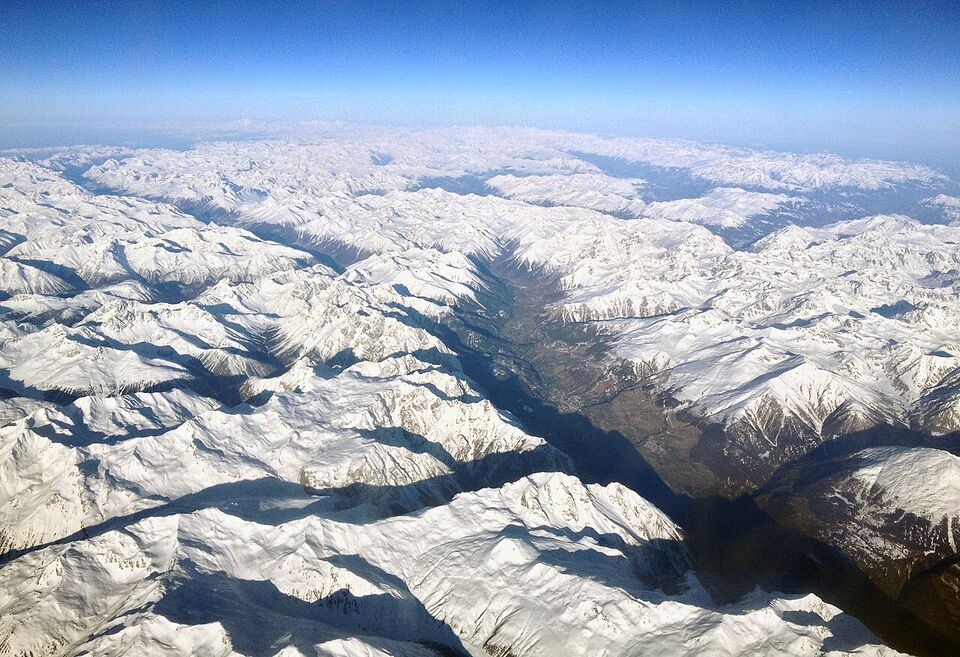
Overview: how to get to Switzerland from the US
You can fly nonstop from many US cities to Zurich, and from a few to Geneva. If your city has no nonstop, you connect in a European hub or on the East Coast, usually adding a few hours. Most flights from the US East Coast leave in the evening and land the next morning, so your first day is a jet-lagged one. Plan it gently.
Zurich is the main gateway for most first trips, because the Swiss rail network radiates from it and the airport has its own railway station. Geneva makes sense if your trip starts on Lake Geneva or in the French-speaking west. Basel is served via a hub, and Milan Malpensa in Italy is a possible entry for Ticino and Zermatt.
The airline routes below come from public airport listings, which compile the airlines' timetables, and not from airline sites, so treat them as a guide to what exists and not as a promise for your dates. Winter 2026-27 and summer 2027 schedules are set by the airlines and can change. Before you buy, check the airline site, Zurich Airport and Geneva Airport.
Nonstop flights by region of departure
These are the routes we found for Zurich and Geneva. "Seasonal" means the route does not run all year, so check the months you want. Other airlines or routes may exist.
| Region | Departure city | To Zurich | To Geneva |
|---|---|---|---|
| Northeast | Boston | SWISS | None found |
| Northeast | New York JFK | SWISS, Delta | SWISS |
| Northeast | Newark | SWISS, United | United |
| Mid-Atlantic | Philadelphia | American | None found |
| Mid-Atlantic | Washington Dulles | SWISS, United | United |
| Midwest | Chicago O'Hare | SWISS, United | None found |
| South | Miami | SWISS | None found |
| South | Atlanta | Delta (seasonal) | None found |
| South | Dallas/Fort Worth | American (seasonal) | None found |
| South | Tampa | Edelweiss | None found |
| West | Los Angeles | SWISS | None found |
| West | San Francisco | SWISS, United (seasonal) | None found |
| West | Las Vegas | Edelweiss (seasonal) | None found |
If your home airport is not on this list, you will connect. Common ways to do it are through a US hub to one of the cities above, or through a European hub such as Frankfurt, Munich, Amsterdam or London. A European connection can be useful for travelers from smaller US cities, but allow generous time between flights, because you must clear passport control in the first Schengen country you reach, and bags may need to be re-checked.
Insider tip
Search "all airports" on a fare calendar for the Zurich and Geneva airport codes (ZRH and GVA) and compare nonstop fares with one-stop fares. A one-stop itinerary through a European hub is sometimes cheaper, but a nonstop saves hours and avoids missed-connection risk with a pass already booked.
Winter 2026-27 and summer 2027
The list above reflects what airlines publicly list for the current schedule period, and several routes are labeled seasonal. Airlines usually release summer schedules months ahead and adjust winter schedules around the Christmas and ski season. We could not confirm the 2027 summer timetable for any route, so before you book, open the airline's schedule page and look at your travel dates, not just the route name.
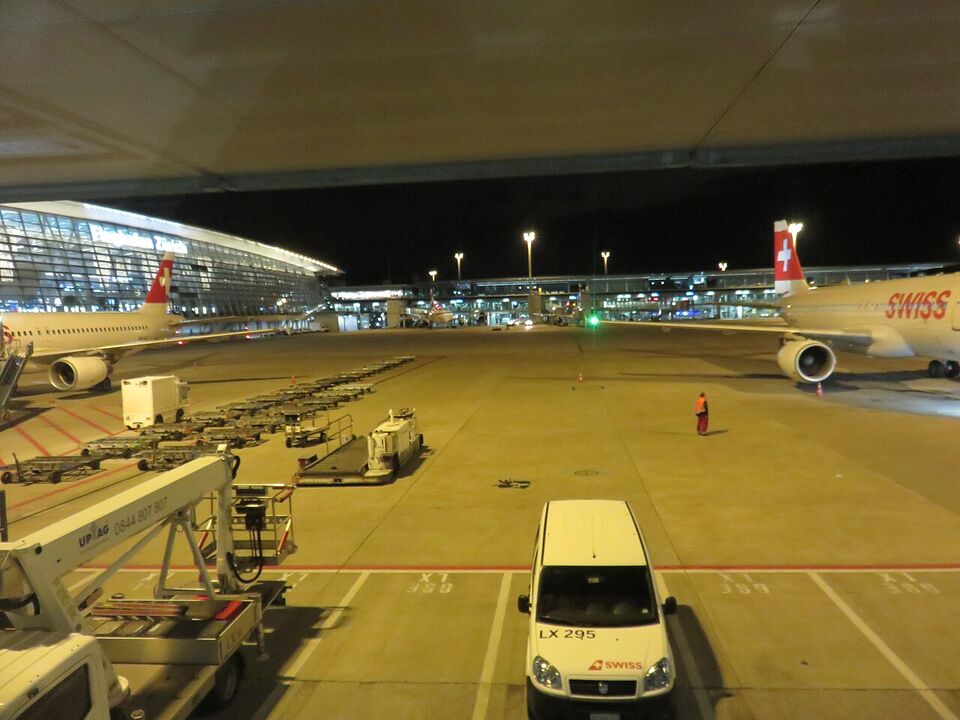
Choosing a carrier
Choose your airline by schedule, price, baggage rules and your loyalty program, not by the Swiss name alone. SWISS is the Swiss national airline, and has the largest number of US routes. United, American and Delta fly to Zurich from their US hubs, and Edelweiss, a Swiss leisure airline, flies to a few US leisure destinations. We do not rate airlines or give seat and service reviews, because we cannot confirm them.
When you compare fares, look at these points:
- Baggage: basic economy fares on many airlines include a carry-on only, or a bag with a fee. Compare the total price after bags. We did not confirm any airline's current baggage fees, so check the fare rules before you buy.
- Arrival time: a morning arrival suits an overnight flight; an afternoon arrival may mean your hotel room is ready.
- Change rules: check how easy it is to change dates, especially if you also buy a Swiss Travel Pass with a fixed start date.
- Airport of departure: if you can drive to a hub with a nonstop, you may skip a connection.
- Miles and points: check which airline program the flight earns and which partner tickets can be redeemed.
Flight times and the best months to fly
We do not give flight times because we could not confirm them for the 2026-27 schedules. They depend on your departure city, the season and the wind, so check the airline's flight page. In general, the shortest crossings are from the Northeast, and West Coast and southern departures are longer. Eastbound flights are usually shorter than westbound flights because of the jet stream.
Fares follow demand. As a general pattern, summer (July and August) and the Christmas and New Year period are the most expensive, and late winter and the shoulder months are cheaper. This is a pattern rather than a rule, and we have no fare data to confirm it, so use a fare calendar for your cities. See when to go for weather and crowds, and remember that mountain lifts, boats and scenic trains have seasons: many close for weeks in November and again for some period in spring.
Save money
If your dates are flexible, price a trip that starts midweek and one that starts on a weekend, then compare both with a departure from a nearby airport. A change of a day or two can change the fare more than a change of airline.
Which airport: Zurich, Geneva, Basel or Milan
Zurich (ZRH)
Zurich is the best default. It is the closest big airport to Lucerne, Bern, Interlaken, Zermatt (by train) and eastern Switzerland, it has the most US nonstops, and its railway station is part of the airport. It also has a motorway link (the A51) and a car-hire center in the terminal complex if you plan to drive.
Geneva (GVA)
Geneva is the choice for Lake Geneva (Lausanne, Montreux, Vevey), the Valais and the Chamonix side of the Alps across the French border. Its airport is about 2.5 miles (4 km) from the city center and has its own railway station. SWISS flies Geneva-New York JFK, and United flies to Newark and Washington Dulles. Geneva has fewer US nonstops than Zurich, so the choice is often decided by price and your itinerary. See Geneva.
Basel-Mulhouse (BSL/MLH)
EuroAirport is the only binational airport in the region, with a Swiss sector and a French sector, and it sits on French territory. We found no US nonstops there, so you would connect through a hub. If you land here, make sure you leave through the Swiss side when your trip is in Switzerland. Check the signs, and ask staff if you are unsure. A city bus links the airport with Basel station; check the operator for fares. Swiss-side parking is charged in francs and French-side parking in euros (for scale, €21 is about $24). See Basel.
Milan Malpensa (MXP)
Milan Malpensa in Italy is a possible entry for Ticino and for Zermatt via Italy. It can have different fares from Zurich and Geneva, and some US cities have flights to Milan. We did not confirm routes or the rail connections from Malpensa to Switzerland, so check both the airline and the Italian and Swiss railways before you commit. Remember that crossing from Italy into Switzerland is a border crossing with Swiss customs rules, even though Switzerland is in Schengen. See Italy, France and beyond.
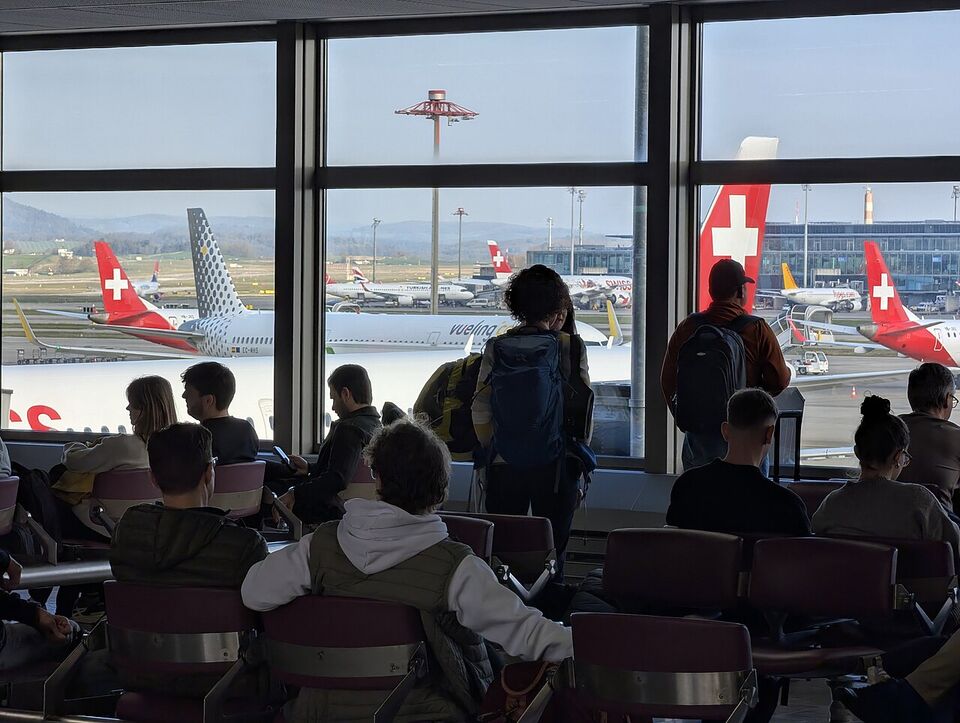
Open-jaw itineraries
An open-jaw ticket flies into one airport and out of another, such as into Zurich and out of Geneva. Switzerland's trains are fast and frequent, so open-jaw trips often save a day of backtracking. A trip that starts in Zurich with Lucerne, Interlaken and Zermatt and ends in Geneva or Lausanne is a classic shape. See the Swiss Travel Pass guide for how a pass or half-fare card fits.
Price the open-jaw fare against a round trip. Sometimes the open-jaw costs the same, sometimes more. Ask the booking site to search "multi-city" and compare. Consider also an open-jaw that begins in Switzerland and ends in another country, for example Milan, Paris or Frankfurt, if your itinerary continues beyond Switzerland.
From the airport to the city by train
Zurich Airport
The airport station has about 13 trains an hour to Zürich HB (Hauptbahnhof, the main station), and the journey takes about 10 minutes. Tram 10 also links the airport with the city, but it is slower. Some long-distance trains also call at the airport station, so check the SBB app for a direct connection to your next stop. The fare is a few francs, and you can buy it in the SBB app or at the machines. If you have a Swiss Travel Pass and have started it, the train is covered.
Geneva Airport
The airport is about 2.5 miles (4 km) from the center, with a station and trains to Genève-Cornavin. Hotel guests in approved hotels, hostels and campsites receive a free Geneva Transport Card, valid in zone 10 and on the Cornavin-airport train, so ask your hotel before you buy a ticket. Machines at stops and at the station take francs or euro change. We could not confirm the train journey time or fare, so check the SBB app.
Starting a pass on arrival
If you buy a consecutive-day Swiss Travel Pass, the first day counts from the day you choose. Do not start it on the day you land if you will only ride a short airport train and go to bed. With a Flex pass, you choose and activate each travel day, so an arrival-day transfer can be bought as a single ticket. See the Swiss Travel Pass guide.
Luggage, forwarding and baggage fees
Swiss trains have luggage racks, but they fill up in the high season and the stairs at smaller stations can be a hassle. SBB runs a station-to-station luggage service: it costs CHF 12 (about $14) per item, with a maximum of 23 kg per item, and CHF 20 (about $24) per bicycle. You drop the bag at a participating station and collect it at your destination station two days later, and you need a valid ticket for the whole route. Storage at the arrival station is free on arrival day and for four days after, then CHF 5 (about $6) a day.
The Swiss Travel System advertises more than 50% off same-day luggage services for Swiss Travel Pass holders on journeys from October 1 to December 15, 2026. The offer ends then. Door-to-door and airport options also exist, but we could not confirm prices or whether the old service of checking airline bags at a station still exists. Do not plan around it, and check sbb.ch for what is currently offered.
For checked baggage on your flight, we did not confirm fees for any airline, so read the fare rules before you buy. Pack light if you can: a single bag you can lift onto a rack, plus a small daypack, makes trains easier. If you travel with a heavy suitcase, consider forwarding it between your two or three main bases. See the packing list.
Beating jet lag
Most first trips involve a night flight and a six-hour time change from New York (Switzerland is 6 hours ahead of New York most of the year; the gap is 5 hours for a few weeks in March and from late October to early November, because the US and Europe change clocks on different dates). The first day sets the tone for the trip.
- Sleep on the plane if you can, using an eye mask and earplugs.
- On arrival, get outdoors in daylight and take a light walk. Daylight is the strongest signal to your body clock.
- Keep the first afternoon free, and avoid scheduling a mountain excursion or a long drive.
- If you need a nap, keep it short (under an hour), and go to bed at a local time that evening.
- Drink water, and go easy on alcohol the first night.
- Move your watch to Swiss time when you board the plane.
If you pick up a rental car on arrival, think twice about driving when tired. Taking the train from the airport for the first day, and collecting the car later, is a safer plan. See driving in Switzerland.
Arrival day: border control, money and phone
Switzerland is in the Schengen area, so you go through passport control on arrival from the US. The EU's Entry/Exit System (EES) has been running at Swiss airports since the Schengen-wide start in October 2025 and has been fully in force since April 2026. It replaces passport stamping and records your name, passport details, facial image, fingerprints and the date and place of each entry and exit. First-time travelers register at a kiosk or with an officer.
Waiting times vary by airport and day, and we could not confirm figures for Zurich or Geneva. Allow extra time, and do not book a tight train connection after landing. Your passport must be valid for at least three months after you plan to leave the Schengen area and issued within the last 10 years. Americans can visit for up to 90 days in any 180 without a visa; check the Swiss State Secretariat for Migration or the State Department before you go. ETIAS is not required yet, and the EU will announce a date months ahead. See entry rules for details.
After the border, a few quick jobs help. Take out some francs from an ATM (see Money in Switzerland), get your phone connected (see Phones, Data and Power), and buy or show your train ticket. Customs rules apply to what you carry in: do not bring meat or dairy products from the US into Switzerland.
Watch out
Do not book a Glacier Express, a mountain railway or a timed attraction on the afternoon you land. Flights can be late and lines at passport control can be long. A flexible first day costs nothing, and a missed prepaid train can.
Booking tips and fare traps
Book flights before you book tickets that depend on them. Hotels, passes and scenic-train seats can usually be fitted around a flight, but a flight is hard to move once the fare is cheap and fixed. We have no fare data to say how far ahead to buy, so use your airline's fare alert or a fare calendar and decide on a price you are happy with.
- Book directly or through a known agency. A change or cancellation is simpler when the airline holds your booking.
- Check the arrival airport on multi-leg tickets. Make sure a "Zurich" ticket does not land at another city's airport with a similar name.
- Match names exactly to your passport. A mismatch can cost money to fix.
- Add your frequent-flyer numbers at booking, not at the airport.
- Allow a long connection if you pass through a European hub, since passport control and bag transfers may take time.
- Buy travel insurance with medical cover. It matters more for a long-haul trip than for a short one, and Swiss medical care is high quality but expensive for visitors.
Know your return too. The flight home leaves from the same airport you flew into (or your open-jaw airport), so work out the train to the airport the day before. Swiss trains run on time, but a mountain valley connection on the morning of an international flight leaves little room for error. Plan to sleep near the airport or the main station the night before an early departure, and check the SBB app on the evening before you leave. See the FAQ for quick answers to common planning questions.
Before you fly: a checklist
- Check that your passport is valid for at least three months after you plan to leave, and was issued within the last 10 years.
- Confirm the airline's current winter 2026-27 or summer 2027 schedule for your dates.
- Read the fare's baggage rules and your airline's carry-on limits.
- Book a hotel for the first night, even if the rest is flexible.
- Decide which pass or ticket you will use on day one.
- Check the SBB app for your train from the airport.
- Arrange travel insurance with medical cover.
For help planning the rest of the trip, see plan your trip and getting around Switzerland.
Add it to a route in the trip builder, or ask us to plan the hotels, trains and guides for you.