Overview
Interlaken sits on a narrow strip of land between Lake Thun and Lake Brienz at 1,893 ft (577 m). It is the gateway to the Jungfrau region, the group of valleys and mountain villages in the Bernese Oberland that includes Grindelwald, Wengen, Mürren and Lauterbrunnen. Most first-time visitors pick Interlaken for its train links and then ride up into the mountains each day. A growing number choose a village base instead to get ahead of the day-trippers.
The region packs a lot of the standard Switzerland postcard into a small area: the Eiger, Mönch and Jungfrau peaks, waterfalls falling from valley walls, two turquoise lakes and a railway that tunnels to the highest station in Europe. It is also the most expensive and most heavily visited part of the country. This page helps you choose a base, plan the Jungfraujoch trip, understand the crowd and weather risks, and use a Swiss Travel Pass sensibly. For the wider Bernese Oberland picture, see the Switzerland's Destinations overview, or Lucerne for the alternative base.
Choosing a base
The decision comes down to how much of your time you want in the mountains and how much you want to move. Interlaken has a station, supermarkets, boats and the most hotels. The villages have views and quiet but fewer choices. Whichever you pick, you reach the others by train, so the choice is about where you wake up.
| Base | Feels like | Good for | Trade-offs |
|---|---|---|---|
| Interlaken | Small town between two lakes | Rail hub, lake boats, Harder Kulm, rainy days, first nights | Less alpine atmosphere; the big peaks are an hour or more away by rail |
| Grindelwald | Large village under the Eiger north face | First, Eiger Express, the Jungfraujoch with the shortest approach, winter sports | Busy in high season; the Terminal and the village station are different stops |
| Wengen | Car-free terrace village above the valley | Quiet evenings, rail link to Kleine Scheidegg, the Lauberhorn ski races | Reached by cog railway only; fewer cheap places to eat |
| Mürren | Car-free village on a cliff edge | Views, Schilthorn access, walking | Slow to reach; small; check lift status because maintenance closures are common |
| Lauterbrunnen | Valley floor with waterfalls on both sides | Waterfalls, valley walks, a cheaper base than the terraces | Shaded valley with short winter daylight; day-visitor crowds at midday |
For a first visit of two or three nights, we suggest Interlaken if you are traveling by rail and want a flexible weather plan, or Grindelwald or Wengen if the Jungfraujoch is your main goal and you want a quiet evening. Mürren and Lauterbrunnen reward people who are happy to walk. Wengen and Mürren are car-free villages, so you leave the car at the valley station. The Where to Stay in Switzerland page explains how to compare room types, and hotels here are almost always $$ or $$$ in high season.
The Jungfraujoch (Top of Europe)
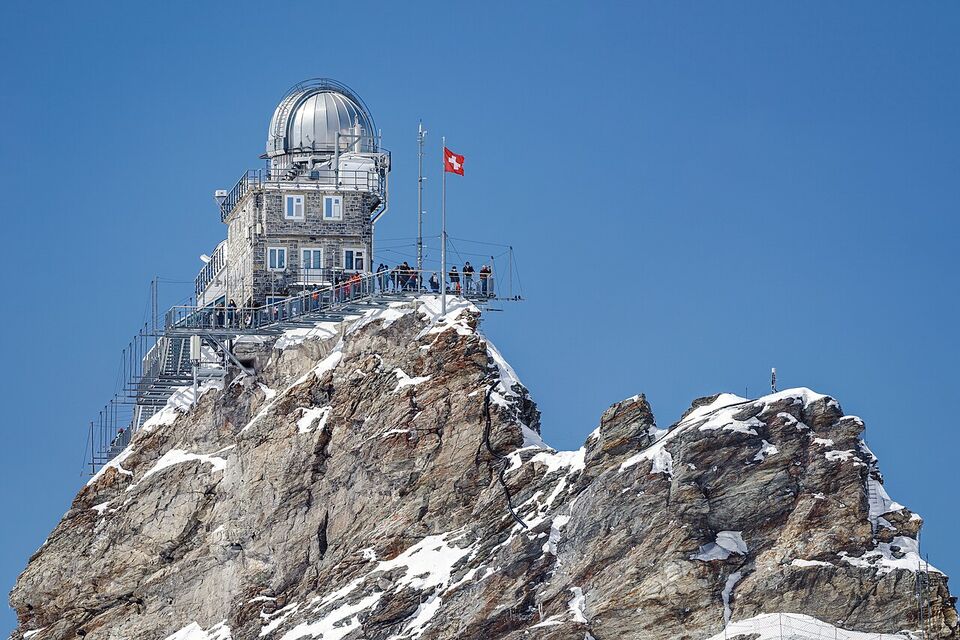
The Jungfraujoch is a saddle between the Mönch and the Jungfrau at 11,332 ft (3,454 m), reached by a railway that runs through the Eiger and Mönch and has done since 1912. It is the highest railway station in Europe and is part of a UNESCO World Heritage area. At the top you will find the Sphinx Terrace at 11,716 ft (3,571 m), the Ice Palace, a 360-degree cinema, a chocolate shop and walks on the Aletsch Glacier plateau. The Aletsch is the longest glacier in the Alps.
How you get there
The easiest route runs from Interlaken Ost on the Bernese Oberland Railway to Grindelwald Terminal (937 m), then the Eiger Express, a tricable gondola that reaches Eigergletscher in about 15 minutes. From there the Jungfrau Railway climbs in about 26 minutes, with a five-minute stop at about 10,370 ft (3,160 m) to look out through the rock. The operator quotes about 1 hour 30 minutes from Interlaken Ost and about 45 minutes from Grindelwald Terminal. You can also ride up through Lauterbrunnen and Kleine Scheidegg, which is slower and lets you do a loop.
Watch out
Do not get off at Grindelwald Terminal if you are going to First or to the village. The First cable car is at Grindelwald station, one stop further on the Bernese Oberland Railway. Check which stop the trains from Interlaken Ost use, because the cable car and the Terminal are not the same place.
What it costs
The operator advertises a Jungfraujoch return from CHF 129.60 (about $155) from Grindelwald Terminal via the Eiger Express and Jungfrau Railway. It does not say which fare or discount that "from" price assumes, so treat it as a floor. A reseller list shows the standard adult price at roughly CHF 200 (about $240), and the price from Interlaken is higher than from the Terminal. Plan on CHF 200 (about $240) or more per adult from Interlaken before discounts, and confirm on jungfrau.ch.
A paid seat reservation called the Guaranteed Seat costs CHF 10 (about $12), and the operator strongly recommends it in good weather. Its Good Morning Ticket (15% off an early departure) ended October 31, 2026, so it is no longer on offer for this season. Holders of a Swiss Travel Pass or Half Fare Card get a reduction, but we could not confirm the amount on an official page. Do not assume "half price".
The Jungfrau Travel Pass (3 to 8 days) costs CHF 210 (about $250) for 3 days up to CHF 330 (about $395) for 8 days, or CHF 165 (about $195) to CHF 255 (about $305) for pass or Half Fare Card holders. It does not include the Jungfraujoch. You add a connecting ticket for the final stretch: CHF 63 (about $75) outside the summer period and CHF 89 (about $105) from May 1 to October 31, seat reservation included. The Unlimited Jungfrau Summer Pass from CHF 449 (about $535) runs to November 29, 2026, and the Unlimited Jungfrau Winter Pass from CHF 399 (about $475) runs from December 1, 2026 to April 30, 2027.
Lines, cloud and timing
Two things go wrong at the Jungfraujoch: lines and cloud. In summer and on clear winter weekends, the ticket desk and the Eiger Express boarding queue can grow, which is why the seat reservation exists. Buy tickets online ahead and arrive early. Cloud is the bigger risk. The summit is at 11,000 ft, and a gray valley does not mean a gray summit, but the reverse also happens: a bright Interlaken can sit under clouds that hide the glaciers. The operator publishes a webcam. Check it at breakfast, and if you have a flexible pass, choose the clearest day of your stay.
It is cold at the top in every month. The nearby Jungfraujoch weather station records average highs of about 38°F (3°C) in July and August, 20°F (-6.5°C) in November and 15°F (-9.5°C) in January, with lows well below that. Wear warm layers, a hat and gloves even in August, and bring sunglasses and sun cream for the snow glare. A few people feel mild altitude effects such as a headache or breathlessness at 11,000 ft, so walk slowly, drink water and do not rush up the stairs. The Health page covers altitude and travel insurance.
The Jungfraujoch is sold as open every day of the year, but the lifts on the way up are not. A third-party closure list updated September 16, 2026, which we treat as a guide only, shows the Eiger Express closed from November 9 to 20 for maintenance, and the Wengen to Kleine Scheidegg railway closed from November 9 to December 4. In that gap, the route from Grindelwald station to Kleine Scheidegg is the way up. Check jungfrau.ch for the current route before you leave.
Schilthorn, First and Harder Kulm
These three are the best alternatives when the Jungfraujoch is too expensive, too cloudy or too crowded. The Mountain Excursions page compares them with peaks across the country.
Schilthorn (Piz Gloria)
A rotating summit restaurant with views of the Eiger, Mönch and Jungfrau, and cableways that run in stages from the valley. A reseller list shows CHF 92 (about $110) from Mürren and CHF 115 (about $135) from Stechelberg, full adult return; we could not read the operator's page. A new cableway section has been under construction since 2024.
Grindelwald First
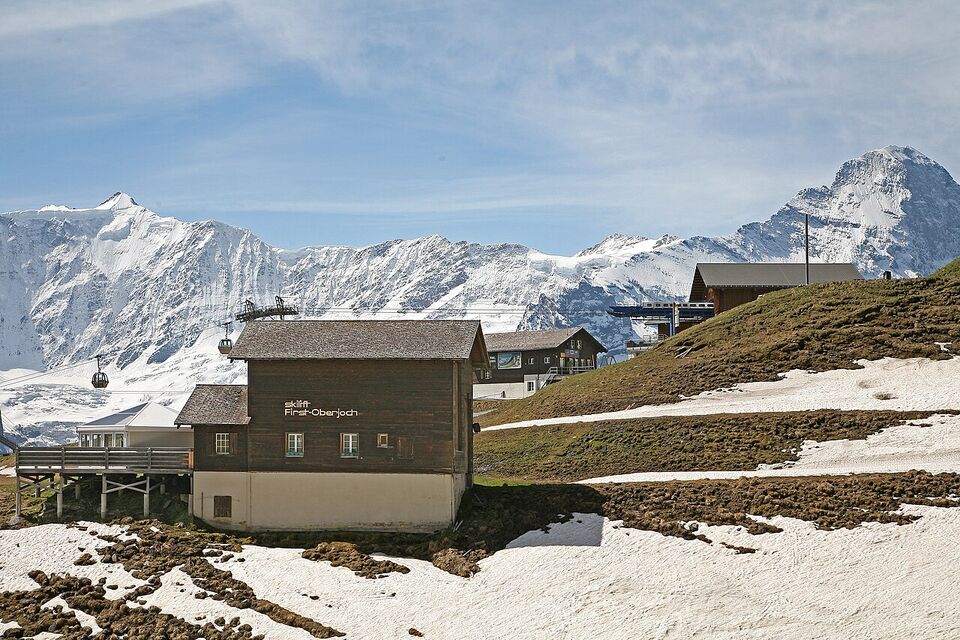
The gondola costs from CHF 38 (about $45). At the top: the First Cliff Walk (a 148 ft or 45 m footbridge), the First Flyer zip line at up to 84 km/h (52 mph), the First Glider, mountain carts, and a walk to Bachalpsee in under an hour. Bachalpsee is at 7,431 ft (2,265 m) and the return walk takes about two hours.
Harder Kulm
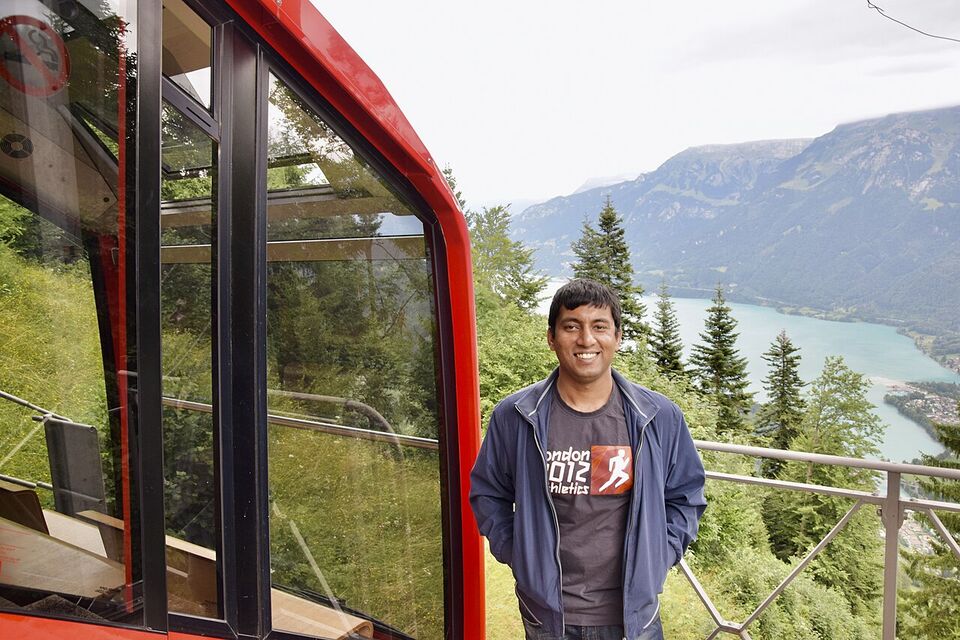
A 10-minute funicular from a short walk from Interlaken Ost, with views of both lakes and the three big peaks. The ticket starts from CHF 19 (about $23). An end-of-season offer from CHF 34 (about $40) includes a CHF 25 (about $30) dining voucher at the Panorama Restaurant. Alphorn concerts run daily at 6:30 p.m.
Late-season status matters. The same closure guide shows the First cableway closed from October 26 to November 27, 2026, so the winter-hiking and ski season start of November 21 may slip. It also shows the Allmendhubel funicular above Mürren closed to December 11, the Stechelberg to Mürren cableway closed October 19 to 30, and no autumn closure for the upper Schilthorn cableways. The Brienzer Rothorn and Schynige Platte railways stopped after October 25. Harder Kulm was listed as running until at least November 29. Treat all of these as questions to ask the operator.
Waterfalls and the valley
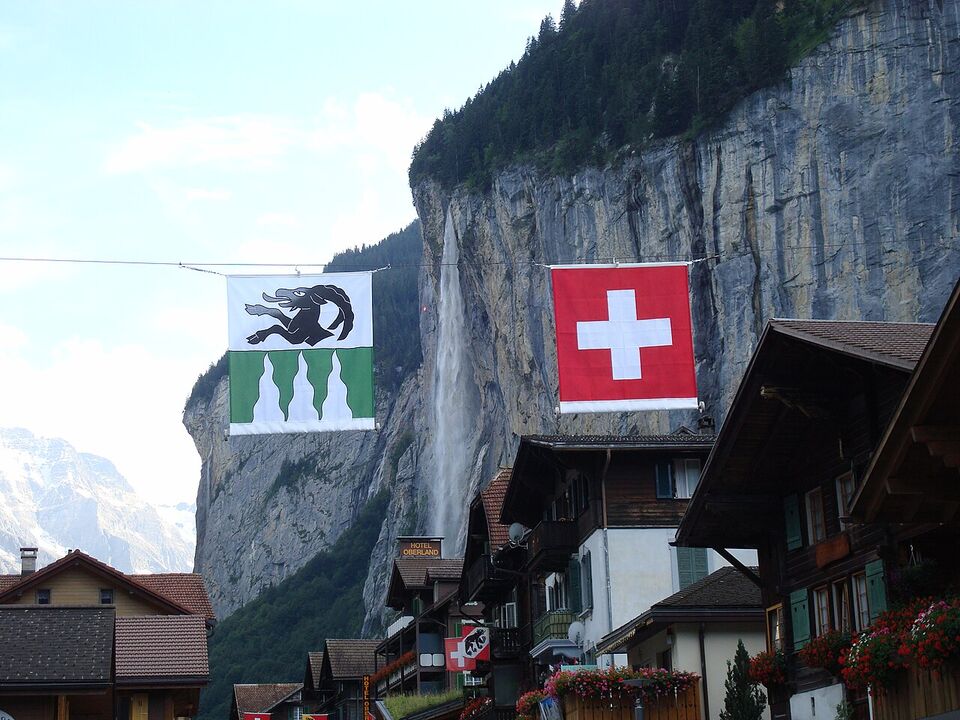
Lauterbrunnen means "many springs," and the valley has dozens of waterfalls dropping from limestone cliffs. Staubbach Falls sits at the edge of the village and is easy to see in a short walk. The Trümmelbach Falls are glacier-fed falls that run inside the mountain, seen from tunnels and walkways. They are seasonal, and we did not confirm their current opening dates, so check the operator before a visit in spring or autumn. The valley floor is a flat, easy walk of a few miles (check a map for distance), which suits families and rainy-day outings.
From the valley, a cableway to Grütschalp and a short train ride take you to Mürren, and a cog railway climbs to Wengen. The Hiking in Switzerland page has the Lauterbrunnen to Mürren walk and other trails in this area.
Lake Thun, Lake Brienz and the Giessbach falls
Interlaken's two lakes are a calmer alternative to the high peaks, and they are the right choice when the summits are in cloud. Lake Thun is wider and lined with castles, small harbors and villages such as Spiez and Oberhofen. Lake Brienz is deeper, narrower and a more vivid turquoise because of glacial silt. Scheduled boats run on both. The Swiss Travel Pass covers boats, and we suggest checking the operator's timetable for the season, because winter sailings are sparse.
On Lake Brienz, the town of Brienz is known for woodcarving and has a steam railway to the Brienzer Rothorn that the closure guide lists as stopped for the season after October 25. The Giessbach falls drop in stages into the lake on the south shore and can be reached by boat from Brienz and by a short funicular. We did not confirm the current schedule or ticket prices, so check before you go. Iseltwald, a small village on the same shore, became a day-trip magnet after a TV drama made its lakeside pier famous. See the next section for what that means for crowds.
The Lakes and Boats page compares the lakes of Switzerland, and the boats are one of the best uses of a pass day when the weather is mixed.
Crowds, fees and reservation systems
Day-tripper pressure is real in the Jungfrau region. Lauterbrunnen, Wengen, Grindelwald First and the Jungfraujoch ticket lines all fill up on clear summer days, and tour groups tend to arrive in the late morning. The easiest defenses are to start early, to visit in shoulder season, and to avoid the Jungfraujoch on a weekend with a good forecast.
Some Swiss villages have discussed or tried entry fees, pier fees or reservation systems to manage visitor numbers. Lauterbrunnen and Iseltwald have both been named in reports about such charges, and other places, such as Oeschinensee near Kandersteg, have been mentioned too. We found no 2026 status for any of them. Check the village or lake site before you go; if a fee exists, it is likely to be small and payable by card at the site.
Insider tip
If you want a calm Jungfraujoch visit, take the first departure of the day, buy a Guaranteed Seat, and plan to be back in the valley for a late lunch. If the forecast is poor for two days in a row, swap the Jungfraujoch for the lakes and keep the peak for the clearest day.
Paragliding and other activities
Interlaken is the Swiss capital of adventure sports, and tandem paragliding is the most popular. Pilots take off from hillsides above the town and from the valleys around Lauterbrunnen and Grindelwald, and land in fields near Interlaken. Flights depend on wind and visibility, so operators cancel at short notice and rebook. We have no official price list, so compare current prices, and choose an operator that is licensed and insured, with clear weather and cancellation rules. Other options include canyoning, river rafting and the First zip line mentioned above. Your travel insurance may exclude adventure sports, so check the policy first.
Different from home
Swiss mountain operators cancel for weather far more readily than American ones do, and a canceled paragliding flight or closed lift is routine, not a reason for a refund dispute. Keep a flexible day in your plan and book the weather-dependent activity on the first day, not the last.
Weather and seasons
The valley is mild from May to September and gray and cool from November to March, with snow on the higher villages. The mountain top is another climate. The table shows normals for Interlaken at 577 m and for the Jungfraujoch weather station at 3,580 m.
| Month | Interlaken high / low | Rainy days | Jungfraujoch high / low |
|---|---|---|---|
| January | 38°F (3°C) / 27°F (-3°C) | 9 | 15°F (-9.5°C) / 4°F (-15.5°C) |
| April | 58°F (15°C) / 39°F (4°C) | 10 | 21°F (-6°C) / 10°F (-12°C) |
| July | 76°F (24°C) / 57°F (14°C) | 13 | 38°F (3°C) / 28°F (-2°C) |
| October | 57°F (14°C) / 43°F (6°C) | 9 | 28°F (-2°C) / 19°F (-7°C) |
| November | 46°F (8°C) / 34°F (1°C) | 10 | 20°F (-6.5°C) / 11°F (-12°C) |
These are 1991-2020 averages. Winter is the second season: the Jungfrau Ski Region pass is listed from CHF 79 (about $94) for November 21, 2026 to April 25, 2027, and a Winter Hiking and Sledging Pass (1 to 7 days) from CHF 61 (about $73) for the same dates. The Lauberhorn ski races are in Wengen from January 15 to 17, 2027. See the Skiing page and the When to Go to Switzerland page for the bigger picture.
Getting around by train, boat and pass
The Bernese Oberland Railway runs from Interlaken Ost to Grindelwald every 30 minutes, according to the First operator, and branches to Lauterbrunnen, where mountain railways continue to Wengen and Kleine Scheidegg and cableways go to Mürren. The Swiss Travel Pass covers the Swiss Travel System network, including boats, but the mountain railways above the valley floor and the peaks are not free: the pass gives a discount on many, and the Jungfrau Travel Pass is a regional ticket for the valley lifts. The Swiss Travel Pass page has the 2026 prices and rules, and the Trains and Transit in Switzerland page explains how tickets work.
If you are coming from Lucerne, the Luzern-Interlaken Express runs over the Brünig route. See Scenic Trains for the panoramic trains, and check the timetable in the SBB app, since we could not confirm journey times or fares. Interlaken also has two stations, Interlaken West and Interlaken Ost, so check which one your hotel is nearest.
A three-day plan
- Day 1
Arrive and see the lakes
Settle in Interlaken, take the Harder Kulm funicular late in the afternoon for the view and the alphorn concert, and have dinner in town. If the weather is poor, take a lake boat instead.
- Day 2
Jungfraujoch on the clearest day
Check the webcam at breakfast. Take an early train, buy a Guaranteed Seat, and return to the valley by mid-afternoon. In November, confirm that the Eiger Express is open.
- Day 3
Lauterbrunnen and Mürren
Walk to Staubbach Falls, ride up to Mürren, and take the Schilthorn if the cableway is running. Or stay lower: a valley walk, a waterfall and a late lunch.
For more on how to build an itinerary, see Day Trips in Switzerland and the Zermatt page if the Matterhorn is next.
Add it to a route in the trip builder, or ask us to plan the hotels, trains and guides for you.