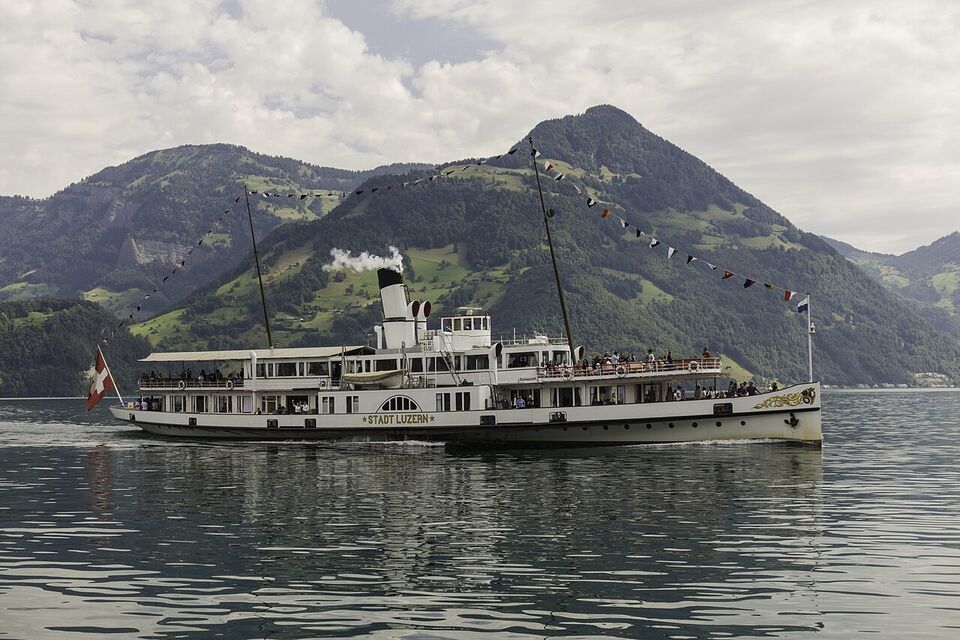
Overview: which lake, which boat
Switzerland has dozens of lakes, but a first trip needs only two or three of them. The best choice depends on where you are already staying: Lake Lucerne from Lucerne, Lake Geneva from Montreux or Lausanne, Lake Thun and Lake Brienz from Interlaken, Lake Zurich from the city, and Lake Lugano or Lake Maggiore from Ticino. In every case the boat is public transport, not just a tour, and it is often the nicest way to get from one town to another.
This page compares the lakes you are most likely to visit, shows which ones keep historic paddle steamers, suggests the towns to base in and the short cruises that suit a day, and explains swimming, timetables and the winter reductions that catch many visitors out. The details change by season, so we point to the operator's site wherever a date or timetable matters.
For the cities and mountains around the lakes, see Lucerne, Lausanne and Montreux, Interlaken, Zurich and Lugano and Ticino.
Comparison table
This table is a planning aid, not a timetable. Details can change for 2026-27, so check the operator before building a day around any row.
| Lake | Where to base | Historic paddle steamers | Operator to check | Best for |
|---|---|---|---|---|
| Lake Lucerne (Vierwaldstättersee) | Lucerne, Weggis, Vitznau, Brunnen | Yes (for example the steamboat Gallia) | lakelucerne.ch (SGV) | Mountain-rimmed scenery, Rigi and Pilatus links, short cruises |
| Lake Geneva (Lac Léman) | Montreux, Vevey, Lausanne-Ouchy, Geneva | Yes, a Belle Époque fleet | cgn.ch (CGN) | Vineyards, Château de Chillon, Alpine backdrop, French-speaking towns |
| Lake Zurich | Zurich, Rapperswil, villages on the lake | Yes, on selected sailings | zsg.ch (ZSG) | An easy half day from the city, summer swimming |
| Lake Thun and Lake Brienz | Interlaken, Thun, Spiez, Brienz | Yes, one on each lake | bls.ch (BLS) | Turquoise water, Bernese Oberland, village stops |
| Lake Lugano and Lake Maggiore | Lugano, Locarno, Ascona | Not the main draw | Local operators; see Ticino tourism | Italian atmosphere, palm-lined promenades, longer mild season |
| Lake Neuchâtel and Lake Murten | Neuchâtel, Murten (Morat) | Not the main draw | Local operator; check the timetable | Quiet shores, medieval towns, vineyard views |
| Lake Constance (Bodensee) | Romanshorn, Rorschach, Kreuzlingen | Mostly run from the German and Austrian shores | Local and cross-border operators | A three-country lake that crosses Switzerland, Germany and Austria |
Lake Lucerne
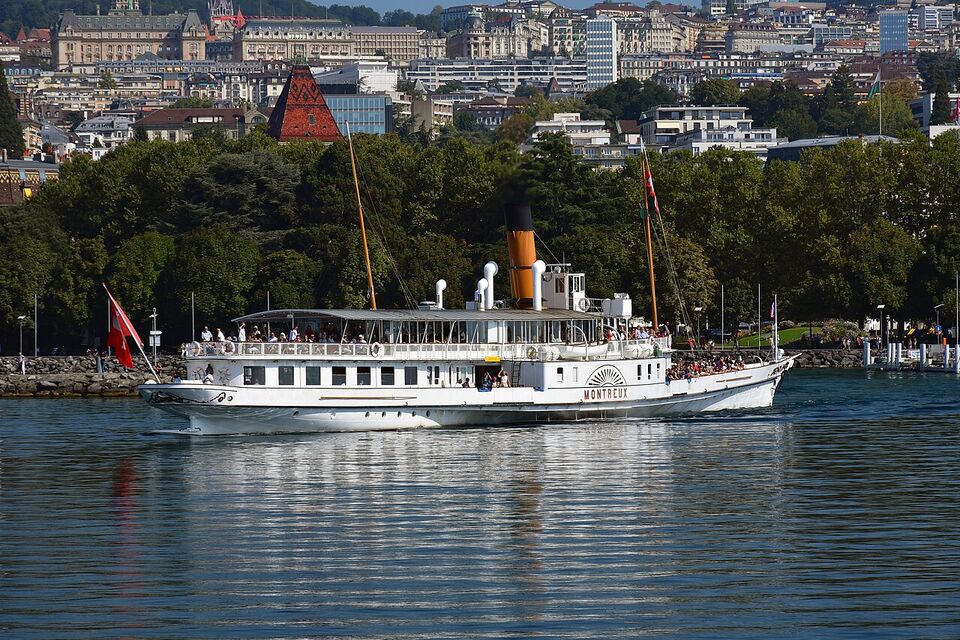
Lake Lucerne has a branching shape and steep shores, which is why a cruise here reveals new scenes at every bend. The operator, the Lake Lucerne Navigation Company (SGV), runs a fleet of about 20 ships, and its site includes timetables, webcams and a ticket shop. Passes that travel free on the scheduled boats include the Swiss Travel Pass, the Swiss Travel Pass Flex and the Swiss Transfer Ticket, among others. The Half Fare Card gives 50% off.
In Lucerne, boats leave from several piers near the station. Pier 1 serves Weggis, Vitznau (for the Rigi), Brunnen and Flüelen; Pier 2 serves Alpnachstad (for Pilatus); and Pier 3 serves Küssnacht am Rigi and Bürgenstock. Tickets are sold on board and at the stations in Lucerne and Weggis; in spring to autumn, they are also sold at Brunnen and Vitznau. Seats on the open deck are not reserved, so board early on a sunny summer day if you want a window. Only the onboard restaurant takes table reservations.
Short cruises worth considering
- The one-hour cruise from Lucerne: the operator describes it as a city trip activity with views of Rigi, Pilatus and the Bürgenstock. It suits travelers with only an afternoon.
- Lucerne to Vitznau or Weggis: a ride that can be combined with a Rigi excursion. A Swiss Travel Pass includes the Rigi, so this is one of the pass's better-value day trips.
- Brunnen to Flüelen on Lake Uri: the operator calls the Lake Uri section fjord-like, with steep shores and places linked to Swiss history. It is longer, so allow a half day.
- Boat and cogwheel train to Pilatus: a loop that goes up by boat to Alpnachstad and down by another route. The Pilatus railway runs only in season, and the operator offered a boat-and-cogwheel autumn tour on weekends between October 24 and November 15, 2026; check the current dates.
- The Gotthard Panorama Express: a boat-and-train combination between central Switzerland and Ticino, with a historic paddle steamer from Lucerne to Flüelen and a train through the Gotthard route. The seat reservation is required even with a pass, and the season dates for 2027 should be checked with the operator. See Scenic Trains.
In 2027, the operator is bringing back its "Legends of Lake Lucerne" dinner cruise on the steamboat Gallia, with a five-course menu, from May 15 to September 15, 2027. The operator invites visitors to register for 2027 tickets. It is a premium evening sailing, not a scheduled boat, so it is not covered by passes.
Lake Geneva
Lake Geneva is the largest of the lakes in this guide and is shared with France. The Swiss shore stretches from Geneva through Lausanne and the vineyard terraces of Lavaux to Vevey and Montreux, with the Savoy Alps on the far side. The main operator is CGN, which keeps a fleet of Belle Époque paddle steamers alongside modern motor ships. The French-speaking towns on the water, and the boats that connect them, make this the easiest lake for a day trip without a car.
Good base towns are Montreux and Vevey for the eastern end, Lausanne (with its lakeside district of Ouchy) for the middle, and Geneva for the western end. From Montreux, the Château de Chillon is a short ride along the shore and is one of the best-known boat-and-sight combinations. The castle is closed on December 25 and January 1, with winter hours of 10 a.m. to 5 p.m. (last entry 4 p.m.) from November to February.
The boat can also carry you across the border. Some boats cross to French towns such as Evian in season (check CGN), so bring your passport: you are crossing an international border and may be checked on arrival in France. For how the border and the EES work, see the entry rules.
In winter, CGN also runs themed sailings. The Montreux Noël market runs from November 20 to December 24, 2026, and includes a "Flying Santa" cruise on a CGN boat on selected days. Check the dates on the Montreux Noël site. See Lausanne and Montreux and Geneva for the towns, and Christmas Markets for the season.
Lake Zurich
Lake Zurich is the city lake. Boats leave from the Bürkliplatz piers at the south end of the Bahnhofstrasse area and run along both shores to villages and to Rapperswil at the far end. A short cruise from Zurich is a pleasant half day, with an option to return by train. The operator, ZSG, runs regular boats and some historic steam sailings, mostly in the warm months; check zsg.ch for what runs on your dates.
Zurich's summer life centers on the water: lidos along both shores, evening drinks on the quays, and swimming from the city's bathing spots. See Zurich.
Lake Thun and Lake Brienz
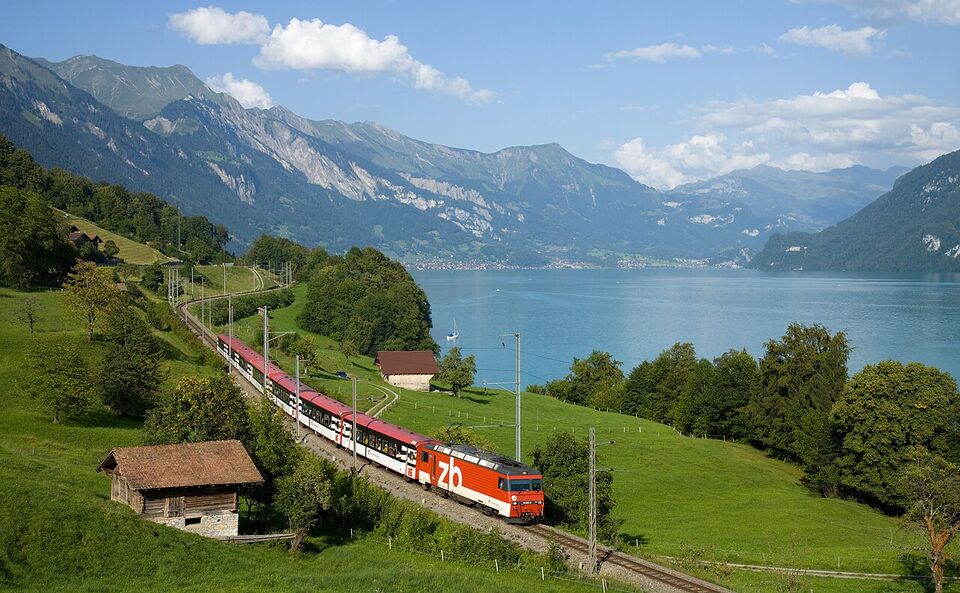
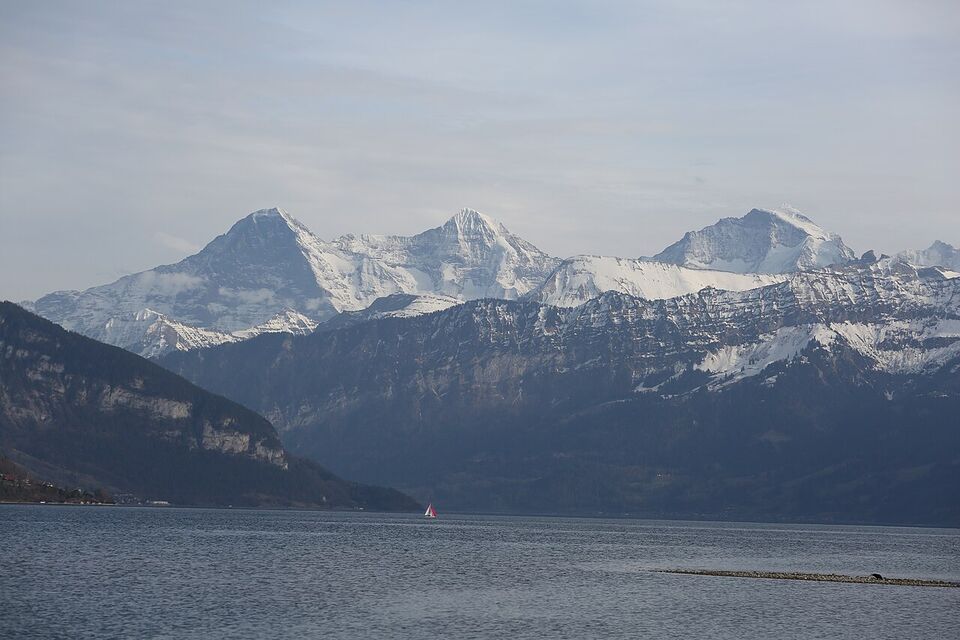
Lake Thun and Lake Brienz flank Interlaken, which is why the town is named "between the lakes." Both are known for their blue-green color. The BLS company runs the boats, including a historic paddle steamer on each lake. Interlaken Ost station is next to the Lake Brienz pier, and Interlaken West is the stop for Lake Thun.
Good bases are Interlaken, Thun and Spiez. From Interlaken, boats reach Brienz, Iseltwald and villages along the shore. Some lakeside villages have tested visitor fees or reservation systems for their most photographed places, so check before you go. For hiking, mountain excursions and the Jungfraujoch, see Interlaken and the Jungfrau Region.
Lake Lugano and Lake Maggiore
The Ticino lakes have a different mood from the northern ones: lakeside promenades, palm trees and an Italian menu. Lugano sits on Lake Lugano, which is shared with Italy, and Locarno and Ascona sit on the Swiss end of Lake Maggiore, which stretches into Italy. The season is longer: Lugano's average high is about 53°F (11.6°C) in November, compared with about 46°F (7.6°C) in Zurich.
Boats here link Lugano with lakeside villages and cross the border into Italy at times. Crossing into Italian waters or onto the Italian shore means a border, so carry your passport, and expect euros on the Italian side. The Ticino Ticket, given to guests in participating accommodation, includes free public transport and discounts on navigation; ask your hotel and check the terms. See Lugano and Ticino.
Lake Neuchâtel, Lake Murten and Lake Constance
The three-lakes region west of Bern (Lake Neuchâtel, Lake Murten and Lake Biel) is quieter than the Alpine lakes, with vineyards on the north shore of Lake Neuchâtel and walled Murten (Morat) at the lake of that name. It is a good option if you are already traveling between Bern and Lausanne and want a gentle day. See Bern for the capital's links.
Lake Constance lies at the north-eastern edge, bordering Germany and Austria. Swiss lakeside towns include Romanshorn and Rorschach, and the area connects to St. Gallen and Appenzell; see Appenzell. A cross-lake ferry takes you into Germany, which is in Schengen, though you should carry your passport.
Choosing between the lakes
If you can only fit in one boat day, let your base decide. A traveler staying in Lucerne gains nothing by traveling to Lake Geneva for a cruise, while someone moving between Interlaken and Montreux can fit a lake into the journey. We suggest matching the boat to the weather as well: clear days suit the long, open sections of Lake Lucerne or Lake Brienz, while a gray day is better spent on a short sailing with a castle or museum at the end.
- Half day
Lucerne, one-hour cruise
Sail from the piers by the station, then spend the rest of the day in the old town. This works on a travel day, because the station is next to the pier and you can leave your bags in the station lockers if space is available.
- Full day
Lucerne to Vitznau and the Rigi
Take a scheduled boat to Vitznau, ride up the Rigi, and come back by another route. The Rigi is included in the Swiss Travel Pass, but check the operator's November maintenance overview if you travel in the off-season.
- Full day
Montreux, Chillon and the Lavaux shore
Visit the Château de Chillon from Montreux, then continue along the vineyard terraces by train or boat. Wine tasting in Lavaux is better done on foot or by train than behind a wheel.
Swiss Travel Pass and ticket coverage
The Swiss Travel Pass covers train, bus and boat travel across Switzerland. For Lake Lucerne, the operator lists the Swiss Travel Pass, Flex and Transfer Ticket among tickets that travel free on scheduled boats, as well as the national GA travelcard, the Saver Day Pass, and several special day passes. The Half Fare Card gives 50% off. The operator also says that tickets and travelcards from the Passepartout regional scheme are not valid on its boats, apart from a narrow exception for monthly and annual cards on the Lucerne-Hertenstein-Weggis-Vitznau route.
The same pattern is common elsewhere, but it is not universal. Scheduled passenger boats are generally covered, while dinner cruises, special or themed sailings, first-class upgrades and some cross-border legs are charged separately or only discounted. Combined boat-and-mountain tickets (for example, a round trip with Pilatus or Rigi) have their own prices. Check each operator and read the line for your pass. For a pass-by-pass comparison, see the Swiss Travel Pass page.
Save money
If you hold a pass, use the scheduled boats as transport rather than buying a separate sightseeing cruise. A pass-covered trip from Lucerne to Vitznau, then a pass-covered Rigi excursion, can fill most of a day at no extra ticket cost on the days your pass is valid. With only a Half Fare Card, boats are half price, which can make a longer cruise reasonable.
Timetables and winter reductions
Boat timetables follow the seasons. In summer, many lakes run frequent departures all day, with the paddle steamers on selected sailings. In spring and autumn the schedule thins out, and in winter several routes run fewer boats or pause entirely, with some lakes keeping only the main commuter routes. The new national rail timetable starts on December 13, 2026, and boat operators often adjust their own schedules at other times, so do not assume last year's pattern.
Lake Lucerne offers "Winter Cruises" on its website, so it does not stop entirely, but the full summer network does not run. Before you plan a boat day between November and March, open the operator's timetable for the exact date, and look for notes such as "only on weekends" or "no service". Lakelucerne.ch, cgn.ch and zsg.ch have timetables and ticket shops. For the timetable tools, see Trains and Transit in Switzerland.
Watch out
The most common lake mistake is assuming winter service. A route that sails every hour in July may have one boat a day in January, or none. Check the date, the direction and the last return boat before you go, and keep a train as your backup. Weather and low water can also cancel sailings.
Swimming spots and bathing etiquette
Swimming is part of Swiss summers. The usual choices are:
- Public lidos: many towns have a lake or river Badi (German), bains (French) or lido (Italian), with changing rooms, lockers, grass and often a snack bar. They are cheap compared with other Swiss costs but usually charge a small fee, and opening dates vary, so check the town's website.
- Free swimming places: some shorelines and parks have free access, with simple steps into the water. Lucerne's tourism site lists lakes and outdoor pools.
- River swims: in Bern the Aare is popular, and in Basel, swimmers float down the Rhine with a waterproof bag. Zurich has swimming in the Limmat at some points.
Etiquette is straightforward. Shower before you enter a pool or lido, avoid glass, keep music low, pack out your rubbish, and put a towel under you on shared lawns. Quiet is respected, and dogs may be banned at lidos. Swimsuits are normal, though some places have separate sections where nude sunbathing is allowed; follow the signs.
River swimming risks
Treat a river differently from a lake. The Aare, Rhine and Limmat have strong currents, even when they look calm, and the water is cold because it comes from snowmelt. Enter and leave only at marked places, never near weirs, bridges or boat traffic, and avoid swimming after heavy rain or snowmelt, when the flow is higher. Do not jump from bridges. Lakes carry their own hazards: sudden storms, cold water and, on some lakes, flashing storm-warning lights, which mean leave the water. Go with others and respect the local rules.
Common mistakes
- Assuming winter service. See above; check the timetable.
- Booking a paddle steamer on a day it is not sailing. The historic ships run on selected days, so confirm which boat is on the timetable.
- Using a pass for a special cruise. Dinner and themed sailings are usually not covered.
- Mixing up lake piers. In Lucerne, check the pier number on the timetable: Pier 1, 2 and 3 serve different routes.
- Swimming without checking conditions. Rivers and lakes change; follow local advice.
For the wider picture, see Switzerland's Destinations and Day Trips.
Add it to a route in the trip builder, or ask us to plan the hotels, trains and guides for you.