Overview
Switzerland is an easy country to travel with children, because the trip is made of short, varied rides. A morning on a lake steamer, an afternoon on a funicular to a playground, and an evening back in a small town works for most ages, and the trains are punctual and clean. The challenge is cost, and the way to handle it is to pick a small number of paid excursions and fill the rest with free play, parks and walks.
This page covers what works at which age, tickets and the Swiss Family Card, strollers, hotels, altitude, winter, food, safety and sample plans. We avoid prices where they change, and we tell you where to check. Lifts, boats and museums run on seasons, and many close for maintenance in November and spring, so confirm each family day on the operator's site. This page was checked in November 2026.
If you are still planning the shape of the trip, start with how to plan a trip to Switzerland, and see Switzerland by interest to compare family travel with other kinds of trip.
What works at which age
| Age | What works | What to skip or plan around |
|---|---|---|
| Babies and toddlers (under 3) | Lake promenades, short boat rides, playgrounds, city parks, a base in one town for several nights | High-altitude summits, long scenic trains with no stops, tight day plans |
| Preschool (3 to 5) | Funiculars and short cogwheel rides, animal parks, a transport museum, easy walks with a playground at the end | Long trails, anything with a fixed ticket time |
| Primary school (6 to 11) | Cogwheel trains, caves and waterfalls, themed trails, sledding, castles, a chocolate museum, swimming where it is safe | Exposed paths, very early starts |
| Teens (12 and up) | High viewpoints, a scenic train, adventure sports with age limits, cities with markets and shopping, skiing | Too many museum days in a row |
Age limits for adventure activities (zip lines, carts, bike rides, via ferratas, canyoning) change by operator and season, and they often use height as well as age. Check the operator's page, and ask staff before you book for a teen who is small for their age.
Trains, boats and cogwheels
For small children, the transport is the highlight. Swiss trains have low platforms on many routes, clear signs, and plenty of window seats. Long-distance trains may carry a family coach with a play area, but not every service does, so check the SBB app before you rely on one. For help with buying tickets and using the app, see trains and transit.
- Lake boats: a boat is the easiest outing with a toddler, since the child can walk, look and snack while you sit. Lake Lucerne, Lake Geneva, Lake Thun and Lake Zurich all have scheduled boats, and the historic paddle steamers are a draw for older children. See lakes and boats. Boats are free with the Swiss Travel Pass and half price with the Half Fare Card, and the operators list special children's passes.
- Cogwheel trains: Pilatus, Rigi and the Gornergrat climb steeply, and children enjoy the angle. Pilatus describes its line as the steepest cogwheel railway in the world, and Rigi has Europe's first mountain railway. Rigi is included in the Swiss Travel Pass. Seasons and maintenance closures apply, so check before you go.
- Steam and heritage trains: a few steam and heritage lines run in summer, such as the steam cogwheel railway up the Brienzer Rothorn above Lake Brienz, which stops for the winter. These are fun for children who love trains, but they run on set days, so plan around the timetable, not the other way around.
- Panoramic trains: the Glacier Express and Bernina Express are long. For under-8s, a segment is easier than the whole route, and a seat reservation is required. See scenic trains.
Playgrounds, caves, animal parks and museums
Swiss towns and mountain stations are full of playgrounds, and many are at the top of a lift, which means a ride, a view and a place to run off energy in one trip. These are the kinds of places we would look at first.
Grindelwald First
The Jungfrau operator describes an alpine playground at Bort where children can dam a stream, balance on nets and look for marmots. First also has adventure rides with their own age and size rules. See Interlaken and the Jungfrau region.
Harder Kulm
A short funicular ride from Interlaken leads to a viewpoint with a playground and balancing path. The restaurant holds alphorn concerts in the evening, which can be a good end to the day for children who like music. Confirm the operating dates for the season.
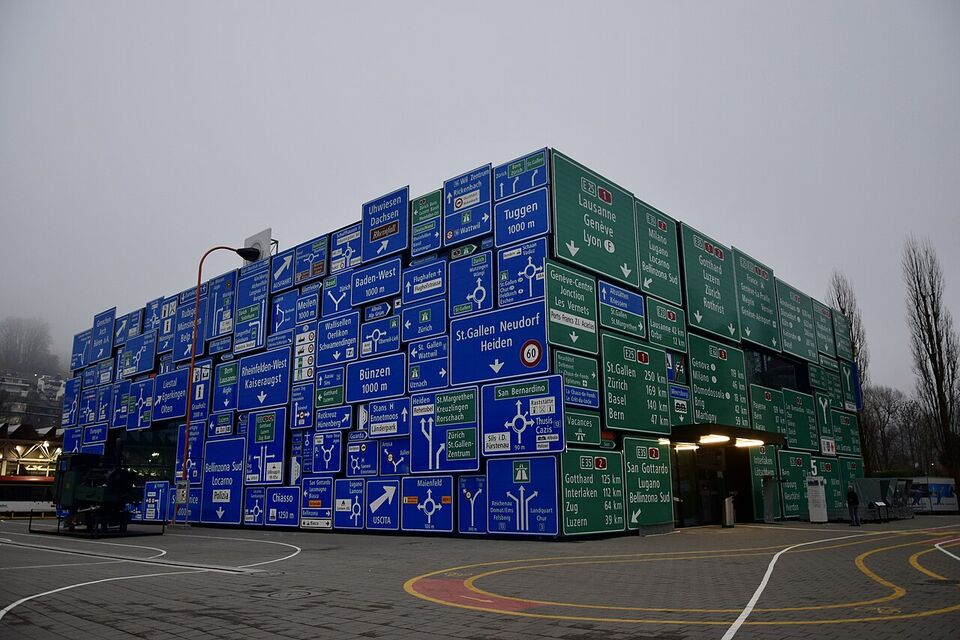
Swiss Museum of Transport
Trains, cars, aircraft and boats, with hands-on displays. It has its own stop on the Lucerne rail network, and it is the standard answer to a wet day in Lucerne. Check hours and whether your pass covers it. See Lucerne.
Lindt Home of Chocolate
A chocolate museum with a very tall chocolate fountain and a shop. Younger children enter free and older children pay a reduced price. Book online ahead, since the museum warns of high demand. See chocolate and cheese.
Bern Bear Park and zoos
Bern's Bear Park is by the river near the old town and is reported to be viewable from outside. Zurich and Basel have zoos that suit a half day. We have not confirmed hours or prices, so check the park and zoo sites. See Bern and Zurich.
Chillon and CERN
Château de Chillon is the most visited historic monument in the country, with a reduced price for children. CERN's Science Gateway in Geneva has free entry but requires registration. See Lausanne and Montreux and Geneva.
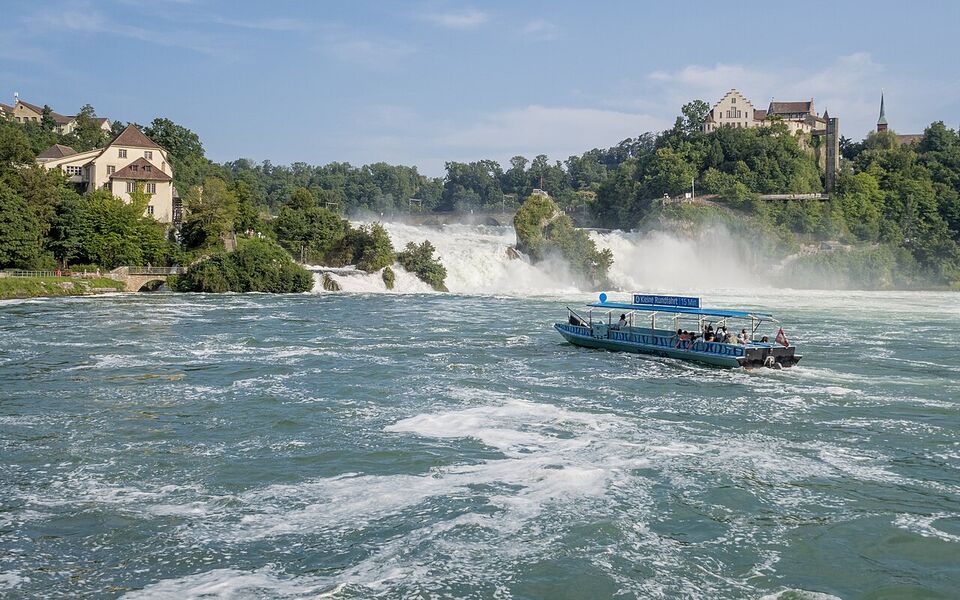
Caves and waterfalls are popular with school-age children. The Beatus Caves above Lake Thun and the Trümmelbach Falls inside a mountain near Lauterbrunnen are the usual choices, and the Rhine Falls near Schaffhausen are a reliable half day with boat rides. Caves and falls have seasons and shorter hours in winter, and it is cold inside. Check each site's opening dates, which we have not confirmed for 2027.
Easy hikes and the marmot trail
The best hikes for children are short, with a payoff: a playground, a lake, a hut with a terrace, or animals. Start with a path that begins at a lift station and finishes at one, so a tired child does not mean a long walk back. The hiking guide explains trail signs and safety.
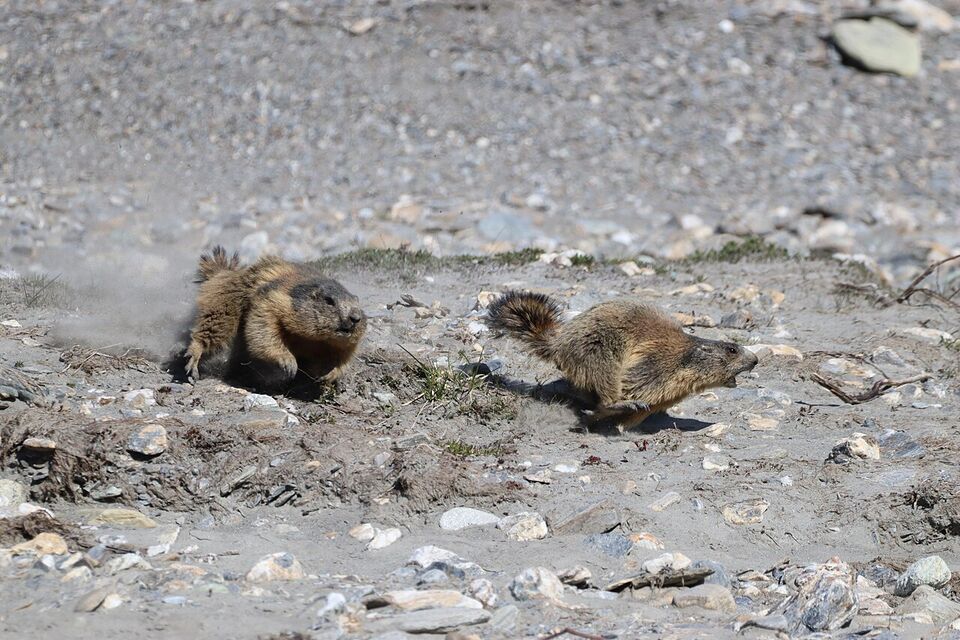
Several mountain areas promote a marmot trail, a short path with information boards where marmots are often spotted at a distance. Marmots live in the high meadows and hide from people, so do not promise your child a sighting. We have not confirmed which marmot trails are open in 2027, so ask the tourist office in your base. The playground at Grindelwald First is also built around the marmot theme.
Insider tip
Pick the trail by the end point, not the start. A route that finishes at a lift, a boat pier or a restaurant with a playground gives you an exit if the weather turns or a child is done. Pack a spare layer for each child, since mountain weather changes quickly.
Strollers and step-free routes
Strollers work well in cities, along flat lake promenades, and in car-free villages like Zermatt, where electric taxis and shuttles replace cars. They work badly on mountain paths, in old-town stairs and on some historic lifts. A folding stroller and a baby carrier together cover almost everything, and we suggest taking both for a baby.
- Check the operator before you plan around a lift. Some cable cars and trains take strollers and wheelchairs, some take them only on some sections, and conditions can change. For example, while the Titlis Rotair cabin is out of service (announced until December 12, 2026) strollers and wheelchairs go only as far as Trübsee, and summit construction from December 13, 2026 means parts of the summit will be closed for several years. Check before you plan a family day there.
- Many Swiss trains have level boarding or ramps, and bigger stations have lifts, but older regional trains and platforms can have a step. Ask staff for help; they are used to it.
- Station-to-station luggage forwarding takes your suitcases ahead and leaves you free for strollers, car seats and kids. See trains and transit.
- Pack a light, folding stroller and use a carrier on any path that is not paved.
Tickets, the Swiss Family Card and passes
Switzerland has a simple, generous family rule on public transport, and understanding it can change which pass you buy. Children under 6 travel free. Children aged 6 to 15 travel free on public transport throughout Switzerland when they are with at least one parent who holds a Swiss Travel Pass and the free Swiss Family Card. The same arrangement applies to the Swiss Travel Pass Flex, and a reseller list says it also applies to the Swiss Half Fare Card. A child traveling without a parent gets a discount on the pass.
The Family Card is free but tied to the adult's pass, so you add it when you buy. Check the current rules on the official Swiss Travel System site before you buy, since the age wording has varied on some pages, and 2026 rules may change for 2027.
The family rule applies to public transport. It does not always extend to mountain railways, cable cars or museums, so check each one. Some give children a reduced price, some have flat children's fees on regional passes, and some are free for under-6s. Gornergrat, for example, charges ages 6 to 15 the reduced price and lets under-6s ride free, and Pilatus gives the pass price to children aged 6 to 15. The Swiss Travel Pass also includes free entry to more than 500 museums.
Save money
For a family with two or more children aged 6 to 15, the Family Card changes the pass math: children ride free, so only the adults pay. Compare a pass with a Half Fare Card and point-to-point tickets for your actual route, using the Swiss Travel Pass page and the budget tips. Prices on those pages are the 2026 prices.
Family hotels and where to stay
For families, the best base is a small town with a lake, a station and a playground within walking distance, not the biggest name. Lucerne and Interlaken are the usual first choices because they put boats, trains and lifts within a short ride. See where to stay for the types of lodging and guest cards.
- Family rooms and connecting rooms: many Swiss hotels offer rooms for three or four, but rooms are small, and occupancy rules are strict. Check how the hotel counts children and whether a crib is free.
- Apartments: a kitchen, a washing machine and separate sleeping areas make a long stay cheaper and calmer, especially in mountain villages.
- Farm stays and hostels: farm stays let children see animals, and some Swiss hostels have family rooms. Availability and rules vary, so ask before booking.
- Resort hotels: some mountain hotels run kids' clubs and indoor pools, which help on wet days. Confirm what is offered in the season you visit.
Hotel guests in some regions receive a guest card with free local transport or discounts, for example in Geneva, Basel and Ticino. Ask about children's terms when you check in. Guest cards and local taxes are on the where to stay page.
Altitude and ear pressure
Many Swiss excursions go high quickly. The Gornergrat station is at about 10,135 ft (3,090 m), and the Jungfraujoch station is at 11,332 ft (3,454 m), where it is well below freezing all year. Most children cope well, and the main problems are cold, tired feet and ears that need to pop. Altitude sickness is unusual at the heights of ordinary family excursions, but it is not impossible, so watch for headache, nausea and unusual sleepiness.
- Offer a drink, a snack or a pacifier on the way up and down; swallowing helps ears. Babies can feed during the ride.
- Go up in stages if you can: a mid-height lift one day, a higher one another day.
- Bring hats, gloves, sunscreen and sunglasses. Sun is strong in the mountains even when the air is cold.
- If a child has an ear infection, heart or breathing problem, ask your pediatrician before booking a high excursion. This is general advice, not Swiss official guidance.
- If anyone is unwell, go down. The lifts and railways make that easy.
For more on health, see health and medical care.
Winter fun with children
Winter is a good time for children who like snow. Sledding, winter walks and snow play are available in many resorts, and you do not need to ski. The Jungfrau region sells a winter hiking and sledding pass, valid from about November 21, 2026 to April 25, 2027; the date can slip if the cableway has works, so check the operator. A secondary guide lists the First cable car as closed for maintenance until November 27, so the start may slip.
Kids' ski schools take children from a young age, but the minimum age, the group size and the hours vary by school and resort. Book early for Christmas and New Year, rent helmets, and pick a resort with a gentle beginner area. See skiing and winter for choosing a resort, and December and January for crowds. At St. Moritz, the White Turf horse races on the frozen lake have Family Days planned for February 6, 13 and 20, 2027. Geneva's Christmas market has a new ice rink by the lake. See Christmas markets.
Watch out
Snow depends on the season, and we cannot say what it will be like in winter 2026-27. Check the resort and the SLF site (slf.ch) close to your dates. Keep a plan B (a pool, a museum or a train ride) in case a sledding day is not possible.
Food and eating out
Swiss food is easier with children than many visitors expect. Rösti (fried grated potato), pasta in Ticino, sausages, soups and bread are all child-friendly, and fondue is a fun meal for older kids. Many restaurants offer children's portions. Restaurants often serve lunch and dinner in set windows, so check hours when you plan an early or late meal. See Swiss food and fondue.
- Picnics: supermarkets like Coop and Migros, and bakeries, make lunches cheap, and most towns have public drinking fountains unless a sign says otherwise.
- Allergies: learn the words for your child's allergy in German, French or Italian, and ask about hidden nuts, dairy and gluten. See phrases.
- Service: service is included in menu prices, so a small round-up is enough.
- Baby supplies: pharmacies and supermarkets stock formula and diapers, but brands differ from home. Bring a supply of anything your child needs.
Travel days and pacing
Jet lag hits children hard. Switzerland is six hours ahead of New York for most of the year (five for a few weeks around the clock changes in March and late October to early November), so plan a quiet first day. Arrive in Zurich or Geneva, take the train to your first base, and keep the first day to a walk and an early night. See flights for nonstop routes.
- Stay at least two or three nights in each base. Changing hotels every night is the most common cause of family meltdowns.
- Plan one main activity per day and leave a half day free for weather.
- Reserve seats on panoramic trains, which fill up; see scenic trains.
- Carry snacks and water on every train and boat ride.
- Check the timetable change on December 13, 2026, if you travel after that date.
Safety on trails, lakes and in the mountains
Switzerland is safe, but the dangers are different from home. The State Department rates the country at Level 1, the lowest, as of November 2026. The main risks for families are the mountains and the water, so brief your children before you go.
- Trails: keep to marked paths, hold hands near drops, and turn back if the weather changes. Cattle graze on many alpine paths; give cows space, especially cows with calves, and keep children calm and close. See hiking.
- Lakes and rivers: water is cold, even in summer, and many swimming spots have no lifeguard. Rivers can run fast and cold. Supervise young children at all times and use life jackets on boats.
- Ticks: ticks are widespread and can carry disease. Check children after walks in grass or woods, and talk to your doctor about vaccines. The CDC mentions tick-borne encephalitis vaccine for people with extensive exposure.
- Emergencies: call 112 or 144 for an ambulance, and 1414 for the Rega air rescue, which also has an app. A helicopter rescue can cost thousands of francs, so buy travel insurance with medical and rescue cover. Rega patronage helps with rescue costs in Switzerland but does not replace insurance.
See safety for more on emergency numbers and the US Embassy.
Sample family itineraries by age
These plans are templates. Seasons and running days vary, so confirm each lift, boat and museum for your dates, and keep a spare half day for weather.
- Under 5
One lake, one base
Stay four or five nights in Lucerne. Use the boats, the lakeside paths and playgrounds, the Swiss Museum of Transport on a wet day, and one gentle excursion with a seat and a view. Keep the days short and the naps intact. Add Zurich at either end for the airport.
- Ages 6 to 11
Lucerne and Interlaken
Spend three nights in Lucerne, then move by train to Interlaken for three or four. In Lucerne, take a boat and a cogwheel or funicular ride. In the Jungfrau region, visit a playground at First or Harder Kulm, a waterfall or cave, and one big lift day. In winter, replace the lifts with sledding. See Lucerne and Interlaken.
- Teens
Mountains and a city
Combine Zurich or Lucerne with Interlaken and Zermatt, a high excursion, a scenic train segment and one adventure activity that fits their age. Add Lugano for a lake and a warmer climate if you have a week or more. See Zermatt and Lugano and Ticino.
- Rainy day
Plan B
Keep one indoor option per base: a transport museum in Lucerne, the chocolate museum near Zurich, CERN or a museum in Geneva, or a thermal pool. See day trips.
Add it to a route in the trip builder, or ask us to plan the hotels, trains and guides for you.