Overview: shop smart, then pack smart
Switzerland is expensive, and the best souvenirs are often small: chocolate, a block of hard cheese, a knife, a textile, a regional craft. This page covers what is worth buying, where to shop, what the shops are open, how the tourist VAT refund works (and why it is not automatic), and what you can bring home through US customs, including cheese, wine and chocolate.
The two most common mistakes are buying cheese or meat you cannot bring home and expecting the VAT refund to arrive on its own. Both are avoidable. Figure out what you plan to buy, check the rules before you pack, and keep receipts and forms in your hand luggage. For the cost of the whole trip, see our budget tips, and for the chocolate side in depth, see the chocolate guide.
Prices in Switzerland include sales tax (VAT), so the price on the label is the price you pay. The normal rate is 8.1 percent, with a reduced rate of 2.6 percent for food (except alcohol and restaurant meals), medicines and books.
What is worth buying
Chocolate
Bars from the supermarket are cheap, good gifts and travel well. Specialty chocolatiers sell boxes and truffles at higher prices. Buy near the end of the trip, and avoid hot days in a bag. Our chocolate guide has more.
Cheese
Hard cheeses such as Gruyère, Emmental and Appenzeller are the usual choice, sold in vacuum-sealed packs that travel well. Pack them in your checked bag and check the US rules below before you buy.
Watches
Switzerland is famous for watches, from affordable brands to luxury houses. Buy from an authorized dealer and keep the warranty and receipt. Check the US duty and the $800 exemption for expensive items.
Swiss Army knives
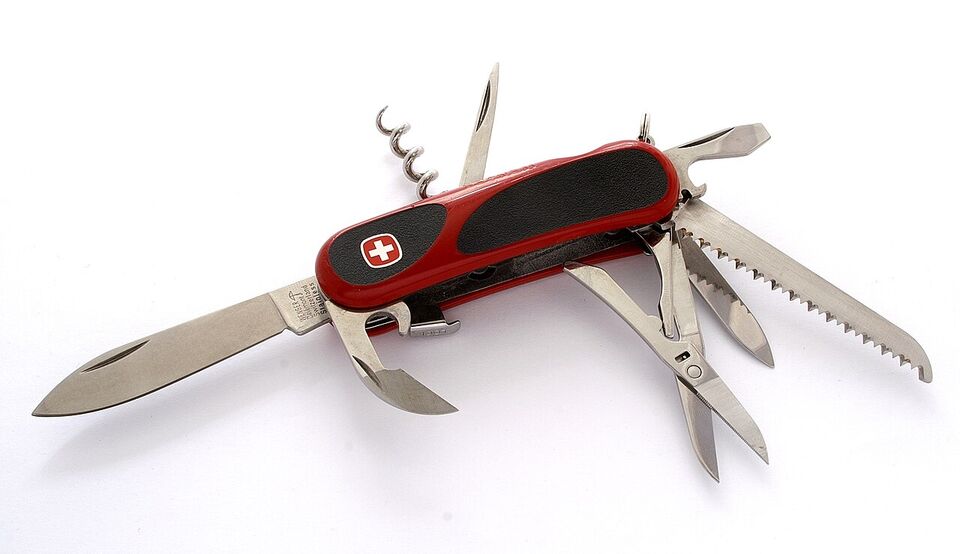
The red pocket knife is a classic gift. Many shops offer engraving. It must go in checked luggage on a flight, not carry-on.
Cowbells
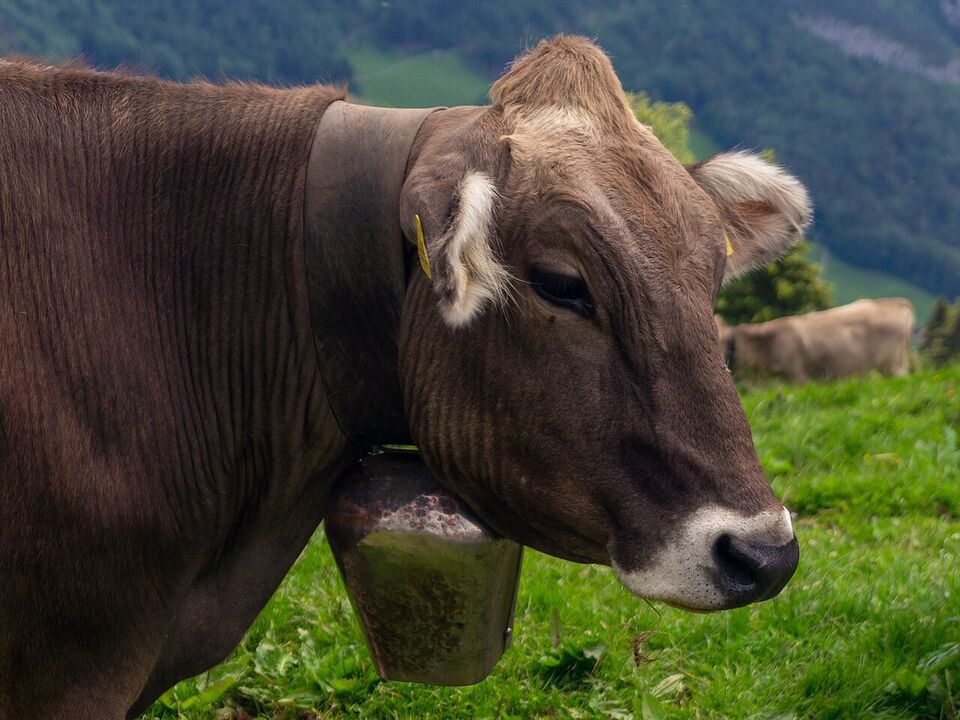
Small decorative bells are easy to carry. Real farm bells are heavy and loud, so weigh them before you commit to your luggage allowance.
Textiles and embroidery
Embroidery and lace from the St. Gallen and Appenzell area, linen, wool and traditional fabrics make lasting gifts. Check the label to see where it was made.
Regional crafts
Look for wood carving in the Bernese Oberland, paper cuts, ceramics, glassware, music boxes and local honey and spirits. A handmade item usually costs more than a factory souvenir, and that is the point.
A good rule: buy things that are made in Switzerland, that you can only find there and that are light. Postcards, a bar of local chocolate and a vacuum-packed cheese give a better sense of the trip than a mass-produced souvenir that was shipped from elsewhere. Look at the label for "Swiss made" or the place of manufacture.
Where to shop
Coop and Migros. These are the two big supermarket chains, found in almost every town and in many train stations. They are the best places for chocolate bars, packaged cheese, coffee, snacks and picnic food, at prices lower than in tourist shops. Both chains have their own brands, and their food halls and bakeries are good for lunch. We have no confirmed price list, so compare in the shop.
Department stores. Big department stores in Zurich, Bern, Basel and other cities sell watches, clothing, souvenirs, homewares and food halls in one place. They are useful for gifts and may have staff who can explain the VAT refund process.
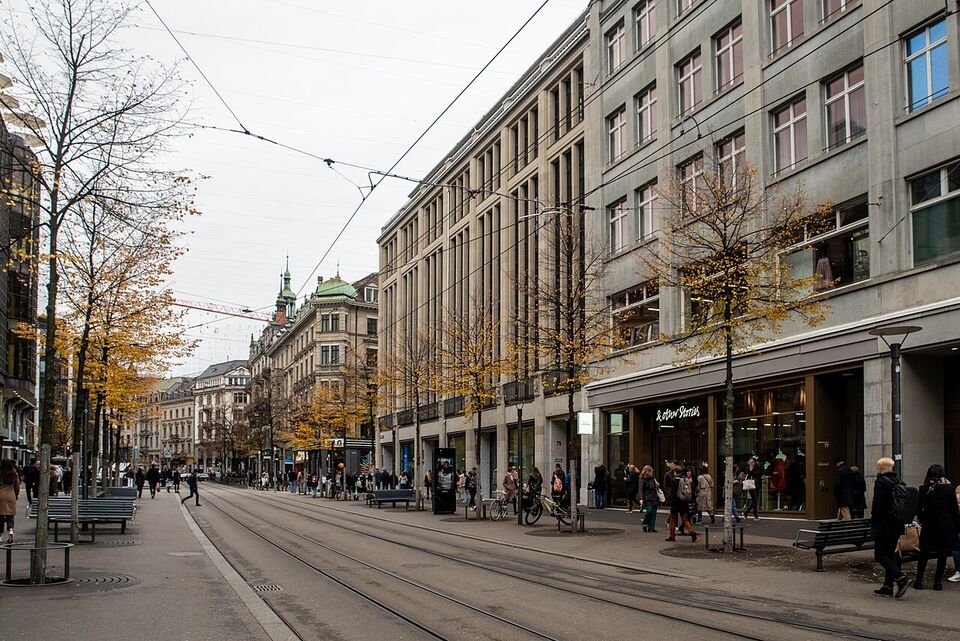
Specialty shops. Chocolate shops, cheese shops, cutlery shops, watchmakers and craft stores give better quality and advice. On a street such as Zurich's Bahnhofstrasse you will find luxury names; smaller streets in old towns have independent shops.
Outlets. There are a few outlet centers in Switzerland, mostly for clothing and shoes. We could not confirm current stores or hours, so check the outlet's own website, and compare prices with what you would pay at home.
Markets and farm shops. Weekly markets in towns sell cheese, bread, honey and local products. In rural areas some farm shops work on trust, with a box for cash, so keep francs. Our food guide lists what to look for.
Save money
Supermarkets are far cheaper than souvenir shops for chocolate and cheese. Buy chocolate and cheese in Coop or Migros and save the specialty shop for one special item. Switzerland is also a place where prices are high everywhere, so decide what matters and skip the rest.
Opening hours and Sunday closures
Swiss shops keep shorter hours than many American stores. In general, supermarkets and shops open in the morning, close in the evening on weekdays and close earlier on Saturday. Most are closed on Sundays, except for shops at train stations and airports and in tourist resorts, where Sunday trading is common. Rules and hours differ by town and canton, so check the posted hours or the shop's website before you rely on a shop being open.
Public holidays add closures. August 1 is the only national holiday, and cantons decide the others, such as Christmas Day (December 25, 2026), New Year's Day (January 1, 2027) and Easter Monday (March 29, 2027). Many shops close early on December 24 and 31, and we could not confirm times, so check locally. A new rail timetable starts on December 13, 2026. See the December page and the etiquette guide for more on rhythms of the Swiss week.
Plan to buy souvenirs and supplies on Saturday or a weekday, and use the station shops for last-minute needs. Station shops cost more and have a smaller choice, but they save a Sunday.
VAT refund for tourists
Swiss VAT is included in the price of most goods. Visitors who live outside Switzerland can in principle get the VAT back on goods they take out of the country in their luggage, but the refund is not automatic. The process asks for steps at each end, and it only works if you ask at the shop.
- Ask in the shop if it takes part in the refund scheme, and what the minimum purchase is. Participating shops usually have a sign. Minimums are set per shop and per day, and we could not confirm the current figure, so ask at the till.
- Show your passport and ask for the refund form (the export form) to be filled in with your name, address abroad and the goods. Keep the receipt with the form.
- When you leave Switzerland, take the goods and the form to a customs office or a customs counter at the airport, before you check your bags, and have them stamped. The goods should be unused and in your hand luggage so customs can see them.
- Send the stamped form back to the shop, or ask the shop how the refund is paid. Some shops use a refund service, which takes a fee. Refunds usually take time, and the method varies.
There is a time limit between buying the goods and leaving the country, and it differs by scheme, so ask. If you leave Switzerland by flying from an EU airport or driving into the EU, the customs stamp may have to come from that border or airport; the shop can tell you what to do. The official source is the Swiss customs authority: check the Federal Office for Customs and Border Security (bazg.admin.ch) before you shop. We could not confirm the details in 2026, so treat this as the outline and confirm each step with the shop.
Watch out
The refund is not automatic. If you do not ask for the form at the till, do not get it stamped when you leave, or pack the goods in your checked bag before the stamp, you will not get the money back. Allow extra time at the airport for the customs counter, especially since the EU Entry/Exit System is in force at the border (see entry rules).
Swiss customs when you come in
Most Americans do not need to worry about Swiss customs on arrival, but the rules are strict about food. The Federal Office for Customs and Border Security says that it is prohibited to bring meat and dairy products, and most fruits and vegetables, into Switzerland from non-EU countries. For an American traveler, that means do not bring meat, sausages, cheese or milk products from the US. Pack snacks that are sealed, shelf-stable and not meat or dairy, and eat or leave any fresh food before you land.
The personal allowances for goods are, per person: 5 liters of alcohol up to 18 percent alcohol by volume plus 1 liter of alcohol above 18 percent, 250 units of tobacco and 1 kg of butter or cream, but check bazg.admin.ch before you go, since allowances are updated. Goods with a total value of CHF 150 (about $180) or more per person are subject to Swiss VAT (8.1 percent) when you bring them in. Medicines, souvenirs and food count. The customs office's QuickZoll app lets you declare purchases when you enter. Large amounts of cash must be declared; we could not confirm the threshold, so check the Swiss customs site.
These limits matter for shopping trips from the French, German or Italian side as well: Switzerland is not in the EU, so EU customs rules do not apply to Swiss borders, even though Switzerland is in the Schengen area and there is often little checking on the road. If you drive in from France, Germany or Italy with a large purchase, you may still need to declare it. Our beyond Switzerland page covers side trips.
US Customs: what you can bring home
When you return to the US, U.S. Customs and Border Protection (CBP) gives returning residents an $800 personal exemption, which can be used once every 31 days and only after at least 48 hours abroad. Within the exemption, adults 21 and over may bring 1 liter of alcohol duty-free, up to 200 cigarettes and 100 cigars. The next $1,000 above the exemption is taxed at a flat 3 percent. Goods that you bought in a duty-free shop are not free of US duty if they exceed your exemption, and liquor above 1 liter is dutiable at 3 percent plus any IRS tax. State laws may also limit alcohol, so check your state. Check cbp.gov for the current figures.
Declare everything you bought abroad on your customs declaration, whether you pay duty or not. Keep receipts in your hand luggage. Large amounts of cash or monetary instruments must be declared; we could not confirm the amount from the CBP pages we read, so check cbp.gov.
| Item | Usually allowed into the US? | Notes |
|---|---|---|
| Chocolate | Usually yes | Check CBP and APHIS before you pack, especially for fillings that contain dairy or alcohol |
| Hard cheese, vacuum-packed | Usually yes | CBP says certain cheeses are allowed; check the APHIS Travelers Tips before you buy |
| Soft, fresh cheese | Check first | Rules depend on the type and on animal-disease conditions; ask CBP |
| Sausage, ham, dried meat | No | Meat and meat products from most countries are not allowed |
| Bakery items | Yes, generally | CBP says bakery items may be brought in |
| Wine and spirits | Yes, within limits | 1 liter duty-free; more is dutiable; state rules apply |
| Fruit, vegetables, plants, seeds | Usually restricted | Declare everything; do not bring fresh produce |
CBP says that you may bring bakery items and certain cheeses into the United States, and that fresh, dried or canned meat or meat products from most countries are not allowed. It does not name individual Swiss cheeses in the pages we read, and animal-disease outbreaks change the rules. Our advice is that chocolate and hard cheese are usually fine, but check the CBP and APHIS sites close to your departure date. If you do not declare agricultural items, CBP lists a first-time civil penalty of $300, so declare them and let an agriculture specialist decide.
For wine and spirits, one liter is the duty-free amount for adults 21 and over. More than that is dutiable and may be taxed by the state. A bottle of Swiss wine is a nice gift, but Swiss wine is mostly drunk at home and is not cheap, so you may prefer to drink it in Switzerland. See the wine guide for what to look for.
Luggage and airline limits
Souvenirs add weight. Before you buy a heavy item, check your airline's baggage allowance for your fare, since limits and fees vary and change. Some fares include a checked bag and some do not, and overweight fees can be high. A kitchen scale at home and a luggage scale in your bag help you stay under the limit.
Pack fragile items such as bottles in the middle of a suitcase, wrapped in clothes. Liquids in a carry-on are limited by security rules, so wine, honey, jam and soft cheese in jars should go in checked luggage. Pocket knives, corkscrews with blades and other sharp objects must be in checked bags. Chocolate can melt in a hot car or bag; carry it in a bag in your cabin if it is summer.
Think about shipping heavy goods home. Shops that sell large items will arrange shipping, but customs duty and fees may apply on arrival in the US. Compare the cost of shipping with the cost of extra baggage. If you travel by rail with luggage, see our getting-around guide for how bags are handled.
Avoiding fakes and tourist traps
Fake watches and knives are sold in tourist areas, in street stalls and online. A real Swiss watch comes from an authorized dealer or the brand's own boutique, with a warranty card and a serial number. A "Swiss made" label for watches is regulated by law, but the label alone is not proof, so buy where you can return the watch and get papers. A very low price on a luxury name is a warning.
For Swiss Army knives, look for the original maker's brand on the blade and the cross-and-shield logo, and buy from a cutlery or department store. A cheap knife with the same shape may be poor quality. For chocolate and cheese, check labels for the origin and the best-before date, and do not buy souvenirs made abroad that carry a Swiss flag. In souvenir shops, ask where an item is made.
Watch for unlicensed sellers on the street and for requests to buy "gifts" in the street. The safety page lists common scams: see Safety in Switzerland.
Common mistakes
- Buying cheese you cannot import: check CBP and APHIS first, and stay with vacuum-packed hard cheese.
- Packing sausage or dried meat: it is not allowed into the US. Leave it behind.
- Expecting the VAT refund to be automatic: ask for the form at the till and get it stamped at customs.
- Packing the goods in your checked bag before the customs stamp: keep them in your hand luggage until the stamp is done.
- Carrying a knife in your carry-on: it goes in checked luggage.
- Waiting until Sunday to shop: most shops are closed except at stations, airports and resorts.
- Not declaring purchases on the US customs form: declare everything, even if you owe no duty.
- Buying more than the $800 exemption without a plan: the next $1,000 is taxed at 3 percent, so keep receipts.
- Bringing meat or dairy from the US into Switzerland: it is prohibited.
- Buying a watch from a street seller: use an authorized dealer.
When you are done shopping, check the trip planner for the rest of your list.
Add it to a route in the trip builder, or ask us to plan the hotels, trains and guides for you.