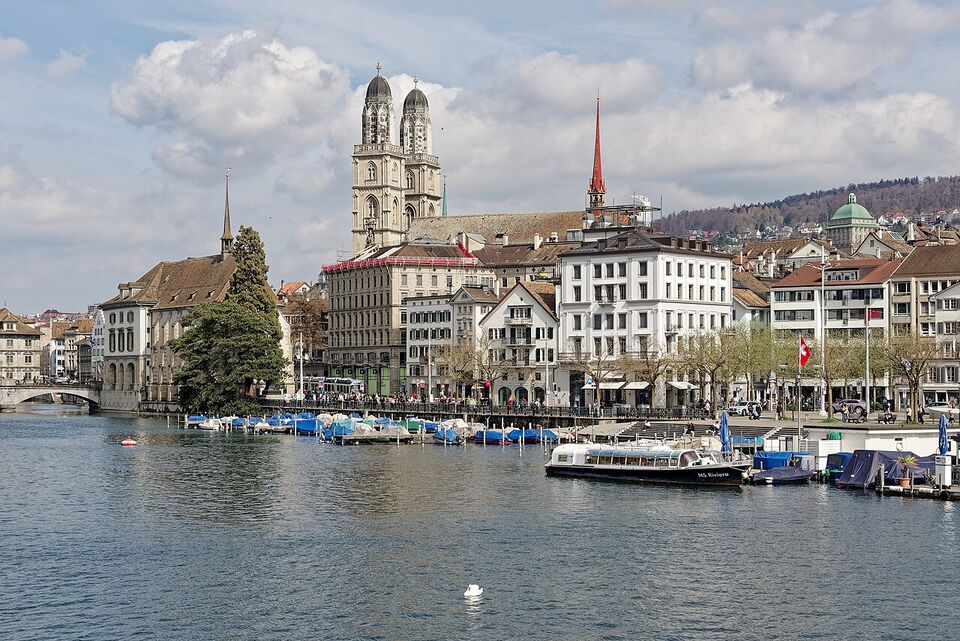
Overview: Zurich as a destination and a base
Zurich is Switzerland's largest city (about 440,000 people in the city proper) and, for most Americans, the place their flight lands. It is worth more than a transfer. The old town sits on both banks of the Limmat river just below where it leaves Lake Zurich, and you can cover its main streets on foot in half a day. The art museums are among the best in the country, and the lake promenade is a pleasant walk in almost any season.
It is also the best-connected base in Switzerland. The main station, Zürich Hauptbahnhof (Zürich HB), is the hub from which trains fan out to Lucerne, Bern, Basel, St. Gallen, Chur and Ticino. That makes Zurich a sensible first or last night even if your real goal is the mountains. Our trip-planning guide shows how Zurich fits into a first itinerary, and the flights page covers getting to the airport from the US.
Zurich is not a city of dramatic sights. Its appeal is quieter: good museums, a walkable center, clean water you can swim in, and food that ranges from veal in cream sauce to modern restaurants in converted factories. If you want mountains, lakes of postcard size and cable cars, read on for how to combine Zurich with them; our Lucerne and Interlaken pages are the next stops most visitors add.
Getting in from the airport and getting around
Zurich Airport has its own railway station under the terminal complex. Trains to Zürich HB take about 10 minutes and run several times an hour, which makes the train the default choice. Buy the ticket in the SBB app or at a machine before you board; the fare is a few francs, so check the app for the price on your day. Tram 10 also runs between the airport and the city, but it is slower. For passport control and the Entry/Exit System that has been fully in force at the Schengen border since April 2026, see our entry rules page, and allow extra time on arrival.
Inside the city, trams and buses cover everything the old town and the lake do not. The old town itself is compact enough that you will walk. Zürich HB sits on the western edge of the old town, about a 10-minute walk from the Limmat bridges, and the city's main tourist office is inside the station. The office listed these hours on the official site as of November 2026: Monday to Saturday 8:30 a.m. to 7 p.m., Sunday 9 a.m. to 6 p.m. By phone, WhatsApp or email it answers Monday to Friday 8 a.m. to 6 p.m. and weekends 9 a.m. to 4 p.m.
If you hold a Swiss Travel Pass, it covers trains, boats and city transport in many towns, and it matters for Zurich because you will probably use the airport train. See our Swiss Travel Pass guide for the 2026 prices and what it covers, and getting around Switzerland for the ticket types in general. Whether your pass includes the local zone in the city is worth checking on the Swiss Travel System site before you buy.
Insider tip
If you land early in the morning and your hotel room is not ready, you can store bags at stations and then walk the old town. Check the current locker and storage prices on the SBB site; do not count on a number from a blog.
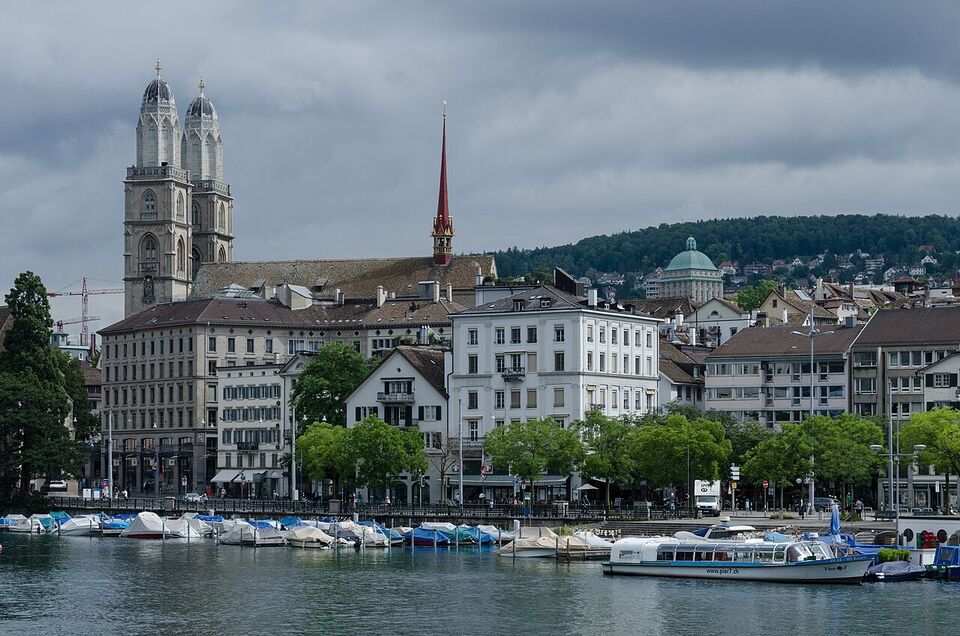
The old town on the Limmat
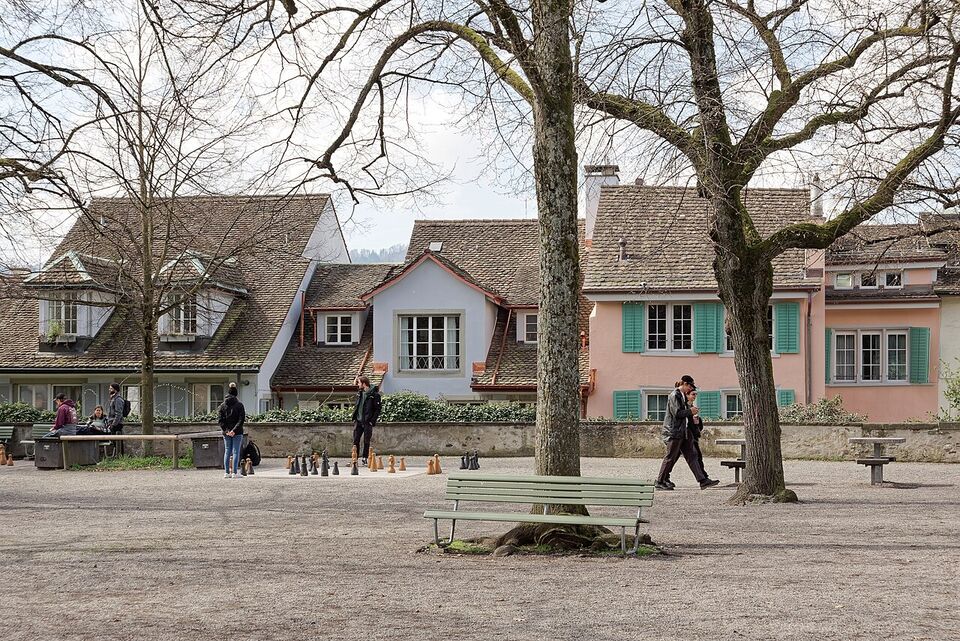
The old town is two neighborhoods facing each other across the river. On the east bank, Niederdorf is a web of narrow, mostly pedestrian lanes with cafés, small shops and bars. On the west bank, the streets climb gently toward the Lindenhof, a small hill that was the site of a Roman fort and later a Carolingian palace. Today it is a quiet gravel terrace with plane trees, benches and a view across the rooftops to the river. It is a good first stop to get oriented.
Two churches define the skyline. The Grossmünster (Great Minster) is the twin-towered Romanesque church on the east bank, where the preacher Huldrych Zwingli began the Swiss Reformation in 1519. Across the river, the Fraumünster is best known for its stained glass: the five-part window cycle in the choir (1970) and the rose window in the south transept (1978) are by Marc Chagall, and Augusto Giacometti made the window in the north transept in 1945. If stained glass matters to you, plan time for this church. Visiting hours and any entry fee change with the season and with services, so check the church's own site before you go.
The guild houses along the river (the Zunfthäuser) are worth a look from the outside and, if you are hungry, from the inside, since several are now restaurants. The Limmat quays, the bridges and the old town's lanes are free to walk at any hour.
The lake and where to swim
Lake Zurich begins right below the old town, and the lakeside promenade runs on both shores. In summer, the city's lakeside and river bathing places (locals call them Badis) open for swimming and sunbathing. Several are free or cost only a small entry fee. The exact open dates, hours and prices differ by site and change from year to year, so check the city's baths page before you plan a swim. Most baths close for the winter, and the promenade is quiet then.
The river and the lake are also used by swimmers who float downstream in warm weather. The current can be strong in places, so use designated spots and follow the posted signs. Passenger boats run on the lake; their timetable is much thinner in winter than in summer, and some Swiss boats are covered by rail passes while others are not, so check the operator before you rely on one. Our Swiss lakes guide explains the boats and where else to swim.
Watch out
Swimming in the Limmat and in the lake is a summer activity. Cold water and fast currents are real hazards outside the season, and some riverside spots are closed. Ask a lifeguard or the tourist office before you get in.
Bahnhofstrasse, shopping and the museums
Bahnhofstrasse runs from the main station down to the lake and is one of Europe's most expensive shopping streets. You do not have to buy anything to enjoy it; it is a pleasant tree-lined walk, and it links Paradeplatz, where trams cross, to the lakefront. Most stores close on Sundays; in the station, shops keep longer hours.
The Kunsthaus Zürich is the city's main art museum, with works from the Middle Ages to modern times, including a large Giacometti collection and the Bührle Collection. Its published hours as of November 2026 are Tuesday, Wednesday and Friday to Sunday 10 a.m. to 6 p.m., Thursday 10 a.m. to 8 p.m., and closed on Monday. The museum was showing Maria Lassnig and Edvard Munch until February 21, 2027, and a collection show until January 10, 2027. Check the ticket price and any timed-entry rules on kunsthaus.ch.
The Swiss National Museum (Landesmuseum) sits next to the main station and covers Swiss history. It is open Tuesday to Sunday 10 a.m. to 5 p.m. and closed Monday, with a few exceptions: it stays open until 6 p.m. on Sunday, November 15, and it opens on Monday, December 21. It is open 10 a.m. to 5 p.m. on December 25 and 26 and on January 1 and 2, and it closes at 2 p.m. on December 24. It is closed on Sechseläuten Monday, April 19, 2027. Prices were not confirmed when we wrote this, so check landesmuseum.ch.
If you plan several museums, the Swiss Museum Pass is a possible value: it gives a year of free entry to more than 500 museums and castles, and until December 31, 2026 it costs CHF 147 (about $175) instead of the regular CHF 177 (about $210). Our budget tips page shows how to weigh that against a city card.
Save money
Add up the museums you actually plan before buying a city card or the Swiss Museum Pass. Two paid museums plus transport can come out near break-even; five or six museums over several cities usually favor the Museum Pass.
The Zurich Card and other passes
The official tourism site presents the Zürich Card as a city travel pass. It is linked on the site with public transport, boat cruises, cable cars and museum benefits, and it is sold on the tourism site and through the Zürich City Guide app. We could not confirm the current price or the exact list of benefits when we wrote this, so check zuerich.com for the price and the list before you buy.
A simple way to decide is to list what you will do. If you will use trams several times a day and visit two or more museums, a card can pay off. If you plan only the old town and a museum, point-to-point tickets are usually cheaper. If you already hold a rail pass, compare it with the card before you add a second product. Our budget tips and pass guide work through the numbers.
Where to eat: traditional and modern
The city's signature dish is Zürcher Geschnetzeltes: thin strips of veal in a creamy white wine sauce, almost always served with rösti (shredded, fried potato). Traditional restaurants, many in guild houses and old-town lanes, serve it, along with other Swiss standards such as cheese fondue and sausages. Expect a main course in a traditional restaurant to cost well over what you would pay in a US city; menus are posted outside, so you can check the price before you sit down.
The modern side of the city is in Zürich West, the former industrial district around the old Escher-Wyss factories and the railway viaduct. Converted brick buildings now hold restaurants, bars, market halls and design shops, and it is a good evening alternative to the old town. Cafés with pastries, such as a Gipfeli (croissant) with coffee, are everywhere. Our Swiss food guide covers regional dishes and how to order, and our chocolate guide covers the sweet side.
Service is normally included in menu prices. Rounding up or leaving a few francs for good service is appreciated but not expected. We do not name restaurants because hours and openings change; choose by neighborhood and by whether the menu is posted and prices are visible.
Different from home
Restaurants in Switzerland usually do not bring a glass of water automatically, and bottled water is charged. You can ask for Leitungswasser (tap water), though some places charge a small fee for it. The check arrives only when you ask for it, and you pay at the table.
Uetliberg and Lindt Home of Chocolate
The Uetliberg is the wooded ridge southwest of the city, 869 meters (2,851 ft) high, reached by the Uetlibergbahn from Zürich HB. From the observation tower you get a view of the city, the lake and, on a clear day, the Alps. It is the cheapest way to get a mountain view from Zurich, but it is not an Alpine experience; do not expect Jungfrau-level scenery. Check the train and the tower hours before you go, and dress warmly in winter.
The Lindt Home of Chocolate is in Kilchberg, just south of the city on the lake. The chocolate museum is open daily 10 a.m. to 7 p.m. (last slot 5:30 p.m.), and it is closed December 25 and 26 and January 1; on December 24 and 31 it closes at 4 p.m. Adults pay CHF 17 (about $20), children aged 8 to 15 pay CHF 10 (about $12), and children 7 and under are free. Book online ahead. Parking costs CHF 1 (about $1.20) per 30 minutes up to CHF 50 (about $60) a day, but the public-transport route is simpler. See the chocolate page for more.
Day trips by train from Zurich
Zurich's rail network is the main reason to stay here. Journey times below are rough; check the SBB app for the schedule on your day.
| Trip | Roughly by train | What you get |
|---|---|---|
| Rhine Falls (Neuhausen) | Under an hour | Europe's largest waterfall by volume; a winter light show and a medieval Christmas market are scheduled |
| Lucerne | About 45 minutes | Chapel Bridge, old town, lake boats |
| Stein am Rhein | About 1 to 1.5 hours with a change | Painted medieval town on the Rhine |
| St. Gallen | About 1 hour | Abbey district and library |
| Appenzell | About 2 hours with a change | Painted houses, cheese, Alpstein hills |
The Rhine Falls is the easiest half-day trip. The site lists a "Winter Magic" illumination at Schloss Laufen from November 13, 2026 to January 3, 2027, and a medieval Christmas market that begins on Friday, November 20, at two castles with special boats. Check the dates and the boat schedule on rheinfall.ch. Our day trips guide ranks these trips and shows which to pair, Appenzell and the East covers the east, and the Lucerne guide covers the most popular trip.
One-day and two-day plans
- Day 1
Old town, lake and a museum
Start at the Lindenhof for the view, then wander Niederdorf. Cross the river to the Fraumünster for the Chagall windows. Walk down Bahnhofstrasse to the lake, then take the promenade. Spend the afternoon at the Kunsthaus (not on Monday). End with dinner in Niederdorf or Zürich West.
- Day 2
Choose one of three
Take the Rhine Falls as a half-day trip and return for the evening; go to Lucerne for a full day; or stay in town for the Uetliberg and Lindt Home of Chocolate. If it is raining, the National Museum and the Kunsthaus are the best fallbacks.
For a first trip, many readers do one night in Zurich at the start or end and spend the rest of the time in the mountains. Our where to stay guide helps you choose between a hotel near the station, in the old town or in Zurich West. Hotels in the city are expensive by US standards, so look at $$ to $$$ options for most dates, and check dates, since prices change with trade fairs and seasons.
Mistakes to avoid
- Trying to see the Alps in one day from Zurich. The Jungfraujoch, Zermatt and the Matterhorn are all very long days from Zurich. A long day mostly means train seats. Base yourself closer; see our mountain excursions guide.
- Arriving on a Sunday or Monday and finding things closed. Most shops close on Sundays, and many museums, including the Kunsthaus and National Museum, close on Mondays. Plan around it.
- Relying on cash or euros. Cards are widely accepted, but carry some francs. Euros are not accepted widely and the exchange rate in shops is poor.
- Skipping advance booking for popular exhibitions or the Lindt museum. Book online when the site recommends it.
- Assuming Zurich is cheap to sleep in. Swiss hotels are among the most expensive in Europe, and prices jump during trade fairs. Book early and check dates.
When to go matters. Zurich's monthly highs in the 1991-2020 climate normals run from 38°F (3.5°C) in January to about 76°F (24°C) in July; November averages 46°F (7.6°C) with rain on about ten days. See our when to go page for the full picture, and our safety page for emergency numbers and what to do if something goes wrong.
Add it to a route in the trip builder, or ask us to plan the hotels, trains and guides for you.