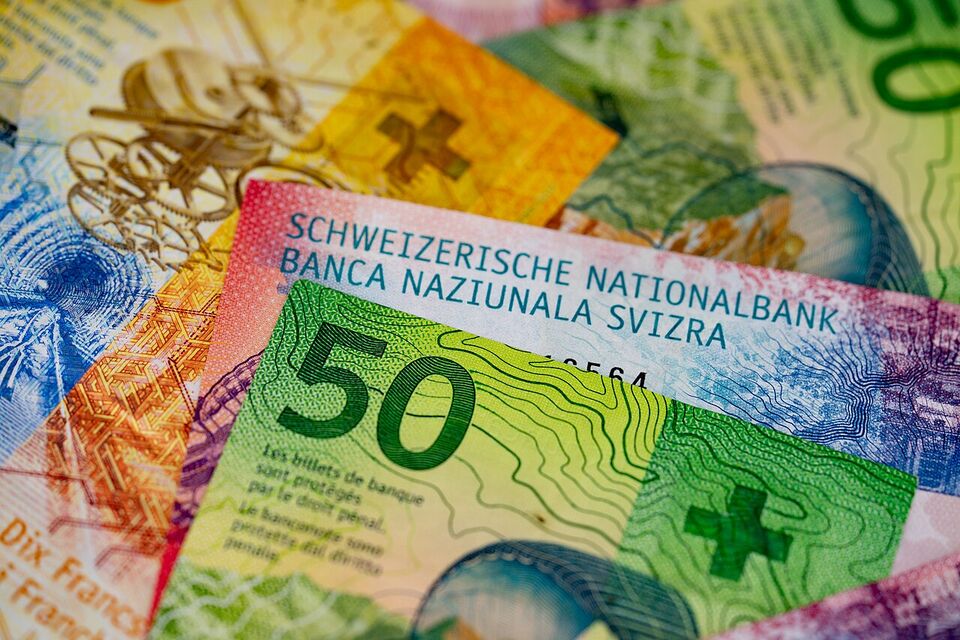
Overview: francs, not euros
Switzerland has its own currency, the Swiss franc, written CHF. It is not in the euro area, even though it sits in the middle of Europe and is part of the Schengen travel zone. Cards work almost everywhere, a little cash is still useful, and the main money surprise for Americans is how high prices are, not how complicated paying is.
On this site we convert at a fixed rate: CHF 1 = US$1.19. That is the rate we used for every price in the guide, so a price of CHF 100 (about $120) is an approximation, not a quote. The franc moves daily, and in early November 2026 it was drifting down against the dollar, so treat our dollar figures as "about". Check the Swiss National Bank's exchange-rate page (snb.ch) or your card issuer's rate for the real number on the day you pay.
This page covers how to read prices, when to use a card or cash, how to get francs without wasting money, tipping, taxes, and what a day actually costs. For trip budgeting beyond this page, see the trip budget calculator and Switzerland on a budget. For passes that cut transport costs, see the Swiss Travel Pass guide.
The Swiss franc: prices, coins and notes
One franc is divided into 100 Rappen (in German-speaking areas), centimes (French) or centesimi (Italian). Menus and price tags may show "CHF", "Fr." or just a number with a decimal point, such as 4.50. All mean francs. In this guide we always write the code first, as in CHF 4.50 (about $5.40), and give dollars next to it.
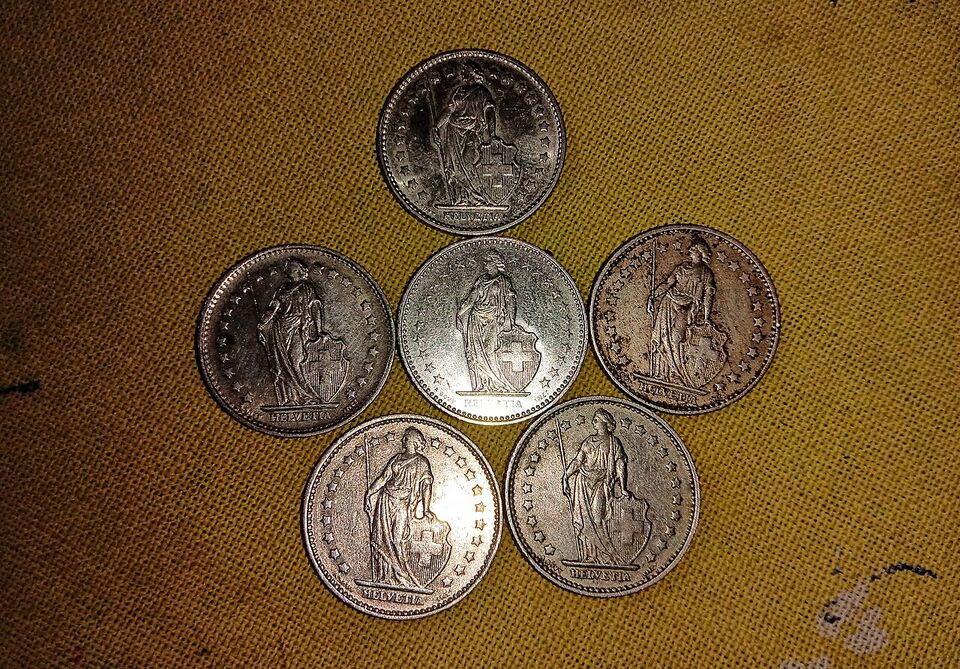
Coins and notes are easy to learn. The small coins are worth 5, 10 and 20 Rappen, and there are coins for half a franc, one, two and five francs. Notes start at 10 francs, and larger notes (up to 1,000 francs) are common in a country that likes cash for big purchases. Cash prices are usually rounded to the nearest 5 Rappen, while card payments are charged to the exact cent. This is general background, not an official list, so look at the coins in your change on the first day.
Use the quick conversions below at the site rate. Round up the dollars in your head and you will rarely be far off.
| Swiss francs | US$ (about) | An example at that price |
|---|---|---|
| CHF 5 | $6 | Swisscom 24-hour data pass (5 GB) |
| CHF 15 | $18 | Adult entry to Chillon Castle |
| CHF 20 | $24 | A 7-day Swisscom prepaid package |
| CHF 40 | $48 | The motorway vignette sticker for cars (2026) |
| CHF 150 | $180 | The Swiss Half Fare Card, valid for one month |
| CHF 200 | $240 | Roughly the Jungfraujoch return from Interlaken |
The "what it buys" column uses only prices we could confirm for 2026. We do not give menu prices for coffee, lunch or dinner because they vary by town, season and type of restaurant. Check the posted menu outside the door before you sit down.
Cards or cash?
Swiss shops, hotels, restaurants, ticket machines and mountain lift counters mostly take Visa and Mastercard, and contactless payment (tapping a card or a phone) is common. Cards from the US work with a chip and, in many places, a PIN. If you have a card with no foreign transaction fee, use it as your main payment method and keep cash as a backup. American Express acceptance is less certain than Visa and Mastercard, so do not rely on it as your only card.
Switzerland is a country that still likes cash for small things. Carry some francs for:
- Mountain huts and small alpine restaurants, which may take cash only or have unreliable card terminals.
- Farm shops and roadside stands, especially those with an honesty box (you leave coins in a tin).
- Some parking meters, lockers, ticket machines on local buses and small lifts.
- Public toilets that charge a fee, and small bakeries or market stalls.
- Tips, if you like to leave a few coins.
We could not confirm a national rule about which payment methods every shop must accept. Rules and terminals vary by operator, so treat this list as practical advice, not a guarantee. If a place is remote or tiny, assume cash.
Different from home
Swiss prices are normally posted as the full price you pay, with VAT already included, not a pre-tax price like in the US. The sticker or menu price is what will come out of your account (plus any tip you choose to add), and the card terminal often asks only for the amount, not a tip line.
TWINT and other Swiss payment apps
Swiss residents use an app called TWINT for many everyday payments. It is built around Swiss bank accounts, so visitors usually cannot use it. Our one confirmed fact is that Swisscom accepts TWINT as a top-up method for its Swiss prepaid SIMs. For everything else, use a card, a phone wallet (Apple Pay or Google Pay) or cash. See Phones, Data and Power for more on phones and apps.
ATMs, bank fees and getting francs
The cheapest way to get francs is usually a withdrawal from a bank ATM using a debit card from a bank with low foreign fees. ATMs are easy to find in towns, at railway stations and at airports, and most offer English. Look for ATMs that belong to a bank, not freestanding machines in tourist areas, which tend to add their own fees.
Three fees can stack up on an ATM withdrawal with a US card:
- The Swiss ATM operator may charge a fee, shown on screen before you confirm.
- Your US bank may charge a foreign ATM fee, and may also charge a percentage for converting dollars to francs (a foreign transaction fee).
- If the machine offers to convert the amount to dollars for you, accepting adds a worse exchange rate (see the next section).
We do not have confirmed fee amounts for any US bank or Swiss ATM, so look up your own bank's international ATM fee before you go. A few larger withdrawals usually cost less than many small ones if the fees are a flat amount. Use only the ATM's screen choice that says francs (CHF).
Insider tip
Before you leave, tell your bank or card issuer you are travelling, set a travel alert if the app offers one, and confirm your PIN works for cash withdrawals. A card with a PIN that you cannot remember is the most common reason visitors end up cashless.
Exchanging cash
You can change dollars at airport and station exchange counters and at banks, but the rate is normally worse than an ATM and counters may charge a fee. Euros are sometimes accepted in tourist shops near borders, but at the shop's own rate, and you will get change in francs. If you want to arrive with a small amount of francs, order from your US bank before you leave, or draw francs at the airport ATM when you land.
Banks in Switzerland generally keep weekday office hours and are closed on Sundays, and many branches no longer handle cash over the counter. Hours vary, so do not plan to change money at a bank branch late in the day or on a weekend. This is general guidance, and we did not verify opening times for any particular bank.
The dynamic currency conversion trap
When you pay by card abroad, the terminal or ATM may ask whether you want to pay in dollars or francs. This is called dynamic currency conversion, and it is almost always a bad deal. The merchant's or ATM operator's bank sets the rate and often adds a margin, so you pay more than if you had let your own card issuer convert the amount.
Watch out
If a card machine, ATM or hotel desk asks "Pay in USD or CHF?", choose CHF every time. Do the same on online bookings in francs. The screen may call the dollar choice "guaranteed rate" or "no surprises"; it is simply the more expensive option.
Keep your card receipts for a few days and check the amounts against your statement. If a charge looks wrong or appears twice, contact your card issuer.
Tipping in Switzerland
Service is normally included in menu prices, so a tip is a thank-you, not a requirement. In restaurants and cafes, rounding up the bill or leaving a few francs for good service is appreciated. We do not have a confirmed percentage and do not recommend using the American 18 to 20 percent rule, which would be generous by Swiss standards.
For taxis, hotel porters and guides, small change or rounding up to a friendly amount is the usual practice. If you are paying by card, tell the server the total you want to pay before they tap the terminal, because most terminals do not have a tip line. These are general customs, and we did not find an official source for exact figures.
Different from home
In the US the posted menu price is not what you pay in practice, because tax and tip come on top. In Switzerland the posted price already includes both VAT and service. A small extra is a gesture, not a rule.
Why Switzerland is expensive, and where it bites
Switzerland has high wages, a strong currency and costs that are steep for locals as well as visitors. Hotels, restaurant meals and mountain lifts are where most travelers feel it. Hotel rates are among the highest in Europe, and we do not give nightly ranges because we could not confirm current 2026-27 prices. Check dates on your booking site and compare more than one town.
Mountain lifts are the other big cost. These are full-price adult tickets we found from operators for 2026 (check each operator's site before you go, because lifts have seasons and maintenance closures):
| Trip | Price (CHF) | US$ (about) | Notes |
|---|---|---|---|
| Pilatus, summer return from Kriens or Alpnachstad | CHF 84 | $100 | CHF 42 with a Swiss Travel Pass or Half Fare Card; summer is May to November |
| Gornergrat railway, return | CHF 102 | $120 | 50% off with Swiss Travel Pass or Half Fare Card; ID needed for online tickets |
| Matterhorn Glacier Paradise, return, pre-season | CHF 104 | $125 | Valid 1 November 2026 to 30 April 2027; peak-season return is higher |
| Titlis day ticket (reseller price) | CHF 108 | $130 | Check titlis.ch; summit construction starts 13 December 2026 |
| Jungfraujoch, return from Grindelwald Terminal | from CHF 129.60 | $155 | From Interlaken, roughly CHF 200 or more; check jungfrau.ch |
| Harder Kulm funicular | from CHF 19 | $23 | A low-cost mountain viewpoint above Interlaken |
Restaurant prices also surprise visitors, mainly sit-down dinners with drinks. Supermarkets and bakeries are the usual way to stretch a budget: Coop and Migros are the two big supermarket chains, with ready-to-eat counters. Many towns also have public drinking fountains; look for a sign if you are unsure whether the water is drinkable. We did not confirm specific prices for these items, so we leave out exact figures.
Save money
Lunch is usually the cheapest hot meal of the day, and many places offer a daily lunch menu (Tagesmenü in German) at a lower price than dinner. Picnic from a supermarket for one meal a day and you will save more than any card trick. See Switzerland on a budget for more.
What a day costs: the numbers we can stand behind
We do not give a single "daily budget" because hotel and meal prices are not confirmed for 2026-27. The table below lists the costs we can state, so you can add your own hotel and food estimates. Passes are spread over days using our own arithmetic.
| Item | CHF | US$ (about) | Notes |
|---|---|---|---|
| Train, bus and boat with a Swiss Travel Pass, per day, 2nd class adult | CHF 33 to 85 | $39 to $100 | The 15-day pass (CHF 499) works out lower per day than the 3-day pass (CHF 254) |
| Saver Day Pass with a Half Fare Card, 2nd class | from CHF 29 | $35 | The card costs CHF 150 for one month; limited seats; check sbb.ch |
| Day Pass with a Half Fare Card, 2nd class | CHF 78 | $93 | New prices for certain Day Passes from 13 December 2026 |
| One big mountain trip, full price | CHF 84 to about 200 | $100 to $240 | Pilatus in summer up to the Jungfraujoch from Interlaken |
| The same trip with a pass (where discounted) | CHF 42 to 51 | $50 to $61 | Pilatus and Gornergrat at half price with a Swiss Travel Pass |
| A castle or chocolate museum | CHF 15 to 17 | $18 to $20 | Chillon Castle CHF 15, Lindt Home of Chocolate CHF 17; many museums free with a pass |
| Prepaid Swiss data and calls | CHF 20 for 7 days | $24 | Swisscom Prepaid Flat 7; see the phones page |
| Tourist tax, Canton Lucerne | CHF 1.10 per person per night | $1.30 | Other places vary; check your hotel |
| Hotel and meals | Among the most expensive in Europe; check dates and compare towns. | ||
A worked example: on a day with an 8-day Swiss Travel Pass (CHF 439 (about $520) for 8 days, about CHF 55 (about $65) a day) you could ride trains and boats all day, then pay half price for a Pilatus trip (CHF 42). That is about CHF 97 (about $115) in transport and sights before food and a bed. Without a pass the same day would cost the train fares plus CHF 84 (about $100) for Pilatus.
VAT, tourist tax and guest cards
Switzerland's value-added tax (VAT) has three main rates: 8.1% for most goods and services, 2.6% for groceries (not alcohol), medicines and books, and 3.8% for accommodation with breakfast. Restaurant meals are charged at the normal rate. The prices you see already include VAT.
Tourist and guest-card taxes
Most Swiss destinations charge a small tax per person per night. In Canton Lucerne it doubled from the start of 2026, to about CHF 1.10 (about $1.30) per person per night. For Zurich, Interlaken, Zermatt, Geneva, Lausanne, Lugano and St. Moritz we could not confirm the 2026 amounts, so check your hotel. The charge is often added to your hotel bill, and in many places it comes with a guest card that includes some benefits.
- Geneva: guests in approved hotels, hostels and campsites receive a free Geneva Transport Card for the length of the stay, valid in zone 10 and on the airport train to Cornavin station. Ask at check-in.
- Basel: the BaselCard is a free guest card with discounts.
- Ticino: the Ticino Ticket gives free public transport and discounts for stays in more than 500 partner places.
- Lucerne and Zurich: the Lucerne Visitor Card and the Zurich Card exist, but we did not confirm their prices or benefits. Ask your hotel what is included.
Guest cards can be worth more than the tax itself, so ask for yours at check-in. See where to stay for how to compare hotels.
Museums
The Swiss Travel Pass includes free entry to more than 500 museums. If you are not buying a pass, the Swiss Museum Pass gives one year of free entry to more than 500 museums and castles: CHF 147 (about $175) for one person in the 30th-anniversary offer (CHF 30 off) through December 31, 2026 (regular price CHF 177 (about $210)). Whether it pays off depends on how many museums you visit, so add up the entry prices first.
Tax refunds on souvenirs and shopping
Visitors who live outside Switzerland can often reclaim the VAT on larger purchases that they take home unused. Shops that offer this give you a form at the till, and the form usually needs a customs stamp when you leave. Airports have tax-refund counters (we found them listed for Geneva Airport and EuroAirport). Minimum purchase amounts, time limits and fees depend on the shop and the refund company, and we could not confirm them, so ask before you pay and check the Swiss customs site, bazg.admin.ch.
Bringing things home has its own limits. Returning US residents get an $800 personal exemption (once every 31 days, after at least 48 hours abroad), then a flat 3% on the next $1,000. For food rules and what you can and cannot pack, see shopping and taking things home and the CBP site. Keep your receipts.
Watch out
Do not bring meat or dairy products from the US into Switzerland. The customs value limit for goods you bring in is CHF 150 (about $180) per person, above which you owe Swiss VAT (8.1%). Check the customs site before you travel.
Border towns and the franc-euro mix-up
Basel, Geneva, Lugano and other border areas are close to France, Italy and Germany, and prices and currencies change within a few miles. A few points to keep straight:
- EuroAirport Basel-Mulhouse sits on French territory but has a Swiss sector and a French sector. Swiss-side car parks charge in francs and French-side car parks in euros.
- Some Geneva transport ticket machines at stops and at the station take change in francs or euros.
- If you cross to France or Italy for a day, you will need euros. A euro is worth about US$1.12 on this site (for example, €21 is about $24).
- Shopping across the border is cheaper for many everyday items. If you bring purchases back into Switzerland, the CHF 150 (about $180) limit per person applies before Swiss VAT is due.
Pay attention to the currency symbol on every price, particularly at border-town restaurants and gas stations. A price that looks like a bargain may be in euros, and one that looks high may be in francs. See Italy, France and beyond for trips into France and Italy.
Paying together: split-the-bill habits
In Swiss restaurants, the server will often ask "together or separate?" when you ask for the bill. In German you may hear zusammen oder getrennt?, in French ensemble ou séparé? and in Italian insieme o separato?. Splitting the bill by person is normal and not rude. Say how you want to split before the server brings the card machine, because it is awkward to re-do afterwards.
Many restaurants bring a handheld card terminal to your table, and you tap or insert your card there. If you want to leave a tip, tell the server the total you want to pay before they enter the amount. You normally do not wait for a check to be delivered: ask for the bill when you are ready, and expect not to be rushed.
Before you go: a money checklist
- Pick a debit and a credit card with no foreign transaction fee, and bring two in case one fails.
- Tell your bank where and when you are travelling, and confirm your PIN.
- Look up your bank's international ATM fee and daily withdrawal limit.
- Plan to withdraw francs from a bank ATM on arrival, or bring a small amount from home.
- Always choose CHF, not USD, when a terminal asks.
- Carry coins for huts, farm stands, lockers and public toilets.
- Check the live exchange rate on the SNB page or your bank's app.
- Read the phones and data page before you land so you can use your phone's wallet and banking apps.
Add it to a route in the trip builder, or ask us to plan the hotels, trains and guides for you.