Overview: how safe is Switzerland?
Switzerland is one of the safest countries for visitors. Violent crime against tourists is rare, public transport is reliable, and emergency services are quick and well organized. The US State Department lists Switzerland at Level 1, the lowest level, which means "exercise normal precautions." That was the level shown on the US Embassy's page in November 2026; check travel.state.gov for the current level before you go, because advisories can be updated at any time.
The real risks for visitors are of three kinds. The first is petty theft in crowded places. The second is the mountain environment, where weather, ice, avalanches, altitude and a simple wrong turn can turn a pleasant day into an emergency. The third is water: Swiss lakes and rivers are clean and inviting but cold, and some have strong currents. Most of this page is about those three.
If you want one rule that covers most of it, it is this: Switzerland is easy, so people relax, and the mountains do not. Take the same precautions you would take in a large European city on the streets, and take the mountains much more seriously than their well-kept trails suggest. For the health side of the trip, see our health and medical page.
Emergency numbers
Save these numbers in your phone before you land. They work from any phone, including a US phone with roaming, and calls to them are free.
| Number | Use it for |
|---|---|
| 112 | The European emergency number; it works in Switzerland for any emergency and you can use it if you do not know which service you need |
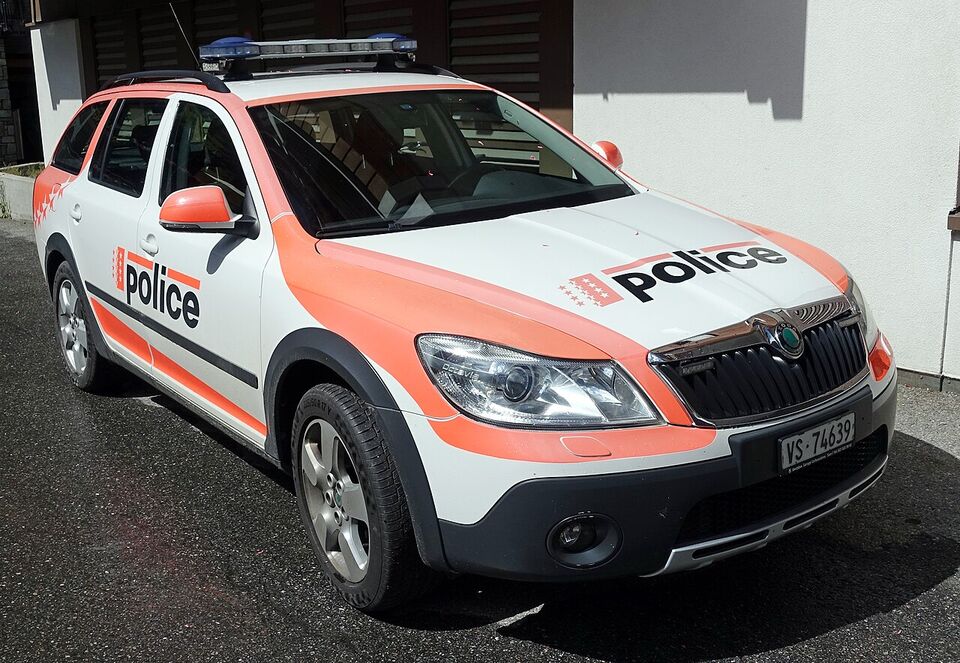
| 117 | Police |
| 118 | Fire |
| 144 | Ambulance |
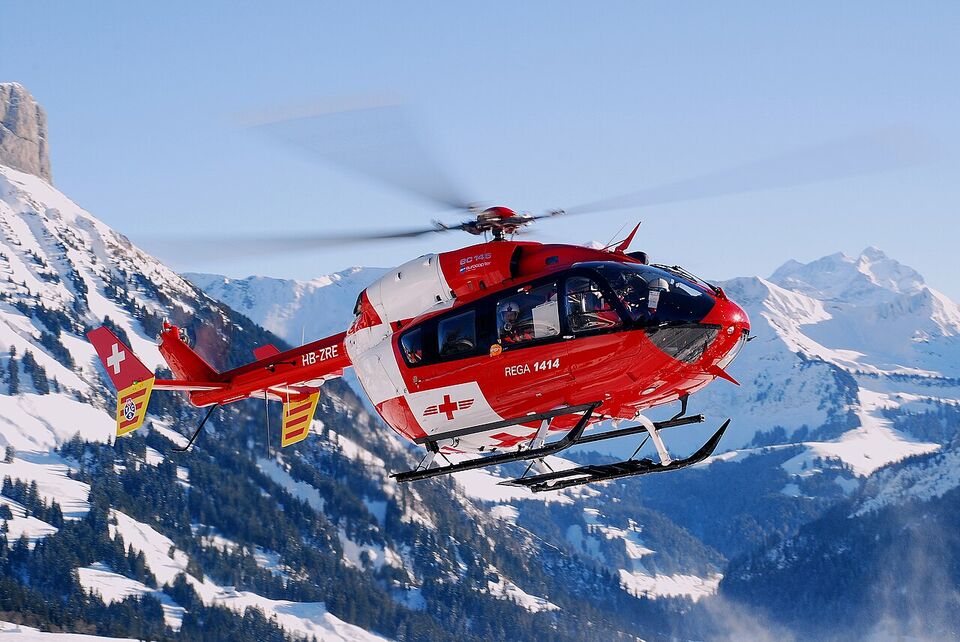
| 1414 | Rega, the Swiss air rescue, for mountain emergencies (+41 333 333 333 from abroad or on a foreign SIM) |
| +41 31 357 70 11 | US Embassy in Bern; there is also a 24/7 line at +1-202-501-4444 from abroad, or +1-888-407-4747 from the US and Canada |
When you call, give your location first (the nearest town, hut, lift station or trail name, or GPS coordinates), then what has happened and how many people are hurt. Stay on the line. Operators in Switzerland generally speak German, French or Italian and often English, so say "English, please" if needed. In a mountain area with weak coverage, 112 can connect through any network that has a signal, even when your own carrier has none. The Rega app can send your location to the rescue center. Our staying connected page covers phone plans and coverage.
The State Department advisory, explained
The State Department uses four levels: Level 1 (exercise normal precautions), Level 2 (exercise increased caution), Level 3 (reconsider travel) and Level 4 (do not travel). Switzerland sits at Level 1, the same as many of its neighbors. As of November 2026, the US Embassy in Bern's page showed that rating, and we do not print the date of the last update because the date on the official page should be checked directly.
A Level 1 advisory does not mean nothing can happen. It means that the department sees no particular country-wide threat beyond normal travel risk. The embassy also posts alerts for specific events. On November 9, 2026, it posted an alert about the potential for demonstrations and related disruptions. Demonstrations in Swiss cities are usually peaceful, but they can block streets and trams, so check the embassy's alerts page, avoid the crowds and follow police directions.
Consider enrolling in the State Department's Smart Traveler Enrollment Program (STEP) before you go. It sends alerts about your destination and helps the embassy reach you in a crisis. If you lose your passport, the US Embassy in Bern issues emergency passports; there are also US consular agencies in Geneva (Rue Francois-Versonnex 7) and Zurich (Dufourstrasse 101), but they keep limited part-day hours, so call ahead before you go.
Crime, pickpockets and scams
Crime against tourists is mostly petty theft. Pickpockets work where crowds, luggage and distraction come together: the concourse and platforms of Zürich Hauptbahnhof, the area around Geneva's Cornavin station, crowded tourist trains and cable cars, busy trams, markets and the lines at major attractions. Keep your phone and wallet in a front pocket or a zipped inner pocket, wear a bag across your body, and never put a phone or passport on a café table or on top of a bag.
Common tactics are a distraction (someone asks for directions or spills a drink), a crowded door, or a bump on a train as it stops. Be especially careful when you board and exit trains with luggage, and when you are focused on a ticket machine. On overnight or long trains, keep valuables with you rather than in a rack. Do not leave bags unattended in a station or a locker you cannot see.
Scams are less common than in some other destinations, but they exist. Be wary of strangers who offer to help with a ticket machine and then ask for payment, people who ask you to sign a petition and then ask for a donation, and anyone who offers to exchange money on the street. Unofficial taxis and "free" gifts in tourist areas are best declined. If you are not sure whether a charge is correct, ask for the itemized bill.
If something is stolen, report it to the police (117 or the nearest station) and ask for a written report, which your travel insurer will want. Cancel cards immediately, and if your passport is gone, contact the US Embassy in Bern. Our money guide covers cards and what to carry.
Watch out
Do not use a loose phone camera at a train door or while waiting for a ticket machine. Many thefts are quick grabs at the doors when a train is about to leave. Keep a photo of your passport and a list of card numbers and phone numbers in a separate place so that you can cancel them quickly.
Mountain safety: weather, ice and avalanches
Swiss mountain rescue is excellent, but it works best when you do not need it. Most accidents come from the same few causes: underestimating how fast the weather can change, going too high or too far, wearing the wrong shoes, going off the marked path and not telling anyone the plan.
Check the weather before every mountain day. The federal weather service, MeteoSwiss, publishes forecasts and natural-hazard warnings. Mornings are generally stable and afternoons can bring clouds and storms, so start early and plan to be off exposed ridges by early afternoon. At altitude, temperatures can be far below those in the valley. The Jungfraujoch weather station, for instance, has long-term average daily highs below freezing from October to May and only a few degrees above it in July and August, so a warm day in Interlaken says nothing about what you will find at 3,454 m (11,332 ft).
The Institute for Snow and Avalanche Research, SLF, runs the official avalanche bulletin and it is the first thing to check if you plan to ski or hike off prepared routes in winter. The bulletin is published daily in winter on slf.ch; check the site for the start date and the current danger levels. Stay on marked ski runs and snowshoe trails unless you have avalanche training, a transceiver, a probe and a shovel, and the experience to use them. Off-piste skiing without a guide is how most visitors get into avalanche trouble.
Ice and snow can remain on trails in early summer and appear again in early fall. A trail that is rated for walkers in July can need crampons in late spring. High-altitude trails may be closed or unsafe after snowfall even if the valley is sunny. Glaciers are retreating, and snow bridges over crevasses are risky; do not walk on glaciers without a guide and equipment. SLF news in October 2026 reported that Swiss glaciers lost a further 5 percent of their volume.
Insider tip
Tell the hotel or hut where you are going and when you plan to be back. A lift station's last-run time is posted; missing the last cable car down means a long walk or a night at altitude. Set an alarm for 30 minutes before the last departure and treat it as a deadline.
Thunderstorms, lightning and altitude sickness
Thunderstorms are most common in summer afternoons. If you hear thunder, get below the treeline, away from ridges, peaks and isolated trees, and do not shelter under a lone tree or near cables. Metal lift cables and via ferrata cables are dangerous in lightning. A hut or a car is safe; a tent or an open shelter is not. Start early to be done by midday when storms are forecast.
Altitude sickness can affect anyone, including fit people, at high elevations. The most common visitor case is the Jungfraujoch, with a station at 3,454 m (11,332 ft). Other high lift stations include Gornergrat at about 3,090 m (10,135 ft). Symptoms are headache, nausea, dizziness, unusual tiredness and trouble sleeping. They are usually mild at tourist stations and ease with rest, slow walking, fluids and descent. Avoid heavy alcohol and strenuous exercise there.
If symptoms are severe, such as confusion, loss of coordination, breathlessness at rest or a cough that brings up fluid, go down immediately and get medical help. Do not wait for the symptoms to pass. If you have heart or lung problems, are pregnant or have other conditions, ask your doctor before you go high. Our health page covers altitude, sun and ticks in more detail, and the mountain excursions guide covers the lift stations.
Rega: membership, helicopter costs and insurance
Rega (Swiss Air-Rescue) is a non-profit foundation that runs the helicopters used for most mountain rescues. Rega's own site says that an average helicopter mission costs around CHF 4,500 (about $5,350), and complex searches can reach tens of thousands of francs. Repatriation flights are far more expensive: Rega gives examples of around CHF 30,000 (about $35,700) from Spain and over CHF 100,000 (about $119,000) from Thailand.
Rega patronage costs CHF 40 (about $48) for adults, and is free for children and young people under 18. The price and the validity date (May 15, 2027, for payments made now) come from Rega's site, so check rega.ch before you pay. Patronage works as a donation that, in Switzerland and Liechtenstein, may lead Rega to waive costs for rescue flights that insurance does not pay. Rega's conditions say this is done without any legal obligation, and that worldwide repatriation flights are for patrons domiciled in Switzerland or Liechtenstein and for Swiss nationals living abroad. That means that, for an American visitor, patronage may help with some mountain rescue bills, but it is not a substitute for insurance.
What to do: buy travel insurance that explicitly covers medical care, mountain and helicopter rescue, and medical evacuation or repatriation, and check the exclusions for the activities you plan (hiking above a certain altitude, skiing off-piste, paragliding and climbing are often excluded or limited). Carry the policy number and the insurer's 24-hour number. Call Rega first in a mountain emergency; you can sort out the money later. The Swiss health insurance rule that pays part of a recognized rescue is for people insured in Switzerland and does not apply to visitors.
Save money
A Rega patronage for CHF 40 (about $48) is cheap compared with a single helicopter bill, but treat it as a bonus, not a plan. A solid travel insurance policy with evacuation cover is the main protection, and it usually costs a small share of your trip budget.
Hiking safety
Swiss trails are well marked, but "well marked" is not the same as "easy." Look for the signposts at junctions: they give the destination and the walking time, and the trail colors indicate difficulty. Yellow signs mark ordinary walking paths. White-red-white marks are used for mountain trails that can be steep, exposed and need sure-footedness, and white-blue-white marks are for alpine routes that may involve snow and glaciers and require equipment and experience. Check the trail rating and the open status on the official trail site before choosing a route. Our hiking guide covers routes and planning.
Pack for the weather, not for the valley: a waterproof jacket, a warm layer, a hat and gloves, sun protection, a head torch, a first-aid kit, a charged phone with an offline map, water and food. Wear hiking boots with good tread; most visitor injuries are slips and falls on wet or loose ground. Poles help on descents. Turn around if the weather turns, if the trail is more exposed than you expected or if you are running out of daylight.
Do not hike alone on difficult routes, and do not rely on a phone signal alone. Tell someone your route and your return time. Respect closures and warnings at the trailhead; after a landslide or rockfall, some trails stay closed for years. The village of Blatten in the Lötschental was largely destroyed by a rock and ice avalanche in May 2025, and you should not plan a visit there; the rest of the valley is separate.
Swimming in lakes and rivers
Swimming in Swiss lakes is a pleasure in summer, and many towns have supervised beaches and lakeside baths. Lake water stays cold well into summer, even when the air is hot, and cold shock can cause trouble even for strong swimmers. Get in slowly, do not swim far from shore and do not swim alone. Watch for sudden weather changes, strong winds and boat traffic.
Rivers are a different matter. Swimming down the Aare in Bern, or in the Rhine in Basel, is popular with locals, but currents are strong and can be dangerous for people who do not know the river, and the water can be very cold. Use the marked entry and exit points, never swim after drinking alcohol and do not enter the water in high flows after heavy rain or snowmelt. Do not jump from bridges. Locals who float downstream know where they will get out before they get in. If a river is flowing fast, stay out. See our lakes guide for places and rules.
Winter driving and road safety
Switzerland drives on the right, as in the US, and roads are well kept. In winter, conditions can change quickly, and mountain roads and passes close with snow. On the passes that stay open all winter, the pass information service says winter tires are obligatory and chains may be required; rental cars in winter are normally equipped, but ask. Carry chains if signs require them, and check the road status before a pass. Passes and mountain roads have seasonal closures; check the official pass sites.
Observe speed limits carefully. Cameras are common, and fines can be high and are sent to the rental company, who will pass the bill on to you. Drink-driving rules are strict, so do not drive after drinking. A motorway vignette is required: it costs CHF 40 (about $48) and the 2026 sticker is valid from December 1, 2025, to January 31, 2027. Our driving guide covers rules, parking and passes.
Trains are usually the safer and easier choice in winter. If you do drive, leave extra time, keep fuel above a quarter tank, carry water and warm clothing and stay on main roads when snow is falling.
Solo, women and LGBTQ+ travelers
Solo travelers find Switzerland easy. Public transport runs on time, towns are calm in the evening and English is widely understood. Solo women usually report feeling comfortable on trains and in city centers at night, with the same precautions as anywhere: stay aware, use well-lit routes and trust your instincts. Late at night, some station areas in big cities can be rowdy; plan your return in advance. Mountain huts have shared dormitories, and the usual advice for solo travelers applies, such as keeping valuables close.
LGBTQ+ travelers will find Switzerland broadly welcoming, especially in the large cities such as Zurich, Geneva, Basel and Bern. Same-sex marriage has been legal in Switzerland since 2022, and discrimination based on sexual orientation is covered by criminal law. As elsewhere, rural areas and some smaller communities can be more reserved, but visible hostility toward visitors is uncommon. If you experience harassment, report it to the police (117).
Pride events and local venues are listed by the city tourism offices. For check-in, hotels, and any specific concerns, consult current traveler resources before you go.
Drugs, alcohol and the law
Swiss laws on drugs are strict for visitors. Cannabis is not legal for general sale or use, even though you may see local debate and pilot programs. Possession can bring a fine or worse, and carrying drugs across borders is a crime. Do not bring or buy drugs, and do not accept packages from strangers. Prescription medicines have their own rules; see the health page.
Alcohol is easy to buy and is part of social life. The legal age is generally reported as 16 for beer and wine and 18 for spirits, but rules and venue policies vary, so expect to show an ID. Drinking in public is not forbidden in most places, but being drunk and disorderly is. The drink-driving limit is low, so if you drink, take the train, a tram or a taxi.
Carry your passport or national ID. Police can ask to see identification, and hotels will require it at check-in. A photocopy or photo in a separate place helps if you lose the original.
Fire, fireworks and open flames
Fire rules are taken seriously, especially after the fire at the Le Constellation bar in Crans-Montana on January 1, 2026, which killed 41 people and injured about 115 more. Canton Vaud announced a ban on pyrotechnics in bars and restaurants. Rules elsewhere may differ, but venues everywhere are likely to be strict. Do not use sparklers, candles with open flames or fireworks indoors, and follow staff instructions.
Fireworks are part of the celebrations on August 1 (Swiss National Day), New Year's Eve and some festivals, but they are regulated. Outdoor fireworks can be restricted or banned when the risk of fire is high, and many towns and cantons post bans during dry spells in summer. Check the local municipality's notices before using or buying any, and do not carry fireworks across borders.
In forests and on mountains, never light a fire except in the marked fireplaces that are provided, and only when no ban is posted. A campfire, a barbecue or a cigarette in a dry forest can start a serious fire. Extinguish cigarettes fully and never throw them from a train or a car.
What to do if: a checklist
- Medical emergency: call 144 (or 112), give your location and stay on the line. Show your travel insurance details at the hospital.
- Mountain accident or missing hiker: call 1414 (Rega) or 112 and give the precise location. Keep warm and visible, and do not move an injured person unless there is danger.
- Theft or assault: go to a safe place, call 117, ask for a written police report and cancel your cards. Tell your insurer.
- Lost passport: report it to the police, then contact the US Embassy in Bern at +41 31 357 70 11. Bring a photo ID and a copy of the passport if you have one.
- Fire: leave the building, call 118, and do not go back for belongings.
- Avalanche: if you are caught, call 1414 or 112 as soon as possible; if you are with a group, start a search with your transceiver at once.
- Storm on a trail: descend below the treeline, stay away from ridges and metal cables and stop to wait for it to pass if shelter is available.
- Swimming trouble: call 112; throw a float or rope instead of jumping in after someone.
- Demonstration or unrest: avoid the area, follow police instructions and check the embassy's alerts.
- Car breakdown: switch on hazard lights, put on a reflective vest, and call your rental company or the roadside assistance number on the rental papers; use 112 if there is danger.
For planning your whole trip with these risks in mind, start with the trip planner, and for the cultural side of getting along on trails and in towns, see Swiss etiquette.
Add it to a route in the trip builder, or ask us to plan the hotels, trains and guides for you.