How to choose a day trip
Switzerland is small and its trains are frequent, so almost every town is a day trip from somewhere. That is useful but also a trap. The best trips give you a lot to see for relatively little time in transit, while the poor ones spend half the day in a seat. We rank the options below by return on time spent: how much you get for each hour on the train, boat or bus.
Three rules help. First, keep each leg under about two hours; beyond that you are better off staying a night. Second, pair two nearby places rather than chasing one far one. Third, check the season. Lake boats, mountain railways and some castles reduce service or close in winter, and many have maintenance closures in November and in spring. Our mountain excursions guide covers the lifts and railways, and our trip-planning page shows how day trips fit into a longer route.
Times on this page are rough and rounded. They are meant for planning, not for catching a connection. Use the SBB app for the timetable on your date, and note that a new national timetable starts on December 13, 2026.
Comparison table by origin
| From | Trip | Mode | Roughly one way | What you get |
|---|---|---|---|---|
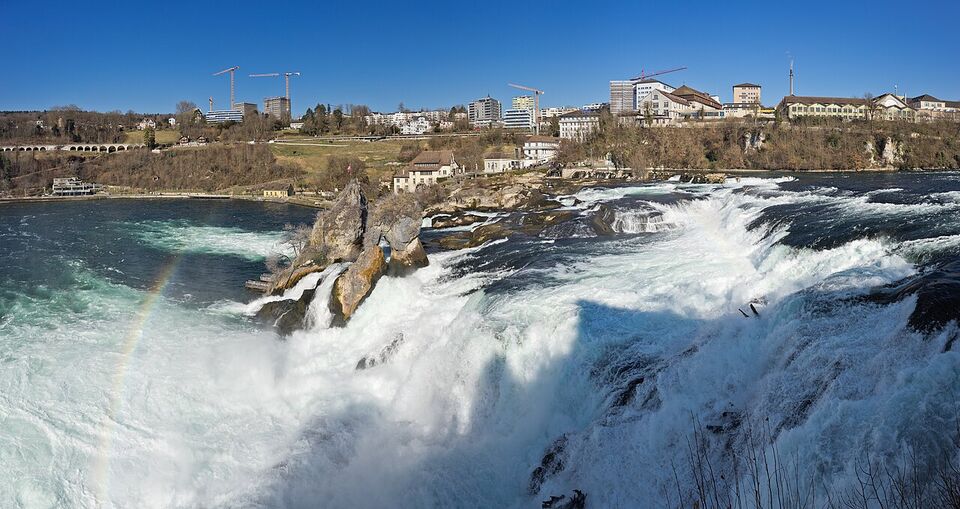
| Zurich | Rhine Falls | Train, short walk | Under 1 hour | The falls, a castle, boats in season |
| Zurich | Lucerne | Train | About 45 minutes | Old town, Chapel Bridge, lake |
| Zurich | Bern | Train | About 1 hour | Old town, arcades, river |
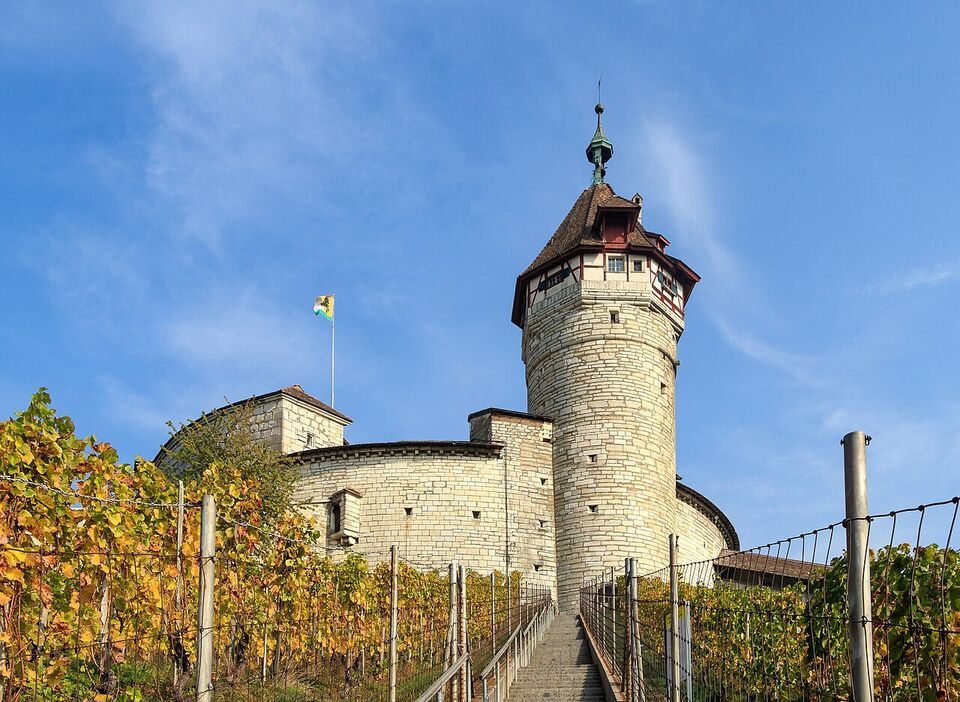
| Zurich | Stein am Rhein | Train with a change | 1 to 1.5 hours | Painted medieval town on the Rhine |
| Zurich | St. Gallen | Train | About 1 hour | Abbey district and library |
| Zurich | Appenzell | Train with a change | About 2 hours | Painted houses, cheese, hills |
| Zurich | Lugano | Train | About 1 hour 40 minutes to 2 hours | Lake town in the Italian-speaking south |
| Lucerne | Lake Lucerne boat | Boat | Hours, depending on route | Lake and mountain views |
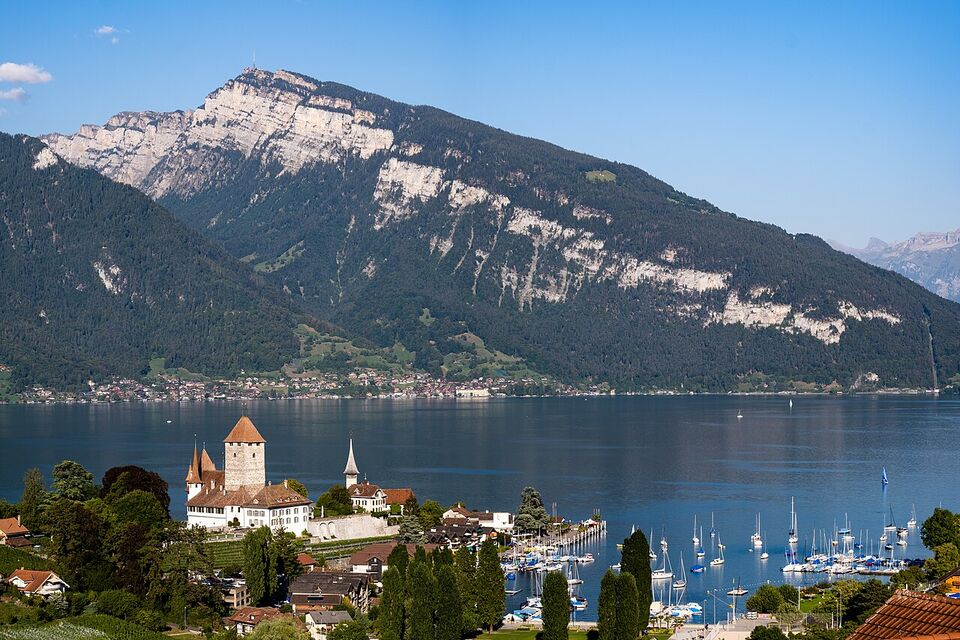
| Bern | Thun | Train | About 20 minutes | Castle on a lake |
| Bern | Murten (Morat) | Train with a change | About 40 minutes | Walled town on a small lake |
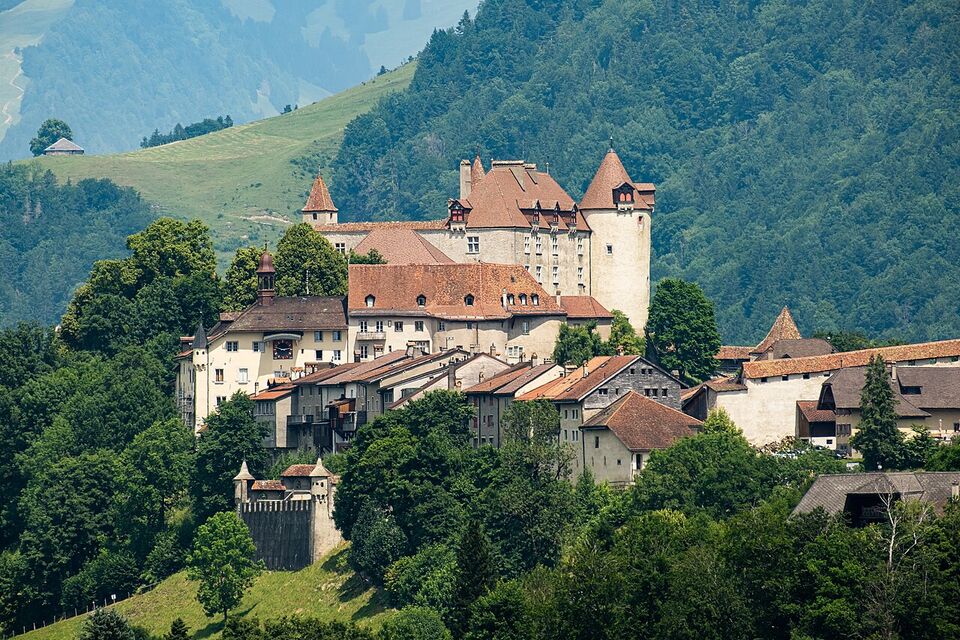
| Bern or Geneva | Gruyères | Train, bus or rail with a change | 1.5 to 2 hours | Medieval hilltop town, castle, cheese |
| Geneva or Lausanne | Vevey, Montreux, Chillon | Train, boat or both | 40 minutes to about 1 hour | Lake towns, castle, vineyards |
| Basel | Bern, Lucerne or Zurich | Train | About 1 hour | A major city in an hour |
The times are rounded planning figures, not timetable readings. Confirm them in the SBB app. Fares are not shown because point-to-point prices change with the December fare adjustment; a national average rise of about 3.6 percent takes effect in December 2026.
Ranked by return on time spent
This ranking reflects the effort and the payoff, not the glamour. It assumes you start from the city named and have a full day.
1. Lucerne from Zurich
The best ratio. You get a compact old town, a wooden bridge, a lake and boat options for a short ride. If you can, stay a night instead. See our Lucerne guide.
2. Rhine Falls from Zurich
The biggest waterfall in Europe by volume, easy to combine with Schaffhausen or Stein am Rhein. The site lists a winter illumination from November 13, 2026 to January 3, 2027.
3. Lake Geneva: Lausanne, Vevey and Chillon
Three to four stops on one line, with vineyards between them. Our Lausanne and Montreux guide covers the details.
4. Bern from Zurich or Basel
An easy, flat old town in a river loop. Pair it with Thun on a longer day. See our Bern guide.
5. Thun and Murten from Bern
Quiet lakeside towns with castles and arcades. They are low effort and work well for a second day in the region.
6. St. Gallen and Appenzell
A quieter trip with a UNESCO abbey district and painted villages. See Appenzell and the East.
7. Gruyères
A beautiful hilltop town, but it takes a long day for what is a half-day place. See below for how to pair it.
From Zurich
Zurich has the broadest menu. Lucerne and Bern are the safest bets. Rhine Falls is a short ride to the station near the falls, then a short walk. The site lists a medieval Christmas market that begins on Friday, November 20, 2026, at two castles on opposite banks, with special boats connecting them. It is open to walkers over a rail bridge as well. The site also says dogs on leashes are allowed and that about 90 percent of the grounds are accessible to strollers and wheelchairs. Check the dates and the boat times on rheinfall.ch before you go.
Stein am Rhein is a small medieval town on the Rhine with painted house fronts. It takes a change of trains from Zurich and works well as a pairing with the Rhine Falls: go to the falls in the morning, continue to Stein am Rhein, and return in the afternoon. Check the SBB app for the route and times for this combination.
St. Gallen offers an abbey district listed by UNESCO, and Appenzell is the nearby region of painted houses, cheese and hills; our Appenzell page explains how to reach it. Lugano is on the other side of the Gotthard in the Italian-speaking south. It is reachable in roughly 1 hour 40 minutes to 2 hours by train, but a round trip eats four hours or more. See the section on trips that are too long, and our Lugano and Ticino page.
If you stay in Zurich, our Zurich guide shows the city plans and the trips in a table.
From Lucerne and Bern
From Lucerne, the best short trip is a boat on Lake Lucerne. Boats are free with the Swiss Travel Pass and half price with the Half Fare Card. Piers include Weggis, Vitznau, Brunnen and Flüelen, Alpnachstad for Pilatus, and Küssnacht and Bürgenstock. A short out-and-back ride is more relaxing than trying to ride the whole lake. Lake boat timetables thin out in winter, so check the operator's site. See the lakes guide.
From Bern, Thun and Murten (Morat) are easy half-day trips. Thun has a castle above a lake with the Alps behind it; Murten is a small walled town beside a lake and sits on the language border, so you may hear German and French. Castle hours change by season, so check before you go.
Gruyères, in the French-speaking canton of Fribourg, is a hilltop town with a castle. The castle is open 10 a.m. to 5 p.m. in November, and an exhibition called "The Great Christmas" runs from November 21, 2026 to January 10, 2027. Check chateau-gruyeres.ch for ticket prices. Cheese and chocolate attractions nearby have their own hours; check each. If you are coming from Bern, count on a day.
From Geneva, Lausanne and the lake
The north shore of Lake Geneva is the richest day-trip corridor in the country. A train runs along the water between Geneva, Lausanne, Vevey and Montreux, and each town is a walkable stop. Lausanne is a hillside city with a cathedral and a lakefront at Ouchy. Vevey has pedestrian streets and Chaplin's World in nearby Corsier-sur-Vevey, and the Lavaux terraced vineyards between Lutry and Vevey are a UNESCO landscape.
Château de Chillon, on the lake near Montreux, is the most visited historic monument in Switzerland, according to its own site. Adults pay CHF 15 (about $18) and children CHF 7 (about $8). November to February it opens 10 a.m. to 5 p.m. with last entry at 4 p.m.; from March to October the hours are longer. It is closed on January 1 and December 25. Check the current ticket rules on chillon.ch.
In winter, Montreux has a Christmas market, "Montreux Riviera Noël," from November 20 to December 24, 2026, with more than 150 chalets. See our Christmas markets page and the Lausanne and Montreux guide. Rochers-de-Naye above Montreux is the area's mountain excursion at 2,042 m (6,699 ft). Check its seasonal running before you plan it.
From Geneva, the French-speaking day trips are easy. Gruyères and Bern are possible, but each is closer to a long day; see below. Our Geneva guide covers the city itself.
From Basel
Basel is well placed for day trips, and the best ones are by train and cross a border: Freiburg in Germany and the Alsace towns in France are short rides away. Because Switzerland is in Schengen, you normally do not pass a passport check, but carry your passport anyway. Our Basel page covers the city.
Within Switzerland, Basel is about an hour by train from Bern, Lucerne and Zurich, so the day-trip logic runs both ways: you can stay in Basel and visit Bern, or use Basel as a day trip from Zurich. If you plan a cross-border trip, remember that euros are used in France and Germany, so budget in euros, and note that the Swiss customs limit for goods you bring back is CHF 150 (about $180) per person. See our beyond Switzerland guide for more.
Best pairings
These pairs fit into one day without rushing.
- Rhine Falls and Stein am Rhein from Zurich: both are in the northeast and share a rail corridor.
- Lausanne and Vevey or Vevey and Chillon from Geneva: all on one line.
- Bern and Thun from Zurich or Basel: two towns, an hour apart at most.
- St. Gallen and Appenzell from Zurich: a full day, best on a clear weather day.
- Lugano and Bellinzona, ideally as an overnight: the castles at Bellinzona are a UNESCO site and a short ride from Lugano. Check the castles' hours and prices on the Ticino tourism site.
Insider tip
Travel out in the morning and come back late. In winter, daylight is short (about nine hours in November), so start early to see anything outdoors.
Day trips that are too long
Some popular excursions are possible on paper but poor value in one day:
- Jungfraujoch from Zurich. The official site gives 1 hour 30 minutes from Interlaken Ost to the top, and you must first reach Interlaken from Zurich, so most of the day is spent in transit and a cloudy morning ruins the view. Stay in the Interlaken area instead. See our Interlaken page.
- Zermatt and the Matterhorn from Zurich or Geneva. Allow roughly three hours each way. Zermatt is car-free and you change to the Zermatt train at Visp. Stay a night or two. See our Zermatt guide.
- Lugano from Geneva. It crosses the whole country; do not try it.
- Glacier Express or Bernina Express as a day trip. The Glacier Express alone takes about 8 hours between Zermatt and St. Moritz, and a seat reservation is required. See the scenic trains guide.
- Geneva to Zurich or back. The trip is long enough to be a transfer, not a day trip.
Watch out
A day that needs more than four hours on trains leaves little time at the destination. If the schedule looks like that, book a night. Mountain trips also depend on weather and lift status, and in November many lifts are closed for maintenance.
Which trips deserve a night
A day trip is a good fit when the place is small, the sights sit close to the station and the journey is under about two hours. It is a poor fit when the place has a lot to do, or when the best light is early or late. Three groups of places are better as overnights. The first is Lucerne, where evenings on the lake are quiet once the day visitors leave. The second is Lugano and Bellinzona in Ticino, where the pace is slower and the trip from the north is long. The third is anywhere in the high mountains, where weather is the deciding factor and a second day gives you a second chance at a clear view.
You can also flip the logic. If you plan to spend several nights in one city, use it as a base and make the others day trips. Zurich, Lucerne and Bern are all good bases because their stations are central and trains run often. Our where to stay guide compares bases by region. Many travelers choose Lucerne or Bern as a base for two or three nights instead of moving every night, which saves time and packing.
Different from home
Trains run on a fixed-interval timetable, usually at the same minutes past each hour, and they leave on time. You rarely need to book a seat on regular trains, so a day trip can be improvised the same morning. Panoramic trains are the exception and need reservations.
Day trips in winter and in the shoulder season
From late fall to early spring, plan with more care. Daylight in November lasts about nine hours, so a trip that needs a long outdoor walk should start early. Lake boats run reduced timetables or stop for the season, and some mountain railways close for maintenance for several weeks. For the Rhine Falls, the special boats that link the two castles are brought out only for the Christmas market weekend, according to the falls' own site, so a winter visit means a walk, not a ride.
The upside is that winter brings its own events. The Rhine Falls has its illumination, Montreux has its Christmas market, and Gruyères has a Christmas exhibition at the castle. Cities such as Bern, Lucerne and Zurich also host markets, usually from late November to Christmas. Dates vary by city, so check them. See our December guide and the Christmas markets page.
Weather changes plans. Lakeside walks, castles and old towns are fine in drizzle; mountain viewpoints are not. When the forecast looks poor in the Alps, switch to a museum town or a castle and keep the mountain for another day. The when to go page has monthly weather averages.
Luggage and timing on travel days
If you change hotels on the same day as a day trip, SBB has two options. Station-to-station luggage transport costs CHF 12 (about $14) per item for up to 23 kg (50 lb); you drop the bag at a participating station and collect it two days later. Storage at a station is free on the day of arrival and for four days after, then CHF 5 (about $6) a day. A valid ticket for the whole route is required. Swiss Travel Pass holders also get a promotion of more than 50 percent off same-day luggage services for trips from October 1 to December 15, 2026. These figures come from SBB and the Swiss Travel System; check the current terms before relying on them.
Finally, build slack into the day. A cushion of 30 to 45 minutes before the last train you need makes a missed connection less costly. Swiss trains are frequent, but the last evening trains on some branch lines leave early.
Tickets, passes and seasonal checks
A Swiss Travel Pass covers trains, buses and boats across the network and city transport in more than 90 towns. In 2026 an adult second-class pass for 3 consecutive days costs CHF 254 (about $300) and a 4-day pass costs CHF 309 (about $370). The Half Fare Card costs CHF 150 (about $180) for one month and halves the price of most trains, boats and many mountain railways. Which is cheaper depends on the number of days and the length of the trips; see our Swiss Travel Pass guide and budget tips.
The pass prices on this page are 2026 prices. The Swiss Travel System says pass prices are not rising in the December 2026 fare round, but 2027 price lists may differ, so check before you buy. Point-to-point tickets rise by about 3.6 percent on average in December.
Finally, check each attraction's own site for seasonal opening. Castles often shorten winter hours, boats thin out, and mountain lifts close for weeks in November and in spring. Our getting around guide explains tickets and the SBB app.
Add it to a route in the trip builder, or ask us to plan the hotels, trains and guides for you.