Overview
Switzerland has a serious wine culture that most Americans never meet, because very little of the wine leaves the country. It also has beer, fruit brandies, a milk-based soft drink, strong coffee and a very good hot chocolate. This page covers what to drink, where, the age rules and the etiquette, and what you can take home to the US.
It pairs with Swiss Food and Fondue, where white wine is part of the cheese, and with Chocolate and Cheese. For tipping and manners at the bar, see the etiquette guide. We give no bottle or glass prices here: we could not confirm them, and they vary widely by town. Wine lists are posted outside most restaurants, so check before you sit.
Why Swiss wine rarely leaves Switzerland
Switzerland has a small wine industry on steep, expensive land. Vineyards are terraced hillsides, farmed largely by hand, and production costs are high. Most of what is made is sold and drunk inside the country, partly because the Swiss like it and partly because it is priced for the home market. The result is that a Swiss white wine on a restaurant list in New York is rare, and a visitor who tastes it in Switzerland is trying something that is hard to find anywhere else.
That has a second effect: the wines are more local in style than the wines of larger exporters. They are made for the local table, and they often taste best with local food. Do not expect them to taste like the wine of a neighbor. A Swiss Pinot Noir is not a Burgundy, a Ticino Merlot is not a Californian one, and Chasselas is not Chardonnay.
The main wine regions and their grapes
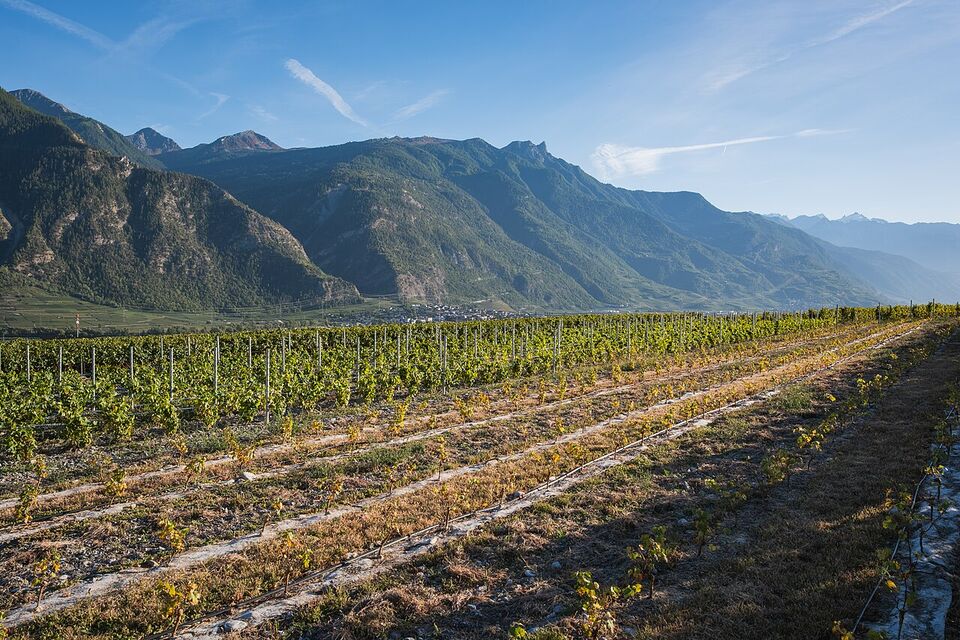
Wine is made in many Swiss cantons, particularly the Valais, Vaud, Geneva, Ticino, Neuchâtel and the Zurich area. The vineyards of the Valais and Lavaux are the most extensive terraced ones. The grape you will meet most is Chasselas, the most common white in French-speaking Switzerland. Pinot Noir is the most popular red in both the French- and German-speaking parts. In the Italian-speaking south, Merlot is the main red.
| Region | Main grapes | What to expect |
|---|---|---|
| Lavaux and Vaud (Lake Geneva) | Chasselas | Dry, delicate whites that reflect the soil; the wine of the lakeside terraces and of fondue |
| Valais (the upper Rhône valley) | Chasselas (as Fendant), Pinot Noir, Petite Arvine, Syrah and local varieties | The biggest and most varied wine canton; sunny, dry slopes; Fendant is the classic partner of raclette |
| Geneva | Chasselas (as Perlan), Gamay, Pinot Noir | Light whites and soft reds near the city |
| Neuchâtel | Chasselas, Pinot Noir | Light whites and a pale rose made from Pinot Noir; the lake and the Jura are close |
| Ticino | Merlot | Soft, rounded reds, and some white wine made from Merlot; pairs with polenta and grotto dishes |
| Zurich and the German-speaking east | Pinot Noir, Riesling-Sylvaner | Small vineyards on lake slopes; wines often drunk young and local |
Petite Arvine is a white grape of the Valais, known for a lively, slightly salty, citrus-and-grapefruit character. If you want one distinctive white to look for, this is a good one. The grape varieties differ between producers, and we do not rank bottles or makers. Ask the server or wine shop for a local recommendation and give a budget.
Insider tip
Order wine by the deciliter. Most Swiss restaurants sell wine by the glass in small measures, such as 1, 2 or 3 deciliters (a deciliter is about 3.4 fluid ounces), as well as by the bottle. Ordering two or three small glasses of different local wines is the cheapest way to learn what you like.
Visiting Lavaux
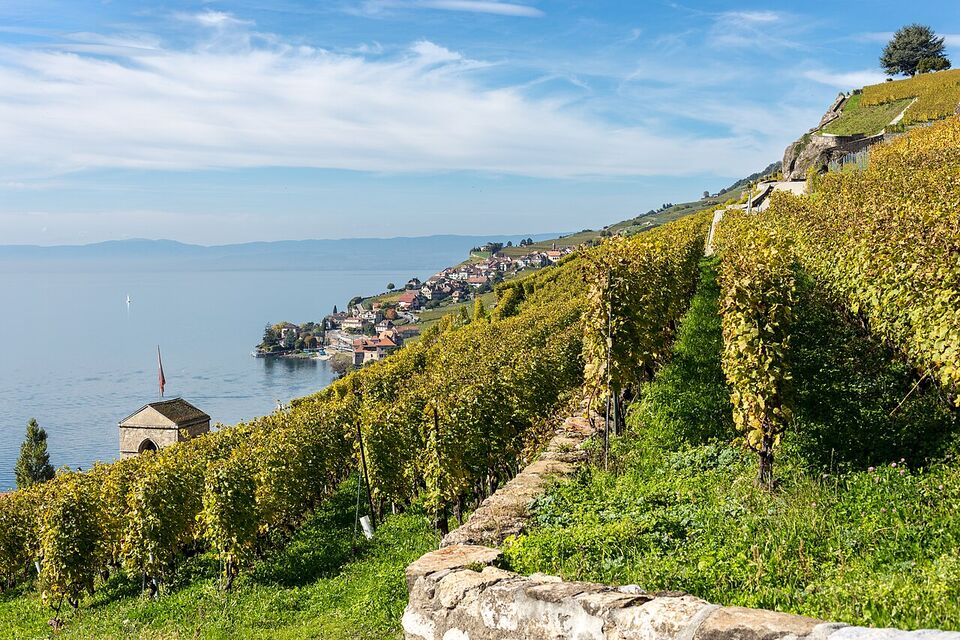
Lavaux is a strip of steep vineyard terraces along the north shore of Lake Geneva between Lausanne and Montreux, listed as a UNESCO World Heritage site. Stone walls hold up the vines, the lake spreads below, and the French Alps stand across the water. The wine villages along it include Lutry, Cully, Epesses and Saint-Saphorin. Local trains stop at some of these villages, so you can walk between them through the vines. Check the SBB app for stops and the current timetable.
- Walking: marked paths run through the terraces. Wear shoes with grip, since the paths are paved but steep in places and stone walls get slick when wet. A short walk between two villages is enough for an afternoon.
- Tasting: many producers open a cellar (cave or caveau) to visitors, some by appointment only and some on set days. We could not confirm hours or tasting charges, so check the village tourist site or the Lavaux UNESCO site, and book ahead for groups.
- When: the harvest is in autumn and the vines are bare in winter. A winter walk is quiet and clear on a good day, but many cellars are open fewer days then.
- Boats and trains: the lake steamers also call along the shore, so you can go one way by boat. See the lakes guide.
Lavaux fits in a day with Lausanne or Montreux. See Lausanne and Montreux for the lake, and Geneva for the other end of the lake.
Wine bars and tastings
Look for a wine bar (bar à vin in French, Weinstube or Vinothek in German, enoteca in Italian), a winemaker’s own shop or a restaurant that lists local wines. In the wine towns, the best tasting is often in the producer’s cellar or at a village wine festival.
- At a cellar, taste in the order the host pours it, usually light to heavy, and say what you like. You are not obliged to buy a case, but buying a bottle is the polite way to thank a small producer.
- It is fine to spit in the container provided if you have to drive or are tasting many wines.
- Ticino has its own tradition of the grotto and osteria, where a carafe of local Merlot comes with polenta. See Lugano and Ticino.
- Valais mountain towns such as Zermatt have cellar bars and restaurants with lists of local wines. Ask for Petite Arvine or Fendant with raclette.
Pairing wine with Swiss food
The local rule is simple: drink what grows near the dish. Light, dry Chasselas suits cheese, so it is the usual wine for fondue, and in the Valais the same grape, sold as Fendant, goes with raclette. Perch from the lake is a natural partner for a Lavaux or Geneva white. A cream-sauced veal dish such as Zürcher Geschnetzeltes works with a Pinot Noir or a rounder white. In Ticino, a glass of Merlot goes with polenta, risotto and sausage.
If you are unsure, ask the server what the kitchen pours with the dish. A waiter in a regional restaurant will almost always have an opinion, and a house wine by the carafe or the deciliter is usually a safe choice. See Swiss Food and Fondue for the dishes themselves.
Beer culture
Beer is second to wine in consumption in Switzerland. Brewing is old, most of the larger breweries are in the German-speaking areas, and the craft scene is growing. Zurich has a number of small breweries, and the country’s largest beer festival is held in Zurich every year, according to Wikipedia; check the dates before planning around it.
You can order a light lager at nearly any bar, and most places also pour a wheat beer, a dark beer and a local or seasonal draft. In German-speaking Switzerland, a small draft beer of about 3 deciliters is a common order; ask the server what sizes they pour. A Panaché or Radler (beer mixed with lemon soda) is a popular light choice. Beer is often the cheaper choice at a bar, so check the menu.
Schnapps and spirits
Switzerland distills fruit brandies in many regions. The best known are kirsch (cherry brandy) and pear brandy; a well-known pear brandy sold under the Williams name is 43% alcohol and is often drunk with fondue or raclette, after dinner or poured into coffee at dessert. Plum brandy and herbal bitters are common, too.
Absinthe is the most famous Swiss spirit abroad. It was banned for most of the twentieth century and was made legal again in 2005. It is distilled again in its home region, the Val-de-Travers in the Jura. Damassine, a plum brandy, comes from the canton of Jura.
Watch out
Fruit brandy and absinthe are strong, often 40% alcohol or more, and a small glass can hit harder than it looks. Do not plan to drive after a tasting; check the current drink-driving limit with the rental company or the TCS (Touring Club Switzerland) site. Alcohol also feels stronger at altitude, and you can read more about this in the health guide.
Soft drinks, ciders and hot chocolate
- Rivella: a fizzy Swiss soft drink, one of the country’s most popular, made with a base of milk whey (lactose). Red is the classic. It tastes like nothing in the US, a little herbal and lightly sweet, so try a small bottle before you buy a case.
- Ovomaltine: a malt-and-chocolate drink powder that began in Switzerland (known abroad as Ovaltine). It is drunk hot or cold with milk, and some people sprinkle the powder on buttered bread.
- Apple juice and cider: sparkling and still apple juice is everywhere, and apple cider is popular in many areas. Look for local apple juice at farm shops and supermarkets.
- Hot chocolate: a good option on a cold day. Ask for Schoggi in Swiss German, chocolat chaud in French or cioccolata calda in Italian.
Coffee culture
The Swiss drink a lot of coffee, and the café is a daily habit. The coffee will not be American drip. Expect espresso-based drinks.
- In German-speaking areas, ask for a Kaffee and you will usually get a small coffee; a Café crème is a larger coffee with cream, and the word differs from place to place. A Milchkaffee or Latte macchiato is a big milky coffee.
- In Ticino, ask for a caffè and you will get an espresso, as in Italy.
- In French-speaking areas, un café is a small coffee and un café au lait or un grand crème is a larger one.
- If you want something closest to American coffee, ask for an Americano, a long black coffee that most cafes can make. Brewed-to-order filter coffee is rare.
- A coffee comes with a small sweet or chocolate at some cafes. Coffee with a shot of schnapps in it, sometimes called a Kaffee fertig, is a country drink; watch the cups of a table next to you to see how it is served.
Coffee is an easy place to see how service works: you sit down, you are served, you pay when you ask for the bill. See the phrasebook for the words.
Drinks by region
| Region | Try | With |
|---|---|---|
| Zurich, Lucerne and central Switzerland | Local lake-slope white and Pinot Noir; a lager at a brewery pub | Zürcher Geschnetzeltes, rösti |
| Bern and the Bernese Oberland | Local beer; a glass of Pinot Noir; apple juice | The Bernese platter, cheese |
| Lake Geneva, Lavaux and Vaud | Chasselas from Lavaux or Dézaley area vineyards | Perch fillets, fondue |
| Valais and Zermatt | Fendant, Petite Arvine, Pinot Noir; pear brandy | Raclette, dried meats |
| Geneva | Perlan and Gamay from the city’s vineyards | Longeole, lake fish |
| Neuchâtel and the Jura | Chasselas and a pale Pinot Noir rose; Val-de-Travers absinthe | Cheese, sausage |
| Ticino | Merlot; a carafe at a grotto | Polenta, risotto, local sausage |
| Appenzell and the east | Local beer, apple juice and herbal spirits | Cheese tart, cheese plates |
The table is a starting point, not a guide to the best producer in each region. For where each region is, see the regions guide.
Practical rules: ages, water, hours, tipping
Drinking ages
The general Swiss rule is that beer, wine and cider can be bought from age 16, and spirits and drinks with distilled alcohol from age 18. This comes from background sources, and we did not check an official page, so confirm on the Swiss government site (ch.ch) if it matters for your party. Bars and shops may ask for ID, so carry your passport or a copy. Some places set a higher age than the law.
Tap water
Tap water is widely used for drinking, and towns have many public fountains. If a fountain carries a sign saying it is not drinking water (Kein Trinkwasser in German, eau non potable in French), do not drink from it. In restaurants, ask for tap water by name, and be ready to pay for it. See food for the full water-and-service habits.
Closing hours
Bar and restaurant hours differ by canton and city, and so do rules on late-night sales of alcohol in shops. We could not confirm any closing times, so ask your hotel which bars are open late, and do not expect many bars in small towns to be open after midnight. Many shops close on Sundays. Buy bottles for your room during the week.
Tipping
Service is normally included in the price. Rounding up the bill or leaving a few francs after good service is welcome, but not expected. Tell the server the total you want to pay when you hand over the card, as in “make it 50”.
Bringing wine home to the US
US Customs and Border Protection allows a returning resident who has been abroad for at least 48 hours an $800 duty-free personal exemption, usable once every 31 days. Within that exemption, travelers aged 21 and over may bring in one liter of alcohol duty-free. A standard wine bottle holds 0.75 liter, so one bottle fits, and a second bottle pushes you over by about half a liter. CBP says that alcohol beyond the limit is dutiable at a flat 3% rate plus any Internal Revenue Service tax, so a few extra bottles of wine is a modest charge. Purchases in a duty-free shop are not exempt from US duty if they exceed your allowance.
- State rules: your state may restrict how much alcohol you can import for personal use. Check with your state’s alcohol control board.
- Packing: wrap bottles in clothes inside a hard-sided case or a padded wine bag, in checked luggage. Liquid limits at airport security cover carry-on bags, so check the TSA rules on duty-free liquids if you have a connecting flight.
- Shipping: a wine shop can arrange shipping, but US import rules and shipping costs apply. Check with the shop.
- Declare it: list what you bring on your customs declaration.
The Swiss side has its own limits for what you bring in: 5 liters of drinks up to 18% alcohol plus 1 liter above 18% per person. This applies when you arrive. Check the Swiss customs site (bazg.admin.ch) before you go. For souvenirs and tax refunds, see shopping and bringing things home.
Common mistakes
- Assuming price equals quality. Swiss wine is expensive across the board because of high production costs. A higher price does not guarantee a wine you will like. Ask for a style you enjoy (light and dry, fruity, full-bodied) and let the server suggest.
- Assuming the wine tastes like a neighbor’s. Do not expect a Swiss Pinot Noir to taste like Burgundy, or Chasselas like Chardonnay. Taste it as its own thing.
- Looking for Swiss wine to take home in the airport shop. It is better value at the producer or a wine shop in town.
- Planning a drive after a tasting. Take the train, a boat or a taxi. See driving for the rules.
- Ordering a bottle when a glass will do. Order by the deciliter or the carafe first.
- Forgetting ID. Bars and shops may ask.
- Assuming tap water is free. Ask and check.
Add it to a route in the trip builder, or ask us to plan the hotels, trains and guides for you.