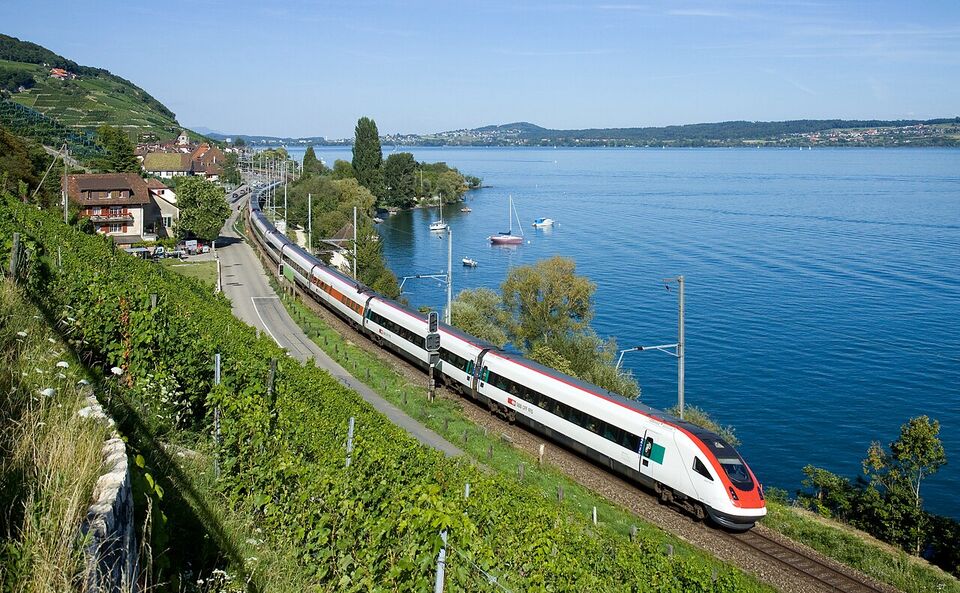
Overview: one network, many operators
Switzerland has one of the most connected public transport systems in the world, and you can cross the country by train, bus and boat without ever renting a car. The main thing to understand is that it behaves like a single network even though many companies run it. A trip from Zurich to Zermatt, for example, uses SBB trains to Visp and a private railway for the last stretch, and a single ticket from the SBB app covers it.
This page explains how the system works, which tickets exist and what they cost where we have confirmed the figures, how to read a timetable, what to do with luggage, and the mistakes we see most often. For passes in depth, see the Swiss Travel Pass page; for scenic railways and their reservation rules, see Scenic Trains.
Insider tip
Install the SBB Mobile app before you fly, set it to English, and search for a few real journeys. The timetable and the fares are the same ones the ticket machines use, and you will see the price of your whole trip before you decide between a pass and individual tickets.
How the Swiss system fits together
SBB (Schweizerische Bundesbahnen, in French CFF and in Italian FFS) is the national railway. It runs most of the standard-gauge network, about 3,266 km (2,029 miles) of line, with 801 passenger stations, and it carried 1.39 million passengers a day in 2024. The shares are held by the Confederation and the cantons.
The rest of the system is a patchwork that you do not need to untangle:
- Private railways: companies such as the Matterhorn Gotthard Bahn (MGB, 144 km of metre-gauge line from Zermatt to Disentis), the Rhaetian Railway in Graubünden, BLS in the Bern area and Zentralbahn between Lucerne, Engelberg and Interlaken. Many are mountain or narrow-gauge lines. They appear in the same timetable.
- PostBus (PostAuto): yellow buses that reach villages with no railway. They take timetable information from the same app.
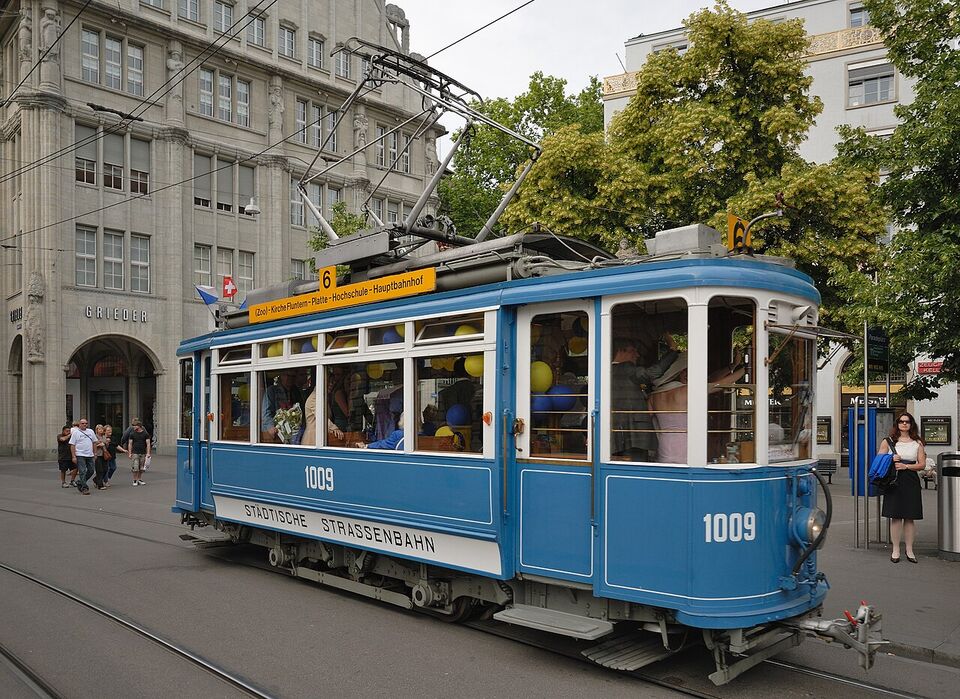
- Trams and city buses: run by city companies in Zurich, Basel, Bern, Geneva and elsewhere. Single-ride tickets are sold at stop machines and in apps; check the local rules.
- Lake boats: on lakes such as Lucerne, Geneva, Zurich, Thun and Brienz. See Lakes and Boats.
- Mountain railways and cable cars: many are run by separate companies, with their own prices, and some are not covered by a pass or are only discounted. See Mountain Excursions.
The key to the system is the clock-face timetable (Taktfahrplan): on most routes trains leave at the same minutes past each hour, usually every hour or half hour, and connections are planned so that trains meet at hub stations. That makes it easy to remember times, and it is why Swiss transfers are short.
Trains are categorized, and the label tells you how often they stop. IC (InterCity) trains stop only at major cities, IR (InterRegio) trains are the workhorses with more stops, RE (RegioExpress) trains stop at selected stations, and R (Regio) and S (S-Bahn) trains stop at almost every station. The IC and IR lines are numbered and colored like a subway map, for example IC1 or IR35. A fast train is not always necessary: if a regional train gets you there in a similar time, take the one that suits your connection.
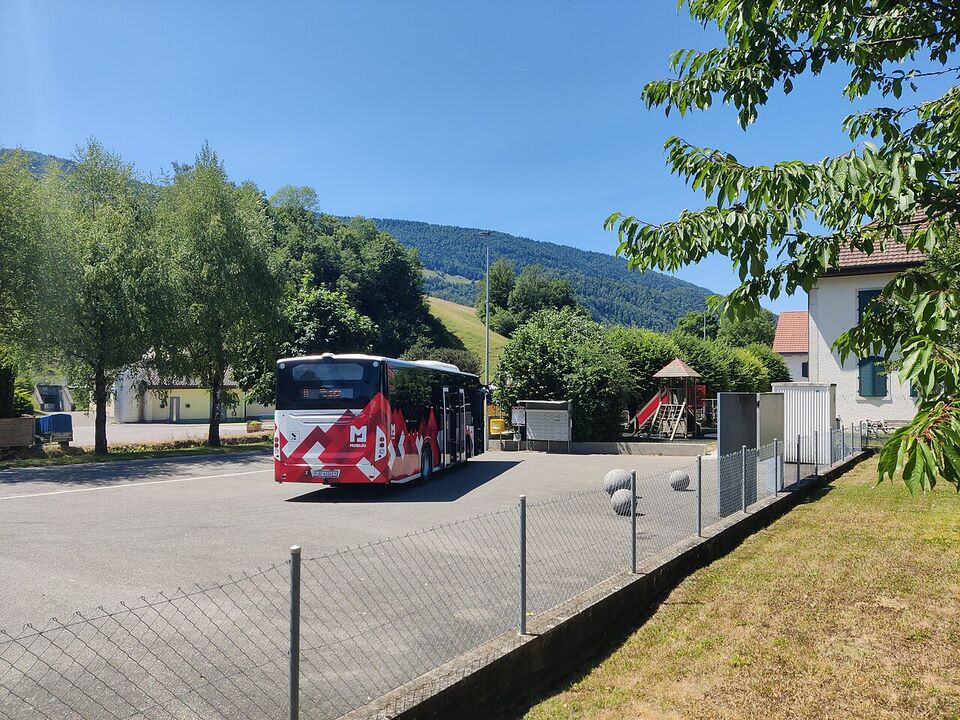
The timetable and the SBB Mobile app
SBB Mobile is the official app, and it does four jobs: it shows the timetable, sells tickets, shows live delays and platform changes, and lets you save a trip. Enter your starting point and destination, choose "now" or a date and time, and the app lists connections with the platform (Gleis), the transfer and the ticket price. You can buy the ticket in the app and show it on your phone. The sbb.ch website does the same thing.
Use local spellings for station names when the English form returns odd results: Zürich HB, Luzern, Genève, Bern, Basel SBB, Interlaken Ost. Many places have more than one station, so pick the right one, such as Interlaken Ost for the Jungfrau trains and Lake Brienz, Interlaken West for Lake Thun. At the Jungfraujoch route, Grindelwald and Grindelwald Terminal are different stops.
How to read a Swiss timetable
If you stand in front of a printed poster or a screen, the same few terms appear everywhere. The poster with a yellow background lists departures (Abfahrt in German, Départ in French, Partenza in Italian), and the white one lists arrivals (Ankunft, Arrivée, Arrivo). Times use the 24-hour clock, so 14:32 means 2:32 p.m. The platform is the Gleis (German), voie (French) or binario (Italian).
- Direction: the train is named for its final stop, not the next one, so check the destination on the board, not the direction you want to go.
- Platform sectors: long platforms are split into lettered sectors (A, B, C...). Your seat reservation or first-class coach may be in one sector, so stand where the sector sign says.
- Train splits: some trains split in two at a junction, with each half going to a different destination. Look for the destination on the carriage side before you board, and ask staff if unsure.
- Trains leave on the minute. Swiss station clocks are synchronized, and doors close promptly, so do not count on a late-boarding grace period.
Different from home
You do not need to arrive at the station an hour early, and there are no ticket gates on most platforms. Arrive a few minutes before departure, check the platform, and board. Staff walk the train and check tickets on board, so have the ticket ready on your phone.
Ticket types and prices
The correct ticket depends on what you plan to do, and the SBB app shows the full-fare price so you can compare. Here are the main choices, with the figures we have confirmed for 2026. Prices change on January 1 and at the December timetable change, so check sbb.ch for the date you travel.
Point-to-point tickets and Supersaver
A normal ticket takes you between two stations on a given day, with a choice of second or first class. Single-journey fares are high compared with US rail fares because the network is dense and well run, but they include every train and bus on the route. SBB also sells Supersaver tickets: cheaper tickets tied to a specific train or time, in limited numbers, and not refundable or changeable in the usual way. We cannot confirm the discount levels, so check the app. For individual fares, see the SBB app on the date you plan to travel.
Saver Day Pass and Day Pass
A Day Pass lets you travel without limit on most public transport for one day. The Saver Day Pass is a cheaper version sold in limited numbers, and its price goes up as the date approaches. With a Half Fare Card, SBB lists the Saver Day Pass from CHF 29 (about $35) in second class and from CHF 49 (about $58) in first class, and the regular Day Pass at CHF 78 (about $93) in second class and CHF 128 (about $150) in first class. SBB says new prices will apply for certain Day Passes from December 13, 2026. The price without a Half Fare Card was not on the page we checked, so look it up before you rely on it.
Some lakes also accept a Saver Day Pass on scheduled boats; the Lake Lucerne operator lists it, together with a dog day pass and a children's day pass. See Lakes and Boats.
Half Fare Card
The Swiss Half Fare Card (Halbtax) costs CHF 150 (about $180) for one month for visitors, and gives 50% off train, bus, boat and most mountain railways. It is worth considering when you will take several long journeys but do not need a day-by-day pass. With a Half Fare Card and the free Swiss Family Card, children aged 6 to 15 travel free with a parent (children under 6 are free); confirm the conditions on sbb.ch.
Swiss Travel Pass and Flex
The Swiss Travel Pass covers train, bus and boat travel and public transport in more than 90 towns and cities, plus free entry to more than 500 museums, for 3, 4, 6, 8 or 15 consecutive days. The Flex version lets you pick travel days within a month. These are the 2026 adult prices. The Swiss Travel System says the pass and Half Fare Card prices are not rising in the December 2026 fare round, but the 2027 price list may differ, so check before you buy.
| Swiss Travel Pass (adult, consecutive days) | 2nd class | 1st class |
|---|---|---|
| 3 days | CHF 254 (about $300) | CHF 405 (about $480) |
| 4 days | CHF 309 (about $370) | CHF 492 (about $585) |
| 6 days | CHF 399 (about $475) | CHF 634 (about $755) |
| 8 days | CHF 439 (about $520) | CHF 697 (about $830) |
| 15 days | CHF 499 (about $595) | CHF 787 (about $935) |
A pass does not cover everything. It includes the Rigi, Stanserhorn and Stoos mountain excursions, and gives up to 50% off many other mountain railways, but the Jungfraujoch, Gornergrat, Pilatus and Titlis are not free (discounts vary, so check each operator). Panoramic trains such as the Glacier Express need a seat reservation with a surcharge even with a pass.
Save money
Do not buy a pass because it is famous. Add up the full fares of the legs you plan, using the SBB app, then compare with a Half Fare Card plus half-price tickets, and with a pass including the free excursions you would otherwise pay for. If you stay in one region and make short trips, individual tickets or a regional pass often cost less.
Validating, class and reservations
You do not validate Swiss tickets. A ticket bought in the SBB app is ready to use, and a pass is valid on the days it covers. Flex Pass holders must activate each travel day before the first journey of the day, at activateyourpass.com. There are no turnstiles at most stations, but conductors check tickets on board, and traveling without a valid one can bring a surcharge. Buy before you board, and if a ticket machine is broken, tell the conductor straight away.
First class costs more and has more space and fewer passengers. Second class is clean, comfortable and perfectly adequate. In practice, first class pays off on busy summer weekends, on long journeys with luggage, and when you want a quieter carriage, but many travelers choose second class and spend the difference on excursions.
Seat reservations are not needed on most ordinary Swiss trains: you sit in any free seat. They are required on panoramic trains such as the Glacier Express, and a reservation fee applies on the Bernina Express and others; check the operator for the amount. International trains such as TGV Lyria to France and ICE services to Germany usually need or strongly benefit from a reservation. On busy long-distance trains in summer or at the start and end of school holidays, a seat reservation can be worth buying when the app offers one. If you plan to use the Glacier Express, see Scenic Trains for the booking details.
Luggage: forwarding and lockers
Luggage forwarding is one of the best ways to make a Swiss trip easier. With SBB's station-to-station service, you drop a bag at a participating station and collect it at the destination station two days later. The fee is CHF 12 (about $14) per item up to 23 kg, CHF 20 (about $24) per bicycle and CHF 30 (about $36) per e-bike. You need a valid ticket for the whole route, and the bag must be labeled with your name, address and phone. Free storage covers the arrival day and the following four days, then CHF 5 (about $6) per day. The Swiss Travel Pass includes a promotion of more than 50% off same-day luggage services for journeys from October 1 to December 15, 2026.
SBB also offers door-to-door and station-to-door services, but we have not confirmed their prices. Some hotels will send bags to the next hotel by courier too. Station lockers exist at larger stations, but prices and sizes vary, so check sbb.ch for your station. Whether the old service of checking airline baggage at a station is still available is not confirmed, so check before you rely on it. Travel with a bag you can lift: older stations often have steps and narrow platforms.
Watch out
Forwarding is not instant. The service takes two days for the standard station-to-station option, so use it when you will be at your destination more than two days later, or pay for a faster option. Pack medication, passport and a change of clothes in your carry-on.
Connections, transfer times and reliability
Swiss transfers are often short, sometimes only a few minutes, because the timetable is designed so that trains meet. A transfer is safe when the app says it is, and the app shows the walking route and platform. If you have heavy luggage, limited mobility or a child, choose a connection with a longer transfer, which the app lets you do.
SBB's own figures for 2024 show that 93.2% of passengers reached their destination with less than three minutes of delay, and 98.9% of connections were made. These are good numbers, but delays happen: track works, snow, landslides or a signal fault. The app shows live changes, and the next train is usually within an hour or less. Keep a flexible day if you are going up a mountain, and keep a buffer before flights. Rail works and line closures are listed on sbb.ch and in the app; check them for your date.
The airport stations at Zurich and Geneva have frequent trains to the city centers. Zurich Airport has about 13 trains an hour to Zürich HB, a trip of 9 to 13 minutes, and Geneva's airport is about 4 km (2.5 miles) from the center and has its own railway station. See Flights to Switzerland for arrivals.
Trams, PostBus, boats and guest cards
In the cities, trams and buses are covered by the Swiss Travel Pass in more than 90 towns and cities. Outside the pass, buy a single ride or day ticket in the SBB app or a local transport app. Many hotels give a guest card that includes local transport: Geneva gives guests in approved hotels, hostels and campsites a free Geneva Transport Card for their stay, covering zone 10 and the Cornavin-airport train. Basel has the free BaselCard, Ticino has the Ticino Ticket, Lucerne has a Visitor Card, and Zurich has the Zurich Card. Ask your hotel what you get, and note that benefits differ.
PostBus fills in the gaps that railways do not reach: mountain villages, valley roads and some passes. The buses are yellow, and the horn at tight bends is part of the experience. Routes appear in the SBB app, and a Swiss Travel Pass covers most of them; panoramic or special services may carry a supplement. Lake boats work as ordinary public transport, with the same passes accepted on most scheduled services; see Lakes and Boats.
Bikes and dogs
Bicycles can travel on many trains with a bike ticket, and some trains require a reservation or have limited space. SBB also forwards bicycles for CHF 20 (about $24) station to station. Check the SBB app: it shows whether a train carries bikes. Dogs usually travel on a half-fare ticket or a dog day pass; the Lake Lucerne operator lists a Dog Day Pass and a Dog GA travelcard among the tickets valid on its boats, and Pilatus charges CHF 14 (about $17) return for dogs over 30 cm tall, while small dogs travel free in a closed bag or basket. Mountain railways set their own dog and bike rules, so check each operator.
Mistakes to avoid
- Buying a pass first. Check the actual fares in the SBB app, then decide. A pass is not always cheaper.
- Not checking supplements. Panoramic trains, some international services and some mountain railways charge reservation fees or are not covered by a pass.
- Taking the wrong station or train part. Interlaken Ost and West, Grindelwald and Grindelwald Terminal, and split trains cause trouble. Read the destination on the carriage.
- Cutting transfers too fine with luggage. Choose a longer connection if you are tired or carrying a lot.
- Counting on a mountain railway running. Seasonal closures are common, so confirm before you go.
- Driving when you do not need to. In most places you will do better without a car; see Driving in Switzerland for the cases where it helps.
For planning the whole trip, see Plan Your Trip to Switzerland, and for saving money on transport and more, Budget Tips.
Add it to a route in the trip builder, or ask us to plan the hotels, trains and guides for you.