Overview
Swiss Christmas markets are at their best in the French-speaking lake cities and in the old towns of the German-speaking north, and almost all of them run from late November to about December 24. The big ones are Montreux, Geneva, Lausanne, Basel, Zurich, Bern and Lucerne, with smaller and more traditional markets in Einsiedeln, St. Gallen and in villages. We suggest choosing two or three that sit on one rail line rather than trying them all.
This page was checked on November 14, 2026. For the Lake Geneva markets we have the official dates and hours. For Zurich, Basel, Bern, Lucerne, Einsiedeln and St. Gallen we do not have confirmed 2026 dates, so we describe what each is known for and tell you where to check. Opening dates and hours are the first thing to confirm before you book a hotel around a market.
If you are still deciding when to come, see Switzerland in December for weather, ski openings and holiday closures, and festivals and holidays for the rest of the calendar.
The main markets at a glance
| Market | Known for | 2026 dates |
|---|---|---|
| Montreux (Montreux Noël, also called Riviera Noël) | More than 150 chalets along the lake quays, with views across the water | November 20-December 24 (official) |
| Geneva (Noël au Quai) | Chalets on the Quai du Mont-Blanc, fondue by the fire, a new ice rink by the lake | November 19-December 24 (official), free entry |
| Lausanne (Bô Noël) | A festive program in the city center; 2026 is announced as the 12th and final edition | November 20-December 31 (official) |
| Zurich | An old-town Christmas village (the Dörfli, described by its organizer as the city's oldest) and a market in and around the main station | Check zuerich.com for 2026 dates |
| Basel | Markets on the old-town squares, usually including Barfüsserplatz and Münsterplatz | Check basel.com for 2026 dates |
| Bern | Old-town squares and arcades, usually including Waisenhausplatz and Münsterplatz | Check bern.com for 2026 dates |
| Lucerne | A market at Franziskanerplatz and a Christmas tree market on Schweizerhofquai are listed by the city | Check luzern.com for 2026 dates |
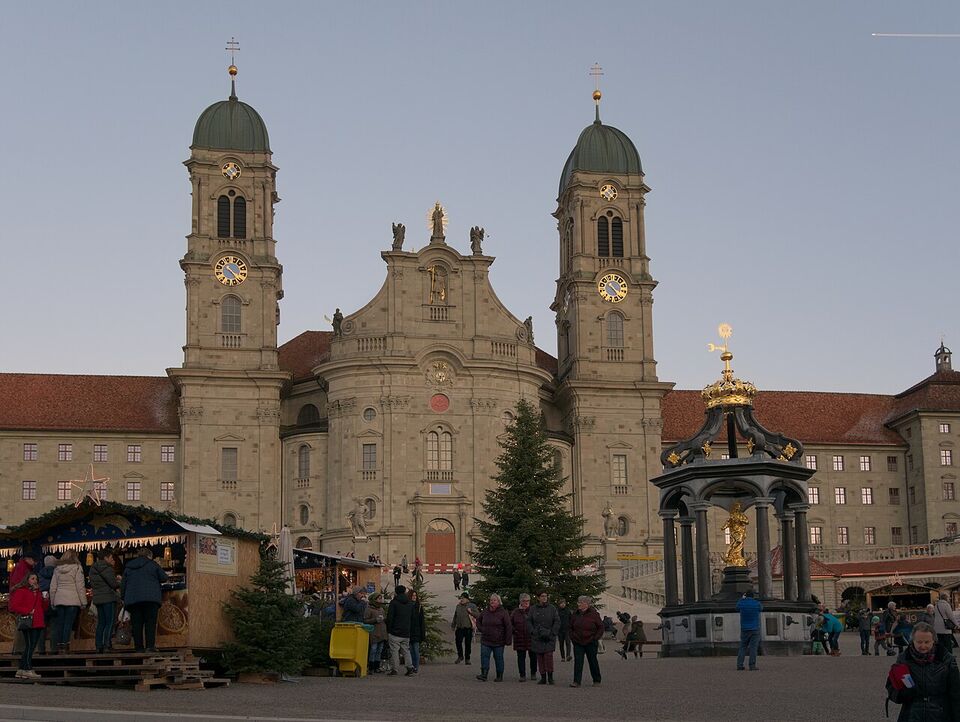
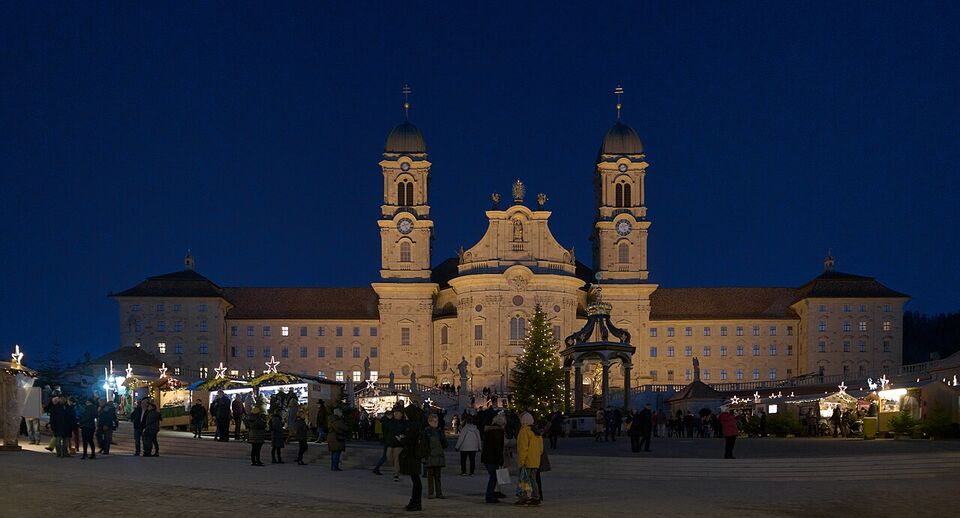
| Einsiedeln | A market beside the abbey in a pilgrimage town | Check the town's tourism site for 2026 dates |
| St. Gallen | An old town with a Christmas lights tradition | Check the city's tourism site for 2026 dates |
Two more are worth knowing about for a different feel. The Rhine Falls near Schaffhausen has a "Winter Magic" light show at Schloss Laufen from November 13, 2026 to January 3, 2027, and a medieval-style market at two castles starting Friday, November 20. The Engadine lists Christmas markets on November 28 in the high valley around St. Moritz. See St. Moritz and the Engadine.
Watch out
Do not rely on a blog or booking site for market dates. Cities change their dates, sometimes move the market within the old town, and cancel or reformat events. Read the date on the official city or market site on the week you book.
Lake Geneva: Montreux, Geneva and Lausanne
These three are the easiest to visit together, because their dates overlap and the trains between them are frequent. See Lausanne and Montreux and Geneva for the cities themselves.
Montreux
The Montreux market sits on the lakefront quays, about 200 meters (650 ft) from the train station, so you can leave the platform and be among the chalets in a few minutes. Craft stalls are listed as open Monday to Wednesday 11 a.m. to 9 p.m., Thursday and Friday 11 a.m. to 10 p.m., Saturday 10 a.m. to 10 p.m. and Sunday 10 a.m. to 8 p.m. Restaurants keep longer hours, 11 a.m. to 11 p.m. On December 24 the market is open from 11 a.m. to 5 p.m.
The organizers also run a "Flying Santa" cruise on a Belle Époque boat on the lake, with children's shows on selected days between November 21 and December 21, and a Santa's House at the top of Rochers-de-Naye, where tickets went on sale in September. Free local buses run on weekends from 1 p.m. The official site also offers a rail package with a train discount and a discounted mug of mulled wine, while stocks last. Parking at Saussaz is listed at CHF 8 (about $10), but the train is simpler.
Geneva
Geneva's Noël au Quai fills the Quai du Mont-Blanc beside the lake, with chalets, fondue and a new ice rink. Entry is free. The market overlaps with the Fête de l'Escalade on December 11 to 13, 2026, when the city celebrates its 1602 victory over a surprise attack and families eat and smash a chocolate cauldron. The Escalade is a festival, not a day when shops close, but the center will be busy. Hotel guests in Geneva receive a free Geneva Transport Card, so ask your hotel for it.
Lausanne
Lausanne's Bô Noël runs the longest of the three, to December 31. The city describes 2026 as the 12th and final edition, so if Lausanne is on your list, this is the year. Check the official site for the program and the exact locations.
Zurich, Basel, Bern and Lucerne
The German-speaking cities have the classic Christmas-market feel of wooden stalls on old squares and strong smells of mulled wine and baked goods. All four are on the main rail line, so they work well as a loop. For the cities themselves see Zurich, Basel, Bern and Lucerne.
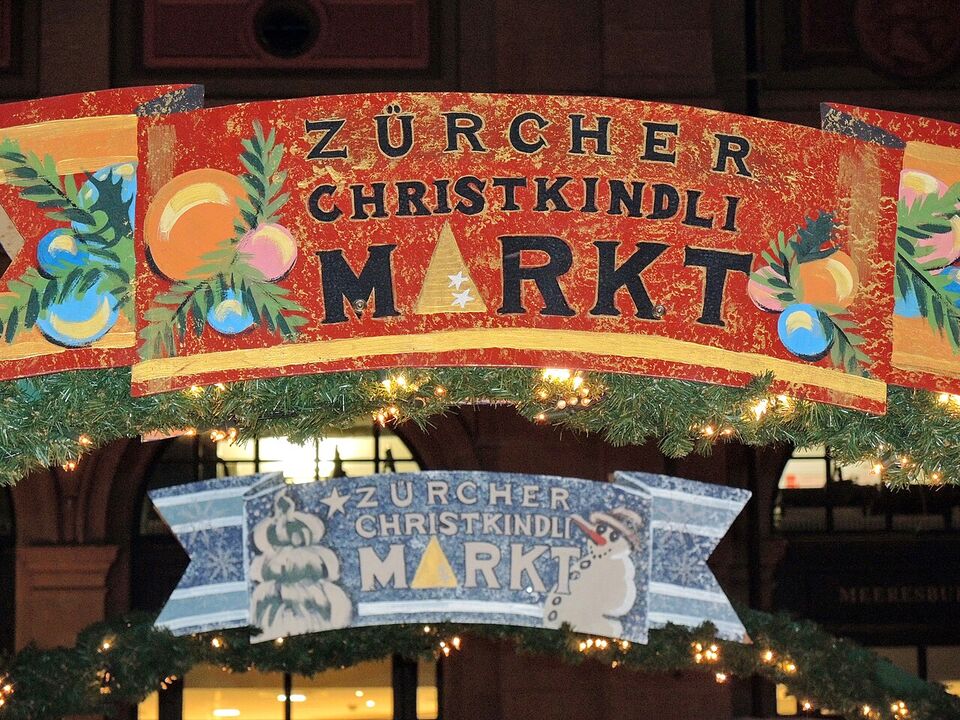
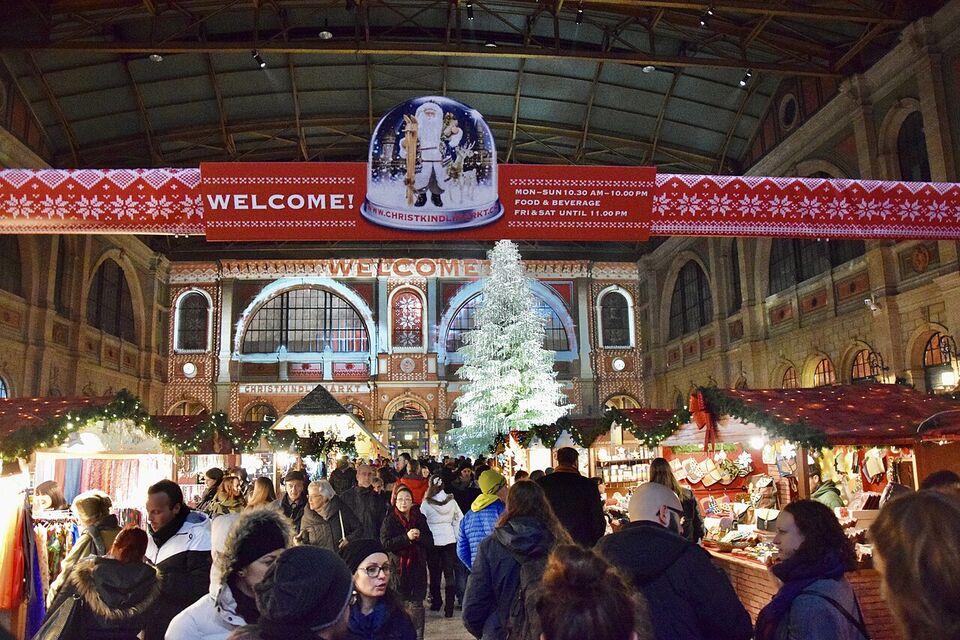
Zurich has a Christmas village in the old town, which its organizer calls the oldest Christmas market in the city, and another market in the main station area. The station market is the one most visitors see first, and it is easy to combine with shopping on the Bahnhofstrasse. Confirm dates and hours on the city tourism site.
Basel has markets on old-town squares, usually around the Münster (the cathedral) and the Barfüsserplatz, and the city sits close to the German and French borders. Its art museums give you somewhere warm to go between stalls. See Basel for opening hours and the fall and winter fairs.
Bern pairs its markets with the arcades of the old town, which keep you out of the rain and snow. That makes Bern a good choice if the forecast is poor. See Bern for a walking plan.
Lucerne lists a market at Franziskanerplatz and a Christmas tree market on Schweizerhofquai, and the city tourism site presents a Christmas train city tour and mulled wine tips. The setting, with the lake and mountains behind the old town and the Chapel Bridge, is the draw. Note that coaches need a prebooked stopping voucher in Lucerne, but this does not affect travelers arriving by train or bus.
Einsiedeln, St. Gallen and village markets
Einsiedeln is a pilgrimage town with a large abbey, and its Christmas market is a good fit for travelers who want something quieter and more religious than the city markets. St. Gallen's old town and abbey library make a combined winter day, with the lights adding to the atmosphere in the evening; see Appenzell and the East for the region. Both are reached by train from Zurich with a change or two, so check the timetable in the SBB app.
Village and mountain markets are smaller and often run for only a weekend or a few days. They are usually announced locally, and the dates can be only a few weeks ahead. If you are in a ski resort in December, ask the tourist office what is on that week.
What to eat and drink
The food is half the reason to go. Expect a mix of stands selling hot drinks, savory snacks and sweets, and a few sit-down fondue and raclette huts. The names change with the language area, so it helps to know both.
- Mulled wine: Glühwein in German-speaking areas and vin chaud in French-speaking ones. Many stands also serve a non-alcoholic spiced drink, tea or hot chocolate.
- Raclette: melted cheese scraped from a wheel onto potatoes and pickles. At markets it often comes in a bread roll or on a plate, and the Valais version is protected by an origin label. Montreux lists Valais raclette and raclette flambée.
- Fondue: a pot of melted cheese eaten with bread, often served in a heated chalet. Montreux lists several types, including truffle and tomato.
- Roasted chestnuts: a classic hand-warmer from a street seller, called Marroni in German and Italian.
- Rösti: grated, fried potato, filling enough for a lunch.
- Sweets: gingerbread, pretzels, waffles and baked goods. In Basel, look for the local spiced honey biscuit, the Läckerli.
For more on what to order, see Swiss food and fondue. Cheese and chocolate gifts are better bought in a shop than a market stall; see chocolate and cheese and shopping and taking things home for what you can bring back to the US.
Different from home
At many Swiss markets, mulled wine comes in a reusable mug with a deposit. You can return the mug for your money back or keep it as a souvenir. Look for the deposit on the price sign before you pay, and ask which stands take the mugs back.
Opening patterns, crowds and when to go
Most markets open around late morning, run into the evening, and keep slightly shorter hours on Sundays. The Montreux hours above are a good guide to what to expect: later closing on Thursday to Saturday, and an earlier close on Sunday. Many markets shut early on December 24 and are closed on December 25, which is a public holiday in all 26 cantons. December 26 is a holiday in most cantons, and January 1 is a holiday everywhere. December 8 is a holiday in some cantons.
Crowds follow a simple pattern. Saturday and Sunday afternoons and evenings are the busiest, especially at the lakefront and old-town markets after dark. Weekday afternoons are easier, with room to walk and queues that move. If you can only come on a weekend, go in the early afternoon and be at the market before the lights come on at dusk.
Insider tip
Come on a Tuesday, Wednesday or Thursday afternoon, stay through dusk and leave before the post-work crowd fills the stalls. In mid-December the days are short, about 8.5 hours of daylight, so the lights are on by late afternoon and you will see the market at its best without a late night.
Dress for cold. In Zurich the December average is a high of about 39°F (4°C) and a low of 31°F (-1°C), with rain or snow on about 11 to 12 days of the month. Waterproof shoes with grip matter more than a heavy coat, since you will be standing on wet cobbles.
Combining markets with a train trip
The best way to see the markets is by train, because stations are near the old towns and you can drink mulled wine without thinking about parking. A new timetable starts on December 13, 2026, and trains are busier on weekends and in the days before Christmas. Use the SBB app for times, and see trains and transit for how to buy tickets.
- Option A
Lake Geneva trio
Base in Montreux or Lausanne and visit all three markets in a long weekend. Start in Geneva in the afternoon, ride along the lake to Lausanne for dinner, and finish in Montreux. Because the markets share dates between November 20 and December 24, any day in that window works.
- Option B
German-speaking loop
Base in Zurich or Lucerne and take day trips to Bern and Basel. Pick one market per day rather than two, so you have time to see the old town too.
- Option C
East Switzerland
Combine St. Gallen with Appenzell or the Rhine Falls for a quieter winter route, and add Einsiedeln on the way back if the timetable works.
A pass can help if you ride a lot. Children aged 6 to 15 travel free with a parent's pass and the free Swiss Family Card. The Swiss Half Fare Card costs CHF 150 (about $180) for a month and halves most fares, and Saver Day Passes with a Half Fare Card start from CHF 29 (about $35) in 2nd class; SBB says new prices apply to certain Day Passes from December 13, 2026. Compare these options on the Swiss Travel Pass page before you buy.
Save money
A market day is cheap to enter and easy to overspend in. Eat a meal at a stand rather than a restaurant, share a fondue, and keep a budget for mugs and sweets. Hotel rooms in popular market cities can cost more on December weekends, so compare a weekday stay or a base in a nearby town with your own dates.
Safety, accessibility and cash
Crowded markets are safe, but they attract pickpockets in the way any crowd does. Keep your bag closed and in front of you, and your phone and wallet out of back pockets. If something happens, call 112 for the European emergency number or 144 for an ambulance, and carry the US Embassy details from our safety page. After the Crans-Montana bar fire in January 2026, Canton Vaud banned pyrotechnics in bars and restaurants, so do not use sparklers or open flames indoors anywhere and follow staff instructions.
Cobbles, steps, crowds and snow make some markets hard for wheelchairs and strollers. Montreux's site has an accessibility page, and Geneva and Lausanne publish official guides. If you use a wheelchair or push a stroller, go on a weekday and ask the organizers about accessible routes in advance.
Cards are widely accepted in Switzerland, and many food stalls take them, but small stands may prefer cash. Carry some francs. Euros are accepted only in some tourist places, usually at poor rates. Plan on cards and francs rather than TWINT, the Swiss payment app, which we have not confirmed works for visitors. See money in Switzerland for how to pay.
Common mistakes
- Booking a trip around a market date you read on a third-party site; check the city's own page.
- Arriving on a Saturday evening and expecting a quiet visit.
- Planning to visit more than two markets in one day.
- Forgetting that many markets close early on December 24 and are shut on December 25.
- Counting on a mountain excursion in the same trip without checking December operating dates; see mountain excursions.
- Carrying only a card; bring some francs for small stalls.
Add it to a route in the trip builder, or ask us to plan the hotels, trains and guides for you.