The base-and-day-trip approach
Switzerland is small, the train system is fast and punctual, and most of the famous places are a day trip from one of a handful of towns. That makes the best way to choose where to stay simple: pick two to four bases, stay at least two nights in each, and travel out and back each day. You unpack less, you spend less time with your suitcase, and you can adjust the day to the weather.
Weather matters more than you might think. Mountain views need clear skies, and a base lets you swap a cloudy mountain day for a museum or a lake boat without rebooking a hotel. See plan your trip for sample routes and getting around for how the rail network and passes fit together.
This page covers the types of lodging, how to compare the main bases, guest cards, tourist tax, when to book, and the mistakes that cause the most regret. We give price tiers rather than nightly rates, because we could not confirm current rates for 2026-27. Swiss hotels are among the most expensive in Europe, so check your exact dates on the hotel's own site.
Comparing the main bases
This table compares seven bases. It does not rank them; the right base depends on what you want to see. Train times between places vary by service, so check the SBB app for the connection you will use.
| Base | Language | Good for | Notes |
|---|---|---|---|
| Zurich | German | Arrival and departure, museums, a city night | Airport trains to Zürich HB take about 10 minutes. Zurich Card is a city pass; check its benefits |
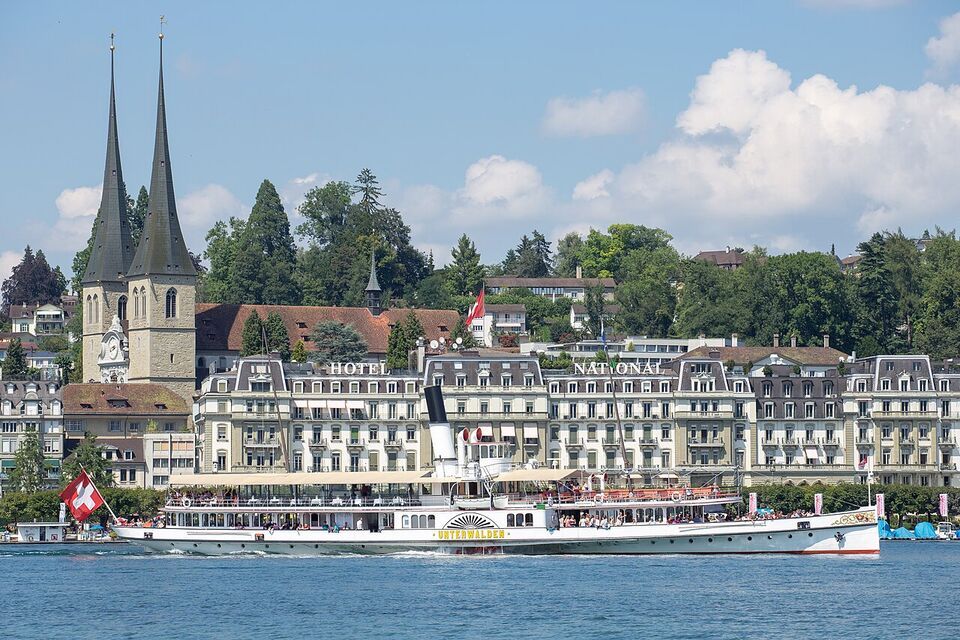
| Lucerne (Luzern) | German | Lake, old town, Mount Pilatus and Rigi | Visitor Card exists; tourist tax about CHF 1.10 (about $1.30) a night |
| Interlaken | German | Jungfrau region, lakes, Harder Kulm | Interlaken Ost to the Jungfraujoch is about 1 hour 30 minutes |
| Bern | German | A quieter capital, day trips to the lakes and mountains | Ask your hotel whether it offers a guest ticket or card; we could not confirm one |
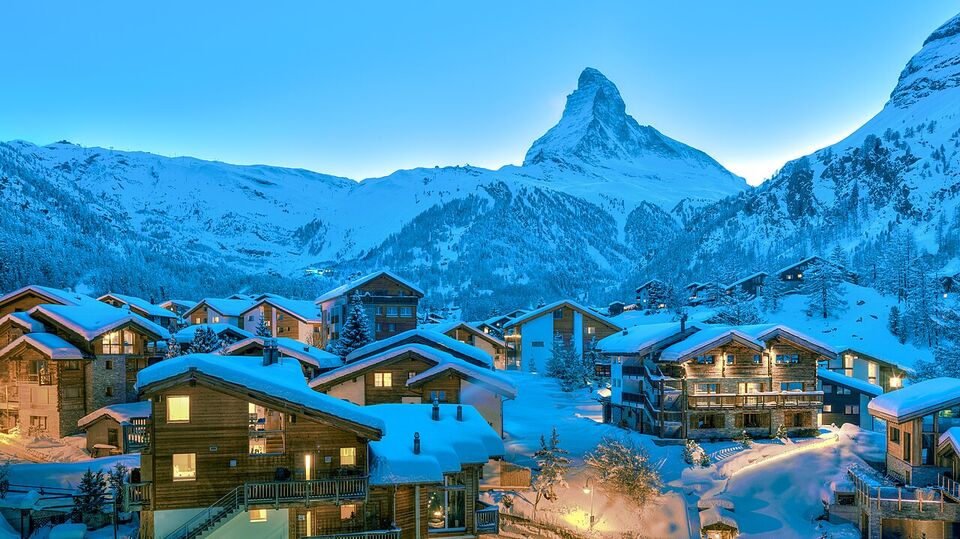
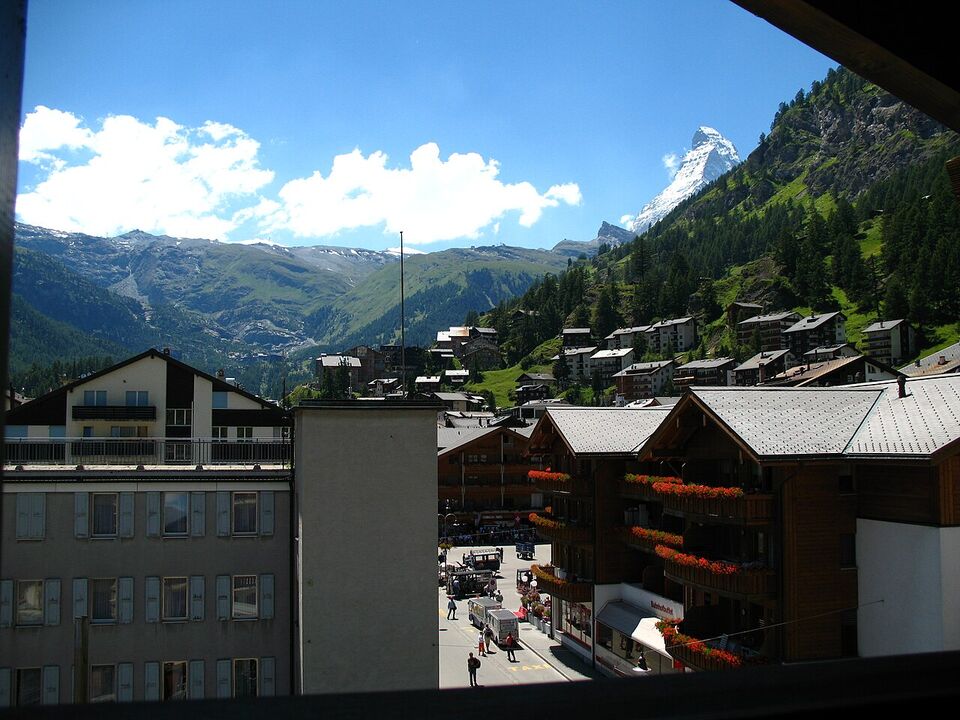
| Zermatt | German | Matterhorn views, Gornergrat, skiing | Car-free; reached by train. Cold winters and snow in the village |
| Geneva or Lausanne | French | Lake Geneva, Montreux, Chillon, Gruyères | Geneva hotel guests get a free transport card; Lausanne has a transport card offer |
| Lugano | Italian | Lake, mild climate, Ticino | Ticino Ticket gives free public transport at partner stays |
A few notes on the choices. Zurich is where most transatlantic flights arrive, and the airport station has about 13 trains an hour to the main station, so the first and last night here makes sense. Lucerne sits among lake and mountain scenery, and has Pilatus, Rigi and boats from the lakefront. Interlaken is the practical gateway to the Jungfrau area. Bern is a good, calm alternative if you want fewer crowds. Zermatt is for the Matterhorn and for skiers. Geneva and Lausanne-Montreux are French-speaking and wine-and-lake oriented. Lugano and Ticino feel Italian and are milder in winter.
The climate numbers show why. Mean daily highs for July are about 76°F (24°C) in Zurich and Lucerne, 80°F (27°C) in Geneva and 81°F (27°C) in Lugano, but only 68°F (20°C) in Zermatt's village. In January the highs are about 38°F (4°C) in Zurich, 45°F (7°C) in Lugano and 33°F (1°C) in Zermatt. These are 1991-2020 averages and individual days vary.
Hotel types and how to choose
The tier shown is a rough guide to a double room in a typical season, not a quote: $ is under $120 a night, $$ is $120 to $300 and $$$ is over $300. Check actual prices for your dates.
City hotel
Convenient for trains, restaurants and museums. Rooms can be small. Ask whether breakfast is included, whether there is a lift, and how close the station is. Business-heavy cities can be cheaper on weekends and dearer on weekdays during trade fairs.
Mountain hotel or chalet hotel
Good for views and a quiet night. Check how you get there, whether luggage can be delivered, and whether the local lifts will be running on your dates. Half-board (dinner included) is common and can be good value where restaurant choice is thin.
Apartment or holiday flat
Useful for families, groups and stays of a week or more, with a kitchen that cuts food costs. Minimum stays, cleaning fees and Saturday-to-Saturday changeovers are common in resorts. See Switzerland on a budget for how self-catering saves money.
Hostel
Hostels in Switzerland are clean and often have private and family rooms, not just dorm beds. They suit budget travelers of all ages, and they are one of the few ways to keep lodging costs down in big names like Interlaken or Zermatt. Check curfew, linen and breakfast terms.
Short-term rental (Airbnb type)
Rules differ by canton and municipality, and some places limit short-term letting. Choose listings that show a clear address, house rules and cancellation terms, and ask about the tourist tax and check-in method. Do not assume the platform price includes local charges.
Mountain hut
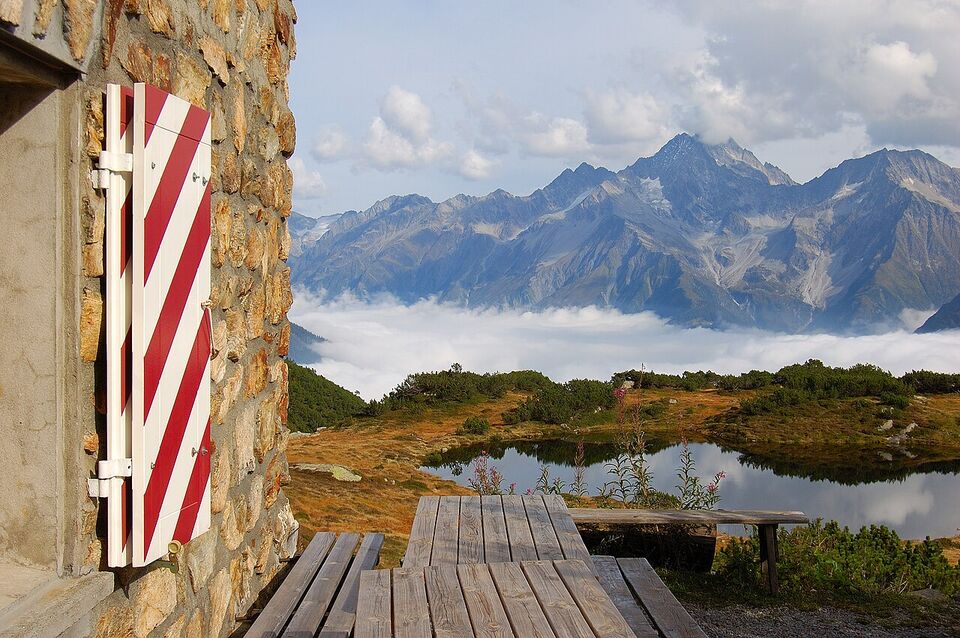
Alpine club and private huts offer bunk beds and meals on hiking routes. They are basic, often seasonal and usually need a reservation. Bring cash, a sleeping sheet if required and layers. See hiking in Switzerland before you plan a hut night.
Some farms also rent rooms or bunk space, and you will see lodging described as a Gasthof (inn), Pension (guesthouse) or hôtel garni (hotel without a restaurant, breakfast only). In French-speaking areas, chambres d'hôtes are bed and breakfasts.
Guest cards and free local transport
Many hotels in Switzerland give guests a card with free or discounted local transport and attraction discounts. It is one of the best value-adds in the country, and it is easy to miss because the hotel often hands it over at check-in without comment. Always ask.
- Geneva: guests in approved hotels, hostels and campsites receive a free Geneva Transport Card for the length of the stay, valid in zone 10 and on the train between Cornavin station and the airport.
- Basel: BaselCard is a free guest card with discounts.
- Ticino: the Ticino Ticket, for stays at more than 500 partner places, gives free public transport and discounts on attractions and boats.
- Lucerne: a Visitor Card exists. We could not confirm its benefits, so ask your hotel.
- Zurich: the Zurich Card is a city pass. We could not confirm its price or whether any hotels include it, so ask.
- Lausanne and Bern: Lausanne's tourism site lists a Lausanne Transport Card. For both cities, details and eligibility vary, so ask when you book.
For places we have not listed, such as Interlaken and Zermatt, ask whether the hotel offers a card. Rules, eligible properties and the length of validity can change, so do not rely on this list. Guest cards usually do not replace a rail pass for long trips: they cover local zones. See the Swiss Travel Pass guide if you plan to travel widely.
Save money
Before you buy a local day ticket or a city pass, check whether your hotel already gives you a guest card. On arrival in Geneva, remember to ask for the transport card; it covers the train between the airport and the center for hotel guests, according to the airport and city pages.
Tourist tax, breakfast and VAT
Tourist tax (Kurtaxe, taxe de séjour) is charged per person per night and is usually added to your bill or included in a guest card scheme. Lucerne's tax doubled at the start of 2026, to about CHF 1.10 (about $1.30) per person per night. For Zurich, Interlaken, Zermatt, Geneva, Lausanne, Lugano and St. Moritz we have no confirmed figure. As a rule it is a few francs per person per night, so check your hotel's price breakdown rather than guess.
Value-added tax applies to accommodation at a special reduced rate of 3.8% for an overnight stay with breakfast, according to the Federal Tax Administration. Ask whether the tourist tax is already in the price you are quoted.
Breakfast is often included in the room rate and is usually generous in hotels, with bread, cheese, cold cuts, muesli and eggs. If breakfast is extra, compare the price with a bakery: a Gipfeli (croissant) and coffee may cost less and be as good. In our view, an included breakfast is worth having if you plan an early train to a mountain.
When to book
We have no official booking-window data, so this is reasoned advice. The tightest periods are the high mountain season in July and August, ski weeks and school holidays in winter, the days around Christmas and New Year, and festival weekends. Book as soon as your dates are firm, particularly in small villages with a handful of hotels, and choose a rate that can be canceled free of charge if your plans might change.
- Zermatt and ski resorts: winter opening weeks run from November 1 to December 6, 2026, and ski passes are valid into spring 2027. Expect higher prices and tighter availability in the main ski weeks.
- Cities: prices rise during conferences, trade shows and festivals. Zurich, Basel and Geneva can be expensive on weekdays even in winter.
- Christmas: markets in Montreux, Geneva and Lausanne run from late November to late December, and hotels near them fill on weekends.
- November and shoulder seasons: more availability, but many mountain lifts and hotels close for part of the season. See November in Switzerland and when to go.
Weekends and holidays can be more expensive than weekdays in leisure destinations, and weekdays in business cities. If your dates are flexible, check a few nights either side.
Rooms, noise, heat and family needs
Air conditioning is rare. Many hotels have none, especially older ones and mountain properties. The summer highs in Geneva (80°F) and Lugano (81°F) are warm rather than extreme, but heat waves do happen. If it matters to you, ask when you book, and request a higher floor, a north-facing room or a fan.
Noise. Church bells ring the hours and sometimes the quarter hours, including at night in some towns, and they can start early on Sunday mornings. Trams, trains and cobblestone streets add to it in old towns. Ask for a room facing a courtyard if you are a light sleeper, and consider earplugs.
Family rooms. Rooms are often small, with twin beds and no extra space for a rollaway. Look for family rooms, connecting rooms or apartments, and ask what ages count as children for the room price. Switzerland is easy with kids, and the families guide covers pass rules for children, including the free Swiss Family Card.
Elevators and luggage. Older hotels may have no elevator, and trains and mountain lifts are not always step-free. Pack light, and consider forwarding bags between stations; see getting around for the luggage service and its price.
Different from home
Tipping works differently. Service is normally included in the price, so rounding up or leaving a few francs for good service is appreciated but not expected. Do not add 15 to 20 percent out of habit.
Location tips: sleep near the station
The single best rule is to stay within a short walk of the main railway station, or near a stop on a direct tram or bus line to it. In Switzerland, almost everything you do starts with a train, so being close saves time, taxi fares and the stress of dragging bags up a hill. This matters most on the first and last nights.
- In Interlaken, know the difference between the two stations, West and Ost. Trains for the Jungfrau region and Harder Kulm depart from Interlaken Ost, and the funicular to Harder Kulm is a short walk from there.
- In Grindelwald, the Grindelwald Terminal is a gondola station; it is not the same as Grindelwald station. For the First cable car you travel one stop further to Grindelwald station.
- In Zermatt, hotels send electric shuttles to the station, and electric taxis operate. Ask whether your hotel collects guests.
- In Lucerne and Zurich, central hotels are walkable to the old town. In big cities, stay near a tram stop and check the late-night public transport.
Also check the distance to your first train in the morning, especially for early mountain departures. In winter, daylight is short: in Zurich in December it is about 8 hours 30 minutes, and in deep valleys it can be shorter.
Putting bases together: three sample patterns
The table is easier to use if you start from a trip shape. These patterns are starting points, not a prescription, and the nights are suggestions.
- Classic first trip
Zurich, Lucerne, Interlaken, Zermatt
Start with a night in Zurich to get past jet lag, then two or three nights in Lucerne, two or three in Interlaken, and two in Zermatt. The route follows the main rail lines, and each base has strong day trips. If you can, end back near Zurich or Geneva for your flight rather than adding a long transfer on the last day.
- Lakes and wine
Geneva, Lausanne or Montreux, Lugano
For a slower trip with less alpine altitude, base in French-speaking Lake Geneva for the castle at Chillon, the vineyards and the Christmas markets, then cross to Ticino for Italian-style lake towns. The weather is milder in the south: Lugano's average December high is about 46°F (8°C), against 39°F (4°C) in Zurich.
- Mountains first
Interlaken and Zermatt, with a city at each end
If the Jungfrau region and the Matterhorn are your reason for coming, give them three nights each and treat the cities as transit. Keep a spare day in each mountain base for weather, because cloud can hide the views for days at a time. See mountain excursions for what each ride costs and when it runs.
Winter and ski stays
If you are visiting to ski, the choice of base follows the lifts. Zermatt's ski passes are valid from November 1, 2026 to early May 2027, and the Jungfrau Ski Region pass is valid from November 21, 2026 to April 25, 2027, though planned dates depend on snow and on the operator. Hotels in the village itself are the most convenient, but they are also the most expensive. Staying in the valley and taking the lift or train up can be cheaper, provided that the first lift of the day is close to the station. See skiing in Switzerland for more.
In winter, check three things before you book a mountain hotel: whether the village is reached by a road that stays open, how the last train or cable car timings fit your plans, and whether the hotel has a place to dry boots and gear. If you are not skiing, a hotel in a lower town with a station often gives you more flexibility for sledding, winter walks and rides to viewpoints.
Booking and arriving
Book direct or through a platform that shows the final price in francs, and compare the cancellation terms rather than only the headline price. A rate that can be canceled is usually worth a small premium in Switzerland, where a bad forecast can change a plan and where nonrefundable deposits are common in mountain villages. Keep a copy of the confirmation in your phone, and a screenshot in case you have no signal.
Check-in is often in the afternoon, and small hotels may close the front desk in the evening. If you arrive late, say so in advance, because many small places leave a code or key for late arrivals. If you land early in the morning, ask whether bags can be stored. Most Swiss stations also have lockers or a luggage counter, but we have no confirmed prices, so check at the station.
Pay by card where you can and keep some francs for small lodges, huts and farm shops. Cards are widely accepted, but small places may prefer cash, and prices are in Swiss francs, not euros. See money in Switzerland for how to pay.
Common mistakes
- Staying on a mountaintop without a luggage plan. If your hotel is at the top of a cable car, find out how bags get up, whether the last lift runs after dinner and what happens if wind closes the lift. A mountain night can end up as an unplanned stay in a valley hotel.
- Choosing a village without a station. A lovely rural village with one bus a day can eat into your sightseeing time. Look at the timetable before you book.
- Changing hotels every night. It costs a half day each time. Two or three nights in a base is usually better.
- Booking a mountain village in the closed season. Many lifts, railways and hotels close for part of November and April-May. Check the operator's calendar.
- Missing the guest card. Ask for it when you check in.
- Ignoring air conditioning, noise and stairs until you arrive. Ask in advance.
- Not allowing for a different tax or fee on top of the price. Ask what is included.
For help turning bases into an itinerary and a budget, see budget tips, the regions guide and money in Switzerland.
Add it to a route in the trip builder, or ask us to plan the hotels, trains and guides for you.