Overview
Lausanne, Vevey and Montreux are three towns on the northern shore of Lake Geneva, in the canton of Vaud. They are French-speaking, they are linked by frequent trains and boats, and between them lie the UNESCO-listed Lavaux vineyard terraces. Together they make one of the easiest regions in Switzerland to visit without a car.
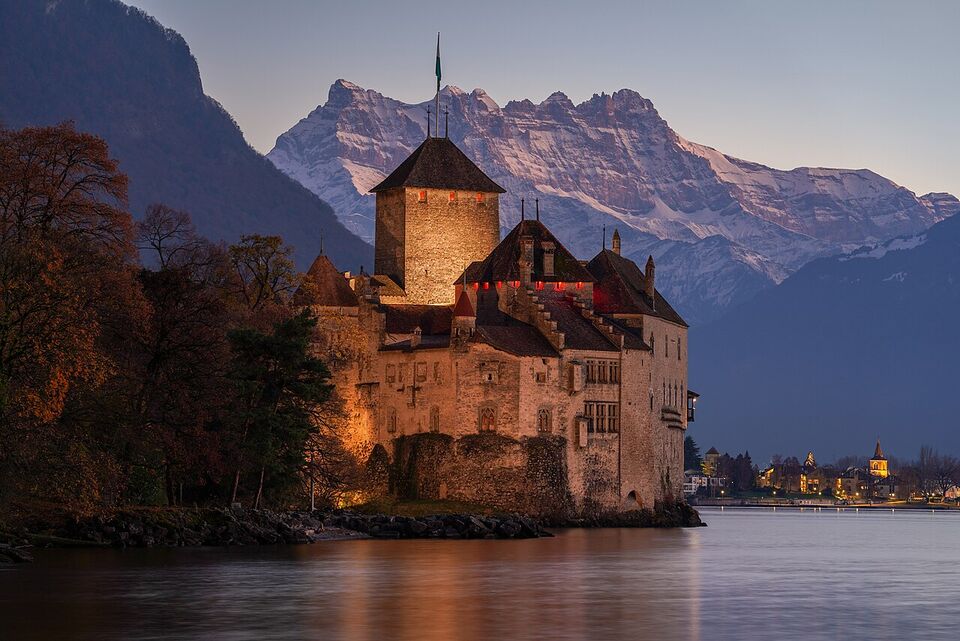
The three have different characters. Lausanne is a hilly city, the fourth largest in the country, and calls itself the Olympic Capital. Vevey is a small, flat town with a pedestrian old center and a famous resident in Charlie Chaplin. Montreux is a resort with a long lakeside promenade, the most visited historical monument in the country a short walk away and a jazz festival every July. Switzerland Tourism describes Montreux as sitting in a sheltered bay, surrounded by vineyards, with snow-covered mountains behind it.
This page helps you choose between Lausanne and Montreux as a base, then covers each town, Lavaux, Château de Chillon, the Montreux Christmas market, the GoldenPass line to Gstaad, Rochers-de-Naye, lake boats and where to stay. For the city at the western end of the lake, see our Geneva page. For the lake itself, see our lakes page.
Lausanne or Montreux as a base?
If you only have time for one, the answer depends on what you want from the evening. Lausanne is a real city, with a university, restaurants, bars and a busy station. Montreux is a resort town that is quieter after dark outside festival times and December. Prices for hotels in both are high by US standards, and we could not confirm 2026-27 rates, so check dates.
| Question | Lausanne | Montreux |
|---|---|---|
| Feel | City on steep hills, students and offices | Resort on a bay, promenade and mountain backdrop |
| Highlights | Old town, cathedral, Olympic Museum, Ouchy | Château de Chillon, promenade, Jazz Festival |
| Rail | Main hub on the lake line, with connections inland | Start of the GoldenPass line and the Rochers-de-Naye railway |
| Lavaux | Villages a short train ride east | Villages a short train ride west |
| Winter | Open all year; Christmas events to December 31 | Quiet except for the Christmas market |
| Best for | City stays, museums, nightlife, a central base | Castle, scenery, mountain railways, relaxed stays |
Vevey sits between the two and is a calmer, smaller choice with its own market and lakefront. If you want one base for the whole shore, Lausanne is the better rail hub; if you have a specific interest in Chillon, jazz or the GoldenPass, stay in Montreux. We did not confirm train times between the towns, so check the SBB app, and our getting around page explains passes and tickets.
Lausanne: the old town, the cathedral and Ouchy
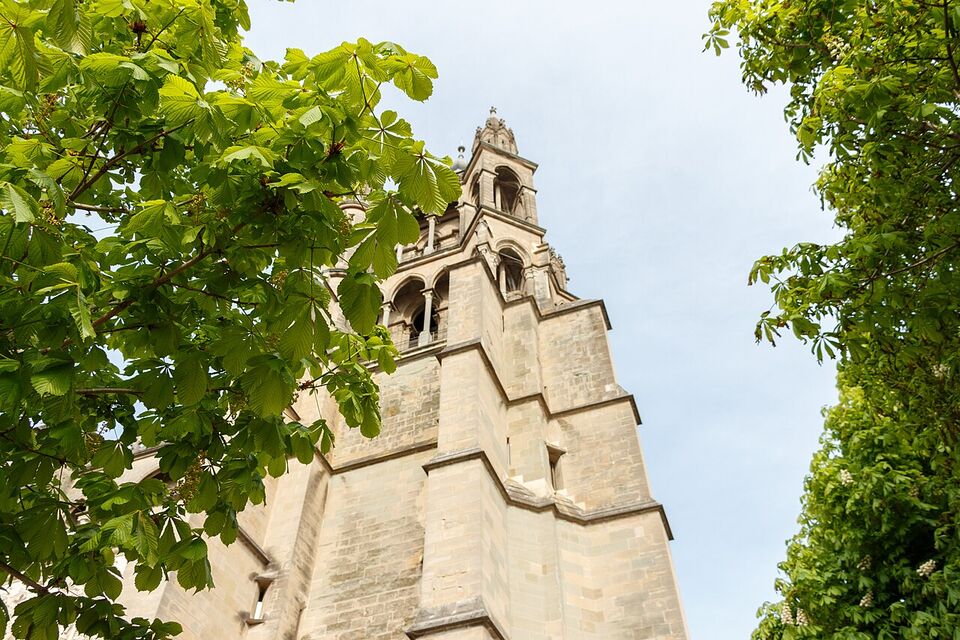
Lausanne is built on three hills above the lake, and almost every walk includes a climb. The old town (La Cité) is on the highest hill and is dominated by the Gothic cathedral. Lausanne Tourism calls the city the fourth largest in Switzerland and the Olympic Capital; it is also the seat of the Swiss Federal Supreme Court.
The cathedral is usually the first stop. Its interior and its tower are the main attractions, and the plaza outside gives a view across the roofs to the lake and the French Alps. We could not confirm the current hours or any entry charge for the tower, so check the cathedral's own site. Allow 45 minutes for the cathedral and a stroll around the old town streets, with cafes and small shops.
Ouchy and the lakefront
Ouchy is the harbor district at the bottom of the hill. It has a long lakeside promenade, gardens, the boat landing and the Olympic Museum nearby. The city's metro line links Ouchy with the center and the station, which saves the climb back up. Lausanne has a “Lausanne Transport Card & More” for visitors and a Lausanne City Pass; we could not confirm what they include or what they cost, so ask your hotel and check lausanne-tourisme.ch.
Hills are the main practical issue. Wear shoes with grip, and expect stairs in the old town. If you have luggage or limited mobility, use the metro and buses rather than walking up from the station.
Museums
The city has several museums that run special shows. Lausanne Tourism lists, for example, an archaeology exhibition at the Palais de Rumine until February 7, 2027, a photography show at the Musée Historique Lausanne until March 14, 2027 and shows at the Cantonal Museum of Fine Arts (MCBA). Dates and hours change, so check the museum's site on the day.
The Olympic Museum
Lausanne is the home of the International Olympic Committee, and the Olympic Museum sits in a park above Ouchy, with views of the lake. Its permanent collection covers the history of the Games, and temporary shows change. Lausanne Tourism lists an exhibition called “Ahead of the Curve,” about innovation at the Games, until February 21, 2027, and a hands-on space for children aged 4 to 10 called “Let's Move: Get Active Space!” until April 12, 2027.
We could not confirm the museum's opening days, hours or ticket prices, and Swiss museums are often closed on Mondays. Check olympics.com/museum before you go and book online if the site offers timed tickets. If you hold a Swiss Travel Pass, check whether the museum is on the list of free entries; see our Swiss Travel Pass page. The Swiss Museum Pass is another route to free entry; check museumspass.ch.
Lavaux: the UNESCO vineyard terraces
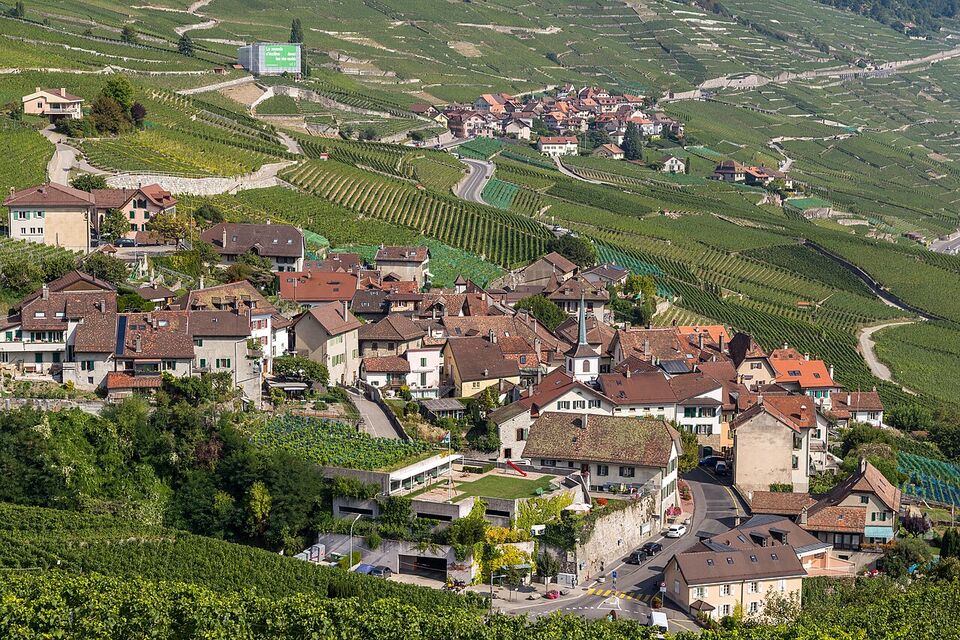
Lavaux is a belt of steep terraced vineyards that runs along the lake, from Lutry near Lausanne to Vevey. The terraces are on the UNESCO World Heritage list, and Switzerland Tourism describes them as worth a visit for nature, culture and food. The wine is mainly white, made from the Chasselas grape. The slope drops directly into the lake, with walls and small villages built into the hillside.
The best way to see it is to walk part of it. Local trains between Lausanne and Vevey stop in wine villages such as Cully, Epesses, Rivaz and Saint-Saphorin, so you can walk between two stations through the vines and take the train back. The paths include steps and some steep slopes. In wet weather the stones are slippery. We did not confirm the current status of marked trails or any guided lines, so check lavaux-unesco.ch for maps, and use SwitzerlandMobility's hiking routes if you want a map; our hiking page explains the trail system.
- When to go. Late spring to autumn is the walking season. The leaves turn in October, while in November the terraces are bare and cool but walkable on a dry day. Many cellars have limited hours in winter.
- Tasting. Small producers often welcome visitors by appointment, and some villages hold open-cellar days. Caves Ouvertes in Chardonne was listed for November 14, 2026; check montreuxriviera.com for later dates. See our wine page.
- Shoes and water. Bring sturdy shoes. In summer the terraces are hot because the walls reflect the sun, and there is little shade.
Insider tip
Plan to walk downhill or along the contour, not up. Take the train to the upper station if there is one, or begin at a village such as Chexbres or Puidoux and walk down toward the lake and the next lake station.
Vevey and Chaplin's World
Vevey is a pleasant half day. The old center has terraces, cafes and pedestrian streets a few steps from the lake. The Montreux Riviera tourist office lists the Jean Planque Collection at a Vevey museum until April 18, 2027, a playing-card exhibition at the Swiss Games Museum until July 4, 2027, and outdoor saunas on the lake that reopen for their ninth season. The town also hosts the Images Vevey photography biennial, with the next edition scheduled for September 2-24, 2028.
Charlie Chaplin spent the last years of his life near Vevey, and Chaplin's World by Grévin, in the village of Corsier-sur-Vevey, is a museum set in his former estate with film sets and exhibits about his life. We could not confirm the current hours or prices, so check chaplinsworld.com. It is usually reached by bus from the station; check the route.
From Vevey a mountain railway climbs to Les Pléiades, a hill about 40 minutes away by train according to the tourist office, with walking trails. Check the operator for winter service.
Château de Chillon
Château de Chillon is a medieval castle on a rock at the eastern end of the lake, in the village of Veytaux next to Montreux. The castle's own site calls it the most visited historical monument in Switzerland. It has towers, halls, cellars and a courtyard, and an on-site cafe named for the poet Lord Byron.
Hours depend on the season. From the castle's website in November 2026:
- November to February: 10 a.m. to 5 p.m., last entry at 4 p.m.
- March and October: 9:30 a.m. to 6 p.m., last entry at 5 p.m. (the website prints a typo for the opening time).
- April to September: 9 a.m. to 7 p.m., last entry at 6 p.m.
- Closed on January 1 and December 25.
Admission for an individual adult is CHF 15 (about $18), and children pay CHF 7 (about $8); check the castle's site for discounts and for family and group rates. Brochures are available in many languages, including English, and guided tours run in English and other languages. The site shows events and workshops through the year, and you can buy tickets online.
You can reach Chillon from Montreux by local bus or train (to Veytaux-Chillon), or on foot along the lakeside, roughly 2 miles (3 km) by our estimate. The walk along the promenade is flat and pleasant on a clear day. A separate site, the Fort de Chillon, is an unusual military site inside the mountain, and we could not confirm its visiting hours.
Watch out
Do not rely on the October-to-March hours when you plan a late arrival. Last entry is an hour before closing in winter, and the castle shuts all day on December 25 and January 1. Add time for security and ticketing on busy December weekends.
Montreux: the promenade and the Jazz Festival
The Montreux promenade runs for several miles along the lake, with flower beds, palm trees and benches facing the mountains. The tourist office describes it as a stroll among flowers and lakes. It is the best free thing in town, and a statue of Queen's singer Freddie Mercury stands on the lakeside, a reminder of the band's recording sessions in Montreux. The walk to Chillon begins from the same path.
The Montreux Jazz Festival is the town's big annual event. The 2027 edition, the 61st, runs July 2-17, 2027. Hotels fill early, and prices rise, so book as soon as you know your dates. The Cully Jazz Festival, in a Lavaux village, runs April 2-10, 2027, and the Septembre Musical in Vevey runs September 10-19, 2027, according to the Montreux Riviera calendar. See our festivals page for the national picture.
Montreux has several smaller events in November, including Montreux Comedy, which runs from November 11 to 22, 2026, in Montreux and Lausanne.
Christmas markets in Montreux and Lausanne
The Montreux Riviera Noël market runs from November 20 to December 24, 2026, along the quays, with more than 150 chalets. Stalls selling crafts and food are open on these hours, and restaurants are open until 11 p.m.:
| Day | Craft stalls | Restaurants |
|---|---|---|
| Monday to Wednesday | 11 a.m.-9 p.m. | 11 a.m.-11 p.m. |
| Thursday and Friday | 11 a.m.-10 p.m. | 11 a.m.-11 p.m. |
| Saturday | 10 a.m.-10 p.m. | 11 a.m.-11 p.m. |
| Sunday | 10 a.m.-8 p.m. | 11 a.m.-11 p.m. |
| December 24 | 11 a.m.-5 p.m. | 11 a.m.-5 p.m. |
Attractions include a Ferris wheel, a Forest of Wishes in the Swiss Gardens and a “Flying Santa” show. A Santa's Flying Cruise runs on a Belle Époque boat from November 20 to December 24, 2026, and Santa's House is at the top of Rochers-de-Naye, with tickets on sale since September 15. The market operator warns that takeaway food and drink closes one hour after the stalls.
In Lausanne, Bô Noël runs from November 20 to December 31, 2026. It is the 12th and final edition, according to Lausanne Tourism, with festive gatherings every Saturday on Rue Centrale. See our Christmas markets page and December page.
One safety change is worth knowing. After a deadly bar fire in Crans-Montana on January 1, 2026, the canton of Vaud banned fireworks, sparklers and flares in bars and restaurants. Do not use sparklers indoors anywhere in Switzerland.
Rochers-de-Naye and the GoldenPass line
Rochers-de-Naye is a summit above Montreux at 6,699 ft (2,042 m), reached by a rack railway from Montreux through Glion. The tourist office calls it the highest peak in the region, with a view of the lake. Santa's House is listed at the top for the 2026 Christmas season.
The status of the railway is the question we could not answer. Mountain railways have seasons and maintenance closures, and we did not find a current timetable, so check the operator (the GoldenPass and MVR sites) for running days, winter hours and prices before you plan a day around it. Fares are often listed per direction, and a Swiss Travel Pass may give a discount rather than free travel.
GoldenPass to Gstaad
The GoldenPass line is a scenic railway route with its base in Montreux. Trains of the Montreux Oberland Bernois line run from Montreux up through the vineyards and over the hills to Zweisimmen, passing Gstaad, and from there the route continues toward the Bernese Oberland and Interlaken. It is a good way to cross from Lake Geneva to the mountains. See our scenic trains page and Interlaken page.
A reservation fee applies on the panoramic trains, and we could not confirm the amount, the winter running dates or whether a direct Montreux-Interlaken Ost service is available this winter. Check goldenpass.ch and the SBB app, and remember that you may need a change at Zweisimmen. A Swiss Travel Pass normally covers the rail fare with the reservation fee extra, but confirm the rules with goldenpass.ch.
Lake boats and steamers
The lake has regular passenger boats, run by CGN, as well as the Belle Époque paddle steamers, which are preserved historic ships with long glass salons. The Montreux Riviera tourist office advertises cruises on these steamers as part of the region's attractions. The big seasonal question is what runs in winter.
The timetable thins out sharply between November and spring, and some boats and lines stop. We could not confirm the 2026-27 timetable, and we have only one confirmed winter service: the Santa cruise on a Belle Époque boat from November 20 to December 24, 2026. For everything else, check the CGN website and the timetable posted at each pier. The Swiss Travel Pass includes boats generally, but check which services it covers. See our lakes page.
Where to stay, getting there and getting around
Hotels in Lausanne cluster near the station, around the Flon district and at Ouchy. Hotels in Montreux are along the lake and near the station, and Vevey has a small number of lakeside hotels. Lavaux has guesthouses and small hotels in the villages, which suit walkers. Choose lakeside rooms only if you are willing to pay a premium. Our where to stay page explains hotel tiers.
Trains run along the whole shore, and Lausanne, Vevey and Montreux are all on the main lakeside line, with connections to Geneva Airport, Bern and Zurich. We could not confirm journey times, so use the SBB app. A free guest card with local transport is offered in Geneva; for Lausanne and the Montreux Riviera, ask your hotel what it includes, since we could not confirm the terms.
Language is French; English is widely used in hotels and the main sights. See our phrases page.
A lake climate makes the region mild. Geneva, at the western end, averages highs of 48.7°F (9.3°C) in November and 80.1°F (26.7°C) in July, which is a rough guide for Lausanne and Montreux, although we have no figures for those towns.
Plans for two or three days
- Day 1
Lausanne
Climb to the cathedral and walk the old town in the morning. Take the metro down to Ouchy, have lunch by the lake, then spend the afternoon at the Olympic Museum. In late November and December, finish in Rue Centrale for Bô Noël.
- Day 2
Lavaux and Vevey
Take a local train to a wine village such as Cully or Saint-Saphorin and walk between two stations. Have lunch in a village or in Vevey, then see the old center. Choose Chaplin's World if it suits you.
- Day 3
Chillon and Montreux
Reach Chillon by mid-morning. Walk or take the bus back along the promenade. In winter, end at the Christmas market. In summer, add a boat. Decide about Rochers-de-Naye only after you check the operator.
If you prefer to stay in one town, Geneva is a short train ride to the west, and Bern is to the northeast; see our Bern page. The region also fits into the loops in our day trips page.
Add it to a route in the trip builder, or ask us to plan the hotels, trains and guides for you.