Overview
February is the busiest month of the Swiss winter after the Christmas weeks, and one of the best. Snow is usually most dependable at altitude, lifts and railways run their full winter timetables, and the calendar is crowded: ski racing, carnival, horse racing on a frozen lake. The price is cold weather, short days (about 10 hours of daylight at mid-month) and full resorts when the Swiss and their neighbors take their winter holidays.
This guide covers the weather, the main 2027 events, school holidays and crowds, where to go, what it costs and what to pack. Facts were checked on November 15, 2026, and dates marked "check" were not confirmed by the organizers. The month before is Switzerland in January and the month after is Switzerland in March. For resorts and passes see skiing in Switzerland, and for the whole year see when to go.
Weather and daylight
February is still deep winter, but a little lighter than January: about 10 hours of daylight at mid-month, against about 9 in mid-January. The lowlands stay cold and often gray, with fog or low cloud on the central plateau around Zurich, Bern and Lucerne for days at a time. Higher up, on a ridge or at a ski area above the cloud, it can be bright and sunny. In the Alps, February is also often the month with the best balance of cold, dry snow and lengthening days.
| Place | Average high | Average low | Days with rain or snow |
|---|---|---|---|
| Zurich | 41°F (5.2°C) | 30°F (-1.2°C) | 9 |
| Geneva | 45°F (7°C) | 30°F (-1.1°C) | 8 |
| Lucerne | 42°F (5.8°C) | 29°F (-1.7°C) | 8.7 |
| Interlaken | 42°F (5.4°C) | 27.5°F (-2.5°C) | 8.5 |
| Lugano | 48°F (9°C) | 35°F (1.9°C) | 5 |
| Zermatt village (5,374 ft / 1,638 m) | 35°F (1.7°C) | 19°F (-7.3°C) | 5.5 |
| Jungfraujoch weather station (11,745 ft / 3,580 m) | 13.6°F (-10.2°C) | 2.7°F (-16.3°C) | not listed |
These are 1991-2020 averages, not a forecast. Zermatt village averages about 17 inches (44 cm) of snow in February. We make no snow forecast for 2027; read the avalanche bulletin at slf.ch and each resort's own snow report. Lugano, on the south side of the Alps, is the mildest and driest of the places above. See Lugano and Ticino.
Big events in February 2027
FIS Alpine World Ski Championships, Crans-Montana
The 2027 World Championships are scheduled for February 1-14, 2027 in Crans-Montana, a resort in the canton of Valais above the Rhône valley. The events listed on a reference site are the downhill, super-G, giant slalom, slalom, team combined and team parallel. We could not confirm the day-by-day race schedule or ticket sales, so check the organizers' site and fis-ski.com before you plan around a particular race day.
Expect full hotels in Crans-Montana and the nearby valley towns for the whole fortnight, and probably busy trains and roads on race days. If you want to see a race, book rooms in Sierre or elsewhere in the Rhône valley rather than waiting for a room in the resort, and check the transport plan the organizers publish. Ski racing is also on the World Cup calendar this month: the women's World Cup is listed at Lenzerheide in Graubünden on February 20-21, 2027, but the venue and dates should be checked.
White Turf, St. Moritz: February 7, 14 and 21
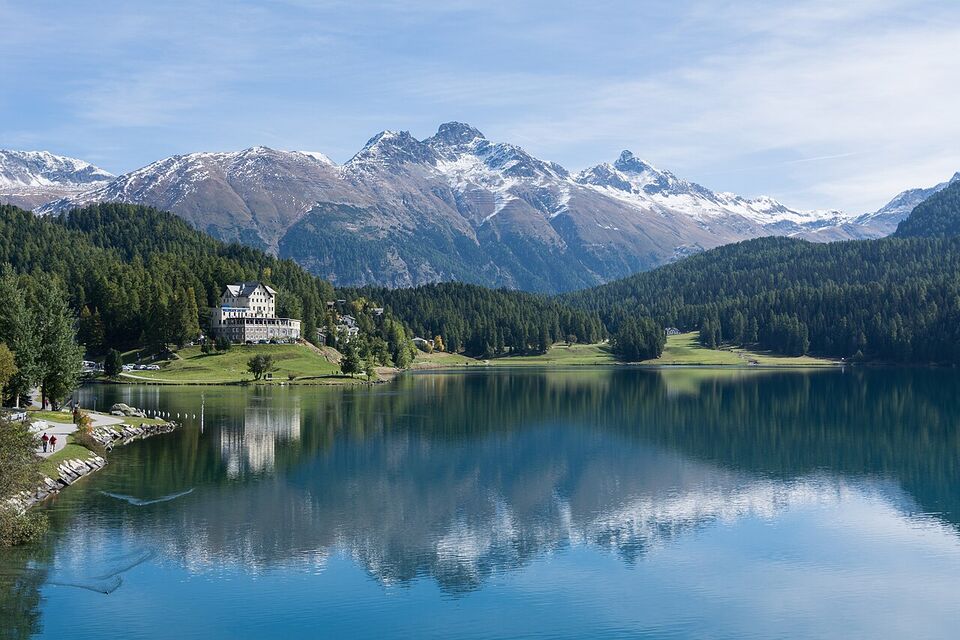
White Turf is horse racing on the frozen surface of Lake St. Moritz: flat racing, trotting and skikjöring, where a horse pulls a skier. The 2027 meeting is the 120th, with racing on Sundays February 7, 14 and 21 and family days on Saturdays February 6, 13 and 20. The organizers say races have run since 1907 and report over 35,000 visitors a year. Tickets and hospitality packages are sold at whiteturf.ch. See the Engadine for the area, and book hotels early for all three weekends.
The Engadine's "Amusements on the Lake" runs from January 18 to February 21, 2027, so there are other things to do on the frozen lake on those same days. Dress warmly: standing on a frozen lake in shade is far colder than the sunny photos suggest.
Lucerne Fasnacht: early February
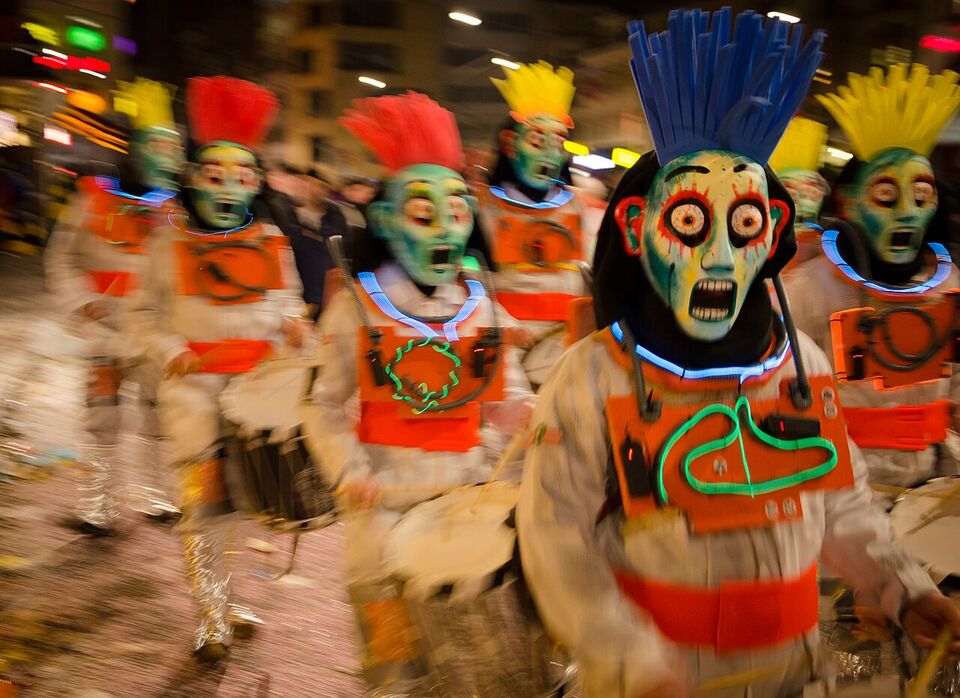
Lucerne's carnival (Fasnacht) starts on the Thursday before Ash Wednesday at 5 a.m. with the Urknall (Big Bang). It has parades on Schmotziger Donnerstag ("Dirty Thursday") and Güdismontag, and it ends on Güdisdienstag with the Monstercorso, a parade of brass bands, lights and lanterns. Ash Wednesday in 2027 is February 10, so by our calculation the carnival runs from Thursday, February 4 to Tuesday, February 9. We could not confirm the official program, so check luzern.com or the carnival committee before you book. See Lucerne.
Basel Fasnacht: February 15-17
Basel's carnival is the largest in Switzerland and is on UNESCO's list of intangible cultural heritage. In 2027 it runs from February 15 to 17 and begins on Monday, February 15, at 4 a.m. sharp with the Morgestraich: the city lights go out, and costumed groups called cliques march through the old town with piccolos, drums and hand-painted lanterns. The carnival ends with the Ändstraich at 4 a.m. on Thursday, February 18. The big parades take place on Monday and Wednesday afternoons. Basel's official page lists the dates at basel.com.
The Morgestraich is music in the dark, not a street party, and the best spots fill early. See Basel and Swiss festivals.
Insider tip
For Basel Fasnacht, many people sleep in Zurich, Lucerne or Bern, or in nearby Rhine towns, and take an early train. Check the SBB app for early-morning and late-night services on the carnival days, and have a plan to get home, because trains from the city are crowded after the parades.
School holidays and crowds
February is when many Swiss school children get their winter sports holidays (Sportferien), and the dates differ by canton, usually somewhere between late January and late February. A school-holiday calendar lists Lucerne's as January 30-February 14, 2027, Ticino's as February 6-14 and Basel-Stadt's as February 6-20; treat these as unconfirmed and check the canton's own site. Families from Germany, France and the UK also travel in February, and the UK's February half-term week is usually in the middle of the month. Presidents' Day, February 15, 2027, gives many Americans a long weekend, and it falls on the same day as the start of Basel Fasnacht.
The result is full hotels and mountain restaurants, long lift queues at the big resorts on the first days of each holiday, and ski lessons and rental gear that sell out. We have not confirmed 2027 hotel prices. Swiss hotels are among the most expensive in Europe, and resort prices in school holiday weeks are usually among the highest of the winter after Christmas and New Year. See where to stay.
Save money
Ski mid-week and pick a village with a train connection and a lower price base, such as one in the Jungfrau region, rather than the best-known resort. A Half Fare Card costs CHF 150 (about $180) for a month at the 2026 price and halves train, bus, boat and most mountain railway fares. It only pays if you travel a lot, so work it out in the SBB app first. See the Swiss Travel Pass and budget tips.
Skiing and snow in February
For most visitors February is the heart of the season. The higher the resort, the more reliable the snow, and in February even mid-altitude resorts usually have their full lift networks open if the winter has been normal. Planned season dates for 2026-27 include the following; they depend on snow, so confirm on each resort's own site.
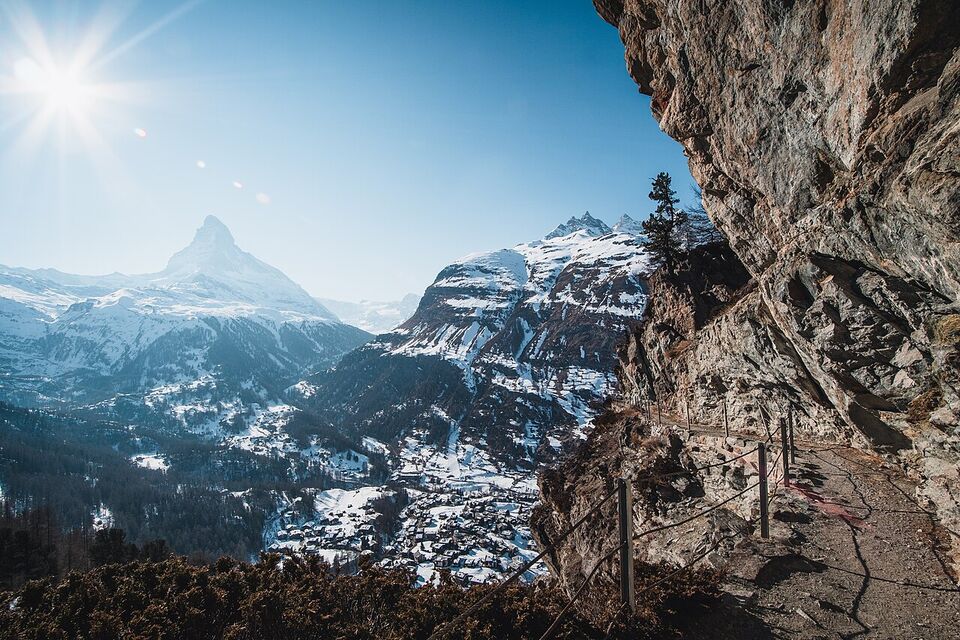
- Zermatt. Ski passes from CHF 92 (about $110), a Flex ski pass from CHF 181 (about $215) and the Peak Pass from CHF 190 (about $225). They are valid into spring (ski passes to May 2, 2027 and the Peak Pass to April 30, 2027). See Zermatt.
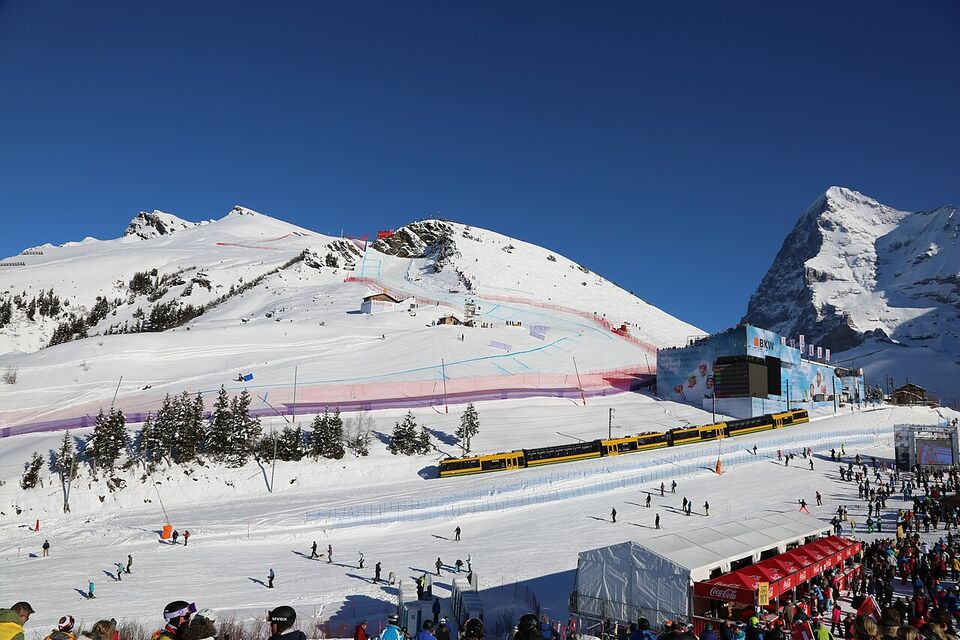
- Jungfrau Ski Region (Grindelwald, Wengen, Mürren). The ski pass, from CHF 79 (about $94), is valid November 21, 2026-April 25, 2027. See Interlaken and the Jungfrau region.
- St. Moritz and the Engadine. The planned season runs from late October 2026 to early May 2027 on an aggregator site, which is preliminary. See the Engadine.
Piste ratings, lessons and passes are explained in skiing. Book lessons and equipment ahead for school holiday weeks. Do not ski off the marked runs without a guide and avalanche gear; the SLF bulletin is the first thing to read each morning.
Watch out
Travel insurance should cover mountain rescue and medical evacuation. A Rega helicopter mission costs around CHF 4,500 (about $5,355) on average, and complex searches cost far more. Rega's number inside Switzerland is 1414. A Rega patronage (CHF 40, or about $48, for adults) may help with some rescue costs in Switzerland but does not replace travel insurance. See safety.
If you do not ski
February suits non-skiers too, if you dress for it. The Jungfrau Region's Winter Hiking and Sledging Pass starts at CHF 61 (about $73) and is valid November 21, 2026-April 25, 2027. Grindelwald First is reached by cableway from CHF 38 (about $45), and Harder Kulm above Interlaken has a funicular from CHF 19 (about $23). Many resorts groom winter paths and mark sledging (Schlitteln) runs, with sledges rented at the lift. Check on the day that the path or run is open.
The Jungfraujoch (the 11,333 ft or 3,454 m station) is sold as open all year. A Jungfrau Travel Pass holder buys a connecting ticket for the Jungfraujoch at CHF 63 (about $75) outside the summer period; without a pass the fare is much higher, so check jungfrau.ch for the day's price. At the top, February temperatures sit near 14°F (-10°C) before wind chill, so wear warm layers. See mountain excursions and hiking for winter-trail rules.
Zermatt's Matterhorn Glacier Paradise is listed as open until April 30, 2027, with a pre-season return fare of CHF 104 (about $125) from November 1, 2026 to April 30, 2027. The Gornergrat railway return is listed from CHF 102 (about $120). Check both operators for closures in bad weather.
City breaks and museums
February can be a good time for a city trip, particularly on the central plateau when the mountains are crowded, though the lowland weather is the least inviting of the year. Museums are open (many close on Mondays):
- Zurich. The Kunsthaus shows Maria Lassnig and Edvard Munch until February 21, 2027, and is open Tuesday-Wednesday and Friday-Sunday 10 a.m.-6 p.m., Thursday 10 a.m.-8 p.m., closed Monday. The Lindt Home of Chocolate is open daily 10 a.m.-7 p.m. with an adult ticket at CHF 17 (about $20); book online. See Zurich.
- Basel. The Kunstmuseum's "Van Gogh, Hodler, and a Cabriolet" runs until February 7, 2027. The museum is closed Monday. See Basel.
- Bern and Geneva. Bern's arcaded old town keeps you dry, and Geneva's CERN Science Gateway is free but requires registration. See Bern and Geneva.
- Lake Geneva. Château de Chillon is open 10 a.m.-5 p.m. (last entry 4 p.m.) from November to February, with adult entry at CHF 15 (about $18). See Lausanne and Montreux.
Fondue and raclette are at their best in February, and a table at a popular restaurant in a ski village needs booking. See food for what to order.
Getting around in February
Swiss trains run on time in winter, and they are the easiest way to reach most ski resorts. Heavy snow can delay a mountain railway, and a closed pass road can mean a detour. The pass roads that close for winter, including Furka, Grimsel, Susten and the old Gotthard road, are still closed in February; the Gotthard road tunnel stays open. If you drive, winter tires are obligatory on the passes that stay open and chains may be needed. See driving and getting around.
Different from home
Swiss trains are the normal way to a ski resort, and you carry your skis onto the train with you. Car-free villages such as Zermatt and Wengen mean you park in the valley (Tasch for Zermatt) and take a train up. A Swiss Travel Pass covers trains but does not automatically cover ski lifts, so check what a pass gives you before you buy. See the Swiss Travel Pass.
What to pack
Pack a base layer, a fleece or wool midlayer and a waterproof, windproof shell. Bring waterproof boots with real grip, warm socks, a hat, gloves, a scarf, sunglasses or goggles, and sun cream and lip balm, since the February mountain sun is strong over snow. A small daypack is useful for layers. Charge your phone before you go out, because cold drains batteries quickly. Our packing page has a full list.
A sample week in February
- Days 1-2
Arrive and settle in Lucerne or Zurich
Take the train from the airport, walk the old town and see a museum. Keep the first day light, because Switzerland is 6 hours ahead of New York.
- Days 3-5
Ski or walk in the Jungfrau region
Base in Grindelwald or Interlaken, buy a regional pass and ski, sledge or walk. Check the weather the evening before.
- Days 6-7
Basel Fasnacht or the Engadine
Go to Basel for the Morgestraich on Monday, February 15, or to St. Moritz for White Turf on Sunday, February 14 or 21. Book both early.
The bottom line
February is a strong choice for skiing and events, and a poor one for a cheap, quiet trip. Book the ski days, lessons and beds first, pick one or two events and build the rest around the weather. If you can choose, avoid the main school holiday weeks and go mid-week. The next month, March, is milder and less crowded, with good spring skiing at altitude.
Add it to a route in the trip builder, or ask us to plan the hotels, trains and guides for you.