Overview: what to know before you go
Swiss manners are not difficult, but they differ from the easygoing, chatty American style in a few small ways. Be on time, greet people when you walk into a room or a shop, keep your voice down on trains and in apartment buildings, tidy up after yourself outdoors, and treat Sunday as a quiet day. If you do those five things, most of the rest sorts itself out.
This page is about culture, not rules that change from year to year, so the advice here is general and has no prices or dates. Customs also differ by region. German-speaking Switzerland (Zurich, Lucerne, Bern, Basel, Interlaken, Zermatt, Appenzell) is the most formal about punctuality and rules. French-speaking Switzerland (Geneva, Lausanne, Montreux) is a little more relaxed and more affectionate in greetings. Italian-speaking Ticino (Lugano, Locarno) is warmer still. Our phrases page has the words you will use most.
The Swiss are polite, but they tend to be reserved with strangers and private about personal matters. Do not read quiet as unfriendly. A short, correct greeting and a "thank you" go a long way, and most people are glad to help when you ask a clear question.
Different from home
In the US, friendly small talk with a cashier or a stranger on a train is normal. In Switzerland, a greeting and a thank-you are enough, and long conversations with strangers are less common. A neighbor who does not chat is not being cold; privacy is part of the culture.
Greetings: handshakes, kisses and hello
When you meet someone for the first time, shake hands, look at the person and say your name. In business or with older people, wait for them to offer a hand first if you are not sure. When you leave a group, many Swiss shake hands with each person again, which is polite but not required of a visitor.
Among friends in French-speaking Switzerland, people greet with three kisses on alternating cheeks (les trois bises), usually starting on the right. In other regions two kisses are common between friends, and in German-speaking areas a handshake or a hug is more usual. As a visitor you will mostly shake hands; if a host leans in for a kiss, go with it and lean the way they do. A light touch of cheeks, not a real kiss, is the style.
Say hello to people when you walk into a small shop, a bakery, a doctor's waiting room or a lift (elevator), and say goodbye when you leave. Walking into a shop and saying nothing is the most common small mistake Americans make. Switzerland also has a habit of greeting strangers on hiking trails, covered in the trails section below.
Language: how to be polite in German, French and Italian areas
Switzerland has four national languages. German is spoken by the majority, French in the west (Geneva, Lausanne, Montreux, Neuchâtel), Italian in Ticino and some southern valleys, and Romansh by a small group in parts of Graubünden. In German-speaking Switzerland people speak Swiss German dialects in daily life and write standard German. Do not worry if you cannot understand the dialect; most people switch to standard German or English when they speak to a visitor.
English is widely understood in hotels, stations, big attractions and restaurants in cities and tourist areas. In smaller villages and in shops it varies. Start with a greeting in the local language and then ask, "Sprechen Sie Englisch?" (German), "Parlez-vous anglais ?" (French) or "Parla inglese?" (Italian). That small effort is noticed.
| Situation | German areas | French areas | Italian areas |
|---|---|---|---|
| Hello (formal) | Grüezi (Zurich area) or Guten Tag | Bonjour | Buongiorno |
| Hello (informal) | Hoi or Salü | Salut | Ciao |
| Please | Bitte | S'il vous plaît | Per favore |
| Thank you | Danke or Merci | Merci | Grazie |
| Goodbye | Uf Wiederluege or Auf Wiedersehen | Au revoir | Arrivederci |
| Excuse me | Entschuldigung | Excusez-moi | Mi scusi |
Greetings vary by place. Grüezi is typical around Zurich, and other German-speaking regions have their own versions, so listen to what people say and echo it. In the Engadine, where Romansh is spoken, you may hear Allegra; German or English will be understood there. Because Swiss people often say Merci even in German-speaking areas, it is safe nearly everywhere.
For longer lists of useful words, restaurant phrases and pronunciation tips, see Phrases in German, French and Italian. Do not assume that a French-speaking or Italian-speaking Swiss person speaks German; use English if you need a shared language.
Sie or du, vous or tu
German and French both have a formal and an informal "you". In German, use Sie with adults you do not know, with shop staff, hotel staff and officials. In French, use vous. Wait until someone suggests du (German) or tu (French), often with the phrase "Wollen wir uns duzen?" Switching is a small social moment, and the older or more senior person usually proposes it.
There are common exceptions. Hikers and skiers often say du to each other on the trail or the slope. Younger people, many workplaces and many shops aimed at young customers also use it. If you answer in English, none of this matters, but if you use a few German words, Sie is the safe choice until you hear du from the other person.
Punctuality and daily rhythm
The Swiss reputation for punctuality is earned. Trains, trams and buses are scheduled to the minute, and people plan their days around them. For private appointments, a dinner invitation or a guided tour, arrive on time. If you will be late, call or send a message; arriving ten minutes late without a word is rude. A very early arrival at someone's home is also awkward, so arrive within a few minutes of the agreed time.
Restaurant mealtimes follow a regular pattern. Lunch is served roughly from noon to 2 p.m., and many restaurants in smaller places close between lunch and dinner or serve only drinks and cake in the afternoon. Dinner often starts early, from about 6 p.m., and kitchens in small towns may stop serving by 9 p.m. or earlier. Check the posted hours of a place you want to try, especially on Sunday and Monday, when many restaurants close.
Tickets matter too. On trains, buy your ticket before boarding, and on trams and buses buy it at the machine or in the app. Ticket inspectors can fine you for travelling without a valid ticket, and "I did not know" does not change that. Our getting-around guide explains how tickets work.
Quiet hours, Sundays and neighbors
Quiet is an important value. Many Swiss municipalities and apartment buildings have rules about noise at night, at midday and on Sundays and public holidays. The hours differ by town and building, but a common pattern is quiet from about 10 p.m. to the early morning, and on Sundays all day. If you rent an apartment, read the house rules (Hausordnung) in the flat and follow them: they may cover when you can use the washing machine, shower late at night or play music.
On Sundays, expect shops to be closed and the streets to be calmer. Avoid loud activities, such as mowing, drilling or noisy parties. In most hotels this is not an issue, but in apartments and small guesthouses, remember that walls and floors can be thin. When you come back late, lower your voice in the stairwell and close doors gently.
Bells are part of the soundscape, too. Church bells ring on the hour, and in some villages they ring through the night, so a room near a church can be noisy; ask for a room on the other side if you are a light sleeper. Cowbells are normal in summer in the mountains (see the alpine section below). Switzerland also observes quiet in public places such as churches, libraries and museums, where phone calls are out of place.
Insider tip
Do your grocery shopping on Saturday. Most supermarkets close on Sunday, and the shops that stay open (at stations and airports, and in resorts) cost more and have a narrower choice. Check the posted hours before you rely on any shop on a Sunday or a public holiday.
Recycling and waste
Switzerland is serious about sorting waste, and visitors are expected to follow the basic rules. Public bins in towns, at stations and on trails are often split for general waste, PET bottles, aluminum, paper and sometimes glass. Look at the labels on the bins before you drop anything in. If you are not sure where something goes, hold on to it until you find the right bin or ask someone.
In many municipalities, household waste has to go in official, taxed bags, and leaving unmarked bags on the street can lead to a fine. You will mostly not meet this as a hotel guest, because staff handle waste. If you rent an apartment, ask your host where the bins are, which bags to use and which days the collection happens. Glass is usually taken to collection points, sorted by color, and it should not be dropped off at night or on Sundays because of the noise.
On hikes, take your trash with you. Do not leave bags beside bins that are full or leave anything on a mountain hut's step. Bring a small bag for your rubbish; huts and trails often have no bins at all. Our hiking guide covers more trail practice.
Trains, trams and public spaces
On trains and trams, people keep their voices low. Some long-distance trains have quiet coaches where phone calls and loud conversations are not allowed; look for the pictogram on the door or the coach, and follow it. Even outside quiet coaches, take calls briefly and quietly, and use headphones for music and videos. Do not put your feet or your bag on a seat. Offer your seat to older passengers, pregnant women and people with small children.
On platforms, stand back from the edge, let people get off before you board, and do not block a door. On stairs and escalators, stand on the right and leave the left side free for people who want to walk, and generally walk on the right on footpaths and in pedestrian streets. If you are carrying large luggage on a busy train, use the racks at the end of the car rather than the aisle.
Food on trains is accepted, but strong-smelling meals are not. A sandwich or a bakery item is fine; a full takeout meal is less so. Alcohol on trains is legal, but drunken behavior is not welcome, especially on late trains.
Alpine etiquette on the trails
Hiking is a social activity in Switzerland, and the trail has its own small code. Greet people you pass. A simple Grüezi or Hoi in German-speaking areas, Bonjour in French-speaking areas, or Buongiorno in Ticino is enough. A greeting also helps safety: people on a trail notice one another, and a hiker who does not answer may be in trouble.
The usual right-of-way rule is that uphill hikers have priority, though a person who has stopped for breath often waves you on. Step aside for groups, let faster hikers pass, and keep to the marked trail so you do not damage grass that farmers need. Walk, do not cut switchbacks. Do not pick flowers, and do not take rocks or fossils. Take your litter home. Camping rules differ by canton, so do not assume that you can pitch a tent anywhere; ask locally before you plan a night outdoors.
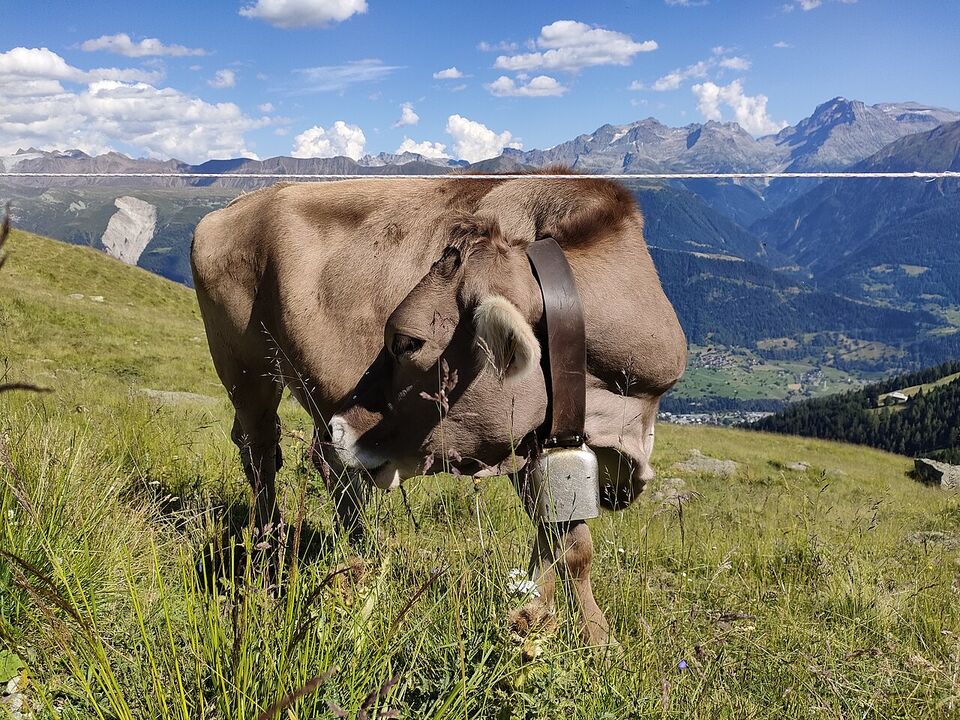
Farm gates and fences matter. On pastures, gates keep animals in. Open a gate only as much as you need, walk through and close it behind you, even if it was open when you arrived, unless a sign says otherwise. Electric fences may carry a mild current; touch them only when you know that they are switched off, and use the stiles or gates provided. If you hike with a dog, keep it on a leash near livestock. For maps, trail grading and what to carry, see our hiking guide, and for safety, see Safety in Switzerland.
Watch out
Cows are large animals and they can be dangerous, especially mother cows with calves and, in rare cases, herds that feel threatened by a dog. Do not walk between a cow and her calf, do not try to pet or feed cows, and do not run. If cows approach, walk away calmly and, if a cow seems aggressive toward your dog, let the dog off the leash so that it can get away.
Cows, bells and the Alpine year
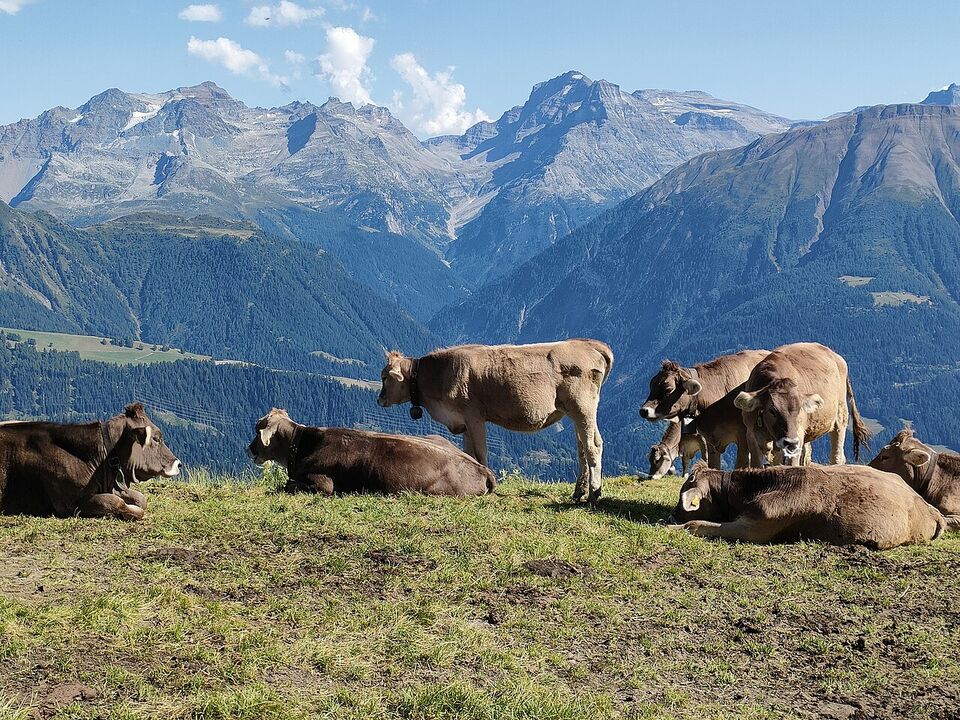
In summer many cows graze on high pastures (Alpen), and the sound of cowbells carries across valleys. The bells are not a tourist show; they help farmers find animals. Bells can be loud at night near a farm, and some visitors find them charming and others find them tiring. If you are a light sleeper, a room in a village away from the pasture is quieter.
At the end of summer, in many regions, farmers lead their cows down from the mountains in a festive parade where the animals wear flowers and large bells. Watching is welcome. Keep to the side of the road, do not touch the animals, and do not block the route to take a photo. Dates and places change from year to year, so check the local tourist office. Our festivals guide lists major events.
Farm shops and small mountain restaurants sometimes work on trust, with products on a table and a box for payment. Pay what is on the price list and keep small change in francs for this, since card readers are not always available.
Tipping and paying
Service is normally included in menu prices in Switzerland, so tipping works differently from the US. Rounding up the bill or leaving a few francs for good service is appreciated but not expected. In a casual café you can simply round up, and in a more formal restaurant you may leave a few francs if the service was good. There is no fixed percentage, and a US-style tip is not needed. Our money guide explains cards, cash and exchange.
When you pay at a restaurant, the staff bring the card machine to the table. Say how much you want to pay in total, including the extra, before you tap or insert your card, since the amount may be set before the tip option appears. For taxis, round up. For hotel porters, a small tip is a courteous gesture, not a duty.
Prices in shops include tax, so the price on the label is the price you pay. Most places accept cards, but keep some francs for small farm shops, mountain huts and some machines.
Money, politics and personal questions
Swiss people are generally discreet about money. Asking someone how much they earn, what their rent is or what a house cost is considered nosy. Showing off wealth is also not admired. Talking about prices in general (for example, that something is expensive) is fine, and Swiss people often joke about it themselves.
Politics is a regular topic in Switzerland because of its system of direct democracy, in which citizens vote several times a year on national, cantonal and local questions. A federal vote is scheduled for November 29, 2026, for example. Many Swiss enjoy discussing how the system works. As a visitor, listen more than you speak, avoid strong opinions about Swiss domestic issues and avoid comparing Swiss and American politics in a way that sounds like a lecture. Neutrality is a point of national pride, and criticism from outsiders can be unwelcome.
Questions about family, religion and health are considered private in the first conversation. Instead, ask about hobbies, places and food. A simple "Do you hike?" or "Where would you recommend we eat?" usually starts a good conversation.
Photography and privacy
Swiss law and culture put a high value on privacy. Photographing scenery, buildings, food and public events is fine. Photographing people close up, especially children, without their permission is considered rude, and publishing identifiable images of people online can raise legal issues. Ask first, and respect a no. At festivals and parades, photographing performers is usually welcome.
Inside churches and museums, look for signs. Many museums allow photos without flash but ban tripods and selfie sticks, and some exhibitions prohibit photography entirely. Some places, such as certain parts of thermal baths, spas and saunas, forbid phones altogether. If you use a drone, check the rules before you fly; flying near people, airports, crowds, nature reserves and some mountain areas is restricted, and the rules are set by the federal authorities, so check the Federal Office of Civil Aviation site before you pack one.
Shop hours, Sundays and holidays
Shop opening hours are shorter than in most US cities. Supermarkets such as Coop and Migros usually open early in the morning and close in the evening on weekdays, with earlier closing on Saturday, and most are closed on Sundays. Exceptions are shops at train stations and airports and in tourist resorts, which often open on Sundays. Check the hours posted at the door or on the store's website.
Public holidays add to this. August 1 (Swiss National Day) is the only national holiday, and cantons set their own other holidays, such as Christmas Day, New Year's Day and Easter Monday, so closures vary by place. Many shops close early on December 24 and December 31; check local hours. For dates and what is open in each season, see our shopping guide and the December page.
Save money
Tap water is widely drunk in Switzerland, and public fountains in many towns provide drinking water (a sign says if a fountain is not for drinking), so carry a refillable bottle and skip bottled water. Many restaurants charge for bottled water but will serve tap water if you ask for it, sometimes for a small fee.
What to wear
Swiss dress is practical and fairly understated. In cities, smart casual is fine almost everywhere: jeans, a jacket, comfortable shoes. For a nice dinner, a shirt or blouse and neat trousers or a dress is enough, and you do not need formal clothing unless you are going to a formal event or opera. Overly casual clothes, such as beachwear in a city, stand out.
In the mountains, wear layers, sturdy shoes with good grip and a rain jacket, even in summer. Weather changes fast, and a warm layer is useful at altitude. Hiking boots are normal and accepted on trains and in mountain restaurants. In churches and monasteries, cover bare shoulders and avoid very short shorts.
Thermal baths and saunas have their own norms. In many saunas in German-speaking Switzerland, clothing is not allowed in the sauna room, you sit on a towel, and people shower before entering. Check the house rules before you go, and ask staff if you are unsure.
Dining etiquette
At a meal, wait until everyone has been served and the host or the group says En Guete (German), Bon appétit (French) or Buon appetito (Italian). When toasting, look people in the eye as you clink glasses, and say Zum Wohl or Prost in German, Santé in French, or Salute in Italian. Hold the fork in the left hand and the knife in the right for most meals, as in much of Europe, though visitors are not expected to switch.
If you are invited to someone's home, bring a small gift such as chocolate, flowers or a bottle of wine. Arrive on time. Take off your shoes if the host does. At a cheese fondue, spear the bread with the fork, stir the pot, and eat the morsel off the fork without double-dipping. Our Swiss food guide explains the main dishes.
In a restaurant, you may have to ask for the bill, since waiters do not hurry you. Say "the bill, please" (Die Rechnung, bitte in German, L'addition, s'il vous plaît in French). Tables in a busy restaurant may be shared, and it is polite to ask if a seat is free.
Common mistakes and how to avoid them
- Not greeting in shops, lifts and waiting rooms: say hello and goodbye.
- Arriving late to a tour, a meal or a train: be early, and expect departures to be on time.
- Talking loudly on trains, in quiet coaches or in apartment stairwells.
- Leaving a farm gate open, walking through a pasture off the path or approaching calves.
- Planning on shopping on Sunday: buy what you need on Saturday.
- Tipping a US-style percentage by habit: round up instead.
- Putting glass or garbage in the wrong place, or dropping it at night or on Sunday.
- Using the informal du or tu with strangers before they offer it.
- Photographing strangers or their children without asking.
- Assuming everyone speaks German: Switzerland has four national languages, so check which region you are in.
If you make a mistake, do not worry. A quick apology ("Entschuldigung," "Pardon," "Scusi") and a smile are enough. For the practical side of staying safe, see Safety in Switzerland, and for planning the whole trip, start with the trip planner.
Add it to a route in the trip builder, or ask us to plan the hotels, trains and guides for you.