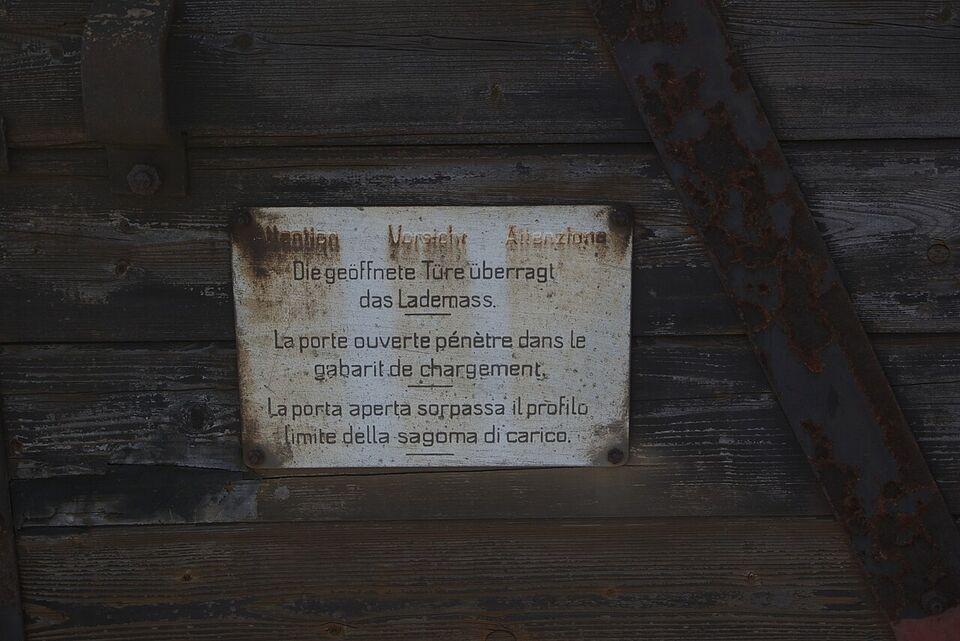
Overview
You can visit Switzerland in English, and most Americans do. But Switzerland has four national languages, and the one on the sign changes as the train crosses a border you cannot see. A few phrases in the right language, used in the right place, make shops, restaurants and ticket counters friendlier. This page gives you about 50 practical phrases in German, French and Italian with a simple pronunciation guide for English speakers, plus place names, signs, numbers, emergency words and the most common mistakes.
The phrases here are the ones travelers use: greetings, thanks, ordering, shopping, directions and trains. For manners beyond words, such as when to shake hands and how to behave at the table, see the etiquette guide. For menus and dishes, see Swiss Food and Fondue.
Which language where
German is the main language of about 62% of residents. French is next, at about 23%, Italian about 8% and Romansh about 0.5%. English is the main language of about 5% of residents, as it is for many people from abroad, and is widely used as a common second language.
| Area | Language you will read and hear | Typical places |
|---|---|---|
| North, east and center | German (Swiss German in speech) | Zurich, Lucerne, Bern, Basel, Interlaken, Zermatt, Appenzell |
| West | French | Geneva, Lausanne, Montreux, Gruyères |
| South | Italian | Lugano, Locarno, the rest of Ticino |
| Parts of the Engadine and Graubünden | Romansh (and German or Italian) | Villages near St. Moritz and in the east |
Some cantons are bilingual: Bern, Fribourg and Valais use both German and French, and the signs change within a short drive. Zermatt is in the German-speaking part of the Valais. See the regions guide for the map.
Swiss German versus Standard German
Switzerland has one written German and many spoken ones. In writing, in school, in the news and in formal settings, Swiss people use Standard German (with small differences, such as writing ss where Germany writes ß). In daily conversation they speak Swiss German, a group of dialects that differ from Standard German in sound, vocabulary and grammar, and from one valley to the next. If you studied German in school, you may understand the signs but not the conversation at the next table.
That is normal, and it is not your fault. Speakers will usually shift to Standard German or English once they know you are a visitor. Use Standard German when you try, and use the local greeting to be friendly. Learn these Swiss German words, which you will hear every day.
- Grüezi (GREW-et-see): hello, polite, used with anyone.
- Hoi (hoy): hello, casual, among friends and younger people.
- Merci (mair-SEE): thanks; yes, it is the French word, and it is used in German-speaking Switzerland. Merci vielmal (mair-SEE FEE-el-mahl) means thanks a lot.
- Uf Wiederluege (oof VEE-der-loo-eh-geh): goodbye; also Ade (ah-DAY) or Tschüss (chooss) when casual.
- Billett (bill-YET): the ticket, instead of the Standard German Fahrkarte or Ticket. You will see it on station signs.
The essentials: German
Use these in Zurich, Lucerne, Bern, Basel, Interlaken and Zermatt. Use Sie (formal “you”) with adults you do not know. In the pronunciation column, capital letters show the stressed syllable, ue is the sound of ü (say “ee” with rounded lips), and kh is a throaty “h” as in Scottish “loch”.
| English | German | Say it like |
|---|---|---|
| Hello (Swiss) | Grüezi | GREW-et-see |
| Good day | Guten Tag | GOO-ten tahk |
| Goodbye | Auf Wiedersehen | owf VEE-der-zay-en |
| Please / you’re welcome | Bitte | BIT-uh |
| Thank you | Danke | DAHN-kuh |
| Excuse me / sorry | Entschuldigung | ent-SHOOL-dee-goong |
| Yes / no | Ja / Nein | yah / nine |
| Do you speak English? | Sprechen Sie Englisch? | SHPREH-khen zee ENG-lish |
| I don’t understand | Ich verstehe nicht | ikh fair-SHTAY-uh nikht |
| A table for two, please | Einen Tisch für zwei, bitte | EYE-nen tish fuer tsvy, BIT-uh |
| The bill, please | Zahlen, bitte | TSAH-len BIT-uh |
| Tap water, please | Leitungswasser, bitte | LY-toongs-vah-ser BIT-uh |
| I am vegetarian | Ich bin Vegetarier / Vegetarierin | ikh bin veh-geh-TAH-ree-er / -in |
| Where is the station? | Wo ist der Bahnhof? | voh ist dair BAHN-hohf |
| How much is it? | Wie viel kostet das? | vee feel KOS-tet dahs |
| One ticket to Lucerne, please | Ein Billett nach Luzern, bitte | ine bill-YET nahkh loo-TSAIRN BIT-uh |
| Help! | Hilfe! | HIL-fuh |
| I need a doctor | Ich brauche einen Arzt | ikh BROW-khuh EYE-nen artst |
The essentials: French
Use these in Geneva, Lausanne, Montreux, Gruyères and the Valais. In French-speaking Switzerland, say Bonjour when you walk into a shop, café or office, and say Merci, au revoir when you leave. Skipping the greeting is the most common way for a visitor to seem rude. In the pronunciation column, “zh” is the sound in “measure” and “n” at the end of a syllable is nasal, barely spoken.
| English | French | Say it like |
|---|---|---|
| Hello / good day | Bonjour | bohn-ZHOOR |
| Goodbye | Au revoir | oh ruh-VWAHR |
| Please | S’il vous plaît | seel voo PLEH |
| Thank you | Merci | mair-SEE |
| Excuse me / sorry | Excusez-moi / Pardon | ex-kew-zay MWAH / par-DOHN |
| Yes / no | Oui / Non | wee / nohn |
| Do you speak English? | Parlez-vous anglais ? | par-lay VOO ahn-GLAY |
| I don’t understand | Je ne comprends pas | zhuh nuh kohm-PRAHN pah |
| A table for two, please | Une table pour deux, s’il vous plaît | oon TAH-bluh poor DUH |
| The bill, please | L’addition, s’il vous plaît | lah-dee-SYOHN |
| Tap water, please | Une carafe d’eau, s’il vous plaît | oon kah-RAFF DOH |
| I am vegetarian | Je suis végétarien / végétarienne | zhuh swee vay-zhay-tah-RYEN |
| Where is the station? | Où est la gare ? | oo eh lah GAHR |
| How much is it? | C’est combien ? | seh kohm-BYEN |
| One ticket to Lausanne, please | Un billet pour Lausanne, s’il vous plaît | uhn bee-YEH poor loh-ZAHN |
| Help! | Au secours ! | oh suh-KOOR |
| I need a doctor | J’ai besoin d’un médecin | zhay buh-ZWAN duhn mayd-SAN |
Swiss French differs from the French of France in its numbers. The Swiss say septante (70) and nonante (90), and in several cantons huitante (80), where France says soixante-dix, quatre-vingt-dix and quatre-vingts. Both are understood, and prices read aloud may use either. The same Bonjour works everywhere.
The essentials: Italian
Use these in Lugano, Locarno and the rest of Ticino. Italian is also heard in the southern valleys of Graubünden. In the pronunciation column, the Italian “r” is lightly rolled and every vowel is spoken.
| English | Italian | Say it like |
|---|---|---|
| Hello / good day | Buongiorno | bwon-JOR-noh |
| Hi / bye (casual) | Ciao | chow |
| Goodbye | Arrivederci | ah-ree-veh-DAIR-chee |
| Please | Per favore | pair fah-VOH-ray |
| Thank you | Grazie | GRAHT-see-eh |
| Excuse me / sorry | Mi scusi | mee SKOO-zee |
| Yes / no | Sì / No | see / noh |
| Do you speak English? | Parla inglese? | PAR-lah een-GLAY-zeh |
| I don’t understand | Non capisco | non kah-PEE-skoh |
| A table for two, please | Un tavolo per due, per favore | oon TAH-voh-loh pair DOO-eh |
| The bill, please | Il conto, per favore | eel KON-toh |
| Water, please | Acqua, per favore | AH-kwah |
| I am vegetarian | Sono vegetariano / vegetariana | SOH-noh veh-jeh-tah-RYAH-noh / -nah |
| Where is the station? | Dov’è la stazione? | doh-VEH lah stat-SYOH-neh |
| How much is it? | Quanto costa? | KWAHN-toh KOS-tah |
| One ticket to Lugano, please | Un biglietto per Lugano, per favore | oon beel-YET-toh pair loo-GAH-noh |
| Help! | Aiuto! | ah-YOO-toh |
| I need a doctor | Mi serve un medico | mee SAIR-veh oon MEH-dee-koh |
Insider tip
If you do not know which language to use, start with the greeting for the region you are in, then ask “Do you speak English?” in that language. People respond better to an effort than to English from the first word. If someone answers in English, take the hint and continue in English.
Numbers, 1 to 10
| Number | German | French | Italian |
|---|---|---|---|
| 1 | eins (ines) | un (uhn) | uno (OO-noh) |
| 2 | zwei (tsvy) | deux (duh) | due (DOO-eh) |
| 3 | drei (dry) | trois (trwah) | tre (treh) |
| 4 | vier (feer) | quatre (KAH-truh) | quattro (KWAH-troh) |
| 5 | fünf (fuenf) | cinq (sank) | cinque (CHEEN-kweh) |
| 6 | sechs (zeks) | six (sees) | sei (say) |
| 7 | sieben (ZEE-ben) | sept (set) | sette (SET-teh) |
| 8 | acht (ahkht) | huit (weet) | otto (OT-toh) |
| 9 | neun (noyn) | neuf (nuf) | nove (NOH-veh) |
| 10 | zehn (tsayn) | dix (dees) | dieci (DYEH-chee) |
Trains, signs and menus
Swiss stations are easy to read in any language, because the signs are clear and the trains run on time. These are the words you will see most. See getting around for how the system works.
| English | German | French | Italian |
|---|---|---|---|
| Platform / track | Gleis | Voie (quai is the platform edge) | Binario |
| Departure / arrival | Abfahrt / Ankunft | Départ / Arrivée | Partenza / Arrivo |
| Ticket | Billett | Billet | Biglietto |
| Entrance / exit | Eingang / Ausgang | Entrée / Sortie | Ingresso / Uscita |
| Open / closed | Offen / Geschlossen | Ouvert / Fermé | Aperto / Chiuso |
| Day of rest (closed) | Ruhetag | Jour de fermeture | Giorno di chiusura |
| Not drinking water | Kein Trinkwasser | Eau non potable | Acqua non potabile |
| Set lunch of the day | Tagesmenü | Menu du jour | Piatto del giorno |
On a menu, look for Vorspeise / entrée / antipasto (starter), Hauptgang / plat principal / secondo (main) and Dessert / dolce. Be careful with the word entrée: in Switzerland it means a starter, not the main dish as in the US. For vegetarian and allergy needs see food.
Place names you will see
The same city has different names in different languages. Maps and booking sites use English names, but signs and announcements use the local one.
| English | On the sign | Say it like |
|---|---|---|
| Zurich | Zürich | ZUE-rikh (roughly ZOO-rikh) |
| Lucerne | Luzern | loo-TSAIRN |
| Geneva | Genève | zhuh-NEHV |
| Basel | Basel | BAH-zel |
| Lausanne | Lausanne | loh-ZAHN |
| Montreux | Montreux | mon-TRUH |
| Gruyères | Gruyères | grew-YAIR |
| Zermatt | Zermatt | tsair-MAHT |
| Appenzell | Appenzell | AH-pen-tsel |
| Chur | Chur | koor |
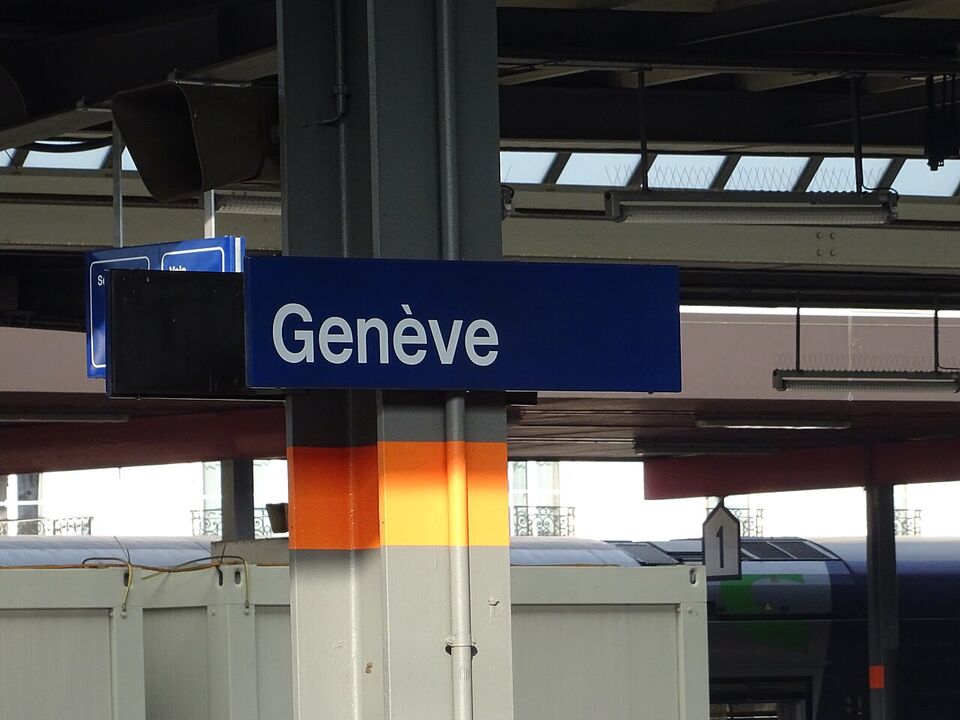
When a train says Bern, Luzern or Genève, it means Bern, Lucerne or Geneva. German-language timetables and announcements call Geneva Genf and Lausanne stays Lausanne, so a train to Geneva may show either name depending on where you are.
Emergencies
If you are in danger, you do not need to find the right language. Call, say “Help” in English if you must, and give your location.
| Number | Who answers |
|---|---|
| 112 | European emergency number; works in Switzerland |
| 117 | Police |
| 118 | Fire brigade |
| 144 | Ambulance |
| 1414 | Rega air rescue (or the Rega app); also for mountain emergencies |
Save the numbers before you go, and see safety and health for what to do next.
Romansh
Romansh is a Latin-based language spoken by about 0.5% of Swiss residents, mostly in Graubünden in the east. It is a national language and you will see it on signs and in the names of villages in the Engadine, often beside German or Italian. You do not need it, but you may hear Allegra (ah-LEH-gra) as a greeting near St. Moritz and Bun di (boon dee) for good day. The words vary between valleys because Romansh has several local forms. See the Engadine.
Being understood in English
English is widely spoken in Switzerland, and it is often the common language between a French-speaker and a German-speaker. It is used in advertising, hotels, major stations, attractions and most restaurants in tourist areas. It is less common in small villages, farm shops, mountain huts and with older people. Speak slowly, avoid idioms, and use short sentences. A phone translation app is a good backup, particularly for menus and allergies.
Common mistakes
- Assuming everyone speaks English. Most do in tourist places, but not everyone does. Ask first, and be ready to point.
- Using the wrong language for the region. Say Bonjour in Geneva, not Guten Tag, and Buongiorno in Lugano. In bilingual towns such as Fribourg or Biel/Bienne, both languages are used, so follow the signs.
- Expecting Standard German to match what you hear. If you studied German, expect a gap between the classroom and the street. Use it, but learn Grüezi and Merci.
- Skipping the greeting. Say a greeting when you enter a shop, a café or a lift car, and say goodbye when you leave.
- Using the informal “du” or “tu” with strangers. Use Sie or vous unless invited.
- Calling Ticino Italy. The language and the food are Italian in style, but Ticino is Swiss. See Lugano and Ticino.
- Looking for Zurich instead of Zürich HB. Station names add letters such as HB (Hauptbahnhof, main station).
Different from home
In the US, a stranger who says “hi” to a shop clerk is being friendly. In Switzerland, the greeting is a small form of respect and the clerk will expect it. A short Grüezi, Bonjour or Buongiorno on entering, and a thank-you on leaving, is part of buying anything.
Add it to a route in the trip builder, or ask us to plan the hotels, trains and guides for you.