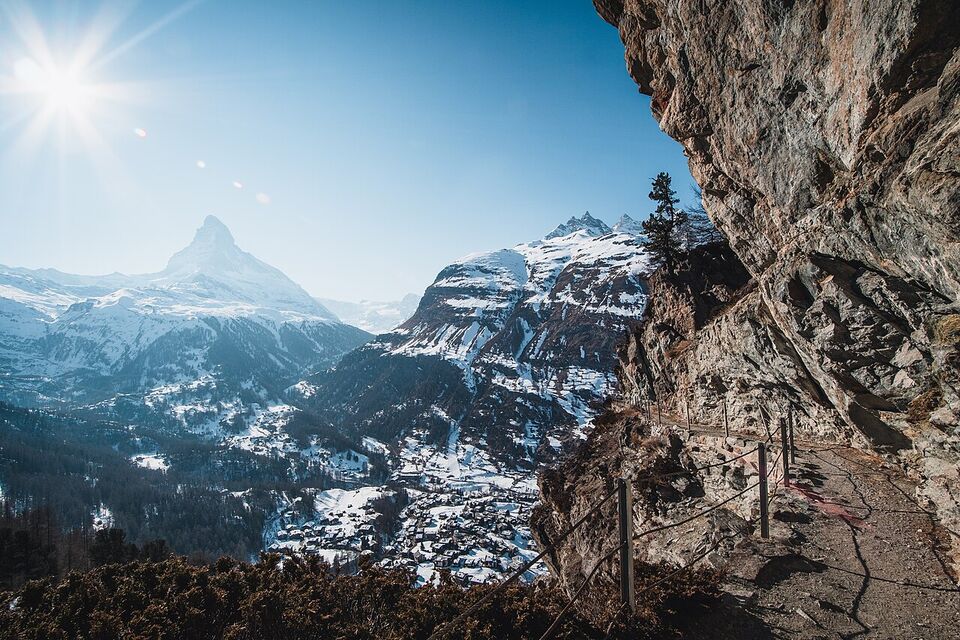
Overview: is Zermatt worth it?
Yes, for most first-time visitors who care about mountains. Zermatt sits at the end of a long side valley, about 5,300 ft (1,600 m) above sea level, with the Matterhorn (14,692 ft, 4,478 m) standing over the village. The whole town is a zone where combustion-engine cars are not allowed, which keeps the air clean and the streets quiet. You walk, you ride small electric taxis, and you take trains and lifts into the mountains.
The trade-off is cost and weather. Swiss mountain resorts are among the most expensive places in Europe, and Zermatt is at the top of that list. The Matterhorn is also a mountain that makes its own cloud, so a clear view is never guaranteed. If you can give the trip two or three nights and stay flexible about which day you go up, it works well. If you only have a day, you can still go, but you will be trading time on trains for time on the mountain.
Zermatt is one of the stops on most first-time routes. See the regions guide for how it fits with Lucerne, Interlaken and the Engadine, and mountain excursions guide for the other big lifts in Switzerland.
Different from home
At a US mountain resort you usually drive to the base area and park. In Zermatt, the car stays in the valley. Pack a bag you can carry from the station, because there is no curbside drop-off in the village, only electric taxis and hotel shuttles that meet the trains.
Getting to Zermatt by train
The railway is the normal way in. Zermatt is at the end of the Matter Valley (Mattertal), and the last stretch from the Rhône valley is run by the Matterhorn Gotthard Bahn (MGB). Most routes from the rest of Switzerland meet it at Visp, where you change to the narrow-gauge train up the valley. The zermatt.swiss site describes arrival as easy and sustainable by train, with a shuttle train or taxi from Tasch for drivers.
From Zurich, Lucerne and Bern
Many trains from Zurich, Lucerne and Bern reach the Valais through the Lötschberg Base Tunnel (via Spiez), and from Visp the MGB takes over. We recommend putting your date into the SBB app rather than relying on a printed time, because the annual timetable changes on December 13, 2026. Expect a trip of several hours with at least one change at Visp. If you are using a Swiss Travel Pass, the ride is covered (see Swiss Travel Pass guide).
From Geneva and Lausanne
Trains run east along Lake Geneva and up the Rhône valley to Visp, then change for Zermatt. This is a natural route if you land in Geneva (see Geneva guide). The Rhône valley is French-speaking at first and German-speaking from about Sierre onward, so you will see place names switch (Sion/Sitten, Brig, Visp) as you go.
From Italy
From Milan, trains cross the Simplon route via Domodossola to Brig, then connect to Visp and Zermatt. Check the timetable and any rail works on both SBB and the Italian operator before you book. In summer, the cable cars above Zermatt connect to the Italian side at Cervinia as part of the Matterhorn Alpine Crossing, which the Zermatt lift company markets as a route from Zermatt to Cervinia. Carry your passport for that crossing.
By car: Tasch and the shuttle
Drivers park in Tasch, the last village with road access, then take the shuttle train or a taxi up the valley. The zermatt.swiss site has a section on the car park and taxi transfer. We could not confirm current parking prices, shuttle fares or frequency, so check zermatt.swiss for the current procedure before you drive. Swiss motorways require the vignette (CHF 40 (about $48) for the 2026 sticker, valid to January 31, 2027); see driving guide. Winter conditions on the valley road can change quickly, so check the forecast.
Insider tip
If you have a rental car for the rest of the trip, consider returning it before you go to Zermatt and doing this leg by train. Parking in Tasch is one more cost and one more thing to schedule, and you will not use the car in the village anyway.
The Matterhorn: when you can see it
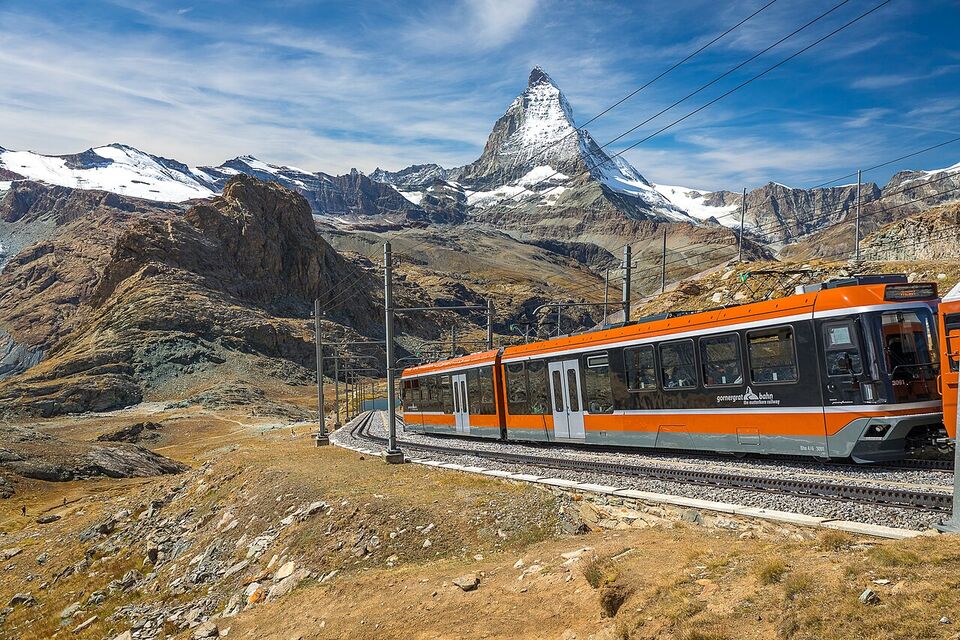
The Matterhorn is easy to find and not always easy to see. It rises on its own at the head of the valley, so it creates cloud in the same way some other lone peaks do. Clear mornings are common in settled weather; afternoons can bring cloud and showers in summer. Treat any one hour as a gamble, and plan so that a cloudy day does not ruin the trip.
- Watch the webcams. The zermatt.swiss, matterhornparadise.ch and gornergrat.ch sites all list webcams and live information. Look before you buy a ticket for the day.
- Go early on the day you commit. Morning skies are often clearer than afternoon skies. A first train or lift gives you the best chance, and it beats the crowds.
- Keep a spare day. If you can, buy flexible tickets or buy on the day. A second night gives you a second try.
- Check conditions at altitude. Weather in the village and weather at 10,000 ft (3,000 m) can be very different. Dress in layers and bring sunglasses and sun protection in any season.
From the village you can see the peak from several streets and from the bridges over the river. For photographs, the best-known sunrise and sunset views are from higher up, so look at the forecast. The MeteoSwiss site (meteoswiss.admin.ch) has forecasts and natural-hazard bulletins.
In the village, the tallest nearby summits include Monte Rosa's highest peak, the Dufourspitze (15,203 ft, 4,634 m), which is the highest point in Switzerland, and the Dom, Liskamm and Weisshorn. Most of the Alpine four-thousanders are in or near the Zermatt area.
Viewpoints and lifts
There are four main places to look at the mountains, each by a different lift. Prices and dates below come from the operators' pages in November 2026; check zermatt.swiss and the individual operators before you go, because some lifts close for maintenance and prices change.
Gornergrat
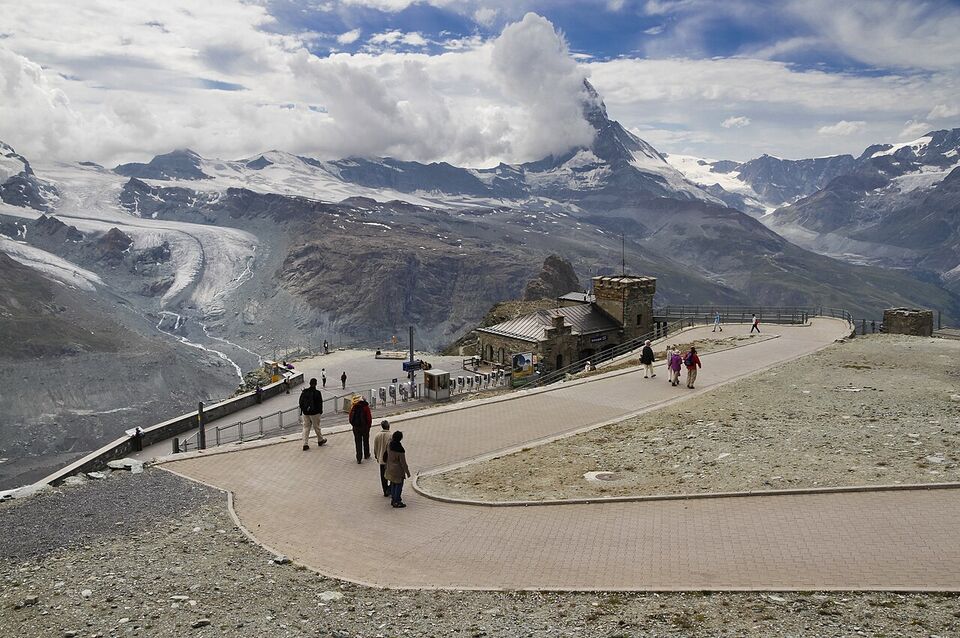
The classic Matterhorn viewpoint, reached by a rack railway that opened in 1898 and was the first fully electric cogwheel line in Switzerland. The station has a view of the Matterhorn, the Gorner Glacier and dozens of four-thousanders. A return ticket lets you get on and off at stations along the way.
Matterhorn Glacier Paradise
The highest lift in the Zermatt region, to the Klein Matterhorn on the ridge between the Breithorn and the Matterhorn. Views extend into Italy. It is cold and windy even in summer, and skiers use it in winter.
Sunnegga, Blauherd and Rothorn
A different angle on the Matterhorn, with the mountain reflected in lakes along the Five Lakes trail in summer. The Zermatt-Rothorn cableway was listed as operating until December 18, 2026; check the dates.
Riffelsee
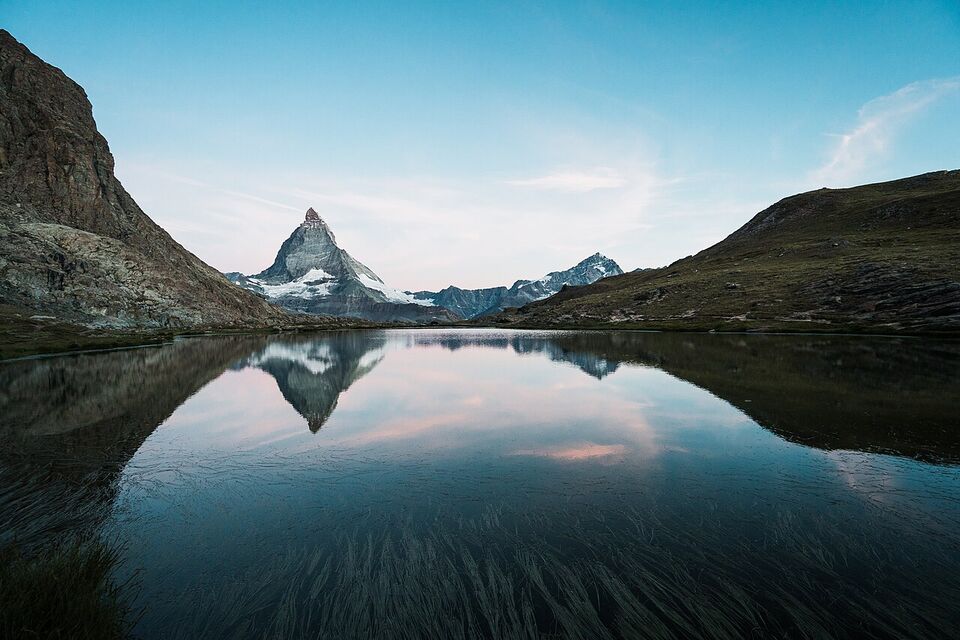
A small lake on the Gornergrat line where the Matterhorn reflects on calm days. You can get off the train at Rotenboden (9,236 ft, 2,815 m), walk to the lake and back, and rejoin the train on your return ticket.
Prices and discounts
Gornergrat tickets are sold online on zermatt.swiss, with a return from CHF 102 (about $120). Adults with a Swiss Half Fare Card, a Swiss Travel Pass or Flex pass, or a GA travel pass, and children aged 6 to 15, pay half. Children under 6 travel free. Online tickets are valid only with a passport or ID card, so bring it. The Gornergrat railway was reported closed from November 2 to 14 for works and due to run again from November 15, 2026; confirm that on the operator's page.
The Matterhorn Glacier Paradise table published by the Zermatt lift company runs from May 1, 2026 to April 30, 2027. In the pre-season period (November 1, 2026 to April 30, 2027) the listed fares are CHF 64 (about $76) one way and CHF 104 (about $125) return. The Rothorn is CHF 44 (about $52) one way and CHF 70 (about $83) return, and Sunnegga is CHF 17 (about $20) one way and CHF 26 (about $31) return in that period. Discounts of 50 percent apply with a GA, Half Fare Card or Swiss Travel Pass. These are the operator's published figures for that season; confirm the current price and your date when you book.
Save money
If you have a Swiss Travel Pass or Half Fare Card, remember that the 50 percent discount applies on the Gornergrat and the Zermatt lifts, but the lifts are not free. Count the discount into your budget, and see Swiss Travel Pass guide for what the pass covers across the whole trip.
The village: Hinterdorf, the Matterhorn Museum and the streets
Zermatt is small and dense. There are three main streets along the river, with cross-streets near the station and the church, and nearly everything is within about a 30-minute walk. The main street (the Bahnhofstrasse) runs from the station toward the church and is lined with hotels, restaurants and shops. Allow time to just walk it.
Hinterdorf, the old quarter, is where traditional wooden houses and barns survive among the newer buildings. The barns stand on stone supports, a Valais building tradition that keeps mice out of stored grain. It is a short walk from the station and quieter than the main street, and a good place to see what the village looked like before tourism.
The Matterhorn Museum tells the story of the first ascent in 1865 by Edward Whymper's party, which ended tragically on the descent, with only three of seven climbers surviving. The museum is a short visit that adds context for the mountain you have been looking at. We could not confirm current opening hours or ticket prices, so check the museum's own site.
The village is busiest in the ski season and in July and August, and calmer in autumn. Some shops and restaurants close for a few weeks between seasons, typically in late autumn and spring.
Hiking and the Five Lakes trail
Summer is hiking season. Zermatt is a start point for many routes, from short walks near the village to high routes toward the Haute Route and glacier crossings that need a guide. For the Alps in general, see hiking guide.
The Five Lakes trail (5-Seenweg)
The best-known day walk in Zermatt links five small lakes, with Matterhorn reflections on calm days. It starts near Blauherd (reached by the Sunnegga funicular and a cable car from Sunnegga) and finishes at Sunnegga or in the village. It takes a few hours of walking with some ups and downs. The trail is a summer hike: it depends on snow-free paths, which usually means late June or July to September or early October, but this varies by year, so check zermatt.swiss for trail conditions before you go.
Hiking from the Gornergrat
The Gornergrat railway is also a hiking tool. The return ticket lets you get on and off at stations along the line, so a popular plan is to ride up, walk down to a lower station and take the train for the rest. The black-nosed sheep that spend the summer on the Gornergrat are a feature of the route.
Safety on the trail
Mountain weather changes fast. Carry a rain shell, a warm layer, water and a phone with the local emergency numbers. In Switzerland, call 112 or 144 for an ambulance and 1414 for Rega air rescue, or use the Rega app. Hiking insurance with rescue cover is worth having, because a helicopter rescue can cost thousands of francs; see safety guide.
Summer versus winter in Zermatt
| Season | What is open | Typical weather in the village | Who it suits |
|---|---|---|---|
| Summer (late June to September) | Hiking trails, Gornergrat, Glacier Paradise, most restaurants and hotels | Mean daily high about 68°F (20°C) in July; low about 47°F (8°C) | Hikers, photographers, families |
| Autumn (October to mid-November) | Fewer lifts; some hotels and restaurants closed between seasons | Mean daily high about 41°F (5°C) in November | Quiet-season visitors who accept limited choice |
| Winter (December to April) | Ski areas, winter hiking, Gornergrat, Glacier Paradise | Mean daily high about 33°F (1°C) in January; low about 19°F (-7°C) | Skiers, snowboarders, winter walkers |
| Spring (late April to May) | Reduced services, lift maintenance in some areas | Cool; mean high about 50°F (10°C) in April | Late-season skiers, travelers who want quiet |
The averages in this table are 1991 to 2020 normals for the village station at 5,374 ft (1,638 m), from the Wikipedia climate table that uses MeteoSwiss and NOAA data. Snow falls in the village in winter, with averages near 56.9 cm (about 22 inches) in December and 53.4 cm (about 21 inches) in January. Higher up, conditions are colder and snowier.
Skiing and winter walking
Zermatt is a big ski area that crosses into Italy at Cervinia. The Matterhorn Ski Paradise winter ski pass for 2026-27 is valid from November 1, 2026 to May 2, 2027, and the Peak Pass to April 30, 2027. The lift company lists winter ski passes from CHF 92 (about $110), Flex ski passes from CHF 181 (about $215) and the Peak Pass from CHF 190 (about $225). Zermatt's "Winter Opening Weeks" run from November 1 to December 6, 2026, with 10 percent off stays of four nights or more and 10 percent off the Flex Ski Pass. The matterhornparadise.ch ticket pages also list an Ikon Pass section, so if you hold an Ikon Pass, check its Zermatt terms on the resort's site. For lessons, rentals and the wider choice of resorts, see skiing guide.
Non-skiers can walk winter trails, go sledding, take a Gornergrat or Glacier Paradise excursion for the views, or just stroll the village. Zermatt's own site lists winter hiking, snowshoe tours and sledging.
Is Zermatt worth the cost?
That depends on what you want. If you want a short, easy look at the Matterhorn and a mountain village, Zermatt delivers it with less effort than most places in the Alps. If you want a bargain, it is not the place. We could not confirm hotel prices for 2026-27, so we leave out nightly figures; treat Zermatt as a high-cost destination and check dates early. Here is how to spend smartly:
- Pick one big lift and one smaller one. You do not need Gornergrat, Glacier Paradise and the Rothorn on the same trip. Choose by weather.
- Use the pass discount. A Swiss Travel Pass or Half Fare Card halves the price of many Zermatt lifts, which can be worth more than the pass's other uses on a Zermatt-heavy trip.
- Look at lodging down the valley. Villages along the Matter Valley such as Tasch are usually cheaper than Zermatt, with a short train ride in. Check how late the last train runs before you commit.
- Eat one big meal and keep the rest simple. Supermarkets in the village sell picnic food.
- Add the tourist tax. Swiss hotels add a per-person, per-night tourist tax, often a few francs, so ask your hotel what it is. We have not confirmed Zermatt's figure.
Watch out
Do not build a single-day trip around the weather forecast alone. A day trip from Zurich or Geneva means a long ride each way, and a cloudy day can leave you with no view. If you must go for one day, check the webcams at breakfast and choose Gornergrat or a village walk accordingly. See day trips guide for other options.
For more on budgeting across the whole trip, see budget tips.
Where to eat
Food in Zermatt ranges from simple counters to fine dining. The zermatt.swiss site describes regional specialties, creative cuisine and a wide choice of restaurants and bars. We do not name individual restaurants because we cannot confirm which are open in the current season; ask your hotel or check zermatt.swiss.
- Mountain restaurants. The lifts and the Gornergrat line serve restaurants at several stations. They are good for lunch with a view, and hamlets above the village, such as Findeln, are common lunch stops on foot or on skis.
- Valais dishes. Raclette (melted cheese scraped onto potatoes) and cheese fondue are the standard orders in Zermatt, along with rösti and local wines. See food guide for the wider Swiss menu.
- Self-catering. Supermarkets near the station sell sandwiches, fruit and cheese. This is the cheapest way to eat, and a picnic on the trail is part of the experience.
- Cards and cash. Cards are widely accepted in the village, but carry some francs for small huts and kiosks.
Service is normally included in menu prices, so rounding up or leaving a few francs for good service is appreciated, not expected.
Where to stay
Hotels in Zermatt run from simple guesthouses to grand hotels, with apartments and chalets for longer stays. Prices rise sharply in February, Christmas week and July to August. In tiers, a double room generally lands at $$ to $$$ in the village in high season, with $ options mainly in hostels and simple rooms. These are broad tiers, not quotes. Check dates and cancellation terms early.
- Near the station is convenient for arrival with luggage and for the Gornergrat train. It can be busier at night.
- Hinterdorf and the quiet streets suit travelers who want old wooden houses and less foot traffic.
- Near the Matterhorn lifts suits skiers who want an early start.
- Down the valley in Tasch or Randa is cheaper but adds a train ride each way.
Many hotels send an electric shuttle to meet the train. Tell your hotel your arrival time. For general lodging advice across Switzerland, see where to stay.
Closures and recent changes to know about
Mountain railways and lifts have seasons and maintenance closures, and November is a common time for them. As of mid-November 2026, the Gornergrat railway was reported to run again from November 15 after works, the Zermatt-Rothorn cableway was listed to operate until December 18, and no closure was listed for the Matterhorn Glacier Paradise. These come from a secondary closure guide plus the operators' ticket pages, so confirm each one on zermatt.swiss or matterhornparadise.ch before you rely on it.
The 2025 Valais disaster at Blatten, in the Lötschental, was a rock and ice avalanche in late May 2025 that largely destroyed that village. It is a different valley from the Matter Valley and does not affect the Zermatt line, but it is a reminder that Alpine hazards are real. Do not plan to visit Blatten; as of April 2026 it was reachable only by an emergency road that is not passable in winter. A new road and a temporary cable car were under construction as of that date. If you are traveling elsewhere in the Valais, check SBB and the local site for any road or trail closure.
Mountain hazards also include avalanches in winter. The official bulletin is published by the SLF (slf.ch). Stay on marked pistes and trails unless you have a guide and training.
Sample plans
- Day 1
Arrive and walk the village
Take a morning train to Zermatt, drop your bags at the hotel, then walk the main street and Hinterdorf. Visit the Matterhorn Museum if it is open. Check the webcams for the next morning.
- Day 2
Gornergrat or Glacier Paradise
Choose the clearer of the two. Go early. On the Gornergrat line, get off at Rotenboden for Riffelsee, then continue to the summit and ride back with your return ticket.
- Day 3
Hike or ski
In summer, take the Sunnegga funicular and Blauherd cable car for the Five Lakes trail. In winter, ski or take a snowshoe tour. Leave in the afternoon for your next stop, or spend another night.
If you are continuing east, the Glacier Express runs from Zermatt to St. Moritz; see scenic trains guide and Engadine guide.
Add it to a route in the trip builder, or ask us to plan the hotels, trains and guides for you.