Overview
Bern is worth a day, and an overnight stay if you want the old town to yourself in the evening. The city center sits on a tight loop of the Aare river, and its medieval streets are a UNESCO World Heritage site. Almost everything you will want to see is within a 20-minute walk of the railway station.
It is the quietest of the big Swiss cities. Visitors who come for lake views or alpine panoramas tend to find Bern calm to the point of sleepy, while visitors who like architecture, museums and an unhurried city find it one of the easiest places in the country to enjoy. The seat of the Swiss government is here, yet the center feels more like a large town than a capital.
Bern is in the German-speaking part of the country, and people speak a local dialect, Bärndütsch (Bernese German), that sounds slow and soft even to German speakers. Signs are in standard German, and English is widely understood in hotels, museums and restaurants. Our phrasebook page has the greetings that go a long way.
This page covers the old town, the clock tower, the fountains, the bear park, the museums, the parliament, the summer swim, what to eat, how Bern compares with Zurich and Lucerne as a base, and day trips. It ends with a one-day plan. Opening hours and ticketing change, so we point you to the official sites rather than print numbers we could not confirm.
Is Bern a capital, and why does it feel so quiet?
Switzerland has no capital in its constitution. Bern is the Bundesstadt, the federal city, which means the national parliament and the government sit here. Zurich and Geneva are far larger and more international, and that is why Bern can surprise first-time visitors with how small it feels.
For travelers, the practical effect is simple. You will find embassies, civil servants at lunch and a city that closes up early on Sundays and in the evenings. The US Embassy is in Bern at Sulgeneckstrasse 19; if you lose your passport, Bern is where emergency passports are issued. We list the details on our safety page.
Different from home
The capital is not the biggest city, the busiest airport or the main tourist draw. In Switzerland the federal government is deliberately spread out: the Federal Supreme Court sits in Lausanne, the Federal Criminal Court in Bellinzona, and the national bank is based in both Bern and Zurich. Bern is the political center, not the economic one.
The old town, the arcades and the fountains
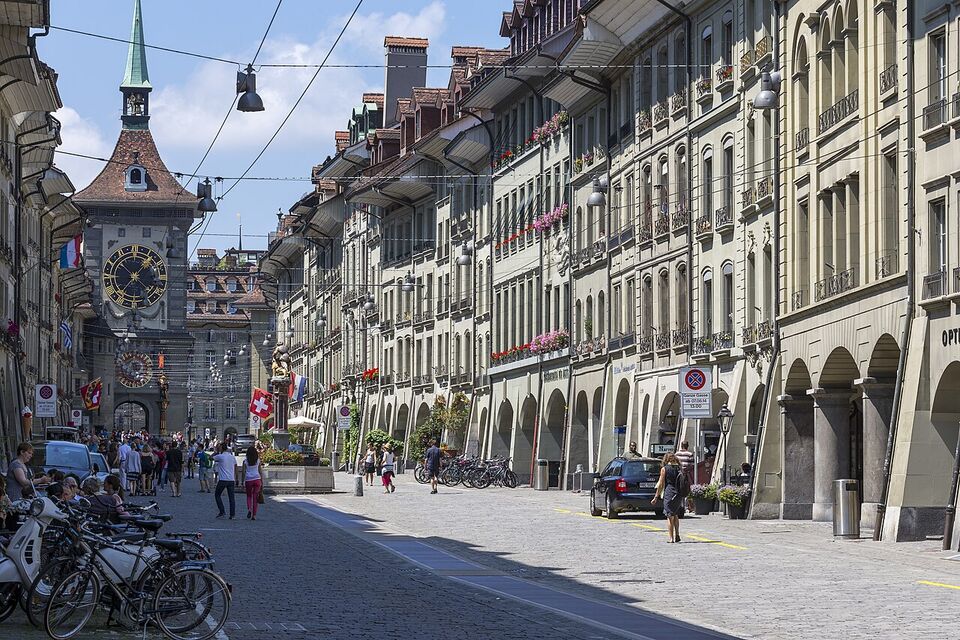
The Old City of Bern is on the UNESCO World Heritage list, and its core is a long peninsula of sandstone buildings above a tight bend of the Aare. The main street changes name as it runs west to east: Spitalgasse, Marktgasse, Kramgasse, Gerechtigkeitsgasse. You can walk the length in about 20 minutes without stopping, but allow a couple of hours.
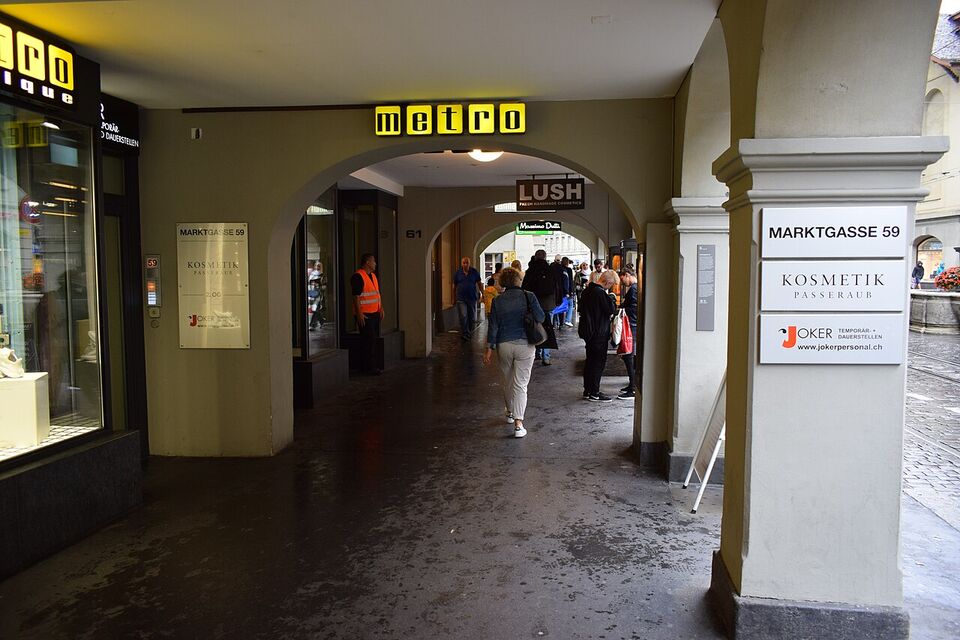
The arcades are the feature people remember. Stone arches on both sides of the street shelter the shops, and the covered walkways are often cited as some of the longest in Europe, at about 4 miles (6 km) in total; the figure varies by how you count, so we treat it as approximate. The practical point is the one you will notice in a November drizzle: you can browse for an hour in the center without opening an umbrella. Most shops are cellars or boutiques, so it is also a good place to look at Swiss design and food products.
The street fountains are the other signature. Statues on tall columns, many of them from the 16th century, stand in the middle of the main streets and are painted in bright colors. Some show figures such as an ogre eating children and a piper, and a few are linked to the old guilds. Most fountains run all year. The water is normally safe to drink unless a sign says otherwise, which is a handy trick on a day of walking; look for signs marked as not drinking water before you fill a bottle.
Cellar shops and the Kramgasse
Many of the arcade shops are in vaulted cellars reached by short steps down from the pavement. Look for the narrow stairs under the arches. Several are small bars, galleries or craft shops. The lower part of Kramgasse is where the Einstein House is, and it is the most photographed stretch of the old town.
The Münster and the tower
The Bern Minster (Berner Münster) is, in Switzerland Tourism's words, the most impressive late-Gothic building in the city. The main portal carries a large Last Judgment scene. You can usually climb the tower for a view over the roofs, but hours and prices vary by season, so check the Minster's own site before you plan around it.
The Zytglogge and its show
The Zytglogge (the clock tower, from the dialect for “time bell”) is a medieval gate tower on the main street with an astronomical clock on its east face. A few minutes before each hour, a figure show begins above the clock face: a jester, mechanical bears, a rooster and a figure of Father Time start moving in sequence, and a bell rings the hour. A small crowd gathers each time, mostly tour groups.
Stand on the Kramgasse side, a little back from the tower, and arrive five minutes early. The show is short and is easy to watch for free from the street. If you want to go inside to see the clockwork itself, the tower is reported to be open only on guided tours, which usually need advance booking through the tourist office. We could not confirm the current times or prices, so check bern.com before you plan on it.
Insider tip
The early show is the least crowded. If you are in town for the evening, stand there again after dark: the tower is lit, and the street is quiet.
The Bundeshaus and the federal parliament
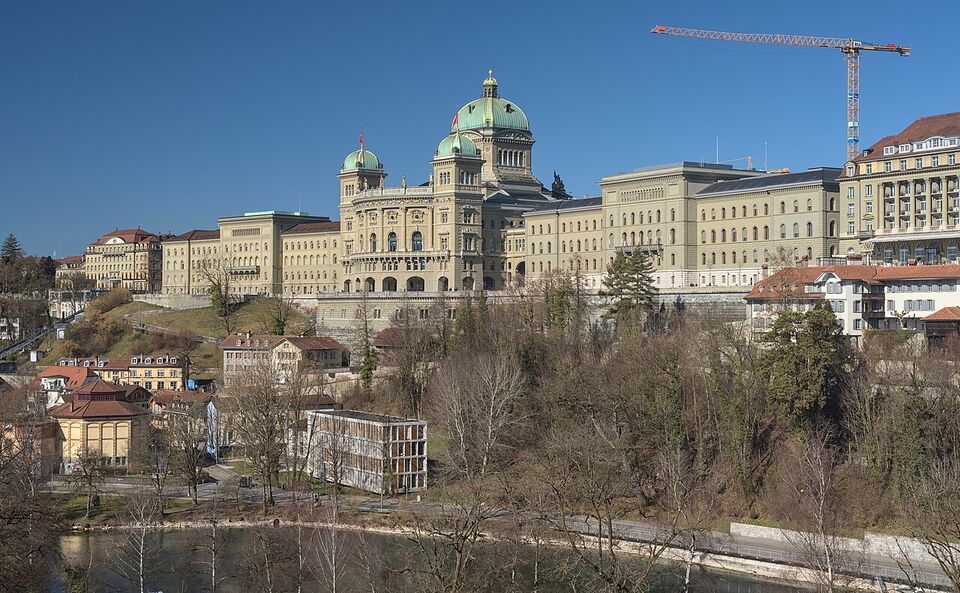
The Federal Palace (Bundeshaus) houses the Swiss parliament and sits at one end of the old town. Its square, the Bundesplatz, is paved with a field of small water jets that children run through in warm weather. The jets are normally off in winter. Public guided tours of the domed hall are normally offered; check bern.com or parlament.ch for dates and whether they are free.
The tour rules we could not confirm. The official parliament page was not available to us when we checked, so the details below are general guidance, not confirmed facts:
- Tours are normally offered when parliament is not in session, and the visitor service sets the times. Parliament meets in sessions several times a year, so check the dates before you build a day around it.
- You usually need to register ahead and bring photo ID, such as your passport. Security screening is like an airport.
- Photography rules and language options for tours (English is usually available) are set by the visitor service.
Check the visitor pages at parlament.ch before you go. On the day, the square itself is free to cross and the facade is worth ten minutes without a ticket.
Watch out
The US Embassy in Bern posted an alert about possible demonstrations and related disruptions on November 9, 2026. Demonstrations can close streets around the Bundesplatz. Check embassy alerts before you travel and avoid demonstrations.
Bear Park, the Rosengarten and the best views
The BärenPark (Bear Park) sits on the Aare slope at the end of the old town, next to the Nydegg Bridge. Bears are the city's symbol (the name Bern is traditionally linked with the German word for bear, Bär), and the park keeps them in a hillside enclosure leading down to the river instead of the old pit. Entry is free, and the animals are visible from walkways and viewing points above. The bears are wild animals in a managed habitat, so you may see them active or asleep. Plan 20 minutes.
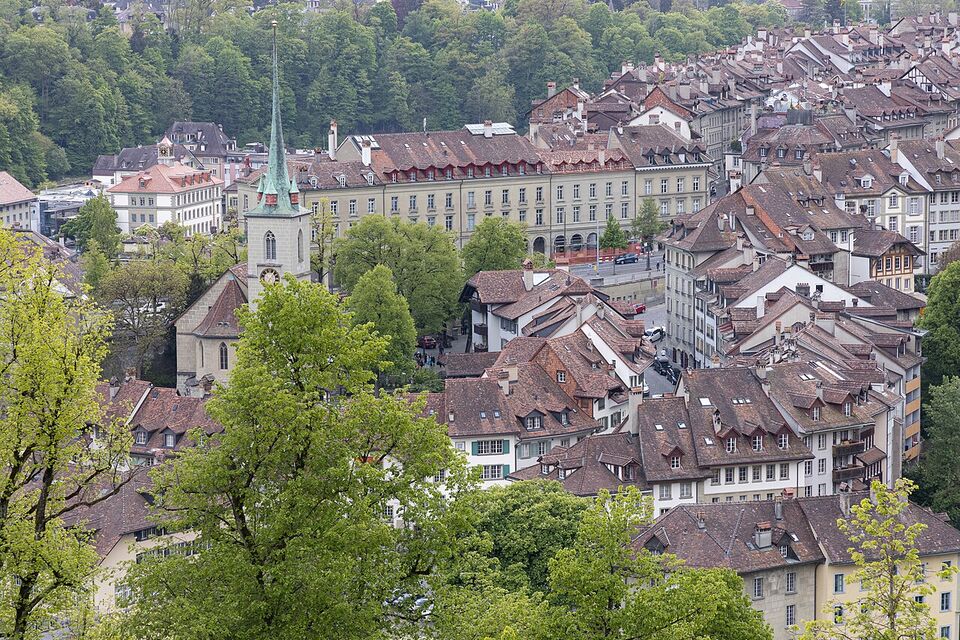
Walk uphill from the park to the Rosengarten (Rose Garden), the classic view of the old town. The garden is a public park with lawns and a restaurant, and the postcard view looks down on the rooftops, the Minster and the river bend. In November the roses are over, but the view is the same, and it is the best place for a sunset. Go uphill from the park by the road, which takes about 10 minutes at an easy pace.
Another good view point is the Nydegg Bridge itself, or the lower riverside path that leads along the Aare. If you only have time for one, choose the Rosengarten.
The Aare in summer
In summer, locals swim in the Aare, and floating down the river is one of the things that Bern is known for. The usual route is to enter the water upstream and let the current carry you toward the Marzili area, where there are public pools and a riverside lawn, and to leave the river at the marked exit points. People bring waterproof bags for their clothes.
It is a fast river, and the water is cold even in July. Swim only in the places locals use, enter well upstream of the exits, and do not swim after heavy rain or when the river is high. Never go near weirs or dams. If you are not a confident swimmer, use the Marzili pools instead. In November and winter, nobody swims, and the river path is for walking.
We could not confirm the 2027 summer details, such as pool opening dates, so check bern.com in spring.
Museums: Paul Klee, Einstein and more
Bern is a good city for a museum day, with two names that interest many Americans. Opening hours and prices were not available on the pages we could read, so check each museum's site before you go. Swiss museums are commonly closed on Mondays.
The Einstein House and the Einstein Museum
Albert Einstein lived in Bern from 1903 to 1905, and the apartment where he lived at Kramgasse 49 is open as the Einstein House. The Einstein House site shows opening hours of Monday to Sunday, 10 a.m. to 5 p.m., with the last entry at 4:45 p.m., from February 4 to December 18, 2026. It closes from December 19, 2026, and the 2027 season runs from February 1 to December 17. Ticket prices were not on the page we saw. The separate Einstein Museum is part of the Bern Historical Museum and covers his life and work; check the museum's own site for its hours.
Zentrum Paul Klee
The Zentrum Paul Klee is a museum of the painter Paul Klee (1879-1940) in a wave-shaped building on the eastern edge of the city. It is not in the old town, so allow a half day, including the trip out and back by city bus from the main station. Check zpk.org for hours, current exhibitions and the bus line, and book timed tickets if the site offers them.
A museum pass can pay off
The Swiss Museum Pass gives free entry for a year to more than 500 museums and castles. Until December 31, 2026, the anniversary price for one person is CHF 147 (about $175) instead of the regular CHF 177 (about $210). It is aimed at a long trip with many museums, so check the museum list at museumspass.ch and add up the admissions you plan before you buy. The Swiss Travel Pass also includes entry to more than 500 museums; see our Swiss Travel Pass page.
Bern Card and guest tickets
Many Swiss cities give hotel guests a free local transport pass or a discount card. Geneva and Ticino offer such passes (see our Geneva page). For Bern, we could not confirm what a visitor card includes, so ask your hotel when you book whether it offers a guest ticket for local buses and trams and which museums it discounts. The tourist office at bern.com is the place to check before you buy anything.
The old town is compact, and you can see most of it on foot. A transport ticket matters mainly if you stay outside the center or want to ride out to the Paul Klee museum. If you have a Swiss Travel Pass, the city buses and trams in Bern should be covered, as in the other towns on the pass; check the pass's town list.
Eating in Bern, and the Zibelemarkt
Bern's classic dish is the Berner Platte, a heavy plate of boiled and smoked meats and sausages with sauerkraut and potatoes. It suits a cold day but is a lot of food for one. Rösti, the fried potato dish, is eaten all over Switzerland, and you will see it on most menus. For something lighter, onion tart (Zwiebelkuchen) and the cellar restaurants under the arcades are good lunch stops.
Bern is also a decent chocolate town, with long-established shops in the old town. See our chocolate page for what to buy and what you may bring home to the US.
The big local event of the autumn is the Zibelemarkt (Onion Market), held on the fourth Monday of November. Stalls fill the old town selling braided onions and onion tarts, and there is a tradition of confetti throwing. In 2026 the fourth Monday is November 23. We could not confirm the day's exact program, so check bern.com. The market starts very early, shops and offices in the center are affected, and the crowds are big, so expect to be pushed along in the main streets.
Insider tip
Go early for the stalls and leave by late morning. Confetti ends up in everything, including your hair and your bag, so wear a hat and put your camera away. Do not plan to drive into the center on that morning.
Bern also hosts a Christmas market in the old town in the weeks before Christmas, but we could not confirm the 2026 dates; the markets across Switzerland generally run from late November to Christmas. See our Christmas markets page for the pattern.
Bern compared with Zurich and Lucerne as a base
| Question | Bern | Zurich | Lucerne |
|---|---|---|---|
| Feel | Calm, historic, government town | Largest city, business and nightlife | Postcard lake town, most tourists |
| Old town | UNESCO, arcades, fountains | Compact, lake and river | Chapel Bridge and the lake |
| Scenery | River and city views only | Lake and city | Lake and mountains |
| Airport | Small; most travelers use Zurich or Geneva | Main international airport | None; use Zurich |
| Best for | Day trips by train and a quiet city stay | Arrival, museums, a first night | Lake boats and Pilatus or Rigi |
Bern is a good base if you plan to do several day trips and want a calmer atmosphere than the lake resorts. Swiss hotels are among the most expensive in Europe, so check dates and prices before you commit. Our where to stay page explains how to choose.
Zurich is the better choice for a first night after landing, since it has the main airport and the most direct flights from the US. Read our Zurich page and our Lucerne page before you decide. Many first-time itineraries pass through Bern on a travel day and stop for a few hours; the station has luggage storage, and the old town is close enough to see in a long layover.
Interlaken and the mountains are the one thing Bern does not offer. If the Alps are the point of your trip, base yourself in Interlaken or Lucerne and visit Bern for a day.
Who should skip Bern
Skip Bern, or give it only a few hours, if:
- You only have three or four days in Switzerland and want mountain scenery, lakes and a scenic train. The old town is lovely, but it will not give you a postcard Alp.
- You are visiting in winter mainly for skiing or snow. Bern itself is low and gets rain, fog or slush as often as snow.
- You dislike museums, architecture and walking. The pleasures of Bern are quiet ones.
- You are traveling with a lot of luggage and need a direct airport link; Zurich and Geneva have the major airports.
It is a fine place for families too, with the bear park, the clock show, the river and the pools in summer, but the city is not built around children's attractions.
Day trips from Bern
Bern is on the main east-west rail line and sits at a junction for the Oberland, the Gruyère region and the Jura lakes. Our day trips page covers the wider country. For each trip below, check the SBB app for the timetable and fare; we did not confirm times.
Thun
A small lake town at the foot of the Bernese Alps, with a hilltop castle, a covered wooden bridge and the lake boats. It is also the way to the Oberland. Boat timetables change by season, so check before you go.
Gruyères
A walled hilltop village in French-speaking Switzerland, famous for its cheese. The castle (Château de Gruyères) shows 10 a.m. to 5 p.m. opening in November, with a Christmas exhibition called “The Great Christmas” from November 21, 2026 to January 10, 2027. We could not confirm the ticket price. See our chocolate page for the nearby chocolate factory, and check its visiting rules, which we could not confirm.
Murten (Morat)
A small, walled town on its own lake, on the language border between German and French. You can walk part of the ramparts. A good half day if you like small towns.
The Emmental
Rolling farmland, big farmhouses with deep roofs and the home of the cheese that Americans call “Swiss cheese”. It is best with a car or a bus plan; a show dairy offers demonstrations, but check the hours.
Interlaken and the Oberland
The gateway to the Jungfrau region. It is possible as a long day, but mountain railways have seasons and maintenance closures. Check the operator before you go, and see our mountain excursions page.
Bern is also on the way to Geneva and to Lausanne and Montreux, so a stop in Bern fits neatly into a route between Zurich and Lake Geneva. For passes and fares, see our Swiss Travel Pass and getting around pages. In 2026 the Swiss Travel Pass costs CHF 254 (about $300) for three days in second class, and the Half Fare Card costs CHF 150 (about $180) for one month; check the price on the day you buy.
A one-day plan for Bern
- Morning
Station to the Zytglogge
Leave luggage at the station if you are passing through, then walk down Spitalgasse and Marktgasse under the arcades. Stop at the Zytglogge a few minutes before the hour for the figure show. If it is a Monday in late November, expect the Zibelemarkt crowds instead.
- Late morning
Kramgasse and Einstein
Walk on along Kramgasse to the Einstein House at number 49, then continue to the Minster. Climb the tower if it is open and the weather is clear.
- Lunch
A cellar restaurant or a simple lunch
Eat under the arches. Order rösti or an onion tart if you want something local. Many restaurants close between lunch and dinner service, so check the hours.
- Afternoon
Bear Park and Rosengarten
Cross the Nydegg Bridge to the Bear Park, then walk up to the Rosengarten for the view of the old town. This is the best time for photographs if the sun is out.
- Late afternoon
A museum or the river
Choose one: the Zentrum Paul Klee (allow a half day) or the Bern Historical Museum with the Einstein Museum. In summer, spend this time at the Marzili pools and the river instead.
- Evening
Dinner and a walk
Have dinner in the old town and walk back along the arcades. The streets are quiet and lit, and the Zytglogge is floodlit.
Getting there, getting around and practical tips
Bern is on the main line between Zurich and Geneva, with direct trains from both and frequent connections. We did not confirm journey times or fares, so check the SBB app, and book Supersaver tickets only if you are certain of your travel day. A Swiss Travel Pass covers the trains and, in most towns, local buses and trams; check the pass's town list for Bern.
The station is at the edge of the old town, and the old town is largely pedestrian. Trams and buses link the station to the outer districts, including the Paul Klee museum. In the old town, watch for trams and bikes, since trams run through some streets at close quarters to pedestrians.
Most shops are closed on Sundays except at stations, airports and in tourist resorts, but check before you rely on it. See our etiquette page for hours and customs. A federal popular vote is held on November 29, 2026, and has no effect on travel.
- Check hours for the Einstein House, the Zytglogge tour and the parliament tour before you go.
- Ask your hotel whether it gives a guest transport ticket.
- Wear shoes with grip: the arcade stones are slippery when wet.
- For a trip in summer, bring a swimsuit and a waterproof bag for the Aare.
Add it to a route in the trip builder, or ask us to plan the hotels, trains and guides for you.