Overview: why Basel
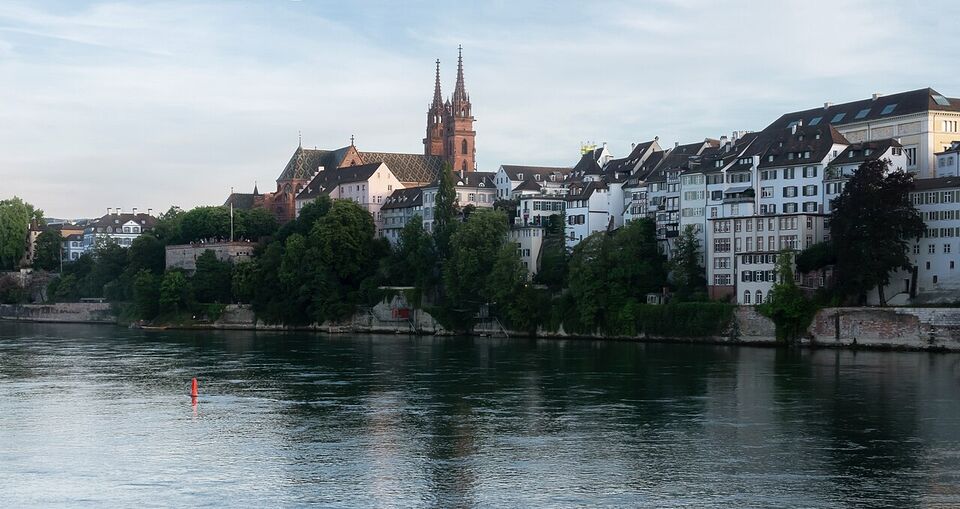
Basel sits in the far northwest corner of Switzerland, where the Rhine leaves the country and where France and Germany are a short walk or tram ride away. It is a compact city of art museums, a red sandstone cathedral and a river that people swim in on summer evenings. The tourism board calls it a city of art and culture on the Rhine, and for visitors that is a fair summary.
Most Americans see Basel on a day trip from Zurich or on the way into France or Germany, but the museums alone justify a full day. Our day trips guide shows how Basel fits into a wider route, and our Zurich page covers the nearest big city. If you are choosing between bases, Basel is good for art and for a quiet, civilized city break; mountain scenery is elsewhere.
The Rhine, the Münster and the old town
The old town rises from the left bank of the Rhine, and the Münster (cathedral) sits on a terrace above the river. Its red sandstone towers dominate the skyline, and the terrace behind it has a view across the water to Kleinbasel, the smaller district on the opposite bank. Visiting hours and any entry or tower fee change with the season, so check basel.com or the cathedral's site before you go.
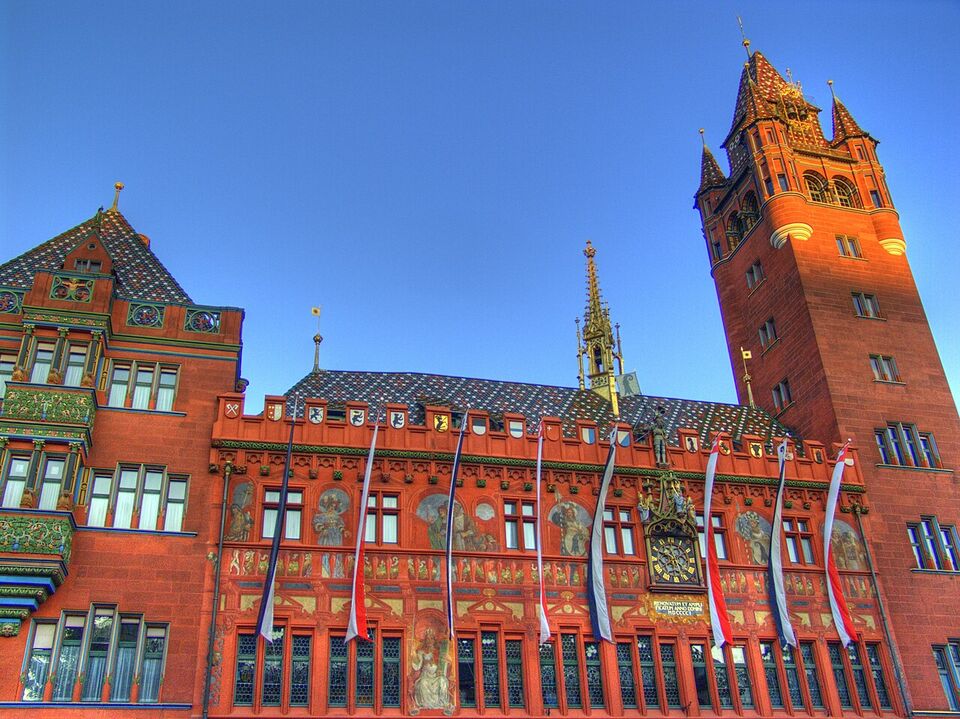
Walk down from the Münster to the Marktplatz, where the red Rathaus (town hall) stands, then through the lanes of the old town toward Barfüsserplatz. The old town is small enough to cover on foot in a morning.
Ferries and swimming
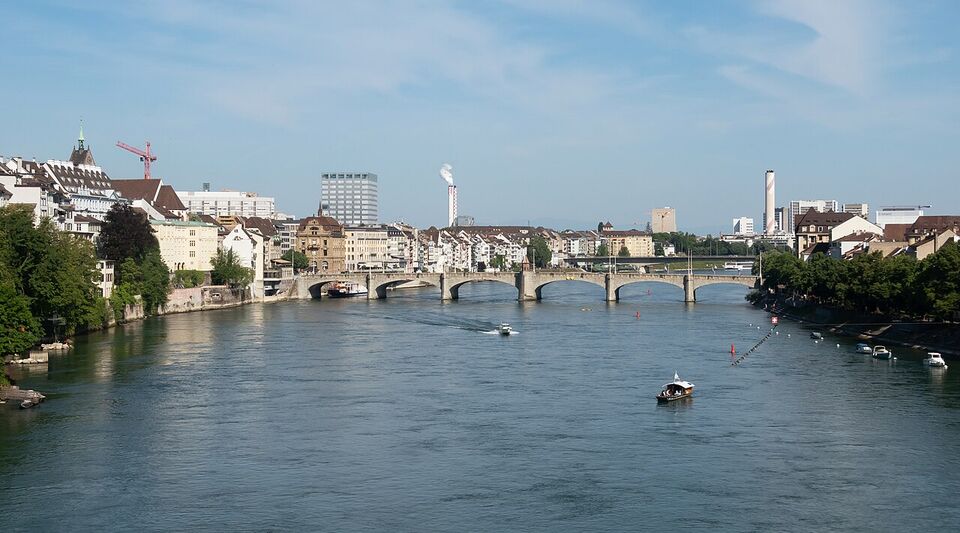
The Rhine in Basel is used for transport and for fun. Small ferries cross the river on a cable, driven only by the current. The tourism site lists them under activities along with boat trips on the Rhine and swimming. Check which ferries run on the day you visit, because operations are reduced in winter. In warm weather, locals float down the river in the current and many carry waterproof bags for their clothes. The current is strong, so ask the tourism office or look for official advice and use marked entry and exit points. We do not recommend swimming outside the summer season.
Watch out
The Rhine moves fast, and floating downstream is a skill, not a free-for-all. If you are not a confident swimmer, enjoy the river from the promenade or the ferry.
The art museums
Basel has a high concentration of museums for a city of its size. These are the three that most visitors plan around. Hours and shows below are as the museums listed them in November 2026; check before you go, because exhibitions rotate.
Kunstmuseum Basel
The main building (Hauptbau) and the new building (Neubau) are open Tuesday and Thursday to Sunday 10 a.m. to 6 p.m., and Wednesday 10 a.m. to 8 p.m. The Neubau has "Van Gogh, Hodler, and a Cabriolet" until February 7, 2027, and "Roy Lichtenstein: Sweet Dreams, Baby!" until March 14, 2027. The Gegenwart building is closed through November 27 and reopens November 28 with "When I'm Here" until March 21, 2027. Ticket prices were not confirmed; check kunstmuseumbasel.ch.
Fondation Beyeler, Riehen
A modern and contemporary art museum in a park just outside Basel, with buildings by Renzo Piano and Peter Zumthor. Hours are 10 a.m. to 6 p.m. daily and until 8 p.m. on Wednesday, but the museum noted special hours during a preview phase of its new building, so check first. Exhibitions listed include Ruth Asawa until January 10, 2027, and Frida Kahlo from January 31 to May 17, 2027. A tram runs from the city to Riehen; confirm the line in the SBB or local transport app.
Museum Tinguely
Dedicated to the kinetic sculptor Jean Tinguely. Basel's tourism site lists a Zilla Leutenegger exhibition from November 20, 2026. Check hours and prices on the museum's site.
Three museums in one day is a lot. We suggest choosing one big museum in the morning and one smaller stop in the afternoon. If you hold a Swiss Museum Pass or a Swiss Travel Pass, check whether the museum you want is included; our pass guide explains how the pass works with museums.
The BaselCard and getting around
The BaselCard is a free guest card that gives discounts on cultural and leisure activities during your stay. Some Basel hotels have also issued a local public transport ticket to overnight guests in the past. Rules change, so ask your hotel at check-in what is included and how to collect it, and check basel.com for details. Our getting around guide explains tickets in general.
Trams are the best way to get around. The old town is walkable, and most visitors only need a tram for the airport bus, a museum in Riehen or the train station. Basel SBB, the main station, is a short tram ride from the old town.
The three-country corner and crossing borders
Basel sits where Switzerland, France and Germany meet, at a point on the Rhine called the Dreiländereck (three-country corner). A walk or a tram ride toward the Rhine harbor gets you to the spot. From Basel you can reach German and French towns by tram, bus or train in minutes.
Switzerland is in the Schengen area, as are France and Germany, so you normally cross without a routine passport check. Carry your passport anyway, since customs officers and police can do spot checks. If you shop across the border and bring goods back, remember that the Swiss limit is CHF 150 (about $180) per person for goods before you owe Swiss VAT, and that you may not bring meat or dairy products from third countries. Check the Swiss customs site (bazg.admin.ch) before you go. Euros are used in France and Germany; Swiss shops expect francs.
Our beyond Switzerland guide covers longer trips into France and Germany.
Fasnacht, the Christmas market and other events
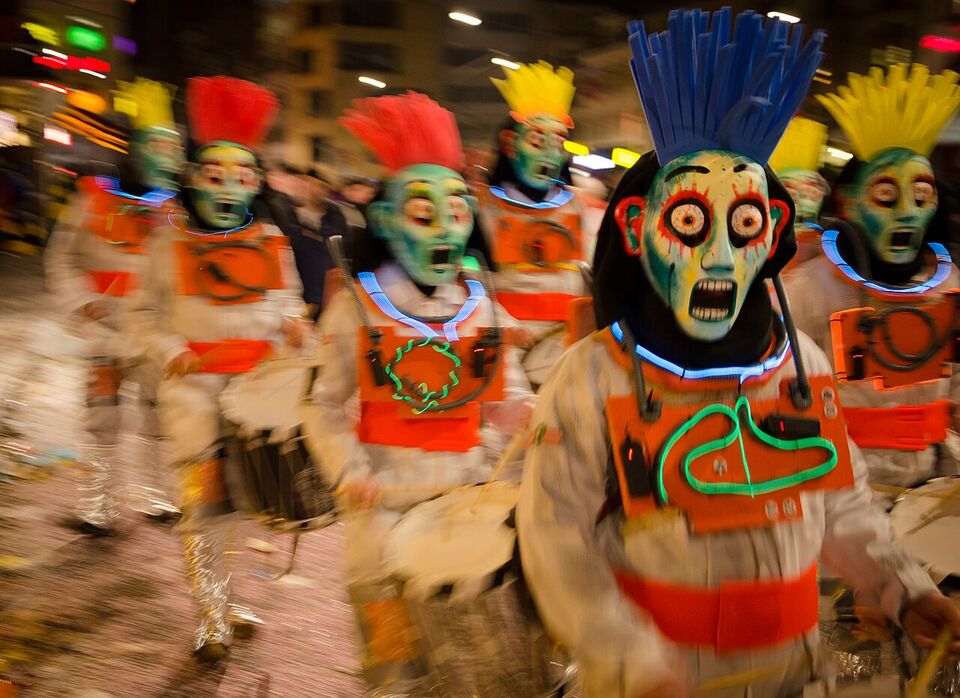
Fasnacht, Basel's carnival, is on UNESCO's list of intangible cultural heritage and is the biggest in Switzerland. In 2027 it runs from February 15 to 17. It starts on Monday, February 15, at 4 a.m. sharp with the Morgestraich, when the lights in the old town go out and costumed groups (called cliques) march with hand-painted lanterns, piccolos and drums. The Ändstraich ends the carnival on Thursday at 4 a.m. Grand parades (the cortège) take place on Monday and Wednesday afternoons; in 2026 they ran from 1:30 to 6 p.m., and the 2027 times should be checked on basel.com. Hotels fill early, so book far ahead. Our festivals guide covers the others.
Basel has a Christmas market in the old town, with stalls at Barfüsserplatz and on Münsterplatz. Dates for 2026 vary, and most Swiss Christmas markets run from late November to Christmas. See our Christmas markets page.
Art Basel, the large contemporary art fair, takes place in early summer and fills hotels at high prices; check artbasel.com for exact dates before you book anything near it. Other big events on the basel.com calendar include the Basel Tattoo, the Herbstmesse autumn fair and the Swiss Indoors tennis tournament. Check dates for each if your trip might overlap.
Save money
During Fasnacht and Art Basel, hotel prices jump and rooms sell out. If you do not need to be there for the events, pick different dates, or stay in a nearby town and take the train.
EuroAirport Basel-Mulhouse and the trains
EuroAirport is the only binational airport in the world, according to its own site. It lies on French soil, and it has a Swiss sector and a French sector. For a trip within Switzerland, use the Swiss side; Swiss-side parking is charged in francs, French-side in euros. A city bus links the airport with Basel SBB; check the operator for the fare and schedule. For the winter 2026/2027 season, from October 25, 2026 to March 27, 2027, the airport lists 89 direct flights to 31 countries, mostly within Europe and to the Mediterranean, so expect to connect for the US. A terminal extension is planned from the third quarter of 2027 and runs to about the end of 2031. Our flights guide covers US routes.
By train, Basel SBB is a major hub. Zurich is roughly an hour away, Bern and Lucerne not much more, and trains also run to Germany and France. Check the SBB app for times. A new national timetable starts on December 13, 2026.
When to go and who it suits
Basel works year-round because so much of it is indoors. Summer suits the river, fall and winter suit the museums and the Christmas market, and February suits the carnival. Spring and early summer bring the art fair crowds, so book ahead if your dates are near it. Our when to go page has seasonal weather and crowd notes for the whole country.
Basel suits readers who like art, architecture and walkable cities, and those who want a calm base with easy rail links. It is less suited to readers who mainly want mountain scenery, since the nearest Alpine views are a train ride away. Because the city sits so close to Germany and France, it also makes a good first or last stop on a longer European trip; the border zone is easy to explore without a car.
A one-day plan
- One day
Münster, old town and a museum
Morning: arrive at Basel SBB, walk to the Marktplatz and the Rathaus, then go up to the Münster terrace. Late morning: take a ferry across the Rhine if it is running, and walk the Kleinbasel bank. Lunch in the old town. Afternoon: the Kunstmuseum (or the Fondation Beyeler in Riehen for a longer excursion). Evening: a walk along the Rhine and dinner, then the train home.
If it rains, spend more time in the museums. The tourism site has a section on what to do when it rains in Basel.
Add it to a route in the trip builder, or ask us to plan the hotels, trains and guides for you.