The short answer
For a first trip, go in June, September or the first half of October. Those months give you long days, mild temperatures in the cities, mountain lifts and boats that are mostly running, and smaller crowds than July and August. July and August are warmest and have the widest choice of open transport, but they are also the most crowded and the most expensive. Winter is a different trip: skiing and Christmas markets instead of hiking and lake boats.
The trap is the dead weeks. Many Swiss lifts, cogwheel railways and lake boats close for maintenance, mainly in November and in April-May, when there is not enough snow for skiing and not enough clear trail for walking. In those weeks the cities are open and charming, but the mountain transport you came for can be shut. Mid-November 2026 is one of those weeks. Dates differ by operator and by year, so always check the operator's own site.
This page covers the seasons, the weather by month, the closures, the crowds and the events. For the detail on the quiet months, see Switzerland in November, December, January, February and March. To plan the rest of the trip, start with plan your trip.
Insider tip
Pick your dates, then check three things: the operator's timetable for the lift or train you want, its live webcam the day before, and MeteoSwiss (meteoswiss.admin.ch) for the forecast. Then keep a spare day. It is the best protection against cloud.
Weather by month
The table gives the average daily high and low for a lakeside city (Zurich), the south (Lugano), a high village (Zermatt, 5,374 ft or 1,638 m) and the top of the Jungfraujoch weather station (11,745 ft or 3,580 m). Figures are 1991-2020 averages from the Zurich-Fluntern, Lugano, Zermatt and Jungfraujoch stations as published in climate tables; real weather varies a lot from year to year.
| Month | Zurich high/low | Lugano high/low | Zermatt high/low | Jungfraujoch high |
|---|---|---|---|---|
| January | 38/30°F (4/-1°C) | 45/34°F (7/1°C) | 33/19°F (1/-7°C) | 15°F (-10°C) |
| February | 41/30°F (5/-1°C) | 48/35°F (9/2°C) | 35/19°F (2/-7°C) | 14°F (-10°C) |
| March | 50/35°F (10/2°C) | 56/41°F (14/5°C) | 42/25°F (6/-4°C) | 16°F (-9°C) |
| April | 59/41°F (15/5°C) | 62/47°F (17/8°C) | 50/31°F (10/-1°C) | 21°F (-6°C) |
| May | 66/48°F (19/9°C) | 69/54°F (21/12°C) | 57/38°F (14/3°C) | 28°F (-2°C) |
| June | 72/55°F (22/13°C) | 77/61°F (25/16°C) | 64/44°F (18/7°C) | 35°F (2°C) |
| July | 76/58°F (24/14°C) | 81/64°F (27/18°C) | 68/47°F (20/8°C) | 38°F (3°C) |
| August | 75/58°F (24/14°C) | 80/64°F (27/18°C) | 67/47°F (20/8°C) | 38°F (4°C) |
| September | 66/51°F (19/11°C) | 72/58°F (22/14°C) | 60/41°F (15/5°C) | 33°F (0°C) |
| October | 57/45°F (14/7°C) | 62/50°F (17/10°C) | 52/34°F (11/1°C) | 28°F (-2°C) |
| November | 46/36°F (8/2°C) | 53/42°F (12/6°C) | 41/26°F (5/-3°C) | 20°F (-7°C) |
| December | 39/31°F (4/0°C) | 46/36°F (8/2°C) | 35/21°F (2/-6°C) | 16°F (-9°C) |
A few patterns follow from the numbers. Zurich, Lucerne and Interlaken have similar weather: warm summers, damp, cool winters, and the most days with rain or snow in May, June and July. Lugano is milder in winter and has fewer wet days from December to March. Zermatt stays near or below freezing in the winter, and the Jungfraujoch stays below freezing nearly all year, so bring layers even in July.
The weather you plan for is the weather where you stand, not in the city you left. A June day can be 72°F (22°C) in Zurich and a cold, windy day well below freezing at the top of the Jungfraujoch. Our packing page covers layers.
Daylight
Day length matters more than most visitors expect. By our calculation, mid-month daylight runs about 15 hours 55 minutes in June, about 14 hours 14 minutes in August, 12 hours 29 minutes in September, 10 hours 45 minutes in October, 9 hours 14 minutes in November, and 8 hours 29 minutes in December. In January it is about 8 hours 52 minutes. In deep valleys such as Zermatt and Lauterbrunnen, the mountains cut daylight further.
Season by season
Summer peak: July and August
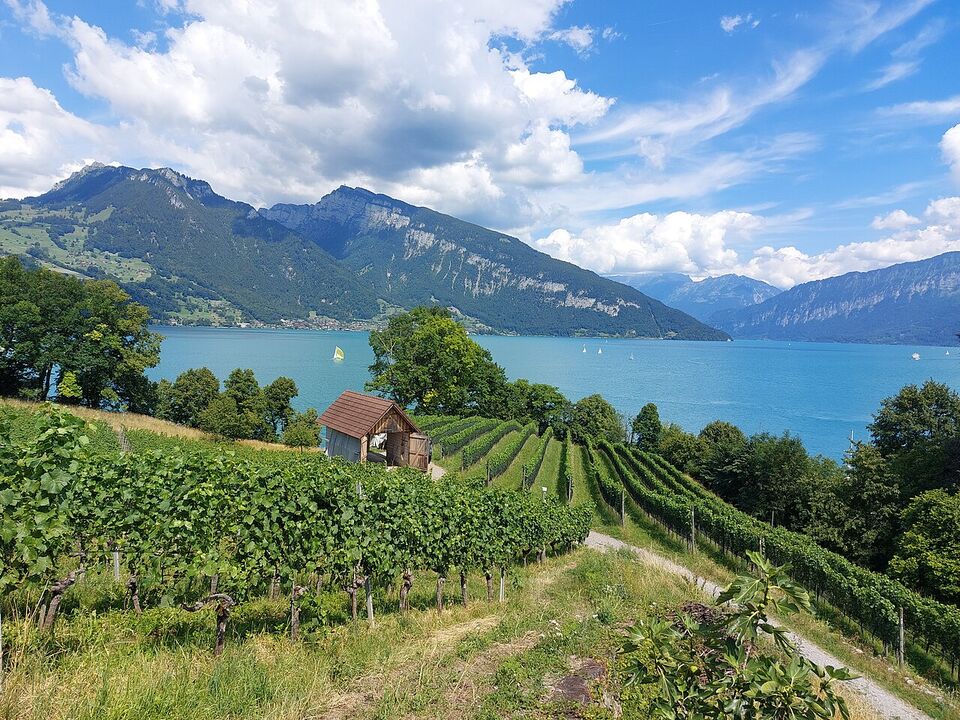
This is the easiest time to get everything open: mountain railways, lake boats, hiking trails at most altitudes, and open-air events. It is also the busiest, so book hotels and any reserved-seat trains early. Hotels in Zermatt, Interlaken and Lucerne fill. Popular trips such as the Jungfraujoch, Pilatus and the Gornergrat can be crowded in the middle of the day; going early helps. August 1 is Swiss National Day, the only federal holiday, with fireworks and bonfires across the country. The Montreux Jazz Festival's 2027 edition is set for July 2-17, 2027.
Summer is also thunderstorm season in the mountains. Start hikes early, check the forecast, and turn back if clouds build. Warm summers also bring haze that can blur distant views.
Shoulder months: June, September and October
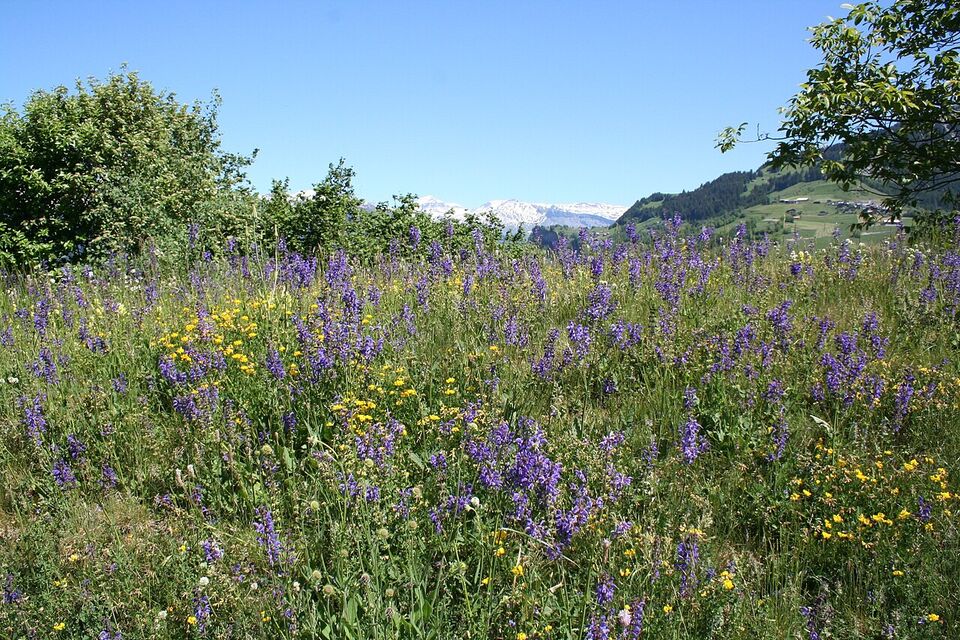
June brings long days and green valleys. High trails often still hold snow in early June, so check trail status before you go. In September the weather is usually settled, the lakes are warm in the first half, and crowds thin after the school holidays end. From mid-September to mid-October, many villages hold cattle descents (Alpabzug), with dates that vary by village; check local tourist offices. October has autumn color but shorter days, and lifts and boats start to stop. Use operators' sites to confirm what runs on your dates.
Winter: December to March
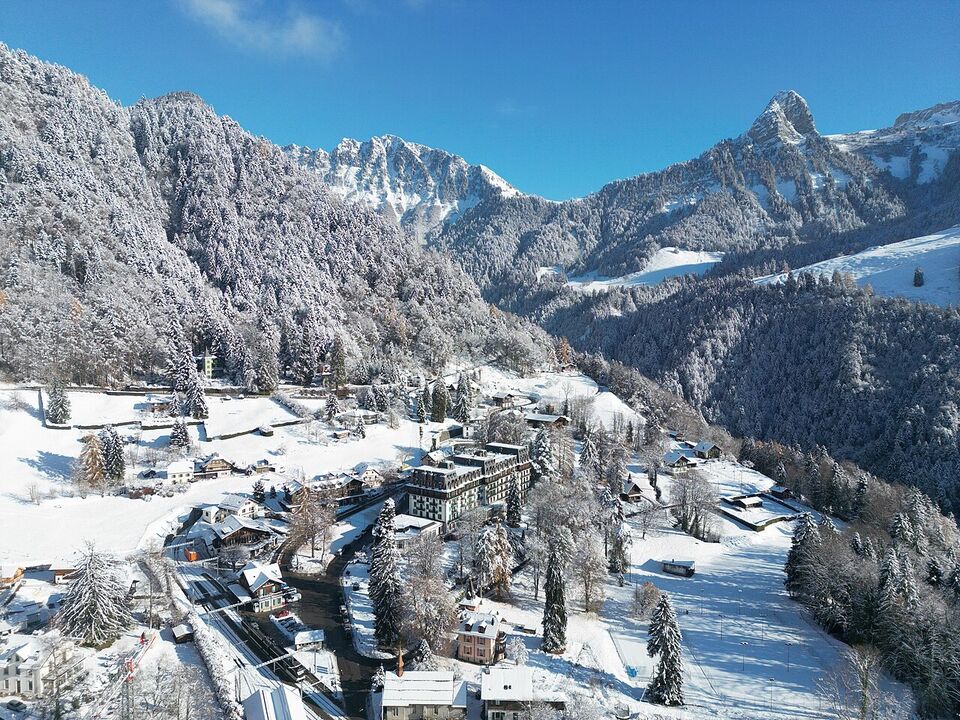
Winter means skiing, sledding, snowshoeing, thermal baths and Christmas markets. The planned 2026-27 season in the Matterhorn Ski Paradise runs from November 1, 2026 to May 2, 2027 for ski passes (April 30 for the Peak Pass); the Jungfrau Ski Region pass is valid from November 21, 2026 to April 25, 2027. St. Moritz and Engelberg-Titlis are listed by an aggregator with preliminary dates of October 24 to May 2, and October 29 to May 2, and the season always depends on snow. Verbier is listed as November 7 to April 25. Those three are not from the resorts' own pages, so check with each resort.
Not everything is open in winter. Some boats stop, high trails close, and mountain passes by road close (Furka, Grimsel, Susten, Nufenen and others were shut for the winter by mid-November 2026). Trains and many cable cars run, but check winter timetables. The skiing guide has more.
Spring: March to May
Spring is the least predictable season. Cities are green and pleasant in April and May, lakeside gardens bloom, and low-altitude walks open. But the high mountains are in transition: snow is melting, ski lifts close, and many cable cars and boats take their spring maintenance break in April and May. Check the exact dates for each operator. Some spring events are worth planning around. The Zurich Sechseläuten parade is Monday, April 19, 2027, and Appenzell holds its Landsgemeinde on April 25, 2027.
Easter 2027 falls on March 28: Good Friday is March 26 and Easter Monday is March 29 (public holidays in most cantons). Ascension is Thursday, May 6, and Whit Monday is May 17. Expect busy trains and full hotels around those long weekends.
What is open and good in each season, by region
This table is a guide to the general pattern, not a timetable. Operator dates change year to year.
| Region | Summer (Jul-Aug) | Shoulder (Jun, Sep, Oct) | Winter (Dec-Mar) | Dead weeks |
|---|---|---|---|---|
| Zurich and Lucerne | Lake swimming, boats, museums; busy and warm | Comfortable for walking and boats; fewer crowds | Christmas markets; short days; mountains nearby are snowy | Cities and museums stay open; Pilatus and Rigi lines have maintenance breaks |
| Interlaken and the Jungfrau region | Best chance of every lift; very busy | Good views; some lifts stop in October | Skiing and winter walks; the Jungfrau Ski Region season starts November 21 | Several lifts and railways closed in mid-November 2026; the Jungfraujoch is sold as open year-round |
| Zermatt | Hiking, Gornergrat, glacier trips; hotels full | Quieter; clear mornings are common but not guaranteed | Skiing from early November; Matterhorn Glacier Paradise was listed with no closure | Short gaps in early November, with the Gornergrat railway back from November 15, 2026 |
| Ticino | Hot, lake swimming; busy on weekends | Very pleasant; good for walking and lakeside towns | Mild but gray; fewer boats | Some cable cars close (for example, San Salvatore and Cardada in November 2026) |
| Engadine | Lakes, high trails, Bernina Express views | Larch color in autumn; early snow possible | Skiing, cross-country, events on the frozen lake; White Turf in February | Quiet; check opening of hotels and lifts |
Watch out
Do not rely on a blog or a guidebook for closure dates. Mountain railways, cable cars and boats publish dates on their own sites, and those dates change. As of mid-November 2026, the closures below came from a secondary guide that we could not match to the operators' own pages, so treat them as clues and verify.
The dead weeks: November and April-May
Many operators close for two to four weeks to do maintenance between mid-October and mid-December, and again in spring. The schedule differs by line, and by year. As a snapshot taken on November 13-14, 2026, a secondary guide listed these, and you should confirm each on the operator's site:
- Jungfrau region: the Eiger Express (Grindelwald Terminal to Eiger Glacier) was listed as closed November 9-20; the Wengen to Kleine Scheidegg railway as closed November 9 to December 4; and the Grindelwald First cableway as closed until late November. The Jungfraujoch itself is sold as open all year, so use another route to reach it when one closes.
- Zermatt: the Gornergrat cogwheel train was closed November 2-14 for works and runs again from November 15.
- Lucerne area: the Pilatus cogwheel railway runs until November 29, and the Kriens-Pilatus gondola is closed until November 27. The Stanserhorn ends its season on November 22. Part of the Rigi network has a maintenance break in the second half of November.
- Elsewhere: Stoos is closed November 23 to December 4 except weekends, and Monte San Salvatore and Orselina-Cardada are closed in part of November and December.
Spring closure dates for 2027 are not yet published for most operators. Plan on April and May as a risk period, and look at each operator's site as the date gets closer.
Save money
If your priorities are city sightseeing, museums, food and fewer crowds, the dead weeks are a fair time to go because hotels can cost less than in the peak months. If you go for the mountains, the savings are not worth the risk. Check prices for your dates and cancellation terms.
Crowds, school holidays and events
The busiest weeks are July and August, Christmas to New Year, and the February ski weeks, plus long weekends around Easter, Ascension and Whit Monday. Visitors from neighboring countries add to the demand during their own school breaks. We do not have a confirmed list of those dates, so check the holiday calendars of Germany, France and the UK when you pick your week.
| Event | Dates | Notes |
|---|---|---|
| Montreux Riviera Noël | November 20-December 24, 2026 | More than 150 chalets on the lakefront |
| Geneva Noël au Quai | November 19-December 24, 2026 | Free entry; Quai du Mont-Blanc |
| Fête de l'Escalade, Geneva | December 11-13, 2026 | Festival marking a 1602 attack |
| Lauberhorn ski races, Wengen | January 15-17, 2027 | Book early |
| Basel Fasnacht | February 15-17, 2027 | Morgestraich at 4 a.m. on Monday, February 15 |
| White Turf, St. Moritz | February 7, 14 and 21, 2027 | Racing on the frozen lake |
| Sechseläuten, Zurich | April 19, 2027 | Half day in the city |
| Montreux Jazz Festival | July 2-17, 2027 | 61st edition |
Most Swiss city Christmas markets run from late November to Christmas, but we did not find dates for Zurich, Basel, Bern or Lucerne, so check the city sites. See Christmas markets and festivals. Lucerne's Fasnacht falls in early February, around the Thursday before Ash Wednesday (February 10, 2027); check the official dates. Locarno's film festival is usually in early to mid-August, and Alpabzug cattle descents are typically mid-September to mid-October; check dates for 2027.
Views: cloud, snow line and trails
The clearest rule is that views are never guaranteed. The Jungfraujoch (the station sits at 11,332 ft or 3,454 m) and the Gornergrat (about 10,135 ft or 3,090 m) can be in cloud while the valley below is sunny, and the reverse also happens, especially when low fog covers the lowlands and the peaks are clear. The Matterhorn is easiest to see in the morning, before clouds build up. Watch webcams the day before and the morning of, and be ready to swap days.
Snow shapes what you can do. In winter, snow covers high trails and many walking routes become winter trails. In spring, the snow line rises through May and June, and some high trails stay closed into early summer. The first snow can return in September at high altitude. Check the operator and local tourist office for trail status, and use the avalanche bulletin at slf.ch for winter conditions off the pistes. See hiking.
The Alpine pass roads follow the same pattern. On November 13-14, 2026, Furka, Grimsel, Susten, Nufenen, Klausen and the Gotthard pass road were all closed for the winter, while Simplon, Julier and Bernina were still open. Conditions change daily and winter tires are required on open passes. See driving.
Month by month in one line each
- January: coldest month in the cities and the best snow in the ski areas. The Lauberhorn races in Wengen run January 15-17, 2027. See January.
- February: ski weeks and carnival. Basel Fasnacht is February 15-17, 2027, and White Turf races take place on three Sundays in St. Moritz.
- March: a transition month. Good skiing at altitude, mild days in Lugano (average high 56°F or 14°C), and Easter on March 28, 2027.
- April: the start of the spring dead weeks. Cities are lovely, but check every lift. Sechseläuten is April 19.
- May: lakes and valleys turn green and lifts reopen one by one. Ascension (May 6) and Whit Monday (May 17) bring long weekends.
- June: long days, up to about 16 hours of daylight, and most transport running. High trails may hold snow.
- July: warm and busy. Montreux Jazz Festival runs July 2-17, 2027.
- August: the warmest weeks, with Swiss National Day on August 1.
- September: steady weather and thinner crowds. Cattle descents begin in many villages from mid-month.
- October: autumn color; lifts and boats begin to close, and short days return.
- November: the quietest month, with closures but also the first Christmas markets from about November 19-20 and early ski openings. See November.
- December: Christmas markets, short days, and ski resorts in full swing by the middle of the month. See December.
Best time by kind of trip
- First-time sightseeing: June or September. Everything is mostly open and crowds are manageable.
- Hiking: July to September for high trails. Check trail status in June and October.
- Skiing and snow: January and February for the most reliable snow. Check resort pages for exact dates.
- Christmas markets: late November to December 24. See December.
- Cities and museums: any month. The quiet months are good value.
- Lakes and swimming: July and August. See lakes.
- Families: late June, early July before the crowds, or September. See families.
- Scenic trains: summer for the widest choice; confirm winter schedules. See scenic trains.
Mistakes to avoid
- Booking a November or April-May trip around the mountains. Check each lift first.
- Using one day for the Jungfraujoch or the Matterhorn. Build in a spare day for cloud.
- Assuming a lake boat runs. Seasons vary, so check the timetable.
- Underpacking for altitude. In July the Jungfraujoch averages a high near 38°F (3°C) while Zurich is near 76°F (24°C), a gap of about 38°F (21°C).
- Ignoring holidays. Easter, Ascension and Whit Monday are busy, and many shops close on Sundays.
- Relying on a pass in a closure week. A pass does not make a closed lift run.
Next, see mountain excursions for the lifts themselves, and the destinations overview.
Add it to a route in the trip builder, or ask us to plan the hotels, trains and guides for you.