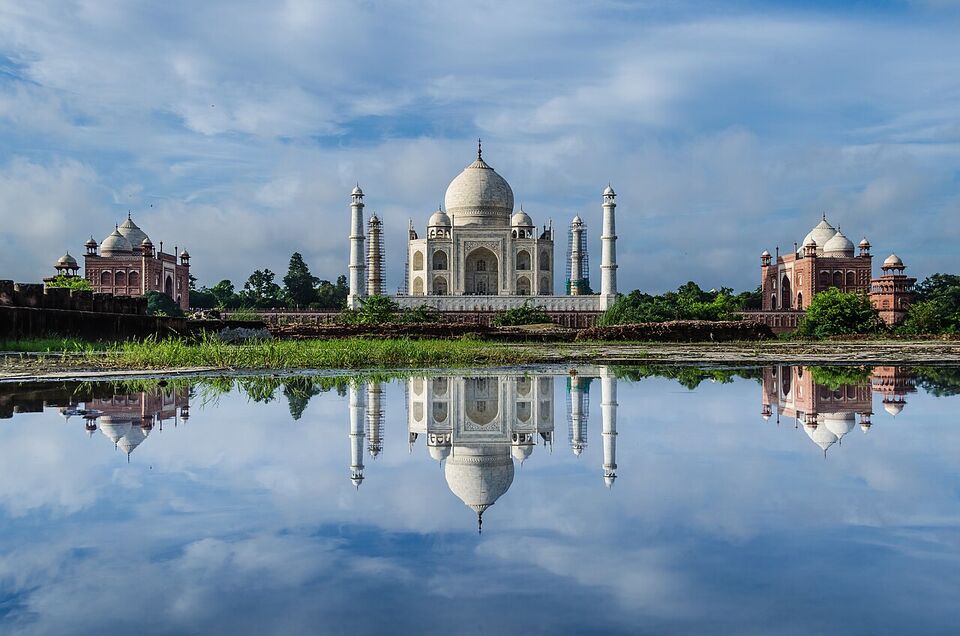
Overview: why Agra is worth a night
Agra is about 130 miles (210 km) south-east of Delhi on the Yamuna River, and the Taj Mahal is the reason nearly everyone comes. Shah Jahan had it built between 1632 and 1648 in memory of his wife, Mumtaz Mahal. It is a UNESCO World Heritage Site, and it is worth the trip.
Agra is also a city of the Mughal period: Agra Fort, the tomb of Itmad-ud-Daulah, Akbar's tomb at Sikandra, and the abandoned capital of Fatehpur Sikri nearby all date from the empire's height. The modern city is noisy and congested, and touts are a reality, but with a plan, Agra is manageable and rewarding. This guide covers how to visit the Taj Mahal, the other sights, getting there from Delhi, where to stay and eat, and what to avoid.
Agra is the middle stop on the Golden Triangle, between Delhi and Jaipur.
How to visit the Taj Mahal
Tickets
The official Taj Mahal site (run by the Government of Uttar Pradesh) lists the foreign-visitor ticket as ₹1,100 (about $12), which includes ASI and Agra Development Authority fees. There is an optional extra ₹200 (about $2) to enter the main mausoleum, so the total with the mausoleum is ₹1,300 (about $14). Buying online brings a discount of ₹50 (about $0.50) per foreign ticket, and children under 15 go free. The official site's text is undated and still carries older notes, so confirm the price before you go.
Buy online through the Archaeological Survey of India's ticketing site (the Taj site links to asi.payumoney.com), or at the ticket window. Tickets are for you, with your passport details, so check names before you pay. Look out for look-alike ticket sites: the official sources are the ASI and tajmahal.gov.in. Ticketing problems go to the ASI, not to the Uttar Pradesh tourism site. The Taj contact line listed on the official site is +91 562 2226431 (10 a.m. to 5 p.m., closed Sunday).
Watch out
The Taj Mahal is closed on Fridays. The rest of the week it is open. Check this before you book hotels, a driver or train tickets: many first-time itineraries land on a Friday by mistake. Other monuments in Agra are open all week, so Friday is a good day for Agra Fort and Fatehpur Sikri.
Hours and gates
The official visiting hours are from 30 minutes before sunrise to 30 minutes before sunset, every day except Friday. Sunrise and sunset move through the year, so check a local sunrise time for your date. In mid-November, sunrise is roughly around 6:30 a.m., and the day ends before 5 p.m. in winter. Wikipedia gives different times (an hour before sunrise to 45 minutes before sunset), but the official site wins: we use its 30-minute figure.
The complex has several entrances, and which gates are open for foreign visitors can change. Ask your hotel or check the ASI ticketing page, and plan your route to the right gate. Agra Metro also serves the area: its first stretch, from Taj East Gate to Jama Masjid, has been reported open since March 2024. Polluting vehicles are not allowed near the Taj, so expect to walk or take an electric vehicle for the last stretch; confirm locally.
Sunrise or late afternoon
We suggest sunrise. The air is cooler, the crowds are smaller, and the early light is flattering on the white marble. In winter, fog or smog can hide the view at dawn, and in that case the late afternoon or the next day can be better. The late afternoon is busy but pleasant, and you can combine it with Mehtab Bagh.
Plan for 1.5 to 2 hours inside. Walk the gardens and the platform, queue for the mausoleum and take your photographs. A guide can add useful context, but agree the price first and use the licensed guides available at the ticket area or through your hotel.
Night viewing
The official site describes night viewing on five nights each month: the full-moon night plus the two nights before and after. It runs from 8 p.m. to 11:59 p.m., in eight batches of up to 50 people, for 30 minutes each. The official page does not give a night price, and we could not confirm whether the program is running now, so check the official site and the ASI before planning around it. It can only happen on moon nights, so it needs flexibility in your schedule, and cloud or smog can spoil the view.
What you may carry in
The official site names three firm rules: drone cameras are banned in and around the Taj, food and drink (eatables) are not allowed inside, and tripods are not allowed without ASI permission. Security is like an airport's. Carry a small bag, a bottle of water for before and after the visit, and your phone and camera. Leave large bags, snacks and anything that could be seen as a weapon at the hotel, because lockers and bag drops are limited and rules at the gate can change. Follow the signs about footwear near the main platform.
Dress comfortably with covered shoulders and knees, which is respectful and also protects against the sun. Wear shoes that come off easily.
Insider tip
Arrive 30 to 45 minutes before the gate opens to be among the first through security. Walk straight to the main platform for a quiet look, and then double back to see the gardens, the side mosque and the guest house while the crowd arrives.
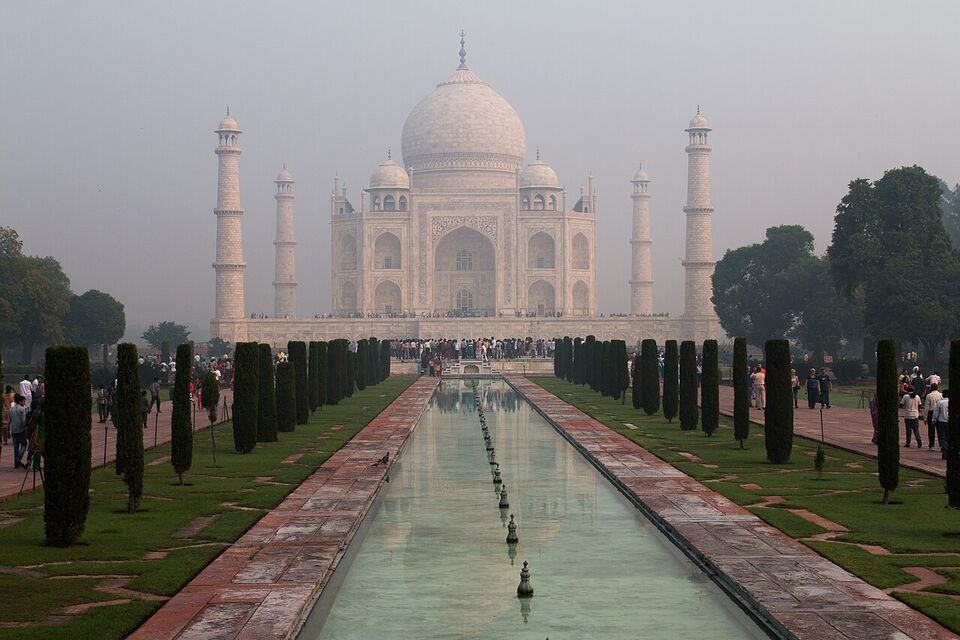
Mehtab Bagh: the view from across the river
Mehtab Bagh ("Moonlight Garden") is a 25-acre (10 ha) Mughal garden on the north side of the Yamuna, aligned with the Taj Mahal on the opposite bank. It was laid out in 1652 as a spot for viewing the Taj. The garden suits sunset and offers a calm view with far fewer people than the Taj itself.
The ASI lists foreign tickets at ₹300 (about $3) for Mehtab Bagh, per the Taj official site. In the rainy season, the grounds can partly flood. Take a taxi or app ride there, and ask the driver to wait. Mist and smog can blur the view in winter, so go on a clearer day if you have a choice. The garden is also a good fallback if you reach Agra on a Friday, when the Taj is closed, though the view is from a distance.
Agra Fort
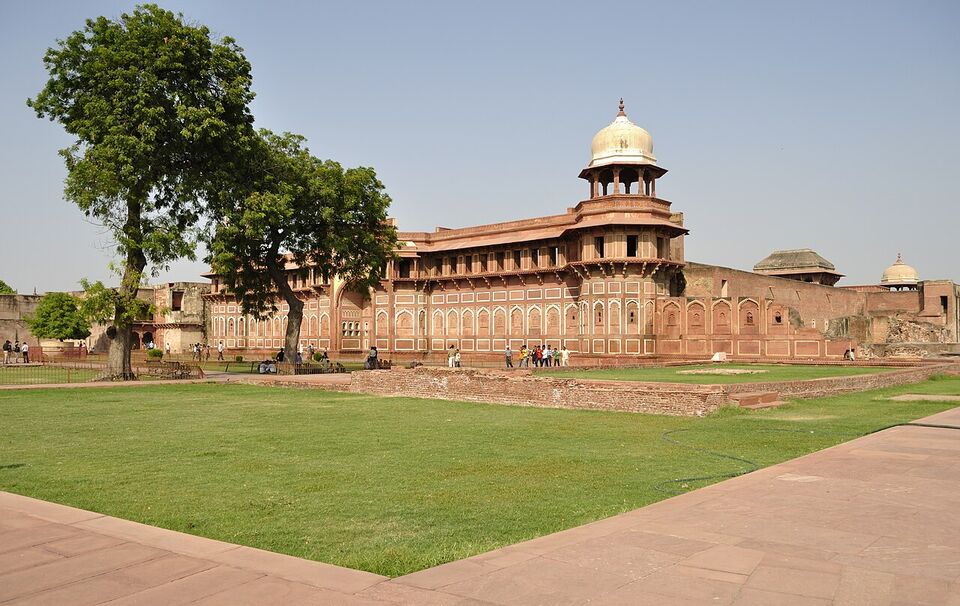
Agra Fort is a red sandstone fort on the Yamuna, rebuilt by the Mughal emperor Akbar between 1565 and 1573, and expanded by Shah Jahan, who added white marble palaces and mosques after 1628. It was the main residence of the Mughal rulers until the capital moved to Delhi in 1638. UNESCO listed it in 1983. From some terraces you can see the Taj Mahal across the river, which is part of its appeal.
Foreign visitors pay ₹650 (about $7) on weekdays other than Friday, or ₹600 (about $6) on Friday or after visiting the Taj, per the official site. The fort is open every day from sunrise to sunset. The page's "after visiting the Taj" column is not fully clear, so assume a lower rate may apply if you also hold a Taj ticket, and check at the window. Allow two hours. It is good in the morning or afternoon and works well after a sunrise at the Taj.
Itmad-ud-Daulah and other monuments
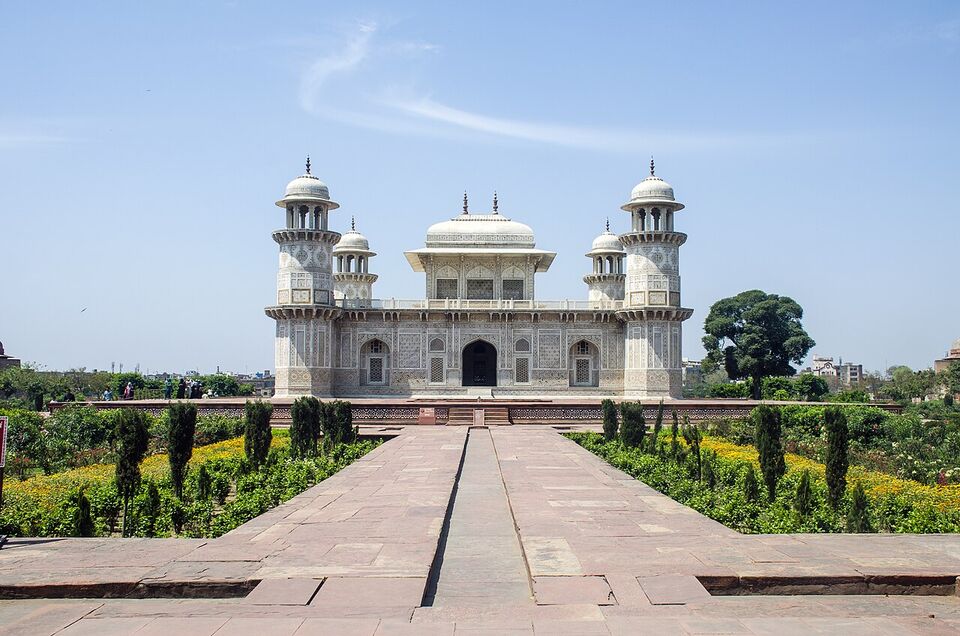
Itmad-ud-Daulah
A small marble tomb built during Emperor Jahangir's reign, with fine inlay. Foreigners pay about ₹310 (about $3), or ₹300 (about $3) on Friday or after the Taj. It is quiet and is a good change from the big sights.
Akbar's Tomb, Sikandra
The mausoleum of the emperor Akbar, finished in Jahangir's time. The foreigner ticket is about ₹310 (about $3). It lies on the road toward Mathura, so it suits a drive-by stop.
Ram Bagh and Mariyam's Tomb
Ram Bagh is an early Mughal garden, and Mariyam's Tomb is a smaller mausoleum. Each lists a foreigner ticket of about ₹300 (about $3). They suit those with extra time.
All these monuments are open all week from sunrise to sunset, according to the official Taj site. Prices rest on that site's table, which has some ambiguous column headings, so check at the ticket window.
Fatehpur Sikri
Fatehpur Sikri was Akbar's capital from 1571 to 1585, built in red sandstone and abandoned within a generation. It lies about 22 miles (36 km) west of Agra on the road toward Jaipur, and is a UNESCO World Heritage Site (listed 1986). The Jama Masjid there has the Buland Darwaza, a gateway 177 ft (54 m) high.
Foreigners pay about ₹610 (about $6) on weekdays other than Friday, or ₹600 (about $6) on Friday or after the Taj, per the official site. Allow two to three hours. It fits well with a car and driver on the way to Jaipur, or as a half-day trip from Agra. It is easiest by car, so skip it if you travel by train. The site has touts and unofficial guides at the gate: decide beforehand whether you want a guide, and agree the price in writing.
The mosque is a working place of worship, so dress modestly and take off your shoes. Our etiquette guide explains the basics.
One day or overnight: how to plan
Agra works either way, but we think most visitors do better with one night. The table compares the two.
| Plan | What you see | Good for | Trade-off |
|---|---|---|---|
| Day trip from Delhi | Taj Mahal and Agra Fort | Short stays, tight schedules | 8 to 10 hours of travel; no sunrise at the Taj |
| One night | Agra Fort in the afternoon, Taj at sunrise, plus Itmad-ud-Daulah or Fatehpur Sikri | Most first-time visitors | One extra hotel night |
| Two nights | All of the above plus Mehtab Bagh, Sikandra and a slower pace | Photographers, families, those with a Friday in the plan | Agra may feel long for some |
A one-night plan
- Day 1
Arrive and Agra Fort
Take the morning fast train or drive from Delhi. Check in, rest and visit Agra Fort in the afternoon. At the end of the day, go to Mehtab Bagh for the sunset view of the Taj.
- Day 2
Taj Mahal at sunrise
Go to the Taj as the gate opens. After breakfast, visit Itmad-ud-Daulah, or head to Fatehpur Sikri if you are continuing to Jaipur by car.
Different from home
In the US you might drive up to a national landmark and walk in. At the Taj Mahal, expect a security screen, a walk from the parking or the drop-off point, and strict bag rules. The visit is more like an airport than a national park, so allow time at the gate.
Getting to Agra from Delhi
By train
A fast train is the quickest way. The Gatimaan Express runs between Hazrat Nizamuddin station in Delhi and Agra Cantonment, about 1 hour 40 minutes for the 117 miles (188 km). One timetable aggregator lists it leaving at 8:10 a.m. and arriving at 9:50 a.m., and not running on Fridays, but this is not an official source: confirm on irctc.co.in or the National Train Enquiry System. Other fast trains also serve Agra, and the quickest take under 2 hours.
Reserved tickets can be booked up to 60 days ahead for the general public, and Tatkal opens a day before departure at higher fares. We could not confirm the foreign-tourist booking arrangements, so check IRCTC, and book early for peak months. Read the train guide for how to book and what to expect at the station. Winter fog can delay trains, so avoid tight plans in December and January.
By road
Agra is about 130 miles (210 km) from New Delhi by the Yamuna Expressway. A drive usually takes 3 to 4 hours, longer with traffic or fog. A car with a driver from Delhi is flexible, and it lets you add Fatehpur Sikri. Agree the price in writing; we could not confirm current rates. Traffic keeps to the left in India.
By air
Agra has a small airport, but most visitors come by road or train. A new airport near Noida (Jewar) was inaugurated in March 2026 and is about 87 miles (140 km) from Agra. We could not confirm commercial services, and most visitors still land in Delhi, about 200 km (124 miles) away.
Where to stay and eat
Where to stay
The choice is between three areas. Near the Taj (the east and south gate areas) you can walk to the gates and some hotels have rooftop views, but streets are narrow and touts are common. Fatehabad Road has many mid-range and upscale hotels, and is a short ride from the Taj. The Cantonment area is quieter and close to the train station. Tiers are $ (under $120 a night), $$ ($120 to $300) and $$$ (over $300), and Agra has all three. We do not name hotels, because we cannot confirm which are open and good in 2026.
A room with a Taj view costs more but is not essential. For one night, pick a hotel that arranges an early start, has a reliable driver and is easy to reach. See our where to stay guide.
Where to eat
Agra's food is north Indian: Mughlai dishes, kebabs, paratha, and a local sweet called petha (made from ash gourd). Hotels and tourist restaurants are the safest for first-time visitors, and street food needs care. Choose busy places, eat food that is cooked fresh, drink sealed bottled water and avoid ice. See our food guide.
Touts, guides and commission shops
Agra has a reputation for aggressive touts, and it is a well-earned one at the gates and on the road in. The pattern is familiar: a driver, guide or "friend" takes you to a marble or jewelry showroom, a restaurant or a "government emporium" that pays commission, and you may feel pressure to buy. Marble inlay is a real local craft, and buying it is fine, but you can buy from a shop you choose, after comparing prices.
- Agree the day's route and say no to shopping stops before you leave.
- Use the official ticket counters. Do not buy tickets from someone outside.
- Hire a guide through your hotel or at the ticket area, and fix the price first.
- Say "no, thank you" and keep walking; do not stop to explain.
- Be wary of anyone who says the Taj is "closed" and offers an alternative, especially on a day it should be open.
Our scams guide and shopping guide have more.
Air quality, fog and heat
Agra's winter is mild: November highs average about 85°F (29°C) with lows near 56°F (13°C), December highs near 75°F (24°C) with lows near 47°F (8°C), and January highs near 72°F (22°C) with lows near 45°F (7°C). The hot months are harsh: May highs average about 107°F (42°C), and the record is 119°F (48.6°C). The monsoon comes in July and August. October to March is the best time, though early mornings in December and January can be foggy.
Winter fog and smog affect Agra as well as Delhi. Fog can delay trains and hide the Taj at dawn, and north Indian air quality worsens from November through February. Check the live air-quality level before you go, carry an N95 mask on bad days, and leave a spare day in your plan if you can. In the heat of April to June, go at first light and rest at midday. The health notes in our health guide apply, and the when to go guide compares seasons.
Save money
Foreigners pay far more than Indian residents at these monuments, and the price list is long, so decide which sights are worth the cost. If you have limited time and budget, the Taj Mahal and Agra Fort give the most. Itmad-ud-Daulah and Mehtab Bagh are cheaper and quieter. Buy the Taj ticket online to save ₹50 (about $0.50).
Mistakes to avoid
- Arriving on a Friday. The Taj is closed on Fridays. Check your dates first.
- Booking a day trip with no buffer. A long day can go wrong with one train delay.
- Carrying food or a big bag. Food, drones and tripods are banned at the Taj, and queues are long for bag checks.
- Buying tickets from touts or look-alike sites. Use the ASI and the official Taj site only.
- Accepting shopping stops. You are not obliged to go.
- Ignoring fog and air. Keep a flexible plan between December and January.
- Skipping the second view. Mehtab Bagh or Agra Fort gives a different view of the Taj away from the crowd.
For the full loop and onward travel, read our Golden Triangle guide and the trip planning guide.
Add it to a route in the trip builder, or ask us to plan the hotels, trains and guides for you.