Overview
Indian food is a set of regional cuisines, not one cuisine. A meal in Amritsar, Kochi, Kolkata and Ahmedabad can share almost no dishes: different staples, fats, spices and habits. For an American first-timer, the most useful plan is to eat what each region does best, start with milder dishes, and use a few simple rules to keep your stomach comfortable.
This page covers how the regions differ, what a thali is, the breads and curries you will meet, what "vegetarian" really means here, how to eat street food more safely, how to order milder, and how to handle dietary restrictions. For what to drink with it, see Chai, Water and Alcohol.
Two points shape everything else. First, India's food customs follow religion and region, so a menu's choices tell you something about where you are. Hindus often do not eat beef, Muslims avoid pork, and Jains are strict lacto-vegetarians. Second, most restaurants will happily adjust a dish, and asking politely almost always works. For manners at the table, the etiquette page has more.
How the regional cuisines differ
The quickest way to understand India's food is by staple and fat. Wheat breads and dairy sit in the north; rice, coconut and tamarind sit in the south; fish and mustard oil run along the east and west coasts. Here is what you will find in the cuisines most visitors meet.
North Indian and Punjabi
Tandoor-baked breads, creamy dal, butter chicken, paneer dishes and lassi. This is the style most American Indian restaurants copy. Punjabi home cooking also includes sarson da saag (mustard greens) with makki di roti (corn flatbread) in winter.
Rajasthani
Food built for a dry climate: dal baati churma (baked wheat balls with lentils and a sweet crumble), gatte ki sabzi (gram-flour dumplings in curry) and laal maas, a fiery red meat curry. Much of the traditional cooking is vegetarian.
Bengali
Freshwater fish, mustard oil, rice and an enormous sweet tradition: rasgulla, sandesh and mishti doi (sweet set yogurt). Fish is central to the meal here, and many Bengali Hindus eat it.
Goan
A blend of Portuguese and Indian cooking: vinegar-sharp pork vindaloo, sorpotel, fish curry with rice, seafood grilled with recheado masala, and bebinca, a layered coconut dessert. Pork appears here far more than in most of India.
Kerala
Coconut in everything, fresh seafood, appam (lacy rice pancakes) with vegetable or meat stew, and Malabar biryani. Coconut oil is the usual cooking fat. See the Kerala page for where to eat and stay.
Tamil
Idli, dosa and sambar for breakfast, rice meals on banana leaf, and the peppery meat dishes of Chettinad. Filter coffee is the drink of choice. See Tamil Nadu.
Gujarati
Mostly vegetarian, often lightly sweet, with a snack tradition of dhokla (steamed gram-flour cake), thepla (spiced flatbread) and farsan (fried savories). A Gujarati thali is a famous all-you-can-eat meal.
Other cuisines are worth a mention: Hyderabadi biryani, Awadhi kebabs from Lucknow, Kashmiri wazwan feasts, Parsi dishes in Mumbai, and the Mughlai richness of Old Delhi. You do not need a plan for all of them. Pick the regions on your route and eat the local specialty.
What is a thali?
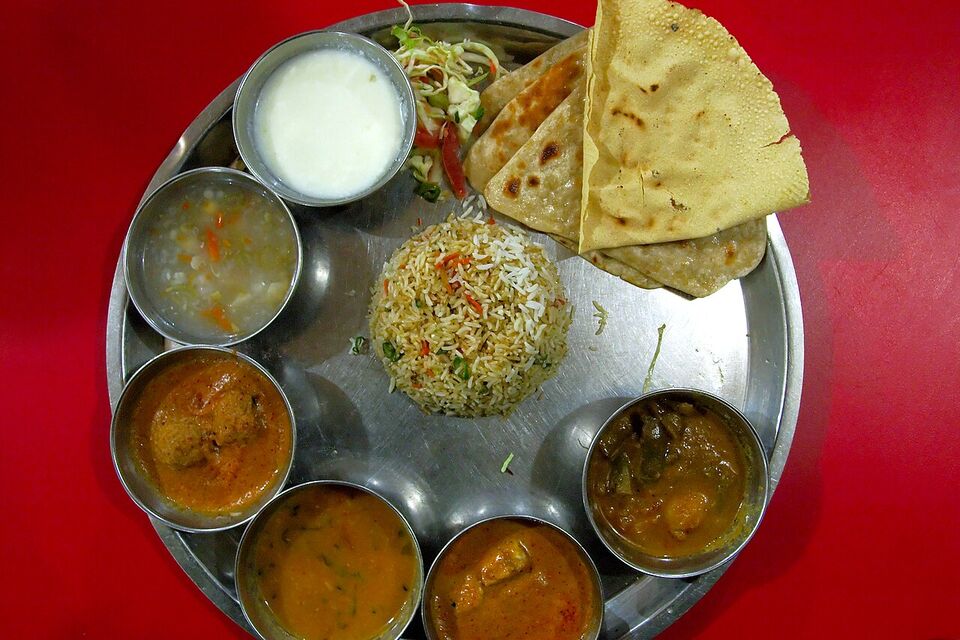
A thali (the word means "plate") is a meal served on one large platter, usually with small steel bowls (katoris) holding several dishes: a couple of vegetable curries, dal, rice, bread, yogurt, pickle, something crunchy and often a sweet. Many restaurants offer unlimited refills, and servers walk around ladling more into your bowls.
For a first-timer, the thali is the easiest way to taste a region. The dishes come in small portions, so you can discover what you like. It is also hot and freshly served at busy lunch restaurants, which is a point in its favor on food safety. Most cities have a vegetarian thali place and a non-vegetarian one. Say "veg" or "non-veg" when you order, since the two differ.
In the south, you may eat the same kind of meal on a banana leaf, where servers bring the dishes in a set order. Rice goes in the center, and the curries and sides go around it. Fold the leaf toward you when you finish, if that is what people around you do, or just leave it as is.
Breads, rice and curries
Breads
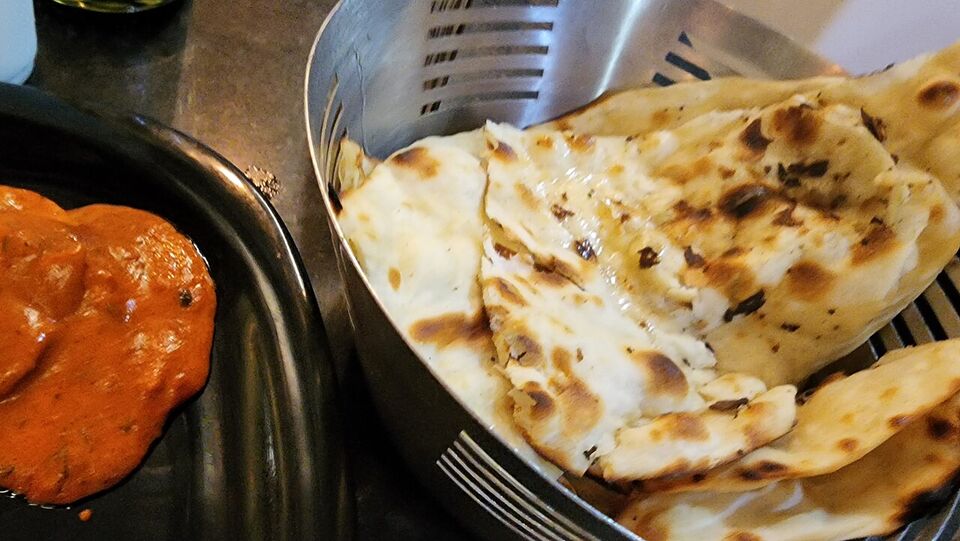
North Indian meals revolve around bread. The common ones are:
- Roti or chapati: thin, round whole-wheat flatbread cooked on a griddle. The everyday bread at home.
- Naan: a thicker, leavened bread baked in a tandoor (clay oven). Restaurant food more than home food.
- Paratha: layered, pan-fried bread, often stuffed with potato (aloo), cauliflower (gobi) or paneer. A classic breakfast, served with yogurt and pickle.
- Puri and bhatura: deep-fried puffed breads, served with chickpea curry (chole) or potato curry.
- Kulcha: soft, stuffed bread, a specialty of Amritsar. See the Amritsar page.
Rice dishes
Plain steamed rice goes with dal and curries across the country, and it is the base of the southern diet. Biryani is a different thing: rice layered with spiced meat, vegetables or egg and cooked together, with styles from Hyderabad, Lucknow, Kolkata and Kerala. Pulao is a simpler, gently spiced rice cooked in stock.
Curries and dal
"Curry" is a Western word. Indian menus name dishes by the main ingredient and cooking style: dal (lentils), sabzi (vegetable dish), paneer (fresh cheese), masala (spiced gravy) and korma (a rich, mild, cream or nut-based gravy). Dal is eaten daily and ranges from watery and simple to the slow-cooked, buttery dal makhani of Punjab.
Good everyday orders for beginners include dal tadka (lentils with a fried spice topping), palak paneer (spinach and cheese), chana masala (chickpeas), aloo gobi (potato and cauliflower) and, for meat eaters, chicken tikka masala or butter chicken in a north Indian restaurant. Butter chicken is a creamy tomato-and-butter dish that came out of Delhi and Punjab and is among the mildest options on any menu.
Dosas, idlis and other southern food
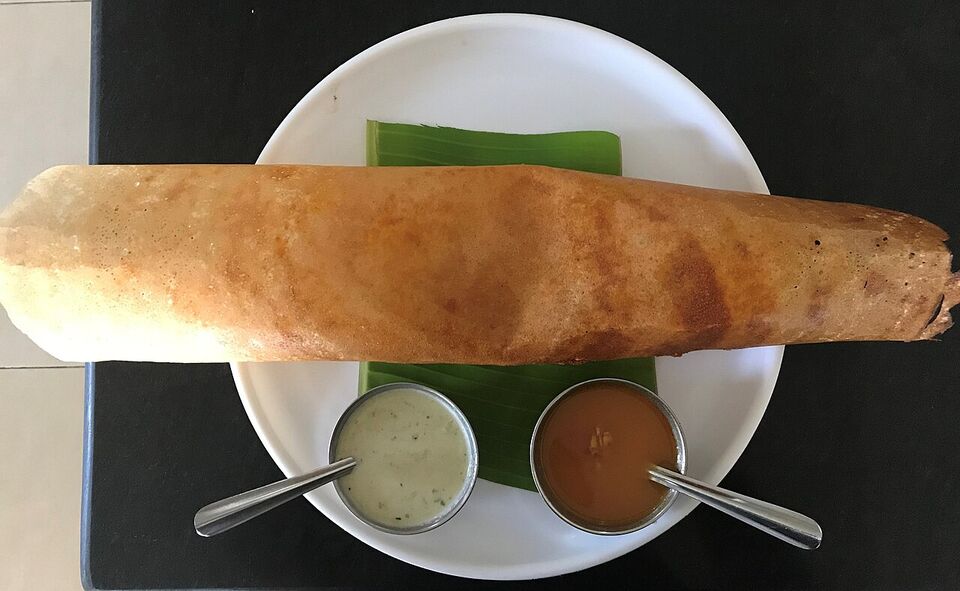
A dosa is a thin, crisp crepe made from fermented rice and lentil batter, folded around a filling (the classic is a spiced potato, called masala dosa) and served with sambar (a lentil and vegetable stew) and coconut chutney. Idli are steamed rice-lentil cakes, soft and mild. Vada are fried lentil doughnuts. Uttapam is a thicker pancake topped with onion, tomato or chilies.
These are breakfast and snack foods across the south, and many "tiffin" restaurants serve them all day. They are rice-based and usually vegetarian, which makes them a gentle first choice. Pair them with filter coffee. See the Chai, Water and Alcohol page for how to order it.
Street food
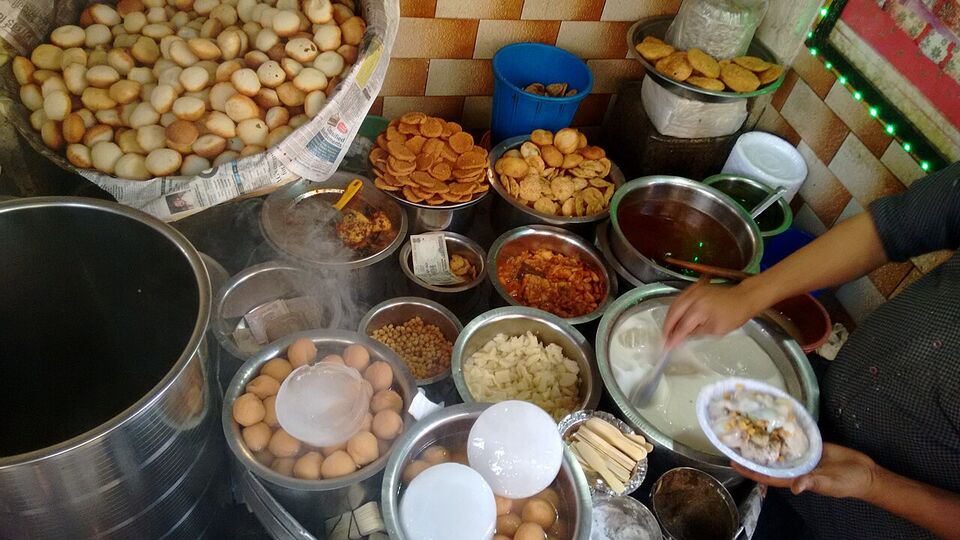
Street food is a large part of the experience in India: samosas, chaat (savory snack mixes with yogurt, chutneys and crisp bits), pav bhaji and vada pav in Mumbai, pani puri (also called golgappa), kachori, kebab rolls, roasted corn and more. In Old Delhi, the street food of Chandni Chowk and Chawri Bazar is a draw in its own right, with vendors who have sold food there for generations.
The risk is real. Travelers' diarrhea affects a sizable share of visitors to the region, and it is most common in the first couple of weeks. Hepatitis A and typhoid are also risks, which is why the CDC recommends vaccines for most travelers. See the health page and talk to a travel doctor at least a month before you leave.
How to choose a safe stall
- Pick a stall with a crowd and fast turnover, so the food has not been sitting.
- Choose food cooked fresh and served hot: fried snacks, breads off a griddle, tea boiled in front of you.
- Watch for clean hands, covered ingredients and a tidy workspace. Trust your eyes and walk away if it looks wrong.
- Skip raw salads, cut fruit that has been sitting out, and chutneys or drinks that might have been made with tap water or ice.
- Be careful with pani puri, since the flavored water is the usual risk. Eat it only from places where you trust the water source, or skip it on the first week.
- Drink only sealed bottled or properly filtered water. Check the seal every time.
- Start slowly. Eat one street food item a day for the first few days, not five.
Watch out
Do not assume a tourist-looking restaurant is safer than a busy street stall. What matters is turnover, heat and how the water and ice are handled. Hot food from a crowded stall can be safer than a lukewarm buffet in an empty dining room.
Restaurants vs stalls
For your first few days, eat mostly at sit-down restaurants and hotel dining rooms with steady crowds, and add street food gradually. Restaurants that are packed at lunch with local office workers are usually a good sign. India's food safety regulator is the Food Safety and Standards Authority of India (FSSAI), and licensed food businesses are supposed to display a license or registration number. We could not confirm the current signage and hygiene-rating rules, so treat a displayed license as one clue among several and check the FSSAI website (fssai.gov.in) for the current scheme.
What "vegetarian" really means in India
India has a very large vegetarian population, and vegetarian food is not an afterthought. Menus often split into "veg" and "non-veg" sections, and many restaurants, especially in Gujarat, Rajasthan, the south and around temples, serve only vegetarian food. Packaged food usually carries a green dot (vegetarian) or a brown dot (non-vegetarian); check the label if it matters to you.
There are several levels worth knowing:
- Vegetarian ("pure veg"): no meat, fish or eggs, though dairy (milk, yogurt, ghee, paneer) is used freely. Some strictly vegetarian kitchens do not allow eggs, and many do not allow meat to be cooked or even carried in.
- Jain: strict lacto-vegetarian food with no root vegetables such as potatoes, onions and garlic, based on the principle of avoiding harm to living things.
- Vaishnavite and some temple food: vegetarian without garlic and onions.
- Eggetarian: vegetarian plus eggs, a common term on menus.
Strict vegetarians and non-vegetarians often eat together, but utensils and serving spoons are kept separate. Do not use the "veg" spoon in a "non-veg" dish, and do not offer a vegetarian host food from your own plate. Food that has touched someone's mouth or used utensils is considered jootha (contaminated), so avoid sharing bites off your own spoon with others.
A few places are vegetarian by rule. Rishikesh is a vegetarian-only, alcohol-free city where the sale of meat, fish and eggs has been banned since 1956 (see Rishikesh). Varanasi has many vegetarian eateries as well (see Varanasi).
Regional dishes by destination
| Destination | Try | Notes |
|---|---|---|
| Delhi | Chaat, parathas, kebabs, butter chicken | Old Delhi is the street food center; New Delhi has many restaurants. See Delhi |
| Agra | Petha (a translucent sweet), bedai and jalebi for breakfast, Mughlai dishes | Agra's petha is sold in shops near the Taj Mahal. See Agra |
| Jaipur and Rajasthan | Dal baati churma, pyaaz kachori, laal maas, ghewar (a honeycomb sweet) | Much of it is vegetarian; laal maas is very hot. See Jaipur |
| Amritsar | Amritsari kulcha, lassi, langar at the Golden Temple | The temple kitchen serves free vegetarian meals. See Amritsar |
| Varanasi | Kachori-sabzi breakfast, tamatar chaat, lassi, sweets | Mostly vegetarian; the ghats area has many small eateries. See Varanasi |
| Kolkata | Fish curry, kathi rolls, rasgulla, sandesh, mishti doi | Famous for sweets and street rolls. See Kolkata |
| Mumbai | Vada pav, pav bhaji, bhel puri, Parsi dishes, seafood | Fast, cheap street snacks eaten on the move. See Mumbai |
| Goa | Fish curry rice, vindaloo, sorpotel, bebinca, grilled seafood | Pork and beef appear on menus here; see the beef section below. See Goa |
| Kerala | Appam and stew, fish molee, seafood, Malabar biryani, banana-leaf meals | Coconut-heavy; fish is a staple. See Kerala |
| Tamil Nadu | Idli, dosa, sambar, Chettinad chicken, filter coffee | Breakfast is the best meal of the day. See Tamil Nadu |
| Karnataka | Masala dosa, bisi bele bath, Mysore pak | Bengaluru has a large range of restaurants. See Karnataka |
| Hyderabad | Hyderabadi biryani, haleem (in season), Irani chai | Biryani is the signature dish. |
Spice levels and ordering milder
Not all Indian food is hot, and heat comes from several sources: green and red chilies, black pepper and mustard seed. Many north Indian restaurant dishes are rich and mild, while the cuisines of Rajasthan, Andhra Pradesh, Chettinad and Goa can be fiery. Dishes labeled "vindaloo," "laal maas" or "Chettinad" are good ones to approach carefully.
To order milder, say kam mirch (less chili, "kum meerch") or "mild, not spicy, please." Most kitchens can cook it that way. Ask for extra yogurt or raita (spiced yogurt), which cools the mouth better than water. Rice, bread, sweets and dairy help too. Water makes the burn spread.
Insider tip
Say "less spicy" when you order, not when the dish arrives. Cooking times and spice blends cannot be changed afterward. If you are with a group, order one hot dish and several mild ones, and share.
Eating with your hands and the left-hand rule
Many Indians eat with their right hand, and it is fully normal. In the south and at home, rice is mixed with curry and picked up with the fingertips. In restaurants, you may be given a fork and spoon, or you can ask for them. A fork is never a rude request.
The rule that matters is the left hand. Most Indians eat with the dominant hand and keep the other clean for passing dishes, so avoid touching shared food with your left hand. If you are left-handed, use a spoon, or ask quietly for one. Wash your hands before and after the meal. Most restaurants have a sink in the dining area or nearby, and many places offer finger bowls.
Do not worry about doing it perfectly. Hosts know that visitors are learning. Tear bread with your right hand, scoop curry with it, and take small bites. Whole spices in the food (cloves, bay leaves, cinnamon sticks) are not meant to be eaten; set them to one side.
Sweets and desserts
India's sweets (mithai) are very sweet, often built on milk, sugar, nuts and ghee. Common ones are gulab jamun (fried milk dumplings in syrup), jalebi (crisp, syrup-soaked spirals), rasgulla and sandesh (soft cheese sweets from Bengal), barfi (a dense milk-and-nut fudge), laddu (round sweets) and kulfi (dense ice cream). Sweets are given as gifts at festivals, and the festivals page shows when the sweet shops are busiest.
Sweet shops with a high turnover are generally reliable. Be cautious with ice cream from street carts and with milk-based sweets that have clearly been sitting out in the heat.
Dietary restrictions
You can eat well in India with most restrictions, but you need to ask clearly and not assume. Write the restriction down in English or Hindi, or show it on your phone. The Hindi Phrases page has phrases you can use.
- Vegetarian: easy. Look for "pure veg" places, or order from the veg section. Ask whether stock or ghee used for cooking contains meat.
- Vegan: doable but requires care. Ghee, butter, cream, yogurt and paneer are in many dishes. Ask for "no ghee, no butter, no dahi (yogurt), no paneer." South Indian food, chickpea and lentil dishes and many vegetable curries work well.
- Gluten-free: much of India eats wheat bread, but rice, dal, many vegetable dishes, idli and dosa are usually gluten-free. Cross-contact is common in shared kitchens, and some spice mixes and a seasoning called asafoetida (hing) may be cut with wheat flour. Ask, and be cautious if you have celiac disease.
- Nut allergy: cashew and almond pastes thicken many rich gravies (korma, butter chicken and others), and peanuts or peanut oil show up in snacks. Explain the allergy clearly, carry your medication, and avoid dishes that you cannot check.
- Halal: Muslim-run restaurants are widespread, especially in Old Delhi, Hyderabad, Lucknow, Kolkata and Mumbai. Look for the word "halal" on signs or ask. Pork is rarely served in these places.
- Jain: ask for "Jain food," meaning no root vegetables, onion or garlic. Many restaurants, especially in Gujarat and Rajasthan, cook it on request.
If an allergy could be serious, say so plainly, repeat it to the person who cooks, and have a plan for medical help. See health.
Beef, pork and meat rules by state
Eating habits tied to religion shape what is sold. Hindus often do not eat beef, since many Hindu communities consider the cow sacred and the practice a taboo, and cow slaughter is banned in many Indian states. Muslims avoid pork. Rules are set by each state, and they differ in what animals are covered, what meat can be sold and what penalties apply.
We could not confirm a current state-by-state list for November 2026, so please do not rely on any list of "beef-friendly" states, including ours. In practice:
- In much of north, central and west India, beef is not on menus, and asking for it may cause offense.
- Menu items called "buff" refer to water buffalo, which is eaten in some places and is not the same as cow beef. Check local rules before ordering.
- Goa, Kerala and parts of the northeast have large communities that eat beef or pork, and these items may appear on menus. Rules can still change, so check locally.
- Do not bring beef or pork products into Hindu or Muslim homes, temples, or community events, and avoid raising the topic at someone's table.
If you are unsure, order chicken, fish, lamb, goat or vegetarian dishes. They are safe everywhere, and they are what most Indian menus offer. Some towns are vegetarian by rule: Rishikesh bans the sale of meat, fish and eggs.
Tipping and paying
Modest tipping is common. In sit-down restaurants, about 10% is usual when no service charge is on the bill. A service charge, if printed, is voluntary and you may ask to have it removed. For small cafes and street stalls, rounding up is fine. For hotel staff, drivers and guides, small amounts are appreciated, as the etiquette page explains. Cash is useful at small places; larger restaurants take cards. See money.
We do not give menu prices on this page, since they change by city, season and restaurant. As a general rule, local thali restaurants and tiffin places cost a fraction of what the same dishes cost in tourist areas or hotel restaurants.
Common mistakes
- Eating too much, too fast, in the first days. Begin with cooked, mild food and add chilies and street snacks over time.
- Drinking tap water or using ice without checking. Use sealed bottled or properly filtered water, and brush your teeth with it too. See Chai, Water and Alcohol.
- Offering your left hand, or sharing food from your own plate. Both are impolite.
- Assuming "vegetarian" includes eggs, or that all Indians are vegetarian. Ask what the restaurant means.
- Ordering beef without asking. It may be unavailable, and in some states restricted.
- Skipping an unknown restaurant just because it is small. A busy local place is usually better than an empty polished one.
- Ignoring allergies. Say them clearly, in advance, and at every restaurant.
Different from home
In the US, "Indian food" usually means one north Indian style. In India, menus are organized by region and by veg or non-veg, meals arrive when they are ready rather than in courses, and bread or rice is part of almost every order. Do not be surprised if everything arrives at once.
Planning your food days
A simple rhythm helps. Start with breakfast at a hotel or local tiffin place, eat a thali or a set meal at lunch, and treat dinner as the main meal. Try one new thing per meal, and keep a few safe standbys: plain rice, dal, bread, yogurt and bananas. Carry oral rehydration salts and basic medicine from home, and see the health page for advice on traveler's diarrhea. If you are traveling with children, the families page has suggestions for easy meals.
When you are choosing where to eat on a city route, look at destinations for how destinations connect, and at by interest for trips built around food.
Add it to a route in the trip builder, or ask us to plan the hotels, trains and guides for you.