Which side trips work from India
Nepal and Sri Lanka are the easiest side trips from an India holiday. Both are a short flight from several Indian cities, both are used to visitors, and both fit into a week or less. Bhutan and the Maldives work too, but they take more planning (Bhutan because of its daily fee system and limited flights, the Maldives because it is mainly a resort destination). Bangladesh and Myanmar are different: we do not suggest building a trip around them, and we do not suggest counting on any land border.
The one rule that shapes every side trip is how you come back into India. If you travel on a tourist e-Visa, you can leave India and return within the visa's validity, but you must return by air or sea through a listed entry point. We explain why below. This page also gives a comparison table, a short guide to each destination, which pairings fit which season, and a list of common mistakes.
A note on how far to trust this page. India's rules come from the official e-Visa portal. For the neighboring countries we point you to their official sites, because their visa rules, fees and flight schedules change often, and we could not confirm current details from official pages. Treat anything we call "check" as something to verify before you book. To plan the India part, see Plan Your Trip to India.
How re-entry to India works with an e-Visa
Many travelers worry that an e-Visa is single-entry and that leaving India for Nepal or Sri Lanka will use it up. For US citizens, it is not. The official e-Visa information lists all three tourist e-Visas (30-day, 1-year and 5-year) as multiple entry. That means you can leave and re-enter as long as you stay inside the validity period. The details differ by visa:
| e-Tourist Visa | Validity | What it means for a side trip |
|---|---|---|
| 30 days | 30 days from your first arrival in India | Multiple entry, but the 30 days keep running while you are away. Your return to India must fall inside that window. |
| 1 year | 365 days from the date of grant | Multiple entry. Total stay in India is capped at 180 days per calendar year. |
| 5 years | 5 years from the date of grant | Multiple entry. The same 180-day cap per calendar year applies. |
The rule that catches people: no land entry
The official FAQ states that e-Visa holders can enter India only through the designated airports and seaports on the e-Visa list, and that a valid e-Visa does not allow entry at a land border. You may leave India through any immigration checkpoint, but you must come back through a listed airport (or a listed seaport). So if you cross to Nepal by road at a border town, you cannot simply walk back across the border on an e-Visa. You would have to fly back into India, for example to Delhi, Varanasi, Lucknow, Kolkata or Bagdogra, all of which are on the list.
Land crossings are open to travelers on a regular visa. The government's regular-visa page lists many land entry points, among them Sonouli (Sunauli) and Raxaul on the Nepal border and Jaigaon on the Bhutan border. If you want to travel overland in both directions, ask an Indian mission about a regular visa, and read our entry page. Because border practice can differ from the written rule, check the Bureau of Immigration site (boi.gov.in) before you plan an overland route, and treat a flight as the reliable option.
Watch out
An e-Visa is not valid for protected, restricted or cantonment areas without prior permission. If your side trip returns you to India at the northeast (for example by Bhutan to Assam or West Bengal), check which areas on your route need permits. Also, on your way back, check whether you need to submit a new e-Arrival card (the online form is for arrivals within 72 hours before landing).
Two more points. First, keep your passport valid: India asks for six months' validity when you apply, and the other countries often have the same rule, so renew early. Second, if your plans might change, do not rely on a 30-day visa for a long side trip. The 1-year visa costs more but gives you freedom, and the fee is non-refundable if you change your mind.

Comparison at a glance
This table compares the usual add-ons. "Visa" is for US citizens and is a pointer, not a promise: check the official site before you book. Flight times are approximate, and routes change by season.
| Destination | How to get there | Visa for Americans (verify) | Works as an add-on? | Time to allow |
|---|---|---|---|---|
| Nepal | Flights from Delhi and other Indian cities to Kathmandu, about two hours from Delhi; road crossings exist but are slow | Check Nepal's immigration department | Yes, easy | 4 to 7 days |
| Sri Lanka | Flights from Chennai (Madras), Delhi, Mumbai and others to Colombo | Electronic travel authorization; check Sri Lanka's official site | Yes, easy | 5 to 8 days |
| Bhutan | Flights to Paro from Delhi, Kolkata and other Indian cities; road via Jaigaon | Visa and a daily fee through the official system; check tourism.bt | Yes, with planning | 4 to 7 days |
| Maldives | Flights from several Indian cities to Malé | Check the Maldives immigration site | Yes, as a beach finish | 3 to 7 days |
| Bangladesh | Flights from Kolkata and Delhi to Dhaka; land crossings exist | A visa has generally been needed; check the official site and the State Department advisory | Only for the experienced | 4 to 6 days |
| Myanmar | Few practical routes from India | Check the State Department advisory first | Not recommended | Not applicable |
Time zones help planning: Nepal is 15 minutes ahead of India, Sri Lanka is on the same time as India (UTC+5:30), Bhutan is half an hour ahead and the Maldives is 30 minutes behind. India Standard Time itself is 10 hours 30 minutes ahead of New York in winter and 9 hours 30 minutes in US summer time.
Nepal
Nepal is the classic add-on: Kathmandu for temples and old squares, Pokhara for lakes and mountain views, and treks for people with more time. Most Americans fly, and we recommend you do too.
Getting there
By air, flights link Kathmandu with Delhi and other Indian cities, and the trip from Delhi takes about two hours. Check airline sites for current schedules, since routes shift by season. From Kathmandu, Pokhara is reached by a short flight or a long road journey.
By road, the border towns on the Indian side include Sonouli (Sunauli), Raxaul and Jogbani, all on the government's list of regular-visa land entry points. These crossings are used by locals and backpackers. They are slow and the road connections can be rough, and an e-Visa holder cannot re-enter India there, as explained above. Most Americans will save time and trouble by flying both ways.
Visa and money
Nepal's visa rules and fees for Americans change from time to time, and we could not confirm them from an official page. Check the Nepal Department of Immigration before you book. Bring a passport with plenty of validity, and expect to use Nepali rupees, which are a separate currency from India's.
Does it work as an add-on?
Yes. Four nights in Kathmandu and Pokhara fit well after the Golden Triangle or Varanasi (Varanasi is a listed e-Visa airport in the east; see Varanasi). Trekking needs more time and its own permits. The best seasons are generally autumn (October and November) and spring (March to May); check conditions for your dates. For high-altitude travel, also see our health page.
Sri Lanka
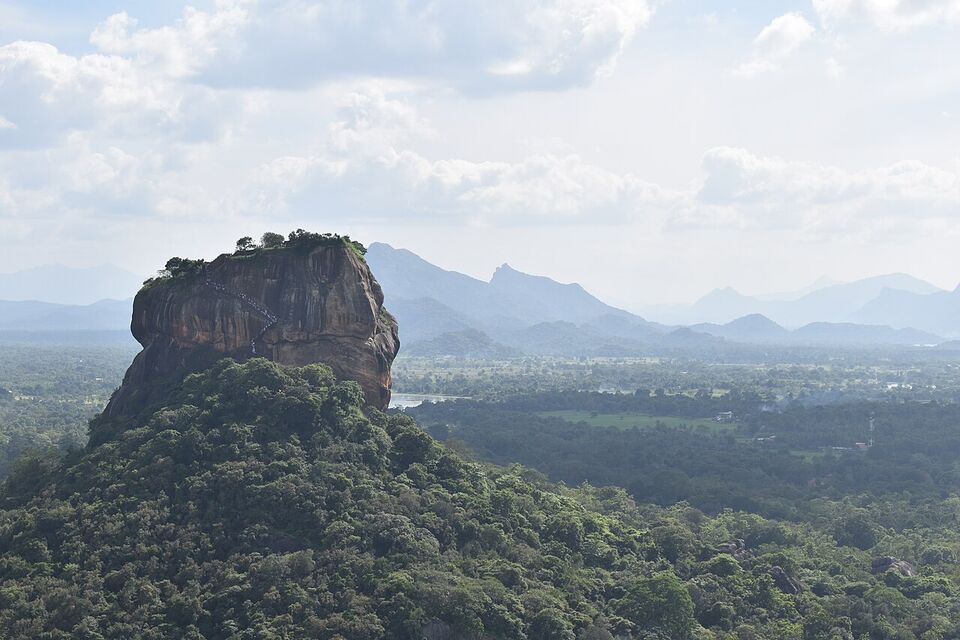
Sri Lanka is a compact island with beaches, tea hills, ancient cities and wildlife, close to the south of India. It pairs naturally with Tamil Nadu and Kerala (see Tamil Nadu and Kerala).
Flights run to Colombo from Chennai, Mumbai, Delhi and other Indian cities, and flights from Chennai are the shortest. There is no practical land route. Americans generally need an electronic travel authorization to enter Sri Lanka, which is applied for online; check the official Sri Lanka site for the current process and fee rather than using an agent. Rules change, so confirm before you book.
Sri Lanka has two monsoons, so the best coast depends on the month. As a general pattern, the west and south coasts are best from roughly December to March, and the east coast is better from about April to September; check a current forecast. Allow a week for a first visit. Because Sri Lanka is on the same time as India and a short flight away, it is the easiest add-on in terms of jet lag and timing.
To return to India, fly into a listed airport such as Chennai, Kochi, Thiruvananthapuram, Delhi or Mumbai. Your multiple-entry e-Visa lets you re-enter, as long as it is still valid.
Bhutan
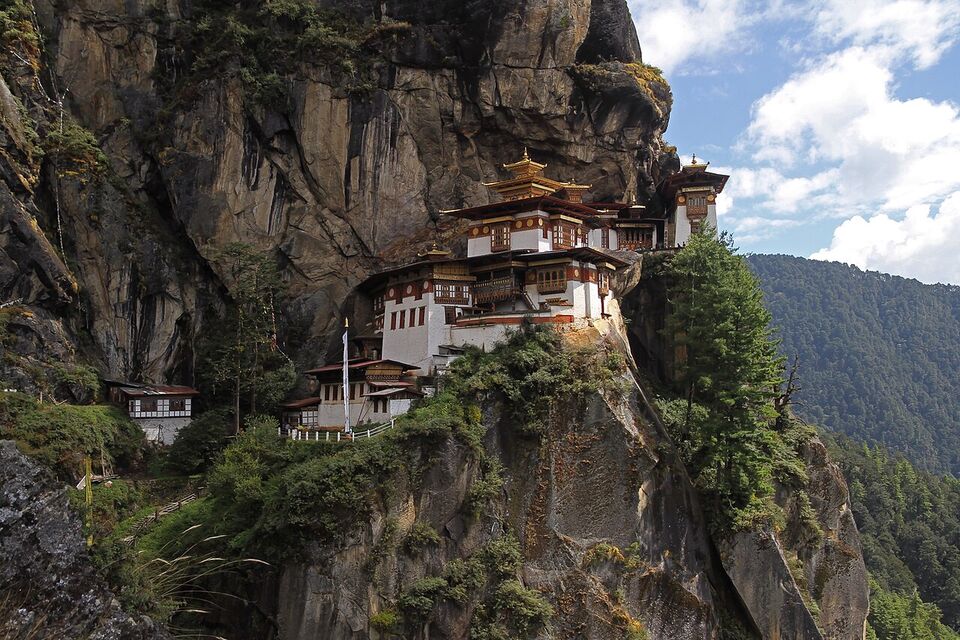
Bhutan is a Himalayan kingdom known for monasteries, dzongs (fortress-monasteries) and mountain scenery. Its tourism system is set by the government, and it is different from the other add-ons: visitors from most countries, including the United States, pay a daily Sustainable Development Fee, set by the government and changed from time to time, in addition to tour costs. We could not confirm the current fee from an official page, so check tourism.bt, the official tourism site, and ask a licensed Bhutanese tour operator for the up-to-date total.
Getting there
Most visitors fly into Paro. Flights have run from Delhi and Kolkata, and also from other Indian cities, on Bhutan's two airlines; check the airlines for current routes and schedules, since seats are limited and sell out in the peak seasons. A road route runs from the Indian border town of Jaigaon into Bhutan, and Jaigaon is on the government's list of regular-visa land points. As with Nepal, an e-Visa holder cannot return to India by land, so plan a flight back (for example to Kolkata or Bagdogra).
Does it work as an add-on?
Yes, but not on a whim. Book the tour, the fee and the flights early, because seats in spring and autumn go first. Four to seven days is typical. Plan the India part of the trip so that your return lands inside your visa's validity. For mountain regions closer to home, see the Himalayas guide. The east of India, including Kolkata, is a natural starting point; see Kolkata.
The Maldives
The Maldives is a chain of low coral islands in the Indian Ocean, mostly visited for resort stays, diving and snorkeling. It is a beach finish to an India trip rather than a cultural one.
Flights run to Malé from several Indian cities, including those in the south, and schedules change, so check the airlines. Entry rules for Americans are set by the Maldives and could not be confirmed from an official page here, so check the Maldives immigration site and the resort's instructions before you book. Most visits involve a transfer by speedboat or seaplane to the resort, which the resort arranges. The weather is generally best in the dry season, roughly December to April, and wetter in the middle of the year.
Save money
Resorts price in dollars and are the main cost. Check what is included (meals, transfers, taxes) before you compare. Because resort islands are far from shops, a few days is usually enough for a first visit, and a stay that is too long makes the add-on more expensive than the whole India trip.
Bangladesh, Myanmar and the land borders
Bangladesh and Myanmar both border India, but we do not suggest planning an India trip around them.
- Bangladesh. Americans have generally needed a visa; check the official Bangladesh site and the State Department's advisory before you go. India lists several land crossings with Bangladesh for regular-visa holders, but the status of any border post can change, and an e-Visa does not allow land entry into India. If you are interested, fly between Kolkata and Dhaka, and confirm that your return is by a listed airport.
- Myanmar. Check the State Department's advisory first. India lists land entry points on the Myanmar side, but we do not suggest counting on them, and they are close to restricted areas in the northeast that need permits.
- Pakistan. The only land crossing open to non-citizens on the Pakistan border is Attari-Wagah, according to the State Department advisory, and that advisory rates the India-Pakistan border area as Do Not Travel. We do not suggest planning to cross. The daily border ceremony at Wagah is a popular day trip from Amritsar; see Amritsar.
Whichever side trip you choose, check our safety page and the State Department's advisory for the country, and register your trip if you wish through the State Department's traveler program. Borders can close at short notice for security or political reasons. The safest rule is to book flights, not land crossings.
Dubai and Gulf stopovers
Many US-India itineraries connect through Gulf hubs such as Dubai, and a stopover is an easy way to break up a long flight. Entry rules for Americans, transit rules and visa-free periods are set by each Gulf country and change, so check the official immigration site of the country where you stop before you book. Allow enough time between flights, because a missed connection means a rebooking and possibly a visa question. For flight options into India, see flights.
Which pairings fit which season
- November to February: the north of India plus Nepal (Kathmandu and Pokhara, with cool days) or the south of India plus Sri Lanka's west and south coasts. The Maldives is in its dry season. See when to go.
- March to May: India's plains are hot, so favor the hills and neighbors with mountain scenery: Nepal and Bhutan, which are generally good in spring.
- June to September: the monsoon covers India, and Ladakh is open. Sri Lanka's east coast is generally drier then, and the Maldives is wetter.
- October and November: good for Nepal and Bhutan, as the skies clear after the rains. Book early.
Keep the order sensible: do the India leg first when you need a long visa window, and put the beach last. Avoid starting a side trip in the first two days after you arrive from the US, when jet lag is at its worst.
Common mistakes
- Crossing a land border and expecting to return by land on an e-Visa. It is not allowed. Fly back to a listed airport.
- Forgetting that the 30-day visa keeps running. The 30 days start at first arrival, so the whole trip must fit.
- Assuming visa rules are the same as India's. Each country has its own rules and fees, and they change.
- Booking Bhutan without the daily fee and a licensed operator arranged.
- Booking a tight connection on the way back. Leave a day of margin before an international flight home.
- Ignoring the State Department advisory for the neighbor you plan to visit.
- Planning a side trip that crosses into restricted areas without checking permits.
Before you book
- Passport valid for 6 months or more, with blank pages
- Your India e-Visa valid on the day you return, and a listed airport for re-entry
- The neighbor's visa or travel authorization checked on its official site
- Flights booked in both directions, with a buffer day before your flight home
- Travel insurance that covers the side trip, including medical evacuation
- A new e-Arrival card for your return, if required (submit within 72 hours before landing)
For long add-ons, also read long stays and use the trip builder to count days.
Add it to a route in the trip builder, or ask us to plan the hotels, trains and guides for you.