How long a first trip to India needs
Plan on 10 to 14 days for a first trip, and build it around the Golden Triangle (Delhi, Agra and Jaipur) plus one other region. That is enough time to see the big sights without spending most of the trip in a car or a train carriage. If you can only take a week, stay with the Golden Triangle or with one region, and do not add a second.
India is much larger than most Americans expect. It is about a third the size of the United States, but it holds more than a billion people, and the roads, rail lines and airports carry that load. A leg that looks short on the map can take most of a day. The Golden Triangle circuit alone is about 720 km (about 447 miles) by road, and each leg is roughly 4 to 6 hours of driving.
Distance is only part of it. Jet lag from the US is large (India Standard Time is 10 hours 30 minutes ahead of New York in winter and 9 hours 30 minutes ahead in US summer time, and the half-hour offset is normal), a nonstop flight typically takes 14 to 16 hours, and the first two days are rarely your sharpest. Airlines reroute around closed airspace, so check your own itinerary for the actual time. We suggest treating day one as a recovery day and putting nothing expensive or time-limited on it.
Different from home
India drives on the left, and traffic is dense, mixed and fast to adapt: cars, trucks, motorbikes, auto-rickshaws (tuk-tuks), cows and pedestrians share the same road. Most visitors do not rent a self-drive car. The CDC advises hiring a licensed driver, avoiding night driving and wearing a seatbelt in the back seat. See our getting around page for how to arrange a driver.
Why fewer places and more time works better
India rewards depth. A city such as Varanasi, Jaipur or Kochi takes a full day to understand and two days to enjoy, and the best moments (sunrise on the river, an evening in a bazaar, a long lunch in a family-run restaurant) do not fit a one-night stop. Visitors who add one more city usually lose a rest day, and the rest day is what keeps the trip enjoyable.
A few rules of thumb help:
- Two nights minimum in every base except Agra, where one night is enough if you also see Agra Fort and want a sunrise Taj Mahal visit.
- No more than one long transfer every two or three days. A long transfer means a flight or a train ride of more than about four hours, or a drive of five hours.
- One rest day per week. Pool time, a spa, a slow breakfast and a laundry service count as planning, not as wasted time.
- Keep the first and last days light. International flights often arrive in the middle of the night, and delays at either end are common.
Weather adds another reason to slow down. In the hot months (April to June) the best sightseeing hours are before 10 a.m. and after 4 p.m., and in the cold season fog can delay flights and trains in the north. Leave a day of slack near any flight home. Our when to go page covers the seasons in detail.
How to split your days
A balanced first trip has three parts: the Golden Triangle, one other region, and rest. The table shows how that looks at three trip lengths. These are starting points, not rules, and they assume you arrive in Delhi.
| Trip length | Golden Triangle | One other region | Rest and buffer |
|---|---|---|---|
| 8 to 9 days | 5 days (Delhi 2, Agra 1, Jaipur 2) | None, or a short Varanasi flight | 1 to 2 days |
| 12 to 14 days | 5 to 6 days | 5 to 6 days (Rajasthan, Kerala or Varanasi) | 2 days |
| 18 to 21 days | 6 days | 8 to 9 days, or two regions that are close together | 3 to 4 days |
The Golden Triangle is the usual starting point because the three cities are close, well served by trains and drivers, and cover the history most first-timers come for: the Mughal capital in Delhi, the Taj Mahal in Agra and the palaces and forts of Jaipur. We cover it in the Golden Triangle guide, with separate pages for Delhi, Agra and Jaipur.
Choosing the second region
The other region should contrast with the first. If the Triangle is about monuments and crowded bazaars, pick something slower or greener.
Rajasthan
Udaipur, Jodhpur and Jaisalmer extend the Jaipur leg into palaces, lakes and desert. It is the easiest add-on because it sits next to the Triangle. See Rajasthan.
Kerala
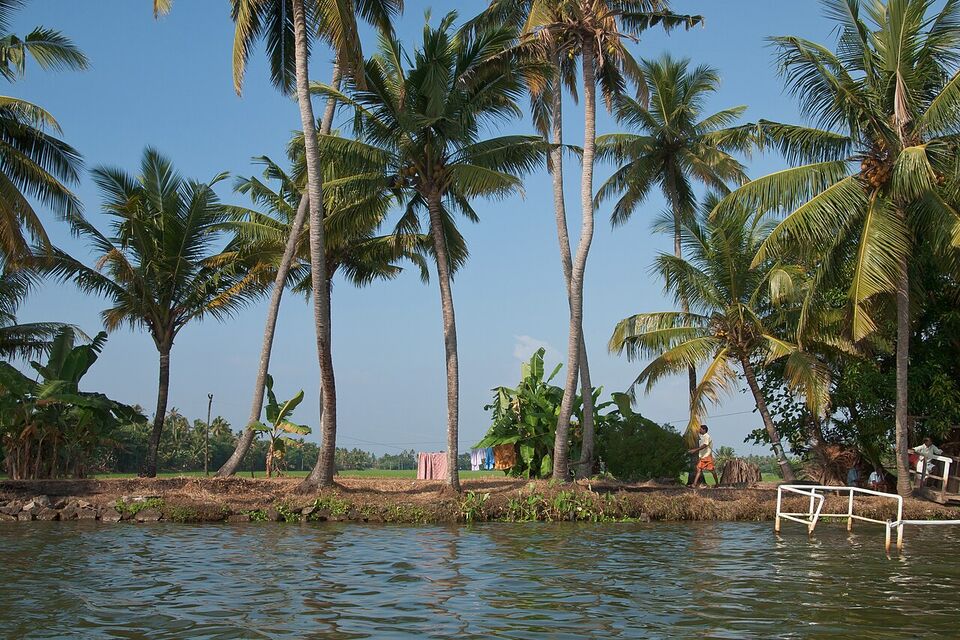
A quiet, green contrast to the north: Kochi, tea hills near Munnar and the backwaters near Alleppey. It is humid, so aim for the dry months. See Kerala.
Varanasi
An intense, rewarding add-on of two or three days, easy to reach by air or the Vande Bharat train (about 8 hours from New Delhi on the published timetable). See Varanasi.
The Himalayas
Rishikesh, Himachal Pradesh and Ladakh each have their own season, and high roads close in winter. Read the Himalayas guide and Rishikesh before you commit.
Two regions that look close on a map, such as Kerala and Rajasthan, are in fact separated by a long flight or a multi-day train ride. Our regions page shows how the main areas relate.
Choosing a base: a comparison
A base is the city where you sleep for two or more nights and take day trips from. The best bases are those that combine good transport, enough to do and a place to rest. This table compares the usual choices. Costs vary a lot by season and hotel type, so we give no nightly prices here; see where to stay and the budget page.
| Base | Good for | Day trips and add-ons | Watch for |
|---|---|---|---|
| Delhi | First arrival, history, food, easy flights and trains | Agra by fast train; Jaipur by road or train | Winter air quality; heavy traffic |
| Agra | The Taj Mahal and Agra Fort | Fatehpur Sikri; Sikandra | Touts and aggressive sales; the Taj is closed on Fridays |
| Jaipur | Palaces, forts and shopping | Amber (Amer) Fort; Pushkar; Ranthambore | Midday heat from April; crowded bazaars |
| Udaipur | Lakes and a slower pace | Hill forts and temples nearby | Check flight and train routes before you commit |
| Varanasi | The ghats, boat rides and Ganga Aarti | Sarnath | Narrow lanes; intense crowds; fog in winter |
| Kochi | Kerala gateway, old port and food | Backwaters near Alleppey; Munnar | Humidity; heavy rain in the monsoon |
| Mumbai (Bombay) | Big-city India, food and the film industry | Elephanta Caves (closed Mondays) | Long distances inside the city; monsoon flooding |
| Goa | Beaches and a relaxed finish | Old Goa churches | Beach season is roughly November to February; many places close in the rains |
| Rishikesh | Yoga and the Ganges foothills | Haridwar; rafting in season | It is vegetarian and alcohol-free; check road conditions |
Insider tip
Fly into Delhi and out of Mumbai (or the reverse) to avoid backtracking. An open-jaw ticket often costs about the same as a return and saves a full travel day. Check the airport on the e-Visa list before you buy (see entry rules); Delhi and Mumbai are both on it.
Sample itineraries
These plans are examples. Times are based on typical journeys and published timetables, so check current schedules with the operator before you book. Our trip builder can help you adjust the length.
A first trip: 12 days, Golden Triangle plus Rajasthan or Varanasi
- Day 1
Arrive in Delhi
Transfer to your hotel, eat something simple and sleep. If you arrive in the morning, keep the afternoon free. The Delhi Airport Express train runs 22.7 km to New Delhi station in about 16 minutes, every 10 minutes, a reliable alternative to road traffic.
- Day 2
Old and New Delhi
Start in Old Delhi (the Red Fort, Jama Masjid and the lanes of Chandni Chowk) and then drive through the tree-lined avenues of New Delhi to Humayun's Tomb. See Delhi sights.
- Day 3
Delhi to Agra
Take a fast morning train or a driver along the Yamuna Expressway (Agra is about 210 km from New Delhi). Visit Agra Fort in the afternoon, and rest before an early start.
- Day 4
The Taj Mahal at sunrise
The Taj opens 30 minutes before sunrise and is closed on Fridays. After a late breakfast, go to Fatehpur Sikri on the road to Jaipur.
- Day 5
Jaipur
Reach Jaipur by afternoon. Walk the old city in the evening when it is cooler.
- Day 6
Amber (Amer) Fort and the City Palace
Go to the fort early. Spend the afternoon on the City Palace and Jantar Mantar, and shop in the bazaars.
- Day 7
Fly or drive to your second region
Choose between Udaipur (lakes and palaces) or a flight to Varanasi, or a flight to Kochi for Kerala. This is your long transfer day, so schedule nothing else.
- Days 8 to 10
Your second region
In Varanasi, take a sunrise boat on the Ganges and watch the evening Ganga Aarti at Dashashwamedh Ghat. In Kerala, take a backwater cruise and visit the tea hills. In Udaipur, take a lake boat and walk the old town.
- Day 11
Rest and shopping
A free day for a spa, laundry, souvenirs and a good dinner. See shopping and bringing things home.
- Day 12
Fly home
Allow extra time at the airport. Fly through Delhi or Mumbai for the most US connections.
A repeat trip: 14 days, new places and slower days
If you have been before, skip the Triangle and aim for a different India. This plan connects two regions that share a rail line or a short flight.
- Days 1 to 3
Mumbai (Bombay)
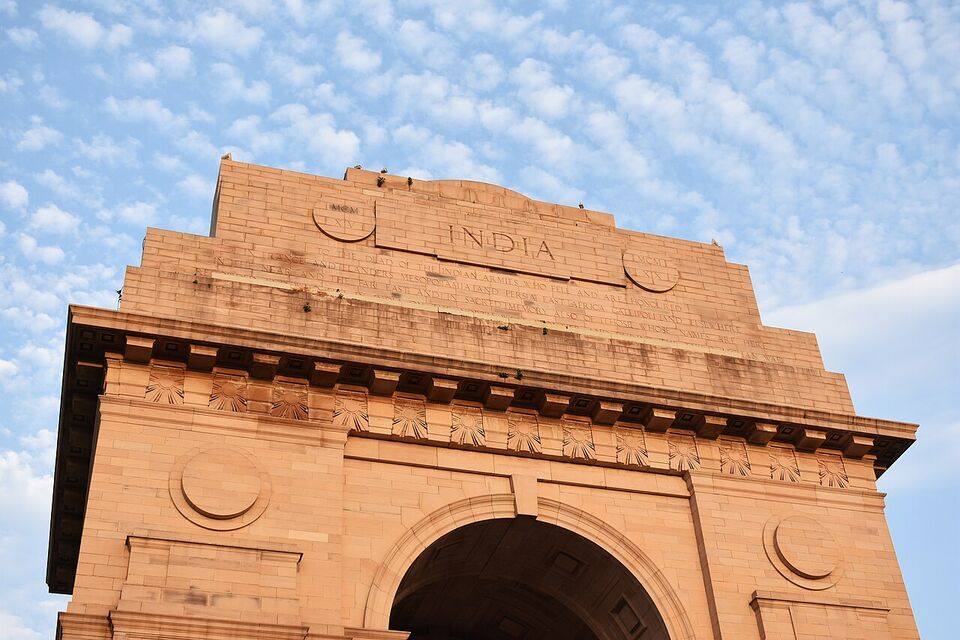
See the Gateway of India, take the ferry to Elephanta Caves (closed Mondays) and eat your way through the city. See Mumbai.
- Days 4 to 6
Goa, in season
Go by train, which takes about 7 hours 45 minutes on the Mumbai to Madgaon timetable, or by a short flight. Goa works best from roughly November to February, since it is wet and quiet in the monsoon. See Goa.
- Days 7 to 10
Kerala
Fly to Kochi. Split the time among Fort Kochi, the hills and the backwaters. See Kerala.
- Days 11 to 13
Tamil Nadu or Karnataka
Add temples and architecture in Tamil Nadu, or Hampi and Mysuru (Mysore) in Karnataka. See Tamil Nadu and Karnataka.
- Day 14
Fly home from Chennai (Madras), Bengaluru (Bangalore) or Mumbai
Check that your departure airport has the US connection you want.
A booking timeline
Some things sell out or have a fixed window. Others can wait until you land. This timeline puts the hard ones first.
| When | What to book | Notes |
|---|---|---|
| 4 to 6 months out | Flights; peak-season hotels; tiger safaris if you are set on a date | December and January are the busiest months in the north. Safari booking windows differ by park; check the park's official booking site. |
| 2 to 3 months out | Passport check; e-Visa application window opens (up to 120 days ahead) | Your passport must be valid for 6 months at application, with two blank pages. |
| 60 days out | Reserved train tickets | General reserved tickets open up to 60 days ahead. Foreign visitors may be able to book further ahead; check irctc.co.in. |
| 4 to 6 weeks out | e-Visa (apply early; the official minimum is 4 days) | Processing time is not published, so allow plenty of margin. |
| 2 to 4 weeks out | Internal flights; drivers; Taj tickets online | Taj tickets are available through the ASI portal at asi.payumoney.com. |
| Within 72 hours of arrival | e-Arrival card | Submit it online; check your airline's instructions. |
The e-Visa
Americans need a visa. The e-Visa is the simplest route for tourists, and it must be applied for only on the Indian government's official portal, indianvisaonline.gov.in. Look-alike agent sites charge extra for the same form, so type the address yourself rather than clicking an advertisement. Our entry page gives the full steps, fees and airports.
Watch out
The Government of India charges no emergency, express or extra "facilitation" fee, and has not authorized agents to charge one. If a site asks for much more than the fee shown on the official portal, you are probably on a look-alike site.
Long-distance trains
Reserved train tickets can be booked up to 60 days ahead for the general public. Popular trains between big cities fill quickly in the first days after the window opens, so set a reminder for the day you cross 60 days before travel. A "Tatkal" quota opens one day before departure at higher fares, and a confirmed Tatkal ticket is non-refundable. Whether foreign visitors can register on IRCTC with a passport and a foreign card, and how far ahead foreigners can book, is a point to check on irctc.co.in before you plan around it. A licensed local agent or a hotel can also book for you. Read our trains guide before you choose a class.
Tiger safaris
Safari permits are limited and go first. Corbett (Uttarakhand) takes bookings through corbettonline.uk.gov.in, and Bandhavgarh (Madhya Pradesh) through forest.mponline.gov.in. Ranthambore (Rajasthan) and other parks have their own official portals, and booking windows, prices and monsoon closure dates change, so check each park's official page. See the wildlife guide. Never rely on a tiger sighting: even with a permit, sightings are never guaranteed.
Trains, flights or a driver
For most itineraries you will use all three. A short guide:
- Fast trains suit corridors with frequent service, such as Delhi to Agra (the Gatimaan Express takes about 1 hour 40 minutes, but does not run on Fridays; confirm on IRCTC) or Delhi to Varanasi (the Vande Bharat takes about 8 hours). Book air-conditioned classes and read the trains page.
- Flights save a day on long legs, such as Delhi to Kochi or Mumbai to Delhi. Domestic carriers include Air India, Air India Express, Akasa Air, IndiGo and SpiceJet. We give no fares because they change daily. See flights.
- A car with a driver suits multi-stop days, such as Agra to Jaipur with a stop at Fatehpur Sikri. Agree the price and the route in writing before the first day. Our getting around page covers this.
Cities have their own options. The Delhi Metro runs roughly 5 a.m. to midnight, and the first coach of every train is reserved for women. A tourist card costs ₹200 (about $2) for one day or ₹500 (about $5) for three days, including a refundable ₹50 (about $0.50) deposit.
Money and phones in brief
We give the details on separate pages, but a few points affect planning.
The rate we use on this site is US$1 = ₹94. India still runs on cash in many places: rickshaws, small shops, temples and tips. Cards work in hotels and larger restaurants. Most UPI apps (the instant payment system Indians use) are not for foreign visitors, so plan on cards and cash. ATM limits and fees vary by bank, so ask your bank before you go. Carrying about ₹25,000 (about $266) in rupees in or out of the country is the amount we have seen quoted; check the current rule with Indian customs before you fly. Read the money page for more.
For phones, check your carrier's international plan. Verizon, for example, lists TravelPass at $12 a day (charged only on days you use it) and a $100 monthly international plan, but you should confirm that India is on your carrier's country list. Airport eSIM offers exist at Delhi; read the terms. India uses 230 V, 50 Hz power with Type C, D and M sockets, so bring a plug adapter; most phone and laptop chargers are dual-voltage, but check the label. See staying connected.
Save money
Foreign visitors pay much higher ticket prices than Indians at many monuments. The Taj Mahal, for example, is ₹1,100 (about $12) for foreigners plus an optional ₹200 (about $2) for the main mausoleum, with a ₹50 (about $0.50) discount for online tickets. Buying online and skipping the optional extras you do not want are the main savings. Always check the price on the official page, because it can change.
Common planning mistakes
- Packing too much in. Every extra city costs a travel day. Drop one stop before you add one.
- Booking the e-Visa on a look-alike site. Use indianvisaonline.gov.in only.
- Landing at an airport that is not on the e-Visa list. Leh, Udaipur, Jodhpur, Dehradun and Srinagar are not on it, so fly into a listed airport first.
- Ignoring the season. The same itinerary is delightful in January and miserable in May. See when to go.
- Leaving trains and safaris late. The best ones sell out on the day the window opens.
- Planning the Taj Mahal for a Friday. It is closed that day.
- Skipping travel insurance. Get a policy that covers medical evacuation, and see a travel clinic at least a month before departure. Our health page covers vaccines.
- Not checking the safety advisory. The State Department's advisory for India is Level 2, "Exercise Increased Caution" (as shown by the US Embassy in November 2026), and it lists areas with a Do Not Travel advisory. Check travel.state.gov before you finalize the route and read our safety page.
Before you go: a checklist
- Passport valid for at least 6 months at application, with two blank pages
- e-Visa granted and printed
- e-Arrival card submitted within 72 hours before arrival (check airline instructions)
- Flights, key hotels and long-distance trains booked
- Travel insurance with medical evacuation
- Vaccines and malaria advice discussed with a doctor or travel clinic
- Phone plan, plug adapter and a small amount of rupees arranged
- Copies of your passport, visa and insurance stored separately from the originals
- Your embassy details saved: +1-202-501-4444 from abroad, or the US Embassy New Delhi at +91-11-2419-8000
Next, read the packing guide, check the FAQ and, if the dates are flexible, pick your month with when to go.
Add it to a route in the trip builder, or ask us to plan the hotels, trains and guides for you.