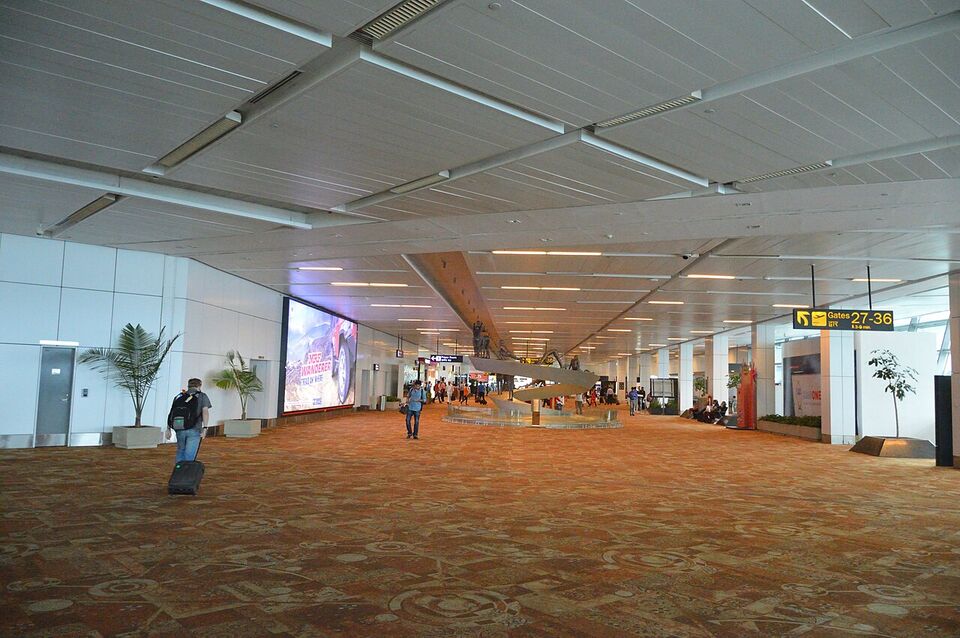
Do Americans need a visa for India?
Yes. US citizens need a visa to enter India, and most tourists get it as an e-Visa (the e-Tourist Visa), applied for online at the Government of India's official portal, indianvisaonline.gov.in/evisa. The visa arrives as an Electronic Travel Authorization (ETA) by email; you print it, carry it with your passport and show it at immigration, where the visa is stamped in your passport.
There is no visa on arrival for Americans. India's visa on arrival is offered only to nationals of Japan, South Korea and the United Arab Emirates, so do not plan to buy one at the airport. Airlines normally check for a valid visa before they let you board, so sort it out before you fly.
This page covers what a US passport holder needs: passport rules, the choice between the e-Visa and a regular visa, how to apply step by step, the airports you can use, the e-Arrival card, what to expect at immigration and customs, restricted-area permits, and what to know on the way home. Rules and fees change, so we send you to the official page for every figure that matters. For trip planning, see Plan Your Trip to India.
Watch out
The official e-Visa site is indianvisaonline.gov.in/evisa, and no other website is official. Dozens of look-alike sites copy its look, rank high in search results and charge a service fee for the same form. Type the address yourself or follow the link from boi.gov.in (the Bureau of Immigration). The Government of India states that it charges no emergency, express or extra fee for an e-Visa and has authorized no agent to do so.
Passport rules
Your passport must be valid for at least 6 months when you apply for the e-Visa, and it needs at least 2 blank pages. Check this before anything else: a passport that expires within six months, or one that is full of stamps, is the most common reason a trip stalls at the start.
- Blank pages. The immigration officer stamps your entry and exit. Make sure the pages are marked "Visas" or are otherwise empty, and not just the endorsement pages at the back.
- Each traveler needs an application. Children need their own e-Visa and a passport valid for at least six months from the date of arrival.
- Name and details must match. Enter your name, date of birth and passport number exactly as printed. A mismatch can cause trouble at check-in or immigration.
- New passport. The portal has a transfer service that moves an existing ETA from an old passport to a new one. Use it if you renew after your visa is granted.
- Return or onward ticket. The official rules ask for a return or onward ticket and enough money for your stay.
Two eligibility points matter for some Americans. Persons of Pakistani origin, including those with a parent or grandparent born in Pakistan, are not eligible for the e-Visa. And persons of Indian origin of any category need a visa or an Overseas Citizen of India (OCI) card, not just a US passport. If either applies to you, check the Bureau of Immigration site (boi.gov.in) or contact an Indian mission before you plan.
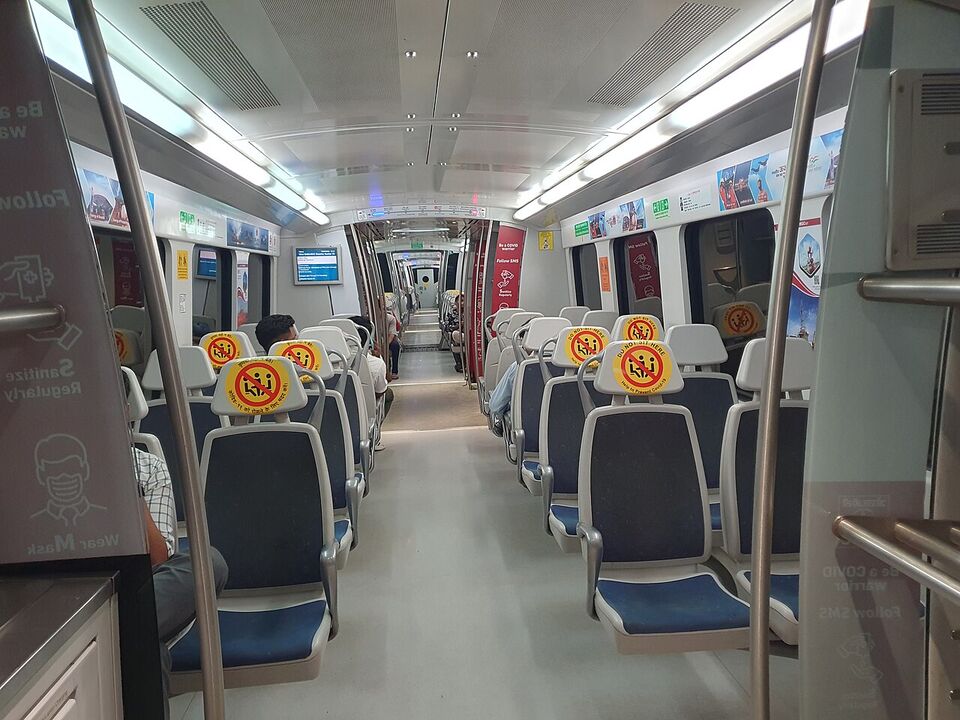
The e-Visa or a regular visa
For a holiday, a family visit, a short yoga or cooking course (up to six months, with no qualifying certificate) or short voluntary work (up to one month, unpaid), the e-Tourist Visa fits. For anything else, or for stays beyond what the e-Visa allows, you will need a regular visa through an Indian mission.
| e-Tourist Visa | Validity | Stay | Fee for US citizens |
|---|---|---|---|
| 30 days | 30 days from first arrival in India | 30 days, multiple entry, not extendable | US$25 (July to March); US$10 if applied in April to June |
| 1 year | 365 days from the date of grant | Up to 180 days per calendar year, multiple entry | US$40 |
| 5 years | 5 years from the date of grant | Up to 180 days per calendar year, multiple entry | US$80 |
We list these from the official fee schedule, but that schedule carries no date, and a card fee of about 3% (the official FAQ says 3% for cards and 4% for PayPal) is added at checkout. Check the fee on the official page before you pay. The fee is non-refundable even if the visa is refused or you cancel your trip.
Which one to choose
For a single trip of two to four weeks, the 30-day visa is fine, as long as your first arrival date falls inside the visa's validity. Remember that its 30 days start on your first arrival, not on the date of grant. If you expect to return to India within a year or two (or add side trips to Nepal, Sri Lanka or Bhutan, as our beyond India page describes), the 1-year or 5-year visa costs less per trip. They allow multiple entries, but your total stay in any calendar year may not exceed 180 days.
Save money
The 30-day fee drops to US$10 for applications made in April, May and June, according to the official fee table. If your travel dates are flexible and you are going in a cooler month, that is a small saving, but not worth traveling in the heat. For repeat visitors, the 5-year visa at US$80 is the cheapest per trip.
When you need a regular visa
Choose a regular visa for stays beyond what the e-Visa covers, for work, long study, or any purpose not on the e-Visa list. You apply online on the portal's regular visa section, print and sign the form, and submit it with your documents and passport to an Indian Visa Application Center or an Indian mission, on an appointment date. The process is slower and costs more, so start early. Regular-visa holders may also use many land border crossings. For long visits, see long stays.
How to apply for the e-Visa, step by step
The form takes some time, so set aside a calm half hour with your passport open next to you. Our steps follow the process the portal describes: apply online, upload your photo and passport page, pay the fee, receive the ETA by email, and fly.
- Open the official site. Type indianvisaonline.gov.in/evisa into your browser yourself. Do not click an advertisement or an unfamiliar search result.
- Start the e-Visa application and select the e-Tourist Visa. Pick the duration (30 days, 1 year or 5 years) and fill in the form with your details exactly as in your passport.
- Fill in the details. You will give your address, the planned date of arrival, your port of arrival and previous-visa information (write "NA" if not applicable). Pick an arrival airport from the list in the next section.
- Upload your photo and passport page. See the next section for what to prepare.
- Pay the fee online by credit or debit card or by a payment wallet. If a payment fails, the official advice is to clear your browser history and cookies and try again, or switch browsers. After about three failed tries, you may need to submit the application again.
- Save the application ID. You will need it to check the status or to continue a partly filled form.
- Wait for the ETA. The portal has a "Check your Visa Status" option. Fee-status updates can take up to 2 hours. The status should read "Granted".
- Print the ETA and carry it. Present it at immigration with your passport. The visa is stamped there.
The official site says the e-Visa service is entirely online and that no intermediary is needed. A helpdesk is listed on the portal if you get stuck. If you have already paid the official fee, the airport does not charge anything else for the e-Visa, and the official FAQ warns travelers to beware of anyone asking for extra payment.
Look-alike sites and agents
Search results for "India e-Visa" often show sites that look official but are not. They may charge the government fee plus a "service" or "express" charge. Some add extras you did not ask for, and any copy site that is not the government's is a risk for your passport data and card details.
How to protect yourself:
- Check the address bar: the domain must end in indianvisaonline.gov.in. Sites with a different domain, a hyphen or a ".com" are not the government's.
- Treat "express", "priority" or "emergency" fees as a red flag. The Government of India states it makes no provision for such fees.
- Use the link on the Bureau of Immigration site (boi.gov.in) if you are unsure.
- If you have already paid a look-alike site, keep your receipts, tell your card issuer, and check with the portal's helpdesk whether your application is real before you buy another.
Some licensed travel agents offer to file the form for a fee. That is legal for a person who prefers help, but it is never required, and you give up control of your personal data. We suggest filing it yourself.
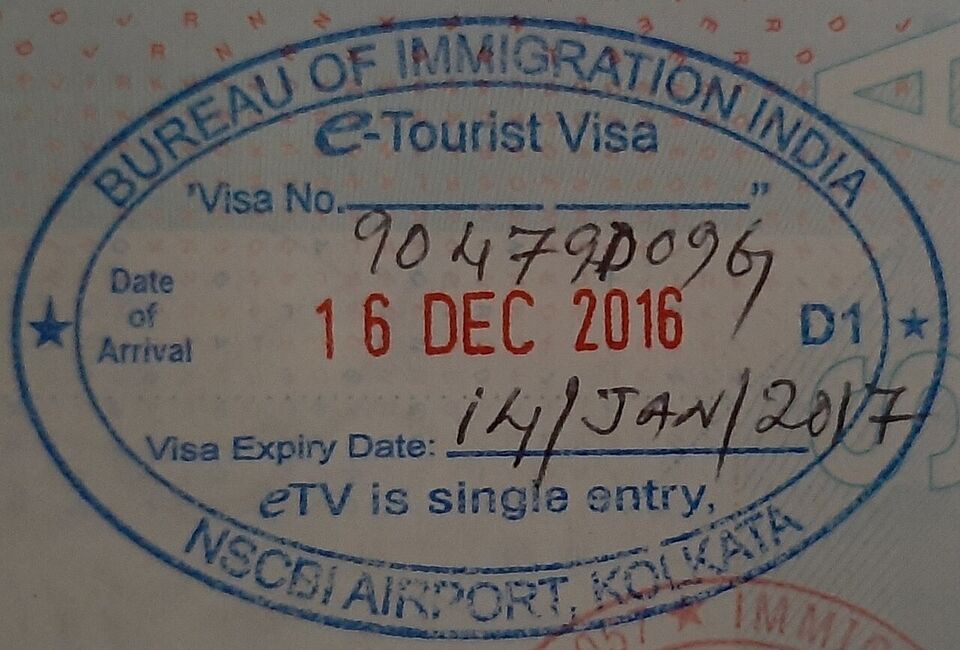
Photo and document upload
You must upload a recent front-facing photograph with a white background and a scan of your passport photo page (the page with your name, date of birth, nationality and expiry date). The portal can reject an application if the photo or scan is unclear or does not match its specification, so read the portal's current instructions on file size, format and dimensions before you start.
- Photo taken against a plain white background, facing the camera, with no heavy shadow or glare
- Scan of the passport photo page, flat, in color, with all four corners and the bottom lines visible
- File sizes within the portal's current limits (check on the form page)
- A return or onward ticket and your hotel or first night's address ready
Take the photo yourself against a white wall, in daylight. A smartphone is enough, and a photo shop can help if it is rejected. Do not use filters.
When to apply
The official rule is that you may apply at least 4 days before arrival and up to 120 days ahead. The same wording covers the 30-day, 1-year and 5-year tourist visas. The fee must also be paid at least 4 days before travel. The portal gives an example: apply on September 1 and you may select an arrival date from September 5 to the following January 2.
No official figure is given for how long a decision takes. We suggest applying 3 to 4 weeks before departure, which leaves time to fix a problem. Do not apply more than a few months ahead, since the 30-day visa is valid for 30 days from your first arrival, and the arrival date you choose must fall within the visa's validity.
Book your flights first if you can, but read the cancellation terms. The visa fee is non-refundable, so apply once your plans are firm. Our planning page shows where the visa sits in the booking timeline.
Where you can arrive: airports and ports
e-Visa holders can enter India only at designated airports or seaports, not by land. The official list shows 37 airports (an FAQ answer on the same site gives a shorter figure of 33, so we use the official entry-point list). Among them are:
- Delhi, Mumbai (and Navi Mumbai), Chennai, Kolkata and Bengaluru
- Hyderabad, Thiruvananthapuram, Cochin (Kochi) and Goa (Dabolim and Mopa)
- Ahmedabad, Amritsar, Jaipur, Lucknow, Varanasi and Pune
- Bagdogra, Guwahati, Chandigarh and Port Blair (Andaman Islands)
Leh, Udaipur, Jodhpur, Dehradun and Srinagar are not on the e-Visa entry list, so fly first into a listed airport and then take a domestic flight on to these places. Major cruise ports such as Mumbai, Cochin, Goa and Chennai accept e-Visa arrivals by sea, but the official pages give different counts of seaports, so confirm yours on the portal.
You may depart through any Indian immigration checkpoint, not only the one where you arrived. That includes land crossings, but you cannot re-enter India by land on an e-Visa. See Nepal, Sri Lanka and beyond for what this means for side trips. Our flights page covers getting there.
Insider tip
Pick your arrival airport on the form with care. If your plans change and you land at a different listed airport than the one on your application, ask a visa expert or the portal's helpdesk first. We found no official statement on whether a different airport is allowed, so the safest course is to use the airport you declared.
The e-Arrival card
Foreigners can complete an online e-Arrival card within 72 hours before arriving in India. You can do it at boi.gov.in, at indianvisaonline.gov.in, or in the official "Indian Visa Su-Swagatam" mobile app. The government notes this is for arrival information, not a visa. The Bureau of Immigration page announcing it was updated in November 2026.
We could not confirm from the official pages whether the card is mandatory for all travelers. Our advice is to submit it anyway, which takes a few minutes, and to read your airline's instructions, since the airline may check for it at check-in. Keep a screenshot of the confirmation on your phone. The Delhi airport site also promotes an e-Arrival card article.
Do not mix up the e-Arrival card with the e-Visa. The e-Visa is the permission to enter. The e-Arrival card is a short arrival form. Neither replaces your passport.
Immigration and customs at Delhi and Mumbai
Most Americans arrive at Delhi's Indira Gandhi International Airport or Mumbai's Chhatrapati Shivaji Maharaj International Airport. Navi Mumbai International Airport opened in December 2025 and is also on the e-Visa list, but most US connections still land at the older airports, so check your ticket. Delhi has Terminals 1, 2 and 3, and international flights usually use Terminal 3; confirm on your itinerary.
At immigration
Go to the foreigner queue and have ready your passport, your printed ETA, your arrival card confirmation and the address of your first hotel. The officer will check your documents, take fingerprints and a photograph (biometrics are taken on arrival), and stamp your visa. Queues can be long when several international flights land together, especially at night, so keep your onward plans loose on the first day.
At customs
Be ready to declare anything above your allowance. We could not confirm India's current duty-free allowances from an official page, so we give no figures: check Indian customs (cbic.gov.in) before you fly. Declare large amounts of cash. Carrying about ₹25,000 (about $266) in rupees in or out is the limit we have seen quoted, but we could not verify it officially, so check the rule before you go. If you carry a satellite phone, drone or professional camera gear, declare it if asked and check the rules first; drones are banned at the Taj Mahal, and other sites may have their own limits.
If you carry prescription medicine, keep it in its original packaging with a copy of the prescription. See our health page and packing guide.
Getting out of the airport
At Delhi, the Airport Express line reaches New Delhi station in about 16 minutes, with trains every 10 minutes. The Delhi Metro network runs roughly 5 a.m. to midnight. A Golden Line link to Aerocity and Terminal 1 is planned for December 2026, but that date is not guaranteed. Otherwise use the prepaid taxi counter or a ride app, and agree the price first. For your first night, our Delhi guide and scams page help.
Restricted and protected areas
The e-Visa is not valid for protected, restricted or cantonment areas without prior permission. Some areas need an extra permit for foreigners. These include parts of the northeast (Arunachal Pradesh and Sikkim), parts of Ladakh, the Andaman and Nicobar Islands, and Lakshadweep. Some of the rules are relaxed from time to time, and they differ by area and by year.
We could not confirm current permit rules for Ladakh or the Andaman Islands from an official page, so we give no steps here. The practical advice is simple: before you book a trip to any of these places, check the Bureau of Immigration page on entry to restricted and protected areas (boi.gov.in), and ask a licensed tour operator in India to arrange the permits. Do not travel to the area without the permit in hand.
The State Department advisory is separate. It rates India at Level 2, "Exercise Increased Caution" (as shown by the US Embassy in November 2026), and lists areas where it says Do Not Travel: Jammu and Kashmir except Ladakh's eastern region and Leh, the India-Pakistan border area, parts of Central and East India with Maoist activity, and Manipur. Check travel.state.gov for the current text, and read our safety page. For mountain trips, see the Himalayas guide.
Land borders need care. The only land crossing open to non-citizens on the Pakistan border is Attari-Wagah. An e-Visa does not cover land entry, so check the rules before you try any crossing.
Customs and rules on the way home
US Customs and Border Protection (CBP) sets what you can bring back. The points travelers most often ask about:
- The duty-free exemption. Returning US residents get an $800 exemption, usable once every 31 days, after at least 48 hours abroad. Family members who live together can combine their exemptions on a joint declaration.
- Alcohol and tobacco. One liter of alcohol is duty-free if you are 21 or older, it is for personal use and it is legal in your arrival state. Tobacco within the exemption is limited to 200 cigarettes and 100 cigars.
- Food. Packaged spices, tea, coffee, honey, oils and condiments are generally admissible. Meat products and soup or bouillon mixes are not. Avoid bringing rice. Fruits and vegetables depend on their origin.
- Ivory and antiques. Ivory needs a US Fish and Wildlife Service permit, and products from endangered species are restricted. Antiquities may belong to India under its own law, so be careful with anything old.
- Ayurvedic medicines, herbs and plants. We could not find a specific rule. Check cbp.gov and the FDA before you buy.
Declare everything you are unsure about. The penalties for a false declaration are worse than the duty. For shopping, see shopping and bringing things home.
An arrivals checklist
- Passport with 6 months' validity at application and 2 blank pages
- Printed ETA, plus a copy on your phone
- e-Arrival card submitted within 72 hours before you land (and airline rules checked)
- Return or onward ticket and your first hotel's address
- A little cash in rupees for the airport and the first ride
- Printed or saved copies of your insurance, hotel booking and flight details
- US Embassy New Delhi number saved: +91-11-2419-8000 (open Monday to Friday, 8:30 a.m. to 5 p.m.); from abroad, the US State Department's 24-hour line is +1-202-501-4444
Mistakes to avoid
- Using a look-alike website. Go only to indianvisaonline.gov.in/evisa.
- Applying too late. The official minimum is 4 days, but a mismatch or rejection leaves no room to fix it.
- Assuming the 30 days start at grant. They start at your first arrival, and that arrival must fall within the ETA's validity.
- Arriving at an unlisted airport. Leh, Udaipur, Jodhpur, Dehradun and Srinagar are not on the e-Visa list.
- Trying to re-enter by land. An e-Visa does not allow it.
- Assuming a refund. The fee is non-refundable.
- Forgetting protected-area permits for the northeast, Ladakh or the Andamans.
Next, read Plan Your Trip to India, then money, health and the FAQ.
Add it to a route in the trip builder, or ask us to plan the hotels, trains and guides for you.