Overview
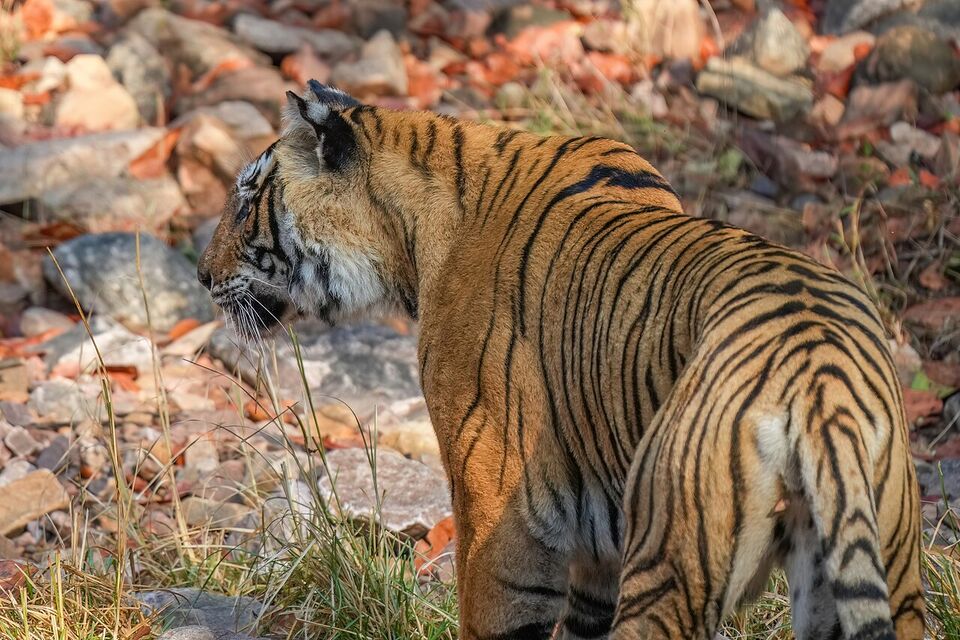
India is one of the few countries where you can see wild tigers in a national park, and also rhinos, elephants and lions, from an open vehicle with a trained guide. The experience is simple in outline: you book a permit and a seat on a jeep, you enter the forest at dawn or in the afternoon for about three hours, and you look. What is not simple is the planning, because parks have zones, quotas, seasons and closures, and the best slots sell out well ahead.
This page explains which parks matter, when to go, how booking works, how to choose a vehicle, how to set expectations, and how to behave. It gives no prices, because permit and vehicle fees change and vary by park and by whether you are a foreign visitor; check each park's official portal. For the wider context, see India's destinations for the geography, and India by interest for how wildlife fits with other interests.
Most visitors combine one or two parks with a cultural trip. Ranthambore is the easy add-on to the Golden Triangle and Jaipur; the central Indian parks need a flight and a drive; Kaziranga is in the northeast, and Gir is in the west. Plan wildlife as a block of its own, not as a day trip.
The parks that matter
India has many tiger reserves. These seven are the ones most first-time wildlife visitors consider, for different reasons.
Ranthambore (Rajasthan)
A dry forest of lakes and a ruined fort. The park is popular with photographers, and the lakes and ruins make for a dramatic setting. It is the easiest park to combine with the Golden Triangle and Rajasthan.
Bandhavgarh (Madhya Pradesh)
A rugged reserve with a hilltop fort. Its main safari zones are Tala, Magdhi and Khitauli, and it has a long reputation for tiger sightings. Bookings run through the Madhya Pradesh forest portal.
Kanha (Madhya Pradesh)
A large reserve of grassland and forest, famous for the barasingha (hard-ground swamp deer), alongside tigers, leopards, sloth bears and gaur. A quieter, more spacious experience than Ranthambore.
Jim Corbett (Uttarakhand)
Founded in 1936 and the oldest national park in India, with river valleys, hills and a strong birdlife. It has both core and buffer zones, and Ramnagar is the nearest town.
Kaziranga (Assam)
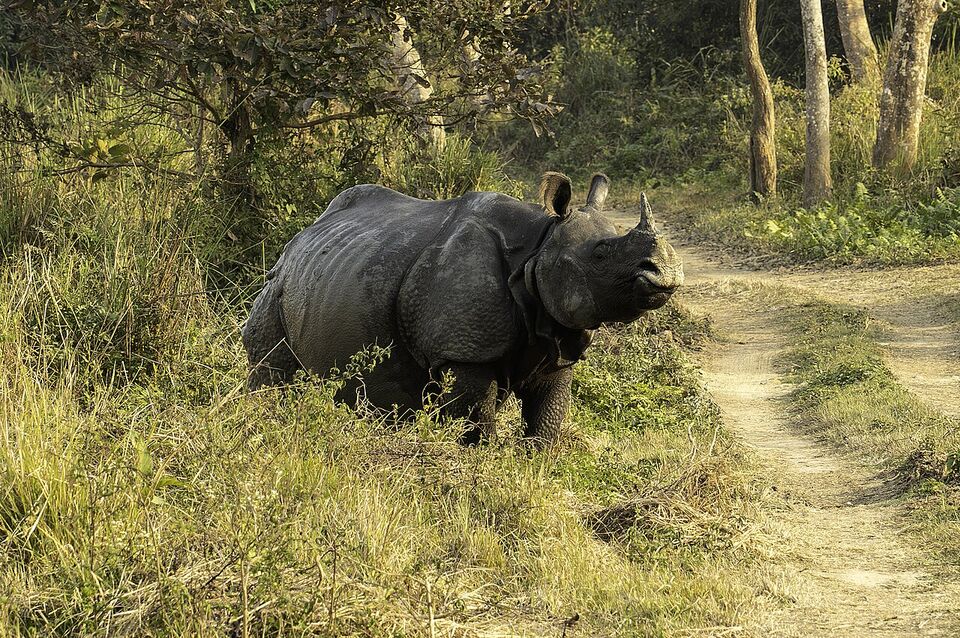
A UNESCO World Heritage Site of flooded grasslands that holds the Indian one-horned rhinoceros, wild buffalo, swamp deer and elephants, as well as tigers. Rhinos are the draw, not tigers.
Periyar (Kerala)
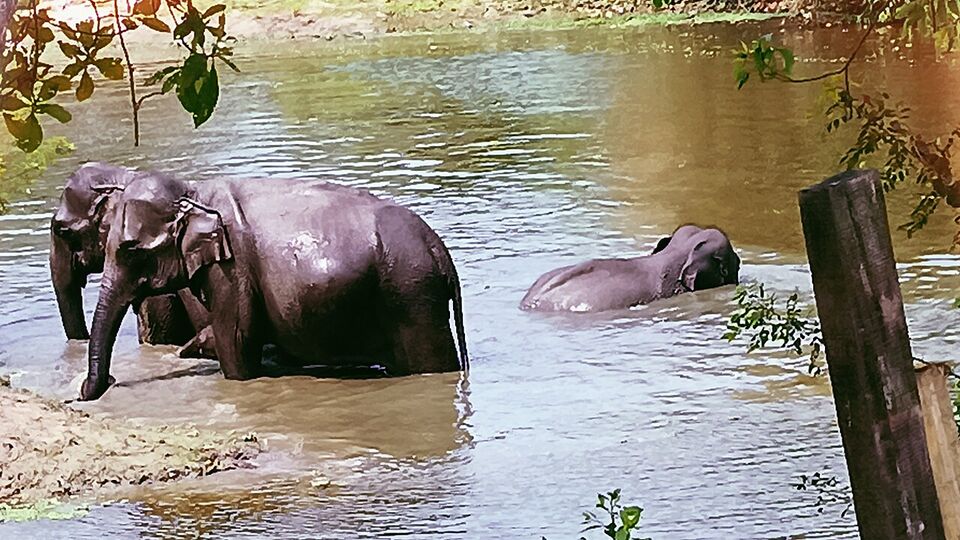
A forest reserve around a lake in the Western Ghats, known for elephants and boat trips. Tigers are rarely seen here, so go for the landscape and the elephants.
Gir (Gujarat)
The last wild home of the Asiatic lion. It is the place to see lions rather than tigers. Gujarat is a dry state, with special rules for alcohol that foreigners can apply to use.
Comparison by park and species
| Park | State | Main draw | Other wildlife | Pairs well with |
|---|---|---|---|---|
| Ranthambore | Rajasthan | Tigers, fort ruins | Leopard, sloth bear, crocodile, many birds | Jaipur, Udaipur, Jodhpur and Jaisalmer |
| Bandhavgarh | Madhya Pradesh | Tigers | Leopard, dhole, gaur, deer | A central India circuit |
| Kanha | Madhya Pradesh | Tigers, barasingha | Leopard, dhole, sloth bear, gaur | A central India circuit |
| Jim Corbett | Uttarakhand | Tigers, elephants, birds | Leopard, many birds | Delhi, Rishikesh and Haridwar |
| Kaziranga | Assam | One-horned rhinoceros | Elephants, wild buffalo, swamp deer, tigers | A northeast trip (check permits) |
| Periyar | Kerala | Elephants, lake setting | Birds, deer, a few big cats | Kerala |
| Gir | Gujarat | Asiatic lions | Leopards, deer, crocodiles | A western India loop |
Insider tip
If seeing a tiger matters most, choose a park, not a country tour. Decide on a park, book three safaris there, and add a second park only if you have the days. Spreading one or two safaris across several parks lowers your odds.
When to go: seasons and monsoon closures
The dry season, roughly November to April, is the main safari window. The forest thins out, animals concentrate near water, and the weather is more comfortable than in the pre-monsoon heat. The cold months, December and January, have chilly early mornings in open vehicles, so dress in layers. April and May are hot, though some visitors go then because animals gather at the few remaining waterholes; if you do, expect midday temperatures that make the afternoon drives tiring.
In the monsoon, from June to September, most tiger reserves close their core zones for the rains, and roads become impassable. The southwest monsoon normally reaches the southwest coast in early June and covers the country by mid-July. Kaziranga floods in the monsoon: in the peak months a large share of the park goes underwater for days at a time, and the animals move to higher ground. Gir and the central Indian parks also close for part of the rains, and the date varies each year.
We could not confirm the official closure dates for each park in 2026 and 2027. Check each park's own portal or forest department notice before you plan, and do not assume a park will reopen on a fixed day. Also check for short closures: some parks close on a set day of the week or for local reasons, and the rule differs by park.
Watch out
Closure dates and zone rules change from year to year. A park that was open on a given date last year may not be open on the same dates this season. Confirm with the official portal and your lodge before you pay for non-refundable flights or rooms.
How to book permits and zones
Parks are divided into zones, and each zone has a daily quota of vehicles. You book a permit for a specific zone, date and time slot (morning or afternoon). A permit is tied to one vehicle with a guide, and foreign visitors usually book with passport details. Fees differ for foreign and Indian visitors, and also for jeeps and canters; we give no figures because they change.
Official portals
Each state runs its own forest department booking system. Jim Corbett uses Uttarakhand's official booking site, and Bandhavgarh and Kanha take bookings through Madhya Pradesh's forest portal. Ranthambore, Kaziranga, Periyar and Gir each have their own state forest department or tourism booking page; we could not confirm the exact current addresses, so start from the park's official page or the state tourism site and avoid look-alike sites.
We could not confirm the date on which each booking window opens, and it is different for each park. Check the portal, and set a reminder for the opening day. Popular zones in the cold season sell out quickly.
Different from home
In the US, you can usually buy a park ticket on arrival. In India's tiger reserves, you cannot walk in: the quota is fixed in advance and a permit is tied to a named person and a zone. Booking late means few or no options.
Lodges and agents
Many visitors book a lodge near the park, and the lodge handles the permit and the vehicle, sometimes for a fee. This is convenient and often the only way to get a seat late, but check what is included, and confirm that the permit is a real one. Never buy a permit from a street tout or an unlicensed agent. Our general advice on where to stay applies here: read the cancellation terms before you pay.
Jeep or canter
A jeep is an open four-wheel-drive vehicle with room for a small group, with a driver and a guide. A canter is a larger open truck with many seats, shared with strangers. Jeeps are quieter, can pick a position with fewer vehicles, and give everyone a clear view. Canters are cheaper per person but are louder, and a seat at the back may mean a worse view.
Not every park offers both, and some assign zones by vehicle type. Where you can choose, a jeep is better for photography and for small groups. If you travel alone, a canter or a shared jeep seat is an economical way to join a safari. Ask your lodge how many seats are in the vehicle and who you will share it with.
Setting expectations
A safari is not a zoo visit. A tiger may appear within minutes, or not at all, and the forest can be silent for hours. Trackers and guides read alarm calls from deer and monkeys, and the vehicle often waits in one spot for a long time. This is normal.
- Plan at least three safaris in a park. A single drive depends heavily on luck.
- Do not demand guarantees from a lodge. Honest operators say that sightings vary.
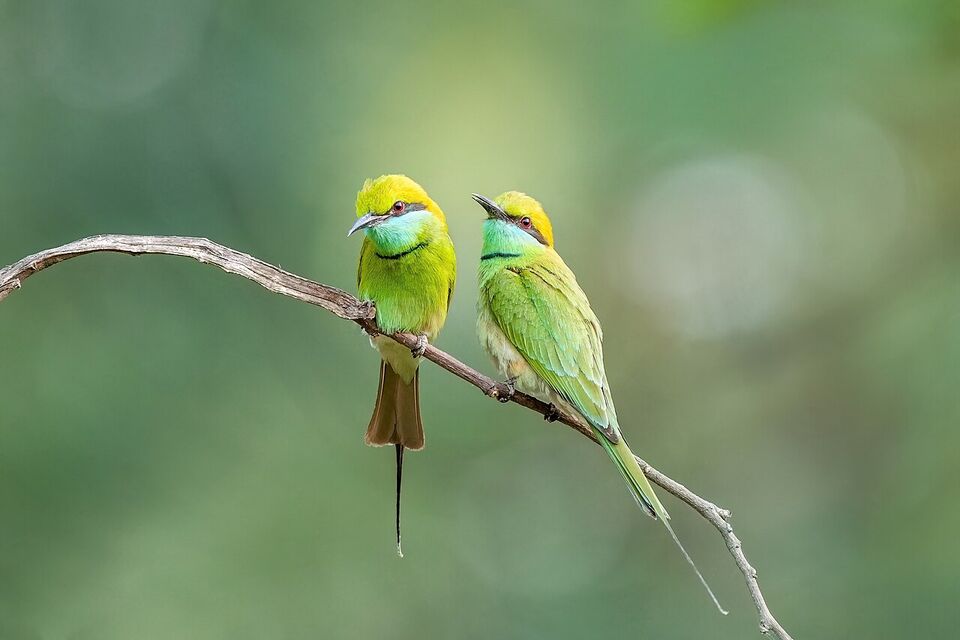
- Enjoy the rest: deer, langurs, peacocks, owls, eagles and the forest itself. Ranthambore alone has recorded more than 270 bird species.
- Bring binoculars; a camera with a long lens helps but is not necessary.
Tigers are more likely to be seen in the dry months, and sightings vary by zone and year. If your heart is set on one animal, tell your guide and ask which zone is best that week, but treat what they say as a probability, not a promise.
Ethics and rules
Responsible viewing protects the animals and your safety. Follow your guide, and follow the park rules, which are posted at the gate.
- Do not feed or call animals. Do not toss food, and do not make noise to attract attention.
- Do not chase. Vehicles stay on the tracks and keep their distance. If a driver tries to crowd an animal, ask them to back away.
- Stay inside the vehicle unless the guide says it is safe at a marked place.
- Keep quiet and keep phones on silent. Avoid flash.
- Leave no trace. Carry out your waste and avoid bringing plastic in.
- Drones are generally prohibited in national parks; leave yours at home.
Choosing a responsible lodge and guide matters. Ask how many vehicles share a sighting, whether the guide works for the park or the lodge, and what the lodge does for conservation and for local communities. A guide who keeps a respectful distance is a good sign, even if a closer view would give you a better photo.
How many safaris to book
We suggest three to five safaris in one park, over two or three nights. That gives you morning and afternoon drives, a rest period in the hot middle of the day, and some margin for bad weather or a quiet day. If you have only two days, book four drives in one park instead of two in each of two parks.
Think about the whole trip. A park far from other destinations costs time in transfers, so balance wildlife with cities and temples. A mix of a safari block and culture is the usual pattern, and families has advice on pacing for children.
Health and safety
Parks are often in rural, forested areas where emergency care is limited. The CDC says that malaria transmission is reported throughout India, with some exceptions at high altitude (above 2,000 m, or about 6,560 ft), and that prescription medicine is recommended for some areas. Talk to a travel doctor at least a month before you go, ask which areas you will visit, and check the current CDC page. Dengue is also present, so mosquito avoidance matters.
- Use an insect repellent, wear long sleeves and trousers at dawn and dusk, and sleep under a net or in a screened room if advised.
- Drink sealed bottled or properly filtered water and be careful with ice and raw salads.
- Rabies is a risk where dogs and wild animals are common. Do not touch animals, and seek care at once after any bite or scratch.
- Carry a basic first-aid kit and any personal medicines, and consider travel insurance that covers medical evacuation.
The State Department advisory is Level 2 (Exercise Increased Caution) as of November 2026, and it lists areas where it advises against travel, including parts of Central and East India with Maoist activity and Manipur. Read the advisory at travel.state.gov for the parks on your route. More detail on health is on health and air quality.
What to pack
- Layers for cold mornings: a fleece and a windproof jacket, plus a hat and light gloves for winter safaris.
- Neutral colors, such as green, brown and gray; avoid bright white and strong colors.
- Binoculars and a camera with a zoom lens, plus spare batteries and a dust cover.
- Sun hat, sunglasses and sunscreen for the afternoon drives.
- A scarf or bandana for dust.
- Insect repellent and any prescribed medicine.
- Passport and a copy of your booking, because the permit is checked at the gate.
- A reusable water bottle and sealed bottled water.
For the bigger packing picture, see India Packing List.
What a safari day looks like
A typical day has two drives. The morning drive starts around first light, so you leave the lodge in the dark, wrapped up against the cold, and return in the late morning for breakfast and a rest. The afternoon drive starts after the midday heat and ends near dusk. Exact gate times shift with the season and are set by the park, so confirm them with your lodge.
On a drive, the guide and driver follow the tracks in your zone, stop to listen for alarm calls, and may wait at a waterhole or junction. Expect dust, bumps and long waits. You will usually get a snack or a thermos of tea, but ask your lodge what is allowed, because some parks restrict food and drink inside the vehicle. Use the time between drives to sleep, read, or walk in the lodge grounds, rather than booking extra activities that tire you out.
Photography tips are simple. A zoom lens helps, but patience helps more: tigers often walk along a track or sit in the shade for a long time. Keep the camera on a beanbag or a vehicle rail, and shoot in short bursts. Respect other passengers by sharing the best view and keeping your voice low.
Which park suits which traveler
There is no single best park, but these pairings follow from what each park offers and how easy it is to reach.
- Short on time, already in Rajasthan: Ranthambore, from Jaipur or the Golden Triangle. It needs the least extra travel.
- Want a longer, quieter wildlife trip: Kanha or Bandhavgarh in Madhya Pradesh, with two or three nights in the forest. Allow for a flight and a road transfer.
- Prefer hills and rivers, close to Delhi: Jim Corbett, which also suits a combined trip with Rishikesh and Haridwar.
- Want rhinos: Kaziranga in Assam. Check the entry rules for the northeast before you go, because some areas need a permit for foreigners, and read the State Department advisory for the region.
- Want elephants and a gentle landscape: Periyar in Kerala, which fits with the backwaters and tea hills on Kerala.
- Want lions: Gir in Gujarat, a different trip from the tiger parks, often added to a western India route.
Families with young children should pick one park, keep the number of drives modest and make sure the lodge allows children on safari; see families. Travelers with mobility limits should ask the lodge about vehicle access before booking.
Choosing a lodge and a guide
The lodge you pick shapes the trip as much as the park. Look for a lodge with trained naturalists, clear information about who holds the permit, and a plain cancellation policy. Ask whether the lodge shares vehicles with other guests, how far it is from the gate, and whether you can change zones or times if the first drive is quiet. Lodges outside the park boundary vary widely in price, and a simpler place with a good guide often beats a grand one with a poor one.
Guides are usually assigned by the park or the lodge. A good guide knows the animals' habits, talks softly and explains what you are seeing, and does not pressure the driver to get closer than the rules allow. Tipping is customary for guides and drivers; modest amounts are normal, and the same advice applies as for other services: ask the lodge what is usual. For general advice on choosing a place to sleep, see where to stay.
Save money
Combining a safari with a nearby city stay saves on transfers, and a shared jeep or a canter lowers the cost per person. Do not save money by skipping the permit or using an unofficial agent; the risk of being turned away at the gate is real.
Common mistakes
- Booking too late. The best zones sell out weeks or months ahead in the cold season. Book permits and lodges as soon as your dates are firm.
- Booking only one safari. A single drive depends on luck; book several.
- Going in the monsoon. Most core zones are closed, and the roads may not be passable.
- Trusting an agent or tout who offers a last-minute permit. Use the official portal or a lodge you trust.
- Underdressing for dawn. Open vehicles are cold in December and January.
- Wasting the trip on transfers. Do not cram a far-off park into a short itinerary.
For other interests that fit with a wildlife trip, see India by interest, and for the best months overall, see when to go.
Add it to a route in the trip builder, or ask us to plan the hotels, trains and guides for you.