Overview
Varanasi (Benares, also called Banaras and Kashi) is a city of Hindu pilgrimage on the left bank of the Ganges, in eastern Uttar Pradesh. People come to bathe, to pray and to cremate the dead beside the river. Foreign visitors come for the ghats (the long flights of steps that run down to the water), the dawn boat ride, the evening Ganga Aarti and the maze of lanes behind the river. Sarnath, where the Buddha gave his first teaching, is a short ride away.
The short answer for an American planner: yes, go, and give it two nights. Varanasi is crowded, loud and sometimes confronting, and it is also one of the most memorable stops on a first trip. It works best if you treat it as a place where people are living their religion in public, not a show put on for visitors.
Most travelers add Varanasi to a longer route, often after the Golden Triangle or before a flight on to Kolkata. For the wider picture see our regional overview.
How the city is laid out
Everything revolves around the river. The Ganges runs roughly north to south here, and the old city and almost all the ghats sit on the western bank. The far bank is mostly sandbar and open land, which is why boat trips at sunrise give such a clear view of the whole river front facing east.
The ghats run for several miles. The ones travelers hear about most are:
- Assi Ghat at the southern end, calmer, with cafes and guesthouses, near the Banaras Hindu University campus.
- Dashashwamedh Ghat, the main ghat in the center, close to the Kashi Vishwanath Temple and the site of the best-known evening aarti.
- Manikarnika Ghat and Harishchandra Ghat, the two ghats where Hindus cremate their dead. We cover how to behave there in its own section below.
Behind the ghats lies the old city: lanes often only a few feet wide, crowded with pilgrims, shops, cows, motorbikes and street dogs. Cars cannot enter most of it, so hotels in the lanes usually send someone to walk you in with your bags.
Different from home
There is no "tourist district" with polite queues. You share the steps and lanes with pilgrims, vendors, cattle and funeral processions. Walk on the left of any lane when you can, step aside for anyone carrying a body or a load, and expect your day to run slower than planned.
The sunrise boat ride
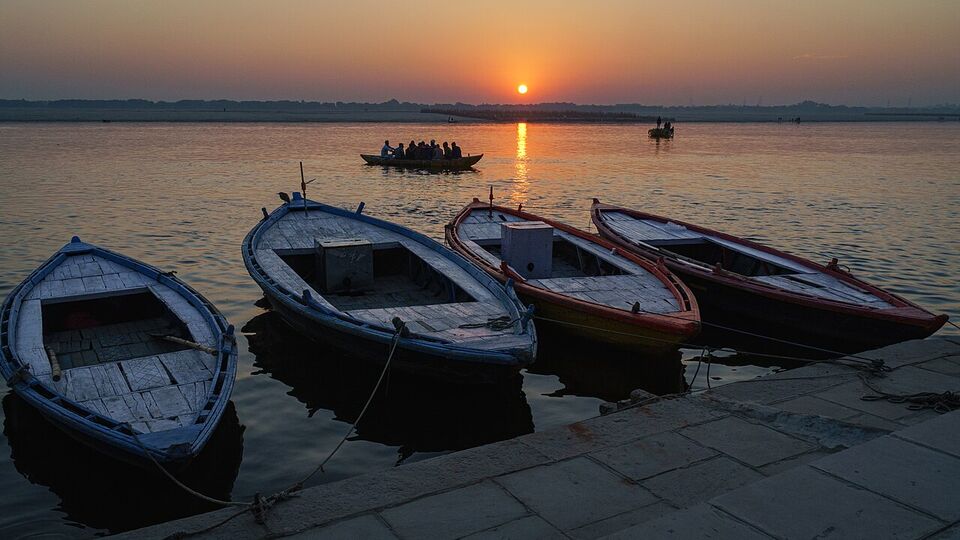
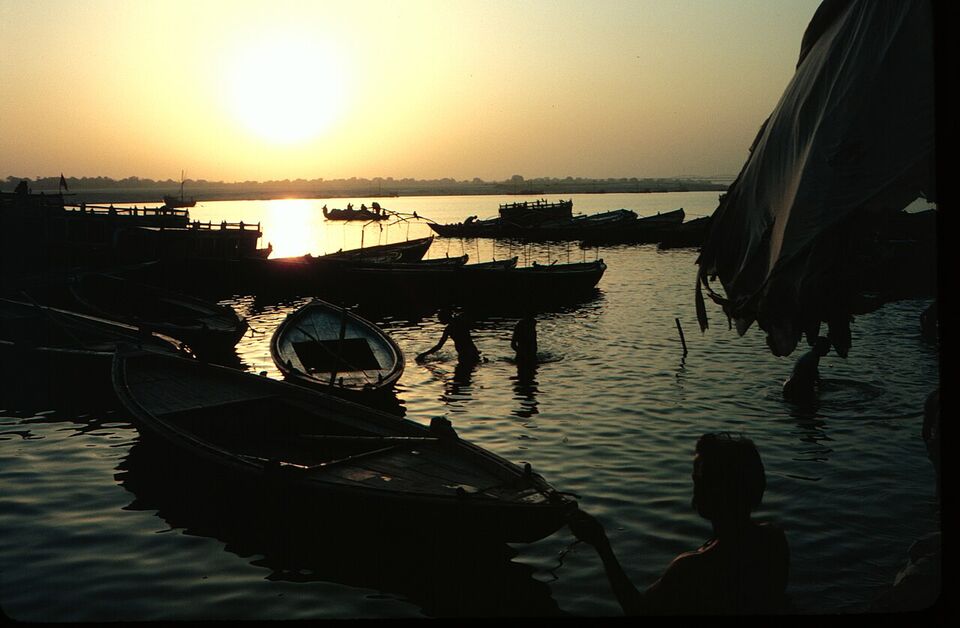
A boat ride along the ghats at dawn is the single most popular thing to do in Varanasi, and for good reason. From the water you see the whole stretch of the river front at once, with people bathing, praying, doing yoga and washing clothes as the sun comes up over the far bank. A ride usually lasts one to two hours, depending on how far you go and whether the boat is rowed or motorized.
How to arrange it
The easiest way is through your hotel or guesthouse, which will know a boatman. You can also walk down to Assi or Dashashwamedh Ghat the evening before and agree a time. Sunrise in Varanasi falls roughly between 6:00 and 6:45 a.m. from November to January (check the exact time the day before), so boats leave in the dark or just before first light. Dress in layers: it is cold on the water in December and January.
- Agree the price in advance. We could not confirm any official fare list, so do not assume one exists. Ask your hotel what is reasonable for a rowed boat for the whole boat (not per person) and for how long, and settle it before boarding.
- Say what you want. A common route runs from Assi Ghat north past Dashashwamedh to the cremation ghats and back. Ask the boatman not to stop at shops. Pay at the end, in small notes.
- Rowed boats are quieter. A motor is faster but louder. Ask your hotel which kind of boat suits the route and the season.
Sit still, keep a hand on your phone and bag, and avoid leaning over the side. If a boatman offers a lamp and flower offering to float on the water, you may do it as a quiet gesture, but you are not obliged to.
Watch out
Boat fares are a classic place where visitors pay several times the local price. Settle the price for the whole boat, the route and the time before you step in. If someone near the ghat insists the fare has gone up "because of the festival" or "because of the flood", ask your hotel or step away and find another boat.
If the river is in flood, the lower steps of many ghats go under water, boat routes are restricted and the aarti may be moved to higher ground. The monsoon in Varanasi runs from about July to October (average of more than 12 rainy days a month in July and August). Check with your hotel before you plan a boat ride in those months.
The Ganga Aarti
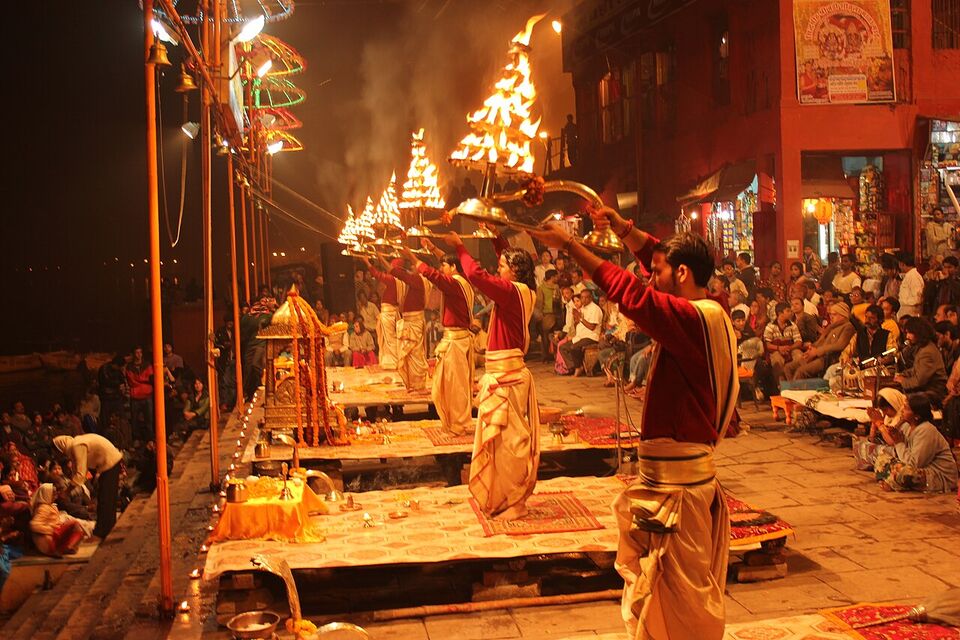
The Ganga Aarti is an evening offering of fire, incense and prayer to the river, performed by priests in unison on a raised platform. Dashashwamedh Ghat is the best-known place to watch it. The ceremony is held daily at dusk, starts soon after sunset and lasts about 45 minutes. Reports put the start at around 6 p.m. in winter and around 7 p.m. in summer, and special aartis are held on Tuesdays and religious festivals. The exact time moves with the sunset, so check with your hotel on the day or on the Uttar Pradesh Tourism site (uptourism.gov.in).
Where to watch from
- From a boat. Many visitors prefer this: boats anchor a short way out from the ghat and you have an uncrowded view without being in the crowd. Boats must book their place early, so arrange it in the afternoon.
- On the ghat steps. You will be in the crowd. Arrive 45 to 60 minutes early for a seat. This is the more immersive option and also the more crowded.
- From a rooftop or balcony. Cafes and guesthouses overlooking the ghat sell tables with a view. This is a comfortable choice if the crowd is a worry. Confirm the price before you sit down.
The right way to watch
This is a religious ceremony that also draws many visitors. Keep your voice low, do not stand up in the middle of the crowd, and do not block the view of people behind you. Photography is generally accepted from the audience, but do not use flash, do not shoot over the priests, and do not photograph people at close range without asking. Keep your bag in front of you and your phone in a zipped pocket. Pickpockets work crowded events anywhere in the world, and this is no exception.
Smaller aartis are held at other ghats and are often quieter: ask your hotel. When the ceremony ends the crowd leaves all at once up the same narrow lanes, so wait ten minutes on the steps if you can.
Insider tip
Work out your return route before the aarti starts. Lanes are poorly lit, have no street signs and look identical at night. Save your hotel's location on your phone map, or ask the hotel to send someone to meet you at the ghat.
The old lanes and Kashi Vishwanath
Walking the lanes (galis) behind the ghats is where you meet the city's daily life: sweet and tea shops, silk sellers, temples the size of a closet, wrestlers' gyms, music teachers, stacks of marigolds. Go in the morning when the light is soft and the traffic is light, and take an offline map: GPS is unreliable between tall buildings.
Varanasi's silk is famous (Banarasi saris are woven in the city, and the weaving trade is a major employer). Guides and rickshaw drivers often take visitors to showrooms where they earn commission, and the prices reflect it. If you want to shop, ask your hotel for a weaver or shop they trust and compare more than one price.
Kashi Vishwanath Temple and the corridor
The Kashi Vishwanath Temple, dedicated to Shiva, is the city's main temple. A pedestrian corridor (the Shri Kashi Vishwanath Corridor) was opened in December 2021 and links the temple area with the ghats, replacing some of the cramped lanes that used to lead to it. Entry rules, security checks and what you can bring in change from time to time and during festivals. Phones, bags and cameras are often not allowed inside, and there may be lockers outside. We could not confirm the current rules for foreign visitors, so check with the temple's official channels and follow the staff on the day.
For general advice on dress, shoes and conduct in temples, see our guide to temples and religious sites and our etiquette guide. In short: dress modestly with shoulders and knees covered, leave shoes where staff indicate, and follow the lead of the people around you.
The cremation ghats: how to behave
Hindus believe that dying and being cremated at Varanasi, beside the Ganges, can bring liberation. Manikarnika Ghat and Harishchandra Ghat are the two main cremation grounds, and fires burn there day and night. The scenes can be confronting for first-time visitors, and they are not entertainment. Families bring their dead here, often after long journeys, and are present at every stage.
- No photographs, ever. This includes phones and long lenses from a boat. Put the camera away before you approach.
- Keep your distance and your voice down. Do not walk through the cremation area or stand close to a pyre. Watching from a respectful distance, or from a boat, is acceptable.
- Do not follow someone who offers to "explain". People who approach you near the ghat may be genuine, but some of them then ask for a large "donation" for wood for the cremations of poor families, and the demand escalates. If you want to give, you can do it quietly through a registered charity later. You are not rude if you say "no, thank you" and walk away.
- Do not touch anything on the ground. Wood stacks, bundles and ash are part of the ritual.
There is nothing wrong with feeling moved or unsettled. Take a break at a quieter ghat afterwards.
Sarnath
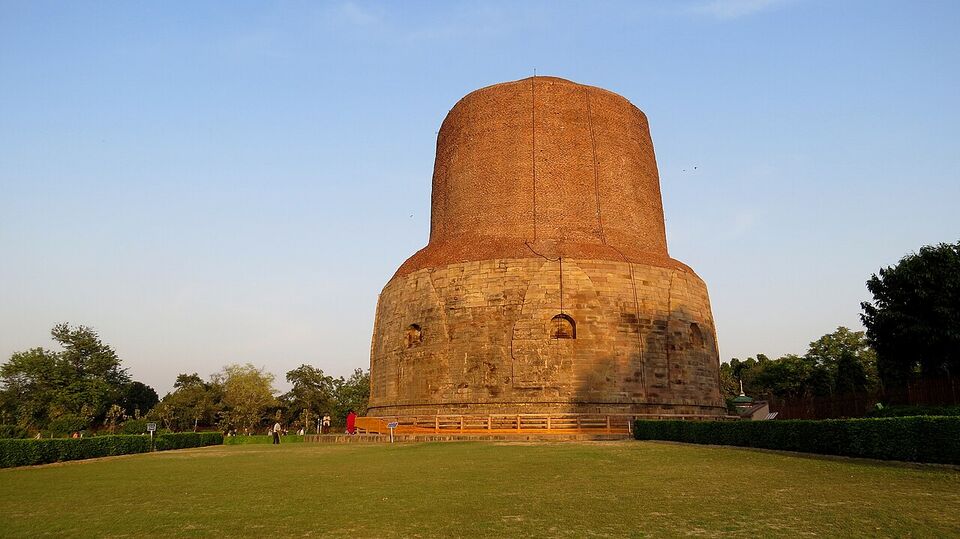
Sarnath lies about 5 miles (8 km) north-east of the center, and is the place where the Buddha gave his first teaching after enlightenment at Bodh Gaya. It takes a half day to see and makes a calm contrast to the city. The most recognizable sights are:
- The Dhamek Stupa, a large cylindrical monument that marks the site traditionally associated with the first sermon.
- The ruins of monasteries and stupas in the archaeological park, with the remains of the Ashokan pillar nearby.
- The Sarnath Archaeological Museum, which houses the Lion Capital of Ashoka, India's national emblem, and a fifth-century sculpture of the Buddha preaching his first sermon.
Sarnath has long been on UNESCO's tentative list, and Wikipedia's page on the site reports that it was added to the World Heritage list in 2026. We could not check that against UNESCO's own site, so confirm it there if it matters to you. The archaeological site is managed by the Archaeological Survey of India (ASI), which charges foreigners much more than Indian residents at most of its sites. Check the ticket price and the museum's closed day on asi.nic.in before you go. We could not confirm either.
Most visitors go by taxi or auto-rickshaw (tuk-tuk) from the city, and many combine it with a morning boat ride the same day. Agree the price for a round trip and a waiting time in advance.
Food and the lassi shops
Many eateries near the ghats and temples serve only vegetarian food. Do not assume every place is vegetarian: ask if it matters to you. For the wider story of Indian regional food, see our food guide.
What to look for:
- Lassi. A thick yogurt drink, often served in a disposable clay cup (kulhad) that you can smash after drinking. Shops across the old city have been making it for generations. Choose a busy shop with a fast turnover so the yogurt is fresh.
- Breakfast kachori and sabzi. Fried lentil-stuffed bread with spiced potato curry, a standard early morning meal.
- Chaat. Savory street snacks. Eat only what is cooked in front of you and served hot, and see our health guide before you start on street food.
- Paan. A betel leaf parcel with areca nut and spices, eaten after meals. Varanasi is known for its betel leaves, and many visitors skip it.
Use bottled or filtered water and skip ice and raw salads.
Health, hygiene and crowds
The Ganges at Varanasi is sacred, and it is also heavily polluted by sewage and waste. Wikipedia's page on the city notes that people who use untreated local water have a higher risk of water-borne stomach disease. As a visitor, do not drink river water, do not bathe in it, and do not let it splash on your mouth or face. If you touch the water as a gesture of respect, wash your hands with soap or sanitizer afterwards.
- Water and food. Drink only sealed bottled or properly filtered water. Choose cooked, hot food.
- Vaccines. The CDC recommends hepatitis A for unvaccinated travelers one year and older, and typhoid for most travelers. See a travel clinic at least a month before you leave.
- Dogs and monkeys. Dogs with rabies are common in India. Do not pet street animals, and get medical help at once after any bite or scratch. The CDC page also notes a counterfeit rabies vaccine reported in Delhi, so get care at a reputable hospital.
- Heat. From April to June daytime highs pass 100°F (38°C). Avoid midday walking.
- Crowds. Lanes and ghats are busiest on festival days and at the aarti. Keep your bag in front of you, hold hands in a crowd if you are with children, and agree on a meeting point.
The U.S. State Department rates India at Level 2, "Exercise Increased Caution" (as of November 2026). Check travel.state.gov for the latest. Our safety guide has the details and the emergency numbers: 112 is India's national emergency number.
Touts, scams and boat-fare tricks
Varanasi has the same tourist-trade problems as other major sights: persistent offers, commission arrangements and creative pricing. None of it is dangerous if you stay calm, but it can wear you down. Our scams guide covers the general patterns; these are the ones you are most likely to meet here.
- Boat price. A boatman quotes "per person" or adds a "festival rate" at the end. Settle the price for the whole boat, the route and the duration in advance.
- "The temple is closed." A rickshaw driver or a friendly stranger says the temple or ghat is closed and offers an alternative, which is a shop. Check with your hotel.
- Silk and gem shops. A "free" guide or driver takes you to a showroom. You are under no obligation to buy.
- The "donation" at the ghat. See the cremation section above. A request for wood money or a priest's "special blessing" with a set price is a sales pitch.
- Puja packages. Priests at the ghats may offer a ritual (puja) at a high price. If you want one, arrange it through your hotel and agree the price first.
A calm, polite "no, thank you" and walking on is usually all you need.
See also our guide for women travelers for practical advice on lanes at night, taxis and dress.
How many days, and a simple plan
Two nights is the practical minimum: that gives you a full evening for the aarti, a dawn boat ride the next morning, a middle part of the day for the lanes and a rest, and a second evening or morning for Sarnath. Add a third night if you are arriving by a late train, if you want to see some of the music or silk culture, or if you are traveling with children and need slower days.
- Day 1
Arrive and see the aarti
Check in, rest, then head to the river in the late afternoon. Walk the ghats between Assi and Dashashwamedh, have a lassi, and watch the Ganga Aarti from a boat or the steps. Have dinner at a place near your hotel so you are not walking unfamiliar lanes late.
- Day 2
Dawn boat, lanes, Sarnath
Take the sunrise boat ride, return for breakfast and rest. Walk the old lanes late in the morning if the weather allows, or go to Sarnath in the afternoon (taxi or auto, round trip with waiting). Spend the evening quietly or catch a smaller aarti at another ghat.
- Optional night 3
A slower day
Visit the Banaras Hindu University campus or the Ramnagar Fort across the river, and take a last dawn walk on the ghats.
Where to stay
Choose by what you want from the city. Our general guide on where to stay in India explains the price tiers: $ is under $120 a night for a double, $$ is $120 to $300 and $$$ is over $300.
Near Assi Ghat
Good for a first visit because the area is quieter, with more western-style cafes and guesthouses and an easier walk to the river. It is further from Dashashwamedh and the temple, so you take an auto or walk about a mile (a little under 2 km) for the aarti.
Near Dashashwamedh and the old lanes
You are in the middle of everything, with rooftop views and the shortest walk to the aarti and the temple. It is also crowded and noisy from before dawn. Heritage havelis (old mansions) here can be beautiful, but you may have to carry your bags through narrow lanes.
Cantonment and the station area
Larger hotels with parking, lifts and easy road access. Good for older travelers or anyone with heavy luggage, but you will take a taxi to the river every day, and it can take a long time in traffic.
Book ahead from November to February and around festivals. Ask any hotel in the old lanes for exact directions and a drop-off point.
Getting there
Americans need a visa. Apply for the e-Visa only on the official government portal at indianvisaonline.gov.in/evisa: look-alike agent sites exist and charge extra. Varanasi is on the e-Visa entry list, but most travelers from the U.S. arrive in Delhi or Mumbai first. Our entry guide explains the visa types, validity and the arrival card.
By train
The New Delhi to Varanasi Vande Bharat (a fast chair-car train) covers the 472 miles (759 km) in about 8 hours, according to the published timetable. Train times and days change, so check on the official National Train Enquiry System or the IRCTC site before you book. Overnight sleeper trains and slower expresses also run from Delhi and Kolkata. Reserved tickets can be booked up to 60 days ahead for the general public, and foreign visitors may be able to book further ahead: check IRCTC. Book early on busy routes, particularly around festivals. Read our train guide for how booking works and what the classes mean.
By air
Lal Bahadur Shastri International Airport serves Varanasi, with domestic flights from Delhi, Mumbai, Kolkata and other cities. In winter, fog can delay flights in north India on some mornings (the national average is roughly 15 to 20 days a year), so do not schedule a tight connection on the same day. The airport is some distance from the old city: allow time for the drive, and agree the taxi price at the prepaid counter or via an app. Our flights guide covers the long-haul flights.
Getting around the city
Walk when you can. For longer trips use a taxi, app cab or auto-rickshaw with the price agreed beforehand. See our getting around guide.
India uses India Standard Time (UTC+5:30) all year with no daylight saving. The city is 10 hours 30 minutes ahead of New York in winter and 9 hours 30 minutes ahead in U.S. summer time. The half-hour offset is normal.
Best time and festivals
November to February is the main season. Varanasi in November averages a high of about 85°F (29°C) and a low of about 58°F (15°C). December cools to about 75°F (24°C) by day and 50°F (10°C) at night, and in January the average is about 71°F (22°C) by day and 48°F (9°C) at night. Mornings on the water are cold, so bring a layer. From April to June it is very hot, with May averaging a high of about 105°F (40°C). The monsoon from July to October brings humid heat and the risk of high water.
Festivals bring big crowds and big beauty, and they can close or crowd some ghats. Dates move with the lunar calendar, so check each year.
- Dev Deepawali, a festival of lamps lit along the ghats on the full-moon night of the month of Kartik, falls around November 24 in 2026 (confirm the date locally). Hotels book out, ghats are packed and boat prices rise.
- Maha Shivaratri in February or March (check the date): a procession of Shiva goes to the Kashi Vishwanath Temple.
- Dhrupad Mela, a five-day classical music festival at Tulsi Ghat in February or March (check the date).
- Diwali (October 29 in 2027) and Holi (March 2027, check the date) are celebrated across the city.
Our festivals guide has a wider list. If your trip falls on a major festival, book your hotel and train early, expect closures and crowds, and plan to be flexible. If you are traveling in late November, see our November guide too. For when to go across India, see when to go.
Common mistakes
- Rushing it. Varanasi is not a one-hour stop. Give it two nights.
- Photographing the cremation ghats or pointing a lens at mourners.
- Paying for the boat before the ride or agreeing a "per person" fare.
- Drinking the river water, or having ice and raw salads in places you do not know.
- Following a stranger who says the temple or the ghat is closed.
- Arriving at the aarti at the last minute and finding no view.
- Planning a tight onward connection on a winter morning, when fog can delay trains and flights.
Plan your next leg with our guides to Delhi, Rishikesh and Haridwar and Kolkata.
Add it to a route in the trip builder, or ask us to plan the hotels, trains and guides for you.