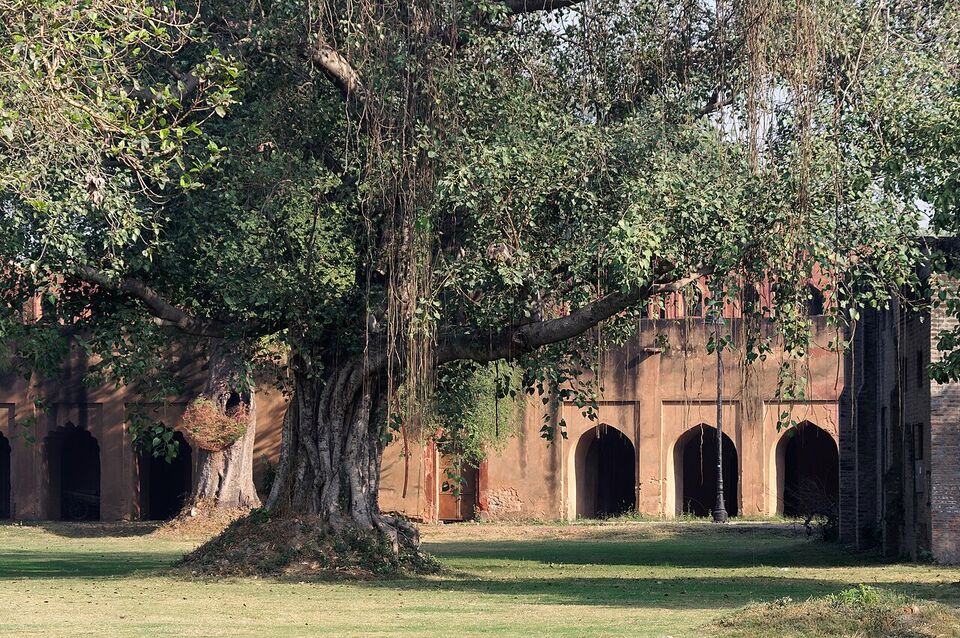
Overview: what the Golden Triangle is
The Golden Triangle is the name for the loop that joins Delhi, Agra and Jaipur. It is India's best-known first-trip route because it packs three very different cities into a distance a car can cover in a day at a time: the capital with its Mughal and colonial monuments, the city of the Taj Mahal, and the Rajasthani capital with its palaces and forts. The full circuit is about 450 miles (720 km) by road, and each leg takes roughly 4 to 6 hours of driving.
This guide explains how the loop works as a trip, how many days it needs, which order to go in, how to travel between the cities, and what to skip if time is short. For the details of each city, see our guides to Delhi, Delhi things to do, Agra and the Taj Mahal and Jaipur.
The loop suits first-time visitors, families, and anyone who wants a lot of famous sights with little planning. It suits fewer people who want quiet, nature or beaches: for those, the trip planning guide shows other routes, and the Rajasthan guide goes deeper into the desert cities.
Different from home
Distances in India look short on a map but take longer than the same miles at home. Roads are shared with trucks, tractors, cows and motorbikes, and traffic keeps to the left. A 130-mile (210 km) drive that would take two hours on a US interstate is closer to three or four hours here. Plan on the slow side.
How many days you need
The loop can be done in four days, but only just. Four days gives you one day in Delhi, one day on the way to and in Agra, one day on the road to Jaipur, and one day in Jaipur, with the flights in and out landing at awkward times. We think five to seven days is the sweet spot for a first visit, because it leaves room for jet lag, a rest day and a second day in Delhi.
Jet lag matters here. India Standard Time (UTC+5:30) is 10 hours 30 minutes ahead of New York in US winter and 9 hours 30 minutes ahead in US summer time, and the half-hour offset is normal. Many flights from the US land in Delhi at night or in the early morning, so the first day is often a short one.
| Length | Best for | What you get | What you give up |
|---|---|---|---|
| 4 days | A stopover or a short break | Delhi highlights, Taj Mahal, a quick Jaipur day | Rest time, Fatehpur Sikri, a second day in any city |
| 5 to 6 days | Most first-time visitors | Old and New Delhi, the Taj at sunrise, Agra Fort, Fatehpur Sikri, Amber Fort and the old city of Jaipur | Add-ons beyond the triangle |
| 7 to 9 days | Visitors who want a slower pace | All of the above plus a rest day, a second Delhi day and one add-on such as Ranthambore or Pushkar | Little, but the days are longer in total |
| 10 days or more | Those linking the loop to Rajasthan or Varanasi | The loop plus Udaipur, or a flight to Varanasi at the end | Depth in any one place |
Which order: Delhi, Agra, Jaipur or the reverse
The usual order is Delhi, then Agra, then Jaipur, and then back to Delhi (by road or train) for the flight home. We think this is the better default for three reasons. It starts with the city that has the most reliable airport, hotels and English-speaking services, it puts the Taj Mahal early when you are fresh, and it finishes in Jaipur, which is gentler and easier to enjoy than Delhi.
The reverse order (Jaipur, Agra, Delhi) works well if you fly into Jaipur, which is on the list of airports where the e-Visa is valid (see our entry requirements page). Not many international flights land at Jaipur, so check airline schedules first. Some travelers prefer to end in Delhi because the airport is close to the city and onward flights are easy to find.
Some visitors take it as a one-way trip rather than a loop: Delhi to Agra to Jaipur, then a flight or train from Jaipur to the next place (Udaipur, Varanasi, Mumbai). Jaipur's airport is on the e-Visa list, so this can save a long backtrack. Book a one-way car and driver only after asking whether the company charges for the empty return trip.
Travel between the cities: road, train or a mix
There are three main ways to link the cities. Each suits a different type of traveler, and we think most visitors do best with a mix. Prices for car hire vary a great deal, and we have no reliable figure to give: agree the full price in writing before you start.
| Option | Time (typical) | Good for | Watch out for |
|---|---|---|---|
| Fast train, Delhi to Agra | About 1 hour 40 minutes on the Gatimaan Express; fast trains take under 2 hours | Solo travelers, couples, anyone who wants speed and no road stress | The Gatimaan does not run on Fridays; seats sell out in peak season |
| Other trains, Delhi, Agra, Jaipur | Varies; check the National Train Enquiry System (NTES) | Budget travelers and those who like to see ordinary India | Fog delays in winter; crowded stations and station touts |
| Car with a driver | 4 to 6 hours per leg | Families, groups, those who want Fatehpur Sikri and other stops on the way | Prices vary; drivers may steer you to shops that pay commission |
| Organized tour | Fixed itinerary | First-timers who want everything arranged | Shopping stops and a fixed pace; check what is included |
| Domestic flight | Under 2 hours between some pairs, plus airport time | Linking the triangle to a far city | Rarely worth it within the triangle itself |
Trains: Gatimaan and other fast services
The Gatimaan Express runs between Hazrat Nizamuddin station in Delhi and Agra Cantonment (Agra Cantt). One timetable aggregator lists a departure at 8:10 a.m. and an arrival at 9:50 a.m., about 1 hour 40 minutes for the 188 km (117 miles), and no service on Fridays. This is not an official source: check the current timetable on irctc.co.in or the National Train Enquiry System before you plan around it. Indian Railways also runs other fast trains, including Vande Bharat services on some routes, and the Ajmer Shatabdi links Delhi with Jaipur. We could not confirm a current Vande Bharat timing for Delhi to Agra, so check.
Reserved train tickets can be booked up to 60 days ahead for the general public. Tatkal tickets open a day before departure at higher fares, and confirmed Tatkal tickets are not refundable. Foreign visitors may be able to book further ahead through the foreign-tourist arrangement, but we could not confirm how this works now, so check the IRCTC site and book early on busy routes. Read our train guide for how to book, the classes and the stations.
Car with a driver
For the triangle, a car with a driver (a "driver" is usually a licensed taxi driver paid by the day or the trip) is the most flexible option. You can leave when you like, stop at Fatehpur Sikri, and avoid carrying bags on and off trains. The driver typically deals with the road, the parking at monuments and the tolls.
We suggest the following for hiring one:
- Ask for the total price in writing, including tolls, parking, the driver's food and lodging, and any waiting time. We have no confirmed rate to give you, so do not rely on figures from blogs.
- Use a registered company or your hotel, and confirm the car is air-conditioned.
- Do not drive yourself. The CDC advises hiring a licensed driver, avoiding night driving, wearing seat belts and sitting in the back seat. If you ever do drive, carry an International Driving Permit with your US license.
- Agree up front that you will not make shopping stops. A driver who receives commission from shops will often suggest one.
See also the getting around guide for how taxis, apps and drivers work across India.
Insider tip
Take the train from Delhi to Agra in the morning and hire a car and driver for the Agra to Jaipur leg only. You get the speed on the first leg and the freedom to stop at Fatehpur Sikri on the second. Book the car through your Agra hotel for the following day.
Day 1 to 2: Delhi
Delhi is where most people land, and it is where the loop begins. Our Delhi guide covers the neighborhoods, the airport, the Metro and how to stay healthy in the winter air. Our Delhi sights page covers the Red Fort, Humayun's Tomb, the Qutub Minar and the rest.
In two days, most visitors cover Old Delhi (the Red Fort, Jama Masjid and Chandni Chowk) on one day and New Delhi and the south (India Gate, Humayun's Tomb and the Qutub Minar) on another. If you have one day only, pick Old Delhi and Humayun's Tomb, which are different in character and close enough to link by Metro or a taxi.
Delhi's winter air can be poor. The Supreme Court asked states in the region to file emission plans in November 2026, and stage-based restrictions called GRAP (Graded Response Action Plan) have been invoked in the National Capital Region on bad days. Plan for 300 to 450 or more on bad days, carry an N95 mask, and check the live reading on airquality.cpcb.gov.in (the national air-quality portal) before you go out.
Day 3: Agra and the Taj Mahal
Agra is the shortest leg: about 130 miles (210 km) from Delhi by the Yamuna Expressway, which takes around 3 to 4 hours by car in normal traffic. The Taj Mahal is the reason to come, and our Agra guide has the tickets, gates, timings and the Friday closure.
The key points for planning the loop are these. The Taj Mahal is closed on Fridays, so choose your days to avoid a Friday in Agra. Foreigners pay ₹1,100 (about $12) for the Taj plus an optional ₹200 (about $2) to enter the main mausoleum, per the official Taj Mahal site. Check the price before you go, because ticket prices change. The Taj opens 30 minutes before sunrise and closes 30 minutes before sunset.
A good rhythm is to arrive in Agra at midday, see Agra Fort in the afternoon, and visit the Taj at sunrise the next morning. If you arrive by the early train, you can visit the Fort the same morning and the Taj in the afternoon light.
Watch out
The Taj Mahal is closed on Fridays. Some itineraries sold online ignore this. Count the days before you book your hotels and drivers, and keep a Friday for Agra Fort or Fatehpur Sikri instead, or choose another city that day.
The Fatehpur Sikri stop
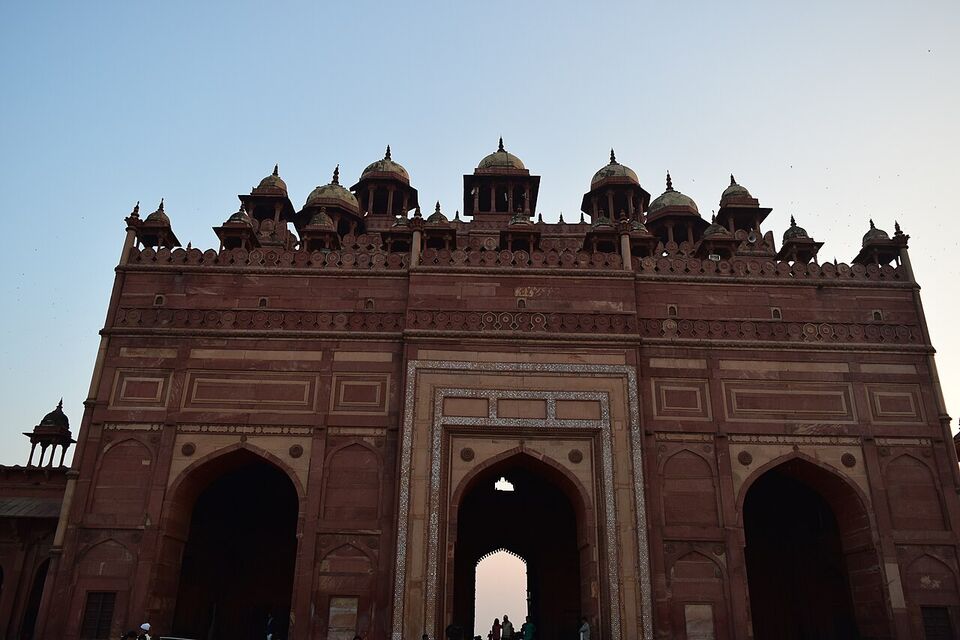
Fatehpur Sikri is the abandoned Mughal capital built by Emperor Akbar in 1571 and used until 1585. It lies about 22 miles (36 km) from Agra and sits on the way to Jaipur, so it makes a natural stop on the road. It is a UNESCO World Heritage Site and has a large mosque and the 177 ft (54 m) high Buland Darwaza gateway.
Foreign visitors pay about ₹610 (about $6) on weekdays other than Friday, or ₹600 (about $6) on Friday or after visiting the Taj, per the official Taj Mahal site, which lists the Agra monuments. Check the current price before you go. Allow about two hours on site, plus time at the gate for touts and guides. Wear comfortable shoes: you will walk on stone, often in the sun, and you take your shoes off to enter the mosque.
Fatehpur Sikri is worth including if you have a car. It is easiest by car, so skip it if you take the train from Agra to Jaipur. If time is short, skip it before you skip the Agra Fort.
Day 4: Jaipur
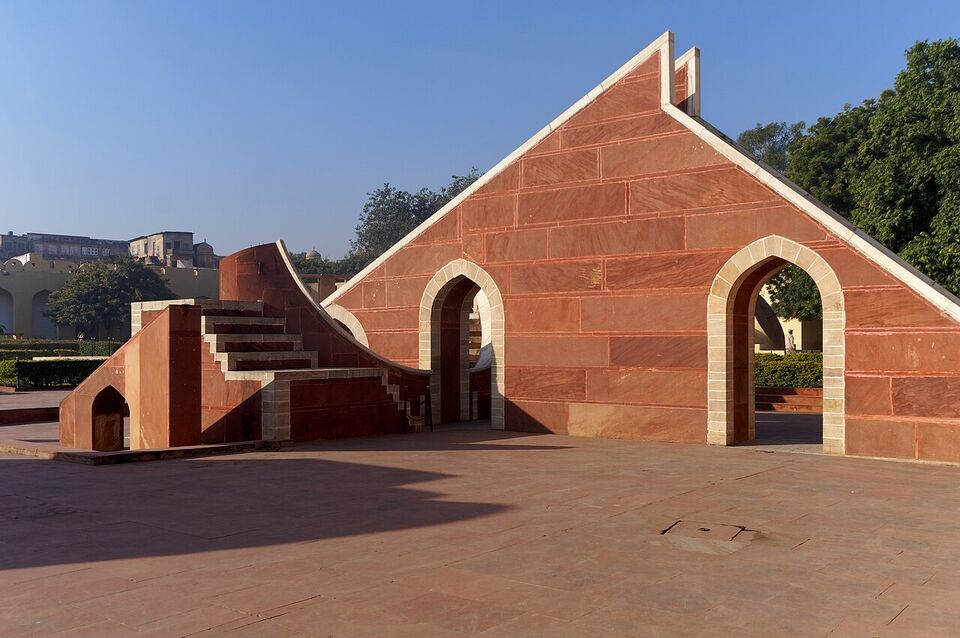
Jaipur is the capital of Rajasthan, known as the Pink City because the old town's buildings share a color scheme. It has Amber (Amer) Fort, the City Palace, Jantar Mantar and the Hawa Mahal, and its markets are among the best for textiles, jewelry and crafts. Our Jaipur guide covers these in detail.
The drive from Agra to Jaipur is about 150 miles (240 km) and takes 5 to 6 hours with a stop. Foreign ticket prices at Rajasthan's state-run monuments rose at the start of 2026, according to local news: Amber Fort about ₹1,000 (about $11), the Hawa Mahal and Jantar Mantar about ₹600 (about $6) each, and a composite ticket about ₹5,500 (about $59) valid for 10 days. We could not confirm these on an official page, so treat them as approximate and check on the Rajasthan tourism website before you buy.
The City Palace has a day visit from 9:30 a.m. to 5 p.m. and a night visit from 7 p.m. to 10 p.m., but we could not confirm its ticket price. A full day in Jaipur covers Amber Fort in the morning, the City Palace and Jantar Mantar at midday, and the old-city bazaars in the late afternoon.
Save money
If you plan to enter several of Jaipur's state-run monuments, ask about the composite ticket before you buy single entries. It is only worthwhile if you visit most of the sites it covers within its validity period, so add up the single prices first. Check the current rate on the official Rajasthan tourism pages.
Returning to Delhi
The Jaipur to Delhi leg is about 170 miles (270 km), around 5 to 6 hours by road, or a fast train. Leave generous time before an international flight: many long-haul flights from Delhi leave late at night, and delays on the highway into the capital can be long, especially on winter mornings when fog slows traffic. Fog also disrupts flights on roughly 15 to 20 days a year across north India, so avoid tight connections in December and January.
If your flight home is late at night, a day room or a hotel near the airport is a better plan than driving straight from Jaipur. For more on getting in and out of India, see our flights guide.
Sample itineraries
Short: 4 days
- Day 1
Delhi
Old Delhi in the morning (Red Fort, Jama Masjid), then Humayun's Tomb and India Gate in the afternoon. Early night.
- Day 2
Delhi to Agra
Fast train or car to Agra. Agra Fort in the afternoon, then the Taj Mahal from the Mehtab Bagh garden across the river at sunset.
- Day 3
Taj Mahal, then Jaipur
The Taj at sunrise, breakfast, and a drive to Jaipur with a short stop at Fatehpur Sikri if you have time.
- Day 4
Jaipur and back
Amber Fort in the morning, the City Palace after lunch, then the road or train to Delhi.
Medium: 6 days
- Day 1
Arrive in Delhi
Rest. A short walk and an early dinner.
- Day 2
Old Delhi
Red Fort, Jama Masjid, Chandni Chowk food stops.
- Day 3
New Delhi and the south
Humayun's Tomb, Lodhi Garden, India Gate and the Qutub Minar.
- Day 4
Agra
Train in the morning, Agra Fort, and the Mehtab Bagh view of the Taj at sunset.
- Day 5
Taj Mahal and Fatehpur Sikri
Taj at sunrise, then a car to Fatehpur Sikri and on to Jaipur.
- Day 6
Jaipur
Amber Fort, City Palace, Jantar Mantar and the markets. Fly or travel on from Jaipur, or return to Delhi.
Long: 9 days with one add-on
- Days 1 to 3
Delhi
Arrival and rest day, then Old Delhi and New Delhi at an easy pace.
- Days 4 to 5
Agra
One night, Taj at sunrise, Agra Fort, Itmad-ud-Daulah and an unhurried afternoon.
- Days 6 to 7
Jaipur
Two nights: Amber Fort, the City Palace, Jantar Mantar and the old-city markets.
- Days 8 to 9
Add-on or return
Ranthambore for a tiger safari, or Pushkar, then return to Delhi. See the next section.
Add-ons: Ranthambore, Pushkar and Udaipur
Ranthambore
A tiger reserve within reach of Jaipur by road or rail. Safari booking is online through the Rajasthan forest department, and the park is usually closed for part of the monsoon, but we could not confirm booking rules or closure dates: check the official site before you plan. See our wildlife guide.
Pushkar
A small lake town known for its camel fair, which runs for around a week in the Hindu month of Kartik and ends on the full moon (reported as around November 17 to 24 in 2026). We could not confirm the exact dates, so check Rajasthan Tourism. The fair brings crowds and high hotel prices.
Udaipur
A slower, softer city than Jaipur, with a lake palace complex. Udaipur is not on the e-Visa entry list, so arrive via a listed airport first. Allow a flight or a long drive from Jaipur.
Varanasi
A flight or overnight train from Delhi or Jaipur. It is a very different India from the triangle. Read our Varanasi guide.
What to skip
You do not need to see everything. We suggest skipping or shortening these if time is short:
- A second fort in Jaipur. Amber Fort, the City Palace and the old-city bazaars are enough for one day. Add Nahargarh or Jaigarh only if you have a spare half-day.
- Most Delhi museums. Choose the monuments instead, unless you have a specific interest.
- Itinerary stops in factories and showrooms. Carpet, marble and jewelry showrooms are the usual commission stops. You can say no.
- A long drive in the dark. Roads are harder at night and our advice, and the CDC's, is to avoid night driving.
Common mistakes
Too many sights per day
The most common mistake is to treat the loop as a checklist. Two big sights a day, plus a meal and the road, is a full day in India's heat and crowds. Arrive early, rest in the middle of the day and use the late afternoon for markets and viewpoints.
Commission shops
Drivers and guides often receive commission from shops, and the quoted "no obligation" stop can take an hour. A polite "no, thank you" and a firm plan in advance works. Our scams guide and shopping guide explain how to buy crafts at fair prices.
Staying only in Delhi
Some travelers base themselves in Delhi and do Agra as a long day trip. It can be done, but it is a day of roughly 8 to 10 hours of travel. One night in Agra gives you the Taj at sunrise, which is a very different experience from the mid-morning crowds.
Ignoring the Friday closure and the fog
Check the days of the week against the Taj closure, and leave a spare day in the plan for fog delays between December and January. Our when to go guide and our pages for December and January explain weather and crowds.
Booking too late
The best months are busy. Book trains, the driver and your hotels as soon as the dates are fixed. Read the where to stay guide for how to choose.
Before you go
- Apply for your e-Visa only at indianvisaonline.gov.in/evisa. Look-alike agent sites charge extra, and the government charges no express fee. See the entry page.
- Check the Taj Mahal closing day against your dates, and buy tickets from the official ASI channel.
- Book trains, a driver and hotels early for the busy months.
- Carry an N95 mask in Delhi in winter, and drink only sealed bottled or filtered water. See the health guide.
- Check the State Department advisory (Level 2: Exercise Increased Caution as of November 2026) on travel.state.gov, and read the safety guide.
- Bring a plug adapter: India uses 230 V and Type C, D and M sockets.
Add it to a route in the trip builder, or ask us to plan the hotels, trains and guides for you.