Overview
Kolkata (Calcutta) is the capital of West Bengal and the largest city in eastern India, on the east bank of the Hooghly River, a branch of the Ganges. Its city proper had about 4.5 million people at the 2011 census and the wider metropolitan area about 14 million, and both figures are higher now. It was the capital of British India until 1911, and its center still holds grand colonial buildings, wide parks, old tram lines and a lively bookish and artistic culture. Many Indians call it the country's cultural capital.
For a visitor, Kolkata is a city to wander and eat in, not a place to rush through. It does not have a single monument on the scale of the Taj Mahal. It has a collection of sights, markets and food places spread over a large and congested city, which rewards a slow pace. It also makes a good gateway to eastern India, including Darjeeling and the hills of the northeast, and it sits on the route to Varanasi.
Hours, tram routes and metro lines change often, so check the official sources we name before you go.
Plan it like Kolkata, not like Delhi
The most common mistake is to expect a Delhi-style sightseeing schedule, with a fixed list of monuments and a guide with a van. Kolkata is more spread out, more congested and less set up for packaged sightseeing. A day can disappear in traffic. Many sights close for part of the day or one day a week, and the heat and humidity are heavy from March to September.
- Plan two main things a day, one in the morning and one in the late afternoon, with a long lunch and rest in between.
- Use the metro for distance and walk or take a short ride for the last stretch.
- Start early. Mornings are cooler and the roads are clearer. Markets are at their best at dawn.
Different from home
Traffic here is dense and slow, and a short trip on a map can take an hour at rush hour. Allow double the time you expect, and avoid booking a flight or train on the same afternoon as a long sightseeing day. Cars drive on the left.
Victoria Memorial and the Maidan
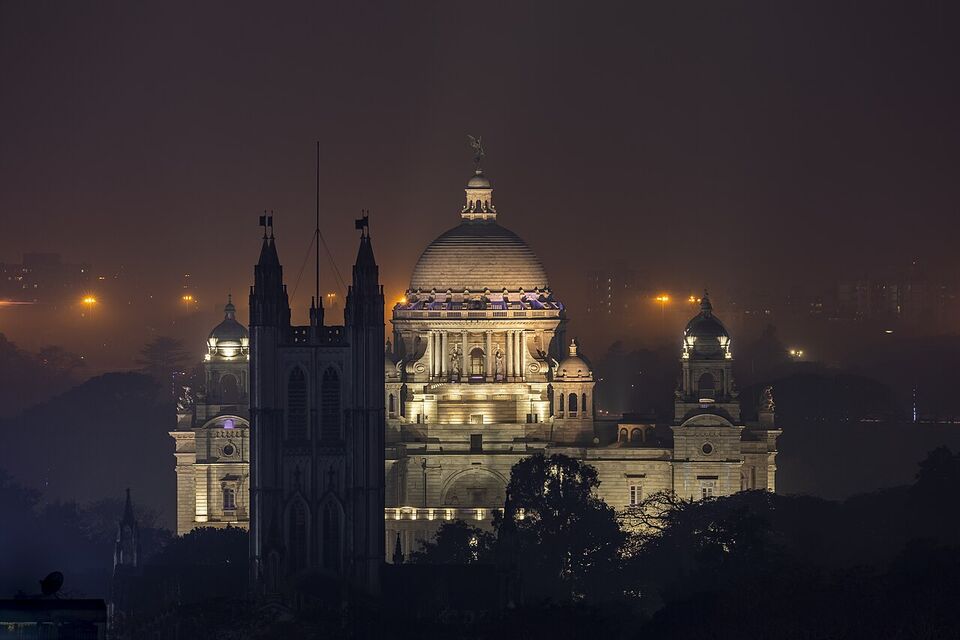
The Victoria Memorial is the city's best-known landmark: a white marble building on the Maidan (the big central park), built between 1906 and 1921 in memory of Queen Victoria. Its mix of European and Indian ("Indo-Saracenic") styles is easy to recognize, with a dome topped by a bronze Angel of Victory. Today it is a museum under the Ministry of Culture, with a collection of paintings, objects and documents about the colonial and Bengal history, set in about 64 acres (26 ha) of gardens. The gardens charge an entry fee, and the museum has a separate ticket.
We could not confirm the current opening hours, the closed day or the foreign visitor ticket price. Check the official site, victoriamemorial-cal.org, before you go. Many museums in India close one weekday, and the memorial's gardens and galleries can have different hours, so confirm both. Plan about two hours for the museum and an hour for the gardens.
The Maidan is worth a walk in the morning or at dusk. It is where Kolkata exercises, plays cricket and football and sells tea. St. Paul's Cathedral and the Eden Gardens cricket ground are nearby.
Howrah Bridge and the flower market
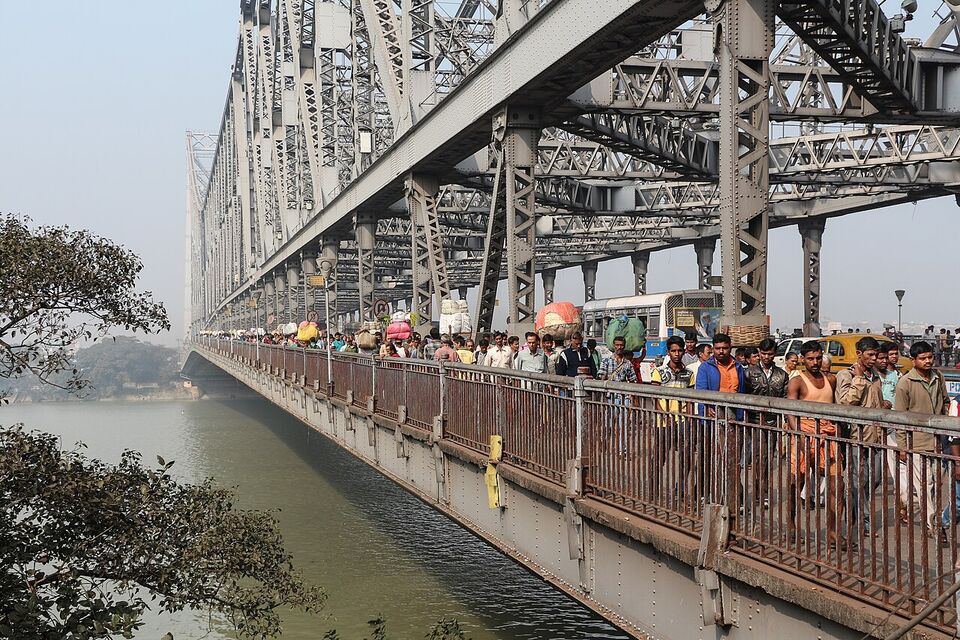
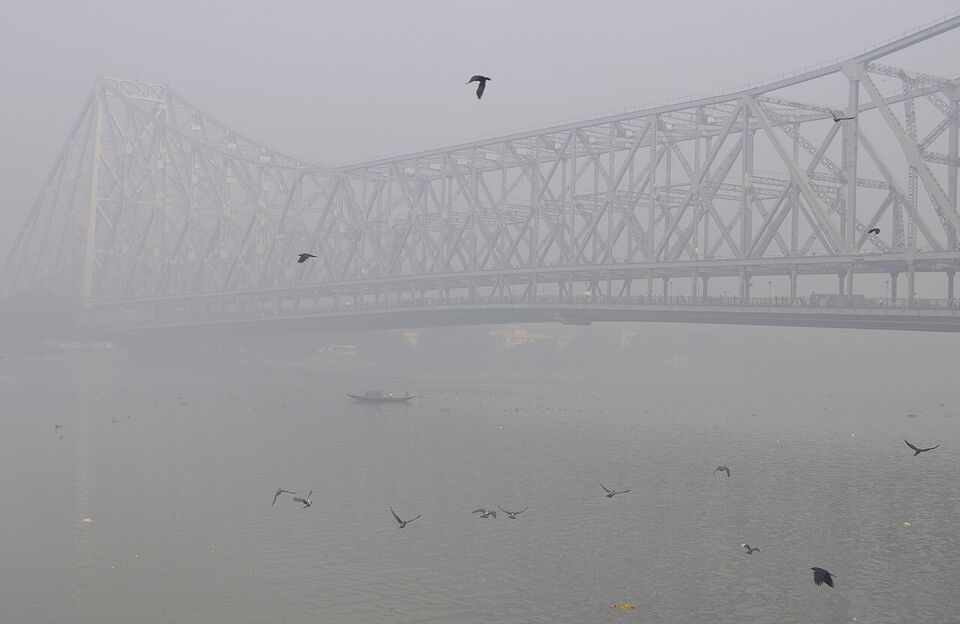
The Howrah Bridge (officially Rabindra Setu) is a steel bridge over the Hooghly that opened in 1943. It is about 2,300 ft (705 m) long and, according to reference sources, carries around 100,000 vehicles and more than 150,000 pedestrians every day. There is no toll. It links the main city to Howrah, the big railway terminus on the western bank.
Walking across the bridge is a good way to feel the city's scale, but do it in daylight, keep your bag in front of you and watch your footing on the crowded footpaths.
Near the foot of the bridge on the Kolkata side, a large wholesale flower market operates beside the river, busiest in the early morning. Garlands and marigolds are sold by weight and by the strand. The ground is wet and crowded, so wear closed shoes, ask before you photograph anyone, and ask your hotel for the best time to go. We could not confirm the market's hours.
College Street, books and coffee
College Street, in north Kolkata, is known for its dense row of secondhand and new bookstalls, many facing the University of Calcutta (the first modern university in India, according to reference sources). The area is often called the "Boi Para" (book quarter). Students, teachers and collectors hunt here for textbooks, old magazines, poetry and rare titles. It is also known for its old coffee houses, where regulars sit for hours and talk. The streets are narrow, so go in the late morning, take your time, and expect to bargain at stalls without a marked price.
The old Chinese and Armenian quarters
Kolkata's cosmopolitan past is part of its character. Reference sources note that the city has India's only Chinatown, and the remains of Jewish, Armenian and Anglo-Indian communities. The Chinese community, which once numbered about 20,000, has shrunk to a few thousand, after repatriation, restrictions on citizenship after the 1962 war and migration abroad. Traditionally the community worked in the leather trade and ran Chinese restaurants, and some of the city's Indian-Chinese food is still cooked in this tradition.
- Chinatown, in eastern Kolkata, is known for its restaurants and Indian-Chinese cooking. Go with a local friend or a food guide if you want to explore.
- Armenian and other churches and synagogues in the old business district are historic buildings, some with limited opening hours. Ask your hotel to check before you go.
These are living neighborhoods and places of worship. Ask before photographing people or inside buildings, and do not treat them as sights to tick off in a hurry.
Kumartuli and the idol makers
Kumartuli, in north Kolkata, is a cluster of narrow lanes where artisans shape clay idols of gods and goddesses, especially Durga, for the city's festivals. You can watch figures take form from straw and clay, then painted and dressed. It is busiest in the weeks before Durga Puja, and fewer idols are in progress at other times. Ask permission before you photograph an artist at work, and expect some to ask for a small payment or a purchase. Take care on the uneven lanes, and wear shoes that can get dirty.
Trams and the metro
Kolkata has the only tram network still running in India, founded in 1902. The tram is slow, rattling and a pleasure to ride for a short distance, though it is no longer a main form of transport. Reference sources list three routes in operation: Tollygunge to Ballygunge, Gariahat to Esplanade, and Shyambazar to Esplanade. Routes and frequency change, so check at a tram stop or with your hotel before you plan around one. A short ride costs very little, and you can ride in daylight for the experience.
The Kolkata Metro has been running since 1984 and is the oldest underground system in India. The main north-south line is the one visitors use most. Other lines have opened in stages, with part of a second line inaugurated in 2020. We could not confirm the current status of every line, so check the operator's site and signs at the station. Stations are crowded at rush hours. For how to buy tickets, see our getting around guide.
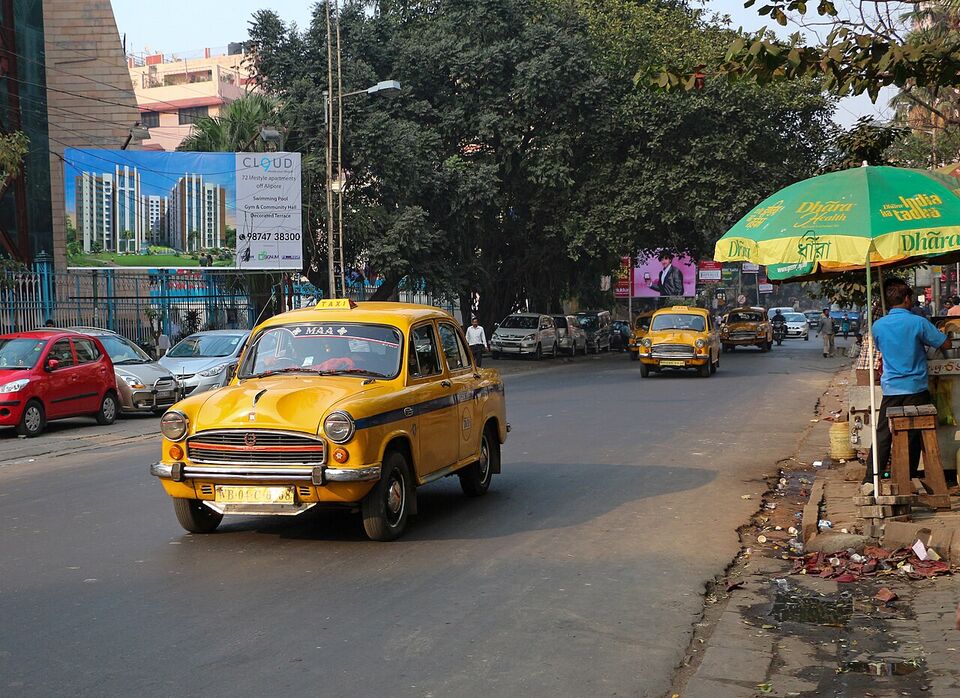
For other trips, use app-based cabs or a taxi with the fare agreed beforehand, and an auto-rickshaw for shorter hops. Some hand-pulled rickshaws survive in a few areas, and many visitors choose not to use them. Do not take any transport that insists on a fixed "special" price after you have gotten in.
Bengali food
Food is the reason many travelers fall for Kolkata. Bengali cooking uses rice as the staple, mustard oil and mustard paste, and fish. Reference sources single out the hilsa, a prized river fish, along with carp and bhetki. Fish is usually cooked with bones, so eat carefully and ask for help at a restaurant. Bengal is also known for its milk sweets, such as sandesh (a soft sweet of milk or fresh cheese).
- Fish and rice. A simple lunch of fish curry, rice and a vegetable dish is the classic Bengali meal.
- Street rolls. The city is the home of the kati roll, a flatbread wrap with chicken, egg or vegetable filling. It is quick, cheap and filling. Choose a busy stall with hot food made in front of you.
- Sweets. Visit an established sweet shop for sandesh and other milk sweets, and choose a busy shop where stock turns over fast.
- Street snacks. Puffed rice mixes and filled crisp shells are popular. See our health guide before you eat from a stall.
- Vegetarian cooking. Not all Bengali cooking is fish-based. A Vaishnavite temple tradition uses strictly vegetarian food that avoids even onions.
Drink only bottled or filtered water. Our food guide has more on regional dishes and how to order.
Durga Puja in outline
Durga Puja is Kolkata's biggest festival, honoring the goddess Durga and her victory over a demon. In Kolkata, the festival is built around thousands of temporary shrines called pandals, which are often elaborately designed, with large clay idols that are immersed in the river at the end. Durga Puja in Kolkata was inscribed on UNESCO's list of intangible cultural heritage in 2021.
In 2026 it ran from October 16 to 21, and it is now over. The 2027 festival is expected in early October, around October 5-10, according to a calendar source, but check the dates locally because the festival follows the lunar calendar. During the main days the city is packed: roads close, hotels fill and prices rise, and many offices and shops shut. If you want to see it, book rooms and trains many months ahead, and plan your pandal visits in the daytime or very early when crowds are lighter. If you prefer to avoid the crowds, choose a different month. Our festivals guide lists other major dates.
Where to stay and how to get there
We suggest choosing by area, and our general guide explains the price tiers: $ is under $120 a night for a double, $$ is $120 to $300 and $$$ is over $300.
Park Street and Camac Street
A good base for first-time visitors: central, with restaurants, shops and a short ride to the Victoria Memorial and the Maidan.
Near the Maidan and Chowringhee
Older hotels and guesthouses within reach of the park, the museums and the metro.
Howrah and the airport districts
Useful for late arrivals and early trains, but far from the sights.
Getting there
Americans need a visa. Apply for the e-Visa only on the official portal at indianvisaonline.gov.in/evisa: look-alike agent sites charge extra. Kolkata is on the e-Visa entry list, though most U.S. travelers first land in Delhi or Mumbai. Our entry guide explains the visa types and the arrival card.
- By air. Netaji Subhas Chandra Bose International Airport (code CCU) has domestic flights from across India. See our flights guide.
- By train. Howrah is the main long-distance station on the west bank, and Sealdah serves trains from the north and east. Overnight trains link Kolkata with Delhi and other big cities. A Vande Bharat sleeper train between Guwahati and Howrah was flagged off in January 2026. Check IRCTC for current services, and read our train guide for how booking works.
- Time. India Standard Time (UTC+5:30) applies all year, 10 hours 30 minutes ahead of New York in winter and 9 hours 30 minutes in U.S. summer time.
- Consulate. The U.S. Consulate General is at 5/1 Ho Chi Minh Sarani, Kolkata 700071, +91-33-6827-2400. For emergencies in India, call 112.
Monsoon and the best time
November to February is the most comfortable time. Typical highs are about 86°F (30°C) in November, 80°F (27°C) in December and 78°F (26°C) in January, with lows of about 68°F (20°C), 60°F (16°C) and 58°F (14°C). Rain is rare. From March, heat and humidity climb, and May and June are hot, with highs in the mid-90s°F (35°C) and sometimes over 100°F.
The monsoon runs from about June to September, with the highest rainfall in July and August (about 17 rainy days in each month) and an annual total of about 71 in (1,800 mm). Heavy rain can flood streets, slow transport and interrupt tram and bus services. Cyclones also reach the region at times. If you travel in the monsoon, bring a compact umbrella, quick-dry clothes and waterproof shoes, keep your plans flexible, and avoid wading through floodwater, which can contain sewage and hide open drains. Our when to go page compares the seasons across India.
Beyond the city: Darjeeling
Darjeeling, a hill town at about 6,709 ft (2,045 m) in the Himalayan foothills, is the most popular add-on to Kolkata. In November, highs are about 63°F (17°C) and lows 43°F (6°C), and rain is rare. From June to September it is wet, with 18 to 23 rainy days a month. Most travelers fly from Kolkata to Bagdogra, which is on the e-Visa entry list, or take an overnight train to New Jalpaiguri, then continue by road. Allow at least three or four days. We cover the toy train, tea estates and the mountains in our Himalayas guide. Some areas in the northeast and Sikkim need permits for foreigners: check before you go and use a licensed operator.
Common mistakes
- Planning Kolkata like Delhi, with a long list of monuments and no room for traffic or heat.
- Going to the Victoria Memorial without checking the closed day and the hours.
- Visiting during Durga Puja without booking months ahead, or arriving in the main days expecting to move quickly.
- Traveling in the monsoon without a flexible schedule.
- Photographing people, idol makers and temples without asking.
- Assuming Hindi is widely written: signs are in Bengali script as well as English.
Add it to a route in the trip builder, or ask us to plan the hotels, trains and guides for you.