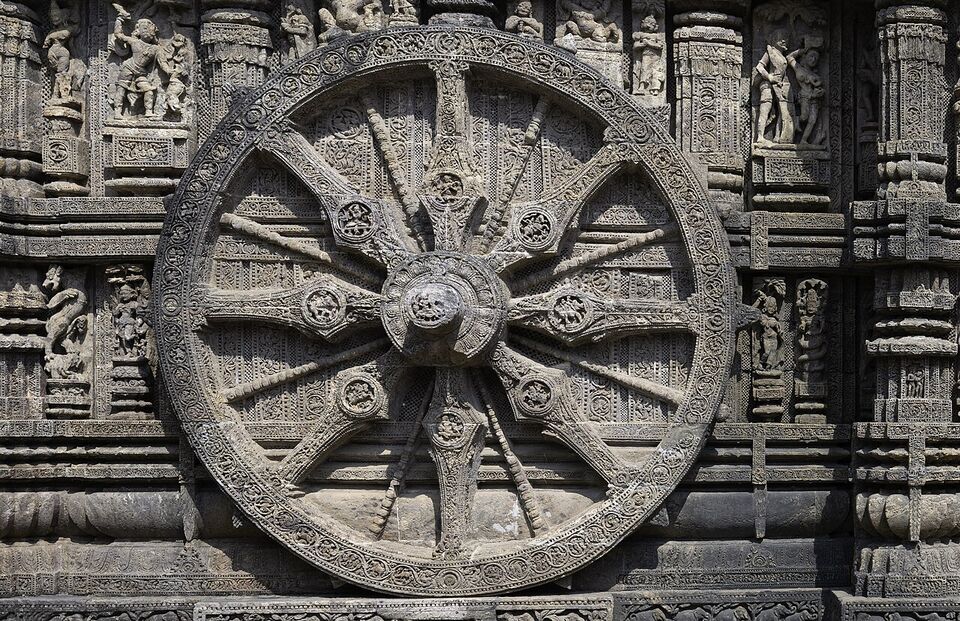
Overview
Visiting a place of worship in India is one of the most rewarding things a traveler can do, and also one of the easiest to get slightly wrong. The core rules are short. Take your shoes off, cover your shoulders and knees, keep your voice low, and watch what the people around you do. Rules for photography, entry fees and who may go inside change from one site to the next, so this page gives the pattern and then the exceptions.
India is home to Hindu, Muslim, Sikh, Jain, Buddhist, Christian and many other communities, and you will meet all of their buildings on an ordinary trip: a Hindu temple in Madurai, a mosque in Old Delhi, the Golden Temple in Amritsar, a church in Goa, a monastery in Ladakh. We treat each one on its own terms. The goal is that a visitor is welcome, causes no offense, and leaves with a good memory.
Two points to settle before anything else. First, where a rule is written on a sign at the gate, that sign wins over anything you read here, including this page. Second, the exact dress and shoe rules are a matter of the site's own management. Where we are not certain of a current rule, we say so and tell you what to check. For wider manners (greetings, eating with the right hand, how to refuse politely), see our etiquette guide.
The rules that apply almost everywhere
Shoes and socks
Shoes come off before the temple doorway, and in a large complex before the first gate. This is true at Hindu temples, mosques, gurdwaras and Jain temples, and at many Buddhist monasteries. Socks are usually accepted in cold places and in some mosques, but at many temples the rule is bare feet. Courtyards are stone, and in summer they can be too hot to walk across, so plan your visit for early morning or late afternoon, and keep a pair of thin socks in your bag in case socks are permitted.
Churches are different: you keep your shoes on, as at home. Always follow the signs, and when you see a row of shoes outside a door, take that as the instruction.
Covering up
The working rule is to cover shoulders and knees, for men and women alike. Loose trousers or a long skirt, and a shirt with sleeves, will work everywhere. Leggings alone, shorts, sleeveless tops and anything transparent can get you turned away at the door. Some temples sell or lend a wrap at the gate for a small sum, but do not count on it. A large cotton scarf (the kind sold in any market) is the single most useful item: it covers your head, your shoulders, or your knees if you need it to.
Some temples, particularly in the south, ask men to remove their shirts or wear a dhoti (a wrapped cloth) inside the inner shrine. This is not universal, so read the notice at the entrance. Leather belts, wallets and bags are sometimes asked to be left outside at certain temples, and Jain temples in particular may ask. Carry a small cloth bag for what you must leave at the cloakroom.
Behavior
- Speak quietly. Do not point your feet toward a shrine or an image when you sit.
- Do not touch images, priests or worshippers unless invited.
- Keep your phone silent. Take calls outside.
- Do not eat, smoke or chew gum in a sacred space, and do not carry in alcohol or tobacco.
- Walk in the direction people around you walk. At many Hindu temples and Buddhist sites this is clockwise around the shrine, a practice we explain below.
- Leave with the same respect as you arrived: do not turn your back on the main image if you can avoid it when stepping away, and do not rush.
Different from home
In the US a church or synagogue visit rarely means walking barefoot across a hot courtyard or wearing a wrap you borrowed at the gate. In India, shoes, covered knees and sometimes a covered head are the normal price of entry, and they apply to everyone, including the visiting foreigner. Treat them as a courtesy, not a fuss.
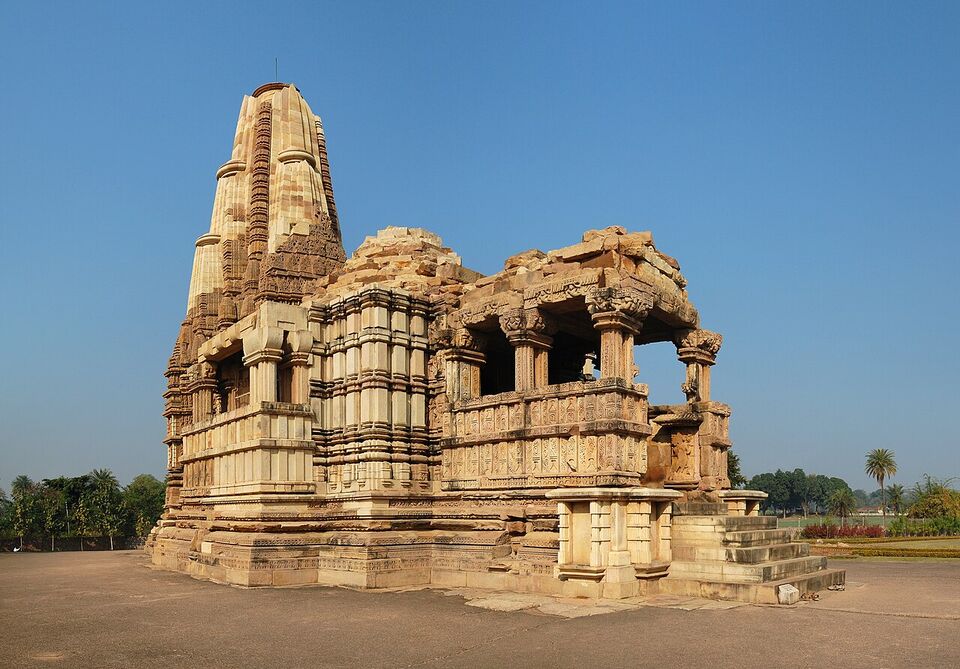
The main types of place and what to expect
The table below is a map, not a rulebook. Every site has its own signs and its own people in charge, and rules for dress and photography differ even between two temples in the same city.
| Place | Shoes | Head | Dress | Photography | Notes |
|---|---|---|---|---|---|
| Hindu temple (mandir) | Off, often before the gate | Usually uncovered | Shoulders and knees covered; men may be asked to remove shirts in some southern shrines | Often banned in the inner shrine | Some temples admit only Hindus; offerings and prasad are common |
| Mosque (masjid) | Off | Women usually cover hair; men may cover too | Long sleeves and trousers or long skirt | Rules vary; ask | Avoid the times of prayer, and Friday midday in particular |
| Gurdwara (Sikh temple) | Off | Everyone covers head, men and women | Modest, covered | Allowed in outer areas at many; ask | No tobacco or alcohol; the langar is open to all |
| Jain temple | Off | Usually uncovered | Modest; leather items may be left outside | Often limited | Strict customs on cleanliness; follow the attendant |
| Buddhist monastery | Off at the door | Uncovered | Modest, covered shoulders | Often banned inside the prayer hall | Walk clockwise around stupas and prayer wheels |
| Church | On | Uncovered | Modest; no beachwear | Usually fine outside services; ask | Do not walk about during Mass |
Hindu temples
A Hindu temple is a house for a deity, and worship there is personal and comes in many forms. Most temples have a gateway tower, a courtyard, and an inner room (the sanctum) where the image sits. People go to see and be seen by the image, an act called darshan. You do not need to share the belief to join the line, and visitors of other faiths are common at many large temples. But not every temple lets everyone in.
Non-Hindu restrictions
Some Hindu temples admit only Hindus, either in the whole complex or in the inner shrine. Jagannath temple in Puri and some temples in Kerala are widely cited examples. Each site sets its own rule, and signs at the gate say so, sometimes in English and often only in the local language. If you are unsure, ask at the entrance and accept the answer politely. Arguing at the gate does nobody any good. Many temples that restrict the inner shrine still let you see the outer courtyard and carved gateways, which is often where the most striking architecture is. If a particular temple matters to your plans, check the temple's own site or a regional tourism office before you travel.
Queues and the sanctum
At big temples the line to the sanctum moves slowly and is often managed by barriers. Follow the crowd and do not push. Some temples have a fast line for which you pay a ticket at an official counter: if it exists, there will be a printed fare and a receipt. At a few of the busiest shrines, men and women use separate lines. In the sanctum, people may touch the threshold or fold their palms. You can do likewise, or simply stand quietly and look. Do not walk across the front of someone who is praying.
Offerings and prasad
Worshippers often bring flowers, coconuts, fruit or sweets as offerings, bought at stalls outside. You are not obliged to buy any. If you want to join in, a small garland or a few flowers is simple. Stallholders near the shoe stand often quote higher prices to foreigners and sometimes pair the offering with shoe-keeping. You can decline. After the offering, a priest may return part of it as prasad, a blessed food that is shared. Accept it with your right hand (or both hands together), and eat it or carry it away: it is not polite to refuse or throw it down. If you cannot eat it for health or dietary reasons, accept it, thank the person, and give it to someone later, or keep it. Do not hold it in your left hand.
Walking around the shrine
Many temples have a path for walking around the inner shrine, called a pradakshina. Walk in the same direction as everyone else, usually clockwise. Hindus and Buddhists both use clockwise circuits around holy objects. Take it slowly, and keep your hands to yourself.
Priests, guides and money
The money question comes up at nearly every large temple. Three kinds of request are common, and it helps to know which is which.
- The official donation box. Most temples have a box or a counter. A donation is voluntary, and the amount is up to you. This is the cleanest way to give.
- Paid-entry or fast-line tickets. Where these exist, they are sold at a counter with a posted rate and a receipt. Pay there and keep the receipt.
- A person who approaches you. Someone near the gate may offer to guide you, hold your shoes, bless you or lead you to the front. Some are genuinely helpful and some are not. A priest or helper may place a mark on your forehead or tie a thread on your wrist, and then ask for a sum. You are free to refuse the thread or mark before it happens, and to say "no, thank you" and keep walking.
If you want a guide, agree on the fee before you start and write it down, or ask your hotel to suggest one. If you accept a blessing and then feel pressed, you can give a small note, say thank you and leave. You are not required to hand over a large amount, and nobody needs to be paid on the spot to be allowed to enter. For the wider range of tricks involving temples, shops and tickets, see common scams in India.
Watch out
Never hand your shoes or bag to a stranger who is not at an official stand, and never give a large amount of cash to anyone at a temple gate who says it is for a ritual. A real temple counts its income at the donation counter, and a receipt is normal for anything formal.
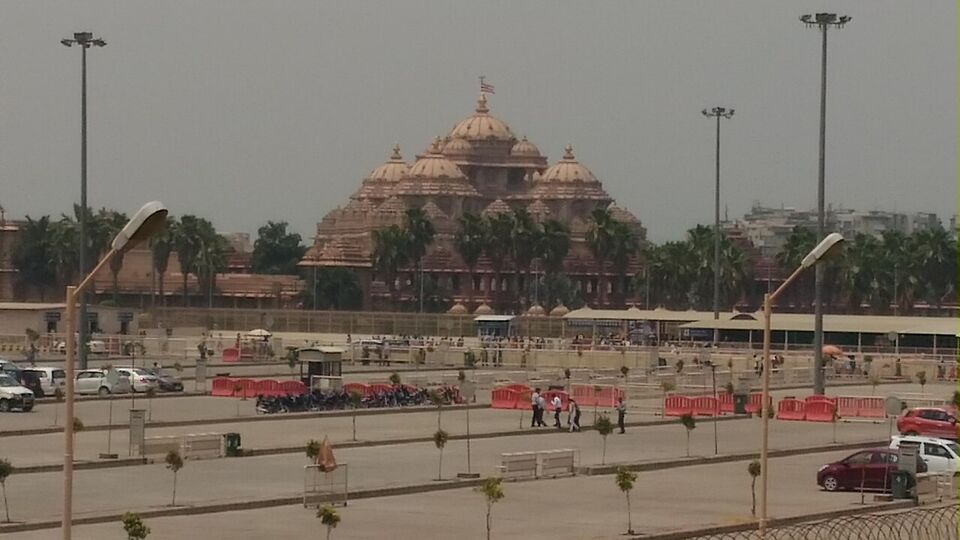
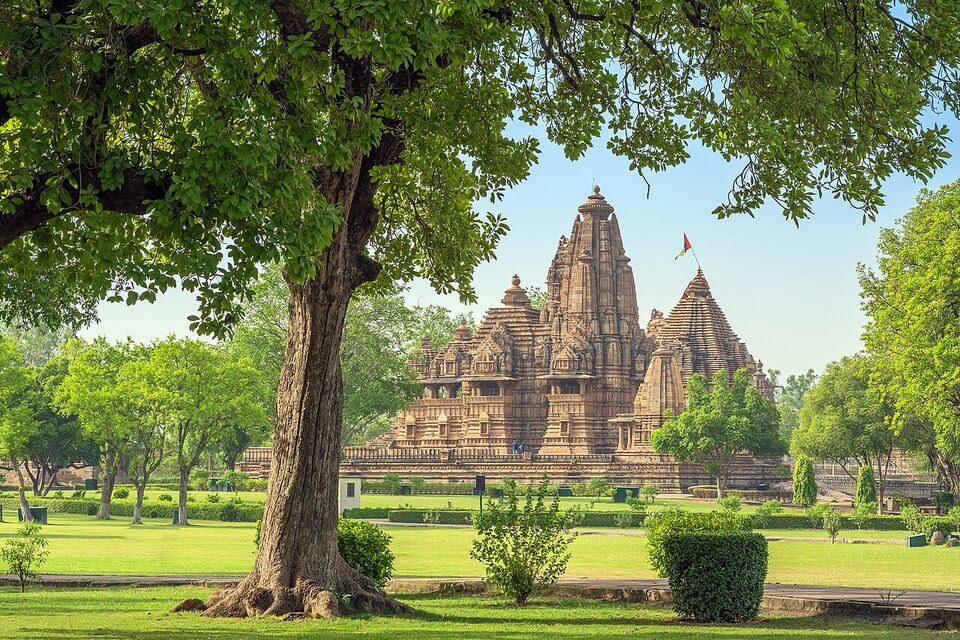
Mosques
Mosques are open to visitors at many sites, though not all, and the practice varies. Large mosques that are also tourist landmarks, such as the Jama Masjid in Old Delhi, are used to visitors, but they are working places of prayer first. Avoid the time of the five daily prayers, and especially Friday midday, when the main hall fills with worshippers and visitors are often asked to wait or come back. Check the current hours and any entry or camera charge on the spot: we have not been able to confirm them for this edition, and they change.
Dress with more coverage than you would at a Hindu temple: long sleeves, long trousers or a long skirt, and a scarf for women's hair. Some mosques have an area set aside for women, and some do not admit women to the main hall. The attendant will tell you where to stand. Wash-basins by the entrance are for worshippers preparing for prayer, not for visitors' feet. Do not walk in front of someone praying. Never take photos of people at prayer without permission. Shrines to Sufi saints, called dargahs, follow their own customs, often with a head covering required for everyone and women directed to a separate area.
Gurdwaras, the Golden Temple and the langar
A gurdwara is a Sikh place of worship, and every gurdwara is open to people of all faiths. The most famous is the Golden Temple (Harmandir Sahib) in Amritsar, which the encyclopedic sources we checked describe as drawing about 150,000 people a day and as one of the most visited religious sites in the world. It sits in the middle of a sacred pool. Our Amritsar guide covers the city; here we cover how to behave.
Entry rules
- Head covered: everyone, men and women, covers their head. Bring a scarf or a plain cloth. Some gates offer cloths for visitors, but bring your own to be safe.
- Shoes off: leave them at the shoe counter, which is free at official stands. Many people also pass their feet through a shallow water channel at the entrance.
- No tobacco or alcohol: leave them outside, along with anything you would not want a worshipper to see.
- Dress modestly: shoulders and knees covered, as elsewhere.
- Cost: we know of no entry fee. Confirm on the day. If a person claims you must pay to enter, that is a red flag.
Walk clockwise around the pool, keep to the flow of the crowd, and keep your voice low. Many visitors queue for the inner sanctum, which can take an hour or more at weekends and festivals. Photography around the pool is usually fine, but we recommend asking about photographing inside the sanctum, and never photograph people bathing. If in doubt, ask a volunteer in uniform.
The langar
The langar is a free community kitchen attached to a gurdwara. At the Golden Temple, the langar hall serves vegetarian food to every visitor regardless of faith, gender or background, and the sources we read give a figure of more than 100,000 meals a day. Everyone sits on the floor in rows and eats the same meal, served by volunteers. This is a core part of Sikh practice: a statement that all people are equal.
What to know when you go in:
- Cover your head, remove your shoes, and follow the queue into the hall.
- Sit where the volunteers direct you, close to the person beside you, and wait to be served. Hold out your hands or plate for the food.
- Eat what you take, and take only what you can eat. Waste is frowned upon.
- When you finish, leave your plate where indicated and move out so the next group can sit.
- There is no charge. A donation is welcome and entirely your decision, made at the official donation point, not to someone in the hall.
Volunteering in the kitchen, such as washing plates or serving, is part of the practice, and some visitors take part. Ask a volunteer before you join. Other gurdwaras across India serve a langar too, and the etiquette is the same.
Jain temples, Buddhist monasteries and churches
Jain temples
Jain temples are often extraordinarily detailed in carved marble, and they have strict customs about cleanliness and non-violence. Remove shoes, and expect to be asked to leave leather items such as belts and wallets outside. Photography is often limited. Follow the attendant. Do not touch the images.
Buddhist monasteries
Monasteries in Ladakh, Sikkim, and the hills around Dharamshala and McLeod Ganj are active communities as well as sights. Remove shoes at the door, dress modestly, walk clockwise around stupas and prayer wheels, and ask before you photograph monks or the inside of a prayer hall. Some monasteries charge a small fee to visitors or ask for a donation. Some areas where monasteries are found need an extra permit for foreigners: see our entry guide and the Himalayas page, and check before you go.
Churches
India has old churches in Goa (see our Goa guide), Kerala and elsewhere. Keep your shoes on, cover your shoulders and knees, do not walk around during Mass, and ask before taking photographs of a service. Many churches post visiting hours that avoid worship times.
Insider tip
Not every sacred building is a Hindu, Muslim, Sikh, Jain, Buddhist or Christian place. The Lotus Temple in Delhi is a Baha’i house of worship open to people of all faiths, with a visitors' center and a quiet-hall rule. It is a good first stop if you want to practice the habits of silence and removing shoes before you try a working Hindu temple. Read more in our Delhi sights guide.
Women at places of worship
Women are welcome at most places of worship in India and make up a large share of worshippers. The differences are specific.
- Gurdwaras: women and men are equal in the prayer hall and in the langar. Everyone covers the head.
- Mosques: some have separate areas for women, and some larger mosques do not admit women to the main hall. Cover your hair and arms.
- Hindu temples: most admit women to all areas. A small number of shrines, and a few other sites, have customs or rules that limit women's entry, for instance at certain times of life or in certain parts of the complex. These are the rules of the site and are sometimes debated within India itself. Read the notice, and if the rule matters to you, ask before queuing.
- Jain temples: some ask women who are menstruating not to enter. Ask the attendant if you are unsure.
Our page for women travelers covers dress and transport for the whole trip.
Photography
The default is to ask. Inside the inner sanctum of a Hindu temple, a mosque's prayer hall and a monastery's assembly hall, photography is often banned, and some places also ban phones and cameras altogether, with a cloakroom to leave them. Courtyards and outer walls are often fine, but some temples charge a fee for a camera or video. Look for signs and watch what the crowd does.
- People: ask before photographing a worshipper, priest or monk. A smile and a gesture is usually enough, and "no" is a complete answer.
- Selfies: do not take selfies with the deity or the sanctum behind you, and do not pose in prayer positions for a photo.
- Cremations: do not photograph cremation ceremonies, such as those beside the river in Varanasi. They are private grief in a public space. Our Varanasi guide explains how to watch the evening Ganga aarti with respect.
- Drones: banned in and around the Taj Mahal, and restricted at many other sites and in many areas. Leave the drone at home.
- Monuments: at the Taj Mahal, the official site bans food inside and tripods without ASI permission; check the same for other sites.
Entry fees, shoe storage and small costs
Temples, mosques and gurdwaras that are places of worship rarely charge for entry. Temples that are also monuments run by the Archaeological Survey of India or a state, such as the Taj Mahal, charge visitors and often charge foreigners more than residents; check whether a given temple or monument has a ticket. For example, the Taj Mahal asks foreign visitors ₹1,100 (about $12), plus an optional ₹200 (about $2) to enter the main mausoleum. Prices of other sites are not confirmed for this edition: look on the official ticket page. Our money guide explains the two-tier prices.
The cost people forget is the shoe stand. Official stands charge nothing or a few rupees, and a small coin or note is a fair tip. Prices at informal stands near the gate are often higher. A small cash float in coins and small notes helps: you cannot pay by card at most shoe counters, donation boxes or flower stalls.
Hours and booking
Many temples close in the middle of the day for a few hours and reopen in the afternoon. Hours also change on festival days. We could not verify the hours of individual temples for this edition, so check each temple's official site or notice board. Our festival guide lists the days when crowds spike and queues lengthen.
What to bring and wear
- A large cotton scarf to cover your head, shoulders or knees.
- Loose trousers or a long skirt; a top with sleeves.
- Slip-on shoes that are easy to leave and collect.
- Thin socks for places that allow them.
- A small cloth bag for items you might be asked to leave.
- Coins and small notes for shoe stands, flowers and donation boxes.
- Hand sanitizer and wet wipes for your feet after a stone courtyard.
For more on clothing for the whole trip, see our packing guide.
Common mistakes
- Wearing shorts or a sleeveless top, and being turned away at the gate.
- Forgetting a head covering for a gurdwara.
- Visiting a mosque at the time of prayer or on Friday midday, then being asked to leave.
- Photographing the inner shrine, a monk or a worshipper without asking.
- Pointing your feet at an image, or touching a statue or a priest.
- Handing over shoes or money to an unofficial person at the gate.
- Accepting a thread, a mark or a garland, then being surprised by a request for a large sum.
- Assuming that "everyone is welcome" at every Hindu temple. Some are not open to non-Hindus, and the rule is not up for debate.
- Treating a visit as a photo stop and not a place where people are praying.
If you remember one thing, make it this: the people around you are not part of the scenery. Follow their lead, and ask when you are not sure.
Add it to a route in the trip builder, or ask us to plan the hotels, trains and guides for you.