Overview
Tamil Nadu is the southeastern state of India, and it is the place to see the great Dravidian temples: tall carved gateways, pillared halls and living worship that has gone on for centuries. Chennai (Madras) is the gateway, and you can reach Mahabalipuram, Kanchipuram and Pondicherry in a few hours by road. Most visitors need five to ten days, and the best months are December to February.
The main language is Tamil, which has its own script, and signs are often not in Hindi. English is widely understood in hotels and cities, and a simple greeting such as vanakkam (hello in Tamil) is appreciated. Our Hindi phrases page is useful in the north, but in Tamil Nadu a few Tamil words will take you further.
The state is large, and the temple towns lie far apart. Chennai to Madurai is about 285 miles (460 km), so plan with trains, flights or a car with a driver, not a casual drive. This page covers the temples, Chennai, the hill stations, Pondicherry and Auroville, the food, temple manners and the monsoon, with a sample route and a comparison table. See our destinations page to compare Tamil Nadu with other regions.
Tamil Nadu at a glance
The table gives the main places in the rough order of a route that runs from the coast inland and south. Distances are approximate, and road times vary greatly with traffic.
| Place | Known for | Allow | Notes |
|---|---|---|---|
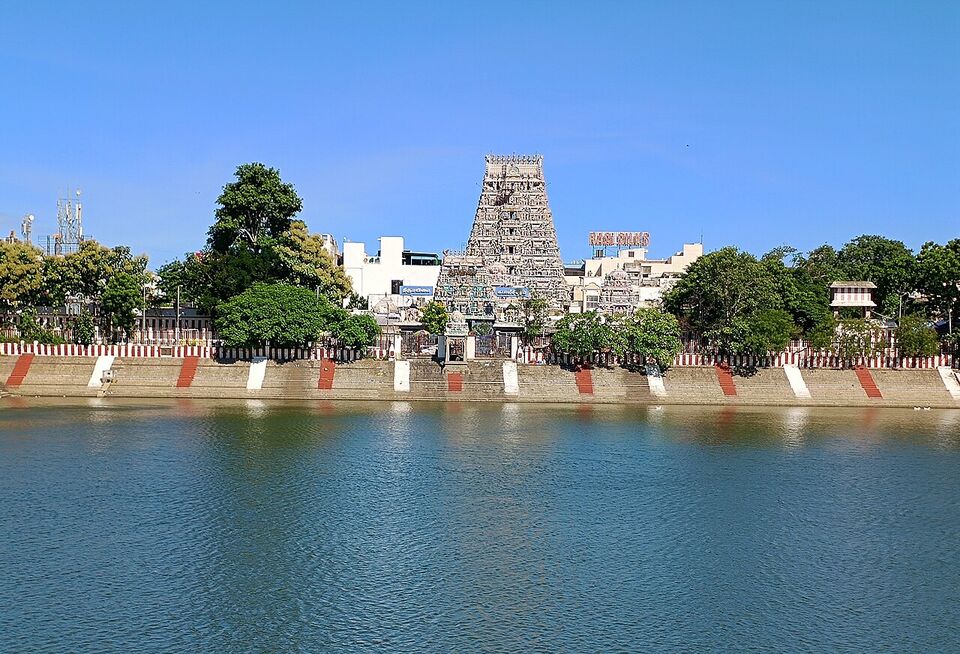
| Chennai | Gateway city, Marina Beach, Kapaleeshwarar Temple | 1 to 2 nights | Humid; busy traffic; US Consulate General |
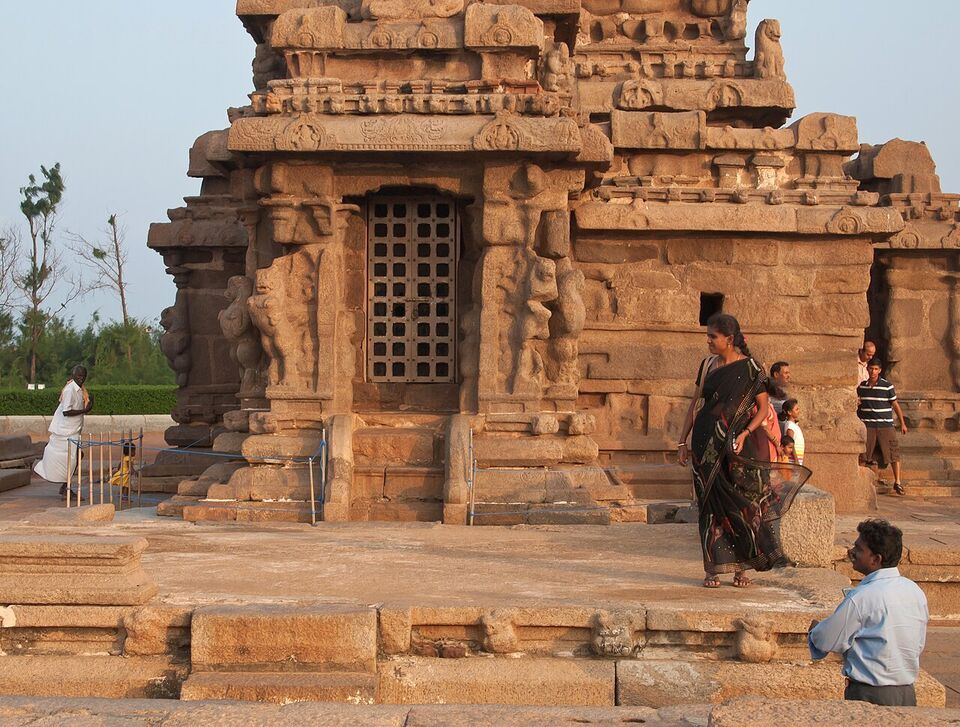
| Mahabalipuram | 7th and 8th century rock-cut monuments and Shore Temple | 1 night | UNESCO World Heritage Site; about 35 miles (56 km) south of Chennai |
| Kanchipuram | Temple city, silk weaving | Day trip | About 45 miles (72 km) from Chennai |
| Pondicherry (Puducherry) | French quarter, cafes, seafront; near Auroville | 2 nights | About 95 miles (150 km) from Chennai |
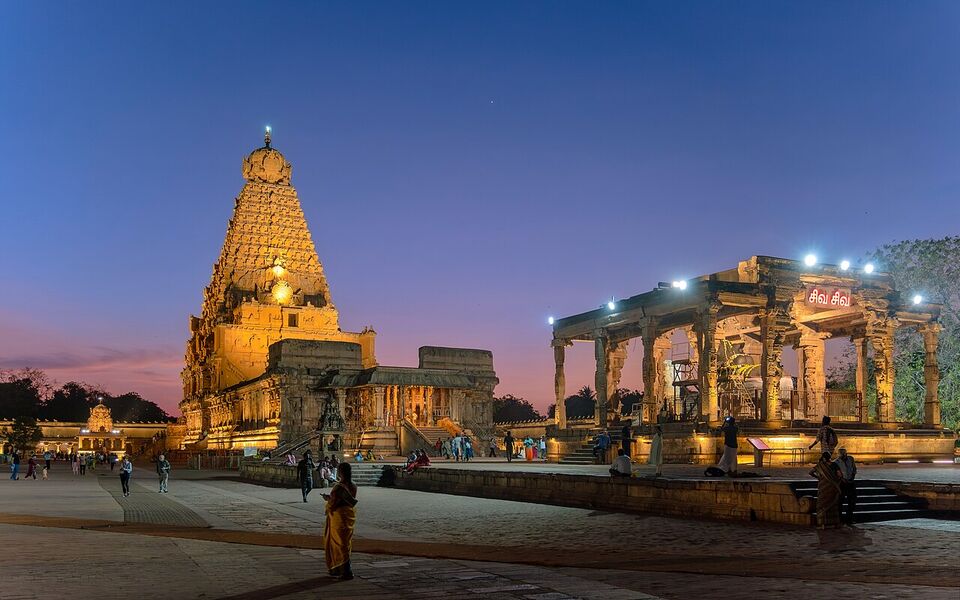
| Thanjavur | Brihadisvara Temple, a Chola-era temple | 1 night | UNESCO site; the old center of the Chola kingdom |
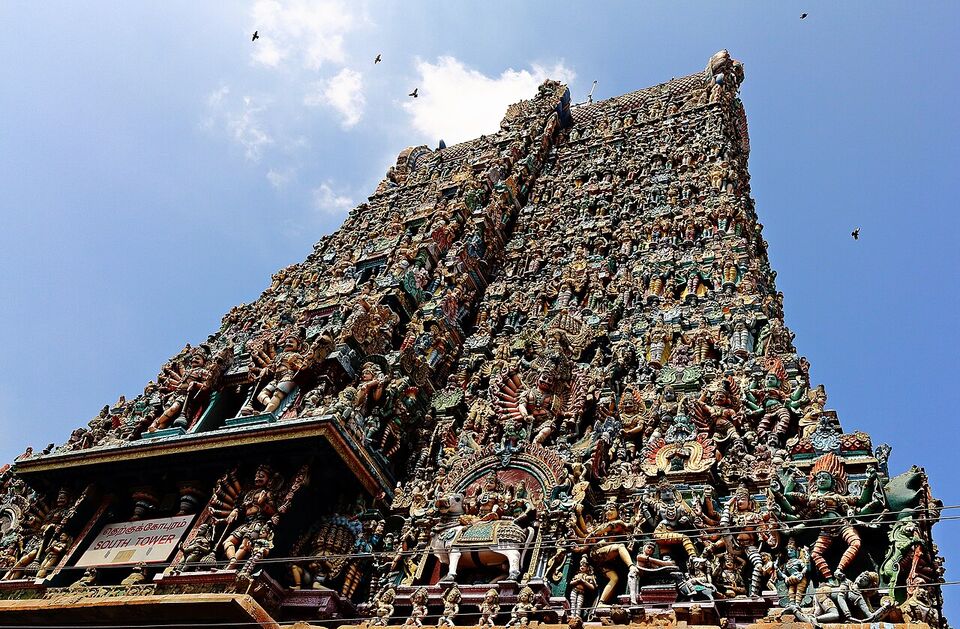
| Madurai | Meenakshi Temple, a huge temple city | 2 nights | About 105 miles (170 km) from Thanjavur |
| Ooty and Coonoor | Nilgiri hills, tea, heritage railway | 2 nights | About 7,350 ft (2,240 m) at Ooty |
| Kodaikanal | Hill station with lake and cool air | 1 to 2 nights | About 75 miles (120 km) from Madurai by road |
The Dravidian temples
Dravidian temple architecture is the style of South India: a high, stepped, carved tower (gopuram) over each gateway, courtyards, columned halls and a water tank. These are working temples, not museums, so you will see worshippers, priests and offerings. Plan your visit around opening times and festivals, and be ready to wait in a line at busy shrines.
Meenakshi Temple, Madurai
A large temple on the south bank of the Vaigai River, dedicated to Meenakshi and Shiva (as Sundareswarar). Four main gateways and many smaller ones surround it, and the southern tower rises to about 170 ft (52 m). It is managed by the state's Hindu religious department; check its official site for hours, dress and phone rules.
Brihadisvara Temple, Thanjavur
An early 11th century Shiva temple and a UNESCO World Heritage Site. It is known for its tall central tower and a large stone courtyard. Go early or late, when the stone is cooler.
Kanchipuram
A city of old temples and a center of hand-woven silk. Visit a weaving workshop or a cooperative, and be careful about high-pressure sellers and claims of "pure silk" without proof.
Mahabalipuram (Mamallapuram)
A coastal town of 7th and 8th century rock-cut temples, cave sanctuaries, a giant open-air relief known as the Descent of the Ganges, and the Shore Temple, all UNESCO-listed. It is an easy trip from Chennai.
We could not confirm current ticket prices, camera fees or opening hours for any of these sites. Foreign visitors usually pay a higher price at protected monuments than Indian residents, so ask at the ticket window and check official pages before you go. Our temples page covers general temple etiquette across India.
How to dress and behave in a temple
Temples are places of worship, and a few simple habits go a long way.
- Dress: cover your shoulders and knees. Loose cotton trousers or a long skirt and a light shirt with sleeves work well.
- Shoes: take them off at the entrance and leave them at the stand or with an attendant, who may ask for a small tip. Carry socks if the stone is hot at midday, because paving can burn bare feet.
- Leather: some temples ask you to leave leather belts and bags outside, so ask.
- Photography: it is commonly banned inside shrines and often allowed in courtyards. Follow the signs, and do not photograph worshippers without permission.
- Manners: walk clockwise around shrines if others do, keep your voice low and do not point your feet at an image.
- Money: carry small notes for shoe stands, donations and tips. Cash is needed in many places.
Different from home
Some temples admit only Hindus to the inner sanctum, and a few to the whole complex. This is a rule of the temple, not a personal judgment, and it varies from place to place. Look for signs at the entrance, ask a staff member politely, and accept the answer. Many large temples have outer areas open to everyone. We could not confirm the rules for each temple.
Chennai
Chennai (Madras) is the capital of Tamil Nadu, a large, humid coastal city that most visitors use as a base for a day or two. It is an old colonial port and also a center of music, dance and hospitals. It has a more modest tourist scene than Mumbai or Delhi, which suits people who want to see daily life.
Marina Beach is a long city beach where families walk, play and eat in the evening. Treat it as a place for a stroll rather than a swim, since currents can be strong and the surf is rough. The Kapaleeshwarar Temple in Mylapore is an active Shiva temple with a tall gateway, and the surrounding streets show daily life. Other options are the old government buildings, the museums and the market areas. Check hours for any museum before you go.
The US Consulate General is at 220 Anna Salai, Chennai 600006, phone +91-44-2857-4000. Chennai's airport is on the official e-Visa entry list. We could not confirm which airlines fly nonstop between Chennai and the US this winter, so check airline sites, since schedules change. See our flights page.
Idli and sambar are typical of the city, and filter coffee (filter kaapi) is made with chicory and served hot, strong and sweet with froth. Many small restaurants serve a "meals" plate on a banana leaf, with rice and several side dishes.
Getting around Chennai
Traffic is heavy, and distances are bigger than they look, so group sights by area: Mylapore and the temple in one outing, the beach and old city buildings in another. Taxis and ride apps are the simplest choice for visitors, and auto-rickshaws are common for short hops; agree the fare first if the meter is not used. The city also has suburban trains and a metro, but we could not confirm routes or fares, so check at the station. Chennai Central is the main railway station for long-distance trains, and you should allow plenty of time to find your platform.
October to December is the wettest part of the year in the city. Carry a light rain jacket, wear sandals that dry quickly, and avoid walking through flooded streets, where open drains can be hidden under the water.
Hill stations: Ooty and Kodaikanal
If you want cooler air, Tamil Nadu has two popular hill stations. Both are crowded in April to June and on holidays.
Ooty and the Nilgiri toy train
Ooty (Udhagamandalam) is in the Nilgiri hills at about 7,350 ft (2,240 m). The Nilgiri Mountain Railway, which opened in 1908, is a metre-gauge rack railway and the only operational rack railway in India. It is part of the UNESCO-listed Mountain Railways of India. It climbs from the plains toward Coonoor and Ooty. We could not confirm the current service status, timetable or booking rules, and rain and landslides can disrupt the line, so check with Indian Railways or IRCTC before you plan around it. If the train is not running, a road transfer is the alternative.
The closest major airport is Coimbatore, about 55 miles (90 km) from Ooty by road, and it is on the official e-Visa list. Hill roads are winding, so allow extra time.
Kodaikanal
Kodaikanal is a smaller, quieter hill station near a lake, reached from Madurai or Coimbatore. It suits a short stay and gentle walks. Check road and weather conditions in the monsoon, as fog and rain can slow travel.
Hill roads can be dangerous at night and in poor weather. The CDC advises avoiding night driving. See our getting around page.
Pondicherry and Auroville
Pondicherry (Puducherry) is a former French colony on the coast, and its French quarter has tree-lined streets, colonial buildings, bakeries and cafes. The quarter is small and walkable, and best explored early or in the late afternoon. It is not in the same state as the rest of this page, since Puducherry is a separate territory, but it is usually visited as part of a Tamil Nadu trip.
Auroville is an experimental community near Pondicherry that welcomes visitors to some areas. We could not confirm current visiting arrangements, so check its official site before you go and respect any rules on silence, photography and entry. There is no airport at Pondicherry on the official e-Visa list, so most visitors come by road from Chennai (about 95 miles or 150 km) or by train.
The territory has its own rules on alcohol and other matters, which can differ from Tamil Nadu's. We have not confirmed them, so check locally and carry ID.
Mahabalipuram in more detail
Mahabalipuram (also called Mamallapuram) was a port of the Pallava dynasty, and its monuments date from about the 7th and 8th centuries. They include the rathas (temples carved to look like chariots), cave sanctuaries, the giant rock relief known as the Descent of the Ganges and the Shore Temple on the sea. The site is spread across the town, so most visitors take a half day on foot or by bicycle rickshaw, with a break for lunch.
Go early for light and shade, since the monuments sit in the open sun. The beach by the Shore Temple is for walking; do not swim where there are no lifeguards, because the surf and currents can be strong. The town also has stone-carving workshops where sculptors work in granite. If you buy a piece, ask how it will be shipped, and remember that you cannot bring home anything that counts as an antiquity or an endangered-species product. Check cbp.gov before you buy.
Chettinad and South Indian food
The Chettinad region has its own cuisine, listed among the cuisines of South India and known for a strong use of pepper and spices. If you do not eat very spicy food, tell the restaurant when you order. Vegetarian dishes are easy to find in Tamil Nadu, and many restaurants serve only vegetarian food.
Everyday dishes include dosa (a thin fermented crepe), idli (steamed rice cakes), vada (a fried lentil snack), sambar (a lentil and vegetable stew) and rasam (a thin, peppery soup). Filter coffee is a popular drink in Tamil Nadu. Eat at busy places, drink only sealed water, and be careful with ice and raw salads. See our food page for more, and the health page for general precautions. We do not name individual restaurants, because we cannot confirm which are open.
The northeast monsoon and cyclone season
Tamil Nadu is different from the west coast: its main rainy season is the northeast monsoon, from about October 20 for roughly 50 days, to December or January. Chennai gets most of its rain between October and December, and the dry season runs from January to May. Cyclones are common in this season and can bring heavy rain, flooding and storm surge, as well as disrupted flights and trains.
For an October to December trip, keep your plans flexible, buy flexible tickets and travel insurance, and check the weather forecast and any storm warnings from the India Meteorological Department (mausam.imd.gov.in). We could not confirm current cyclone advisories. If a cyclone warning is issued, follow local authorities and your hotel. For the best weather, travel December to February: temperatures are mild by South Indian standards and rain is less likely, though the first weeks of December can still be wet. See our when to go page.
The south of India still gets hot and humid from March through June, so plan temple visits early in the morning and rest in the middle of the day.
A sample eight-day route
- Days 1 to 2
Chennai
Arrive, rest, and see Kapaleeshwarar Temple and the Marina Beach promenade. Keep the second day flexible for jet lag.
- Day 3
Mahabalipuram
Take a car with a driver to the shore monuments. Visit early, and stay the night near the sea or go on to Pondicherry.
- Days 4 to 5
Pondicherry and Auroville
Walk the French quarter in the morning and visit Auroville if open to you.
- Day 6
Thanjavur
Travel inland and see the Brihadisvara Temple at the cooler ends of the day.
- Days 7 to 8
Madurai
Visit the Meenakshi Temple, the markets and the surrounding streets. Fly or take the train back to Chennai or onward.
For a shorter trip, do days 1 to 3 and add Kanchipuram as a day trip. For a hill stay, fly into Coimbatore for Ooty. Our trains page and planning page help with the logistics, and Kerala is the natural next stop to the west.
Getting there, health and safety
Airports on the official e-Visa entry list include Chennai, Tiruchirappalli (Trichy), Madurai and Coimbatore. Americans need a visa, and the only official e-Visa site is indianvisaonline.gov.in; look-alike agent sites charge extra. India Standard Time (UTC+5:30) runs all year with no daylight saving, 10 hours 30 minutes ahead of New York in US winter and 9 hours 30 minutes in US summer time.
The US State Department rates India Level 2, Exercise Increased Caution, as of November 2026; check travel.state.gov. In an emergency in India call 112. See our safety and scams pages. The common problems are touts at temples and tourist sites, drivers who steer you to shops, and silk or souvenir sellers who exaggerate. Agree prices first and use only registered taxis or ride apps.
The CDC lists dengue as present in India, so use mosquito repellent, and drink only sealed bottled or filtered water. Ask a travel doctor about vaccines and malaria prevention at least a month before you go. India drives on the left, and roads between the temple towns are busy, so a car with a driver is usually the best option.
Insider tip
Start early. Temple courtyards are hot by late morning, and the stone floors can be painful on bare feet. A morning visit, a rest at midday and a second visit near sunset is a good pattern in every temple town.
Add it to a route in the trip builder, or ask us to plan the hotels, trains and guides for you.