Overview: what to expect in Delhi
Delhi is India's capital and the usual first stop on a trip, and it is a city that rewards a plan. It is vast, with a population of roughly 16.8 million in the National Capital Territory, and its sights are spread out. The good news is that the Metro links most of them, taxis and app rides are easy, and the main monuments cluster into a few areas.
This page covers how Delhi is laid out, where to stay, how to get in from the airport, how to move around, what to do on a first and second day, and how to handle the heat, the winter air, the food and the touts. For the monuments themselves, see our Delhi things to do page. If Delhi is the start of the Golden Triangle, read that guide too.
Different from home
India drives on the left, and crossing a road on foot takes nerve. Wait for a gap, walk steadily, and do not stop halfway. Many roads have no marked crossings, and vehicles rarely slow down. Look right first, then left, and watch for motorbikes on the pavement.
Old Delhi and New Delhi
Delhi has been a capital many times over, and the layers show. The two parts first-timers hear about are Old and New Delhi, and they feel like different cities.
Old Delhi
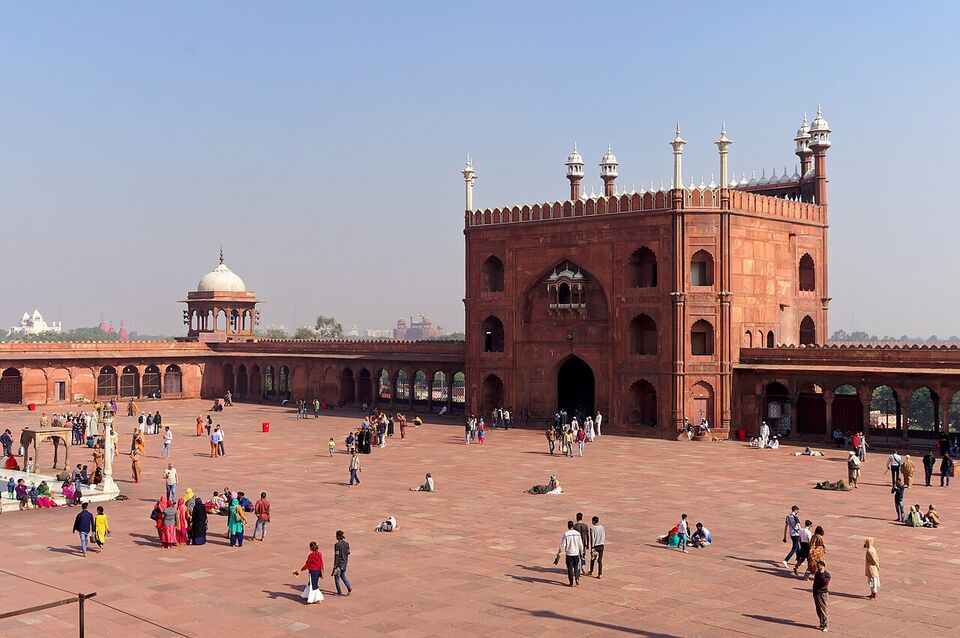
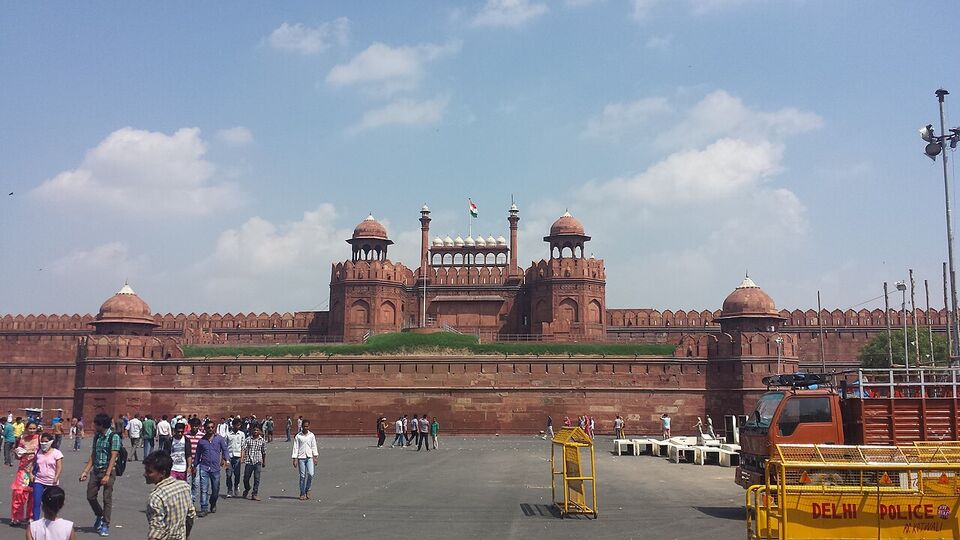
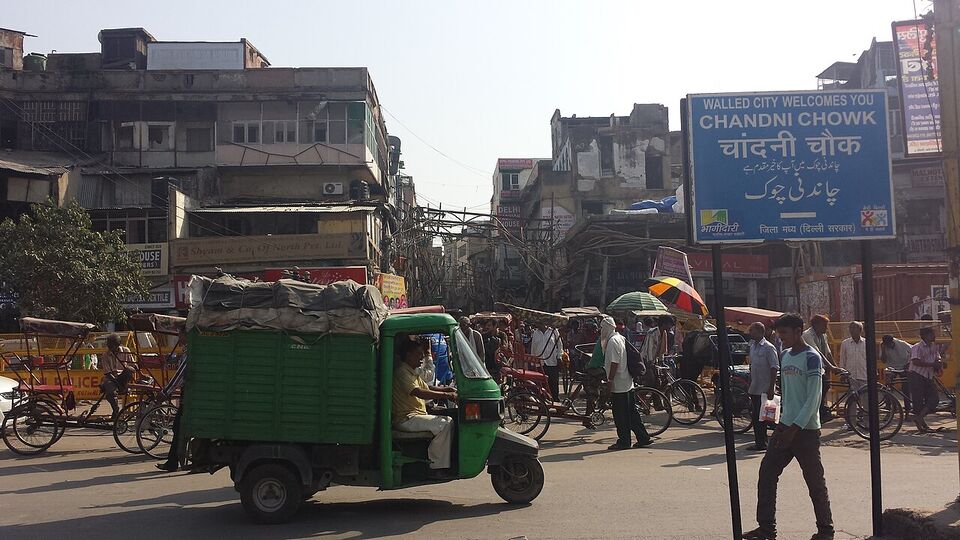
Old Delhi is the walled city that the Mughal emperor Shah Jahan built in the 17th century, once called Shahjahanabad. Its center is Chandni Chowk, a busy main street that runs from the Red Fort toward the Fatehpuri Masjid, with the Jama Masjid nearby. Behind it are narrow lanes of wholesale markets: Chawri Bazar (opened as a hardware market in 1840) and Khari Baoli, one of the city's oldest spice, nut and dry fruit markets (opened 1850).
Old Delhi is noisy, crowded and full of life. It suits visitors who like markets, food and architecture, and who are comfortable with a lot of people. It is not a place for a lot of luggage or for driving: go by Metro, and walk or take a cycle-rickshaw for the last stretch.
New Delhi
New Delhi is the planned city that the British laid out in the early 20th century, inaugurated in 1931. It has wide tree-lined avenues, white bungalows, government buildings and India Gate at the end of the ceremonial axis. It is quieter, greener and easier to walk than Old Delhi, and many embassies and hotels are here.
Connaught Place, the circular commercial hub in the center, is the starting point for many visitors. It is full of shops, cafes and offices, and its touts and pushy "helpers" can be tiring. New Delhi railway station sits just to the north-west, at the edge of Paharganj.
South Delhi and beyond
South Delhi includes the Qutub Minar and Mehrauli, Humayun's Tomb and Nizamuddin, Hauz Khas, and residential neighborhoods with cafes and boutique hotels. Gurugram (Gurgaon) is a corporate city south-west of the capital, and Noida lies east. A new airport at Noida (Jewar) was inaugurated in March 2026, but most visitors still use Delhi's Indira Gandhi International Airport.
Where to base yourself
Pick a base by what you want from Delhi, not by price alone. The tiers below use $ (under $120 a night for a double), $$ ($120 to $300) and $$$ (over $300). We do not name hotels, because we cannot confirm which are open and good in 2026. Read the where to stay guide for how to choose.
| Area | Suits | Pros | Cons | Typical tier |
|---|---|---|---|---|
| Central Delhi (Connaught Place, Janpath) | First-timers, short stays | Metro hub, easy for the station and Old Delhi | Touts, traffic, tired streets | $ to $$ |
| Lutyens Delhi (near India Gate, Chanakyapuri) | Couples, comfort-seekers | Quiet, green, close to India Gate and the embassies | Fewer restaurants within walking distance | $$ to $$$ |
| South Delhi (Hauz Khas, Greater Kailash) | Second-timers, food lovers | Cafes, quieter streets, boutique stays | Longer rides to Old Delhi | $$ |
| Aerocity (near the airport) | Late arrivals, early flights | Next to the airport, Metro link | Far from sights; business-hotel feel | $$ to $$$ |
| Old Delhi | Adventurous travelers | Atmosphere, food, close to the Red Fort | Noise, narrow lanes, limited choice | $ to $$ |
| Paharganj (by New Delhi station) | Backpackers on a tight budget | Very cheap, near the station | Touts, scams, noise, quality varies | $ |
For a first visit we suggest Central Delhi if you want the Metro on your doorstep, or Lutyens Delhi if you want comfort and quiet after a long flight. If you arrive late or leave early, a night in Aerocity can be the easiest option.
Getting in from the airport
Most international flights land at Indira Gandhi International Airport (IGI), which has Terminals 1, 2 and 3. After immigration (the e-Visa is checked and biometrics taken there; see our entry page), you have three main options.
Airport Express Metro
The Airport Express line runs 14.1 miles (22.7 km) from New Delhi station to Yashobhoomi Dwarka Sector 25, serving the airport. The ride between New Delhi station and the airport takes about 16 minutes, and trains run every 10 minutes. The fare is well under ₹100 (about $1); check the current fare on delhimetrorail.com. The Metro runs from about 5 a.m. to midnight, so it will not suit a very late arrival.
We could not confirm the line's current status on an official page, so check before you travel. A new line, the Golden Line, is planned to reach Aerocity and Terminal 1 in December 2026, but treat that as planned and not guaranteed.
Prepaid taxi and ride apps
The airport has a prepaid taxi counter, and cab and private-car options are listed on the airport's own site, newdelhiairport.in. Ride apps also work, with pick-up points. We could not confirm current fares, so agree the price first, and use the prepaid counter or an app rather than a driver who approaches you in the hall. Travel at night is easier by prepaid taxi, and a registered taxi is the safer choice for people arriving alone. See our getting around guide for more.
Hotel transfer
Many hotels will send a car for a fixed price. After a long flight this is often the simplest choice, and the driver will hold a sign with your name. Ask the price when you book.
Insider tip
Download a ride app and a Metro map before you land, and set up your phone's data (an eSIM or a US plan with international data). The airport site lists an eSIM option, but check terms before you rely on it. You will use maps constantly.
Getting around: Metro, apps and rickshaws
Delhi Metro
The Delhi Metro is clean, quick and cheap, and runs about 5 a.m. to midnight on a network of color-coded lines, with trains every 1 to 10 minutes. Eating, drinking and smoking are not allowed. The first coach of every train is reserved for women, and on some lines the last coach is as well at terminals. Security checks at the gate are like an airport's: bags go through a scanner and you may be patted down.
Besides single-journey tickets, visitors can buy a tourist card, ₹200 (about $2) for one day or ₹500 (about $5) for three days, which includes a refundable ₹50 (about $0.50) deposit. Ask at a station counter, and check the current fares on the DMRC site.
Metro stations useful for sights include Chandni Chowk and Lal Qila (Old Delhi), Central Secretariat and Khan Market (central), Jor Bagh for Lodhi Garden, and Qutub Minar. You will still need a short taxi or rickshaw ride to reach some of them.
Ride apps, taxis and auto-rickshaws
App-based cabs are the easiest way to go point to point, because the price is shown before you travel and you can share your trip. Auto-rickshaws (three-wheeled tuk-tuks) are cheap and quick in traffic, but meters and haggling vary, so agree the fare first or use an app that books autos. Cycle-rickshaws are best for short rides in Old Delhi. Do not accept a fare quoted at "special tourist price".
The fuel rule that has shaped Delhi's roads: since April 2025, fuel has been denied to vehicles over 15 years old in the capital. You may notice fewer old diesel cabs because of this and other pollution rules.
Save money
For a day of Metro-hopping between sights, the one-day tourist card is usually better value than topping up a card piece by piece, and it saves queueing for each ride. Use the three-day card if you will ride the Metro daily.
First and second day in Delhi
A first-time plan balances Old Delhi's energy with New Delhi's calm. Here is a suggested pattern. Check each monument's opening days on the Archaeological Survey of India site (asi.nic.in) before you go, because many monuments have a weekly closing day and rules change.
| Day | Morning | Afternoon | Evening |
|---|---|---|---|
| Day 1: Old Delhi | Red Fort, then Jama Masjid | Chandni Chowk and the spice market on foot or by cycle-rickshaw | Early dinner near your hotel; rest |
| Day 2: New Delhi and the south | Humayun's Tomb, then India Gate and the Lutyens area | Qutub Minar and Mehrauli, or Lodhi Garden | Sunset in Lodhi Garden or Hauz Khas; dinner in South Delhi |
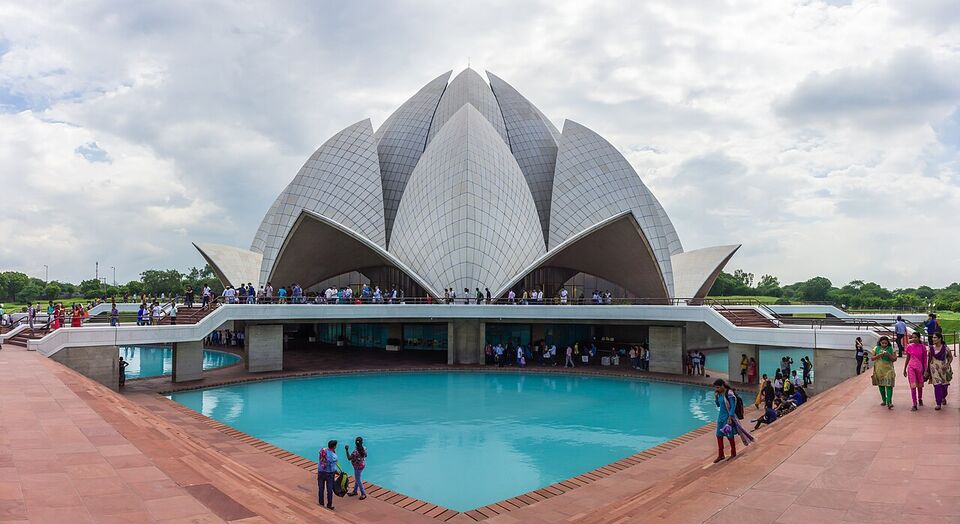
| Day 3 (optional) | Akshardham or the Lotus Temple | A museum or the Nizamuddin area | Qawwali or a food walk |
Our Delhi things to do page explains each site: who it suits, how long to allow, tickets and dress. If you have only one day, choose Old Delhi in the morning and Humayun's Tomb in the afternoon.
Heat, cold and air quality
Delhi's climate has four distinct phases. November in Delhi has a mean high of about 83°F (28°C) and a low of about 55°F (13°C). December is cooler, with highs near 73°F (23°C) and lows near 47°F (8°C), and January highs around 68°F (20°C) with lows near 46°F (8°C). The hot months, April to June, bring highs of 98°F (36°C) to 104°F (40°C), and the monsoon follows in July and August. October to March is the comfortable season for sightseeing.
The winter air
Delhi's air deteriorates from October through February. Readings on the Air Quality Index (AQI) are often "Very Poor" (301 to 400) to "Severe" (401 and above) from November to January, reaching 300 to 450 or more on bad days. On November 6, 2026, the Commission for Air Quality Management invoked Stage III of the Graded Response Action Plan (GRAP) in the National Capital Region, and stage-based restrictions apply on bad days. The stage may have changed since, so check the live level on the Central Pollution Control Board site (cpcb.nic.in).
What this means for visitors: if you have asthma, heart or lung conditions, talk to your doctor before a winter trip. Carry an N95 mask, plan indoor time (museums, cafes, a hotel rest) during the worst hours, and consider a hotel with air filtration. The health notes in our health guide and our pages for November, December and January cover the details.
Fog
Winter fog in north India can be thick enough to disrupt flights on around 15 to 20 days a year. If you have a tight flight connection in December or January, leave extra time.
Watch out
Hazardous air can be worse than the heat. Check the AQI each morning, and do not plan outdoor walking tours for the worst days. Our best advice is to keep a flexible day in your plan so you can swap indoor and outdoor plans.
Food and neighborhood eating
Delhi is one of India's great places to eat. Street vendors in Old Delhi's Chandni Chowk and Chawri Bazar are known for having sold street food for three or more generations. Local dishes include butter chicken, kebabs, chaat (tangy snacks), paratha (stuffed flatbread), chole bhature (spiced chickpeas with fried bread) and sweets. Many restaurants serve vegetarian and non-vegetarian food, and many serve only vegetarian food; ask if it matters to you.
Stay cautious with food to avoid stomach trouble. The CDC advises eating only properly prepared food, and recommends hepatitis A and typhoid vaccines for most travelers. Choose busy stalls with fresh, hot food, drink only sealed bottled or filtered water, and avoid ice and raw salads where you are unsure. Our food guide covers what to order and how to eat safely. Restaurants may add a service charge to the bill, which is voluntary, and you can ask to have it removed.
Neighborhoods good for eating include Connaught Place for cafes and restaurants, Old Delhi for street food and kebabs, Khan Market and South Delhi for modern restaurants, and Nizamuddin for traditional dishes near the shrine. Alcohol is served in many restaurants and bars, but dry days exist, so check ahead on Republic Day (January 26), Independence Day (August 15) and Gandhi Jayanti (October 2). Our drinks guide covers the rules.
Markets and shopping
Delhi's markets range from wholesale lanes to polished boutiques. Old Delhi's Khari Baoli has spices, nuts and dried fruit. Chandni Chowk and Chawri Bazar have wedding goods, stationery and hardware. Connaught Place and Janpath have state-run emporiums and street stalls for crafts and textiles, and Khan Market, Hauz Khas Village and Dilli Haat have boutique shopping and handicrafts.
Bargaining is normal in street markets and not in fixed-price shops. Offer less than the first price, stay friendly, and walk away politely if you do not like the price. We could not confirm bargaining norms from official sources, so treat this as a general guide. Read our shopping guide for what to buy and what to avoid bringing home.
Safety, scams and touts
Most visitors have trouble-free trips, and we advise calm, ordinary precautions. The US State Department advisory for India is Level 2: Exercise Increased Caution, as of November 2026, due to crime and terrorism, and it lists areas to avoid that are not in Delhi. Check travel.state.gov for the current text, and read our safety guide. 112 is India's national emergency number (police, fire, ambulance). The US Embassy is on Shantipath, Chanakyapuri (+91-11-2419-8000, open Monday to Friday, 8:30 a.m. to 5 p.m.).
New Delhi station and Paharganj
The area around New Delhi railway station and Paharganj has a reputation for touts who approach arriving travelers. Common lines include "the station is closed", "your hotel is full or burned down", or "I will take you to the official tourist office". These are attempts to take you to a shop or a hotel that pays commission. The advice is simple:
- Ignore people who approach you, and keep walking. Book your hotel before you arrive.
- Use the official counters and your own booking for train tickets. Do not buy tickets from someone outside the station.
- Book a ride in the official prepaid taxi area or use an app, and confirm the plate number.
- If you must ask for help, ask a uniformed official or a hotel.
Our scams guide lists the common ones across India. Women travelers will find practical advice (registered taxis and app rides at night, the Metro's women-only coach, the 112 number) in our women travelers guide.
Mistakes to avoid
- Packing the day. Two major sights and a meal is plenty. Delhi is large and the traffic is slow.
- Ignoring closing days. Some monuments close one day a week, and the day differs by site. Check on asi.nic.in or the site's own page.
- Arriving without a plan for the air. Pack an N95 mask and check the AQI.
- Drinking tap water or buying unsealed bottles. Check the seal on every bottle.
- Taking help from strangers at the station. Walk on, and use your own booking.
- Dressing for a beach. Mosques and temples ask for covered shoulders and knees and shoes off; see our etiquette guide.
- Skipping Metro because it looks crowded. It is often the fastest and most reliable way to cross the city, especially at rush hour.
Day trips and onward travel
Delhi is the hub for the Golden Triangle (Agra and Jaipur), reached by fast train or car. Agra is about 130 miles (210 km) away, and our Agra guide has the details of the Taj Mahal. From Delhi you can also fly or take trains to Varanasi, Amritsar, Mumbai and beyond. See our train guide and flights guide for how to plan onward travel.
Expect Delhi to be a lot on the first day. A calm hotel, an early night and one or two sights are a better start than a packed itinerary.
Add it to a route in the trip builder, or ask us to plan the hotels, trains and guides for you.