Overview
Rishikesh and Haridwar are neighboring towns on the upper Ganges in Uttarakhand, and they feel very different. Rishikesh is the "yoga capital of the world": a small, hilly town on both banks of the river, full of ashrams, yoga schools, cafes and outfitters offering white-water rafting. Haridwar is an older and busier pilgrimage city where the Ganges leaves the mountains, and its evening aarti at Har Ki Pauri is one of the great sights of northern India.
Most travelers can see both on a short trip from Delhi: two or three nights in Rishikesh, plus a day or an evening in Haridwar. This page covers how they differ, the aartis, the bridges, rafting and how to choose an operator, ashram stays and their rules, the food and drink rules in the towns, how to get there and the mistakes to avoid. If your main interest is a yoga course or Ayurvedic treatment, our guide to yoga and Ayurveda goes deeper.
The towns sit at about 1,100 ft (about 340 m) above sea level, at the edge of the Himalayan foothills. That is low enough to be warm for much of the year, and high enough for cool, clear winters. Higher Himalayan places such as Badrinath and Kedarnath start further north, and we cover the wider mountain region in our Himalayas guide.
Rishikesh and Haridwar: how they differ
| Rishikesh | Haridwar | |
|---|---|---|
| Character | Yoga, meditation, ashrams, adventure sports, cafes | Pilgrimage city, bathing ghats, temples, bazaars |
| Size and feel | Smaller, hillier, split by the river and linked by foot bridges | Larger, flatter, crowded around the main ghat |
| Visitors | Yoga students, backpackers, rafters, pilgrims heading to the Char Dham | Mainly Indian pilgrims and families |
| Evening aarti | Triveni Ghat and some ashrams | Har Ki Pauri |
| Best for | A few days of yoga, walking and the river | One evening or a day for the aarti and the ghats |
If you only have one full day, we suggest Rishikesh for the setting and Haridwar for the aarti, and you can do both from a base in Rishikesh with an early start and a late return. If you want to understand Hindu pilgrimage, spend the evening in Haridwar. If you want yoga, hiking and a quieter pace, stay in Rishikesh.
The Ganga Aarti at each
Haridwar: Har Ki Pauri
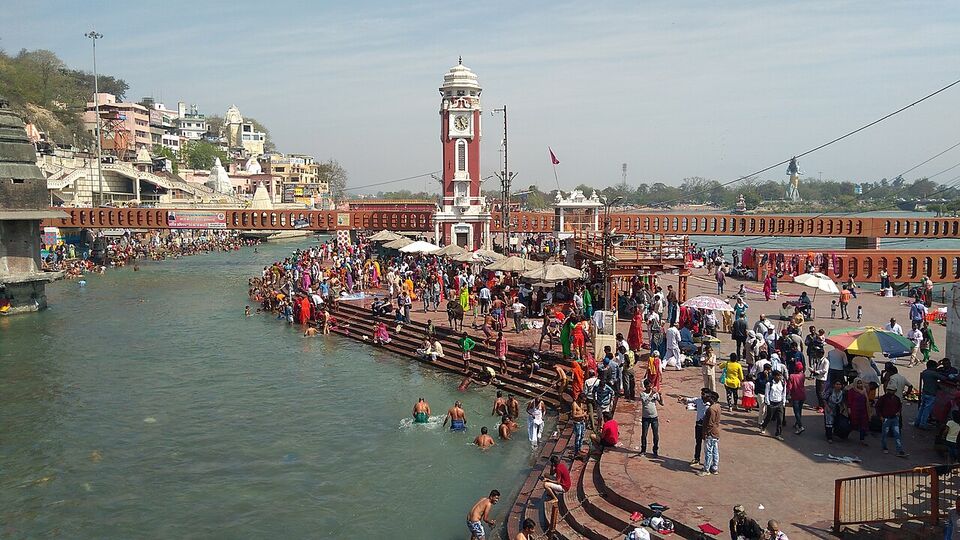
Haridwar's evening aarti at Har Ki Pauri, offered to the river goddess at dusk, is the better known of the two. Thousands of people gather on the steps, bells ring, priests wave lamps and, after the ceremony, pilgrims float small leaf boats with flowers and lamps on the river in memory of their ancestors. The mood is devotional and very crowded.
- Start time. The ceremony begins at dusk, so the time moves through the year with the sunset. We could not confirm an official time: ask your hotel or check the Uttarakhand Tourism site on the day, and arrive 45 to 60 minutes early.
- Where to stand. The steps fill early. Foreign visitors are welcome to watch, and a bridge or a spot on the far side gives a view with more space.
- Look after your things. Crowds are tight, pickpockets work them, and the steps are wet. Carry a small bag and wear shoes you can slip off easily.
- Do not step into the river unless you know the current. The water here is cold and fast, and pilgrims bathe where chains and railings help. Never bathe alone.
Rishikesh: Triveni Ghat and the ashrams
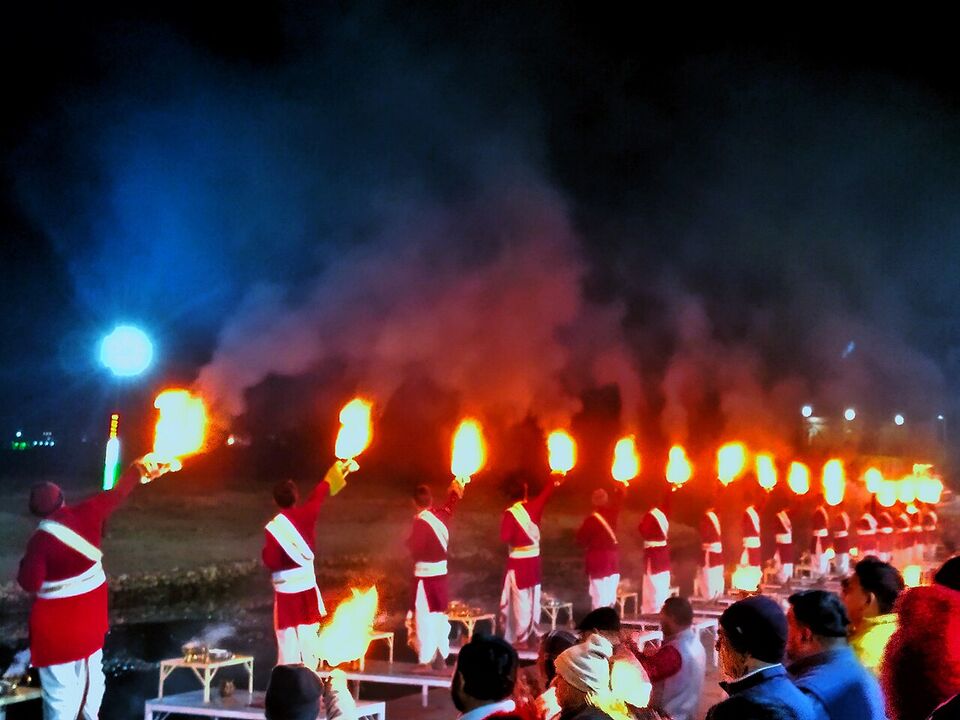
The Ganga Aarti at Triveni Ghat is also held at dusk, with music and offerings. Several ashrams on the river hold their own evening prayers that visitors may attend. These events are smaller and quieter than Haridwar's, and often include singing (kirtan). Dress modestly, sit where staff show you and keep the area clear of phones held up in front of other people.
Insider tip
If you are based in Rishikesh, take an early morning trip to Haridwar by taxi, spend the day, watch the aarti and come back after the crowds thin. Or stay one night in Haridwar so you are not driving at night on a crowded road.
The suspension bridges and the river
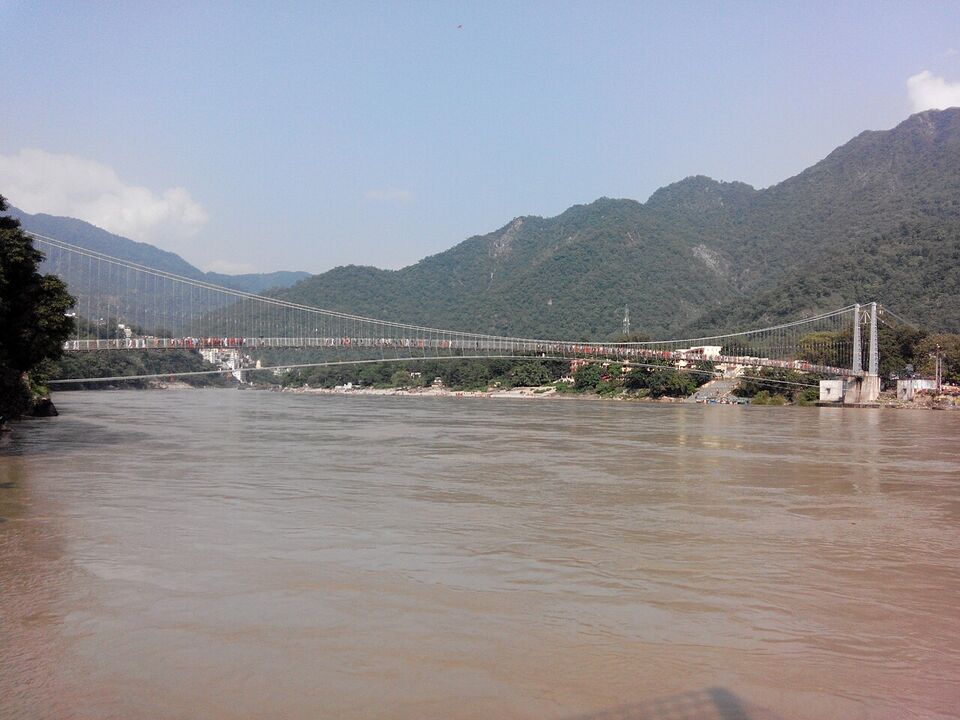
Two famous pedestrian suspension bridges, called jhulas, cross the Ganges in Rishikesh: Ram Jhula (built in 1986) and Lakshman Jhula (the original iron-rope bridge dates to 1889, and was replaced in 1927). Lakshman Jhula has been closed to normal use after structural problems, and a replacement glass-floored bridge has been described as under construction. We could not confirm the current status of either bridge, so check with your hotel before you plan a route around them. A newer bridge, Janki Setu, also crosses the river.
The bridges are shared with motorbikes, pilgrims, cows and monkeys. Keep food out of sight and phones and glasses secured, as monkeys do grab things. Walk on the left, and do not stop in the middle for photos at busy times.
Beyond the bridges, the walk along the river between the ashram areas of Swargashram and Sivananda Nagar is a good way to see the town. Many cafes and small shops sell books, clothing and yoga gear. Bring small notes for purchases and offerings.
A word about the river: upstream of the plains, the Ganges at Rishikesh is clearer and colder than at Varanasi, and reference sources note that the main polluting points lie downstream. Even so, do not drink the water, and use bottled or filtered water. Waste from the growing number of visitors is a real strain on the town, so carry a refillable bottle and do not leave litter on the beaches.
Rafting: season and operator safety
Rishikesh is India's best-known place for white-water rafting, and the stretches above and below the town are popular for short day trips. We do not give river difficulty grades here because we could not verify them against an official source: ask the operator which section you will run, and choose a gentler one if you are new to it.
Season
Rafting on the Ganges is seasonal. In general, the monsoon (about July to September) brings high, muddy and dangerous water, and operators stop or restrict trips, while the cooler months bring better conditions. We could not confirm the official rafting season dates for 2026-27, which are set locally and can change with water levels. Check with the Uttarakhand Tourism Development Board or your hotel for the current dates, and expect the river to be cold in winter.
How to choose an operator
- Ask for the licence or registration. Ask to see the operator's registration and the names of the guides. We could not confirm the exact registration rules, so check with the Uttarakhand tourism office or a hotel you trust if you are unsure.
- Check the life jacket and helmet. Everyone should wear a properly fitted life jacket (personal flotation device) and a helmet, with the straps tight. If a jacket is torn, loose or too big, ask for another or walk away.
- Ask about the guide and a safety boat. A trained river guide in each raft, a safety briefing before you launch and a safety kayaker or rescue boat on the water are good signs.
- Do not choose on price alone. The lowest price often means no insurance, worn equipment and rushed briefings.
- Say if you cannot swim, and check your travel insurance covers adventure sports. Many policies exclude them.
- Do not raft if the water looks high or if you are unwell. The guide can cancel if conditions are unsafe, and a good operator will.
Watch out
Skip any activity where staff refuse to show a licence, rush you onto the water without a briefing, or pressure you to sign a waiver you do not understand. Many accidents on rivers worldwide come from unlicensed operators and high water. If something feels wrong, you can walk away even after paying a deposit.
Rishikesh also has bungee jumping, ziplines and canyoning. The same rule applies: check the licence, the equipment and the insurance.
Ashram stays and ashram rules
An ashram is a spiritual community or retreat, often run by a teacher or an organization, that offers meals, lodging, classes and prayers. Staying in one is a good way to see daily life in the town, and it can be the least expensive option. It is also different from a hotel. You are a guest in a religious community and you follow its rules.
- Food and substances. Meals are vegetarian, and alcohol, tobacco and drugs are not allowed. Some ashrams also avoid onion and garlic.
- Schedule. Wake-up bells can come before dawn, meals are at fixed times, and gates may close in the evening. Ask about the curfew before you book if you want to eat out.
- Dress and conduct. Cover your shoulders and knees, remove shoes at prayer halls and keep your voice low. Some ashrams separate men and women in classes or rooms.
- Photography and phones. Many places ban photography in prayer halls or limit phone use during classes.
- Donations. Many ashrams ask for a donation instead of a fixed price. Ask in advance what is expected and whether the stay is a set fee, so you are not surprised on departure.
- Visitors. Some accept short stays; others take only students on a course. Booking is by email or phone, often weeks ahead in the main season.
Choose a place you can verify: look for a clear website or a written policy, recent first-hand reviews on independent sites, and a manager who answers questions plainly. Our guide to yoga and Ayurveda explains how to evaluate teachers and courses, and our etiquette guide covers dress and conduct.
Alcohol and meat: what the towns allow
This is one of the biggest differences from the rest of India, and a surprise for many visitors. Reference sources describe Rishikesh as a vegetarian-only and alcohol-free city, with the sale of meat, fish and eggs banned since 1956. Haridwar banned meat sales in its main city in 2002, a rule the Supreme Court upheld in 2004. The stated reason is the religious purity of the pilgrimage towns.
In practice:
- Restaurants and cafes in the towns serve vegetarian food, and this includes the cafes that cater to visitors, which often offer Indian, Israeli, Italian and plant-based menus.
- Do not expect to find a bar or a liquor store in Rishikesh. We could not confirm how the rules are applied in Haridwar and in the villages around both towns, so do not plan around a drink, and ask your hotel what applies.
- Do not bring meat or alcohol into an ashram or leave bottles on the river beach. Both are disrespectful and can attract trouble.
The rules apply within the town limits: the situation changes once you cross into the surrounding areas. Our guides to food and drinks explain how alcohol rules vary from state to state, and a dry day can fall on festivals anywhere in India.
The Himalayan foothills and the Char Dham in brief
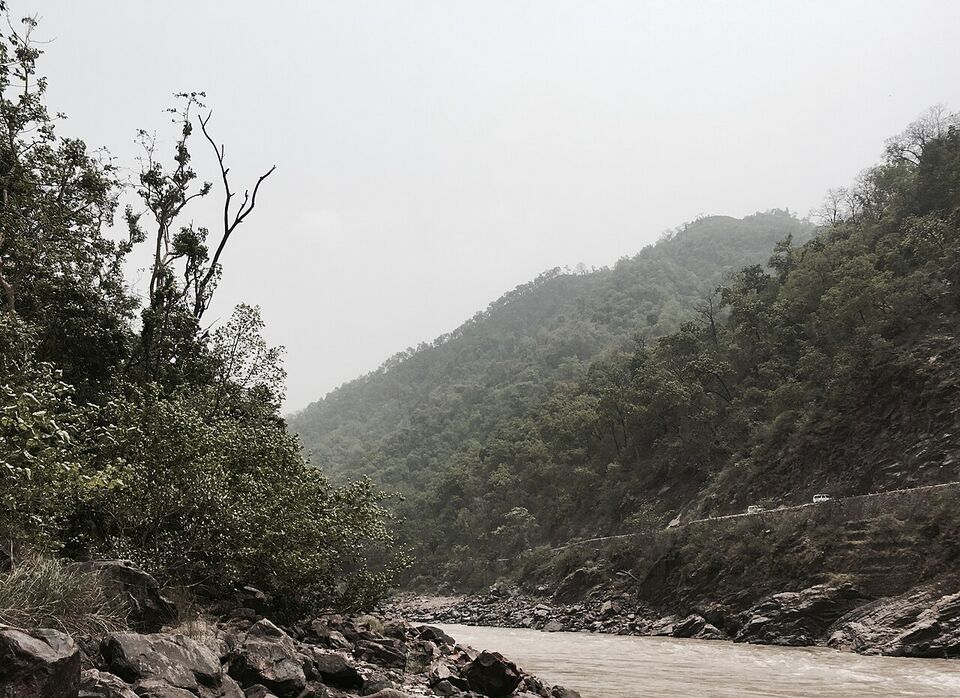
Rishikesh is the gateway to the Garhwal Himalayas, and it is the starting point for the Char Dham, the four Hindu pilgrimage sites of Badrinath, Kedarnath, Gangotri and Yamunotri. These are high-altitude shrines that are open only for part of the year, and mountain roads there close after landslides and snow. We do not give opening dates because they change from year to year and we could not confirm any: check the Uttarakhand Tourism Development Board and the pilgrim registration rules before you plan anything beyond Rishikesh.
Nearer the town, there are short trips you can do in a day:
Neelkanth Mahadev Temple
A Shiva temple reached by a winding road through forest, with views over the valley. It is busy at festival times.
Neergarh Waterfall
On the Rishikesh to Badrinath road, with pools and a short walk. It is busiest in the warm months. Check the water level and the path before you swim.
Vashishtha Guha
A cave beside the river, traditionally linked to the sage Vashishtha. It is quiet and good for meditation.
Riverbank walks
The riverside path through the ashram areas is the simplest and most pleasant way to spend a morning.
Rishikesh sits at the foot of the mountains, so you can take a taxi or bus into the hills for treks or the high-altitude Himalayan regions. For those, see our Himalayas guide.
The Kumbh Mela in context
The Kumbh Mela is one of the largest religious gatherings in the world, held in rotation at four cities, including Haridwar. Wikipedia lists the next Haridwar event as an Ardh (half) Kumbh in 2027 (news reports give a season of about mid-January to April), but we could not confirm the bathing dates from an official source. Check the official Kumbh site, kumbh.gov.in, and the Uttarakhand government for the schedule.
If you plan to be in Haridwar or Rishikesh during a Kumbh period, expect millions of pilgrims, hotels booked out well in advance, road and rail restrictions and large police operations on the main bathing days. Many visitors prefer to avoid the peak days and visit on a quieter day in the same period. Our festivals guide has more on timing.
Getting there from Delhi
Rishikesh is about 150 miles (240 km) from Delhi, and Haridwar about 140 miles (220 km). Most visitors go to Haridwar first, because it has the main railway station and the bus services, and then continue to Rishikesh by taxi. Reference sources give the distance between the towns as short, and we suggest allowing about an hour for the transfer, more in heavy traffic. India drives on the left.
By train
Haridwar is a major station on the Delhi line, with direct trains to many cities. A Shatabdi Express to Dehradun is said to stop at Haridwar, but we could not confirm the days, times or stops, so check IRCTC or the National Train Enquiry System before you book. A Vande Bharat service connects Dehradun and Delhi's Anand Vihar station in about 4 hours 45 minutes, according to the published timetable: confirm the stops. Rishikesh has its own station, Yog Nagari Rishikesh, but Haridwar has far more trains. Our train guide explains how to book, and tickets can be booked up to 60 days ahead for the general public.
By bus
More than 150 buses run daily between Delhi and Haridwar, according to a reference source. Government buses are cheap but slow and crowded, and private "luxury" or air-conditioned buses are more comfortable. Buses leave from Delhi's main terminals, and the stand you need depends on the service. Book through the operator's official site or at the station, not through a street agent.
By taxi
A private taxi or car with a driver from Delhi to Rishikesh is the easiest option with luggage or a group. The drive takes roughly four to six hours depending on traffic and road work, and the road out of Delhi is busy. Agree the price, the route and the stops before you go, and avoid night driving, as the CDC advises. See our getting around guide.
By air
Jolly Grant Airport near Dehradun is the nearest domestic airport, about 9 miles (15 km) from Rishikesh and 22 miles (35 km) from Haridwar. It has domestic flights, but Dehradun is not on the e-Visa entry list, so you must first arrive internationally at a listed airport such as Delhi. Our entry guide explains the visa, which you apply for only on the official portal, indianvisaonline.gov.in/evisa. A short yoga programme fits the e-Tourist visa, as we explain on the yoga and Ayurveda page.
When to go and what to pack
October to March is the main season. In November, Rishikesh averages a high of about 77°F (25°C) and a low of about 48°F (9°C). December and January are cooler, with highs near 68°F (20°C) in December and 63°F (17°C) in January, and lows around 41 to 43°F (5 to 6°C) at night, and mornings by the river are cold. April to June gets hot, with May highs around 102°F (39°C). July and August are the wettest months, with around 15 or 16 rainy days each, and landslides can block hill roads. Our when to go page compares the seasons across India.
Pack light layers and a warm sweater for winter mornings, modest clothing for ashrams and temples (long trousers or skirts, covered shoulders), a scarf, quick-dry clothes and sandals for rafting, a refillable bottle and a small flashlight for lanes at night. Our packing guide has a full list. Water: do not drink from the tap, and see our health guide for vaccines and traveler's diarrhea.
Common mistakes
- Expecting a party town. Rishikesh is a pilgrimage and yoga town with alcohol and meat banned, and with local residents who find loud behavior disrespectful.
- Visiting in the monsoon and expecting to raft. High water closes or restricts trips.
- Choosing a raft operator on price, without checking the licence, the life jacket or the guide.
- Booking a long yoga course online without checking the teacher or the program, or sending a large deposit to an unknown account.
- Wearing swimwear or sleeveless tops on the ghats and in ashram areas. Cover up when not in the water.
- Bathing alone or in fast water. Currents are strong, especially after rain.
- Leaving food or phones where monkeys can reach them.
- Trying to see the whole of Haridwar, Rishikesh and the Himalayas in one day from Delhi. Two to three nights is more realistic.
- Accepting a free flower, tilak or "blessing" and then finding a payment demand. A polite "no, thank you" ends it. See our scams guide and advice for women travelers.
A short plan
- Day 1
Delhi to Haridwar
Take a morning train or taxi from Delhi, reach Haridwar by early afternoon, walk the ghats and watch the aarti at Har Ki Pauri. Stay the night in Haridwar or continue to Rishikesh by taxi afterwards.
- Day 2
Rishikesh: river and ashrams
Walk the riverside path, cross the footbridge, have a long lunch at a cafe and try a yoga drop-in class. Go to the evening aarti at Triveni Ghat or at an ashram.
- Day 3
Rafting or a hill trip
Raft with a checked operator if the season and the river allow, or visit Neelkanth Mahadev Temple or Neergarh Waterfall. Return to Delhi that evening or stay another night.
For where to stay in India in general, see our accommodation guide. In the towns, most guesthouses and hotels are small and family-run, and many $ options are clean and simple. Book ahead for the main yoga season and for any festival.
Add it to a route in the trip builder, or ask us to plan the hotels, trains and guides for you.