What to buy and how to buy well
India is one of the best places in the world to shop for things made by hand: block-printed cotton, woven silk, shawls, brass, carved wood, silver, rugs and spices that smell far stronger than the jars at home. The challenge is not finding things to buy. It is knowing what a fair price looks like, telling the real thing from a copy, and getting it home without a problem at customs.
Our advice, in short: see a fixed-price store first to learn what quality and price look like, then shop the bazaars; bargain politely where it is expected; ask for a proper receipt; and stay away from ivory, wildlife products and anything that looks like an antique. The sections below follow that order, from what to buy by region to what US Customs and Border Protection (CBP) lets you bring home.
Money matters apply too. Many small shops want cash, and bigger stores take cards. See our money guide for how cash, cards and ATMs work.
What to buy where
Crafts in India are regional. A fabric, a technique or a metal is tied to a place, and the best choice, and often the best price, is at or near its source. Use this as a guide, not a rule: every big city has shops that sell everything, and the quality of those shops varies.
| What | Where to look | What to check |
|---|---|---|
| Block-printed cotton (scarves, bedspreads, tablecloths) | Jaipur and the villages around it in Rajasthan | Hand-printed cloth has small irregularities; ask whether the dyes are natural or chemical, and wash color-bleeding items separately at first |
| Silk saris and brocade | Varanasi (Benares) for woven brocade; Kanchipuram in Tamil Nadu is also known for silk | Look for the Silk Mark label, ask for a hand-loom certificate and do the thread test described below |
| Pashmina and woolen shawls | Kashmir, Delhi emporiums, Amritsar and the Himalayan towns | Real pashmina is a fine goat wool; avoid shawls offered as shahtoosh, which is illegal |
| Jewelry and gemstones | Jaipur (a center of gem cutting and jewelry), Hyderabad for pearls, Rajasthan for silver | Buy only from a seller who gives an itemized bill and a lab report; test hallmarks on gold and silver |
| Spices (cardamom, pepper, cinnamon, turmeric) | Kerala, especially the Kochi (Cochin) area, and Old Delhi's spice market | Buy whole spices in sealed packs; ground spices lose strength quickly |
| Tea | Darjeeling, Assam, the Nilgiris and Munnar | Buy sealed packs with a harvest date from a reputable estate shop; ask for a taste |
| Hand-knotted rugs and carpets | Jaipur (one of the biggest rug-making centers), Kashmir and Uttar Pradesh | Count the knots, flip the rug to check the pattern on the back and arrange shipping in writing |
| Leather sandals and shoes | Rajasthan and Maharashtra markets | Handmade sandals need breaking in; check the stitching and the sole |
| Brass, copper and metalwork | Rajasthan and Uttar Pradesh bazaars | Test the weight; heavy metal items add to baggage fees |
| Wood carvings, furniture and stone carvings | Jodhpur (known for handicrafts), Mahabalipuram (stone carving) | For big pieces, ask about fumigation, crating and shipping; wood products may be checked at US entry |
| Miniature paintings and papier-mache | Udaipur and Rajasthan, Kashmir | Ask whether the paint is hand-applied and whether it is on paper or on a modern surface |
| Incense, sandalwood products and Ayurvedic items | Mysuru (Mysore), Kerala and many tourist markets | Real sandalwood is costly; read the next section on fakes |
The two Delhi guides, Delhi guide and Delhi sights guide, cover the shopping streets and markets of the capital. For Rajasthan's crafts and bazaars see Jaipur and Rajasthan, for silk see Varanasi and for spices and coir see Kerala.
Textiles and block prints
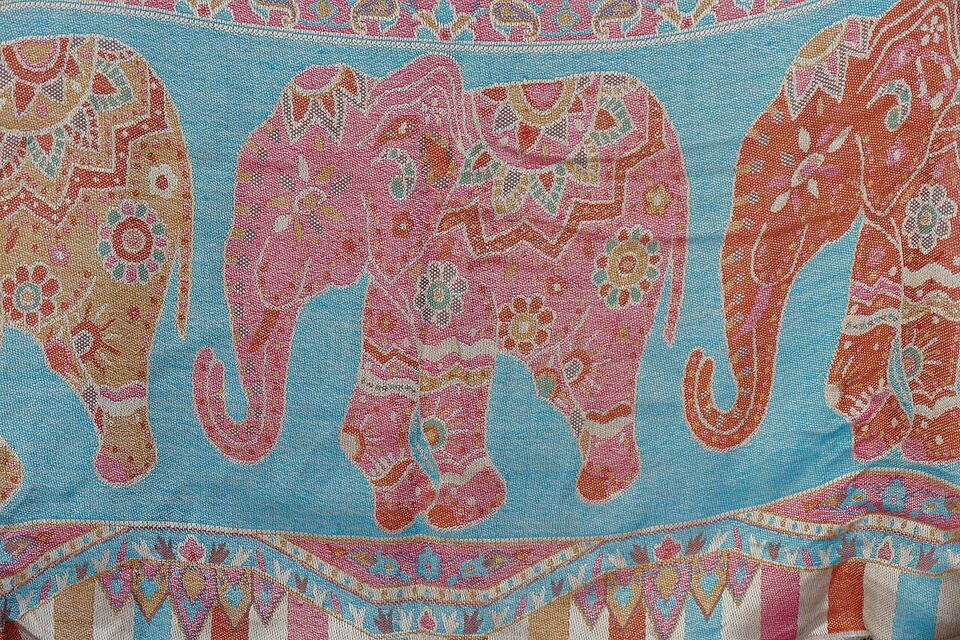
Textiles are the easiest thing to carry and the hardest to price. Cotton scarves and block-printed pieces are inexpensive. Silk, wool blends and hand-embroidered pieces take much more labor and cost a lot more. Pashmina, silk and embroidery vary hugely in quality, and a lower price for a "pashmina" is nearly always a sign that it is a blend or synthetic.
Typical regional specialties include Banarasi brocade from Varanasi, Kanchipuram silk and Kerala cotton with a gold border (kasavu) in the south, ikat from Telangana and Odisha, embroidery from Gujarat's Kutch region, phulkari from Punjab, kantha stitching from Bengal and Lucknow's chikankari. These are widely sold, but you will get a better selection at state-run emporiums and at the source.
Jewelry, spices and tea
Silver jewelry is a good first purchase: it is easy to pack and easy to value by weight. Gold and gemstones are a different matter, covered under fakes. Spices are best bought whole and sealed, in small amounts, from a shop with a busy turnover. Whole cardamom, pepper, cinnamon, cloves and turmeric root travel well. Saffron deserves care, because the high price makes it a target for fakes.
For tea, choose sealed packs and consider the harvest or flush. A small shop in a hill station will often let you taste first. Tea is a light, durable gift for friends at home.

Government emporiums, bazaars and the commission-shop problem
Fixed-price emporiums
Government and state-run emporiums sell crafts from their own state at fixed prices, with a price tag and a receipt. They are not always the cheapest or the most varied, but they are a safe place to see what is available, learn the going price and buy with confidence. Many state tourism boards run them in their own capital and in Delhi, with names that reflect the crafts of the state. They are useful as a price benchmark before you enter the bazaar. Hours and locations change, so check with your hotel before you make the trip.
Bazaars
Bazaars are where most Indians shop, and where the selection and the energy are best. Prices are negotiable, goods vary in quality, and you are expected to look closely. Go early, go with a plan and a budget, and take a break when it gets crowded. See etiquette for tips on manners in markets, and our scams guide for common tricks.
The commission-shop problem
The most common shopping mistake is letting a driver, guide or a "friendly local" take you to a shop. Many are paid a commission, often a share of what you spend, by the shop. The result is a higher price and a long sales pitch, and sometimes pressure. Shops often run a "factory visit" or a "government-approved" tour that is not what the name suggests.
- Say at the start of the day that you do not want to go to any shops, and repeat it politely. If you want to shop, ask for a specific market or emporium by name.
- If someone steers you to a shop that is "closed to the public" or "only open today", be wary.
- Never agree to buy gemstones or carpets "for export" or "to resell at a profit at home." This is a well-known scam.
- Do not sign anything, or pay a deposit, in a shop where you feel pushed. You can leave.
Watch out
If a shop says you can buy gems or carpets to resell at a profit at home, or asks you to pay extra for a "customs guarantee", walk out. These are well-known tourist scams. Pay by credit card where you can, because a card payment gives you a way to dispute a charge, and cash gives you none.
Bargaining, politely
Bargaining is part of shopping in markets, in small shops without price tags and with many street sellers. It is not part of buying in emporiums, malls, pharmacies, supermarkets or restaurants, where prices are fixed. If there is a tag, the price is usually final.
How to do it
- Learn the range first. Look at a fixed-price shop or ask two or three sellers for a price on the same kind of item before you start.
- Ask the price, then react calmly. A first price is a starting point. Say it is more than you planned to pay and ask what the seller can do.
- Counter low but reasonable. In a bazaar, a counter-offer around half the first price is a common opening, and the deal often lands somewhere between. If a seller starts at ₹2,000 (about $21), you might offer ₹1,000 (about $11) and settle near ₹1,300 (about $14). That is only an example: the right gap depends on the item and the seller.
- Stay friendly. A smile and chat, with a cup of tea if offered, make the process easier. In Hindi you can ask kitna? (how much?) and thoda kam karo (please lower it a little).
- Know your limit and walk away if it is not met. Walking away is normal, and a seller may call you back with a better price.
- Only bargain if you mean to buy. Once you name a price and the seller agrees, the deal is made. It is considered rude to refuse after that.
Different from home
In the US a price tag is a promise. In an Indian bazaar it is often an opening position, and haggling is a conversation, not a fight. Do not take a high starting price personally, and do not be afraid to say no. The seller does not expect you to pay the first price.
Save money
Saving ₹100 (about $1) is not worth a bad mood on either side. Save your energy for bigger items such as rugs, jewelry and furniture, and be generous with small items, such as a handmade item from a street seller who works for a low income. Pay what feels fair to you.
How to spot fakes
Silk
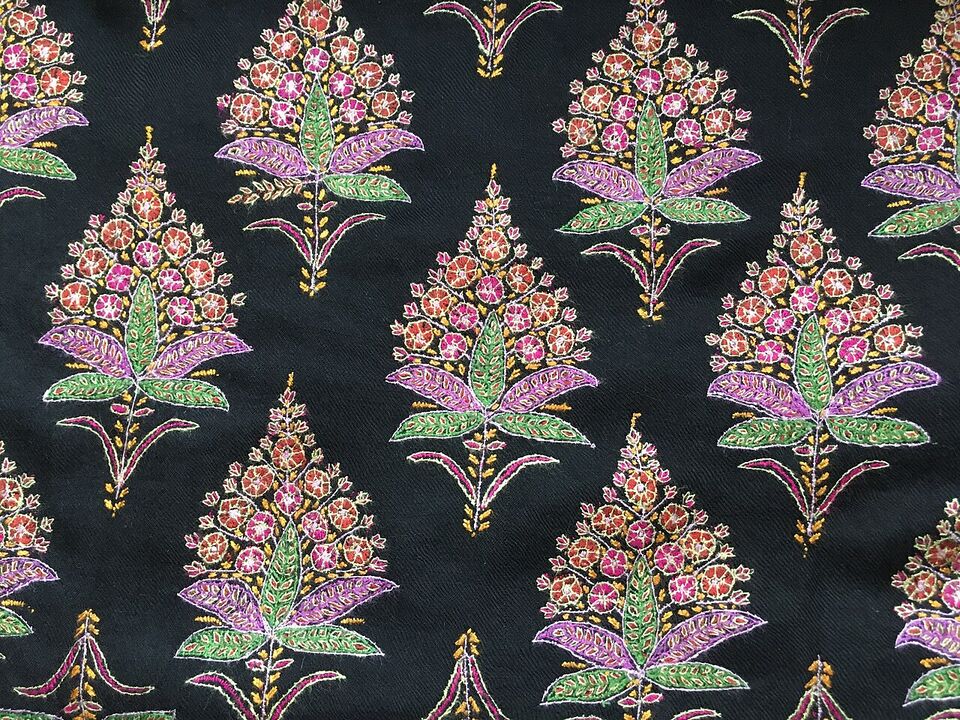
Real silk feels smooth and slightly cool, and the color often changes in the light. A thread pulled from the edge of the cloth burns slowly, smells like burnt hair and leaves a crushable ash. Synthetic fabrics melt, smell of plastic and leave a hard bead. Many sellers will let you test a thread if you ask. Look for the Silk Mark label, which is a certification mark used for pure silk in India, and ask for a receipt that names the fabric.
Pashmina and shahtoosh
Pashmina is the fine undercoat of Himalayan goats. It is soft, warm and light, and because it takes a lot of work, a real hand-woven one is expensive. A price that is a fraction of what other shops ask suggests wool blends, viscose or synthetic fibre. Ask for the fiber content in writing, and ask for a Geographical Indication (GI) tag or a similar label if the seller says it is from Kashmir.
Shahtoosh is different and illegal. It comes from the Tibetan antelope (chiru), an endangered animal that is killed for its wool, and the fibre is smuggled and woven into shawls. Do not buy a shawl that is offered as shahtoosh, or a "ring shawl", and do not try to bring one home. See the wildlife section below.
Gemstones and jewelry
Gem scams are the best known in Jaipur and other tourist cities, and the pitch is nearly always the same: buy stones at a "special export price" and sell them at a profit at home. That profit does not exist. Buy gems only for yourself, from a shop with an itemized bill and a laboratory report from an independent lab, and treat a cheap price on a "ruby" or "emerald" as a sign of glass, synthetic or treated stones. For gold, look for the Bureau of Indian Standards (BIS) hallmark, and for silver ask for a purity mark (925 for sterling) and have the item weighed in front of you. Hallmark rules change, so ask the seller what the stamp means.
Sandalwood and other "natural" products
Real sandalwood is costly. Cheap "sandalwood" oil or incense is often synthetic or diluted, and a carving that smells strongly of perfume may be a different wood treated with scent. Buy small pieces from a licensed shop, and ask for a receipt. Some timbers, such as rosewood, are protected under the international wildlife trade convention (CITES), which can make wood products difficult to import. If you are buying anything made of wood, ask the seller for documents, and read the US notes below.
Shipping vs carrying
For small items, carry them home. Wrap fragile pieces in clothes and keep valuables and jewelry in your carry-on. A cheap duffel or soft bag from a market makes a good extra bag, but check your airline's baggage allowance first. See our flights guide for the airlines that fly to the US.
For large items such as rugs, furniture or sculpture, shipping can make sense. A few rules help.
- Use a recognized shipper, not the shop's cousin. Ask for the cost, the transit time, insurance and the name of the company in writing before you pay.
- Pay the balance only when the goods arrive when you can, and avoid paying the full amount in advance. A card payment gives some protection, and cash gives none.
- Insure the shipment for its full value, and take photos of the items before they are packed.
- Expect customs duty at the US end on goods above your allowance, and a customs broker's fee for a larger shipment. The shipper should tell you who pays.
- Allow time. Sea freight can take weeks to months. Air freight is faster and costs more.
Indian post offices and couriers handle small parcels, with customs forms to complete. For an item of high value, use a courier with tracking.
Taxes, receipts and money on the way out
India charges goods and services tax (GST) on most goods, and the price on a tag in a fixed-price store normally includes it. We did not find an official tourist GST refund scheme on any page we reviewed for this guide, so do not buy on the assumption that you will get a refund at the airport. If a shop offers one, ask how it works and where the refund is paid, and treat it with caution if the answer is unclear.
Keep receipts for large purchases. They help with US customs, with insurance and with any later dispute. If you are leaving with leftover rupees, note that there may be a limit on carrying Indian currency out of the country, which sources put at about ₹25,000 (about $266). Check the rule before you fly, and exchange or spend the remainder.
Antiques, ivory and wildlife products
Antiques and the age rule
India protects its cultural heritage by law. The Antiquities and Art Treasures Act of 1972 is the main Indian law on antiquities, and the Archaeological Survey of India (ASI) is the agency to ask. Export of antiquities is restricted, and we have seen 100 years given as the age at which an object counts as an antiquity, but we could not confirm that. A seller who tells you "it is no problem, I will pack it and ship it" is not an authority. We could not confirm the current detail from an official page, so use this as a caution and check with the ASI (asi.nic.in) before you buy anything that claims to be old.
The simple approach is to buy new, handmade reproductions and to ask for a receipt that says so. A shop that sells genuine antiques will say so and will explain the paperwork. Items that look old but are new and are described as such are a safer buy. The US side matters too. CBP warns that legal ownership of art, artifacts and antiquities may be in question if you bring them in, and that you need documents such as export permits and receipts.
Ivory and wildlife products
Watch out
Do not buy ivory, tortoiseshell, coral, skins, fur, feathers or any product from an animal you cannot name. CBP says endangered wildlife and products made from it generally may not be imported, that a U.S. Fish and Wildlife Service permit is needed for virtually all ivory, and that an ivory antique must be at least 100 years old with documents that prove its age. Items can be seized at the airport, and penalties can be severe.
The list of things that may not come home covers more than ivory. It includes products from endangered species such as shahtoosh shawls, many reptile skins, and items made from wild birds, mammals, fish, shellfish and mollusks. The rules rest on an international treaty on trade in endangered species, CITES. If you are not sure, leave it. For questions, the US Fish and Wildlife Service has a line for permits and information, and CBP points travelers to its page before they buy.
Sellers sometimes offer "bone" or "camel bone" carvings as a legal alternative to ivory, and these are common. They are different materials, but a carving made from a protected animal still breaks the rules, and customs officers cannot always tell the two apart. Ask what a piece is made of, and expect to declare it.
Bringing it home: US Customs
When you return to the US you fill out a customs declaration. Declare everything you bought, including gifts. The details below follow CBP's own pages (duty information and prohibited and restricted items). Check them again before you fly.
| Topic | What CBP says |
|---|---|
| Duty-free allowance | $800 per returning US resident, once every 31 days, after at least 48 hours abroad; family members living together can combine for a joint declaration |
| Alcohol | 1 liter duty-free if you are 21 or older and it is legal in the state where you arrive; extra is dutiable |
| Tobacco | Within the exemption, up to 200 cigarettes and 100 cigars |
| Packaged spices, tea, coffee, honey, oils, condiments | Generally admissible |
| Meat products, bouillon and soup mixes | Not admissible |
| Rice | Best avoided, as it can carry insects |
| Fruit, vegetables, plants, seeds | Depend on origin and type; plant products and straw handicrafts must be declared and presented for inspection |
| Ivory and endangered species | Generally not allowed; permits from the Fish and Wildlife Service needed for ivory |
| Antiques and cultural property | May be restricted; keep export permits and receipts |
| Ceramic tableware | The FDA advises testing imported ceramic for lead release or using it for decoration only, and names India among the places to be careful with |
Food, plants and herbal products
Packaged spices and tea are fine in general, and make good gifts. Keep them sealed in their original packs and declare them. Fresh fruit and vegetables, seeds and unprocessed plant material are the items that cause problems. For Ayurvedic medicines, herbal supplements and plants, we could not confirm the specific rules, so check cbp.gov and the Food and Drug Administration (FDA) before you buy, and see the health page for cautions on herbal products: Health and Air Quality.
Sandalwood, wood and fabrics
Plain cotton, silk and wool fabrics, saris and shawls are generally not a problem when declared and when they do not contain animal parts that are protected. Wood items, such as carvings, boxes and furniture, can come with bark, insects or protected species. Declare them, ask the seller for proof of the wood type, and keep the receipt. If you are shipping furniture, ask whether it has been fumigated, as this can matter for entry.
Insider tip
Take photos of your purchases and receipts and keep them together. If an officer asks about an item, a clear receipt that names what it is and where you bought it settles most questions quickly.
A shopping plan that works
- Visit a fixed-price emporium first in each city to learn what quality and price look like.
- Decide before the day starts that you will not be taken to any shop by a driver or guide.
- Bargain in bazaars with a smile, and walk away if the price is not right.
- Buy fabric, tea, spices and handicrafts, and skip ivory, shahtoosh, protected wood and anything that claims to be an antique.
- Get a receipt that names the material and the seller, and keep it with a photo of the item.
- Keep jewelry, valuables and medicines in your carry-on.
- Know the US allowance ($800), declare everything and check the food and wildlife rules at cbp.gov before you buy.
- Keep room in your bag for the trip home. See the packing guide.
Add it to a route in the trip builder, or ask us to plan the hotels, trains and guides for you.