Overview
Karnataka is the easiest first step into South India. It has a big, English-speaking tech city (Bengaluru, once spelled Bangalore), a palace town (Mysuru, once Mysore) that rewards a slow day, and Hampi, the ruins of the Vijayanagara capital, which UNESCO listed in 1986. The pace is gentler than Delhi and the weather is milder than the plains, because Bengaluru sits on a plateau at 3,020 ft (920 m).
This page is short on purpose. It covers the three main stops, two sets of older temples for people with extra time, Coorg and its coffee estates, and how to link them. For the wider picture, see India's destinations, and for the neighboring states, Chennai and Tamil Nadu and Kerala.
Language is the first thing to know. Kannada is the state language, and Hindi is much less useful here than in the north: Hindi serves as a common language across most of India, with South India the main exception. English is widely spoken in Bengaluru, in hotels and at the big sights, and you will see Kannada script on most signs.
Bengaluru: a tech city and a gateway
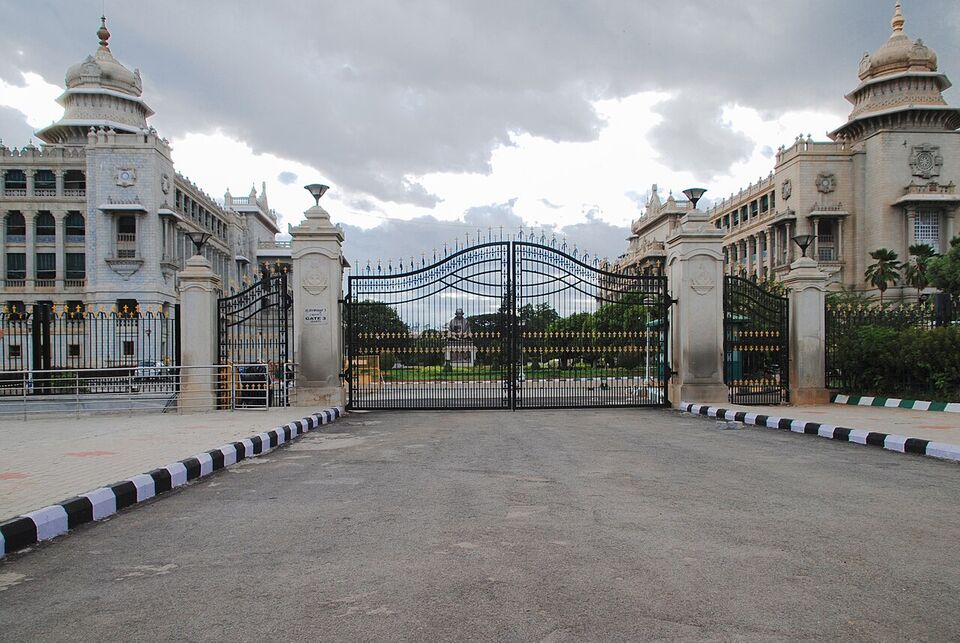
Bengaluru is India's best-known technology hub and the third-busiest airport city in the country. Many visitors only pass through, and that is a reasonable choice: it is a sprawling modern city with a few good gardens, cafes and microbreweries rather than a monument-heavy one. It is called the Garden City, and Lalbagh Botanical Garden and Cubbon Park are the two green spaces most visitors head for.
The city's airport, Kempegowda International, is at Devanahalli, about 19 miles (31 km) from the center. Airport buses, ride apps and prepaid taxis usually run, and the trip is long, so check options on arrival. Allow a generous buffer: Bengaluru's traffic is famous, and a trip that looks short on the map can take much longer at rush hour. We suggest leaving at least three hours before a flight and avoiding weekday evening peaks for onward journeys.
Different from home
Traffic here is a planning factor, not an inconvenience. In Bengaluru, a drive that takes 20 minutes late at night can take over an hour in the evening rush. Schedule train stations and flights with a large cushion, and drive on the left if you ever rent a car (we do not suggest it; hire a driver).
Spend one full day if you are using Bengaluru as a base: a morning in the gardens, the old Bull Temple and market area or a coffee-and-cafe crawl, and an evening off. If you arrive on a long-haul flight, this is also a gentle place to recover from jet lag before the road. Yoga and Ayurveda programs in the region are covered on Yoga and Ayurveda.
Mysuru and its palace
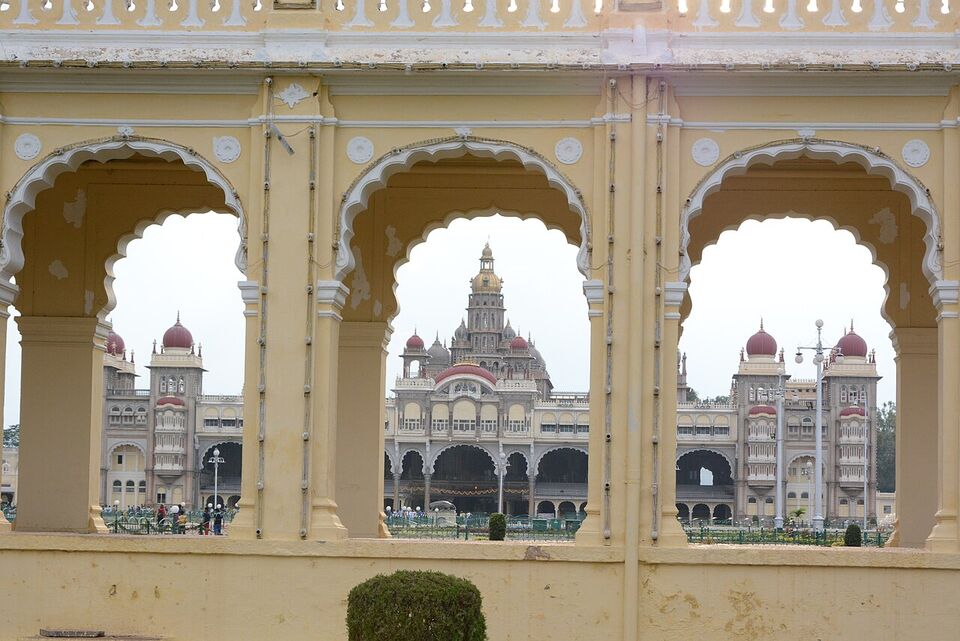
Mysuru is a calm, walkable city known for its Mysore Palace, silk, sandalwood and a clean-and-orderly feel. It was the seat of the Wadiyar royal family, and it is also one of the main centers for yoga study in India. The palace is the headline; the market, Devaraja Market, and the hilltop Chamundi Temple are the natural add-ons.
Mysore Palace: tickets and hours
The palace is open from 10 a.m. to 5:30 p.m. every day, except for the last two days of Navaratri. As of December 2025, the entry fee was ₹1,000 (about $11) for foreigners and ₹120 (about $1) for Indian citizens, and visitors enter through the Varaha gate on the south side. Foreign-visitor prices at Indian sights change often, so check the current figure with the Mysore Palace Board before you go.
The lights: Sundays and Dasara
During Navaratri, the autumn festival known in Mysuru as Dasara, the palace, its gates and nearby temples are covered in roughly 100,000 small bulbs on each of the nine nights. The festival ends with the Vijayadashami procession (Jamboo Savari) from the palace gate, led by elephants. Because Navaratri follows the lunar calendar, plan from the festival dates, which fall in the early autumn weeks before Diwali (October 29, 2027); the exact days need checking each year.
The palace is also reported to be lit on Sunday evenings and on public holidays. We could not confirm a 2026 schedule, the hours or whether foreigners need a separate ticket, so treat it as a bonus and verify it with the palace board or Karnataka Tourism before you build a day around it.
Watch out
Dasara is typically the busiest and most expensive week in Mysuru. Book rooms and trains early and expect crowds near the palace. If you want quiet, go in the weeks before or after it.
Hampi: boulders and ruins
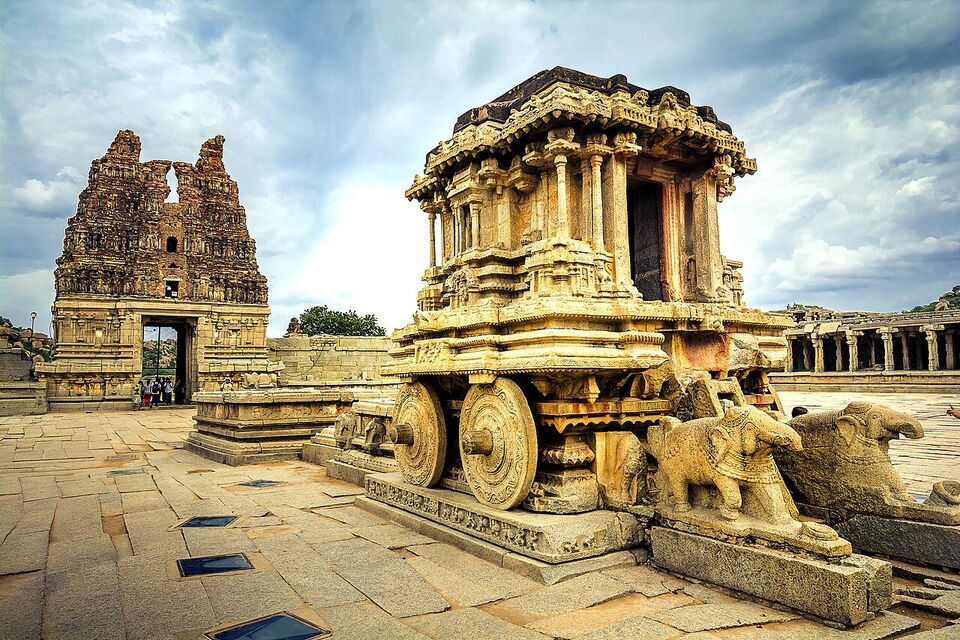
Hampi is the old capital of the Vijayanagara Empire, which around 1500 was one of the largest cities in the world. After defeat in 1565 it was abandoned, and what remains is a strange and beautiful landscape: piles of rust-colored granite boulders, banana fields, the Tungabhadra River, and more than 1,600 surviving remains of temples, markets, royal enclosures and water structures spread over a huge area.
Plan on two nights. The first morning goes to the "sacred center" along the river, around the Virupaksha Temple and the old Hampi Bazaar street, where the temple is still in daily use. A second day covers the "royal center" to the south, with the Lotus Mahal area, elephant stables and the stepped water tanks, plus the Vittala Temple complex, which has the famous stone chariot. Pace the days around the sun: ruins are exposed, and the middle of the day is hot.
Tickets and entry rules
We could not confirm current ticket prices or hours for Hampi's monument groups. In general, the Archaeological Survey of India (ASI) runs the major ticketed sites and charges foreign visitors a higher price than Indian citizens, and some temples that are in active worship, such as Virupaksha, have their own rules on shoes and dress. Check the ASI site (asi.nic.in) and the ticket counters for current prices, hours and any closed day, and carry cash for small payments.
The village across the river
Many travelers stay on the far side of the river, in the village often called Virupapura Gadde, and in the Anegundi area, which is quieter, with rooftop cafes and rice fields. Getting across typically means a short boat or small-ferry crossing, or a longer trip over a road bridge; crossing arrangements and timings have changed over the years, so ask your guesthouse on the day. Stay in the main Hampi village instead if you want to walk to the Virupaksha Temple at dawn.
Getting around: scooter, bicycle or driver
Distances are too long to walk everything and the heat adds up. The common options are a rented bicycle (flat enough in the central areas), an electric or petrol scooter, a local auto-rickshaw for a half day, or a car with a driver. Rental shops cluster in Hampi Bazaar and across the river, and prices are negotiable, so agree the rate and return time in advance.
Insider tip
Riding a scooter in India means driving on the left, often among trucks, cattle and unlit roads. The CDC advises carrying an International Driving Permit with your US license for any driving, and wearing a helmet. If you are not an experienced rider, a bicycle or a hired auto-rickshaw is the safer choice.
Badami and Aihole in brief
Badami and Aihole lie about 87 miles (140 km) northwest of Hampi. They belong to the early Chalukya kingdoms of the sixth to eighth centuries, long before Hampi's empire. Badami has cave temples cut into a sandstone cliff above a lake. Aihole is often described as a laboratory of early Indian temple design, with dozens of small temples scattered through a village.
Together they are a good extra if you care about early architecture, but they are quiet and far from major stations. If you have only one or two days to spare, they are less urgent than Hampi. Allow a night in the area and a driver for the day, because public transport between the sites is slow.
Coorg and its coffee estates
Coorg (the official name is Kodagu) is a hill district of coffee, pepper and cardamom estates in the Western Ghats, known for its own cuisine, language and a strong culture of homestays. It is a restful add-on after Bengaluru or Mysuru: walks through estates, waterfalls, spice gardens and misty mornings, rather than monuments.
The monsoon from June to September brings heavy rain, which can mean landslides on hill roads and leeches on trails, and it is the time many visitors avoid. The cooler months, roughly October to February, are the comfortable window. Book homestays ahead in the main season, and ask whether lodging includes estate tours. We could not confirm 2026 harvest timing, so ask your host if seeing the picking matters to you.
For a complete coffee-and-tea tour that continues south into the hills, link Coorg with Kerala, where Munnar offers tea country and the monsoon pattern is similar.
How to combine the stops
A simple loop starts and ends in Bengaluru. Spend one or two nights there, go to Mysuru for one or two nights, add Coorg if you have time, and return to Bengaluru for an overnight train or a flight onward. Hampi sits on a different axis, to the north, so we suggest putting it at the end or the start, not in the middle.
- Three nights
Bengaluru and Mysuru
One night in Bengaluru, two in Mysuru. A good first taste of the state for families, older travelers or jet-lagged arrivals.
- Five nights
Add Hampi
Bengaluru, Mysuru, then an overnight train to Hosapete and two nights at Hampi. Fly out of Bengaluru, or continue to Goa.
- Seven nights
Add Coorg or Badami
Insert Coorg between Mysuru and Bengaluru for a slower pace, or travel on to Badami and Aihole from Hampi by road.
Getting between the places
Bengaluru and Mysuru are linked by frequent trains and a busy road, and the journey is a few hours either way. Trains are comfortable and avoid the city traffic; check the Indian Railways enquiry site for current times. For Coorg, a driver is the practical choice, because public transport is slow and the hill roads are winding.
The journey to Hampi is the one to plan. The station for Hampi is Hosapete, about 8 miles (13 km) from the ruins. An overnight service from Bengaluru toward Hosapete has run for years, and it is the usual way to travel without losing a daytime. We could not confirm the current train number, departure time or fares, so verify them on IRCTC or the Indian Railways enquiry site and book early; for how booking works, see trains in India. Trains can be fully booked in the main season, and a driver for the whole journey is the fallback, with a long day on the road.
If you fly, Bengaluru is on the e-Visa entry list and is the better point of entry than a smaller airport. The e-Visa itself comes only from the official portal, indianvisaonline.gov.in, and look-alike agent sites charge extra, so apply only there. The flights page covers routes from the US: flights to India. For rides and drivers within the state, see flights, drivers and rickshaws.
Save money
Hire a car with a driver for the legs that trains handle poorly, such as Coorg and Badami, and use trains for Bengaluru, Mysuru and Hampi. A driver for the whole trip rarely makes sense when the rail legs are quick and comfortable.
When to go and the monsoon
The southwest monsoon normally arrives on the west coast at the start of June and covers the country by mid-July, withdrawing from early September to early October. In Karnataka, the hills and Coorg get heavy rain, while Hampi is drier but hot before the rains, and the monsoon turns its surroundings green. We suggest October to February for most itineraries and avoiding the height of summer at Hampi, when the open ruins are brutally hot. See when to go for the national picture.
For wildlife in Karnataka's forests, and for tiger reserves elsewhere, see tiger safaris and wildlife. For hotel types and what to check before booking, see where to stay.
Common mistakes
- Skipping a daytime buffer around Bengaluru's airport and railway stations because the map distance looks short.
- Booking only one night at Hampi, when the first day is spent traveling and the sites need two mornings.
- Visiting Hampi's ruins in the afternoon heat and cutting the day short; start at sunrise and rest at midday.
- Planning around the Sunday lights without confirming them with the palace board first.
- Assuming Hindi will work everywhere; in Karnataka, English and a few Kannada greetings go further.
When you are ready to see how Karnataka fits with the rest of the country, return to the hub at India's destinations.
Add it to a route in the trip builder, or ask us to plan the hotels, trains and guides for you.