Overview
Most people in India, including most drivers, guides and shopkeepers, deal with visitors honestly. But a small number of people near the busiest places make their living from tourists who do not yet know the usual prices, and those places include Delhi's main railway station, the Taj Mahal gate, Jaipur's bazaars and Varanasi's ghats. Almost all of the tricks are about money, not violence. Almost all of them stop working when you slow down, decide your plan beforehand and say a polite no.
This page describes the scams that visitors most often report, shows how each one works and gives you a script. It is not meant to make you suspicious of everyone: a friendly person who talks to you on the street is usually just curious. The test is simple. If the conversation turns toward a shop, a tour, a ticket, a ride or a donation you did not ask for, step away. For wider safety advice, see our safety guide.
How most scams work
Most scams share the same pattern, and once you see it you will spot most of them.
- A friendly start. Someone greets you, asks where you are from, and says something helpful, such as "That road is closed today" or "The office is upstairs."
- A false fact. The helper tells you something you cannot check: the hotel is full, the ticket counter is shut, the museum is closed for a festival.
- A "solution." A taxi, a travel agency, a shop or a "government tourist office" steps in to help.
- The cost. A high price, a commission-driven purchase or a pressure to pay in cash.
The best defense is to check facts yourself using sources you chose: your hotel's phone number, the monument's official site or the railway's booking site. Do not follow a stranger to "the real office."
Scams at a glance
| Scam | How it works | What to do |
|---|---|---|
| "Your hotel is closed" taxi story | A driver or tout says your hotel is full, closed or flooded and offers a "better" one, often a commission hotel | Call the hotel yourself on your own phone; stay on your plan |
| Commission shops and gem deals | A driver or guide stops at a shop; you are pressed to buy gems, carpets or "export" goods and told you can resell them at home | Decline stops; never buy gems as an investment |
| Fake guides and ticket touts | Someone at a monument gate claims to be an official guide or offers tickets at a "skip the line" price | Buy tickets from the official online page or ticket window; hire guides through your hotel or an approved booth |
| Rickshaw meter and fare games | The meter is "broken," or the driver quotes a high fixed price, or takes you the long way | Use a prepaid counter or ride app; agree the price first |
| "Ticket office is closed" at the station | A stranger outside the station says the booking office is closed and sends you to a private agency | Use the railway's official booking site; ask a uniformed station official |
| Fake e-Visa sites | A look-alike site charges extra for an "express" visa or a service fee | Apply only at indianvisaonline.gov.in/evisa |
| ATM and card skimmers | A device on the card slot copies your card; a "helpful" person watches your PIN | Use bank-branch ATMs; cover the keypad; check your statements |
| Overcharging at monuments and for photos | Foreign-visitor prices are quoted at a higher rate, or a performer demands money after you take a photo | Know the posted price; agree before you photograph |
| Drugged food or drink | A new friend offers a drink or a snack; you wake up robbed | Accept nothing from strangers; keep your drink in sight |
| Fake charities | A child or an adult asks you to buy milk powder or books, and the shop takes the item back later | Give to a registered charity or not at all |
The "your hotel is closed" taxi story
This is the most reported scam for first-time visitors. You arrive at a station or an airport and take a taxi or a rickshaw. On the way, or at the door, the driver says your hotel is closed, full, flooded, under renovation or "not safe." He suggests another hotel, often one that pays him a commission, and the room is overpriced. Sometimes a second person phones "the hotel" and confirms the story.
What to do
- Book your first night in advance and save the hotel's phone number and map pin.
- If the driver says it is closed, say "Please drive to this address," and show the screen. If he refuses, get out and take another taxi.
- Call the hotel yourself, with your own phone. Do not use the number the driver offers.
- Arrange an airport pickup with the hotel, or use a prepaid taxi counter or a ride app, so that the driver already knows the address.
Drivers who say there is a "festival" or "strike" and the road is shut are using the same trick. Roads do close in India, but your phone's map and your hotel can tell you.
Commission shops and gem scams
A guide, driver or friendly stranger suggests a stop at "a government shop" or "an export emporium" for carpets, textiles, jewelry or gems. The stop earns the driver a commission on what you buy, and the price includes it. The most serious version involves gems: you are told that you can buy stones at a low price, take them home and sell them at a large profit through a partner. This does not work, and the stones are worth much less than you paid. Nobody legitimate sells gems to tourists as a business deal.
- Say at the start of the day that you do not want shopping stops. A driver who agrees and then stops anyway is working for the shop.
- Do not trust a shop that says it is government-run unless you can check. Fixed-price state emporiums exist, but ask at your hotel.
- Do not buy anything high-value as an investment, and never pay a deposit to send goods home unless you have checked the shop first.
- If you want to shop, do it on your terms: look at several shops and compare prices before buying. See our shopping guide.
Watch out
Never pay for gems, "investment" carpets or jewelry on the strength of a promise that you can sell it later or that a buyer will meet you at home. A shop that arranges shipping of expensive goods and asks you to pay a fee is also a warning sign. Pay by credit card where you can, so that you have a way to dispute the charge.
Fake guides and monument ticket touts
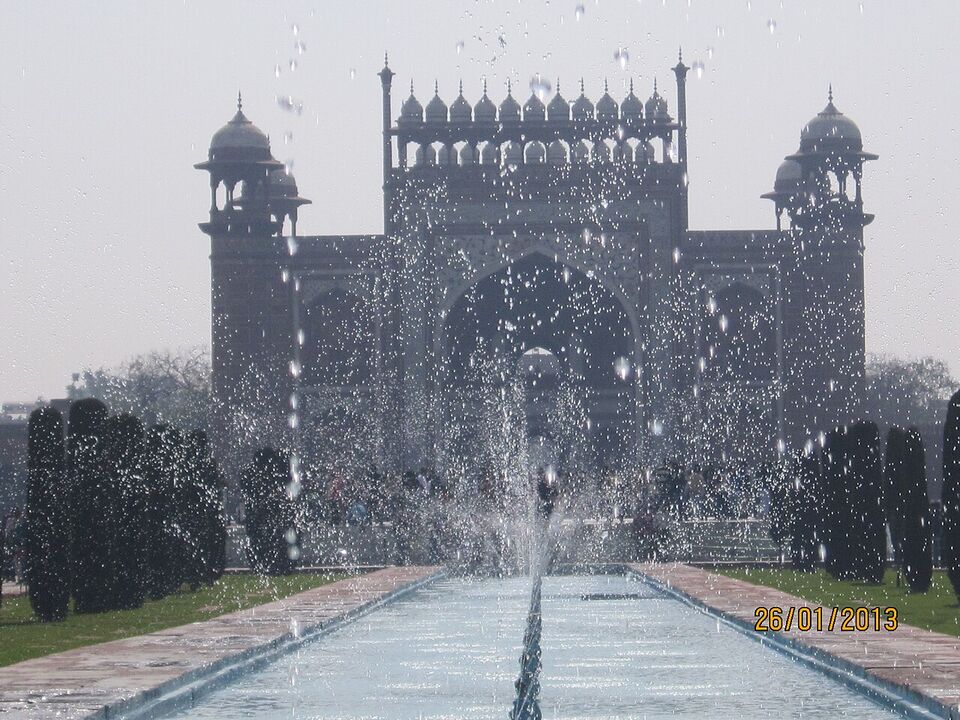
At the Taj Mahal and other major sights, people near the gate offer to guide you, sell tickets or take you past a queue. Some are licensed. Many are not, and some sell tickets at a high price, or tickets that do not match what the monument charges.
Know the posted price. The Taj Mahal's official site shows ₹1,100 (about $12) for foreign visitors, including the entry fees, plus an optional ₹200 (about $2) to go inside the main mausoleum. Buying online earns a ₹50 (about $0.50) discount per foreign ticket, and children under 15 are free. The Taj is closed on Fridays. Tickets are sold through the Archaeological Survey of India's ticket site and at the ticket window. Prices at other Agra monuments are listed on the official page: for example, Agra Fort is ₹650 (about $7) for foreigners, and Fatehpur Sikri is ₹610 (about $6). If someone quotes you far more than the price posted, you are being overcharged. Check the live page for current prices: see our Agra guide.
- Buy tickets only from the official online page or the ticket window. Do not buy from a person who approaches you.
- A guide should show a government-issued ID card. Agree on a fee and the length of the tour, and pay at the end.
- Be wary of anyone who says the monument is closed or "only open for Indian tourists today," and then offers a different attraction.
- Do not hand your phone or camera to a stranger "to take a photo," since the next request may be a tip.
Rickshaw meter and prepaid fare disputes
Auto-rickshaw fares are set by government in principle, but meters and haggling vary from city to city, so we give no per-kilometer figure here. Common problems are a "broken" meter, a fixed price much higher than normal, a longer route, a driver who adds a "waiting" or "luggage" charge, and a prepaid receipt that the driver then ignores.
- Use a ride app where you can. The price is shown, the route is recorded and the driver's name and plate are visible.
- At airports and big stations, use the prepaid counter. Pay at the counter, get a printed slip and hand it to the driver on arrival, not at the start.
- If you use the street, agree the price first, say "meter" if there is one and show that you know where you are going by following the route on your phone.
- Keep small notes. A driver who "has no change" is a common way to add ₹50 (about $0.50) or ₹100 (about $1).
- If a dispute turns heated, pay the agreed fare, take the plate number and walk away. You can report it later.
Our getting around guide has more on how city transport works.
The "ticket office is closed" lie at the station
Outside a big railway station, a friendly person tells you the booking office is closed, the line is long, or foreigners must use a "tourist office" down the road. That office is a private travel agency, and it sells tickets at a high markup, or tours you do not want, or a taxi to a commission hotel. The station's official tourist reservation counters, where they exist, are inside the station, and ask a uniformed official or follow the signs.
The simple fix is to book rail tickets online before you arrive, on the railway's official site (irctc.co.in) or through the official app, and to go straight to the platform. We could not confirm the current steps for foreigners to register and pay on that site, so check the site's help pages and book early on busy routes. See our train guide.
Look-alike e-Visa sites
This is the one scam you can fall for before you leave home. Many websites look like the Indian government's visa portal, show the Indian emblem and sell "e-Visa" services at a high fee. Some charge several times the real fee, some offer "express" or "emergency" processing, and some collect your passport scan and card details.
- The only official application site is indianvisaonline.gov.in/evisa. Type it yourself or follow a link from the Bureau of Immigration site, boi.gov.in.
- The government's own pages state that it makes no provision for charging an emergency or express fee, and that it has not authorized any agent to charge one. A site that sells "express e-Visa" is not the official service.
- The official fee for Americans depends on the visa type and season (the 30-day visa is listed at US$10 for April to June and US$25 for July to March, the 1-year at US$40 and the 5-year at US$80), plus a card fee of about 3% shown at checkout. The fee table on the site is undated, so check the fee on the official page. The fee is not refundable, even if the visa is refused.
- If a site asks for a "service fee," "processing fee" or "priority fee" on top of the government fee, close it.
Our e-Visa and entry guide walks through the real application.
Insider tip
Check the web address letter by letter before you enter a passport scan or a card number. Official Indian government sites end in .gov.in. A look-alike may end in .com, .org or .in with extra words, or sit at the top of a paid search result.
ATM skimmers and card fraud
Card skimmers, devices that copy your card data, exist in India as they do in other countries. Reduce the risk with a few habits.
- Use ATMs inside a bank branch, a hotel lobby or an airport, in daylight.
- Check the card slot and keypad for anything loose, bulky or oddly placed. Cover the keypad with your hand.
- Refuse help from anyone who offers to "show you how" or stands close.
- Tell your bank where you are going, carry two cards and keep them apart, and check your statements on your phone.
- In shops and restaurants, keep your card in sight, and do not let it leave your view.
Our money guide covers ATMs and cards in more detail. If your card is copied or stolen, call your bank at once and cancel it.
Overcharging at monuments and for photos
Foreign visitors pay a higher ticket price at many monuments, and this is official, not a scam. The scam is when a person quotes a price that is higher than the published one, or adds "camera fees," "shoe fees" or "special entry fees" that are not on the notice board.
- Look for the printed rate list at the ticket window and photograph it.
- Ask for a receipt for any fee that is not obviously a ticket.
- A performer, a costumed model or a man with an animal may pose with you and then demand money. If you want a photo, ask the price first. If you do not, say "no photo" and keep walking.
- Do not hand over your camera or phone to a stranger.
For the places where donation requests come up, see our guide to visiting temples.
Drugged food and the bhang lassi story
Bhang is a preparation of cannabis that is traditionally associated with some festivals and is sold openly in a few places. Rules for cannabis products differ by state, and we have not confirmed them for this edition, so do not assume that any cannabis drink is legal or mild. A drink sold as a "special lassi" can contain much more than a visitor expects, and the effects can be strong and long. Do not order it casually.
The related scam is a new friend on a train, a bus or a beach who offers you a drink, tea or a snack. Some of these are laced with a sedative, and the victim wakes up without bags, money or a phone. The rule is the same everywhere:
- Accept no food or drink from strangers, including a fellow passenger who seems friendly.
- Open and pour your own bottled water, and keep your glass in sight.
- Do not leave a drink alone and then finish it.
- Tell your hotel or a friend where you are going at night. If you feel drowsy or strange, go to a public place and get medical help.
Fake charities and begging
A child or adult asks you to buy milk powder, rice or school books "for a family." After you pay a high price, they return the item to the shop and split the money. Other versions use clipboards, "donations" for a school or a child with a story. If you want to help, give to a registered charity through its website or to an organization your hotel can name, and not on the street. Begging itself is not a scam, and people in real need ask for help in India as elsewhere. A smile and a no is enough, and you can decide in advance if you want to give small coins.
How to say no politely
Most touts use the same pressure: they talk while you walk, and they do not listen. A calm routine works better than anger.
- Say "no, thank you" once, with a smile, and keep walking. Do not stop to explain.
- "Nahin, shukriya" (nahin means no and shukriya means thank you in Hindi) works in most of the north. In the south and elsewhere a plain English "no, thank you" is understood. See our Hindi phrases page.
- Do not answer questions about where you are staying, how long you are here or whether it is your first time.
- Use headphones, a map in your hand or a phone call as a shield, without being rude.
- Do not accept anything "free": a bracelet, a flower or a photo can come with a demand.
- If a person follows you or becomes aggressive, walk into a shop, a hotel or a busy area and say clearly "please leave me alone."
Different from home
In the US, ignoring a stranger who speaks to you can feel rude. In a busy Indian tourist area, it is normal and nobody takes it personally. You can still be warm with people who are not selling: a hotel clerk, a family at a temple or a shopkeeper whose shop you chose.
What to do if you are scammed
- Stop paying. Do not hand over more money to "fix" the problem. If you are in a vehicle, ask to be let out in a busy place.
- Keep evidence. Take photos of the vehicle's number plate, receipts, the shop name and any messages.
- Call for help. Dial 112 for police, fire and ambulance. For a non-urgent report, go to the nearest police station and ask for a written complaint or report, and keep a copy. Some cities have tourist police or a tourist help desk, and your hotel can tell you; we have not confirmed their details for this edition.
- Call your bank if a card was used, and cancel it. Dispute the charge with your card issuer.
- Tell your hotel. Hotels often know the local police and the usual scams.
- Contact the embassy if a passport is lost or you are a victim of crime. US Embassy New Delhi is on +91-11-2419-8000 (Monday to Friday, 8:30 a.m. to 5 p.m.), and the State Department's 24-hour line for Americans abroad is +1-202-501-4444 (from abroad) or +1-888-407-4747 (US and Canada). The embassy cannot recover money, but it can help with a passport and with a list of local lawyers and doctors.
- Report an e-Visa scam to your card issuer and to your local police or consumer-protection agency at home.
A scam is irritating and sometimes costs real money, but it does not usually threaten you. It helps to remember that most scams stop at the first firm no, and that your safety matters more than a refund.
Common mistakes
- Leaving an airport or station with no plan, no hotel address and no map.
- Accepting a stranger's statement that a hotel, ticket office or monument is closed.
- Agreeing to a shopping stop "just to look," then feeling obliged to buy.
- Buying gems or carpets as an investment.
- Paying a price you have not agreed first.
- Applying for an e-Visa on the first search result.
- Using an ATM on a quiet street at night.
- Accepting food, drink or a "free" gift from a new friend.
- Arguing for an hour over a small amount: it costs more of your day than the rupees are worth.
Calm, prepared travelers meet few of these tricks, and most visitors leave with good memories of the people they met. See also our guides to Delhi and Agra, the two cities where first-time visitors meet the most touts.
Add it to a route in the trip builder, or ask us to plan the hotels, trains and guides for you.