Overview
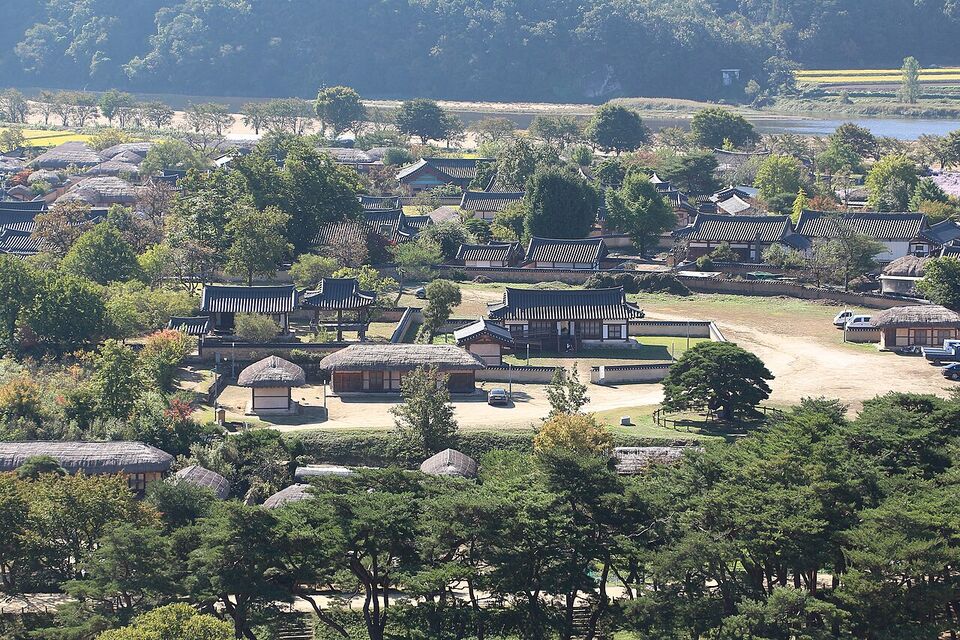
Andong, in North Gyeongsang Province, is the capital of one of Korea's most traditional regions. It has about 168,000 people (a 2010 count) and a long history as a center of Confucian scholarship, which is why you will see old academies and clan villages here more than in most places. The star is Hahoe Folk Village, a Joseon-era village inside a tight bend of the Nakdong River. "Ha" is short for river and "hoe" means to turn around, which describes the bend. The village is a living community, not a museum, with residents, guesthouses and a few small cafes among the old houses.
Hahoe and Yangdong village near Gyeongju were listed together by UNESCO in 2010 as the "Historic Villages of Korea." The village draws around one million visitors a year, though on an ordinary weekday it feels calm. This page covers how to get there without a car, what to see and eat, how mask dance fits in, where to stay in a traditional house, a one-night plan and the mistakes to avoid. If you are choosing between several stops in the southeast, see regions of South Korea.
Hahoe Folk Village and its river bend
The Ryu clan of Pungsan settled Hahoe in the 14th and 15th centuries, and the village has stayed a one-clan community ever since. It was laid out following traditional geomancy (pungsu, Korean feng shui), with the river curling around it, a cliff called Buyongdae to the north and Namsan, a small hill, to the south. Tile-roofed houses of the families sit beside thatched servants' homes, and several large manor houses are designated Treasures or Important Folklore Materials, including Yangjindang and Chunghyodang. Walk the lanes between the clay walls, look at the old trees (a zelkova of about 650 years is a shrine where visitors tie paper wishes) and take the path to the riverside.
The village has been closed to tour carts since 2021, so you walk. Wear flat shoes, and leave plenty of time to wander the lanes and the river path. The boat or ferry crossing to the cliff side and the viewpoint opposite the village run on a seasonal schedule; check whether they are running before you plan on them. Hahoe's entry fee, hours and any seasonal closures can change, so check the official Hahoe village page (hahoe.or.kr) and the Andong tourism site (andong.go.kr), and confirm them before you travel. We could not confirm 2026 prices.
Different from home
People live and work in Hahoe. Treat the lanes as someone's neighborhood: do not open gates, do not step into yards unless a sign says you may, and keep your voice down in the evening.
The mask dance and other performances
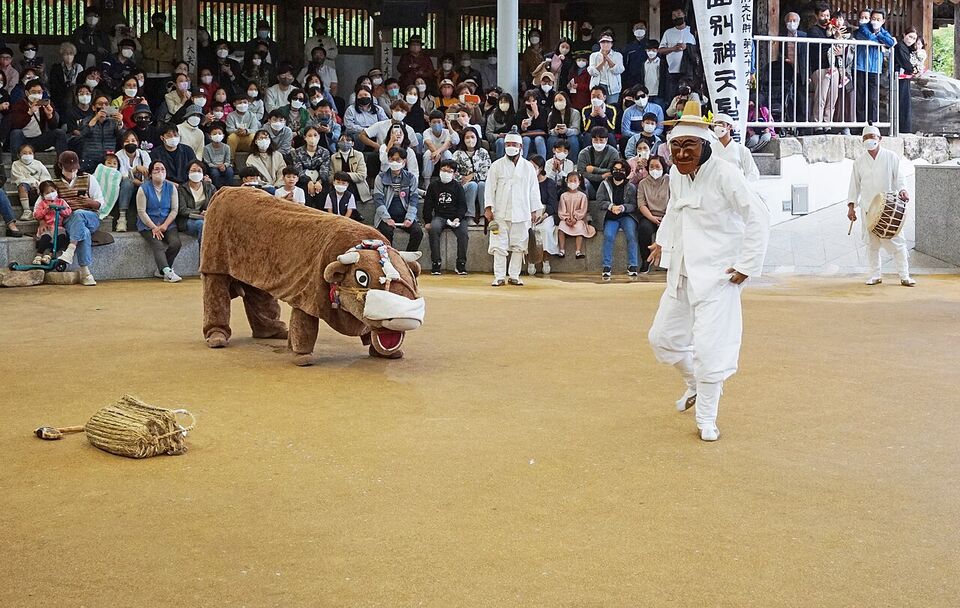
The Hahoe Byeolsin-gut Mask Dance Drama is a National Intangible Cultural Treasure (No. 69), a mix of ritual, folk theater and humor that was originally part of a village rite honoring the local spirits. The performers wear carved wooden masks, and the dances poke fun at scholars, monks and the wealthy. A performance is often held at the village on set days and times, and the Hahoe mask museum and the shops near the entrance show the masks up close.
Because the schedule changes by season, weather and event, it is easy to arrive on a day with no performance. Check the village's official page and the Andong tourism site for the current days and times, and ask about the language: most performances are in Korean, with some English explanation on request or in a pamphlet. Some seasonal events, including the Andong Maskdance Festival in the fall, add extra shows; 2027 dates are not confirmed, so plan around the official announcement. The village also keeps older folk games such as the Jeulbul Nori, which uses strings of fireworks set off at the foot of the Buyongdae cliff; these are special events, not daily shows.
Dosan Seowon and Bongjeongsa
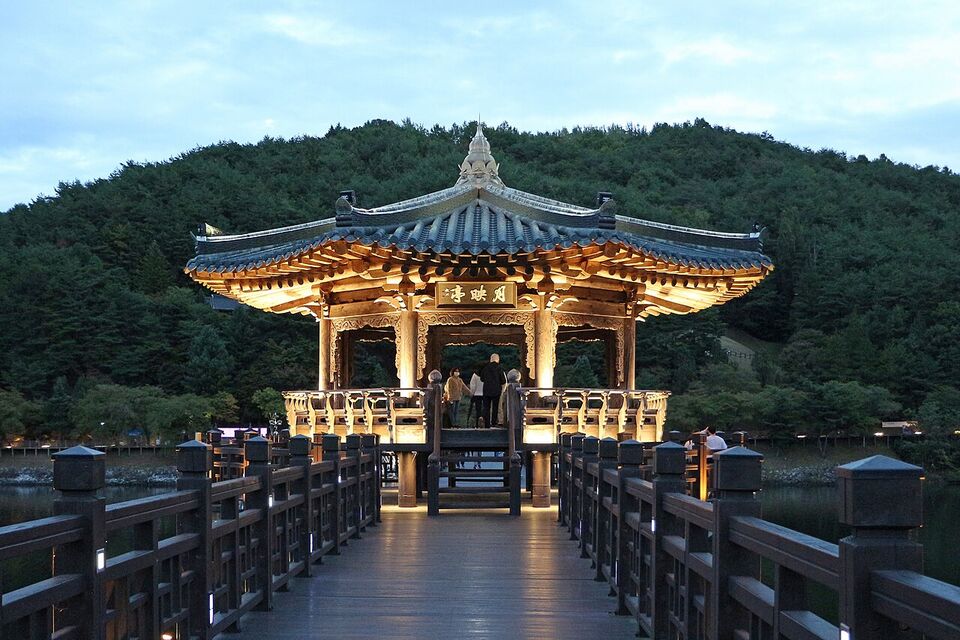
Dosan Seowon is a Confucian academy outside the city, founded by the scholar Yi Hwang (the philosopher known as Toegye) and finished after his death. A seowon was a private academy and shrine; Dosan is part of the UNESCO listing of Korean seowon. The buildings are simple and plain, set on a quiet mountain slope by the Nakdong River. It is a short visit of an hour or so, and it is more interesting if you read a little about Neo-Confucianism first. Hours and fees vary, so check before you go.
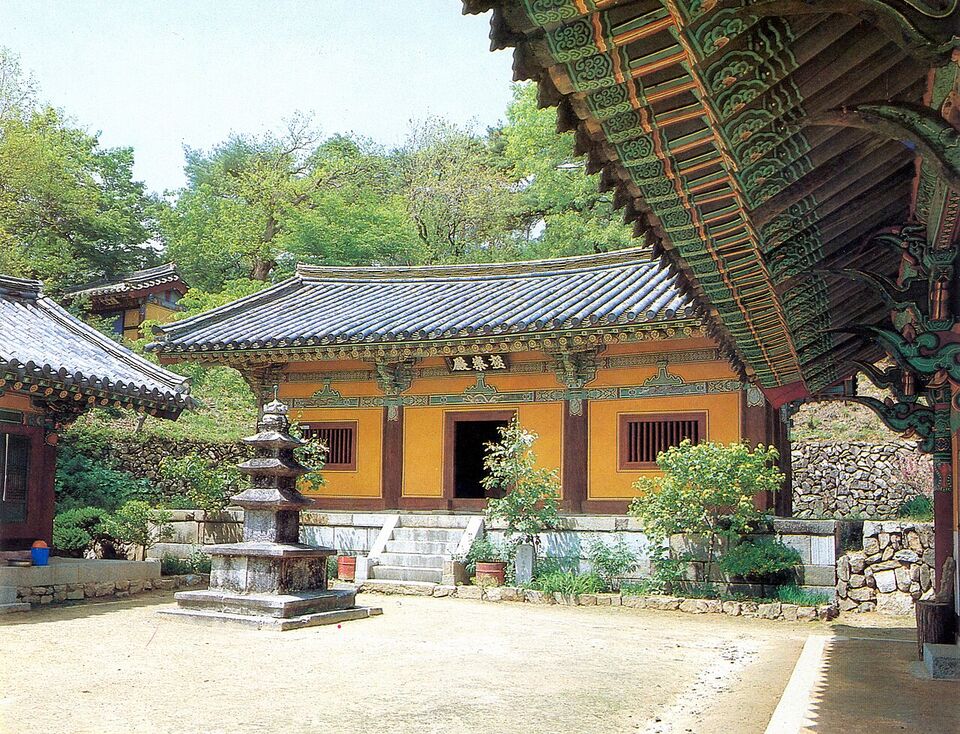
Bongjeongsa is a Buddhist temple in the mountains north of the city, listed as one of Korea's mountain monasteries. It is quiet and remote, and a good stop for anyone who wants a temple without crowds. A taxi from the city is the easiest way to reach it; it is far enough away that you should not plan to go by bus unless you have checked the schedule. For temple etiquette and temple stays elsewhere, see temples and temple stays.
What to eat: jjimdak and other heritage food
Andong jjimdak is the dish most people come for: chicken pieces braised with glass noodles and vegetables in a soy-sauce-based sauce, often with a little heat. The name means "steamed chicken of Andong," and the dish has a long street of restaurants in the old market, where it was served to compete with fried chicken. Others to try:
- Heotjesabap. A bibimbap-style bowl of rice with seasoned vegetables, eaten with soy sauce instead of chili paste. It is based on the foods set out at ancestral memorial rites.
- Salted mackerel. A local salted fish dish that is a regional specialty.
- Andong soju. A traditional rice spirit, once made at home by the women of a household and handed down within families.
- Sikhye. A sweet rice drink; the Andong version is a spicier red version made with chili, ginger and radish.
- Hahoe mask bread and yakgwa. Sweet snacks sold near the village.
Many restaurants in small towns close early (often by 8 or 9 p.m.), and some are cash-only. See Korean food for how to order, including how to handle spice.
How to get to Andong, and the limits of public transport
Andong has no airport; the nearest international one is Daegu, about 57 miles (92 km) to the south. Most visitors arrive by train or bus.
- Train. KTX-Eum trains on the Jungang Line run to Andong from Cheongnyangni station in northeast Seoul; the trip takes about 2.5 to 3 hours, depending on the service. Check the departure station and the time on KORAIL (letskorail.com), because timetables and the types of train have changed in recent years. Andong's station is outside the old center, so you need a bus or taxi from it.
- Express bus. Buses leave Seoul for Andong several times a day, taking about 3 hours; check current times and fares on the express bus sites (kobus.co.kr).
- Driving. The trip from Seoul is roughly 155 miles (250 km) and about 3 to 3.5 hours; see driving in South Korea for tolls and rules.
From Andong to Hahoe, a local bus takes around 50 minutes to an hour, and runs infrequently; a taxi is much quicker (about 25 to 35 minutes) and can be a half-day charter that includes Dosan Seowon. Confirm the bus number and the last return time at the bus terminal or the tourist information desk. This is the real limit of getting around without a car: buses are sparse, and missing the last one means an expensive taxi back. A T-money card works on many local buses; see getting around South Korea.
Watch out
Do not count on being able to get a taxi by hailing one in the village in the evening. Book a return taxi in advance, or stay at Hahoe or in town overnight.
Where to stay: a traditional house
The best reason to stay overnight is a night in a hanok (traditional Korean house). Hahoe has guesthouses run by residents, and the area around Andong has restored manor houses (gotaek) that take guests. Rooms are usually simple, with floor bedding and underfloor heating (ondol), and shared or attached bathrooms. Expect early nights and quiet evenings. Prices are generally in the $ to $$ range, but we could not confirm current rates, so ask the host or the Andong tourism office. Book ahead in fall and at festival time, and ask whether breakfast and heating are included.
For a more conventional hotel with a bathroom and a bed, stay in Andong city and take a taxi to the village. See where to stay in South Korea for hanok etiquette.
A one-night plan
- Day 1
Arrive, Hahoe and the evening
Take a morning train or bus and reach Andong around midday. Eat jjimdak in the old market, then take a taxi or bus to Hahoe. Walk the lanes, see the mask museum and any performance, and watch the light on the river. Check in at a traditional house.
- Day 2
Academy and temple, then home
Walk the village early, before the day visitors. Take a taxi to Dosan Seowon or Bongjeongsa, then return to Andong and take an afternoon train or bus. If you are continuing south, Gyeongju and Busan are the natural next stops.
Mistakes to avoid
- Visiting without checking the mask dance schedule. Performances do not run every day or all year; confirm days and times first.
- Expecting crowds or nightlife. The village is quiet in the evening, restaurants close early, and Andong is a small city.
- Relying on buses without checking the last return. Missing it means an expensive taxi.
- Forgetting cash. Small restaurants, stalls and some guesthouses prefer cash; carry a little.
- Visiting in deep winter without checking. Cold weather can close boat crossings and shorten programs.
- Treating the village as a theme park. It is a home to residents; see the callout above.
Add it to a route in the trip builder, or ask us to plan the hotels, trains and guides for you.