Overview: pay with a card, keep a little cash
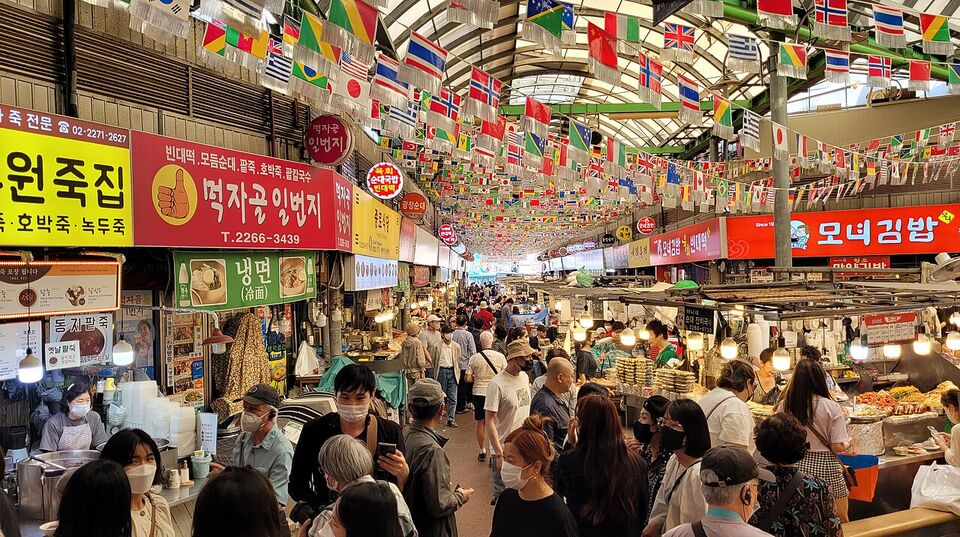
You can do most of a South Korea trip with a US Visa or Mastercard and a transit card. Cards, including contactless and phone payment, are accepted at hotels, department stores, chain restaurants, cafes, convenience stores and many small shops in Seoul, Busan and other cities. The places that still reward cash are markets, street food stalls, some small restaurants, temple donation boxes and some taxis outside the cities.
This page covers the won and the exchange rate, which cards work, how to take cash out of an ATM, the airport versus city exchange question, how to avoid bad rates, T-money and other transit cards, mobile payments, tipping, tourist tax refunds, and what things cost. Where a current figure was not available to us, we say so and tell you where to check.
If you are still building your plan, the budget page turns these prices into a daily total, and the planning page shows where money fits into the rest of the preparation.
The won and the exchange rate
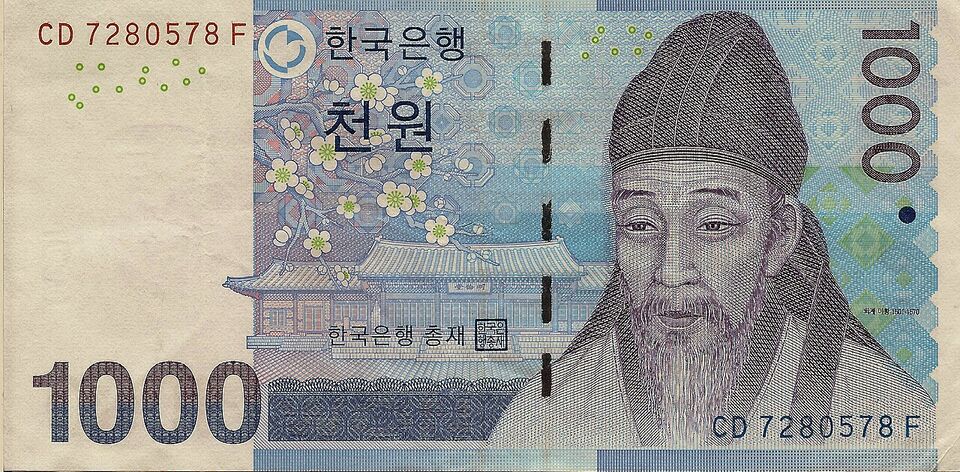
South Korea uses the Korean won, written ₩ or KRW. Banknotes and coins come in many denominations, and the smallest notes you will use often are the ₩1,000 bill (about $1) and the ₩5,000 bill (about $4). Prices in Korea are often in the thousands, so a coffee or a subway ride has four digits. A quick way to think about it: drop three zeros and subtract about a quarter. ₩20,000 is about $15.
This guide uses one fixed rate for every price: US$1 = ₩1,330. In mid-November 2026 the market rate was close to this, in a range of roughly ₩1,330 to ₩1,344 per dollar in news reports from November 10 to 13. The real rate moves daily, and what you get depends on your bank, card network and the exchange booth. Check a live rate on the day you fly, and see the converters page for a quick calculator.
Different from home
Korean prices are written without cents or decimals, and the amounts look large. A price tag of ₩4,500 (about $3.50) is small. Do the conversion once, then think in thousands of won.
Which US cards work
Visa and Mastercard issued in the US are the safest choice. They are accepted widely, including at convenience stores, department stores, chain restaurants, tourist attractions that sell tickets at a counter, and hotels. Tap-to-pay with a physical card or a phone wallet works at many terminals. At an older terminal you may be asked to insert or swipe the card instead.
American Express and Discover are less widely accepted in Korea, so do not rely on them as your only card. We suggest carrying two cards on different networks, in different places, so one lost or blocked card does not strand you.
Small shops and markets
Foreign-issued cards are accepted at many small shops, cafes and market stalls, but not every one. Some stalls take cash only, and an occasional small business has a terminal that rejects foreign cards. If a terminal declines your card, try once more by inserting rather than tapping, then offer cash. It is rarely a problem with the card itself.
Before you go
- Tell your bank or card issuer your travel dates, and confirm your PIN works abroad for cash withdrawals.
- Ask your issuer about foreign transaction fees and ATM fees. Many travel cards charge none, but plain debit and credit cards often do.
- Save the card issuer's international phone number somewhere you can reach it without the card.
- Pack a card that charges no foreign fees as your main one, and a second card as a backup.
When cash still matters
Cash is not needed for most of a city day, but a few situations still call for it. This table shows where to expect it.
| Situation | Cash needed? | What to do |
|---|---|---|
| Hotels, department stores, chain cafes and restaurants | Rarely | Pay by card; tap or insert |
| Convenience stores and most subway ticket machines | Rarely | Cards work at most; the machines at subway stations accept foreign cards for the Climate Companion Card since March 17, 2026 |
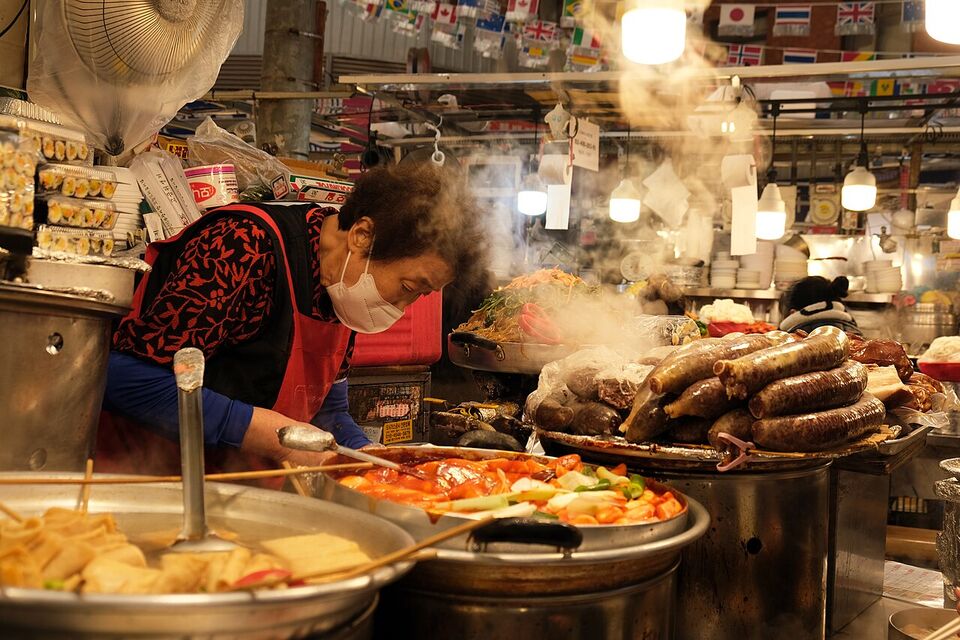
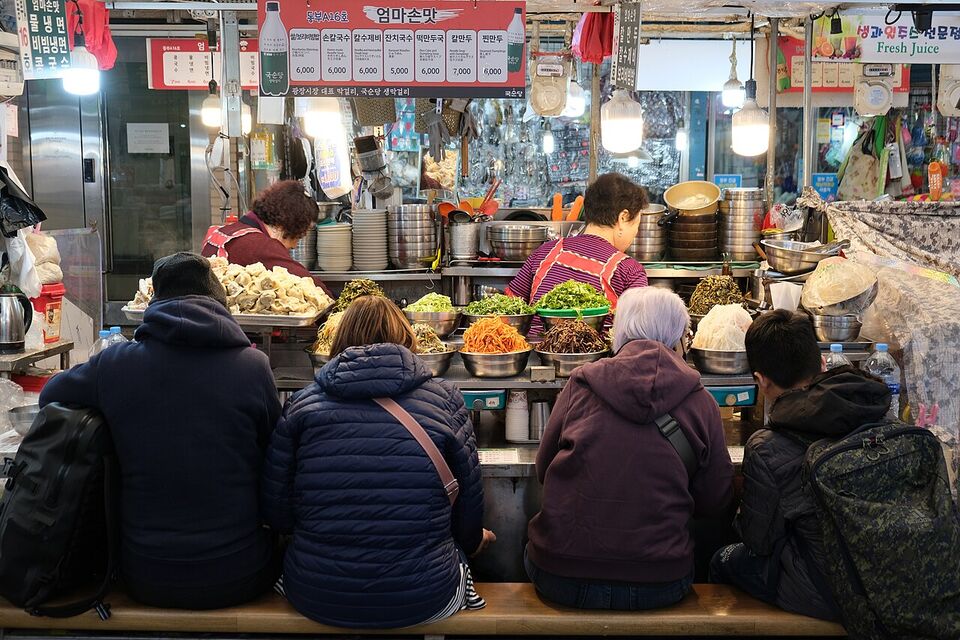
| Traditional markets and street food stalls | Often | Carry small notes of ₩1,000 (about $1) and ₩5,000 (about $4); some stalls take cards, many do not |
| Small family restaurants, especially outside big cities | Sometimes | Ask before you order, or carry enough to pay for the meal |
| Temple donation boxes and small offerings | Yes | Carry small notes |
| Taxis outside the big cities | Sometimes | Many taxis accept cards, but not all; keep cash as a backup |
| Loading a T-money card | Usually yes | Convenience stores usually load cards with cash; see the transit section |
| AREX local-train ticket machines | Yes | The local-train vending machines take won only; Express ticket machines take won and Korean cards, and foreign cards go to the staffed window |
| Rural areas, island ferries, small mountain huts | Often | Withdraw cash before you leave the town |
A sensible cash plan for a first trip is ₩100,000 to ₩200,000 (about $75 to $150) in the wallet at the start, in a mix of ₩10,000 and ₩1,000 notes, topped up from ATMs as you go. Plan more if you will spend time in markets, rural areas or on Jeju.
ATMs: how to withdraw cash with a US card
Most Korean ATMs belong to banks and accept only Korean cards. For a US card, look for ATMs marked Global ATM or showing Visa, Mastercard, Cirrus or Plus logos. They are common in bank branches, in convenience stores, in subway stations and at the airport, and the screen offers an English option. Your own bank sets the fee. ATM operators may add their own fee as well, and the machine usually shows it before you confirm.
Convenience-store ATMs are open long hours, which makes them the easiest choice for travelers. Bank-branch ATMs are good for larger amounts, and during staffed hours you can ask a teller for help. Per-transaction limits vary by machine and card, so do not be surprised if a machine caps the amount.
How to withdraw cash
- Choose an ATM with a Global ATM sign or the Visa or Mastercard logos, ideally at a bank branch or a convenience store.
- Tap the English button, then insert your card and enter your four-digit PIN. If your PIN is longer or uses letters, check with your issuer before you leave.
- Choose the withdrawal option and the account type (checking or savings, if asked; credit card cash advances are costly).
- Enter the amount in won, in multiples the machine allows (it will say if not).
- If the screen offers to convert the amount to US dollars and shows its own rate, decline and choose to be charged in won.
- Take the card first, then the cash, then the receipt. Keep the receipt until you see the withdrawal on your statement.
Watch out
If a machine swallows your card, do not walk away. Call the bank number printed on the machine, or the card issuer's number, straight away. Withdraw during the day at a branch where you can ask a person for help.
Exchanging money: airport or city
You do not have to bring won from home. Most travelers get cash from an ATM on arrival, which usually gives a rate close to the market rate. If you prefer to bring cash to exchange, US dollars are the easiest foreign currency to change, and clean, undamaged bills get the best treatment.
Incheon Airport has exchange counters and bank desks in the arrivals hall, and they are convenient after a long flight. City booths and bank branches usually offer better rates than the airport, with booths concentrated around Myeongdong and other tourist districts. Rates and fees are posted at each booth, so compare two or three before you hand over cash. Banks usually want to see your passport.
A practical way to handle it: change or withdraw only a small amount at the airport, enough for the train fare, a T-money card and a first snack (₩50,000, about $38, is plenty), then use an ATM or a city booth for the rest. Our Incheon Airport transfers page has the first-hour checklist.
Save money
Keep the exchange booth receipt and check the math. Compare the posted buy rate with the live market rate, which should be within a few percent. A large gap, or a counter that quotes only a "fee-free" headline without showing the rate, is a sign to walk to the next booth.
How to avoid dynamic currency conversion and bad rates
Dynamic currency conversion (DCC) happens when a shop or ATM offers to charge your card in US dollars instead of won. It looks helpful, but the rate includes a markup, often larger than your card's foreign fee. The fix is simple: always choose won.
- At a card terminal, if you are asked to pay in USD or KRW, choose KRW.
- At an ATM, decline any "guaranteed rate" or "convert to dollars" offer.
- On a receipt, check that the amount is in won before you sign.
- Avoid exchanging money at hotels, where rates are usually the least favorable, unless it is a small emergency amount.
- Do not buy "pre-paid" won travel cards at an airport booth in the US without comparing: the rate is often worse than an ATM in Korea.
Your card issuer's own foreign fee, when it has one, is separate. A card with no foreign transaction fee plus a won-denominated payment is usually the cheapest combination. See the safety page for what to do if a card is lost or stolen.
Transit cards: T-money and its alternatives
A transit card saves you from buying a ticket for each ride. The standard one is the T-money card, a rechargeable card that works on subways and buses in the Seoul area, Busan, Daegu and Daejeon. It also works at many convenience stores and at some attractions, including Seoul's palaces and Lotte World. Our figures come from a general reference page and are older, so treat them as "about": the card costs about ₩3,000 to ₩5,000 (about $2.50 to $4) to buy, and you can load up to ₩500,000 (about $375).
Where to buy and load
You can buy T-money cards at convenience stores and at some subway station machines, and you load them at convenience stores and station machines. Convenience stores usually take cash for loading. You tap the card on the reader when you board and again when you get off, and the fare comes off the balance.
The Climate Companion Card and foreign cards at subway machines
Since March 17, 2026, new machines at 273 stations on Seoul subway Lines 1 to 8 (440 machines) have accepted foreign Visa and Mastercard credit and debit cards, as well as KakaoPay and Naver Pay, for the Climate Companion Card and for single-use subway tickets. Short-term passes of 1, 2, 3, 5 and 7 days are included, and the 30-day pass was not included at launch. The city said an average service fee of 3.7% applies to purchases with an overseas card. We could not confirm pass prices, so check the price at the machine before you buy, and compare it with a normal T-money card for the number of rides you expect.
Single-use subway tickets carry a refundable deposit of about ₩500 (about $0.50). A single Seoul subway ride for an adult was about ₩1,550 (about $1.20) for trips up to 10 km (6 miles) as of mid-2025, with small increases for longer distances. Fares are revised from time to time, so check on the Seoul Metro site. For route planning, see getting around.
Other options
Prepaid cards sold specifically to foreign visitors exist, and some combine a T-money function with a won balance and exchange booths. We have not confirmed any provider's current terms, so compare fees, refund rules and where you can recharge before you buy one. Many visitors find a plain T-money card plus an ATM easier.
Insider tip
Add only what you expect to ride, and top up again when the balance runs low. Before your last day, ask at a convenience store or check the T-money site about getting the leftover balance back, since the rules depend on where you bought the card.
Mobile payments for foreigners
Korea is a leader in phone payment, but the best-known apps (KakaoPay, Naver Pay and others) are built around Korean bank accounts and Korean phone numbers. Visitors usually cannot register them in full, and linking a foreign card can be limited. Seoul's subway machines now accept KakaoPay and Naver Pay, but whether you can use them depends on how your account is set up.
The simple route for most Americans is to add your Visa or Mastercard to Apple Pay or Google Pay and tap at terminals that support it. It works at many shops, but not all. Treat phone payment as a convenience, not your only way to pay, and keep a physical card and a little cash as backup. See phones, Wi-Fi and apps for the payment-app caveat in more detail.
Tipping
Tipping is not customary in Korea, and you should not add a percentage to restaurant, taxi or bar bills. Servers will not expect it. Some upscale hotels add a service charge to the bill, which is shown on the receipt. If you try to leave extra cash, a restaurant may chase you to hand it back. A warm thank-you does the job. For other manners, see etiquette.
Tourist tax refunds
Korean prices usually include value-added tax (VAT). Many shops, especially in Myeongdong, department stores and duty-free shops, offer tax-free shopping for tourists, and you can recognize them by a tax-free sign in the window. The details change, so we cannot print numbers we could not confirm. Check the Korea Customs Service "Tax Refund" page and the refund operators' sites before you shop.
Instant refund at the store
Some shops can take the tax off at the register, an "instant" refund. You show your passport, buy at a participating shop, and pay the lower price. A limit applies to each purchase and to the total per stay, and a minimum purchase usually applies per receipt. Ask at the till which option the shop uses, and what the limits are, before you pay.
Refund at the airport
Other shops give you a refund slip or electronic record with the purchase. At the airport you complete the refund through a kiosk or counter, usually after customs checks your goods if the rules require it. The goods generally must leave Korea within a limited time, and large or high-value purchases can need to be shown before check-in. Allow extra time at the airport, keep receipts and your passport handy, and keep the items in your carry-on if you may need to show them. Refunds can come back as cash or on a card, and a fee may apply.
Watch out
Rules, minimums and limits changed in recent years and may change again. Do not rely on a blog or a shop clerk's memory for limits. Check the Korea Customs Service page, and keep your purchase receipts and your passport together on departure day. Browse the shopping page for what to buy.
What things cost: prices we could confirm
Daily costs vary widely by city, season and style of travel. These are the prices we could confirm, with the date or source caveat. We have no verified 2026 prices for meals, taxis or hotels, so we do not list any. Prices change on January 1 and when fares are revised, so confirm before you go.
| Item | Price | Note |
|---|---|---|
| Seoul subway, adult, up to 10 km | About ₩1,550 (about $1.20) | As of June 2025; check Seoul Metro for the current fare |
| T-money card (card only) | About ₩3,000-5,000 (about $2.50-$4) | Older reference figure; max load ₩500,000 (about $375) |
| AREX all-stops train, Incheon to Seoul Station | About ₩4,750 (about $3.50) | 2022 fare; may have risen; ₩500 (about $0.50) deposit on single-use cards |
| AREX Express, Incheon to Seoul Station | About ₩9,500 (about $7) | 2022 fare; may have risen |
| Gyeongbokgung palace, adult | ₩3,000 (about $2.50) | Unchanged since 2005; an increase is under discussion; free in hanbok |
| Changdeokgung palace, adult | ₩3,000 (about $2.50) | Secret Garden is by reservation |
| Changgyeonggung, Deoksugung, Jongmyo | ₩1,000 each (about $1) | Check the Royal Palaces and Tombs site |
| Lotte World, one-day adult ticket | About ₩62,000 (about $47) | Older figure; after 4 p.m. about ₩50,000 (about $38) |
| Temple stay, adult, per night | ₩70,000-100,000 (about $53-$75) | Regular rate; the 2026 foreigner discount has ended |
| DMZ half-day tour | About ₩50,000-70,000 (about $38-$53) | A May 2026 report; check the operator |
We list no hotel rates because we could not confirm any. Hotels fill early in busy seasons. For a trip total, see the budget page.
Mistakes to avoid
- Paying in dollars on the terminal. Choose won every time.
- Arriving with no won and no card that works. Bring a card and some cash, and plan a first ATM stop.
- Using a bank-only ATM. Look for Global ATM signs, or move on to the next machine.
- Exchanging a lot at the airport or hotel. Change a small amount, then use better rates in the city.
- Loading too much onto a transit card. Add what you expect to use, and check refund rules.
- Forgetting tax refund paperwork. Keep receipts and passport together, and allow extra airport time.
- Leaving a tip and expecting thanks. It is not customary, and may cause confusion.
- Counting on mobile payment apps. Keep a physical card as your main way to pay.
Travel in the holidays needs extra cash planning: banks and some shops close for Seollal (February 6 to 8, 2027) and Chuseok (September 14 to 16, 2027). See festivals and the FAQ for more.
Add it to a route in the trip builder, or ask us to plan the hotels, trains and guides for you.