Drinking in Korea at a glance
Drinking is part of Korean social life, and many meals, work dinners and weekend evenings include soju, beer or makgeolli. You do not have to drink to take part, and there is also a serious coffee and tea culture. This guide covers the drinks, the etiquette that surrounds them, cafes and tea houses, what the law says, and how to buy drinks at a convenience store. For food to go with them, see our Korean food guide and where to eat in Seoul.
We could not confirm 2026 drink prices from official sources, so we do not list them. Convenience stores are the cheapest places to buy, restaurants cost more, and bars and cocktail places cost the most. Check the menu before you order. See our money guide for planning a budget.
Soju
Soju is Korea's best-known drink: a clear spirit, usually drunk in small shot glasses with food. Its alcohol content varies from about 12.5% to 53% alcohol by volume. Since 2007, low-alcohol soju of below 20% has become the most common type, which is the soju you will find in the green bottle at most restaurants. Traditional soju, distilled from rice, is stronger, and is associated with the Andong region.
Modern soju is smooth and a little sweet, and it is meant to be sipped with food. It comes in flavors such as grapefruit, plum, green grape, peach and apple, which are lower in alcohol and sweeter. Do not mistake the sweetness for weakness, because several bottles add up.
Watch out
Soju goes down easily and many groups share several bottles. Pace yourself, eat with it, and drink water between rounds. It is acceptable to say you cannot drink more, and many groups will accept "I am done" with a smile.
Makgeolli
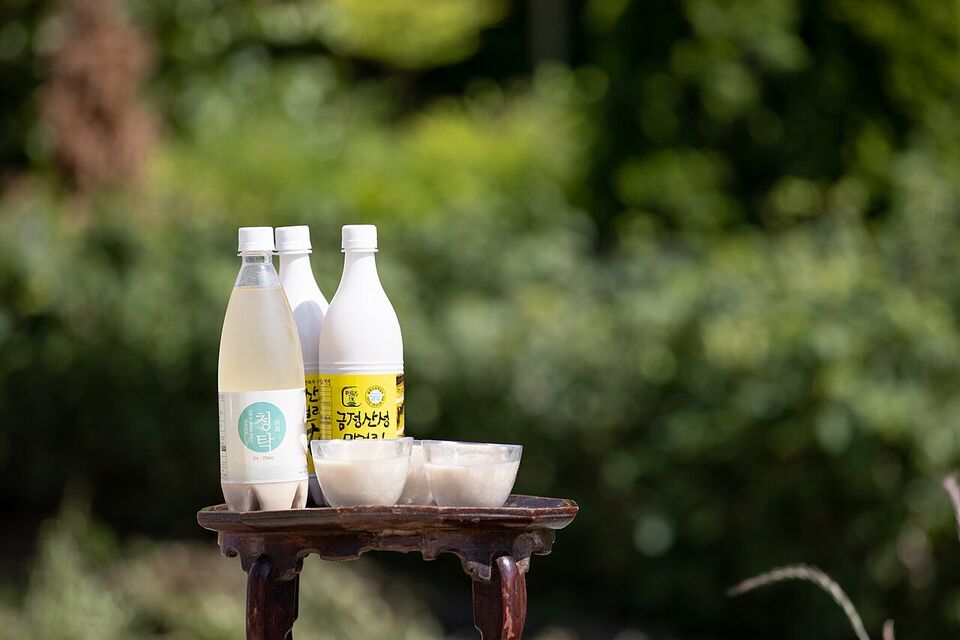
Makgeolli is a milky, slightly sparkling rice wine, usually around 6 to 9% alcohol, tangy and a little sweet. It is sold in bottles that look like plastic water bottles, in stores and in restaurants. The sediment settles, so shake or turn the bottle gently before you open it, and pour into a metal or ceramic bowl.
It pairs well with savory pancakes (jeon), fried food and spicy dishes. Some makgeolli is made fresh and has to be kept cold, and some brands are more carbonated than others. Makgeolli bars, often in older neighborhoods, serve it with a set of side dishes that grows as you order more rounds. Flavors with fruit or chestnut are also sold. It has a short shelf life compared with soju, and unpasteurized bottles should be kept in the fridge.
Beer, somaek and other drinks
Korean beer is mostly light lager, served cold, and drunk with fried chicken, barbecue and snacks. Craft beer has grown in Seoul and other cities, with taprooms in areas such as Itaewon, Seongsu and Hongdae, and imported beer is widely sold.
Somaek combines soju and maekju (beer). The usual method is to fill a beer glass about two-thirds with beer, drop in a shot of soju, and drink it in one go. Groups often make a ritual of it, sometimes with a spoon tapping the table. It is stronger than beer, and the bubbles speed the effect.
Other drinks you may see: baekseju (an herbal rice wine), bokbunja (black raspberry wine), maesil (plum liqueur), sikhye (a sweet rice drink, nonalcoholic) and sujeonggwa (a cinnamon and ginger punch). Whiskey bars and cocktail bars exist, especially in Gangnam, Itaewon and Hongdae.
A table of drinks
| Drink | Type | Strength | Where to try it |
|---|---|---|---|
| Soju | Clear spirit (green bottle or flavored) | Often below 20%; flavored are lower | Barbecue restaurants, pubs, convenience stores |
| Makgeolli | Milky rice wine | About 6-9% | Makgeolli bars, pancake restaurants, markets |
| Beer (maekju) | Light lager and craft beer | Typically a standard beer | Chicken restaurants, pubs, taprooms |
| Somaek | Soju mixed with beer | Between the two | Group dinners, chicken pubs |
| Baekseju | Herbal rice wine | Mild | Restaurants, gift shops |
| Maesil | Plum liqueur or wine | Varies | Bars, stores |
| Sikhye | Sweet rice punch | None | Jjimjilbang, restaurants, cafes |
| Boricha | Barley tea | None | Free at many restaurants |
| Coffee | Americano, latte, filter | None | Cafes everywhere |
Drinking etiquette
Korean drinking etiquette is based on respect for age and rank. It is more relaxed among friends and tourists, but knowing the rules makes you look polite and earns goodwill. Our etiquette guide covers more social rules.
- Do not pour your own drink. Pour for others and let them pour for you. Keep an eye on glasses and refill an empty one.
- Use two hands. Pour with both hands, or hold your pouring hand with the other hand, and receive with two hands, especially from someone older.
- Turn away from elders. When drinking in front of someone older or of higher rank, turn your head or body slightly to the side as you drink.
- Wait for the first toast. The common toast is "geonbae" (cheers). Wait for the eldest person to start.
- Finish a glass before refilling. A full glass signals that you want to stop, and a half-full glass may be topped up.
- Tourists are not expected to know every rule. A visible effort is welcome, and you can say you do not drink and ask for water or a soft drink.
Different from home
At home, you pour your own beer and nobody notices. In Korea, pouring for each other is part of the ritual. If you pour for someone and they pour back, the evening is going well.
Pojangmacha and chicken-and-beer culture
Pojangmacha are tent-style street bars that serve soju, beer and hot snacks late into the night. They are loud and crowded, with plastic stools and shared dishes. Some operate in a fixed building but keep the tent decor. See our Seoul eating guide for more.
Chimaek, fried chicken and beer, gained wide fame during the 2002 World Cup, when crowds watched the matches on big screens in parks. A chicken pub (hof) is a good first place for tourists. Order one chicken to share, a pitcher or a few bottles, and take your time. Many people also order delivery to a park or the Han River riverside.
Hangover drinks and culture
Koreans take hangovers seriously, and convenience stores and pharmacies sell a range of hangover drinks, pills and jelly sticks, usually in small bottles near the register. Whether they work is not proven, and we cannot recommend them as medicine. A better plan is to eat before and during drinking, drink water, and sleep.
The day-after meal is a tradition: haejanguk ("soup to chase a hangover") is a hot soup, usually beef blood or bone broth, bean sprout soup or dried pollack soup, found in restaurants that open early. If you are not drinking, they make a fine breakfast.
Cafe culture
Korea has one of the densest cafe cultures in the world, with a cafe on almost every block of Seoul. Cafes are places to meet, study and work, and the quality of the coffee is generally high, from major chains to specialty roasters.
Specialty coffee and chains
Iced Americano is the everyday coffee, and Koreans drink it all year, including in winter. Specialty roasters in Seongsu, Hongdae, Yeonnam-dong and Euljiro serve filter coffee and espresso drinks. Local chains and international ones are on most streets, and many have English menus and kiosks.
Themed and view cafes
Many cafes are designed around a theme, such as a hanok courtyard, a converted factory, a bookshop, animals or a view over the city. Some charge for the experience through higher prices, and weekend queues are common. Check hours and wait times on Naver Map.
Traditional tea houses
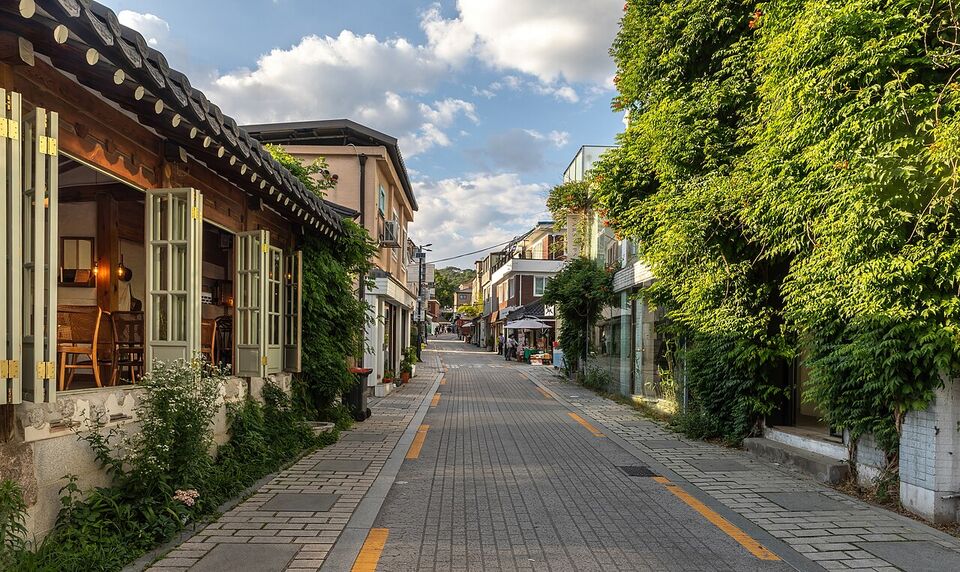
Traditional tea houses (chatjip) in Insadong and Bukchon serve herbal and traditional teas, such as jujube, citron, ginger, five-flavor berry (omija), and sweet rice cakes. They are a calm place to sit and have a seat on the floor or a low table. See Seoul neighborhoods. Boseong is known for tea fields in the south of the country, a day-trip subject for tea lovers.
Cafe seating norms
- Order and pay at the counter first, then take a seat. Some cafes give you a buzzer or call your name.
- Many cafes expect one drink per person. Sharing one drink between two people may be frowned on in a busy cafe.
- Do not stay for hours at a table in a very crowded cafe, especially at weekends. In quieter cafes, working on a laptop is common.
- Seats are often held with a phone or bag. Locals leave belongings and go to order, and it is considered safe, but we suggest you keep your valuables with you. See our safety guide.
- Return your tray and cup to the return station if there is one.
The law: age, ID and late-night rules
The legal drinking age in Korea is 19, and the legal tobacco age is also 19. Korea moved to the international age system for legal purposes in June 2023, so count your age the way you do at home. Bars, clubs and convenience stores can ask for photo ID, and a US driver's license may not be accepted in some places. Carry your passport or a clear copy of the photo page. Clubs and some bars check ID at the door. Do not use a borrowed ID.
Many bars stay open late, and some areas, such as Hongdae and Itaewon, are busy until morning. Convenience stores sell alcohol for most of the day and night, though the exact rules can differ by location. Never drive after drinking, and see our driving guide for the rules on drinking and driving.
For safety, never leave a drink unattended, travel with a friend where you can, and use a registered taxi or the subway to get home. Subway service ends around midnight, then taxis and late buses take over, so plan the return trip before you start. For emergencies, the number is 112 for the police and 119 for an ambulance, and 1330 is the Korea Travel Helpline. More in our safety guide.
Drinking in public, such as in parks and along the Han River, is common and not usually a problem, but some local areas have restrictions. Follow posted signs and take your trash with you.
Buying drinks at convenience stores
Korean convenience stores sell soju, beer, makgeolli, wine and some spirits at most hours. They are the cheapest option, and many have tables outside where people sit with a cup noodle and a beer. Check the label: soju bottles show alcohol percentage, and makgeolli may be marked "unpasteurized" and must be kept cold. You can pay by card or a transit card, and staff may ask for ID if you look young.
Also sold are bottled water, tea, coffee in cans, energy drinks and the hangover drinks mentioned above. Tap water: Seoul treats its tap water to drinking standards, but many locals drink filtered or bottled water. Many restaurants provide free water and tea, and public buildings have water dispensers. For other cities, ask your hotel.
Save money
Buy soju or beer at a convenience store and drink it with a cup noodle at the outside tables or on the Han River lawn, where it is allowed. It costs much less than a restaurant or bar, and you do not tip anywhere.
Soft drinks, tea and water
If you do not drink alcohol, you will not be left out. Restaurants serve free barley tea or water, and cafes sell juice, tea and coffee in many styles. Citron tea (yuja-cha) is a sweet, warm drink made from citrus preserve, popular in winter. Cold barley tea and iced Americano are summer staples. At a drinking dinner, a soft drink in your glass lets you join the toasts without the soju.
Ask for water with "mul juseyo" (water, please). Cold water is the default, and hot water for tea is easy to find in cafes and many restaurants.
Taking alcohol home
Returning US residents have a personal exemption, and alcohol counts inside it, as CBP explains on its customs duty page. A liter of liquor is treated as duty-free in CBP's example, and more is dutiable. Each state has its own rules, and airlines have rules on packing bottles. Korea has its own duty-free limits for people leaving or arriving. We do not give numbers here, so check CBP and customs.go.kr before you shop. Wrap bottles well in checked luggage.
Drinking with locals
If a colleague, host or new friend invites you for a drink, accept if you are comfortable. These evenings often last more than one stop: dinner, a second place for beer or chicken, and sometimes a third for karaoke (noraebang). You can leave early with a polite excuse. It is acceptable to say you do not drink, and a soft drink at the table is normal. Do not insist if someone else refuses. Let the host pay if they offer, and offer to pay the next round or a coffee. If you pay, do it quietly at the counter.
Learn "geonbae" (cheers), "jal meogesseumnida" (I will eat well), and "gamsahamnida" (thank you), all in our Korean phrases guide.
Mistakes to avoid
- Pouring your own drink first, or pouring with one hand for an elder.
- Underestimating soju and somaek, especially flavored soju.
- Drinking on an empty stomach. Order food with drinks, since many bars require it.
- Forgetting ID. Carry your passport or a copy.
- Leaving a drink unattended in a bar or club.
- Missing the last subway and relying on a taxi at peak hour. Plan your route home in advance.
- Assuming that cafes are the same as at home: you order at the counter, keep a seat and return your tray.
- Carrying more alcohol home than customs allows. Check CBP and customs.go.kr.
Add it to a route in the trip builder, or ask us to plan the hotels, trains and guides for you.