Overview
You can plan a very good K-pop and K-drama trip without ever getting a concert ticket. Most of what fans enjoy in Seoul is public: palaces and old streets where dramas were filmed, museums and exhibition spaces, record shops, fan-merchandise stores, themed cafes and the neighborhoods where agencies and fashion brands cluster. Live shows are the hardest part. They sell out quickly, many are aimed at local fan clubs and every year more foreigners try to get in.
This page sorts the options by effort and cost: what to do if you have one free afternoon, what to book weeks ahead and what to leave alone. We do not claim a specific show, museum or store is open or available. Opening status, hours and ticket rules for these places change often, so check each official page before you go.
For wider planning, see Seoul, Seoul Neighborhoods and Shopping and K-Beauty. If you are visiting Seoul on a first trip, start with trip planning. Visitor numbers are at record highs (as of November 2026), so hotels fill up quickly around big events: see Where to Stay in South Korea.
Seeing a show: the realities
There are two main ways to see an artist in Korea: a ticketed concert or fan meeting, and a television music program recorded in front of an audience. Both are possible for visitors, and neither is guaranteed.
Concerts and fan meetings
Big concerts in Seoul are usually held at large venues such as the KSPO Dome in Olympic Park, the Gocheok Sky Dome, Seoul World Cup Stadium or Inspire Arena in Incheon. Smaller acts play in mid-size halls and clubs, many around Hongdae. Exact venues and dates are set by each agency, and we have no fixed schedule to give you. In March 2026 a BTS concert was held at Gwanghwamun Square, a reminder that large events can pop up in public spaces and change the crowds and closures in the center of Seoul.
Tickets are sold through the artist's official fan club, the agency's platform and authorized ticket sellers. Many shows open presales to fan-club members first, and a foreign visitor often needs to join the fan club, create an account and verify an identity before buying. Sales open at a set time and can sell out in minutes. Your best chances are to:
- Follow the artist's official social accounts and fan platform for sale dates, in English where offered.
- Join the official fan club early if the artist uses one, because presale access often depends on membership.
- Make sure your name on the ticket matches your passport. Some shows check ID at the gate.
- Buy only from the official seller or an authorized platform. A resale ticket that cannot be transferred is just a picture.
Plan on flexibility. If you are traveling in a fixed week, treat a concert as a bonus and build the rest of the trip around free and low-cost stops.
Music programs
Korean TV stations record weekly music programs, such as KBS's Music Bank, MBC's Show! Music Core, SBS's Inkigayo and Mnet's M Countdown, and some of them take a studio audience. Admission is free but not open to the public in the usual sense. Seats are mostly given out through fan clubs and a lottery run by the show or the agency, and rules differ from program to program and week to week. Do not plan around a free seat. If a group you love is booked on a show, check the program's own audience page, usually in Korean, and consider asking your hotel or a Korean friend for help with the application. Unofficial "guaranteed seat" offers are a red flag.
If you cannot get in, watching a show on TV or streaming is a good plan B, and the streets around the broadcast stations often fill with fans before and after recordings. You can watch from the sidewalk, but stay out of the way of staff and crowds.
Watch out
Fake and duplicated tickets are the most common scam. Do not buy from a stranger on social media, a message group or a street seller, and do not pay by bank transfer to an individual. An official ticket ties to your name or account, and a legitimate seller will be named on the artist's own page.
K-pop sites in Seoul
K-pop is spread across Seoul rather than gathered in one theme park. Some sites are permanent and free to walk by; others are museums, pop-up stores or agency buildings whose hours and rules change. Treat the list below as places to check, not places to count on.
Gangnam and K-Star Road
Gangnam, south of the Han River, is home to entertainment companies, fashion shops and cafes. A street often called K-Star Road in the Apgujeong area is known for figures of idols and bears placed in front of agency and shopping buildings. Check on a current map before you head there, because installations get moved.
HYBE Insight
HYBE, the company behind BTS and other groups, has run a museum and exhibition space called HYBE Insight. Check its official site for opening days, ticket rules and any reservation requirement before you plan around it. We cannot confirm its current hours.
Agency buildings
Several large agencies have headquarters in Seoul, mainly in Yongsan, Seongsu and Gangnam. These are working offices, not attractions, and do not usually admit visitors. Take a quick photo from the sidewalk if you must, and respect signs and security staff.
Hongdae and Seongsu
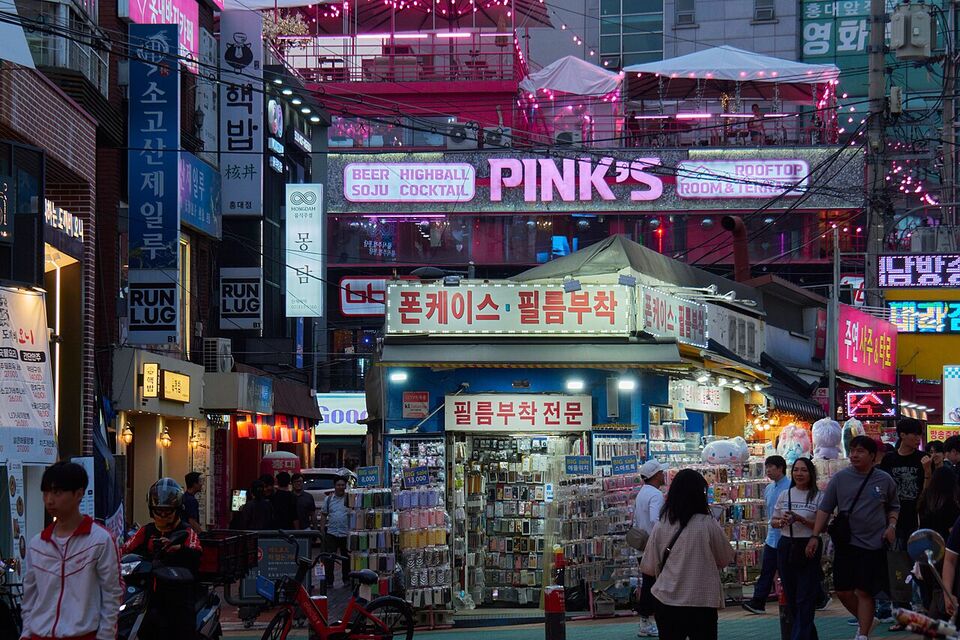
Hongdae has buskers, dance groups and record stores, and Seongsu has converted factories that host pop-up stores. Brands often run short-term fan events, themed cafes and exhibitions here, so check what is on during your dates.
Record and fan stores
Albums, photo cards, light sticks and posters are sold in dedicated shops and large bookstores. Prices vary a lot by store, and international buyers sometimes pay extra. Compare two shops before you buy, and keep receipts.
Dance and vocal classes
Several studios offer one-time K-pop dance or vocal classes for visitors, taught in English or with translation. Book directly on the studio's own site and check the cancellation rules.
K-drama filming locations
You can build a drama-themed day on the subway. Many of Korea's most visited places for fans are ordinary public sights that have been used in dozens of dramas and films.
Palaces and Bukchon
Seoul's palaces are a standard backdrop for historical dramas. As of November 2026, Gyeongbokgung admission is ₩3,000 (about $2.50) and Changdeokgung is ₩3,000 (about $2.50); visitors wearing hanbok (traditional Korean clothing) enter Gyeongbokgung free. Changgyeonggung, Deoksugung and Jongmyo Shrine are about ₩1,000 (about $1) each. The government has been weighing the first palace fee increase in about 20 years, so check the current price on the palace site (royal.khs.go.kr). Gyeongbokgung usually closes on Tuesdays and Changdeokgung on Mondays, so check before you go. The Secret Garden (Huwon) at Changdeokgung is reservation only, and some pavilions are guided tours only.
Bukchon Hanok Village, between Gyeongbokgung and Changdeokgung, is a favorite for photos. It is a residential area, and rules are strict: visitors who are not guests of a local guesthouse may enter the red-zone alleys only between 10 a.m. and 5 p.m., and tour buses with more than 16 seats are banned on a stretch of road. Keep your voice down. Details are on Things to Do in Seoul.
Namsan and the city
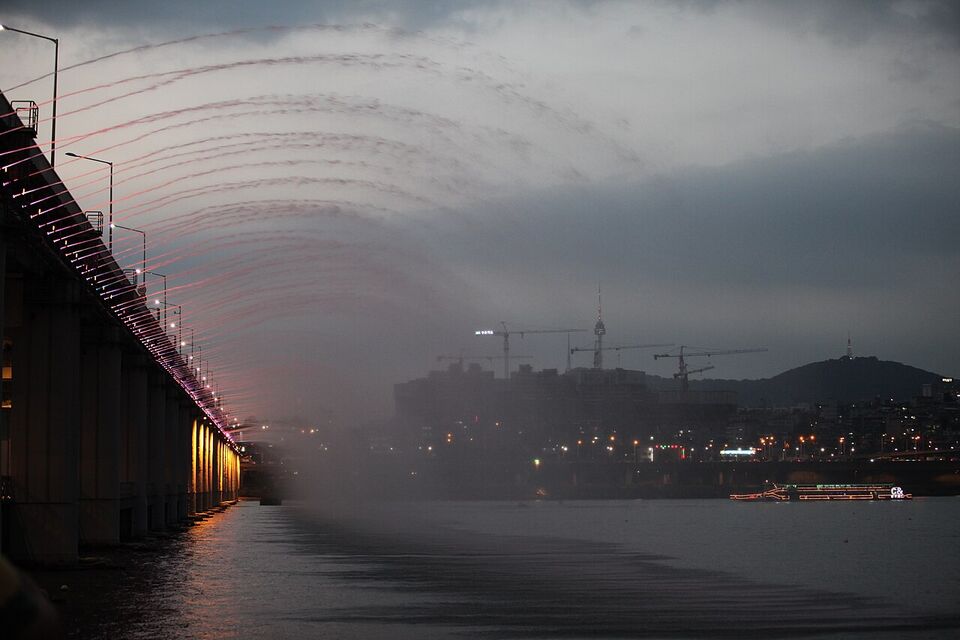
N Seoul Tower on Namsan is a classic site for romance scenes and skyline shots. The lower levels are free, and tickets for the observation levels are sold on site or online (check the current price and hours). Walk up through the park for the best views, and note that many couples attach padlocks on the fences, so avoid adding to the weight and clutter. Other city locations that appear in many dramas include the Han River parks, convenience stores, subway stations and rooftop cafes. These do not need a plan: walk through a neighborhood such as Seoul Neighborhoods suggests and you may see a camera crew.
Jeju and Gangwon
Outside Seoul, drama fans often travel to Jeju, with its coastline, tangerine farms and lava-stone villages, and to the east coast of Gangwon Province, around Sokcho and Gangneung. Fans travel to coastal spots such as Jumunjin near Gangneung because they were used in popular series. Because we cannot confirm which sets and shops are open to visitors, check the town's tourism site before going and confirm any cafe or house is a public venue. See Jeju Island, Gangneung and the East Coast and Sokcho and Seoraksan for general planning.
A rental car is the easiest way around Jeju; book it ahead, and see Driving in South Korea for the rules. Gangwon is easy by train and bus from Seoul.
Insider tip
Look up a location on Naver Map or KakaoMap before you go. Search the show's name with the place, and read recent reviews in English or Korean to confirm it is open, free to enter and not a private home.
Cafes, fan stores and the K-beauty side
K-pop and K-drama culture spills into cafes, stores and skincare shops. Themed cafes run birthday events for idols, with banners, cups and cardboard cutouts. Many of these are run by fans and are temporary, so they are a reason to follow social media for your dates. Photo booths, known as "life four cuts" studios, are common in most neighborhoods and are an easy, inexpensive stop.
K-beauty brands often use idols and actors in their ads. Stores in Myeongdong and Hongdae are where visitors see the products, and you can find the same brands at drugstore chains. We cover what to buy, tax refund rules and what to avoid in Shopping and K-Beauty.
Fan merchandise includes albums, light sticks, photo cards and clothing. The same item can cost very different amounts in an official store, a fan shop and a street seller, so compare before buying. Do not buy "limited" items from strangers who approach you, because counterfeits exist.
Concert and crowd etiquette
Korean fandom is organized and polite. Many groups have official light sticks and, for some shows, fans learn the chants and fan cheers that go with songs. You will see people holding signs, banners and slogan cloths, but venues have strict rules on what you can carry in, so read the official notice for your event.
- Arrive early and expect ID and bag checks.
- Follow seating rules and keep banners at the size allowed.
- Do not film if recording is banned, and never block the view of the people behind you.
- Do not rush the stage or block exits, and stay in lines when entering and leaving.
- Do not scalp or resell tickets above face value. Doing so can lead to legal trouble and cancelled tickets.
Crowd safety matters. After the Itaewon crowd crush of October 2022, in which more than 150 people died, Seoul has paid more attention to crowd management at large events, and staff may direct you in lines and exits. Follow them, and leave a venue calmly if it gets tight. For general safety, see Safety in South Korea.
Photo and privacy rules
Korea takes privacy seriously. Do not photograph strangers without asking, and do not take photos in changing rooms, restrooms or bathhouses. At filming locations, a crew may ask you to step aside or ask you not to film, and the request is the end of the discussion.
Idols and actors are private people when they are not on stage. Do not follow them, wait outside their homes, ask for selfies in the street or post their travel details. Fan behavior of this kind is called "sasaeng" in Korean, and agencies and the public treat it as harmful. If you are lucky enough to see a star in public, a quiet nod is enough. At fan events with set signing or photo sessions, follow the staff instructions.
Drones are restricted in many areas of Seoul, especially near palaces and sensitive sites, so do not fly one without checking the rules. More on manners is on Korean Etiquette.
Experiences by effort and cost
Costs below are levels, not prices, because fees for exhibitions, classes and shows change. Check each official page.
| Experience | Effort | Cost level | Notes |
|---|---|---|---|
| Walk the palaces and Bukchon | Low | Low (palace fee about ₩3,000, about $2.50) | Free in hanbok at Gyeongbokgung; follow Bukchon's red-zone hours |
| Namsan walk and N Seoul Tower | Low | Free to low | Lower levels free; observation levels need a ticket |
| Hongdae busking and cafes | Low | Free to low | Best in the evening; keep an eye on bags |
| Record shops and fan stores | Low | Low to high | Compare prices and keep receipts |
| Themed cafe event | Medium | Low | Often temporary; check the event dates on social media |
| HYBE Insight or another fan museum | Medium | Low to medium | Check current hours and any reservation rule |
| One-time K-pop dance class | Medium | Medium | Book through the studio's own site |
| Jeju or Gangwon drama day | High | Medium | Needs a rental car or a train and bus plan |
| Music program audience | High | Free to low | Mostly fan-club lotteries; do not count on it |
| Concert or fan meeting | High | High | Official ticket only; sells out in minutes |
Sample plans
- Half day
History and drama set pieces
Start at Gyeongbokgung when it opens, walk to Bukchon in the daylight (mind the 10 a.m. to 5 p.m. window), then end with a cafe in Insadong or Samcheong-dong. Keep the afternoon free for a walk up Namsan.
- One day
Fan day in Seoul
Spend the morning in Hongdae for record shops and a dance class, the afternoon in Seongsu for pop-ups and cafes, and the evening on Gangnam's K-Star Road. Check what is open before you go and book the class ahead.
- Two days
Gangwon coast
Take a train or bus from Seoul to Gangneung, visit the beaches and the harbor of Jumunjin, and continue to Sokcho for Seoraksan the next day. Check train and bus times in advance.
Mistakes to avoid
- Buying a concert ticket from a stranger or an unofficial seller, or paying by bank transfer to an individual.
- Waiting outside a hotel, an agency building or a private home to see a celebrity.
- Assuming a museum, set or cafe from a blog post is open without checking its official page.
- Planning your whole trip around one show you do not have a ticket for.
- Ignoring Bukchon's hours or noise rules because the street looks like a set.
- Bringing banners, large bags or recording gear into a venue without reading the event rules.
- Paying more for limited-edition albums from a street seller who approached you.
Different from home
At home, a concert ticket is often just a barcode on your phone, and resale on large platforms is common. In Korea many tickets are tied to a verified name or account, and unofficial resale can mean entry is refused. Treat the official seller as the only safe source.
Where to go next
Pair your fan days with neighborhoods and sights covered in Things to Do in Seoul and Seoul Neighborhoods. If you want to join a local celebration, see Festivals and Holidays. For food stops between sites, see Where to Eat in Seoul. And before you go, review Entry Rules for Americans (K-ETA) for the latest entry rules.
Add it to a route in the trip builder, or ask us to plan the hotels, trains and guides for you.