How to read Seoul's neighborhoods
Seoul is not one tourist center but a set of districts, each with its own character. The best first-time base is a place close to a subway station and near the sights you care about most. Jongno and Myeongdong work for most people, Hongdae for night owls, and Seongsu for travelers who like cafes and design. This guide compares the main districts, shows how to choose by subway line and gives short walking routes. The citywide picture is in our Seoul guide, and sights are in things to do in Seoul.
Seoul is divided by the Han River. North of it lies the historic core (Gangbuk). South of it lies Gangnam, whose name means "south of the river". Districts are called gu and their neighborhoods dong, which is why you see names such as Insa-dong and Myeong-dong on maps. The usual spelling on signs drops the hyphen: Insadong, Myeongdong.
Neighborhoods compared
The table compares vibe, nightlife, transit and quietness. "Quiet" means how peaceful it feels in the evening.
| District | Vibe | Nightlife | Transit | Quiet at night |
|---|---|---|---|---|
| Jongno and Bukchon | Historic, palaces, hanok | Low to moderate | Lines 1, 3, 5; good | High in Bukchon |
| Insadong | Tea houses, crafts | Low | Lines 1, 3, 5; good | Moderate |
| Myeongdong | Shopping, street food | Moderate | Line 4, Line 2; very good | Low (busy) |
| Hongdae | Student, creative, loud | Very high | Line 2, AREX; excellent | Low |
| Itaewon | International, hilly | High | Line 6; fair | Low |
| Gangnam | Corporate, polished | High | Line 2, Line 9; excellent | Moderate |
| Seongsu | Cafes, design, pop-ups | Low to moderate | Line 2; good | Moderate |
| Yeouido | Finance, river parks | Low | Lines 5 and 9; good | High |
| Euljiro | Old print shops, new bars | Moderate | Lines 2 and 3; very good | Moderate |
Jongno and Bukchon
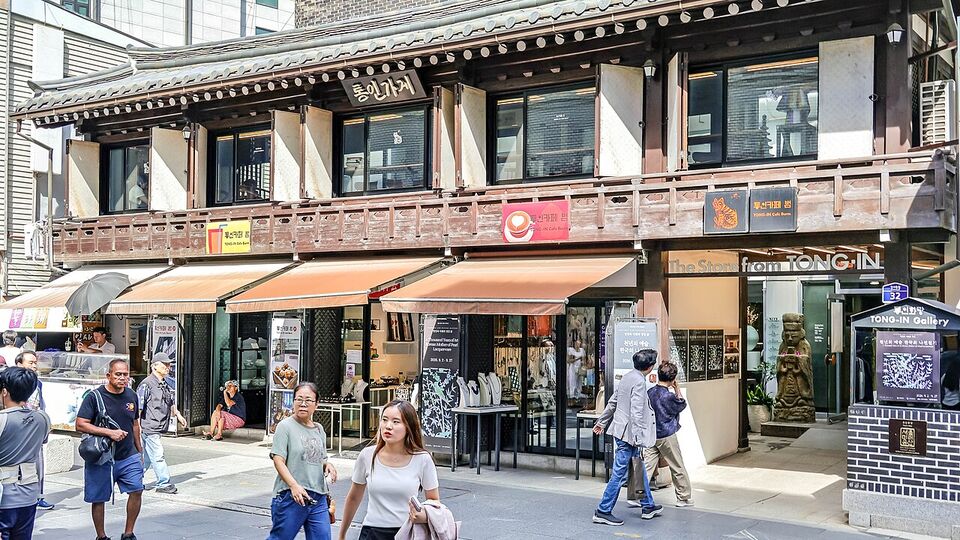
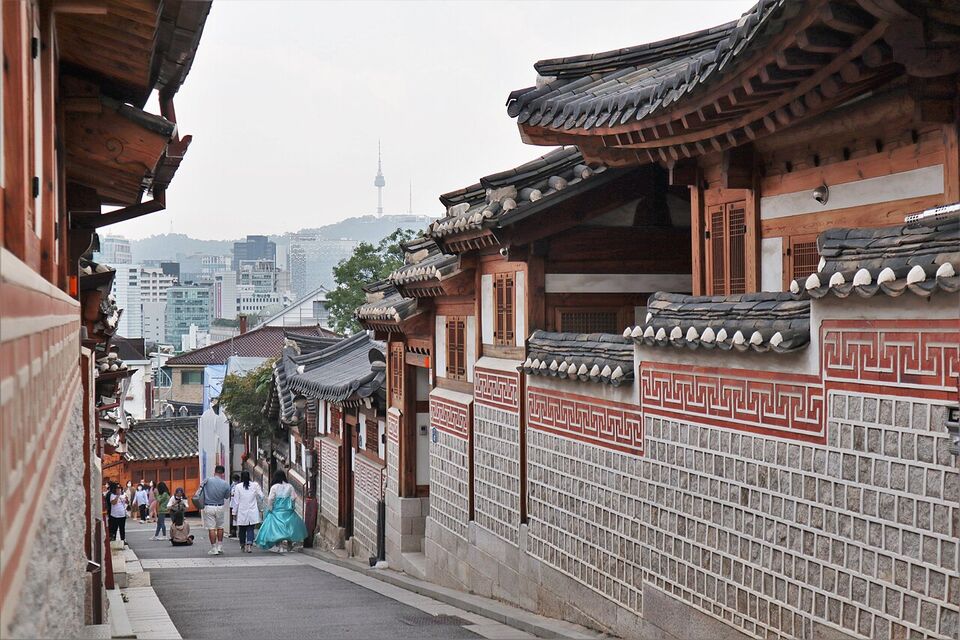
Jongno ("bell street") is the oldest part of the city, with palaces, shrines, Bosingak bell pavilion and traditional streets. Bukchon ("north village") sits in the hills between the two main palaces and is famous for its hanok. It suits first-timers who want history and early mornings. It is a fine place to base if you are going to do the palaces on foot.
What to do: walk the hanok lanes, visit Gyeongbokgung and Changdeokgung, and browse the small galleries and cafes of Samcheong-dong. What to eat: Korean set meals, noodles and rice cakes at neighborhood restaurants; for more, see our Seoul food guide. Where to base: near Anguk (Line 3) or Jongno 3-ga (Lines 1, 3, 5). Choose a hotel near a main road if you do not want to climb hills with luggage.
Bukchon needs care. Tourists may enter the "red zones" only from 10 a.m. to 5 p.m., and guesthouse guests are excepted. Visit in the morning, keep your voice down and stay on the public lanes. For details, see Seoul sights.
Insadong
Insadong centers on Insadong-gil, a pedestrian street lined with tea houses, craft shops, galleries and stationery. Alleys lead off it to quiet courtyards. It is calmer than Myeongdong and is good for souvenirs such as ceramics, paper and tea. Jogyesa, the Jogye Order's main temple, is at its north end.
It suits families, older travelers and anyone who likes browsing. Eat tea-house snacks and traditional dishes; shops usually close in the evening earlier than in other districts. Base here if you want a central, walkable location, but note that the street is busy on weekends. Check our temples guide before you visit Jogyesa.
Myeongdong
Myeongdong is Seoul's best-known shopping district, packed with cosmetics shops, fashion stores and an evening street-food market. It is close to Namsan, and a walking path leads up to N Seoul Tower. Its Myeongdong Cathedral is a landmark. Prices vary and many shops cater to tourists, so compare before you buy.
It suits first-timers who want convenience and easy transit; Line 4 stops at Myeongdong, and Line 2 and Line 3 are a short walk away at Euljiro 1-ga and Chungmuro. It is central for the airport train at Seoul Station. The downsides are crowds and noise: streets fill after dusk. Tax-free shopping is available at many stores; ask at the till, bring your passport and check the Korea Customs Service rules at customs.go.kr. For more, see shopping.
Hongdae
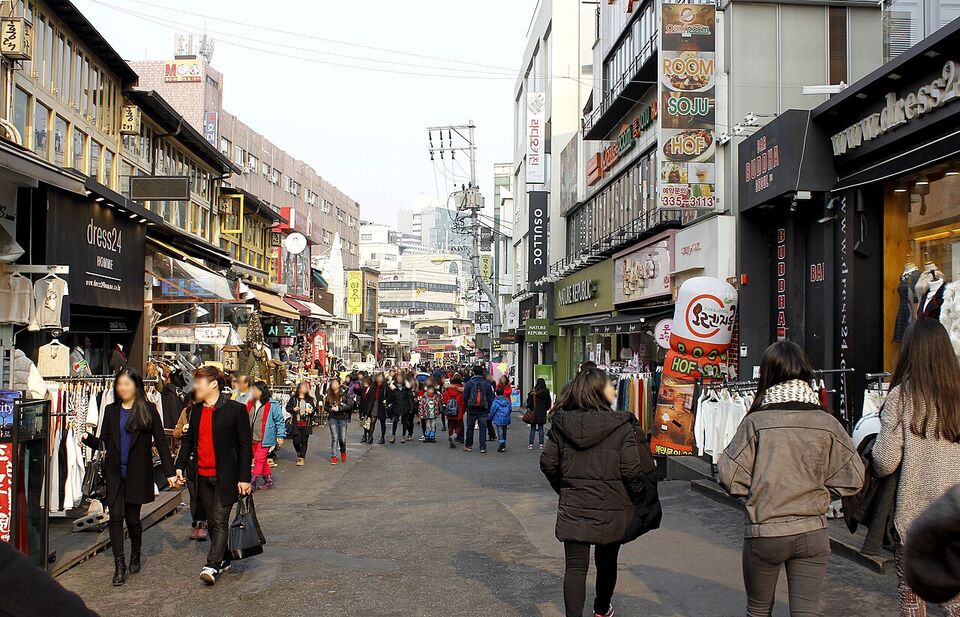
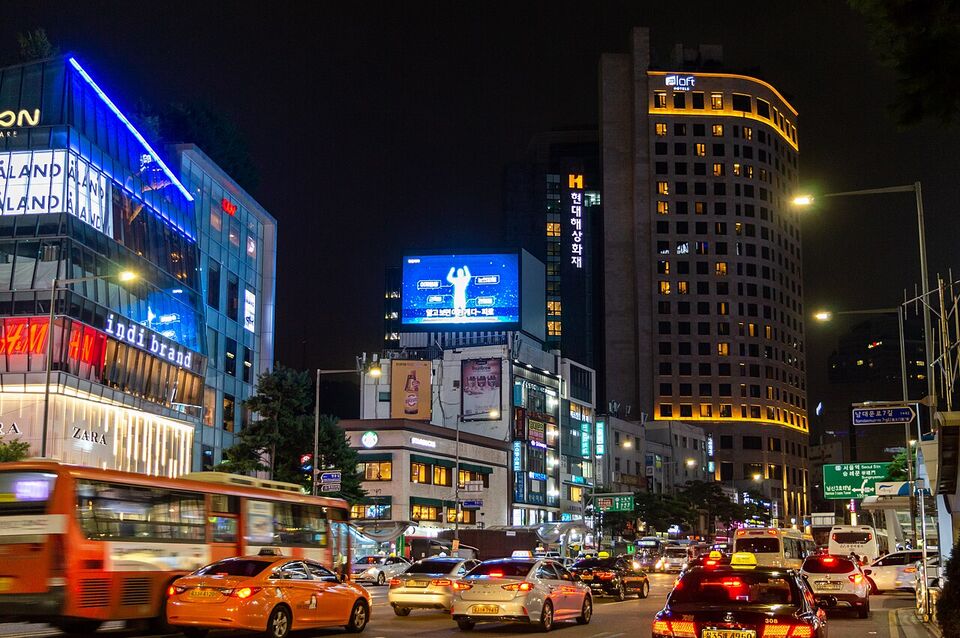
Hongdae is short for Hongik University, and the area around it is Seoul's student and creative quarter. It has busking, small live-music venues, independent shops, cafes and late-night restaurants. It is on Line 2, the airport line and the Gyeongui-Jungang Line, so it is easy to reach from Incheon Airport. Check arex.or.kr for the trip time to the airport from Hongdaeipgu station.
It suits younger travelers, nightlife fans and anyone who wants an energetic base. Expect noise at night, particularly on weekends. For quiet, pick a hotel a few blocks away from the main strip or in nearby Yeonnam-dong or Mangwon, which are calmer. See the food guide for what to try.
Itaewon
Itaewon is the district known for international restaurants, bars and a mix of nationalities, on hilly lanes below Namsan. The War Memorial of Korea and the National Museum of Korea are nearby, in Yongsan. Many travelers come for dinner and drinks rather than to stay.
Itaewon is the site of the October 29, 2022 crowd crush, in which more than 150 people died. Seoul now uses overhead electronic displays and other measures to direct crowds. This is not a reason to avoid the area, but it is a reason to leave early if a street feels packed. Keep to wide streets on busy nights, and follow police and staff directions. Line 6 serves Itaewon. It suits visitors who want a break from Korean food and a relaxed night out.
Gangnam
Gangnam is south of the Han River and has the glass towers, malls and offices that people picture. It includes COEX and the temple Bongeunsa, which dates to the Unified Silla period, and Apgujeong. Line 2 and Line 9 and the Shinbundang Line serve it. Gangnam station and its streets are some of the busiest in the country.
It suits business travelers, shoppers and people who want a modern hotel with an easy connection to Jamsil and Lotte World Tower. It has fewer historic sights, so many tourists visit for a day or an evening and sleep on the north side. If you do base here, you can still reach the palaces in roughly 30 to 40 minutes by subway, though you should confirm the route in a map app. Our where to stay guide covers hotel types.
Seongsu
Seongsu is a former industrial district of workshops and factories, now filled with cafes, design stores and pop-up shops. It sits on Line 2 east of the center. It suits repeat visitors and travelers interested in design and coffee, and it is quiet in the evening compared with Hongdae. Pop-up stores change often, so check opening days before you go.
Base here if you want a relaxed stay and do not mind a ride to the palaces. The Seoul Forest park is nearby for a walk. It is a good second-visit or day two choice.
Yeouido and Euljiro
Yeouido is the island in the Han River with the National Assembly, office towers and a large riverside park. It is lively in daytime, and calm in the evening. Spring brings cherry blossom crowds; dates move each year, so check the Korea Meteorological Administration forecast. Lines 5 and 9 serve it, and the new Sinansan Line is reported to start at Yeouido station when it opens, planned for December 2026; check seoulmetro.co.kr before you rely on it.
Euljiro is an older district north of the river where print shops and tool stores sit beside small bars and cafes hidden behind plain doors. It is on Lines 2 and 3 and is central. It suits visitors who like quirky evenings and who want to see a side of Seoul that is not on every list.
Other districts worth a stop
Seochon
A calm area of small streets, hanok and cafes. It has fewer crowds than Bukchon and no entry-hour rule that we found; check signs.
Ikseon-dong
A small cluster of renovated hanok turned into cafes and restaurants. It fills up in the evening.
Dongdaemun
A late-night market area and the Dongdaemun Design Plaza. Good for evenings.
Jamsil
Home to Lotte World Tower and Lotte World, plus Seokchon Lake and the Han River park.
Yongsan
The National Museum of Korea and the War Memorial of Korea, with Yongsan Station for trains.
How to choose where to stay by subway line
Use the subway as your guide. Follow these steps.
- List your top three sights. Check which lines serve them. The palaces are on Lines 1, 3 and 5; Hongdae and Seongsu are on Line 2.
- Pick a line that touches most of them. Line 2 is the loop and Line 3 crosses the old city. A station on either helps most.
- Prefer an interchange station. Stations where two or three lines meet, such as Jongno 3-ga, Euljiro 3-ga, Dongdaemun History and Culture Park or Seoul Station, save transfers.
- Check the exit. Seoul stations have many exits. Pick a hotel near one marked on the map, and look at the street slope.
- Think about the airport. The AREX line connects Seoul Station, Hongdae and Gimpo Airport. Express trains from Seoul Station take about 43 minutes to Terminal 1. See airport transfers.
- Confirm the last train. Subways stop around midnight. Check seoulmetro.co.kr for your line.
For practical transit details, see the Seoul Metro site (seoulmetro.co.kr) and the Visit Seoul site (visitseoul.net), which carry the official maps and guides.
Insider tip
Use a map app that shows Korean subway routes with exit numbers. Naver Map and KakaoMap work better than some global apps in Korea. A transit card or foreign-card machine at the station handles fares; check the price at the machine.
Who should base where
If the table still leaves you unsure, match your trip type to a base.
| Traveler | Good base | Why |
|---|---|---|
| First visit, mostly sights | Jongno, Anguk or Myeongdong | Palaces and old lanes are on foot or one stop away |
| Nightlife and live music | Hongdae | Line 2 and the airport line, late streets, easy taxis |
| Quiet, slow travel | Seochon, Bukchon edge or Seongsu | Fewer crowds, cafes and parks nearby |
| Shopping and short stay | Myeongdong | Close to Seoul Station and Line 4 |
| Business trip | Gangnam or Yeouido | Offices, conference halls and quick links to the airport by bus or train |
| Families with children | Jongno, Jamsil or near Seoul Forest | Parks, Lotte World and simple transit |
Families will find more tips in our families guide.
Eating by neighborhood
Each district has its own food style, which helps you plan meals around your route. Jongno and Insadong lean toward traditional set meals, tea and rice cakes. Myeongdong is known for street snacks in the evening, while nearby side streets hold noodle shops. Hongdae has casual late-night restaurants and fried chicken with beer, called chimaek. Itaewon has a wide mix, from Middle Eastern to Mexican. Gangnam has polished restaurants, and Seongsu has brunch and cafe food. We give no prices here because they vary, so look at the menu before you sit down.
Many restaurants are small, and some have no English menu. A translation app works with a phone camera, and photos on the menu help. Some barbecue restaurants want two portions, and some tables have raised floors where you remove your shoes. See our etiquette guide.
Late nights and getting home
Hongdae, Itaewon, Gangnam and Dongdaemun stay busy past midnight. Subways stop around midnight and restart at about 5:30 a.m., so after that you need a taxi, a late-night bus or an overnight spot. Taxis are widely available in the busy districts; use a licensed taxi or a ride-hailing app and have your hotel address ready in Korean on your phone. Some taxis outside the cities may want cash, so keep a little on hand. A 24-hour cafe, a convenience store or a jjimjilbang can fill the gap if you stay out late.
For a quieter evening, choose Insadong tea houses, a Cheonggyecheon walk, a Yeouido river picnic or a Namsan view. These stay calm and are easy to leave when you are tired.
Watch out
Crowds can build quickly in Itaewon, Hongdae and Myeongdong on weekend nights and holidays. If a lane becomes too tight to move freely, turn back and use a wider street. Do not push into a crowd, and note where the exits and the nearest station entrance are before the evening starts.
Different from home
Seoul addresses are by district, street and building number, but many people navigate by station and exit number instead. Telling a taxi driver "Hongik University Station, exit 9" works better than a street address. Save your hotel's name in Korean on your phone, and note the nearest exit.
Late afternoon is a good time to switch neighborhoods: palaces and museums close around dusk, and the evening districts are just waking up. A short rest at your hotel between the two gives you the energy for a long night.
Three walking routes
Palace to old lanes (about 3 miles, 5 km)
Start at Gyeongbokgung station, enter the palace, then walk east to Bukchon (before 5 p.m.), down to Insadong and finish at Jogyesa or Cheonggyecheon. Allow a full day with stops.
Myeongdong to Namsan (about 2 miles, 3 km)
Start at Myeongdong station, walk through the shopping streets, then climb the path to Namsan and N Seoul Tower. Return by cable car or on foot. Wear sturdy shoes; the hill is steep in places.
Seongsu loop (about 2 miles, 3 km)
Begin at Seongsu station and walk past cafes, workshops and pop-up stores toward Seoul Forest. Aim for a weekday, when lines are shorter.
Safety and the late-night scene
Seoul's late-night scene is lively and, for most visitors, calm. Bars and restaurants stay open late, many convenience stores never close, and people walk home at all hours. Use common sense: keep your drink in sight, hold on to your bag in crowded areas and use licensed taxis or ride-hailing apps. The US State Department lists South Korea at Level 1: Exercise Normal Precautions (as of November 2026). See our safety guide for more.
The legal drinking age is 19, and venues may check ID; carry your passport or a copy. For hotel guests, noise at night varies by district; ask for a high floor or a room away from the street in busy areas such as Hongdae and Itaewon.
Mistakes to avoid
- Expecting everything to be in one area. Seoul has many centers. Pick one base and accept subway rides to the others.
- Trying to see too many districts in a day. Two areas per day is plenty. Rides, hills and long meals take time.
- Staying far from a station. A 15-minute walk after a long day is tiring, particularly with luggage.
- Ignoring Bukchon's rules. Visit between 10 a.m. and 5 p.m. and stay on the public lanes.
- Booking the cheapest room without checking the street. Bar districts can be loud. Ask for a quiet room.
- Missing the last train. Plan your return or use a taxi.
Add it to a route in the trip builder, or ask us to plan the hotels, trains and guides for you.