The short answer
South Korea fits well into a wider East Asia trip. The simplest add-on is Japan: you can fly from Seoul to Tokyo or Osaka in about two hours (confirm with your airline), or take a boat from Busan to Fukuoka in Kyushu. Both Korea and Japan use the same time zone, and both reward a week or more.
We suggest adding Japan only if you have at least ten days in total. Seven days is enough for Seoul plus Busan. Ten days gives you Seoul, Busan and a few nights in Fukuoka. Two weeks lets you add Osaka and Kyoto. Each border crossing costs time, because you pass immigration, change money and adapt to different transit systems. The planning page explains how to decide how many bases to use first.
This page covers the ways to cross, the practical differences between Korea and Japan, entry rules in general terms, money, a sample combined itinerary and the mistakes that cost travelers the most. Ferry schedules, airfare, Japan's entry rules and baggage rules all change, so we point to the official source each time and do not promise a price or a timetable.
By sea: Busan to Fukuoka and beyond
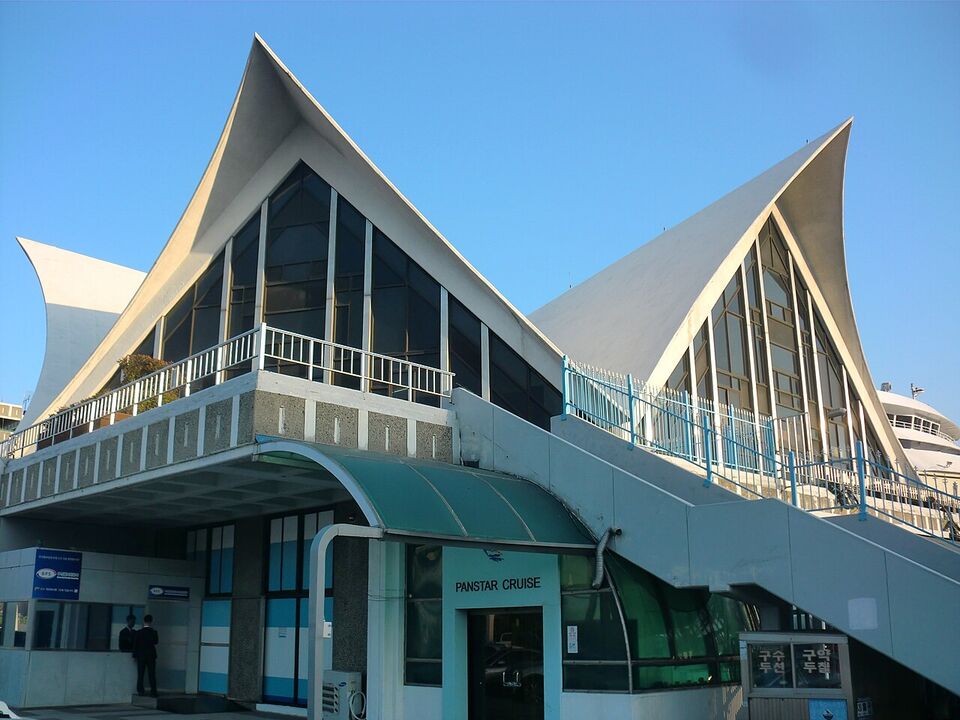
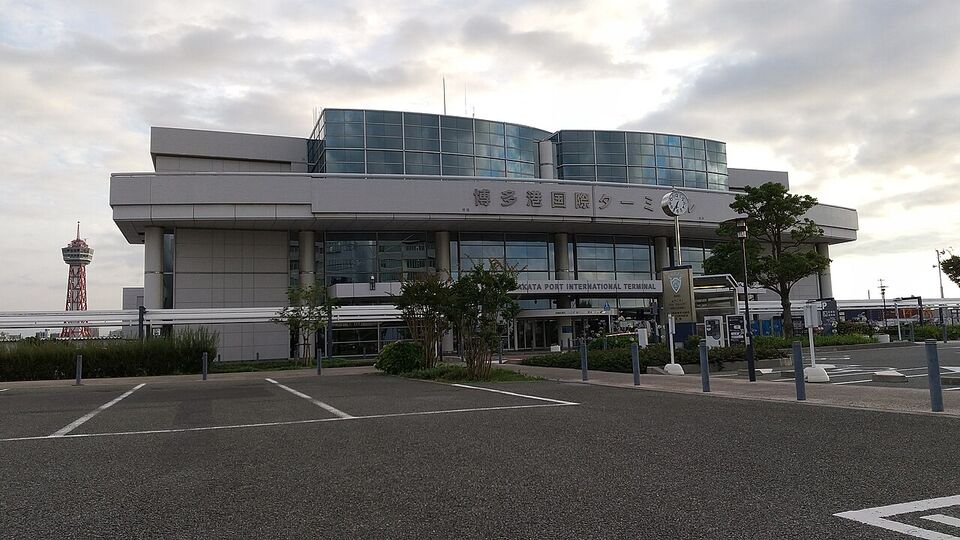
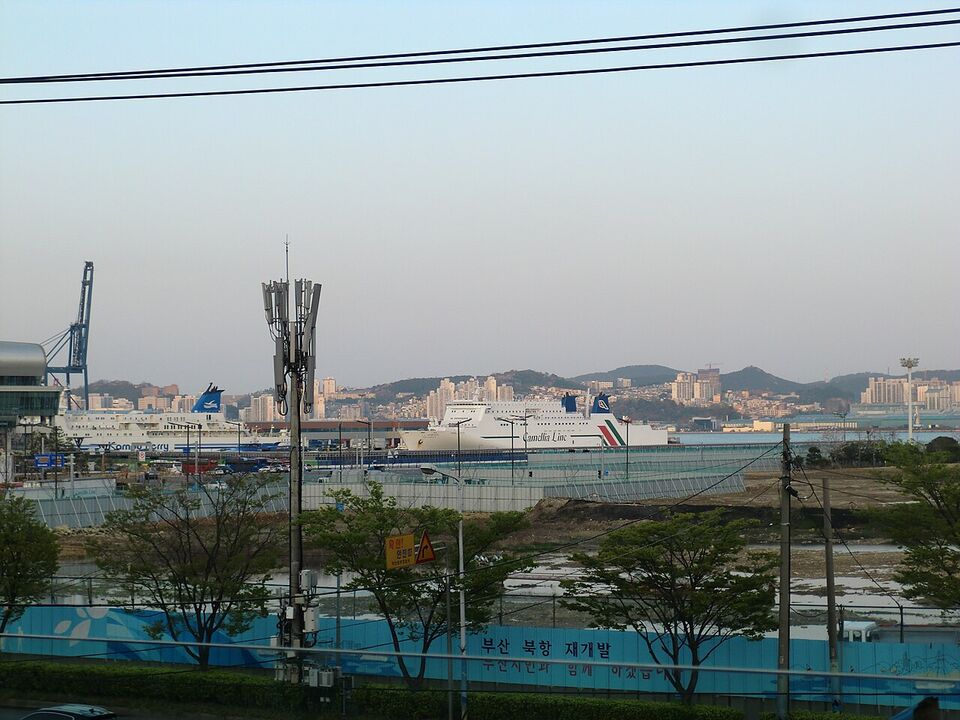
The sea link from Busan is the most distinctive way to cross. Reference sources describe two kinds of service to Fukuoka (Hakata port). The Beetle, a high-speed hydrofoil, crosses the Korea Strait in about 2 hours 55 minutes, with about five departures a day from each city. The Camellia, an overnight ferry, takes about 7 hours 30 minutes eastbound from Busan and about 5 hours 30 minutes on the return. A third route, operated by Pukwan Ferry, links Busan with Shimonoseki.
These details come from a reference page whose date we could not confirm, so treat them as a guide. We could not confirm 2026 fares, the exact number of daily sailings or whether every vessel is still in service. Check each operator's own site and the Busan port information before you book. We also could not confirm a current ferry operator for Busan to Osaka, so plan Osaka as a flight unless you find a current sailing.
| Route | Type | Reported time | Notes |
|---|---|---|---|
| Busan to Fukuoka (Hakata) | High-speed hydrofoil (Beetle) | About 2 hours 55 minutes | About five departures a day each way per a reference source; check fares with the operator |
| Busan to Fukuoka (Hakata) | Overnight ferry (Camellia) | About 7 hours 30 minutes out, 5 hours 30 minutes back | Cabin options; check fares with the operator |
| Busan to Shimonoseki | Ferry (Pukwan Ferry) | Check the operator | Check the operator; useful if you head to western Honshu |
| Busan to Osaka | Check the operator | Check the operator | Check whether a current sailing exists before you plan around one |
Practical points for the ferry
- Bring your passport. You will pass Korean exit control at the Busan terminal and Japanese immigration at the other end.
- Arrive at the terminal early. Ask the operator for its check-in cut-off, because it is stricter than a train's.
- Rough weather can delay or cancel sailings, especially in typhoon season and winter winds. Leave a buffer day before an onward flight.
- Look at whether the ferry is more convenient than a flight from Gimhae, Busan's airport. For many travelers the hydrofoil is quicker door to door.
Our Busan guide covers the port area and the transfer from the train station.
By air: Tokyo, Osaka, Kyoto and Taipei
Flying is the fastest option. Seoul has two airports: Incheon, the main international gateway, and Gimpo, the domestic hub, which has also been used for some short international routes to places like Tokyo Haneda. Check which Seoul airport your ticket uses, because they are in different parts of the city and not the same transfer. The AREX train serves both, and takes about 43 minutes from Incheon to Seoul Station by Express train.
| Destination | Where you land | Typical flight time (confirm) | Note |
|---|---|---|---|
| Tokyo | Narita or Haneda | Roughly 2 hours | Haneda is closer to central Tokyo; check which airport your fare uses |
| Osaka | Kansai (and sometimes Itami) | Roughly 1.5 to 2 hours | The usual gateway for Kyoto and Nara |
| Kyoto | No airport; fly to Osaka | Flight plus about 1 hour by train from Kansai Airport | Check train times and tickets on the day |
| Fukuoka | Fukuoka Airport | Roughly 1.5 hours | Faster than the ferry, but the ferry is more fun |
| Taipei | Taoyuan or Songshan | Roughly 2.5 to 3 hours | Taiwan is one hour behind Korea |
These flight times are general estimates, not timetables. Look up current schedules with your airline. Also note that Asiana flights become Korean Air flights from December 17, 2026, so a 2027 ticket on an Asiana route may carry a Korean Air name. Asiana, Korean Air and Delta use Incheon Terminal 2. Check your terminal on airport.kr, since terminal changes between Korean carriers have happened. See Incheon airport and flights.
One useful trick is an open-jaw ticket: fly into Seoul and fly home from a Japanese city. This saves a backtrack, and airlines often price it close to a round trip. Search for multi-city fares from your home airport.
Korea and Japan: the practical differences
| Topic | South Korea | Japan |
|---|---|---|
| Time zone | UTC+9; Korea does not change its clocks | UTC+9; same as Korea, no daylight saving |
| Currency | Korean won: US$1 = ₩1,330 at the site rate | Yen: US$1 = ¥157 at the site rate |
| Cards and cash | Cards, contactless and phone payment are widely accepted; cash for markets and street food | Cards are widely used in cities, but more small places are cash only than in Korea; carry yen |
| Language and signs | Hangul, with English on major signs and in transit | Japanese script, with English on major signs and in transit |
| City transit | T-money card works across Seoul subway, buses and many shops | Regional IC cards such as Suica and ICOCA are the equivalent |
| Tipping | Not customary | Not customary |
| Food style | Shared dishes, grilled meat, stews, side dishes that refill free | Set meals, noodles, sushi, small dishes; many restaurants specialize in one thing |
| Power | 220 V, Type C and F | 100 V, US-style plugs; a Korea adapter does not fit |
The two countries feel different on the street. Korea is louder, faster and more flexible about hours and late nights, and Japan is quieter, more rule-bound and often more formal. Both are very safe and easy for first-time visitors. We have not verified a 2026 price basket for food, hotels and transit in each country, so compare current prices for your own dates. See getting around in Korea and etiquette.
Different from home
Japan uses 100 V power with plugs that match US sockets, while Korea uses 220 V with round two-pin plugs. Chargers that work in Korea with a plug adapter will usually work in Japan without one, but check the label. A hairdryer or other heating appliance that is not dual-voltage may not work in both.
Money in Japan
At the site rate of US$1 = ¥157, ¥1,000 (about $6.50) and ¥2,000 (about $13) are small amounts, and ¥10,000 (about $64) is a larger note. A handy shortcut between the two currencies is that ¥1,000 is roughly ₩8,500 (about $6.50). Multiply yen by about 8.5 to get won, or divide won by 8.5 to get yen. The rates move daily, and the won was between 1,330 and 1,344 to the dollar in mid-November 2026.
Plan your cash. Bring enough yen for your first day, or use an ATM at the airport, and keep your cards. Do not leave a large won balance unspent: exchanging it back costs a margin at a bank or airport. Our money page covers cards, ATMs and the won.
Entry rules for Americans: general terms
For Japan, Americans in general terms can visit for short tourist stays without a visa. We could not confirm the current length of stay, any fee or any pre-arrival step from a primary source for this page, and Japan has been changing its traveler fees and procedures. Check the official sources before you book:
- The Japanese Ministry of Foreign Affairs (mofa.go.jp) for visa and entry rules.
- Visit Japan Web, the government's online service that handles immigration and customs steps before arrival, if it applies to you.
- The Japan National Tourism Organization (jnto.go.jp) for traveler information.
- The US State Department country page for Japan at travel.state.gov.
For Taiwan, use the official Taiwan government and State Department pages in the same way.
Coming back into Korea
When you re-enter South Korea from Japan, you are arriving again. Complete a new online e-Arrival Card on the official site (e-arrivalcard.go.kr) before you land, and have your passport ready. US citizens are exempt from K-ETA through December 31, 2026. For travel from January 1, 2027, check k-eta.go.kr before you book, including for a Korea re-entry. See entry rules for Americans. Do not assume that a stay abroad resets or pauses your 90-day count; ask the Korea Immigration Service (hikorea.go.kr) if your stay is near the limit.
A sample combined itinerary
| Days | Where | How you move | Notes |
|---|---|---|---|
| 1 to 4 | Seoul | AREX from Incheon | Palaces, markets, a day trip |
| 5 to 7 | Busan | KTX from Seoul, about 2.5 hours (check) | Beaches, markets, hillside villages |
| 8 to 10 | Fukuoka | Hydrofoil or ferry from Busan | Short crossing; Japanese immigration at arrival |
| 11 to 13 | Osaka and Kyoto | Train or short flight within Japan | Temples and food; allow extra time |
| 14 | Fly home from Osaka | Open-jaw ticket | No backtrack to Seoul |
A shorter version is 10 days: four nights in Seoul, three in Busan and two in Fukuoka, with an open-jaw flight home from Fukuoka. For a Seoul and Tokyo trip of 10 to 12 days, give Seoul five nights and Tokyo five, and fly. In any plan, keep one flexible day for weather or a missed connection.
Which Japanese stop first: Fukuoka, Osaka or Tokyo
Fukuoka and Kyushu
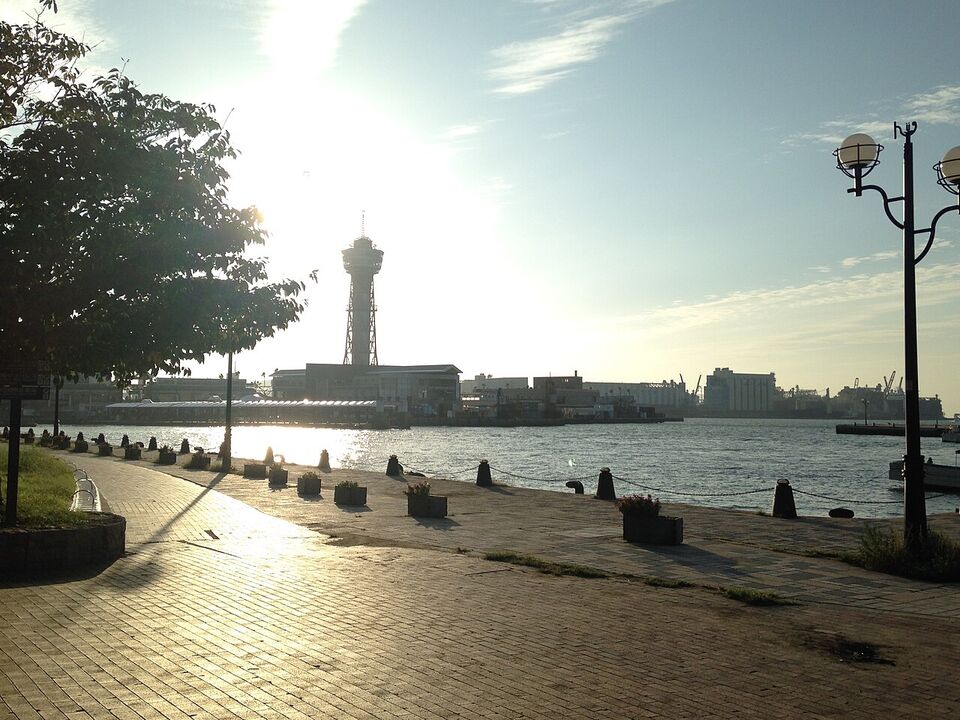
Fukuoka is the natural first stop from Busan. It is a large port city, with a metro area of roughly 2.5 million people, with a compact center, a short train ride from the airport and Hakata Station as a hub for the high-speed rail line and other JR Kyushu trains. A hydrofoil operated by JR Kyushu and a Korean company links Hakata with Busan. Two or three nights is enough for the city and a day trip. If you have more time, Kyushu has hot-spring towns and volcanic scenery reached by rail.
Osaka, Kyoto and Nara
Osaka is a large food city and the usual base for Kyoto (the old imperial capital, with temples and gardens) and Nara. From Korea you reach this area by air, since we could not confirm a current ferry. Kyoto has no airport, so you fly to Osaka's Kansai airport and continue by train. Allow at least four nights, because the sights are spread out and popular temples fill by midday. Compare the entry fees, opening hours and ticket rules on each site's own page, since we do not list them here.
Tokyo
Tokyo is the biggest add-on. It works best as the end of a trip: fly from Seoul, spend four or five nights and fly home from Tokyo. Treat it as a separate trip rather than a side trip, and avoid squeezing it into a weekend.
Taipei and the wider region
Taipei is a short flight from Seoul and works as a stopover or an end point. Taiwan is one hour behind Korea (UTC+8). Entry rules for Americans differ from both Korea and Japan, so check Taiwan's official government site and the State Department's page for Taiwan before you book. We have not verified the details for this page. Beyond Taipei, other Asian stops are possible, but each adds a new border and a new set of rules, so we suggest leaving them for a second trip.
Planning the order of the trip
Where you start matters. For most Americans, flying into Seoul first makes sense because the long-haul flight is most often to Incheon, and jet lag fades during the Korean part of the trip. Then work south by KTX to Busan, cross to Fukuoka and continue through Japan. Finish with a flight home from Osaka or Tokyo. If you instead end in Korea, you must backtrack to Incheon, which costs time.
Pick your dates with both holiday calendars in mind. Korea's Seollal (February 6 to 8, 2027) and Chuseok (September 14 to 16, 2027) fill trains and ferries, and Japan has its own busy periods that we do not detail here. A ferry on a Korean holiday weekend can sell out well ahead. The seasons differ too: both countries are best in spring and fall, and both are hot and humid in summer, with typhoon risk to sea and air routes from July to September. See when to go.
A simple booking order
- Book the long-haul flights, with an open-jaw routing if your dates allow.
- Book hotels for the busiest legs, usually Seoul and Kyoto.
- Book the Seoul to Busan KTX on the official KORAIL site (letskorail.com).
- Book the ferry or the short flight, reading the baggage and change rules.
- Complete the entry steps for each country, close to your travel date.
Low-cost carriers and baggage
Many flights between Korea and Japan are on low-cost carriers. They are often much cheaper, but the fare may include only a small cabin bag, with checked luggage as a paid add-on. Limits for weight and size are strict and enforced at the gate. The rules differ by airline, so we give no numbers: read the fare conditions and check your airline's own baggage page when you buy.
- Price the bag with the ticket. Adding a bag at the airport usually costs more than adding it online.
- Weigh your carry-on at home. Airlines weigh it at the counter and sometimes at the gate.
- Check the seat, the meal and the change fee before you compare fares.
- If your long-haul ticket and the low-cost ticket are separate, your large checked bag from the US may need to be collected and rechecked, which affects timing.
Mistakes to avoid
- Tight same-day connections. If you connect from a transpacific flight to a Japan flight on separate tickets, you must clear Korean immigration, collect your bags, check in again and clear security. Allow many hours, not one or two, and expect to change terminals at Incheon in some cases. A missed flight on a separate ticket is your cost.
- Booking the ferry as a certainty. Weather can cancel a sailing. Do not stack a ferry the same day as a flight home.
- Confusing the airports. Incheon and Gimpo are far apart, and so are Tokyo's Narita and Haneda.
- Forgetting the entry steps for the second country. Japan has its own pre-arrival process, and Korea needs a fresh e-Arrival Card when you return.
- Carrying too much won into Japan. You will pay a margin to convert it back.
- Underestimating how much time a country needs. A day in Fukuoka is not a visit.
When you are ready, see when to go for the season for both countries, and budget for costs.
Add it to a route in the trip builder, or ask us to plan the hotels, trains and guides for you.