Overview
Busan (an older romanization starting with "P" still appears on some old maps and guidebooks) is South Korea's second city and its biggest port, with about 3.3 million people. It is a good second stop after Seoul because it feels so different: a long coastline, mountains that run down to the water, a seafood culture built around the harbor and a skyline of beachfront towers. Most visitors can see the highlights in two or three days.
The city is spread out. There is no single center, which surprises first-time visitors. The old downtown around Nampo and Jagalchi sits near Busan Station, the business and shopping hub is Seomyeon, and the resort and beach district of Haeundae lies well to the east, a subway ride of roughly 40 to 60 minutes from Busan Station (check your map app). Gamcheon is in the west, and the seaside temple is farther east still. Plan by area rather than by landmark, and use the subway, which is clear and has English signs.
This page covers the neighborhoods, how to choose where to stay, what to eat, the major sights and how to avoid the crowds, then ends with a two-day and a three-day plan. For the trip from the capital, see the Seoul guide; for the full national picture of trains and buses, see getting around South Korea.
Busan at a glance: the neighborhoods
Think of Busan as six or seven small towns joined by subway lines. Each has a different feel and a different job in your trip.
Haeundae
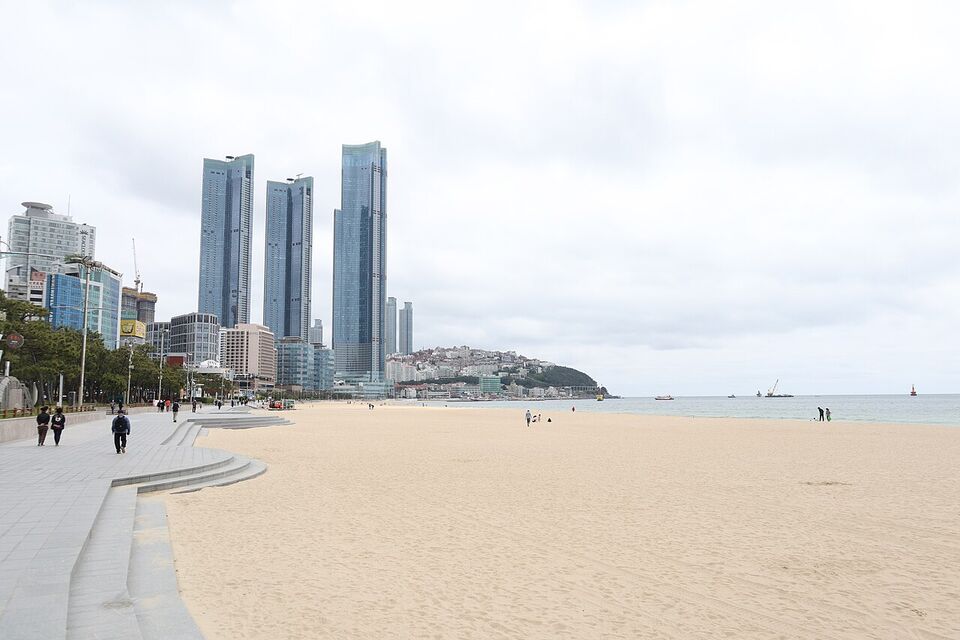
Haeundae Beach is about 0.9 miles (1.46 km) of sand and the country's best-known beach. Luxury hotels, a beachfront promenade, the Sea Life Busan Aquarium and the Centum City shopping and film district are all close. Dongbaekseom, a former island at the western end with a walking path through camellia and pine trees, is a pleasant short walk.
Gwangalli
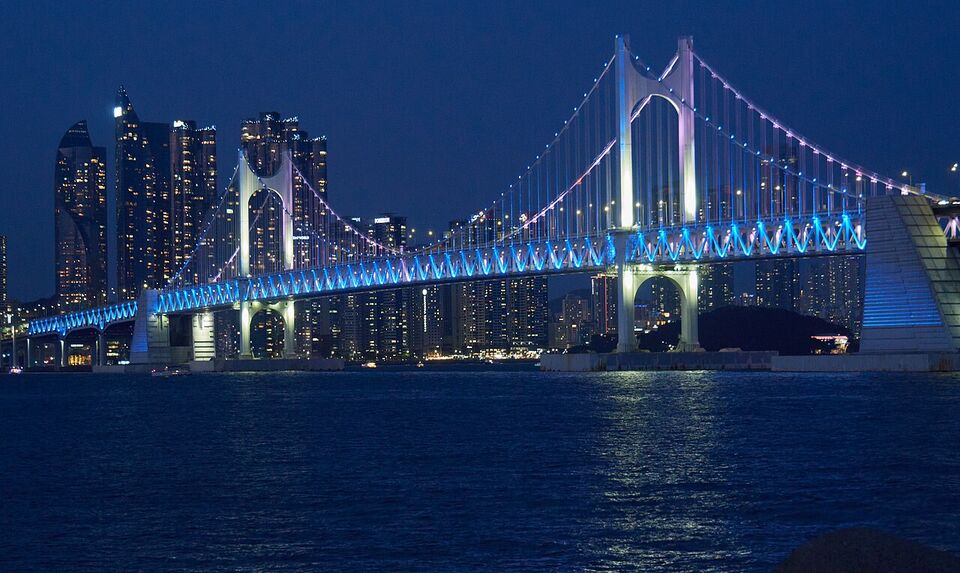
A half-moon beach of about 0.9 miles (1.4 km) facing the Gwangan Bridge, which is lit up after dark. The alleys behind the sand are full of restaurants, cafes and bars. It is less resort-like than Haeundae and easier on the budget.
Nampo and Jagalchi
The Gwangbok, Nampo and Jungang areas form the old center. Jagalchi Market, the largest fish market in the country, sits on the harbor edge, and Gukje Market is nearby. It is the neighborhood nearest to Busan Station and the international ferry terminal.
Seomyeon
Seomyeon Station is where Busan Subway Lines 1 and 2 cross, and it is one of the busiest stations in the country. There are large underground shopping passages, department stores, and Bujeon Market next door. It is a handy base for transit rather than scenery.
Gamcheon
A steep hillside of painted houses and public art, built for working families in the 1920s and 1930s and made into a cultural village from 2009 on. See the crowd advice below before you go.
Taejongdae
A natural park with cliffs facing open sea on the southern island of Yeongdo. It is a walking and views stop, best on a clear day, and it pairs with Nampo or Gamcheon in one day.
Haeundae versus Gwangalli versus Nampo: where to stay
You do not need to move hotels to see the whole city, because the subway reaches all three areas. Your base should match what you want your evenings to look like. Hotel prices below are tiers, not quotes; they rise sharply on summer weekends and around the big events, so check current rates on the hotel's own site.
| Area | Best for | Feel at night | Subway and train | Typical hotel tier |
|---|---|---|---|---|
| Haeundae | Beach days, families, resort hotels, the aquarium, close to the seaside temple | Busy promenade, towers and bars; quieter in winter | Haeundae and Jangsan stations on Line 2; roughly 40 to 60 minutes to Busan Station by subway, with a change | $$ to $$$ |
| Gwangalli | Cafes, seafood, the lit bridge, couples and younger travelers | Lively, with restaurants and bars along the sand; the bridge lighting is the draw | Gwangan station on Line 2, with a short walk or taxi to the sand | $ to $$ |
| Nampo and Jagalchi | Markets, old downtown, easy arrival and departure by KTX or ferry | Quieter after the shops close; fewer big resort hotels | Line 1 (Nampo, Jagalchi, Busan Station) | $ to $$ |
If you only have two nights and want one base, Haeundae is the simplest first choice for most Americans: it has many large international-style hotels, family-size rooms and good transit. Gwangalli is a strong choice if you would rather walk to dinner. Nampo works best for a one-night stopover when you arrive on a late KTX or leave on an early one. Seomyeon is a practical compromise for a short trip because every line passes through it. See where to stay in South Korea for hotel types and how to book.
Insider tip
If you are a light packer arriving by KTX, drop your bags at a hotel near Busan Station for the first night, then move to Haeundae for the beach days. The subway takes bags without trouble, but off-peak is far easier than rush hour. Check the exact route on your map app before you go.
The beaches and the summer crowds
Haeundae Beach is open all year, and on summer weekends it is packed. Reports describe more than 10 million visits in a swimming season, with room for around 120,000 people at once. That is part of the experience for some travelers and the main reason others skip July and August. The local government has added sand over the years because the beach has shrunk through erosion.
Gwangalli is smaller, calmer in the daytime and more of a sunset and evening place. For the Gwangan Bridge to be at its best, go after dark: the lighting is the reason to be there. Songdo, south of the center, and Dadaepo, on the western edge, are other beaches that locals use when the main two are full. Beyond the beaches, the waterfront park between Haeundae and Gwangalli, and the hot springs near both areas, give you rainy-day options. Busan has the largest hot-spring resort areas in the country, including baths in Haeundae, Dongnae and Gwangalli.
When the beaches are open and what the weather is like
Swimming areas usually open for a summer season with lifeguards and rules about flags and hours. The official season dates are set each year by the districts, so check the Busan tourism site (visitbusan.net) and the local district notices. In average terms (KMA normals), Busan runs about 82°F to 85°F (28°C to 29.5°C) in the daytime in July and August, with about 13.6 rainy days in July and typhoon risk from August into September. November averages 62°F (17°C) by day and 47°F (8°C) at night, and January averages 47°F (8°C) and 32°F (0°C).
Watch out
Do not plan an August beach trip without a backup day. Rain and typhoon warnings can cancel ferries, close beaches and stop outdoor events. Check the Korea Meteorological Administration (kma.go.kr) a few days ahead, and keep your hotel booking flexible.
Seafood, milmyeon and pork soup: what to eat
Busan's food is shaped by the port and by Korean War refugees who settled here and adapted the recipes of their home regions. Three dishes are worth knowing by name, and all three are easy to order without Korean.
- Raw fish and seafood (hoe). At Jagalchi Market, the usual pattern is to choose live fish or shellfish from the vendors on the ground floor, then have it cut and served in a restaurant upstairs. Ask the price before they weigh or cut the fish, and agree what you are getting. Cards work at many restaurants, but small stalls may want cash.
- Milmyeon (cold wheat noodles). A Busan version of the cold noodle dish naengmyeon, made with wheat flour instead of buckwheat and served in a chilled broth or with spicy sauce. It is a refreshing meal in hot weather and a good choice if you do not eat much meat.
- Dwaeji gukbap (pork and rice soup). A hearty bowl of pork broth with rice, usually served with salted shrimp, chives and kimchi to add yourself. It is a local comfort food and a classic hangover and cold-weather meal.
- Also try Dongnae pajeon (a green-onion pancake with seafood) and nangchae jokbal (cold pork trotters with vegetables). Busan's street food around Gukje Market and Nampo is a good place to graze.
For ordering, vegetarians and the basics of Korean dining, see Korean food for visitors and Korean etiquette. If you are cautious about raw seafood, choose grilled or cooked fish; many restaurants will serve both. Fish markets and street food stalls are common places where cash is still handy, even though cards are widely accepted across the country.
Gamcheon Culture Village and how to avoid its crowds
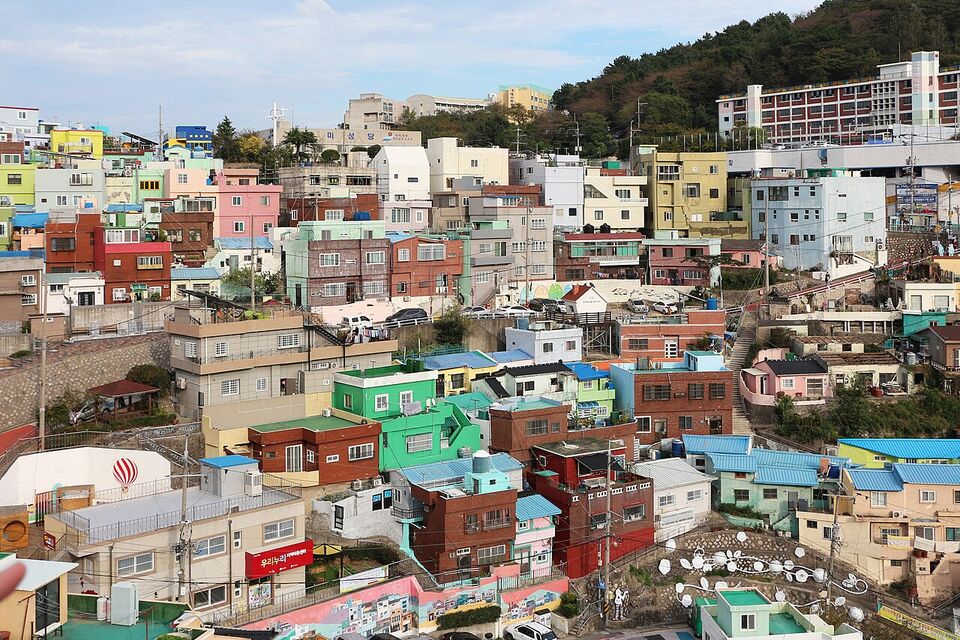
Gamcheon Culture Village is a steep hillside neighborhood of boxy, brightly painted houses stacked up a mountainside. It grew out of poor refugee housing in the mid-20th century and became a cultural village after a public art project in 2009. Visitors have nicknamed it the "Machu Picchu of Busan," which gives the right idea of the look: layered streets, narrow alleys and small art installations, including bird sculptures, a Little Prince scene and painted fish that point the way through the lanes.
It is also a place where people live. The village drew about 1.4 million visitors in 2015, and residents have mixed feelings about the crowds. Some joined the renovation and run shops and cafes; others moved away, and around 300 houses were empty at that time. Treat it the way you would any neighborhood: keep your voice down, stay on the marked routes, and do not photograph into windows or doorways.
How to beat the crowds
- Go early on a weekday. Arrive close to opening, ideally before 10 a.m., and finish before the tour groups and weekend crowds build. Check opening hours and any entry or map fee on the village's own site (gamcheon.or.kr) before you go.
- Avoid weekends and holidays if you can, and especially the Buddha's Birthday and Chuseok weeks. See festivals and holidays for dates.
- Take the upper route first. Buses and taxis drop most visitors at the top near the main viewpoint; walk down, then loop back, rather than climbing up in the heat.
- Pair it with a quieter stop the same day, such as the harbor and Jagalchi, rather than spending the whole day on the hill.
Getting there is by the subway to Toseong Station on Line 1 and then a local village bus or a short taxi ride; the village bus routes and fares change, so confirm the current number at the station or on the village site. Walking from the station is possible but steep.
Different from home
Hills in Busan are steeper than in most American cities, and many sidewalks are stairs. Wear shoes with grip, carry water and expect to walk up and down more than your map suggests.
Temples by the sea: Haedong Yonggungsa
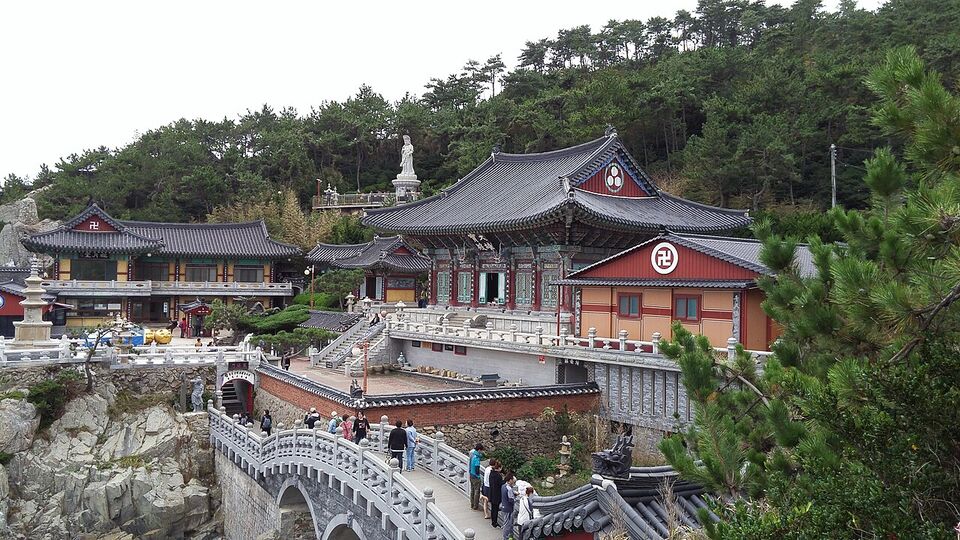
Haedong Yonggungsa (the name means roughly "Haedong Dragon Palace Temple") sits on the coast in Gijang County, on the east side of the city. It is one of the few large Korean temples built right at the water, and it is popular for its sea-facing halls, stone steps and a sea-goddess figure of the Buddha of mercy. The temple says it was first built in 1376, though that date is disputed. At Buddha's Birthday the grounds are covered in paper lanterns, which makes it especially busy (the 2027 date is Thursday, May 13).
It is roughly 30 to 45 minutes from Haeundae by bus or taxi, depending on traffic; check the current bus route on your map app, because routes are adjusted. Go early in the day or around sunrise to avoid the crowds. We could not confirm the current entry fee or hours, so check the temple's official page (yongkungsa.or.kr) before you go. If you want a quieter mountain temple, Beomeosa, Busan's main Buddhist temple, sits on the slope above the Dongnae area; the temples and temple stays page covers etiquette and the other major temples.
Coastal trains, the Sky Capsule and the views
East of Haeundae, a stretch of old coastal rail line has been turned into a sightseeing route between Mipo and Cheongsapo. Visitors can ride a small seaside train or the Sky Capsule, a pod-style car on an elevated track, and there is also a walking path along the same coast. Operators, ticket systems and hours have changed over the years, so we cannot give current fares or timetables here. Check the operator's official page before you go, and book a time slot on weekends and in fall if the operator uses reservations.
Other ways to see the coast are the walking path around Dongbaekseom, the waterfront park between Haeundae and Gwangalli, and the cliff walks at Taejongdae. If you like views from above, the observation towers in Haeundae and the Busan Tower in Yongdusan Park are options. Many sights ask for tickets or time slots that sell out on weekends, so do not leave them for the last day.
Save money
Get a T-money card at a convenience store or station on arrival; it works on the Busan subway and buses and in many convenience stores. A transit card avoids buying single-use tickets and gets you through the gates faster. See money in South Korea for the rate and the usual card pitfalls.
Getting there: KTX from Seoul and other ways
The KTX is the fastest way to travel from Seoul to Busan without flying. Trains leave from Seoul Station; the trip takes about 150 minutes on the fastest services, and frequent departures run through the day. The Gyeongbu Line ends at Busan Station, which is right on Subway Line 1 and close to Nampo and Jagalchi. SRT is a separate high-speed operator on the same corridor from Suseo station in southeast Seoul, which can be more convenient if you are staying in Gangnam. A standard-class adult fare is about ₩59,800 (about $45) one way; fares vary by train type, seat class and day, so check letskorail.com (the English booking site) and the SRT site before you buy. Foreign visitors can often book tickets online, and a Korail Pass for visitors exists for most KORAIL trains; compare it with single tickets for your plan.
By air, Gimhae International Airport serves Busan; it connects to Seoul's Gimpo Airport, and to many cities in Asia. A new airport on Gadeok Island is under construction with no confirmed opening date. Airport limousine buses and a rail link connect Gimhae to the city; routes and fares change, so use the airport's official site for current details.
There are also express buses from Seoul and other cities, and ferries to Japan leave from the international terminal near Nampo (see Asia links for side trips). Gyeongju is a short hop from Busan; see Gyeongju, and for local transport in general, getting around South Korea.
- Book KTX seats ahead for weekends, Friday evenings, Sundays and holidays.
- Choose a Haeundae or Gwangalli base for the beach days and Nampo for the early train home.
- Download a map app (Naver Map or KakaoMap) that works with Korean place names.
- Check for event closures if you are visiting in fall (see below).
Events, fireworks and film: check before you book
Busan's biggest fall events can change hotel prices, close roads and make beaches very crowded. The Busan International Film Festival is based in Haeundae and Centum City; the 31st edition ran October 6 to 15, 2026, and the 2027 dates have not been announced. The Busan Fireworks Festival, held at Gwangalli Beach, is typically in the fall (usually listed for October); check the date and any closures with the city before you book. On fireworks nights, expect crowds from early afternoon, restricted roads around the bridge and heavy subway traffic after the show.
The Jagalchi Festival is an autumn event focused on the fish market, and the Polar Bear Festival in January has several thousand people swim in cold water at Haeundae. The Haeundae Sand Festival is another local event. For the national calendar, including Seollal, Chuseok and Buddha's Birthday, see festivals.
A two- or three-day Busan plan
- Day 1
Old downtown and the harbor
Arrive by KTX, drop bags near Busan Station, and head to Nampo for Gukje Market and Jagalchi. Have lunch at the fish market or a milmyeon shop. In the afternoon, go to Gamcheon (aim for early afternoon on a weekday if you could not manage the morning), then move to your Haeundae or Gwangalli hotel for the evening.
- Day 2
Seaside temple and beach
Go to Haedong Yonggungsa early, before the crowds. Return to Haeundae for the beach, the walking path at Dongbaekseom and the waterfront park. Try dwaeji gukbap for lunch or dinner, and end at Gwangalli for the lit bridge.
- Day 3 (optional)
Taejongdae, a hot spring or a coastal train
If you have a third day, spend the morning at Taejongdae and its cliffs, or take the coastal train and Sky Capsule route in the east. Finish with a hot-spring bath in Dongnae or Haeundae, or head to Gyeongju by train.
If you only have one night, do Nampo and Gamcheon in the morning, take the subway to Haeundae in the afternoon, and stay there. If you have a longer trip, pair Busan with Gyeongju, which is a short trip from Busan by train or bus, or a stop on the way up from the south, and with Seoul at the other end.
Mistakes to avoid
- Trying to see everything in one day. The city is long and hilly. Pick two areas per day.
- Visiting Gamcheon at midday on a weekend. Crowds and heat are worst then. Go early or late on a weekday.
- Skipping the fish market question. Ask for the price before ordering raw fish at Jagalchi, and do not assume that cards are accepted at every stall.
- Booking Haeundae in summer or during an event without a refund option. Rates jump and typhoons can change plans.
- Not allowing for the last train. The KTX has limited late departures, so leave a buffer on your final night, especially after fireworks or a festival.
- Relying on a single source for hours. Attractions in Busan change their schedules for weather, events and repairs. Check the official page for the place you are going.
Add it to a route in the trip builder, or ask us to plan the hotels, trains and guides for you.