Overview
South Korea has a wide range of places to stay, from international-brand hotels to hanok guesthouses and mountain temples. For most first trips the answer is a mid-range hotel or business hotel near a subway station: compact, clean, reliable and well located. Beyond that, the choice depends on what you want from the trip, such as atmosphere, price, space or a particular experience.
This page covers the main types of lodging, how to choose a base in Seoul, Busan and Jeju, what a Korean room is like, the booking platforms people use, check-in rules, a comparison table, and mistakes to avoid. Korea's visitor numbers hit records in 2026, and the Seoul hotel market can be tight, so book earlier than you think you need to. We give price tiers rather than nightly rates, because we could not confirm current prices, and we say where a number comes from an official source.
The tiers used on this site are $ for a double room under $120 a night, $$ for $120 to $300, and $$$ for over $300. Rates change by season, day of the week and local events, so use the tiers as a rough guide only.
Types of places to stay
Hotels
International and Korean brands cover the central districts of Seoul, Busan and Jeju. Rooms are modern, with front desks that speak English, and many have breakfast and airport help. Some upscale hotels add a service charge to the bill, so read the rate details.
Business hotels and motels
Compact, clean rooms near subway stations, often with self check-in, a small desk and a good bathroom. They are the best value for solo travelers, couples and anyone who only needs a place to sleep. Rooms are small, so look at the room size before you book.
Hanok guesthouses
Traditional wooden houses with courtyards and paper doors, often run as small guesthouses. Beds may be floor bedding on an ondol floor. They are atmospheric and quiet in the mornings, but have thin walls, steps and shared spaces.
Guesthouses and hostels
Private rooms and dorms, often with a lounge and a kitchen. Hongdae, Busan's Seomyeon and Haeundae areas, and Jeju City have many. They suit budget and solo travelers who like meeting others. Noise can be an issue near nightlife.
Serviced residences
Apartment-style rooms with a kitchenette and a washer, good for longer stays and families. Space is often better than in a hotel room. Check the check-in rules and whether cleaning is included.
Temple stays
An overnight program in a Buddhist temple, with meditation, a tea talk and simple meals. Adults pay about ₩70,000 to ₩100,000 (about $53 to $75) a night for a regular stay. See the next section for how it works.
Two more categories deserve a mention. A jjimjilbang (public bathhouse and sauna) is a place where some travelers sleep on a floor mat in a shared hall, usually a low-cost option for a night when you have an early train. And Korea has "love hotels" and similar short-stay motels, which are widespread and range from basic to elaborate. The reality is plain: many are clean and cheap, and some are fine for a night, but their privacy features and a lack of English can make them a poor fit. Pick a regular hotel or guesthouse when you can.
Temple stays and hanok stays
Temple stays
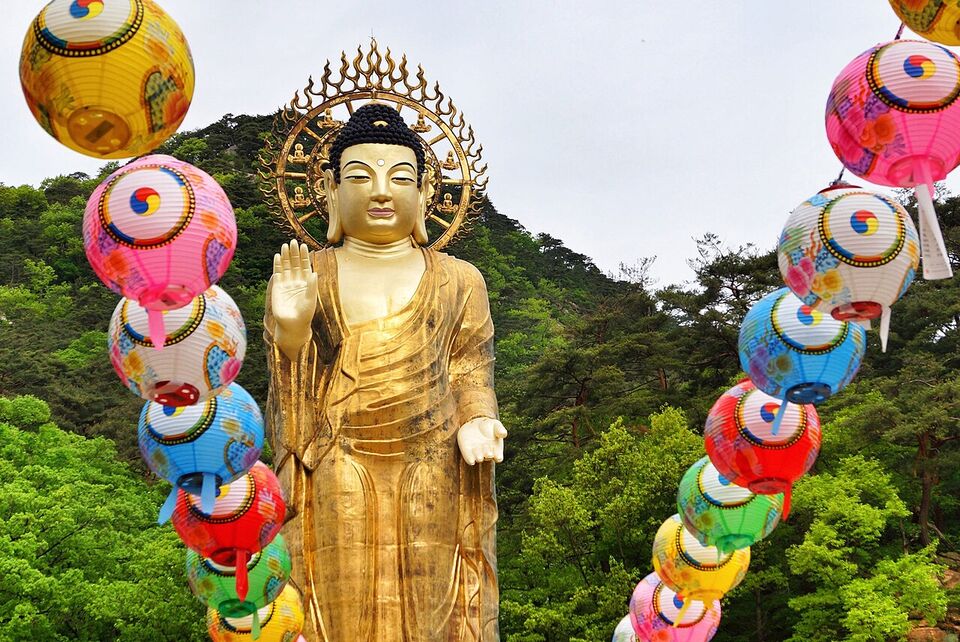
A temple stay (templestay) is an overnight program at an active Buddhist temple, with temple tours, meditation, 108 prostrations, a tea talk with a monk and a communal meal. The program is run by the Jogye Order, and bookings for foreign visitors go through the official English site at eng.templestay.com. Regular adult rates are about ₩70,000 to ₩100,000 (about $53 to $75) a night. A September 2026 discount of ₩30,000 (about $23) at 19 temples has ended, so do not count on it.
Programs differ: some are a few hours, some are rest-focused with fewer activities, and some include more structure. Expect a very early wake-up (often around 4 a.m., varies by temple), simple vegetarian food, shared sleeping rooms and clothing provided by the temple. Rules on phones, shoes and quiet are strict and are part of the experience. Visit the official site to see which temples take foreign guests and what each program includes. More on temples in Temples and Temple Stays.
Hanok stays
Seoul, Jeonju and Gyeongju all have hanok guesthouses. The Seoul city hanok site (hanok.seoul.go.kr; check that it is current) and the Korea Tourism Organization's English pages are good places to start. Rooms differ a lot, so check what is included: floor bedding or a bed, a private or shared bathroom, breakfast and heating. In winter, ondol floors are warm, and in summer a good guesthouse has air conditioning. Houses have steps, stone paths and low doorways, which matter for tall guests and for anyone with a mobility issue.
In Bukchon, tourists who do not stay locally can enter the "red zones" of the hanok village only from 10 a.m. to 5 p.m., but guests who stay in local guesthouses are exempt. If you want quiet streets in the morning and evening, a stay in Bukchon is one of the few ways to get them, and you should still keep your voice down and respect the neighbors. See Seoul Neighborhoods.
Choosing a base in Seoul
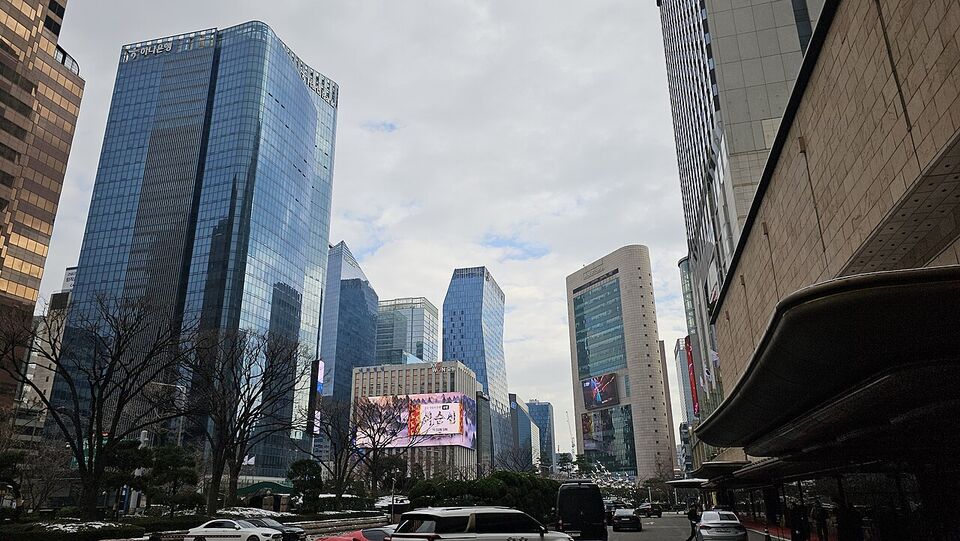
Seoul is large, and the subway makes most bases workable. The best base is one near a station on a line that suits your plans, with an easy ride to the airport train. Think about what you will do most. First-time visitors who want sights, shopping and food usually do well in one of these areas.
- Myeongdong and Namdaemun: central, with shopping and street food, subway lines and easy access to the airport train at Seoul Station. Busy and loud at night.
- Seoul Station and Hoehyeon: convenient for the airport train and for KTX departures, with many business hotels. Less atmosphere.
- Jongno, Insadong and Bukchon: close to the palaces, tea houses and hanok. Calmer at night than Myeongdong, and the best area for a hanok stay.
- Hongdae and Mapo: youthful, with cafes, live music and late nights, plus a direct airport rail link. Many guesthouses and hostels, but noise can run late.
- Gangnam and Samseong: modern, upscale and business-oriented, with large hotels. Further from the old palaces, though the subway links them.
- Itaewon and Yongsan: international restaurants and a central location, with hotels at several price levels.
Spend a few minutes on a map app to compare walking time to the subway, the number of exits and how many stairs you must climb with luggage. Many Seoul stations are deep and hilly. See Seoul for more, and Seoul Neighborhoods for what each district is like.
Choosing a base in Busan and Jeju
Busan
Busan stretches along the coast, so pick by what you want to see. Haeundae has the main beach, large hotels and resort-style stays, and is good in summer and for families. Gwangalli has a calmer beach with a bridge view and many cafes. Seomyeon is the central hub for subways, shopping and nightlife, and a practical base for business hotels. Nampo and Jagalchi put you near the fish market, old streets and Gamcheon access. The KTX arrives at Busan Station, and the airport is at Gimhae. See Busan.
Jeju
Jeju splits into two main bases. Jeju City, in the north, is near the airport and has the most hotels, restaurants and bus links. Seogwipo, in the south, has a milder winter and quick access to waterfalls and the southern coast. Many visitors rent a car and base themselves in one place, then drive. Resorts are scattered along the coast and in the Jungmun area. Plan transport with Driving in South Korea and see Jeju Island.
For smaller cities, such as Gyeongju, Jeonju and Sokcho, stay near the main sights or the bus station and use taxis for the rest. See Gyeongju and Jeonju.
What a Korean room is like
Rooms are smaller than in the US. A standard hotel double can feel compact, and business hotels may have only a narrow strip of floor beside the bed. Floor area is listed in square meters on booking sites: 20 square meters is about 215 square feet. Check the room size, bed type and bathroom before you book.
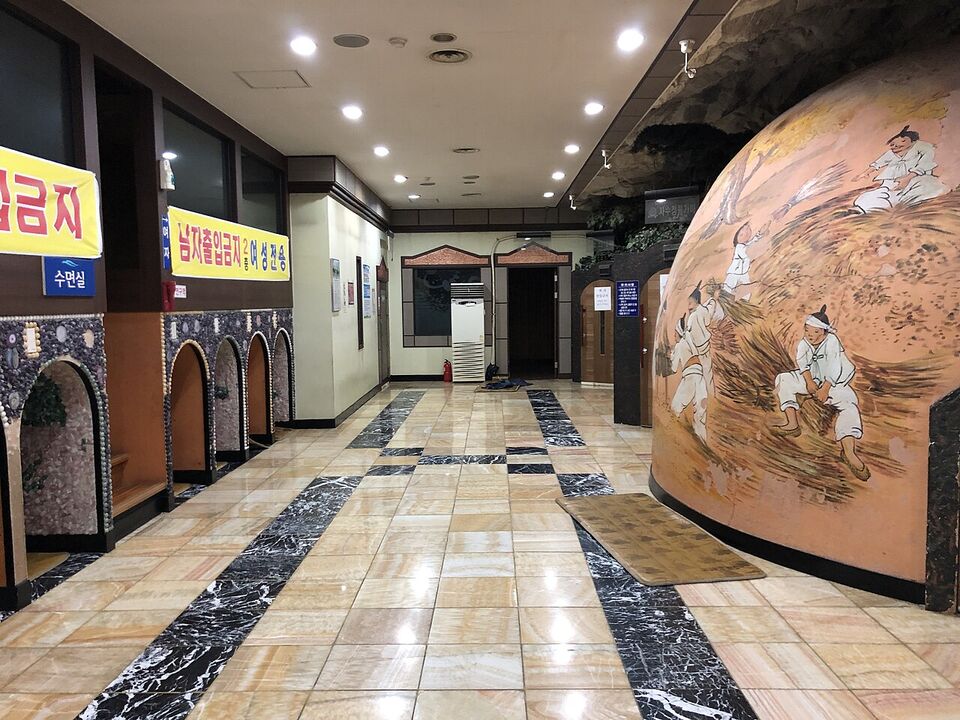
- Ondol (heated floor). Traditional floor heating warms the whole floor. In winter it is cozy, and in a floor-bedding room you sleep on a thick mattress on the floor. Some modern hotels have an "ondol room" type, so you must choose it on purpose.
- Beds. Western beds are common in hotels, and mattresses are often firmer than American ones. Pillows can be firm, too.
- Bathrooms. Small, with a wet-room design in many places: the shower may have no curtain or a low tray, and the floor is a drain. Use the slippers provided, and expect some water on the floor.
- Heating and cooling. Rooms have a thermostat or remote. A key card in a wall slot often turns on the power, so keep it inserted.
- Toiletries. Many hotels provide shampoo and soap, but budget places may not supply toothbrushes or razors. Check the room description and bring your own to be safe.
- Power. Korea uses 220 V and 60 Hz with Type C and F round two-pin sockets, so US plugs do not fit. Bring a plug adapter; most phone and laptop chargers are dual-voltage (100 to 240 V), but check the label.
Different from home
Take off your shoes before stepping onto a floor-bedding room, a hanok room or a temple floor. Look for a shoe area at the door. Hotels with Western rooms generally do not require this, but follow the hosts' lead.
Booking apps and platforms
International booking sites list many hotels, hostels and some guesthouses in Seoul, Busan and Jeju, and are the easiest route for foreigners, with English pages, card payments and a clear cancellation policy. Korean platforms and the properties' own sites often list more guesthouses, motels and small hanok, sometimes with lower rates, but some are in Korean only or do not accept foreign cards.
- Compare with the hotel's own site. Rates and cancellation terms can differ, and a direct booking sometimes includes breakfast.
- Read the cancellation terms. Peak periods may have non-refundable rates.
- Check the exact address and map pin. Many Korean addresses are hard to read, and a similarly named hotel may be elsewhere.
- Save the Korean name and phone number. Taxis find places faster from a Korean-language name, and the hotel can call you if you get lost.
- Official channels. The Korea Tourism Organization (english.visitkorea.or.kr) and the Seoul, Busan and Jeju tourism sites list recommended and registered places to stay. Call the 1330 Korea Travel Helpline for help in English.
Keep a screenshot or printout of each confirmation. For help with apps and a phone plan, see Phones, Wi-Fi and Apps.
Check-in rules and deposits
Hotels in Korea register foreign guests, and you must show your passport at check-in. Bring the physical passport, not a photo. Many places take an imprint or hold on your credit card for incidentals, and a few small guesthouses ask for a cash deposit, returned at checkout. Check-in is usually in the afternoon and checkout in the late morning, with luggage storage available if you arrive early or leave late.
Self check-in is common in business hotels and apartments: you get a door code by message and may need to scan your passport on a kiosk. Some guesthouses have a curfew or quiet hours, and smoking is banned in most rooms, with fines or cleaning fees for violations. Extra guests may need to be registered. Plan a late arrival in advance: tell the hotel your flight time so someone is there to let you in.
When prices and availability shift
Rates follow the calendar. Expect the tightest and costliest periods around cherry blossom season in spring, the fall color season, the summer beach season on the coasts and Jeju, and the long national holidays. Weekends cost more than weekdays in resort areas such as Jeju, Haeundae and the east coast, and midweek can be easier on both price and crowds. Seoul has big events and concerts that can fill hotels in a district on one night, so check your dates against the city's event calendar and Festivals and Holidays.
Families have extra options: connecting rooms, ondol rooms where everyone sleeps on the floor, and serviced residences with a washer. Ask in advance whether a room sleeps three or four, since many standard rooms are set up for two. See Families.
Comparing the types
| Type | Comfort | Cost level | Usual location | Best for |
|---|---|---|---|---|
| International hotel | High | $$-$$$ | Central districts, resorts | Comfort, service, families, business trips |
| Business hotel | Medium | $-$$ | Near subway and rail stations | Short stays, solo travelers, couples |
| Hanok guesthouse | Medium, atmospheric | $$ | Bukchon, Jeonju, Gyeongju | Culture, photography, quiet mornings |
| Guesthouse or hostel | Basic to medium | $ | Hongdae, Seomyeon, Jeju City | Budget, solo travelers, social trips |
| Serviced residence | Medium to high | $$-$$$ | Seoul, Busan, Jeju | Longer stays, families, kitchens |
| Temple stay | Simple | About ₩70,000-100,000 (about $53-$75) a night | Mountains and some cities | Culture, quiet, meditation |
| Jjimjilbang overnight | Very basic | Low (check on site) | Cities, near stations | One night, early train, adventurous travelers |
Tier levels are rough; they change by date. Use them to narrow your list, then compare current rates for your dates.
Accessibility and noise
Many older buildings, hanok and temples have stairs, steps and narrow doorways, and subway stations can have long walks even where elevators exist. If you use a wheelchair or walker, ask each place about step-free access, the bathroom layout and the distance to the nearest elevator, and check for details in writing. Larger international hotels are usually the safest bet.
For noise, ask for a higher floor away from the street and from the elevator. Hongdae, Itaewon, Myeongdong and the bar streets of Busan are loud late. Thin walls are common in guesthouses and hanok. Bring earplugs and, in summer, check that the room has air conditioning.
Mistakes to avoid
- Booking late. Hotels fill early, especially in cherry blossom season, fall, school holidays and on Seollal (February 6-8, 2027) and Chuseok (September 14-16, 2027). See Seasons.
- Ignoring room size. A bargain may be a very small room. Check the square meters and the bed type.
- Choosing by price alone. A cheap room far from a subway station costs time and taxi fares.
- Not checking for ondol. If you want a Western bed, confirm it, and if you want the floor, confirm that too.
- Overlooking the passport. Keep it with you at check-in, not packed in a bag in a hold.
- Mixing up locations. Hotels in different cities can share a name. Check the district and the map pin.
- Ignoring late-arrival rules. Tell your hotel your flight time and check how to get in at night.
- Relying on a temple-stay discount. The September 2026 offer has ended. Check eng.templestay.com for current rates.
Add it to a route in the trip builder, or ask us to plan the hotels, trains and guides for you.