Overview: the east coast, in one place
Gangneung is the main city on the east coast of Gangwon Province, facing the East Sea, as Koreans call the Sea of Japan. It is the place Seoul residents go for a beach weekend, a cup of coffee with a view of the waves and a bowl of tofu soup. From Seoul it is a ride of about two hours on the KTX, so you can arrive for lunch and be on the sand by mid-afternoon.
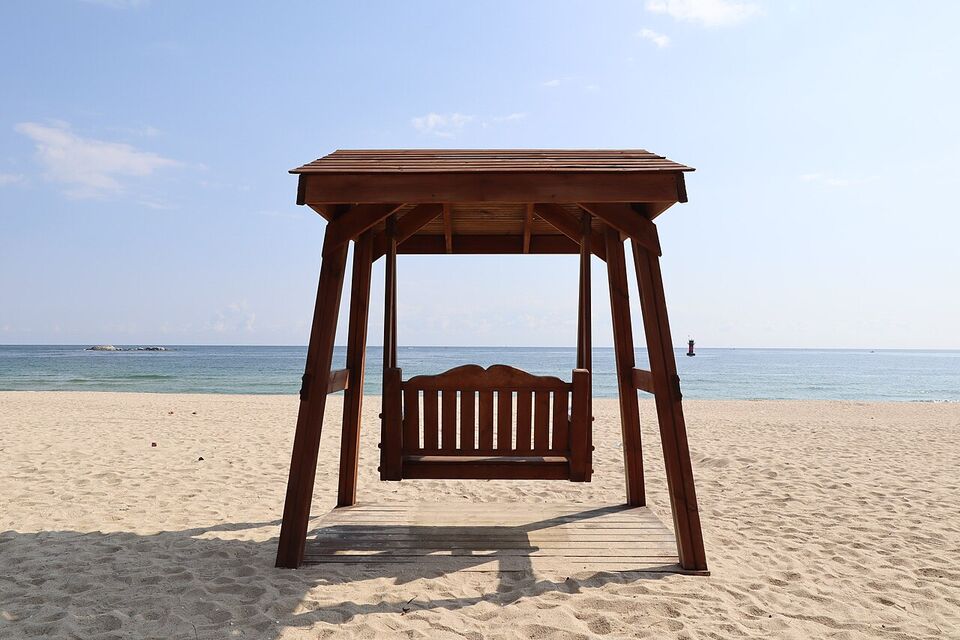
The city is the economic center of the Yeongdong region, the narrow strip of coast east of the Taebaek Mountains. It has about 20 beaches along its shore, including Anmok, Gyeongpo and Gangmun, a lake that is a famous bird habitat, several old buildings of the Joseon dynasty and a long coastline of fishing harbors. It was also a host city for the 2018 Winter Olympics, so its coast has ice venues and the mountains inland have ski resorts.
This page gives you a practical plan: how to reach the coast, a table of stops, the beaches and coffee street, Ojukheon and the heritage sites, the Olympic sites, food, a way to link the coast with Sokcho and Seoraksan, and the mistakes that cost travelers time. If you are choosing between regions, our regions guide compares the options.
Getting there: KTX from Seoul and the east coast rail links
The Gyeonggang Line opened on December 22, 2017, ahead of the 2018 Winter Olympics, and runs from Seowonju to Gangneung, about 75 miles (120 km). KTX trains from Seoul use it. Since August 1, 2021, the KTX-Eum, a newer train with a top speed of about 160 mph (260 km/h), has run on the Gangneung line. A typical KTX route runs from Seoul through Cheongnyangni, Manjong, Pyeongchang and Jinbu before arriving at Gangneung. That means you can get off at Pyeongchang or Jinbu (the stop for the Olympic stadium and the ski resorts) or ride on to Gangneung.
The ride takes about two hours, but the time varies by train and by stops, so check the timetable. A few trains continue beyond Gangneung toward Jeongdongjin and Donghae on the Yeongdong Line, which opened between Namgangneung and Donghae in March 2020, so the sunrise coast is reachable by rail. Check korail.com or letskorail.com for what runs on your date. We could not confirm 2026 fares from an official page, so we do not print a price here; fares vary by train and day, and a Korail Pass for foreign visitors exists (compare it with single tickets).
To book, use the English pages of letskorail.com (Chrome, Safari or Samsung Internet work best, and a wired or mobile data connection is more reliable than hotel Wi-Fi) or buy at a station. Weekends, holidays and sunrise-season mornings sell out. At Seoul's stations, KTX tickets are sold at counters with English signs. For the wider rail picture, see getting around South Korea.
Insider tip
Book a morning train out and, if you can, travel home on a Monday or in the early afternoon on Sunday. The coast is at its best before the afternoon crowds, and Sunday evening trains and buses back to Seoul are the busiest.
Express buses also run from Seoul's bus terminals to Gangneung and take roughly two and a half to three hours depending on traffic. They are a fallback when trains sell out, and they are the main way north to Sokcho. Driving is possible, but traffic on the Yeongdong expressway is heavy on summer and holiday weekends; see driving in Korea if you plan to rent a car.
A table of stops along the coast
The coast is long and the stops are spread out, so choose a few. The table runs roughly south to north, with minutes and styles of travel as typical guides.
| Stop | What it is | Time to allow | Getting there |
|---|---|---|---|
| Jeongdongjin | Sunrise beach and seaside railway station; popular for the first sunrise of the year | Half a day, or a night for sunrise | KTX or local train, or bus and taxi from Gangneung |
| Anmok Beach | Beach with a row of seaside cafes, the coast's "coffee street" | 2 to 3 hours | Bus or taxi from Gangneung station |
| Gyeongpo Lake and Beach | A lagoon with a walking path, a pavilion and a broad beach | Half a day | Bus or taxi; a bike path rings the lake |
| Ojukheon | The house where the scholar Yi I and his mother Shin Saimdang were born; one of Korea's oldest surviving houses | 1 to 2 hours | Short bus or taxi ride from the center |
| Chodang tofu village | A neighborhood known for fresh tofu dishes | A meal | Near Gyeongpo, by bus or taxi |
| Gangneung Olympic Park | The ice venues of the 2018 Winter Olympics | 1 to 2 hours | Bus or taxi from the center |
| Jumunjin | Fishing port with a fish market and a lighthouse | 2 to 3 hours | Bus or taxi, north of Gangneung |
| Pyeongchang (Alpensia, Yongpyong) | Winter Olympic ski area, quiet in summer | A day trip | KTX to Pyeongchang or Jinbu station, then taxi or resort shuttle |
| Sokcho and Seoraksan | A port town and a national park, covered on a separate page | Two nights or more | Express bus from Gangneung or Seoul |
Bus routes and frequencies change, and we could not confirm local fares from an official page. Use Naver Map or KakaoMap for live bus times, and a taxi for short hops when you have luggage. The city's tourism information is at gangneung.go.kr, and Gangwon Province publishes travel information at gangwon.to.
Beaches and the coffee street at Anmok
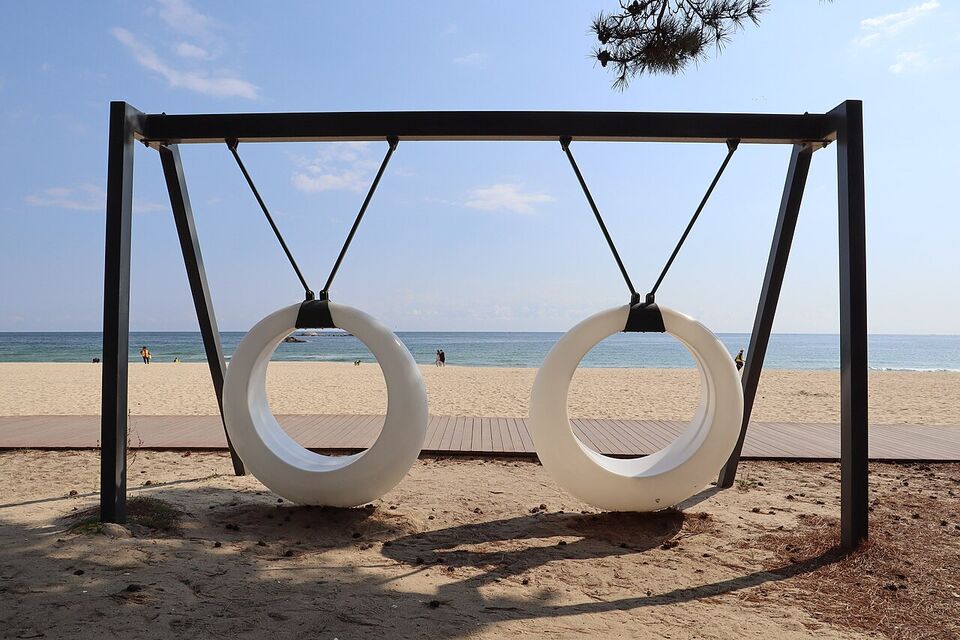
Gangneung has about 20 beaches, and the three best known are Anmok, Gyeongpo and Gangmun. The water is cold even in summer, the sand is fine, and the sea is usually clear. Swimming is a July-August activity: beaches are normally staffed and open only for a short summer season, and outside it swimming is not supervised. Follow the flags and the beach staff, and check the Korea Meteorological Administration (weather.go.kr) for typhoon warnings from July to September.
Anmok Beach is where the coffee scene began, and the strip of cafes facing the water is now one of the best known in Korea. The cafes serve espresso drinks, drip coffee and pastries, and many have windows or terraces that face the sea. Coffee is a point of local pride here, and there is a coffee festival in the fall, though dates move from year to year; check the city tourism site. A drink costs more than a street-food snack, and a seat with an ocean view is part of what you are paying for.
Gyeongpo Beach has a wide strand and a long walkway. Behind it is Gyeongpo Lake, the second-largest lagoon on the east coast, which has shrunk with development but is still a habitat for ducks, cormorants and egrets, with swans in winter. A walking and cycling path circles the lake; walkers can do the loop in about an hour or two, and bikes can often be rented nearby. Gyeongpodae, a pavilion on the north shore, dates from the Goryeo period and is a good place to see sunset over the water.
Watch out
Out of season, many beach cafes close early, and summer weekends fill every seat by midday. In winter, the wind on the sand is strong, and the sea can have dangerous waves. Do not walk on breakwaters or rocks in rough weather, and stay clear of fenced military shoreline: parts of the east coast still have wire fencing and sentry posts, a legacy of its position near the border.
Jeongdongjin and the sunrise train
Jeongdongjin is a small beach village on the coast just south of the city, known for its railway station on the shore and as the place to see the first sunrise of the new year, which is an important custom in Korea. The beach was the setting of the TV series Sandglass, which made it famous in the 1990s. A coastal trail, the Jeongdong-Simgok Badabuchae Trail, runs about 1.8 miles (2.86 km) along a rock terrace formed millions of years ago and is a gentle walk with the sea beside you.
Sunrise watching is simple: check the sunrise time for your date, arrive on the beach 30 to 45 minutes early and dress warmly, because the wind off the sea is cold in winter. In late December and early January, the crowds are large, and special sunrise trains and extra buses have been arranged in past years. We could not confirm the 2026-27 arrangements, so check korail.com and the city site in December if you want to be on the beach on January 1, 2027. Rooms near the beach sell out first.
Outside the New Year peak, the sunrise is just as good. From late October to February, the sun comes up over the horizon at a civilized hour, and a morning walk followed by breakfast in town is a pleasant way to start a day. In summer, sunrise comes very early, and most travelers skip it. If you are traveling in January, our January guide covers the cold-weather plan and the festivals page lists winter events.
Ojukheon, Gyeongpodae and other heritage stops
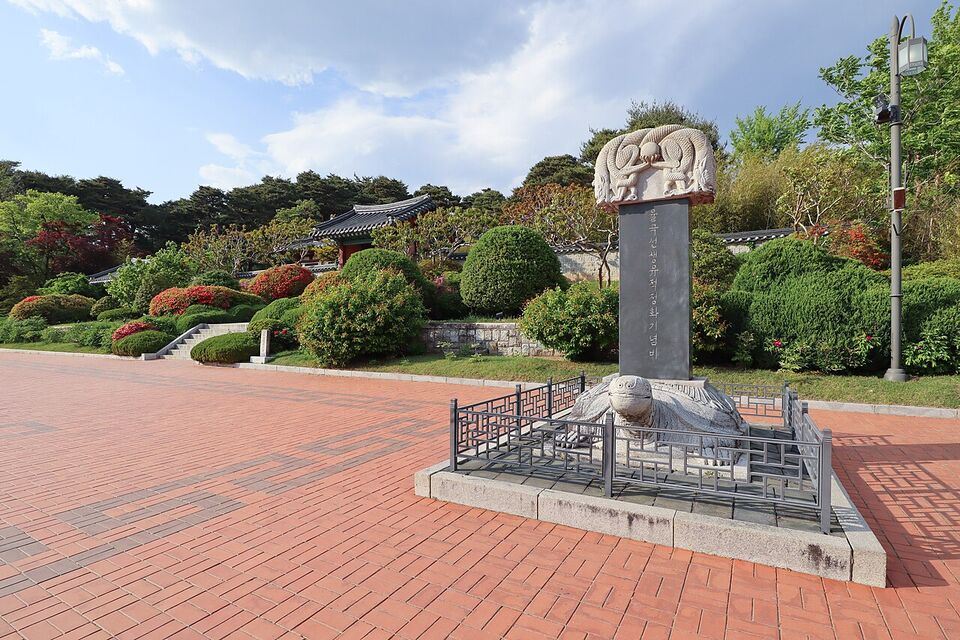
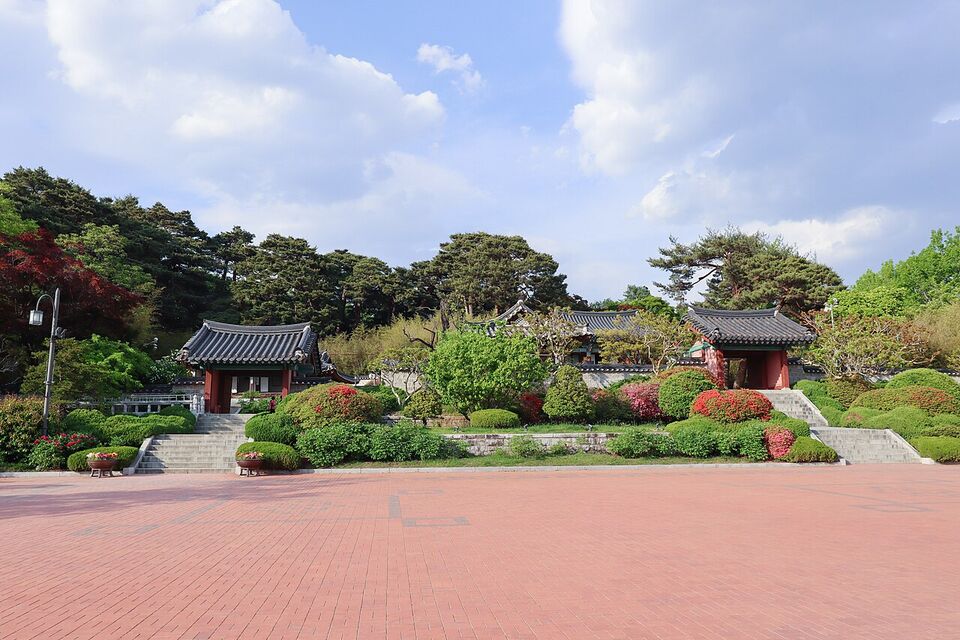
Gangneung has 136 cultural properties, including 40 designated by the state and 60 by the province. Three are worth a place on a short trip.
Ojukheon
The birthplace of Shin Saimdang, a celebrated artist of the Joseon period, and her son Yi I, known as Yulgok, a leading scholar. It is one of the oldest buildings in Korea and is designated treasure No. 165. The grounds have bamboo and a museum; check the opening hours and any entrance fee at the city site before you go.
Gyeongpodae
A Goryeo-era pavilion beside Gyeongpo Lake, built for viewing the lake and moon. It is a short walk from the beach and a good stop for a rest.
Gate of Imyeonggwan
The front gate of an official inn from the Goryeo period, and the only national treasure in the city. It is quick to see and sits near the center.
Gulsansa temple site
The site of a temple founded in 851 and designated a historic site. It is quiet and a little out of the way.
The Gangneung Danoje festival, listed by UNESCO in 2005 as a masterpiece of oral and intangible heritage, is the city's oldest and biggest. It combines commemoration rites, traditional plays and the Gwanno mask dance and is held in the early summer by the lunar calendar. We could not confirm the 2027 dates, so check the city site and our festival guide before you plan around it.
The Olympic sites in Gangneung and Pyeongchang
Pyeongchang County hosted the 2018 Winter Olympics and Paralympics. The snow events were held in the mountains inland, where the average elevation is about 2,300 ft (700 m), and the ice events were held on the coast in Gangneung. Alpensia Resort and Yongpyong Resort are the best-known ski areas. Yongpyong's season runs from about November to early April and it has 31 slopes. Alpensia has six main slopes, and most resorts open between late November and mid-December, depending on snow.
In summer, the mountain resorts are used for hiking, cooler weather and quiet. In winter, they are crowded on weekends. The Olympic Park in Gangneung, with its ice halls, can be reached by taxi in a few minutes from the center. Some venues host events and public skating, but opening hours vary, so check before you visit. If you ski, see our skiing guide for resort details.
Getting there is simple by rail: the KTX stops at Pyeongchang and Jinbu stations, and shuttles and taxis cover the last stretch to the resorts. A day trip from Gangneung to Pyeongchang is possible, but it makes more sense as part of a ski trip.
What to eat on the east coast
Seafood is the big theme. Raw fish (hoe), grilled fish, crab and squid are common, and the ports sell fresh catch from the morning boats. Jumunjin and other harbors have markets where you pick your fish and eat it at a nearby restaurant, and prices are set by weight and vary with the season. Ask for the price before you order, and check that the weight is shown on a scale.
The other local specialty is sundubu, soft tofu made with seawater, in the Chodang area near Gyeongpo. It is served as a stew or as plain tofu with seasoned sauce, and the soup is hot, mild and filling, a good meal after a cold beach walk. Many restaurants in the area serve it as a set meal with side dishes. Vegetarians should ask whether the broth uses seafood, since many Korean stews do; our Korean food guide explains menus and ordering.
Coffee, as noted, is the third pillar. Many cafes roast their own beans, and a cup is a reason to sit and watch the surf. For a cheaper snack, convenience stores and bakeries near the beaches sell bread, hot drinks and instant noodles that you can eat at tables outside. Cards are accepted widely, but carry a little cash for market stalls and small restaurants.
Season notes: summer beaches, winter sunrise
The coast is cooler than Seoul in summer, but it is still hot and humid. Average high temperatures in Gangneung are about 82.6°F (28.1°C) in July and 83.5°F (28.6°C) in August, with 250 mm (about 10 inches) of rain in July and 293 mm (about 11.5 inches) in August (Korea Meteorological Administration normals). The rainy season is mainly late June and July, and typhoons are most likely from July to September, peaking in August. Beaches are lively in July and August and crowded on weekends.
Fall is the best season for walking: the October average high is 68.5°F (20.3°C) and November averages 57.2°F (14.0°C), with lows of 42.1°F (5.6°C). The sea is still pleasant to look at, the cafes are quieter and the sunrise comes at a reasonable hour. Winter is cold and breezy, with an average January high of 41.5°F (5.3°C) and a low of 27.1°F (-2.7°C). Gangneung averages about six snowy days in January, but the mountains inland get heavy snow, which can close mountain roads. Spring brings blossom on the hills and some fine dust on bad days; check airkorea.or.kr.
See the seasons guide and our when to go page for the year in more detail. Chuseok and Seollal send huge numbers of Koreans to the coast; for dates, see the festivals guide: Seollal 2027 is Sunday, February 7, with the holiday running February 6-8, and Chuseok 2027 falls on September 15, with the holiday September 14-16. Book early for those weekends.
Combining Gangneung with Seoraksan
Gangneung and Sokcho are on the same coast, and many travelers do both. The simplest plan is to take the KTX from Seoul to Gangneung, spend two nights on the coast, and then take an express bus north to Sokcho for two nights, using the second stop as a base for Seoraksan. The bus takes about 1.5 to 2 hours, depending on the route and traffic, and runs several times a day; check the express bus sites (kobus.co.kr and the terminal pages) for the current timetable. We found no direct train to Sokcho as of November 2026, so plan on the bus and look at korail.com for any new service.
- Day 1
Seoul to Gangneung
Take a morning KTX. Drop your bags, then walk along Anmok Beach and have coffee and an early dinner of seafood or tofu stew.
- Day 2
Lake, heritage and coast
Walk or cycle around Gyeongpo Lake, visit Ojukheon in the late morning and spend the afternoon at the beach or Jeongdongjin.
- Day 3
Bus to Sokcho
Take a morning bus north. After checking in, visit the fish market and the harbor. Eat dinner at a seafood restaurant.
- Day 4
Seoraksan
Spend a full day in the national park on the trails or cable car. See Sokcho and Seoraksan for the choices and times.
- Day 5
Return to Seoul
Take an express bus back to Seoul. Leave a buffer, since weekend and holiday traffic can add an hour or more.
If you only have a long weekend, pick one of the two: Gangneung for the beach and coffee, or Sokcho for the mountains. Trying to see everything leads straight to the mistakes below.
Where to stay on the coast
Rooms near the beaches are the most popular and fill up in July-August and around January 1. Hotels are cheaper in the city center, and in fall and spring you can often find a good room at short notice. We give price tiers rather than nightly rates: guesthouses and motels are $, mid-range hotels and ocean-view rooms are usually $$, and large resorts and the best sea-view suites can reach $$$. Visitor numbers in Korea are at record highs in 2026, so book early; see our where to stay guide for what to look for.
- Near Anmok and Gyeongpo. Best for beach and coffee; busy in summer, with more traffic.
- Downtown Gangneung. Close to the station, markets and restaurants, and the cheapest.
- Jeongdongjin. Best for sunrise; fewer restaurants, and the village can feel empty on weekdays in winter.
Mistakes to avoid
- Too many stops by public transport. Buses are infrequent between the beaches, Ojukheon, Olympic Park and the north. Pick three or four stops a day, and use taxis for the awkward gaps.
- Booking the KTX too late. Friday evening and Sunday afternoon trains sell out first; book as soon as you know your dates.
- Visiting in a typhoon week. Check the forecast. Waves and wind can close beaches and trails.
- Expecting the sunrise at a fixed time. Check the time for your date and allow for clouds.
- Arriving in winter without warm clothes. The sea wind is sharp, and a coat, hat and gloves are needed from December to March.
- Ignoring holiday crowds. Chuseok, Seollal and peak summer weekends clog the roads and trains.
- Trying Gangneung and Seoraksan in one day. It is too long. Stay at least one night in each.
Save money
Stay in the city center rather than on the beach, and take the bus to the cafes for the view; you get the same sea for less. Eat the set meals in the tofu district at lunch, which is usually cheaper than dinner.
Add it to a route in the trip builder, or ask us to plan the hotels, trains and guides for you.